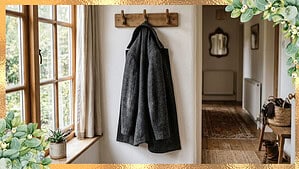
I've been thinking a lot about my friend lately.
Her husband passed away almost a year ago. We've been close since our kids were little, and I drive over to see her every few months.
The first time I visited after the funeral, I expected the house to feel empty.
It didn't. If anything, it felt fuller.
His coat was still on the hook by the door. His coffee mug was still in the drying rack. His glasses were folded on the small table by his chair, and the bookmark was still in the book he was reading.
I told myself, of course. It's only been a few weeks.
But six months later, when I came back, everything was still there.
The coat. The mug. The glasses. The book.
Other things had piled up around them. Months of mail on the kitchen counter, unopened. The local paper from three Tuesdays ago, still on the chair where she does her crosswords. A pair of slippers I didn't recognize, still in their box, by the front door.
The house wasn't messy.
It was paused.
Like the whole place had been holding its breath since the moment he stopped breathing, and nobody had told it the worst was over.
I didn't say anything to her about it. It wasn't my place. It still isn't.
But I haven't stopped thinking about it since.
Because what I saw in her house isn't unusual. It's almost universal for women who lose their husbands. And the women around her, the friends and sisters and daughters and women from her book club, almost never know what to say about it.
What Happens to a Home After You Lose a Spouse

You can feel it the moment you walk into a widow's home, even if it takes you a while to figure out what you're feeling.
The house is full in a way it didn't used to be.
His shoes are still by the door.
The newspaper subscription is still arriving every morning.
There's an extra plate stacked with the others in the cabinet, even though she's eating off just one of them.
The mail on the counter is getting taller.
The closet hasn't been opened in months.
None of it is technically out of place. Each thing has a reason to be where it is. But the home as a whole has stopped doing the small invisible work it used to do, the back-and-forth of bringing things in and letting things go that every lived-in home does.
It's just holding still.
This isn't laziness, and it isn't depression, though depression often shows up too. What we're looking at is a home in grief.
A home where every object has become tied to the person who's gone, and where touching any of those objects feels like touching the loss itself.
A home where deciding what to do with a thing has become impossible, because deciding was always something two people did together.
A home that's waiting for him to come back, even though some part of her knows he isn't going to.
Some people call this grief-related hoarding, or acute hoarding. But those words sound clinical, and what's happening isn't really clinical at all. It's just human.
Most widows don't even realize they've started doing it until someone else points it out.
A daughter visits for the weekend and notices six months of mail on the kitchen counter.
A sister opens the linen closet and sees that the bath towels he used are still folded on his shelf, untouched since the day before he was admitted to the hospital.
A friend offers to help carry in groceries and notices the spare bedroom has become impassable.
This isn't the kind of hoarding you see on TV. The house isn't unsafe. Nothing has rotted. There's no public health issue.
It's something smaller. Sadder. So much more common than anyone talks about.
It's a woman whose home stopped emptying when the love of her life stopped breathing.
And it can stay this way for a year. Three years. Five years. Sometimes longer.
Why Letting Go Feels Like Losing Him Twice

I don't think most of us really understand this until we see it happen to someone we love.
She picks up her husband's reading glasses from the side table, and she just can't put them anywhere.
I mean, she can hold them. But she can't decide what to do with them.
Putting them in a drawer feels like sealing him away.
Donating them feels like giving him away.
Throwing them away feels like throwing him away.
Keeping them on the side table feels like leaving them out for him to come back and find.
There's no good answer.
So she leaves them right where they are.
Then she sits across the room and looks at them. And she remembers him reading the newspaper in that chair. And she lets the glasses stay there one more day.
Multiply that by every object in the house.
His robe. His razor. His shoes. His winter coat. His side of the closet. His half of the medicine cabinet.
The book he was halfway through.
The mug on his nightstand.
The car keys still on the hook.
The voicemail message that's still in his voice.
For most widows, the things he touched have stopped being objects. They've become small physical anchors of him. Pieces of evidence that he was here, that he existed, that the life she still can't quite believe is over actually happened.
Throwing any of them away means losing another piece of him.
And she's already lost so much.
The things in a widow's home aren't clutter to her. They're proof the man she loved was real. That he sat in the chair. That he drank from the mug. That he wore the shoes out the door.
For a long time after he dies, the house is the only place where any of that is still visible. This is one of the deeper reasons we hold onto objects that have come to mean more than they should.
This is why widows hoard.
It isn't laziness. It isn't disorganization. It isn't the early stage of some clinical disorder.
It's the natural protective instinct of a woman who's already lost the love of her life and can't bear to lose the small physical traces of him too.
The grief becomes geography.
His shoes sit by the door because that's where he kicked them off the last morning, and she hasn't moved them since.
His glasses sit on the table because he set them there before bed, and she's not going to be the one to put them somewhere else.
The mail piles up not because she can't open it, but because every decision now feels like one she's making alone, in a house that until recently always had two voices in it.
So even the smallest choice (recycle this catalog or save it) becomes one more reminder that the person she used to make decisions with isn't coming back.
A counselor I know has been working with grieving widows for thirty years. She told me once that there's no other point in a woman's adult life when she experiences this much decision fatigue at this volume.
Every drawer is a thousand decisions.
Every closet is ten thousand.
Every cabinet asks her to choose, alone, what stays and what goes, in a house where everything used to be decided together for forty or fifty years.
So she stops choosing.
And the house slowly stops emptying.
The Conversation That Never Happens

Nobody talks about this part, even though almost every widow lives it.
Her sister visits and notices the pile of mail.
Her daughter comes for Thanksgiving and notices that his coat is still on the hook.
Her best friend stops by for tea and notices the spare bedroom door has been closed for six months.
And none of them say a word.
Because what would they say?
“You should really throw out his things by now” is monstrous.
“It's been a year, sweetheart” implies grief has a timeline she's failing.
“How are you holding up?” is too broad, too easy to brush off with “I'm fine. Just busy.”
So they say nothing.
They love her. They visit her. They bring her casseroles. They sit with her on the porch. They mean well.
But they don't have the words for what they're seeing, so they pretend they don't see it.
And she knows. That's the hard part.
The widow knows the house is fuller than it used to be. She knows the mail is piling up. She knows the spare bedroom hasn't been opened. She knows her daughter glanced at his coat by the door and looked away.
She just doesn't have anyone to talk to about it.
Because the people closest to her are pretending not to see it.
And the conversations that would actually help (about why this is so hard, about how long it takes, about what to do with his things and when, about who decides what eventually means) just don't happen.
So she carries it alone.
The shame, if it's there. The confusion about how long is too long. The exhaustion of looking at his coat on the hook every single morning. She carries all of it alone.
This is one of the most common forms of isolation in widowhood. And it has almost nothing to do with being physically alone.
It's being surrounded by people who love you, and none of them will say out loud the thing you most need to talk about.
If you're reading this and you're the widow, please know: it isn't your imagination. You aren't being too sensitive. The silence is real, and it isn't your fault.
If you're reading this and you love a widow, please know: the silence is one of the kindest-meaning and most unhelpful things you can give her.
There's a way to break it. We'll get there.
Five Things That Help When You're Ready
Most decluttering advice will tell a widow she has to be ready before any of this matters.
That's true.
There's no point trying any of this before she's ready, and trying to force it usually makes things harder.
But if you're a widow who's felt something change inside you, that small tug of I think I might be ready to try something, here are five things that have actually helped real women I know.
None of them are about throwing his things away.
1. Start With Something That Wasn't His

The mail on the counter. The catalogs from stores you don't shop at anymore. The plastic containers in the cabinet that nobody is going to use.
Start with the easiest, least emotional objects in the house.
Build a small muscle of letting go before you go anywhere near his things.
This isn't a trick. It's how the brain actually works. Making one tiny decision (this catalog goes in recycling) makes the next tiny decision a little easier. After enough small decisions, the bigger ones start to feel possible.
But not yet. Just start small.
2. Don't Ask “Do I Throw This Away?” Ask “Is This Still Part of My Life?”

The question do I throw this away puts the weight on losing the object.
The question is this still part of my life puts the weight on the life you're living right now.
Some of his things will still be part of your life for years. That's allowed.
Some won't be.
You'll be surprised which ones surprise you. A few honest questions like this one can do more, on the right day, than any system or schedule.
3. Photograph Anything You Can't Part With

A photograph of his coat on the hook holds the same memory as the coat itself. It just takes up a lot less of your home, and a lot less of your daily grief.
This isn't a betrayal.
The photo will be there forever. The coat doesn't have to be.
You can do this for his shoes, his razor, his bookmark, his side of the closet, before you decide anything about any of it. The photograph is permanent. It doesn't ask you to decide anything about the object yet.
A lot of widows have told me later that the photograph helped them realize they no longer needed the object, by the time the day came.
4. Pick One Drawer, One Box, One Corner. Not the Whole House.
If you wait until you can declutter the whole house, you'll be waiting forever.
The whole house is too much. It's always going to be too much.
But one drawer is possible.
One box is possible.
One small corner of the spare bedroom is possible.
That's where to start. And on the days when even that feels like too much, the kitchen drawer full of rubber bands and twist ties is enough.
Small enough that it doesn't feel like erasing him. Real enough that something in the house finally moves.
If you're looking for an even smaller starting point, the categories of “just in case” things most of us hold onto can be sorted in about twenty minutes, and they don't go anywhere near his belongings.
5. Keep Things Longer Than People Think You Should

This is the most important one, and it's the one people say the least.
You're allowed to keep his coat on the hook for years.
You're allowed to keep his razor on the bathroom counter.
You're allowed to keep his book on the side table with the bookmark in the place where he stopped reading.
There is no rule. There is no timeline. There is no calendar that says you should be “done” by some particular month.
If your sister or your daughter starts hinting that it might be time, you don't have to listen.
The right time is the right time for you. Not for them. Not for the women in your book club. Not for the well-meaning friend who threw out her husband's things three weeks after his funeral and is now, eight years later, wishing she hadn't.
Keep what you need.
For as long as you need it.
The Soft Line Between Grief and Something More

This section is the hardest one to write.
For most widows, what I've been describing isn't a problem. It's grief moving at the speed grief moves at, which is slow, and slower than the world wants it to be, and that's okay.
But sometimes, for some widows, the pattern starts costing more than she's getting back from it.
There's no clinical line for this. There's no checklist that crosses some threshold. But there are signs the people who love her can keep an eye on, with care, never with judgment.
Is the house still safe?
Can she walk freely from the front door to her bedroom, from the bedroom to the kitchen, from the kitchen to the bathroom?
Are the paths clear in case of a fire?
If she fell, could a paramedic get to her?
That's the only true urgency. Everything else can wait. But safety can't.
Has she stopped letting anyone come in?
A lot of widows go through a phase where they don't want visitors. That's normal.
But when months turn into years and she stops inviting even her closest sister or daughter inside, the isolation starts to have its own weight. Loneliness can deepen the grief instead of helping it pass.
Is she eating?
A house full of stuff often hides a kitchen where she's not really cooking anymore. Sometimes she's eating cereal for dinner because the table is too covered to set.
Sometimes she's barely eating at all.
Is the grief getting heavier, not lighter, over time?
Grief isn't supposed to disappear. It changes shape. It softens around the edges. It comes and goes in waves that get further apart.
But if a widow seems heavier now than she did six months ago, and a year ago, and the year before that, something in her may be asking for the kind of help her sister or daughter alone can't provide.
None of this means she has hoarding disorder. None of it means she's broken.
It just means she might benefit from someone who specializes in grief, like a bereavement counselor or a grief support group. Plenty of cities have widow-specific groups that have helped women I know more than any individual therapy ever did.
It might also mean she'd benefit from a geriatric care manager who can come into the home and offer practical support without the emotional weight family members carry.
She doesn't have to do any of this. She gets to choose.
But the people who love her can mention it. Not as a fix. Just as an option.
Sometimes the kindest thing a daughter or sister can do is say: “There are people who help women in your situation. I looked it up. Here's the name and number. You can call when you're ready, or never. I just wanted you to know.”
That's the only sentence she needs to hear.
The rest is up to her.
A Word for the Daughters, Sisters, and Friends Who Love Her

If you have a widow in your life, this part is for you.
The most loving thing you can do for her is one thing: stop trying to fix it.
I know that's hard. You love her. You see her struggling. You want to help. You figure that if you could just get her to throw out his old gym bag, or open the spare bedroom, or finally tackle the mail, she'd feel lighter.
But the things in her house aren't the problem.
The things in her house are how she's keeping him with her.
If you take any of them away, even with the best intentions, you aren't helping. You're participating in another loss.
Please. Don't surprise-declutter while she's at the grocery store.
Don't say, “He wouldn't want you living like this.” You don't know what he'd want. Neither does she. He isn't here to ask.
Don't put a deadline on her grief.
So here's what you can do instead.
Visit. Stay. Don't try to fix.
Just being in the house with her, sitting on the couch she used to sit on with him, drinking coffee at the kitchen table, is one of the most important gifts you can give her. The house feels less empty when someone else is in it with her. That alone matters.
Bring food. Eat with her.
A widow who's stopped cooking often hasn't stopped being hungry. She just doesn't have the energy to make a meal for one. Bring something. Sit. Eat together.
Handle the things she doesn't have energy for, only if she asks.
If she asks for help with the mail, help with the mail. If she asks you to call about the cable bill that's still in his name, make the call. If she doesn't ask, don't volunteer.
Photograph things for her phone.
If she points at his coat by the door and says “I'm not ready yet,” offer to take a picture of it on your phone and send it to her. Then if she ever does decide she's ready, she has the memory in a place that isn't taking up the hallway.
Listen when she finally talks about it.
When she starts talking about his things, what to do with them, when to start, what she's afraid of, just listen. Don't offer solutions. Don't tell her what your aunt did. Just listen.
The biggest gift you can give her is the conversation that hasn't been happening. The one nobody else is willing to start.
You don't even have to start it yourself. You just have to be willing to receive it when she does.
She'll know.
And the things in the house will move when she's ready for them to.
Not before.
If you want a deeper sense of what often gets left behind, and what it asks of the people who loved her, this is the companion piece to the one you're reading.
A Place to Begin When the Time Comes

If you're the widow reading this, please don't take this section as a push.
You don't have to be ready.
But if there's a small part of you that has been thinking maybe I'm ready to try one tiny thing, here's something that might help when that day comes.
My free Declutter for Self Care Checklist is a gentle, room-by-room companion you can pick up whenever you want and put down whenever you need to. There's no calendar. There's no expectation. Just small, kind questions for each space in your home, to help you decide on your own time what's still part of your life and what isn't.
It was made for women who are doing this slowly. Women in their 60s and 70s. Women carrying things nobody else knows about.
Whenever you're ready. Even if that's years from now. The checklist will be here.
Frequently Asked Questions
Is what I'm doing actually hoarding?
For most widows, no.
Clinical hoarding disorder is a very specific, ongoing pattern that exists no matter what life event is happening around it. What most widows experience is something different. It's grief-related accumulation. It can look the same from the outside, but it's a normal response to loss.
Grief-related accumulation usually softens over time, especially when she has support and isn't isolated. Clinical hoarding doesn't soften on its own. That's the clearest difference.
Most widows who feel paralyzed about their husband's things are dealing with grief, not a disorder.
How long does this last?
There's no fixed answer.
Some widows feel ready to start sorting their husband's things within months. Some take three or four years. Some take a decade.
What matters isn't how long it takes. It's whether the home is still safe and the widow is still connected to her people. As long as those two things are true, there's no deadline that matters.
My mother has been like this for years. When should I worry?
Worry isn't really the right word.
What you can do is pay attention. Is the home still safe to walk through? Is she still eating? Is she still letting people in? Is the grief getting heavier or lighter over time?
If any of those answers concern you, a conversation with her doctor or a bereavement counselor in her town might help you think through what to do next.
You don't have to decide for her. You just have to know it's okay to ask the questions.
What if she gets angry when I try to help?
She might.
Anger from a grieving widow about her husband's things usually isn't really about the things. It's about feeling pressured, watched, judged, or rushed.
The best response is to step back and say: “I'm sorry. I won't bring it up again. I'm here when you want to talk about it.”
And then mean it.
Will she ever be ready?
Almost always, yes.
Most widows do reach a point where they begin to sort and let go of some of their husband's belongings. Sometimes it happens slowly over years. Sometimes it happens in a single afternoon when something inside her changes.
You can't make that day come faster.
You can only be there when it does.
Follow me elsewhere!