The Hardest Thing I Inherited Wasn’t the House. It Was the Photos.

When my mother passed, I braced myself for the big things.

The house. The furniture. The bank papers, the car, all the pieces of a life that have to be sorted and signed for. Those were hard, but they were the kind of hard I expected. There were steps to follow. People to call.

Then I found the photos.

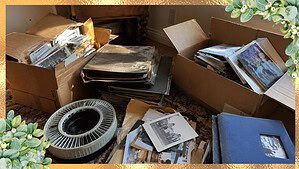
Boxes of them. Albums stacked in the hall closet, shoeboxes stuffed with loose prints, yellowed envelopes straight from the drugstore with the negatives still tucked inside. A whole carousel of slides I had no way to even look at. Decades of my parents' lives, and now my grandparents' lives too, all of it sitting there in front of me.

And I completely froze.

The furniture I could give away. The house, in time, I could sell.

But how do you throw away a photograph?

Every single one was a moment someone thought was worth saving. A birthday. A trip. A face. And a good number of those faces, I realized with a sinking feeling, I couldn't even name.

People my mother knew, people who mattered to her, and there was no one left to ask.

That's when it hit me. This was going to be the hardest thing of all.

If you've found yourself standing over boxes like these, unsure how you'll ever get through them, please know you're not alone, and there's no rush here. Grief has its own clock, and this kind of sorting can wait until you're ready.

When you are, I want to walk you through what finally helped me, because figuring out what to do with parents' old photos turned out to be less about the photos and more about letting myself off the hook.

Why Photos Are the Hardest Thing to Let Go Of

A single faded black-and-white vintage family photograph resting on a wooden kitchen table with an open shoebox of old prints behind it

I've given away plenty of hard things in my life. Furniture, clothes, dishes I'd had for decades. None of it stopped me the way those photos did.

There's a reason for that, and once I understood it, I was a little kinder to myself.

Most things can be replaced. If you give away a lamp and regret it, you can buy another lamp.

But a photograph is the only one of its kind.

That exact picture of your dad laughing on the porch in 1961 exists once, on that one piece of paper. Throw it out, and it's gone for good.

That word, gone, is what freezes us.

It feels final, because it is. So we don't decide at all. We just close the box back up and slide it into the closet, and tell ourselves we'll deal with it another day. I did that for almost a year.

There's guilt tangled up in it too. These pictures mattered to the person who saved them. Tossing even one can feel like saying that moment didn't count, or that the person in it didn't. When it's your own mother's careful albums, that guilt gets very heavy, very fast.

Read related post:   9 Space Saving Folding Hacks I Wish I'd Known Years Ago

If you've felt that exact freeze, you're in good company, and nothing is wrong with you.

Photos are the most tender kind of clutter there is, far harder than the everyday stuff. It's the same struggle behind letting go of any sentimental item, just turned all the way up. Once I stopped expecting it to feel easy, I could finally begin.

How I Finally Started Going Through Them

I want to be honest about how this actually went, because it wasn't one tidy afternoon. It was many small sittings, spread over weeks. But these are the things that got me unstuck.

Give Yourself Permission to Go Slow

One open box of old family photos on a kitchen table with a warm mug of tea beside it and a few prints spread out in soft morning light

The first thing I had to accept was that this would take a while, and that was alright.

I'd been treating those boxes like a chore I was failing at. Every time I walked past the closet, I felt behind, like I should have finished already. That pressure was a big part of why I never started.

So I let it go. I decided I'd do a little at a time, when I felt up to it, and not one minute before.

Some days I sorted for an hour. Some weeks I didn't touch them at all.

If you're clearing a parent's things on some kind of deadline, this is trickier, and there's real advice on handling a loved one's belongings after they pass that can help you pace it. But the photos, at least, could wait for me to be ready.

Sort Into Rough Piles First, Don't Decide Yet

Old family photographs sorted into several rough piles across a kitchen table, with stacks of portraits, blurry prints, and grouped duplicates

When I finally sat down with the first box, I made one rule for myself. No decisions yet.

Deciding on each photo one at a time was what had frozen me before. So instead, I just sorted into rough piles. People I knew, people I didn't. Blurry or damaged ones in their own stack. Duplicates together, because my mother, bless her, ordered doubles of nearly everything.

I didn't throw anything away in this round. I just grouped.

Taking the pressure off deciding made all the difference. It turned an impossible task into a simple one. Anybody can make piles.

It's a lot like any big decluttering job, where asking yourself a few honest questions is easier once things are sorted enough to see what you actually have.

Let Go of the Ones Nobody Can Name

A small pile of very old faded photographs of unknown people, including a group picnic photo and an old wedding party print, on a wooden table

Here's the one that surprised me, and freed me the most.

A huge share of those photos were of people nobody could name. Not me, not my sister, not my last living aunt. Strangers at a picnic in 1958. A wedding party where I recognized no one. A baby who could have been anybody.

I sat with that for a while. And I came to a gentle truth.

A photo of a person no one can identify isn't really a family memory anymore. It's a nice old picture, but the story behind it is already gone. Keeping a box of unnamed faces wasn't honoring my mother. It was just keeping paper. So I let those go, and I felt lighter, not sadder.

Keep the Best, Not Every One

A few carefully chosen best family photographs in a small neat stack on a kitchen table, with a larger pile of near-duplicate prints pushed aside

My mother took twelve pictures of the same sunset. Fifteen nearly identical shots of the same Christmas morning. If you've opened these boxes, you know exactly what I mean.

I didn't need all twelve. I needed the one good one.

So for each moment, each trip, each holiday, I picked the best photo or two and kept those. The clearest, the one where everyone's smiling, the one that actually brought the day back.

The rest of the near-duplicates, I let go without much fuss, because the memory was safe in the best of them.

This one choice cut my piles down by more than half. And honestly, the memories felt stronger for it, not weaker. One beautiful photo of my parents' anniversary says more than fifteen blurry ones.

Read related post:   How to Declutter Your Closet

Snap a Quick Photo of the Ones You're Not Keeping

A cell phone held over an old vintage family photograph laid flat on a table, taking a digital copy of the print, with more old photos beside it

This is the trick that made letting go feel safe, so let me explain it plainly.

For the photos I wasn't going to keep but still felt a little tug about, I used my cell phone to take a picture of the picture. Just laid the old print on the kitchen table, held my phone over it, and snapped.

Now I have a copy saved on my phone, and I don't need the paper one anymore.

It sounds almost too simple, but it changed everything for me.

I could let the physical photo go, knowing the image itself wasn't lost. It was right there on my phone, taking up no space in any closet.

For the ones truly worth keeping in better quality, you can also have them properly scanned, and it helps to have a plan for keeping all those digital copies organized so they don't just become clutter of a different kind.

Make One “Best Of” Album Instead of Twenty Boxes

A single nicely filled family photo album lying open on a living room coffee table, showing a few treasured old family pictures on the page

Once I'd kept only the best and let the rest go, I was left with a manageable stack of real treasures. And I did something with them I wish I'd done years ago.

I put them in one album. A single, beautiful “best of” book of my parents' life.

Instead of twenty boxes I couldn't bear to open, I now have one album I actually look at. I keep it on the shelf in the living room, and when the grandchildren visit, we page through it together. My mother is in that album, laughing on the porch, and now my grandkids know her face.

That's what those photos were always for. Not to sit sealed in a closet, but to be seen. If you want more ideas for displaying and preserving the keepers, there are lovely options for what to do with old photos and portraits once you've narrowed down to the ones that matter.

What to Do With the Photos You're Ready to Part With

Once I had my keepers, I still had to figure out what to do with everything I was releasing. I didn't want to just dump decades of family history in the trash, and you may feel the same.

Share before you let go. Before anything left my house, I offered photos around to family. My sister wanted different ones than I did. A cousin was thrilled to get pictures of her side she'd never seen. What one person releases, another may treasure, so ask first.

Digitize the ones worth saving in good quality. For the real keepers, a scanning service can turn boxes of prints, slides, and negatives into digital files you can share with the whole family and never lose. Those old carousel slides especially, since most of us can't even view them anymore, are worth having converted.

Offer old local photos a good home. If there are old pictures of your town, a local business, or a community event, your area's historical society or library may genuinely want them. It felt good knowing a piece of my parents' world went somewhere it would be valued.

Let the rest go with a clear conscience. The unnamed faces, the blurry shots, the endless duplicates, those can be recycled or tossed without guilt. If it helps to think it through, there's gentle guidance on decluttering belongings after someone dies that applies just as well to photographs.

They Live in You, Not in the Boxes

When I finally closed the last empty box, I sat down and waited to feel like I'd lost something. That feeling never came.

What came instead was relief, and something close to peace.

My parents weren't in those boxes. Not really. They're in me, in the way I set a holiday table like my mother did, in my sister's laugh that sounds just like our dad's, in the stories I tell my grandchildren. A sealed box in a closet was never what kept my parents close. My memory of them does that, and it always will.

Read related post:   15 Best All-Natural Cleaning Products For A Healthier Home And Environment

The photos I kept, the best of them, in that one album, are enough. More than enough. They bring my mother and father right back to me on any ordinary afternoon, and I don't have to dig through twenty boxes of strangers to find them.

If you're staring at boxes like I was, dreading it, please be gentle with yourself. You are not throwing away your parents. You couldn't if you tried. You're simply choosing the pictures that hold them best, and letting the rest go so you can actually see the ones that matter.

Keep the few that bring them back. Let the rest rest. And trust that the people you love are not in the boxes.

They're in you, and they always have been.

Ready to Face the Rest, One Small Step at a Time?

Sorting a parent's photos is some of the tenderest work there is, and if you've started it, you already know how much strength it takes. If there's a whole home of memories still ahead of you, and you're not sure how you'll manage it all, I put together something to help.

It's my free Declutter for Self Care Checklist. It breaks the overwhelming work of clearing a home into small, gentle steps you can take at your own pace, on the days you feel up to it. It's made for real people carrying real grief, not for rushing you through something sacred.

You don't have to do it all at once. You just have to start where you can, and this helps you find that place.

FAQ

What should I do with my parents' old photos after they pass?

Start by giving yourself permission to go slowly, since this is tender work with no deadline. Sort the photos into rough piles first without deciding anything, then keep the best few from each moment rather than every single shot. Let go of duplicates and pictures of people no one can name, offer some to relatives, and digitize the real keepers. The goal is to keep the photos that truly bring your parents back, not to save every piece of paper.

How do I decide which old family photos to keep?

Keep the clearest, most meaningful photo or two from each event rather than every near-duplicate. Ask whether a picture actually brings the moment or the person back to you. If it does, it's a keeper. If it's blurry, damaged, a duplicate, or shows someone no one can identify, it's safe to let go. Choosing the best few actually makes the memories feel stronger, because you're not hunting through boxes to find the ones that matter.

Should I digitize old photos before getting rid of them?

For photos you feel unsure about, snapping a quick picture with your phone is an easy way to keep the image without keeping the paper. For the true treasures, a proper scanning service gives you better quality and lets you share copies with family so the photos are never lost to one flood or fire. Old slides and negatives are especially worth converting, since most of us no longer own a way to view them.

What do I do with photos of people I can't identify?

It's okay to let them go. A photograph of someone no one living can name has already lost the story that made it a family memory, so keeping a box of unknown faces isn't really honoring anyone. Before releasing them, you might show them to your oldest living relatives in case they recognize someone. Any that remain a mystery can be recycled or even offered to a historical society if they show your town or an era of local life.

How do I let go of family photos without feeling guilty?

Remind yourself that you're not throwing away the people you love, you're choosing the pictures that hold them best. Keeping every duplicate and unnamed face in a sealed box doesn't honor anyone, but a treasured “best of” album you actually look at does. Go slowly, keep the ones that bring real memories back, and know that your parents live in you and your family, not in the paper. That truth makes the letting go far gentler.

Follow us on PinterestFollow
Follow me elsewhere!

Leave a Comment