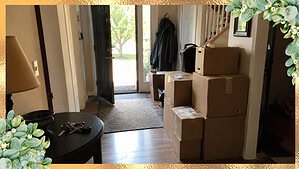
When my mother passed, my brother and I decided to sell her house. It was too much to keep, and neither of us lived nearby, so putting it on the market was the sensible thing to do.
Then it sold faster than we ever expected.
Suddenly there was a closing date at the end of the month, and one hard fact that came with it. Thirty days to empty the home she'd lived in for forty years. I remember standing in her front hallway with her keys in my hand, looking at all of it, with no idea where to begin.
Because every room was full of her. Her coat still hung by the door. Her reading glasses sat on the kitchen table where she'd left them. There were closets I hadn't opened yet, a basement packed with who knows what, and an attic I was afraid to even think about. Forty years of a life, tucked into every drawer and shelf, and now it was on me to take it all apart.
I sat down on the bottom step and cried before I moved a single box.
If you're facing this right now, I want to say something before any of the how-to. This is one of the hardest jobs a person can be handed. You're grieving and working at the same time, and those two things pull against each other.
Grief wants you to go slow. The deadline won't let you.
That's an awful place to stand, and if you feel frozen, there is nothing wrong with you.
I did get through it. Not gracefully, and not all at once, but I got through it.
And along the way I found an order to things that kept me moving without falling apart. Maybe you've already learned that a big job like this is less about working harder and more about knowing what to touch first.
So if you're standing where I stood, wondering how to clear out a parent's house with a clock ticking over your head, let me walk you through what actually worked.
Take what helps, and leave the rest.
This Isn't Decluttering. It's Something Much Heavier.

I've cleaned out closets before. I've done the spring purge, the garage, the junk drawer. So a small part of me thought this would be the same, just bigger.
It wasn't. It wasn't even close.
When you declutter your own home, you're deciding about your own things. A shirt you don't wear, a gadget you don't use. It's simple, because there's no one in it but you.
But clearing my mother's house was different in a way I wasn't ready for. Every single object had her attached to it. The chipped mixing bowl wasn't a bowl, it was Sunday mornings and the smell of her banana bread. Her handwriting on a grocery list stopped me cold. Even her old bathrobe, hanging on the back of the door, undid me.
I wasn't sorting stuff. I was handling her whole life, piece by piece.
And I was doing it while grieving, which is the part nobody warns you about. Some afternoons I'd pick up one photograph and lose a whole hour to it. Other days I couldn't touch anything at all. Grief doesn't care about your deadline. It shows up when it wants and sits down right on top of the work.
There's a reason this is so hard, and it helped me to name it. These aren't just belongings. They're the last physical pieces of the person, and letting them go can feel like letting go of the person themselves.
That's a real and heavy thing, and it doesn't get lighter just because a closing date is coming.
So the first thing I want you to know is this. If you're finding this brutally hard, that's not because you're doing it wrong. It's because it is hard. Be gentle with yourself. Then, when you're ready, here's the order that finally got me through.
How I Emptied the House Without Losing Myself
I'm going to give you the exact order I used.
Having a plan was the only thing that kept the panic down, because instead of facing a whole house, I only had to face the next step.
Start With the Deadline and Work Backward

The first thing I did was get real about the calendar.
I had thirty days. So I sat down with a cheap notebook and worked backward. If everything had to be out by the thirtieth, then the big furniture pickup needed to happen around the twenty-fifth. The estate sale a few days before that.
Which meant the sorting had to be mostly done by the twentieth.
Seeing it laid out that way was scary, but it also helped. It turned a giant, shapeless dread into actual dates.
I gave each week a job. Week one, the easy rooms. Week two, the hard ones. Week three, sell and donate. Week four, the final clear-out and cleaning. It wasn't perfect, and things slipped, but that rough map meant I always knew what I was supposed to be doing that day.
When you're this overwhelmed, not having to decide what's next is a small mercy.
Find the Important Papers and Valuables First

Before I sorted a single sentimental thing, I did one practical sweep for the things that truly mattered.
I went through the whole house looking for important papers and anything valuable. Her will, insurance policies, bank statements, the deed, tax records, her Social Security information. I gathered all of it into one box and put it somewhere safe.
I'm so glad I did this first.
These are the things you cannot replace and cannot toss by accident in a rushed afternoon.
The same goes for obvious valuables, jewelry, cash tucked in drawers (my mother hid twenties in the strangest places), coins, anything that looks like it matters. Older folks often keep important things in odd spots, so check the backs of drawers, inside books, under the lining of jewelry boxes.
Do this sweep while your eyes are fresh, before the exhaustion sets in.
Go One Room at a Time, Not All at Once

My biggest mistake, early on, was wandering. I'd start in the kitchen, get sad, drift to the bedroom, pick at a closet, then wander to the living room. At the end of the day I'd touched everything and finished nothing.
So I made a rule. One room at a time, all the way done, before starting the next.
I started with the easiest room, the one with the least of her in it. For me that was the guest room, which was mostly just furniture and linens. Finishing one whole room gave me a feeling I badly needed. Proof that this was possible. That I could actually do this.
Then I moved to the next, and the next. If it helps to see how others tackle a big house against the clock, there are solid tips for decluttering a house fast that work here too.
Save the hardest room, usually her bedroom, for when you've built up some strength and some practice.
Sort Into Keep, Sell, Donate, and Toss

In each room, I worked with four piles. Keep, sell, donate, toss. That was it.
I got four sturdy boxes and some trash bags and labeled them big. Every single thing I picked up had to go into one of the four. No “I'll decide later” pile, because later never comes and the deciding just piles up.
Keep was for the things I truly wanted, and I was strict about it. Sell was for anything with real value for the estate sale. Donate was for the good, usable things that no one in the family wanted. Toss was for the worn-out and the broken.
The honest truth is the keep pile has to stay small. You cannot keep it all, there's no room in your own life for a second whole household.
A few good questions to help you decide what to keep made this easier for me. I kept the things that genuinely brought her back or that I'd actually use, and I let the rest move on.
Photograph the Things You Can't Keep but Can't Forget

This was the trick that saved me, especially with the deadline pressing.
There were so many things I couldn't keep but couldn't bear to just toss. Her aprons. The chair she always sat in. Her collection of teacups. I didn't have room for any of it, and the clock was ticking, but letting go felt impossible.
So I took pictures of them.
I'd hold up the apron, or snap the chair right where it sat, and that photo let me release the object itself. I still have the image. I can see her chair any time I want, without it filling up my garage. This same idea saved me all over again when I later faced my parents' boxes of old photos, and it works just as well on the furniture and the everyday things you have to release.
Talk to Your Siblings Before You Toss Anything

My brother lived three states away, but this was his mother too. And I learned quickly that clearing a parent's house can crack a family right open if you're not careful.
So we set some ground rules early, and they saved us.
Before anything valuable or sentimental left the house, I checked with him. I'd text a photo and ask, do you want this, before it went in the sell or donate pile.
It took a few extra minutes, but it meant no resentment later, no “you got rid of Dad's watch without asking me.”
If there are several of you, taking turns choosing what you each want keeps it fair. For the bigger picture of doing this together without a feud, there's real help in handling a loved one's belongings after they pass.
The stuff is not worth a broken relationship. No teacup is worth losing your brother. Keep that in front of you the whole time.
Bring in Help for the Big Stuff

I am stubborn, and I wanted to do this myself. That was pride, and it nearly buried me. The day I finally accepted help was the day it all became possible.
You do not have to do this alone, and for a whole house on a deadline, you honestly can't.
For the furniture and the heavy lifting, I hired two young men with a truck for an afternoon, and they did in three hours what would have taken me three days.
For the true junk, a junk-hauling service came and took a whole basement of broken, worthless stuff in one go. Friends offered to help sort, and this time I said yes instead of no. If you have the budget, professional estate cleanout services can handle enormous amounts at once.
Money spent here isn't waste. It's buying back your back, your time, and your sanity when you have precious little of any.
What to Do With Everything That's Left

Even after I'd sorted, I still had a house full of things that needed to go somewhere. Here's how I moved it all out without just hauling it to the dump.
Hold an estate sale or call a buyer.
For a whole houseful, an estate sale company will come in, price everything, run the sale, and take a percentage. It was the easiest way to turn her furniture and dishes into something that helped cover her final costs.
For a smaller amount, online marketplace listings or a consignment shop can work.
Donate the good, usable things in bulk. So much of what was left was perfectly good, just not wanted by us.
Charities will often pick up furniture and boxes right from the house, which is a gift when you're short on time. There are meaningful places that will treasure what you pass on, and knowing her things would help someone else made letting them go so much easier.
Haul away the true trash. Some of it is just worn out, and that's alright. A junk-removal service or a rented dumpster handles the broken furniture, the stained mattresses, the decades of basement odds and ends in one clean sweep.
Give the meaningful pieces to people who'll love them. Her good china went to my daughter. A neighbor who'd known my mother for thirty years wanted her rosebushes dug up and moved. Handing her treasures to people who genuinely wanted them was the only part of the whole month that actually felt good.
What I Carried Out That No Truck Could Hold

On the last day, I walked through the empty house one final time.
Every room was bare. My footsteps echoed. The place where her chair had sat was just a square of carpet a little brighter than the rest. I stood in the kitchen where she'd made ten thousand meals, and it was completely empty now, and I waited to feel like I'd lost her.
But standing there, I understood something I hadn't expected.
She was never in the house. Not really. The walls didn't hold her. The rooms weren't her. The version of my mother I was so afraid of losing, I'd been carrying the whole time, in me, and no moving truck could touch it. Her house was where she lived, but she lived on in me, in my brother, in my daughter, in the way I hum when I cook.
The house was just the house. Letting it go was not letting her go.
If you're about to do this, or you're in the middle of it right now, hold onto that. You are not erasing your mother by emptying her home. You're closing one door with love, and carrying the best of her out with you, where she'll stay for the rest of your life.
The house sold. The keys got handed over. And I drove away with everything that ever really mattered still with me.
When the Whole House Feels Like Too Much

If you're staring down a job like this, and you don't know how you'll manage the sheer size of it, I put together something that might steady you.
It's my free Declutter for Self Care Checklist. It's built to break an overwhelming job into small, clear steps you can take one at a time, even on the days when your heart is heavy and your energy is gone. It won't rush you through something this tender, but it will help you feel less lost when you look around and see how much there is.
You don't have to see the whole path. You just have to see the next small step, and this helps you find it.
FAQ
Where do I start when clearing out a parent's house?
Start by getting clear on your deadline, then work backward and give each week a job. Before any sentimental sorting, do one sweep for important papers and valuables like the will, financial records, and jewelry, and put them somewhere safe. Then work one room at a time, beginning with the easiest room to build momentum. Finishing a single room gives you the proof you need that the whole house is possible.
How do I clean out a house fast after a death?
Work room by room with four categories: keep, sell, donate, and toss, and put every item into one of them without a “decide later” pile. Keep your “keep” pile small, since you can't absorb a second household. Bring in help for the heavy work, movers for furniture, a junk service for trash, and an estate sale company or charity pickup for the rest. Paying for help is often the only way to hit a tight deadline without collapsing.
What do I do with everything left in the house?
An estate sale company can price and sell an entire houseful and take a percentage, which also helps cover final expenses. Good, usable items that no one wants can be donated, and many charities will pick up furniture and boxes right from the home. Truly broken things go to a junk-hauling service or a rented dumpster. Save the meaningful pieces for family members and friends who will genuinely treasure them.
How do I divide a parent's belongings with siblings without fighting?
Agree on a fair process before anything leaves the house. Check with each other, often a quick photo and a text, before selling or donating anything valuable or sentimental. If several of you want to choose, take turns picking items so it feels even. Keep reminding yourselves that no object is worth damaging your relationship, because the grief is hard enough without a family rift on top of it.
How long does it take to clear out a parent's house?
It depends on the size of the home and how much is in it, but with a firm deadline, most people work in a range of a few weeks to a couple of months. A packed house with a full basement and attic takes longer than a small apartment. Bringing in movers, junk haulers, and an estate sale company can shorten it dramatically. Go as steadily as you can, and accept help wherever it's offered.
Follow me elsewhere!