Why You Can’t Let Go of Your Pet’s Things (and How to Start When You’re Ready)

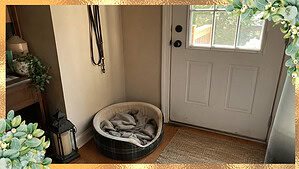
It's been three months since we lost our dog, and I still can't move his bed away from the back door.

The blanket is still rumpled the way he left it. A little fur still clings to the edge. Every time I walk past, I see it, and every time, I decide again to leave it right where it is.

Maybe for you it's the bowl still sitting on the kitchen floor. The leash still hanging on its hook. A favorite toy under the couch that you can't quite bring yourself to pick up.

You know, deep down, that you could put it away. But you can't. Your hand won't do it.

And what makes it so confusing is…

The profound feeling of guilt for keeping it out, like you're not moving forward the way you should.

But the thought of putting it in a box makes you feel guilty too, like you're saying they didn't matter.

Guilt if you keep it. Guilt if you don't.

So you do nothing, and the bed stays by the door.

If that's where you are, I want you to hear something gently, right at the start.

This is grief, not clutter. And if the sadness feels very heavy right now, please lean on the people who love you, or talk to someone who can help carry it. You don't have to hold it by yourself.

What you're feeling is not weakness, and you are not behind.

Letting go of a pet's belongings is one of the quietest, hardest kinds of grief there is, because they were family, and their things are the last soft proof they were here.

Let me sit with you in this for a bit, and then, when you're ready, I'll share a few gentle ways to start.

Why It's So Hard to Touch Their Things

An empty pet food bowl and water bowl still sitting on the kitchen floor in warm morning light, in the spot where a pet used to eat

For weeks, I couldn't figure out why I was being so silly about a dog bed.

It's just a bed. I've thrown away plenty of worn-out things without a second thought. Why not this?

But it isn't just a bed, is it.

And it never was.

Their things are the last places they touched. That bowl still sitting on the floor is where they ate every single morning. The leash is the one you held on a thousand walks.

The toy under the couch is the one they carried around in their mouth, so proud of themselves.

These aren't objects. They're the shape your pet left behind in your home.

So when you reach for that bed, it doesn't feel like tidying. It feels like betrayal.

Like you're erasing the last proof they were here. Like you're telling them they're already gone, when part of you isn't ready to say that yet.

That's why “just deal with it” is impossible.

Well-meaning people say it, and maybe you've even said it to yourself. But you can't just deal with a piece of your heart on the floor. There's nothing to “just” about it.

And there's the guilt, sitting on both shoulders at once.

Read related post:   5 Wonderful Tips And Inspirations To Declutter Your Home

If you put the bed away, you feel like you're moving on too fast, like you didn't love them enough to keep it out. If you leave it there, you feel stuck, like something's wrong with you for not being able to move a simple dog bed.

That push and pull is exhausting. It's a big part of why so many of us just freeze and leave everything exactly where it is.

I want to say this as plainly as I can.

None of that is a flaw. It's love.

The reason you can't move their things is the very same reason they mattered so much while they were here. You don't grieve what you didn't love.

If you've ever felt this same pull with anything else you couldn't let go of, you already know that the fear of getting rid of the wrong thing runs deep, and it runs even deeper when love is attached.

So if you've left their bowl where it sits for weeks now, you are not doing anything wrong.

You're grieving a member of your family, in the most ordinary and painful way there is. That deserves gentleness, not a deadline.

Their Things Are Rarely the Only Thing

A hallway with an empty pet bed in the foreground and, further down, a partly open closet and a few stacked boxes waiting to be sorted

That dog bed by my back door was the one thing I couldn't touch.

But if I'm honest, it wasn't the only thing.

There was the closet I'd been avoiding. The boxes in the spare room I kept meaning to sort. A whole corner of the basement I walked past every day and pretended not to see.

I started to notice something. The bed was just the hardest one sitting on top of a pile of hard ones.

It turns out I'm someone who has a tough time letting go of anything with a feeling attached. And once I saw that about myself, I was a lot gentler about the dog bed. It wasn't that I was broken. It was that letting go of things I love has never come easy to me, and maybe it doesn't for you either.

If that sounds familiar, you're in good company. So many of us keep things not because we need them, but because keeping their things can feel like keeping the ones we've lost. It's true of a person, and it's just as true of a beloved pet.

It was the same ache I felt going through my parents' old photos after they were gone. Different loss, same frozen feeling, standing there holding something I couldn't keep and couldn't release.

And here's what helped me most.

I didn't have to fix all of it at once. I didn't have to empty the closet, sort the boxes, and move the bed all in one brave afternoon. I just had to start somewhere small, when I was ready, and let that be enough.

The dog bed didn't have to be first. Sometimes the way you get strong enough to move the hardest thing is by starting with the easiest thing, way over on the other side of the room.

Gentle Ways to Start Letting Go of a Pet's Belongings

So here are the gentle steps that helped me, when I was finally ready.

None of these have a timeline. Take what feels right, leave the rest, and go at the pace your heart can handle.

Give Yourself Permission to Wait

An empty pet bed left undisturbed in a quiet corner of a living room with soft afternoon light falling across it

The first step isn't doing anything at all.

It's letting yourself wait, without guilt, until you're ready.

There is no rule that says the bed has to be gone by a certain week. Nobody is keeping score. If today is not the day, then it is not the day, and that is perfectly alright.

I left that dog bed by the door for three months. And you know what? Those three months were part of my grieving. I wasn't being lazy or stuck. I was healing at the speed healing actually happens.

Read related post:   "Just in Case" Clutter: The Painful Cost of Saving Things for Someday

So if you're not ready, wait. Waiting is not failing. It's just not time yet, and time is a big part of this.

Keep the One Thing That Means the Most

A pet collar with a small name tag resting in a little dish on top of a bedroom dresser, kept as a keepsake, in soft daylight

Here's something that took the pressure off me all at once.

You do not have to let go of everything. You get to keep the one thing that means the most.

For me, it was his collar. I cleaned it up and set it in a little dish on my dresser, and that was the piece I chose to hold onto. Once I knew I was keeping that, the rest got easier. I wasn't erasing him. I was choosing the one thing that held him best.

Maybe for you it's a favorite toy, or the tag, or a photo of them in their bed. Pick the one that brings them back to you.

When you know you're keeping the thing that matters most, letting the other things go stops feeling like losing them. If it helps to think through which piece to keep, this gentle way to decide what to hold onto is the one I lean on.

Begin Where It Hurts the Least

A spare bag of pet food, a half-empty treat bag, and a couple of old towels gathered on a kitchen counter in warm daylight

When you are ready to start, do not start with the hardest thing.

Do not start with the bed.

Start with something that carries a little less ache. The spare bag of food you won't use now. The extra bowl in the cupboard, not the one on the floor. The pee pads, the half-empty treat bag, the old towels.

These things still matter, but they don't hold your whole heart the way the bed does.

Moving one small, low-stakes thing shows you that you can do this, and that the sky doesn't fall when you do. It's the same reason any big, heavy job feels lighter once you begin somewhere small instead of at the hardest part. You build up to the tender things. You don't start there.

One Small Step Is Enough for a Day

A single clean pet bowl set on a dish towel to dry beside a kitchen sink in warm daylight from the window

On the day you begin, let one thing be the whole task.

Move one item. Then stop.

You do not have to clear it all in a single sitting. In fact, please don't try. This is tender work, and doing too much at once is how people end up sobbing on the floor, swearing they'll never touch any of it again.

One bowl washed and put away is a full day's work when you're grieving. So is one bag of food donated. So is one towel folded into the wash.

Do the one thing. Then be done, and be proud. Tomorrow can have its own one thing. Little by little, that's how the weight lifts, and how letting go of the things tied to the past slowly stops hurting so much.

Make It About Honoring Them, Not Erasing Them

A cardboard box filled with gently used pet items, a folded blanket, unopened food, and toys, ready to donate, by the front door

This is the one that changed everything for me.

Letting go of their things is not forgetting them. It's honoring them.

When I finally donated his unused bags of food to the local shelter, I didn't feel like I'd erased him. I felt like a little bit of the love he gave me was going back out into the world, to feed some other dog waiting for a home.

That's not losing him. That's letting his memory do some good.

You can give their gently used things to a shelter or a rescue, where they'll comfort another animal who needs them. There are meaningful places that will treasure what you pass on, and knowing their bed or blanket will keep another scared little creature warm can turn the ache into something almost sweet.

And if a certain thing is just too heavy to handle alone, let someone help you. A friend, your daughter, your partner. There is no shame in saying, “I can't pick this up by myself.” Let someone who loves you carry it with you.

Read related post:   15 Best All-Natural Cleaning Products For A Healthier Home And Environment

There's No Rush, and No Wrong Way

If you take away one thing from me, let it be this.

There is no rush, and there is no wrong way to do this.

You'll know when you're ready to move the bed. Maybe it's next week. Maybe it's next year. Maybe you keep it forever, and that's alright too. This was never about the bed. It was about giving yourself permission to grieve at your own pace.

And when you are ready, you don't have to do it all. You just do one small thing, on one ordinary day, and then you rest.

That's how the breathing room comes back. Not all at once, but a little at a time. One bowl, one blanket, one small brave moment, until one day you walk past that spot by the door and you smile at the memory instead of aching at it.

Your pet knew they were loved. Nothing you move or keep or give away will ever change that.

And the love they gave you? That part never goes in any box. It stays right where it's always been, with you.

When You're Ready to Reclaim a Little Space

If reading this stirred up more than just the thought of their bed, if it reminded you of all the other things you've been walking around lately, you are not alone in that. Grief has a way of freezing a whole house, not just one corner.

When you feel ready to take that first small step, I made something to walk beside you.

It's my free Declutter for Self Care Checklist. It's built for exactly this kind of gentle, one-thing-at-a-time start, for the days when the whole house feels like too much and you just need one small place to begin. It won't rush you, and it won't ask for more than you have to give.

FAQ

How long should I keep my pet's belongings before letting go?

There is no set amount of time, and anyone who gives you a number is guessing. Some people are ready in a few weeks, others need a year or more, and many keep one or two things forever. Your grief sets the pace, not a calendar. When you can look at their bowl or bed and feel more comfort than pain, that's usually a sign you may be ready to start, gently and in your own time.

What should I do with my pet's things after they pass?

Start by keeping the one or two items that mean the most to you, like a collar, a tag, or a favorite toy. For the rest, gently used beds, blankets, bowls, leashes, and unopened food can be donated to animal shelters and rescues, where they comfort other animals in need. Worn-out items can be let go without guilt. Giving their things a second life is a loving way to honor them, rather than simply throwing everything away.

Why is it so hard to get rid of a pet's belongings?

Because it was never really about the objects. Their things are the last physical proof they were part of your daily life, so moving them can feel like erasing them or saying goodbye all over again. On top of that, there's often guilt whether you keep the items or let them go. This is grief, plain and simple. A pet is family, and letting go of their belongings is one of the quieter, harder kinds of loss.

Is it normal to feel guilty about donating my pet's things?

Completely normal. Many people feel they're being disloyal, as if letting go of the items means letting go of the pet. But donating their things doesn't erase your love or your memories. It sends a piece of that love back out to help another animal in need. Reframing it as honoring your pet, rather than forgetting them, often turns that guilt into something warmer and more peaceful.

How do I start decluttering when grief has left me stuck?

Start as small as you possibly can, and let one tiny action be enough. Move a single low-stakes item, like an extra bag of food, rather than the hardest thing first. Do that one thing, then stop and rest, with no pressure to do more that day. Little by little, those small steps rebuild your momentum. If the whole house feels frozen, a gentle checklist that helps you pick just one place to begin can make the first step feel possible.

Follow us on PinterestFollow
Follow me elsewhere!

Leave a Comment