When Does Saving Sentimental Things Become Hoarding? How to Tell the Difference

A while back, my niece was helping me in the kitchen and opened the cabinet where I keep my coffee mugs.

She just laughed and said, “You're such a little hoarder.”

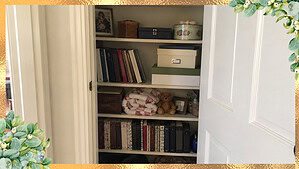
She meant it kindly. It was a joke. But it stuck with me longer than it should have, and that night I found myself standing in front of my hall closet, looking at all the things I'd saved over the years, and quietly wondering.

Am I?

Is this too much?

Have I crossed some line I can't even see?

Maybe someone has said something like that to you too. Or maybe you've wondered it on your own, standing in a spare room or looking at a stack of boxes you can't quite part with.

So let me say this clearly, right at the start.

Keeping things you love doesn't make you a hoarder. Feeling a strong sentimental attachment to things is normal, and human, and usually nothing to worry about at all.

But there is a real line. It exists, and sometimes the keeping does tip over into something heavier.

Knowing where that line is doesn't hurt anyone. It just helps you take good care of yourself and your home.

So let's talk about it honestly, and gently. No shame, no scary labels. Just an honest look at where saving the things you love ends, and where something more than sentiment might begin.

A quick note before we go further. I'm not a doctor or therapist, and this post isn't meant to diagnose anyone. What I'm sharing here is based on my own experience and what I've noticed in my own home. If you're dealing with something that feels bigger than clutter, please don't hesitate to reach out to a professional. There's no shame in that.

There's Nothing Wrong With Keeping What You Love

A few cherished keepsakes on a wooden table, an old birthday card, a pair of baby shoes, and a small inherited floral dish, in soft daylight

Let me put your mind at ease before we go any further.

If you keep things because they mean something to you, that is not a disorder. It's love.

We save things for good reasons. A birthday card from someone who's gone now. Your child's first pair of shoes. A dish that belonged to your mother. These things carry memories, and holding onto them is one of the ways we hold onto the people and moments we love.

That's not a flaw. That's being human.

Almost everyone does it. The vast majority of women who keep a box of keepsakes, or a closet with more than they strictly need, are not hoarders. Not even close. They're just people with full lives and long memories, and things that came along the way.

There's a big, wide space between a tidy home with a few treasured keepsakes and a true hoarding problem. Most of us live somewhere comfortably in that space, and we always will. Sometimes we hold on tightest to the things that belonged to the people we've lost, because keeping their things can feel like keeping them, and that's one of the most human things there is.

So if a family member teased you, or you saw a show on television and felt a little jolt of worry, take a breath. Keeping what you love is normal.

Sentiment is not the same as sickness.

The reason I want to say all this first is simple. You can't look at your own home honestly if you're scared of what you'll find. Shame makes us slam the closet door and refuse to look at all.

Read related post:   A Simplified Guide In Building A Capsule Wardrobe For Women Over 40: Getting Older But Not Out Of Style

So let's set the fear down. Nothing we talk about here means anything is wrong with you. It just means you're willing to take an honest, kind look. And that's a good thing, not a scary one.

So How Do You Know When It's Too Much?

A bedroom doorway looking into a room starting to fill up with boxes and bags along one wall, still walkable but getting crowded

Here's the question that matters, then.

If keeping things is normal, how do you know when it's become a problem?

For a long time, I thought the answer was about how much you own. That a hoarder was simply someone with a lot of stuff. But that's not it at all.

Plenty of people own a great deal and are perfectly fine. Plenty of others own far less and are truly struggling.

The amount is not the line.

The line is about how the keeping makes you feel, and what it does to your daily life. It comes down to three things, really.

The first is distress. Does the thought of letting anything go fill you with real anxiety, not just a little reluctance, but genuine dread?

The second is function. Has the stuff taken over rooms to the point where you can't use them the way they're meant to be used?

And the third is whether it keeps growing, faster than you could ever sort through, no matter how much you mean to.

Those three things, distress, function, and whether it's taking over, tell you far more than any count of boxes ever could. If you want to understand the deeper pulls underneath all this, these are some of the real reasons we can't let go of clutter in the first place.

So let's look at the real signs, honestly and gently. As you read them, don't panic if one or two sound a little familiar. Almost everyone will nod at something here. Pay attention instead to how many ring true, and how strongly.

That's where the real answer is.

The Real Signs It's More Than Sentiment

So here are the honest signs. Read them gently.

Remember, one or two sounding familiar is normal. It's the number of them, and how strongly they ring true, that tells the real story.

The Stuff Is Taking Over Rooms You Need to Live In

This is the clearest sign of all.

Look at the rooms in your home. Can you use them for what they're meant for?

Can you sleep in every bed, sit at your dining table, park in your garage, cook on your kitchen counters? Or have those spaces slowly filled up with things until they can't be used the way they were meant to be?

There's a real difference between a full closet and a spare room you can't walk into anymore. A closet with too many keepsakes is common. A bed you can't sleep in because it's covered in stuff, a tub you can't use, a kitchen you can't cook in, that's the stuff getting in the way of your actual life.

When your things start crowding out the basic function of your home, that's one of the strongest signs it's gone past sentiment. This is often how hoarding quietly takes hold after 60, a little at a time, until a whole room is gone.

Letting Go of Anything Causes Real Distress

A single small worn keepsake resting in the center of an empty wooden table, with a donation box just visible at the edge of the frame

Here's a big one, and it's about feeling, not counting.

When you think about letting something go, what happens inside you?

For most of us, parting with a keepsake brings a small pang, maybe a little reluctance, and then it passes. That's normal. But for someone whose keeping has become a struggle, the thought of letting go of almost anything brings real distress. Genuine anxiety. A tight, panicky feeling that makes it feel impossible.

Not just “I'd rather keep this.” More like “I cannot let this go, and the thought of it upsets me deeply.”

If getting rid of even small, ordinary things fills you with dread, that's worth paying attention to. That level of distress is one of the truest signs that the attachment has become something heavier.

It's a feeling I understand, because letting go of the things we love is never simple, but there's a difference between hard and truly unbearable.

Read related post:   How To Clean With White Distilled Alcohol (From Stains To Shine)

It's Getting in the Way of Everyday Life

A kitchen counter so covered with stacked mail, containers, and odds and ends that there is no clear space left to prepare food

Sentiment shouldn't cost you your daily comfort. When it does, that's a sign.

Think about whether the stuff is causing real problems in your life.

Are you embarrassed to have anyone over, so you've stopped inviting people? Is it hard to clean, or even to find things you need? Are you spending money to store things you never use? Has it caused tension with your husband or your family?

When the keeping starts creating actual problems, with your relationships, your finances, your health, or your ability to have people in your home, it's no longer just harmless sentiment. It's costing you something real.

That cost is the signal. Comfort objects are supposed to add to your life, not quietly take pieces of it away.

The Keeping Is Bringing Shame, Not Comfort

A partly closed bedroom door opened just enough to reveal a crowded, cluttered room behind it that someone would rather keep hidden

This one is quieter, but it matters just as much.

Sentimental things are supposed to make you feel good. They bring warmth, a smile, a happy memory.

So ask yourself how your things actually make you feel now. When you look around, do you feel comforted, or do you feel a heavy, sinking shame? Do your keepsakes bring you joy, or do they bring a knot of anxiety and embarrassment you try not to look at?

When keeping starts to feel like a burden you're hiding instead of a comfort you enjoy, something has shifted.

That shift, from comfort to shame, is one of the most telling signs of all. The things we love shouldn't make us feel bad about ourselves. When they do, it's worth looking closer.

It Keeps Growing, and You Can't Seem to Stop It

A corner of a room where boxes and bags are stacked high and spreading outward, clearly growing over time with no room left

The last sign is about direction. Which way is it going?

A person with a healthy attachment to their things keeps a fairly steady amount. They bring a little in, they let a little go, and it balances out over time.

But when keeping has become a struggle, the stuff only grows. More comes in, almost nothing goes out, and the piles get bigger no matter how much you mean to deal with them. You might feel a strong pull to acquire more, to pick things up, to save what others would toss, even when there's no room left.

If your things are only ever multiplying, and the thought of slowing that down feels impossible, that's a sign the keeping has taken on a life of its own.

Meaning to sort it “someday” while it quietly grows every month is very different from being in control of what you keep.

What to Do If This Sounds Like You

One open drawer being gently sorted on a table, with a small keep pile and a small let-go pile and a warm mug of tea beside it

If you read those five signs and felt a quiet knot in your stomach, please take a breath. I want to talk to you for a moment, gently.

First, recognizing yourself in some of this is not a bad thing. It's a brave thing.

It means you're being honest with yourself, and honesty is the very first step toward feeling lighter. You haven't done anything wrong. Life piled up, feelings got attached to things, and here you are, willing to look. That takes real courage.

Second, please don't try to fix it all in a weekend. That never works, and it usually ends in tears and a bigger mess.

Start small. Pick one drawer, one shelf, one corner. Just one. Do that, and let it be enough for the day. Small steps are how big things actually change, and there's no prize for rushing.

Third, talk to someone you trust. A good friend, your daughter, your partner. Saying it out loud, “I think I've been holding on too tightly,” takes so much of the power out of the shame.

And if several of those signs rang true, and the keeping is truly affecting your daily life, your health, or your relationships, please consider reaching out to your doctor or a therapist. This kind of struggle is real and recognized, and there are people who help with exactly this, with kindness and no judgment. There is real, gentle help available for hoarding, and reaching for it is a sign of strength, never weakness.

Read related post:   Eucalyptus Oil For Cleaning (A Natural Sparkle In Your Home)

You don't have to carry this alone, and you don't have to figure it out all at once.

Knowing the Difference Is Its Own Kind of Care

Here's what I most want you to take from all of this.

For the vast majority of us, keeping the things we love is not an illness. It's love, plain and simple. It's the birthday cards and the baby shoes and your mother's good dish, and there is nothing in the world wrong with holding those close.

The line only matters because you deserve to feel good in your own home.

Knowing the difference between healthy sentiment and something heavier isn't about labeling yourself. It's about taking care of yourself. It's about making sure the things you keep are adding to your life, comforting you, holding your memories, and not quietly weighing you down or crowding you out.

So keep what you love. Truly. Keep the things that bring the people and moments back to you.

Just check in with yourself now and then, honestly and kindly, and make sure your things are still serving you. That check-in, that willingness to look, is one of the gentlest ways there is to care for yourself.

You deserve a home that holds your memories and still has room for you to live.

A small note. This post is based on my own experience and personal observations. I am not a doctor or therapist. If you're struggling with hoarding in a way that's affecting your daily life, your safety, or your relationships, please reach out to your doctor or a mental health professional. There is real help available, and asking for it is nothing to be ashamed of.

When You're Ready to Lighten the Load

If reading this stirred something in you, and you feel ready to gently make a little more room in your home, I have something that might help you take that first small step.

It's my free Declutter for Self Care Checklist. It's made for exactly this kind of careful, no-pressure start, the kind where you go one small space at a time and never have to face the whole house at once. It meets you where you are, with kindness, not a set of rules.

You don't have to change everything. You just have to begin, gently, with one small thing.

FAQ

Is saving sentimental items the same as hoarding?

No. Saving sentimental items is normal and healthy for most people. Keeping a box of keepsakes, cards, or family treasures is a loving, ordinary thing to do. It only crosses into hoarding when the keeping causes real distress, takes over rooms you need to live in, disrupts your daily life, and keeps growing without stopping. The difference is not how much you own. It's how it makes you feel and what it does to your everyday life.

When does keeping things become a problem?

It becomes a problem when your things start getting in the way of living. If clutter has taken over spaces so you can't use them, if letting anything go causes genuine anxiety, if it's straining your relationships or finances, or if it brings shame instead of comfort, those are signs it's more than simple sentiment. A helpful test is whether your belongings are adding to your life or quietly taking pieces of it away.

What's the difference between a collector and a hoarder?

A collector curates. They focus on a certain category, keep it organized, often display it, and can part with items when they choose to. A hoarder accumulates without a system, and the volume grows in a way that's hard to control. The clearest difference is distress. A collector enjoys their things, while a hoarder feels genuine anguish at the thought of letting anything go. Collecting is a hobby. Hoarding is a struggle.

Can you be very sentimental without being a hoarder?

Absolutely, and most sentimental people are not hoarders at all. You can love your keepsakes deeply, feel a strong pull toward meaningful objects, and still be perfectly healthy. The key is whether you stay in control of your space and your choices. If you can still use your rooms, let some things go when you need to, and feel comfort rather than shame, then you're simply a sentimental person, not someone with a hoarding problem.

How do I help a loved one who saves too much?

Lead with compassion, never shame. Pushing someone or throwing their things away behind their back tends to make the holding-on worse, not better. Instead, listen, be patient, and let them make their own choices at their own pace. Offer to help with small, low-pressure steps. If the situation is seriously affecting their health or safety, gently encourage them to speak with a doctor or a therapist who understands this struggle.

Follow us on PinterestFollow
Follow me elsewhere!

Leave a Comment