The Things We Keep When We’re Lonely

The house is quiet now in a way it never used to be.

For years it was full. Kids in and out, doors slamming, somebody always calling my name from another room. There was noise and mess and never enough hours in the day. I used to dream about a little peace and quiet.

Well, I got it.

Now the rooms stay just the way I leave them. The phone doesn't ring as much. Some days I catch myself realizing I haven't said a word out loud until the afternoon.

And somewhere in all that quiet, I noticed something about myself I didn't expect. I'd become someone who couldn't let anything go.

Not the good dishes we hardly ever used. Not the sweater I hadn't worn in years. Not the stack of books I'd already read and knew I'd never open again. I'd pick something up to donate it, hold it for a minute, and set it right back where it was.

I told myself I was just being practical. Waste not, want not (my mother's voice, still in my head after all these years). But that wasn't really it.

The real reason was closer to something I didn't want to say out loud. The emptier the house felt, the more my things felt like company. Letting go of them felt like letting go of one more piece of a fuller time.

It took me a while to understand that what I was dealing with wasn't really a clutter problem. It was the quiet tie between loneliness and clutter, and the way the two feed each other when we're not paying attention.

If any of this sounds a little like you, please keep reading. You're not a packrat, and you are not alone.

The Quiet That Comes After a Full Life
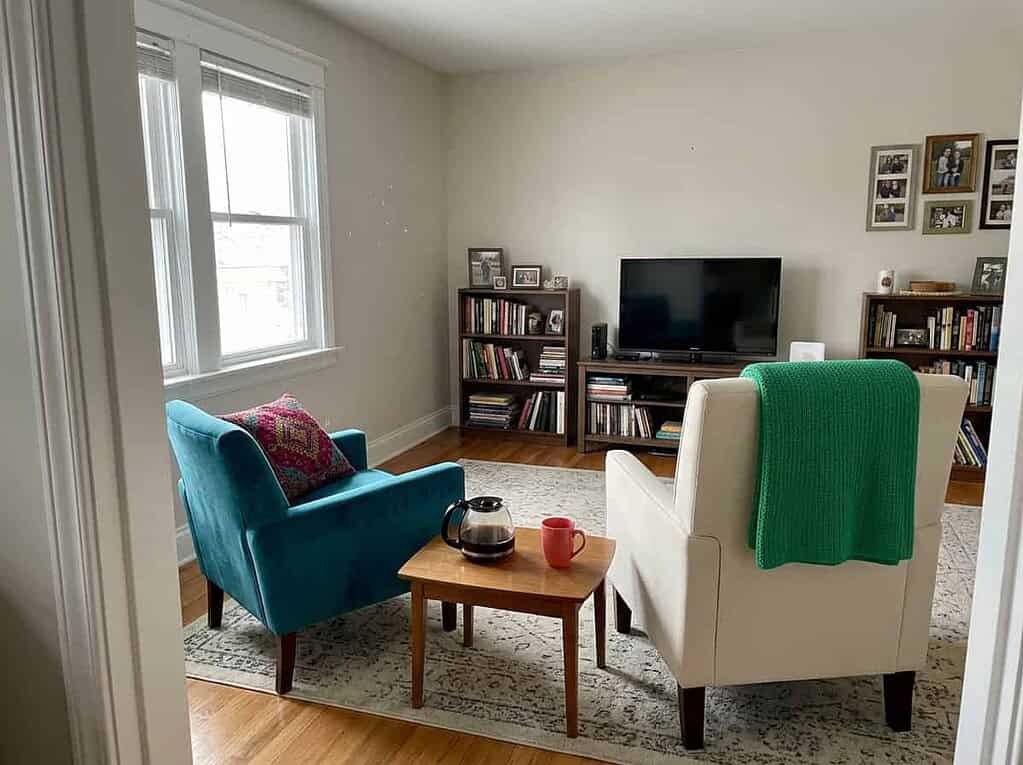
A quiet living room in afternoon light with empty chairs and a single coffee mug, the stillness that comes after a full life

For most of my life, quiet was something I longed for.

When you're raising a family, there's always someone who needs something. A meal, a ride, a permission slip signed at the last minute. The house was loud and busy and a little bit sticky most of the time. I loved it, even when it wore me out.

Then, the way it does for all of us, that season ended.

The kids grew up and built lives of their own. The daily rush slowed down and then mostly stopped. The house that used to feel too small started to feel too big.

I don't say any of this to sound sorry for myself. It's just the shape of a life. We raise people so they can go, and then we're left in the quiet they leave behind.

But nobody quite prepares you for that quiet. How loud it can be. How it settles into the empty chairs and the rooms nobody uses and the second half of a pot of coffee you now drink alone (I still make a full pot out of habit).

Read related post:   How To Clean With White Distilled Alcohol (From Stains To Shine)

The quiet wasn't all bad. Some of it was peaceful, the kind I used to wish for. But some of it ached. And I started reaching for small ways to fill it, without even knowing that's what I was doing.

A closet packed with colorful folded sweaters and stacked books, the belongings we hold on to more tightly when lonely

For a long time, I thought my trouble letting go was just a habit. Maybe a little stubbornness. Maybe growing up hearing that you never throw out something you might need someday.

But it turned out to be something deeper than that, and something a lot more common than I knew.

Researchers have actually studied this (yes, really). When people feel lonely, they tend to hold on to their belongings more tightly.

Not because they're careless or messy, but because those objects start to feel like part of who they are.

The lonelier we feel, the harder it becomes to let anything go.

When I read that, I felt something loosen in my chest. It wasn't a character flaw. It wasn't me being silly. It was a normal human response to an empty house.

That's the quiet link between loneliness and clutter. The feeling comes first. The holding on comes after. And most of us never connect the two, so we just feel bad about the piles and the full closets without ever asking what they're really standing in for.

Once I understood that, I could look at my things differently. I could finally see the emotional weight our belongings can carry, and start to gently set some of it down.

Understanding the why didn't fix it overnight. But it took away the shame. And shame, I've learned, is the thing that keeps us stuck the longest.

When Belongings Start to Feel Like Company

A cabinet of boldly patterned holiday dishes, the kind of sentimental belongings that start to feel like company

Once I saw it, I couldn't unsee it. I started noticing which things I clung to, and why.

There was the set of good dishes. We used them for holidays, back when the table was full. I hadn't taken them out in years. But every time I thought about passing them on, I saw the whole family around that table, and I put them right back in the cabinet.

There was the big armchair by the window that nobody sits in now. There were the shoes I hadn't worn in years, still lined up in the closet like I might need them any day.

There were even gifts I never really liked (we all have a few), but couldn't release, because someone I loved had picked them out for me.

None of it was about the objects, not really. Each one was a small thread back to a person, or a time, or a version of myself I missed. The dishes were holiday mornings. The chair was for evenings when the house was full. The clothes were a busier, younger me.

Holding them felt like holding company. Like as long as they stayed, the people and the years they stood for weren't all the way gone.

I think this is the part nobody talks about. We're not keeping clutter. We're keeping the pieces tied to someone we love, and the feelings that come with them.

Read related post:   DIY Decluttering And Organization Tips (Moving Made Easy!)

That's a tender thing to admit. But admitting it is where the healing starts.

What Holding On Was Really Costing Me

A crowded spare room full of boxes and stored belongings, showing how holding on can quietly turn into weight

What I finally had to be honest with myself about was this. All that holding on wasn't actually helping.

I thought keeping everything close would make the house feel less empty. Instead, it made it feel crowded and heavy at the same time, which is a strange thing to carry.

The full closets didn't give me company. They gave me more to clean, more to move around, more to trip over on my way to bed.

And every crowded surface was one more reminder of the busy years that were over. I'd go looking for a little comfort and find a little grief instead.

There was a practical cost too. The more I kept, the more overwhelming the whole house became. When every drawer is full and every corner has a pile, starting to sort any of it felt like too much, and so I didn't start at all.

I'd shut the door on the spare room and tell myself I'd deal with it another day. (That day had a way of never coming.)

The comfort I thought I was getting had slowly turned into weight. And I was tired of carrying it, on top of everything else.

That was the moment something shifted. Not because I suddenly wanted a bare, empty house. I didn't. But because I finally understood that a house stuffed full of the past wasn't the same as a life full of the present.

How I Started Loosening My Grip

An open donation box with a few items inside next to a half-cleared shelf, gently loosening the grip on belongings

I want to be clear about something. I didn't go on a big purge. I didn't rent a dumpster or empty the house in a weekend (bless the women who can). That was never going to be me, and it doesn't have to be you.

I started small and gentle, one shelf at a time.

The first thing that helped was giving myself permission to keep what truly mattered. I picked out a few things that held the most memory, the real treasures. Those, I kept, and I stopped feeling guilty about it.

For a lot of the rest, I found that a photo could hold the memory just as well as the object could. I took a picture of the holiday dishes before I passed most of them on. I still have the memory. I just don't have to dust it.

The sentimental things were the hardest, so I leaned on a gentle, practical way through the sentimental ones instead of forcing it. Some items I'm still not ready to release, and that's allowed too.

But the biggest change wasn't about the stuff at all.

I realized the empty house was never going to be fixed by keeping more things in it. Or by getting rid of them, for that matter. What the quiet was really asking for was people.

So I started small there too. I called a friend I'd been meaning to call. I said yes to coffee when I would have said I was busy. I looked for small, everyday moments of happiness that had nothing to do with what I owned.

The more real company I let in, the less I needed my things to stand in for it. And the looser my grip got, almost on its own.

The Company We're Really Looking For

Two colorful coffee mugs set together on a table with an open door letting in light, the real company we're looking for

If you're holding on to more than you need, I hope you'll be gentle with yourself about it.

Read related post:   How To Let Go Of Sentimental Items (Finding Freedom And Peace Of Mind)

You're not weak, and you're not a hoarder, and there's nothing wrong with you. You're someone who has loved a full life and misses it. Wanting to hold on to that is one of the most human things there is.

But those dishes, and those clothes, and that chair, they can't sit with you at the table. They can't call you on the phone or laugh at your jokes. They hold the memory of company. They aren't the company itself.

The quiet in your house isn't asking for more things. It's asking for connection. A visit. A voice. Someone who knows your stories.

You can keep the few treasures that truly matter. Let some of the rest go when you're ready, at your own slow pace. And then turn toward the people, because that's the part that actually fills the room.

The things we keep when we're lonely were only ever standing in for what we really want. And what we really want was never going to fit in a closet.

A Kinder Place to Begin

If reading this stirred something up, and you'd like a softer way to start clearing space, I made something that might sit right with you.

My free Declutter for Self Care Checklist was made for exactly this kind of letting go, the tender kind. It walks you through clearing space in a way that honors the memories instead of steamrolling them, and it's gentle enough for the days when your heart isn't quite in it. You set the pace, start to finish.

Frequently Asked Questions

Why is it so hard to let go of things when you live alone?

When a house gets quiet, our belongings often start to feel like company. They carry memories of the people and the busy years we miss, so letting them go can feel like losing a little more of that. It isn't about being messy or stubborn. It's a very normal response to missing a fuller time. Being gentle with yourself about it helps far more than being hard on yourself.

Yes. Research has found that people who feel lonely tend to hold on to their possessions more tightly, because they form a stronger attachment to them. The objects start to feel like an extension of who we are. Understanding that link can take away a lot of the shame, and shame is often what keeps us stuck the longest.

How do I declutter sentimental items without feeling guilty?

Start by keeping the few things that hold the most meaning, guilt-free. For the rest, a photo can often hold the memory just as well as the object can. Passing something to someone who will use it can feel good too, like the memory gets to carry on. Go slowly, and give yourself permission to keep anything you're not ready to release yet.

Does keeping clutter actually make loneliness worse?

It can. A full house doesn't truly fill the quiet. It often crowds it, and every extra pile can become one more reminder of what has changed. Many people find that clearing a little space, while turning toward real connection, eases the loneliness more than holding on ever did.

How do I start decluttering when the whole house feels overwhelming?

Pick one small spot, like a single shelf or drawer, and start only there. You don't have to tackle the whole house, and you certainly don't have to do it in a weekend. Small, gentle sessions add up over time, and each little bit of cleared space tends to make the next one feel easier.

Follow us on PinterestFollow
Follow me elsewhere!

Leave a Comment