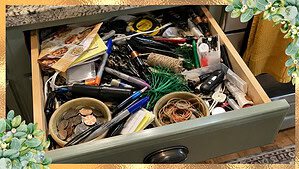
I was hunting for a stamp last week, and I knew exactly where to look. The drawer. You know the one.
Every kitchen has it. The drawer that holds everything and nothing all at once.
I gave it a tug, and it only opened halfway before something jammed it. So I wiggled it, shoved my hand in, and felt around blindly.
No stamp. But I did pull out a dead battery, a rubber band, and a key I have never once been able to identify.
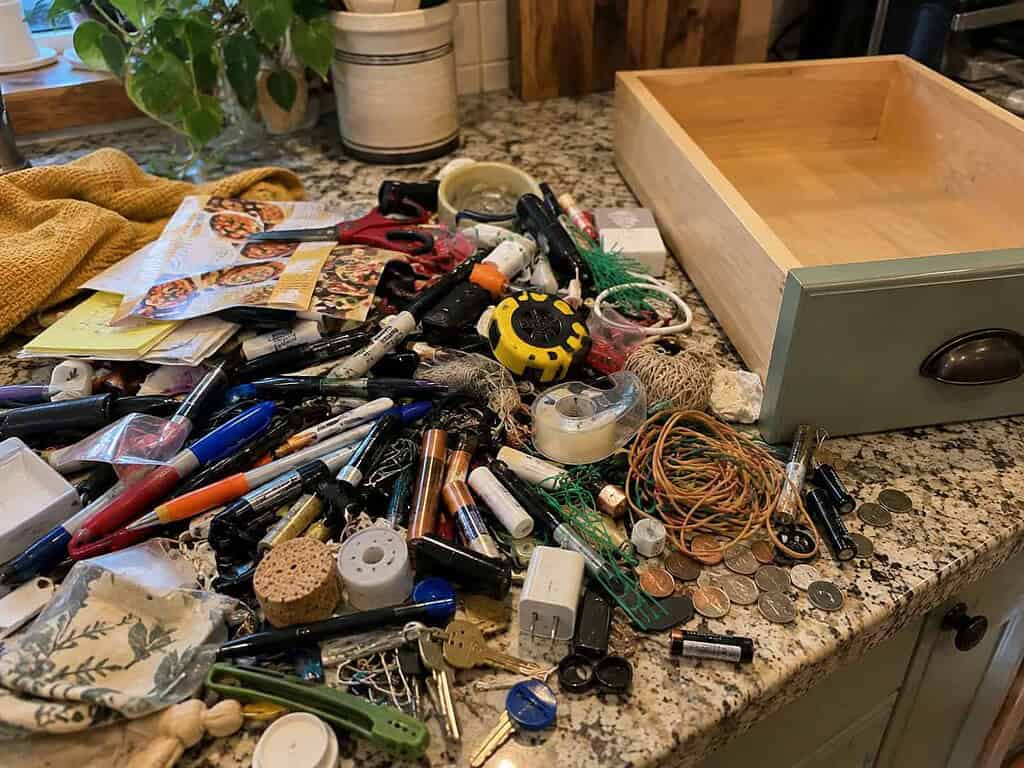
That was the moment I'd had enough. I planted my feet, gave the drawer a good yank, and dumped the whole thing out onto the counter.
What a pile it was. Twist ties. Old takeout menus. A tape measure. Nine pens, and I'd bet money only three of them still worked. A birthday candle. Loose change. And more of those mystery keys.
Twenty years of odds and ends, all crammed into one drawer that could barely close.
I stood there and laughed, because I knew I wasn't alone. If you have a kitchen, you have this drawer too.
The good news is that learning how to declutter a junk drawer is one of the fastest, most satisfying wins in the whole house. It took me twenty minutes. And I want to walk you through exactly how I did it.
The One Drawer We All Pretend Isn't There
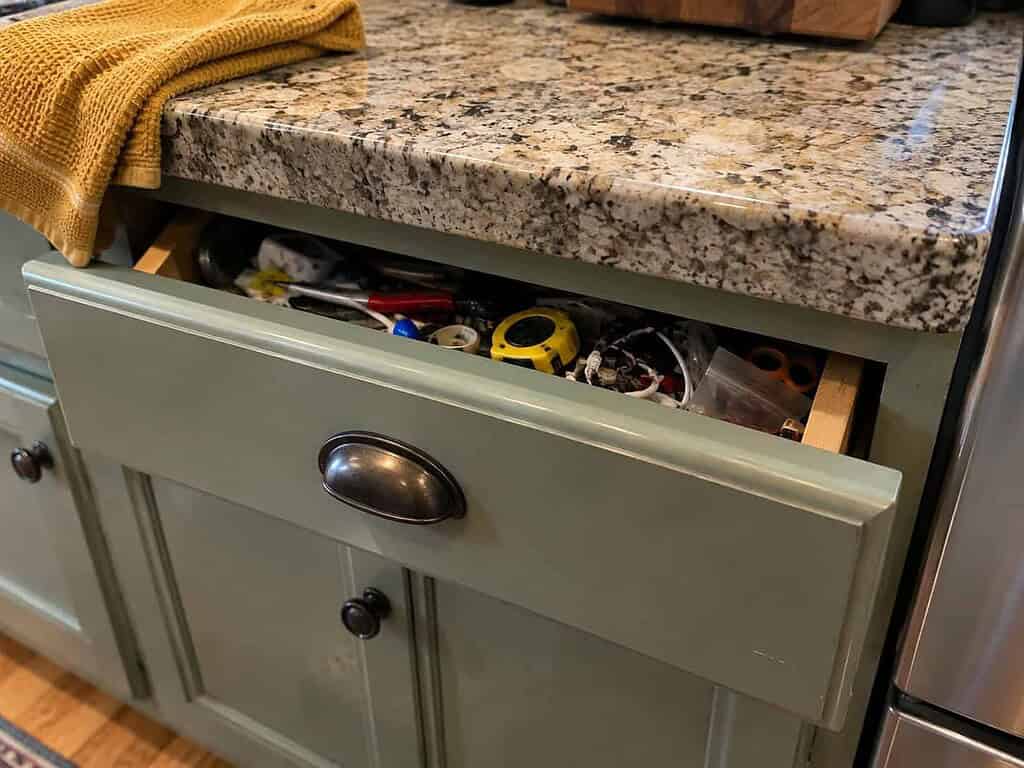
Here's the funny thing about the junk drawer. Everybody has one, but everybody thinks theirs is the worst.
We keep it a little bit secret. We'd never leave it hanging open when company comes. It's the one drawer we quietly hope nobody opens.
But there is nothing wrong with you for having it. It's not a sign you're messy or behind. It's just where the homeless little things end up.
Think about what goes in there. It's rarely trash, exactly. It's the spare key you might need. The battery you're not sure is dead. The manual for a coffee maker you still own. Little things that don't have a real home anywhere else, so they land in the drawer.
And a lot of them go in “for safekeeping.” You set something down there so you won't lose it, and then you never think about it again. (We've all done it.)
That's the real reason the drawer fills up. It's not junk you meant to keep. It's things you held onto just in case, one at a time, over years.
Once I understood that, clearing it out stopped feeling like a chore and started feeling kind of freeing. It was just a small pile of decisions I'd been putting off. And I could make them in one sitting.
How I Finally Emptied Mine
The whole thing took me about twenty minutes, start to finish. Here's exactly what I did, step by step.
I dumped the whole thing out on the counter
You can't sort a junk drawer while it's still in the drawer. Trust me, I've tried.
So the first thing I did was pull the drawer all the way out and turn it over onto the kitchen counter. Everything, all at once, in one big pile.
It looks worse for a minute. That's okay. You have to see it all to deal with it.
Then I did one small thing that felt good. I wiped out the empty drawer. There were crumbs and pen marks in there from who knows when. Starting with a clean, empty drawer made the whole job feel fresh.
I sorted it into little piles (and laughed at a few)
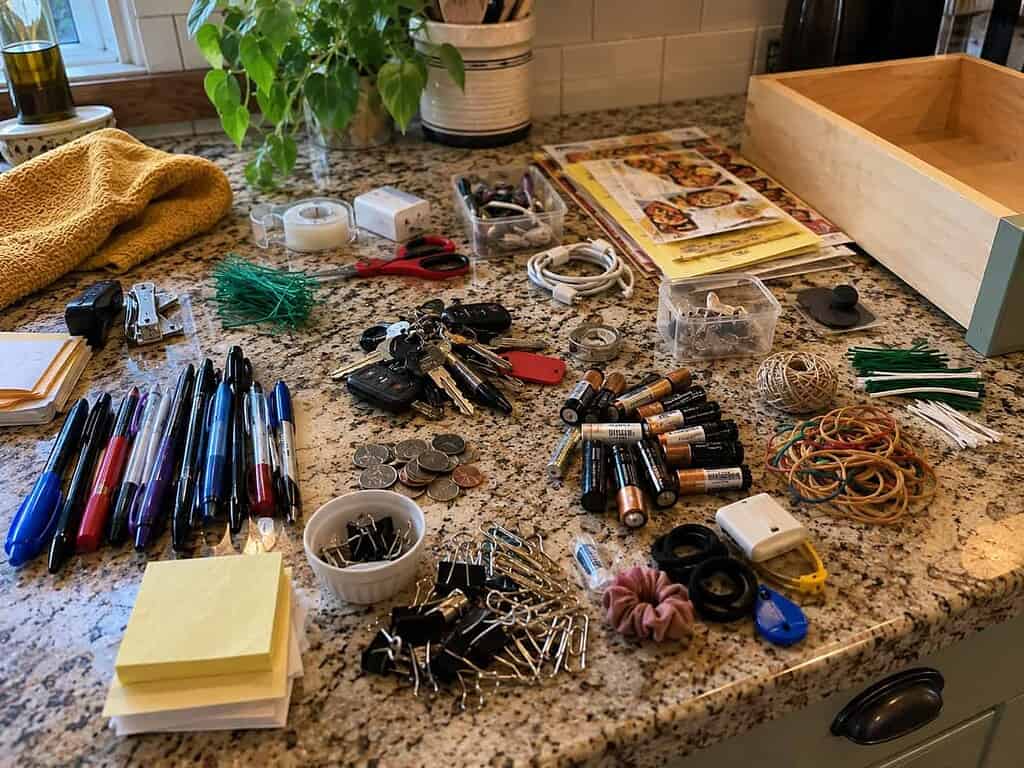
Next I grouped the pile into little clusters of like things. All the pens together. All the batteries. Rubber bands, twist ties, keys, tools, tape.
This part is where you really see it. When you put all nine pens in a row, or all the loose keys in a pile, you realize just how much of one thing you've been keeping.
I found a few things that stopped me for a second. A little plastic toy from a birthday party, from back when my kids were small. I'd forgotten it was even in there.
I set that one aside to keep. Not everything in the drawer is junk, and it's fine to hold onto the little things that tug at your heart. The trick is knowing which few are worth it, and letting the rest go.
I tested everything (this was the real eye-opener)
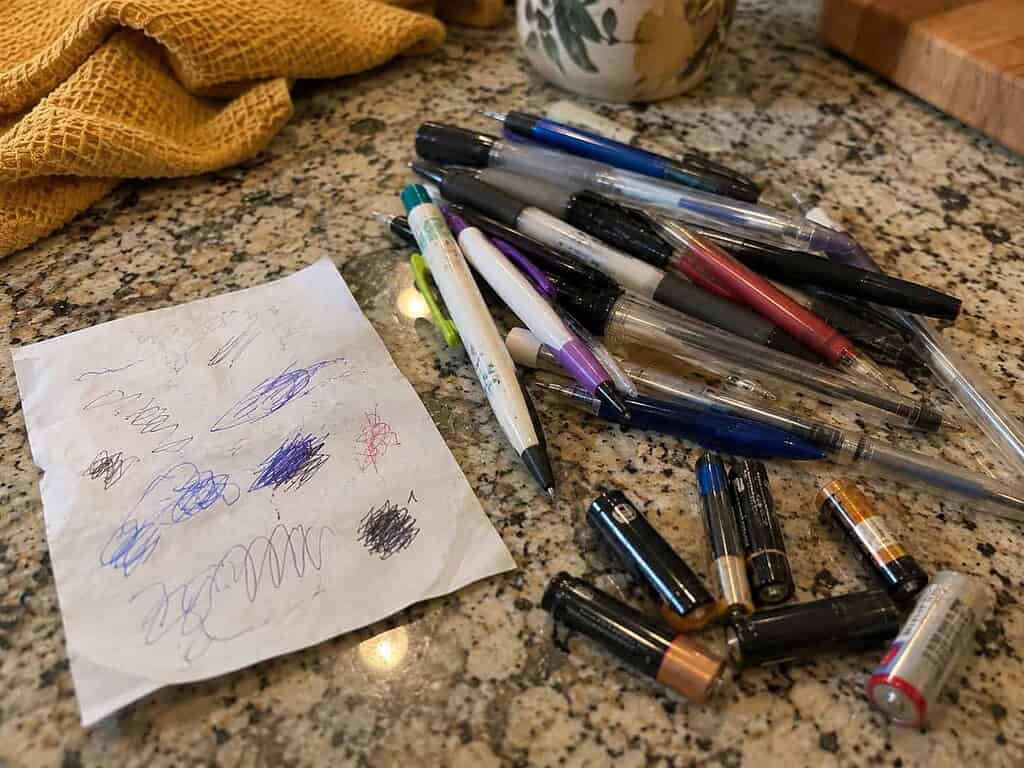
This is the step that clears out the most, and almost nobody does it.
I tested things instead of guessing. I clicked every single pen on a scrap of paper. More than half were dried out. Into the trash they went.
I did the same with the batteries (a little tester helps, but you can also just try them). Half were dead. The flashlight didn't work. The tape was down to the cardboard. Two of the keys, I finally admitted, don't open anything I own anymore.
It's amazing how much of a junk drawer is just broken or used up. You keep it because you never stop to check. Once I actually tested it all, a big chunk of the pile was easy to toss.
I sent things back where they actually belong
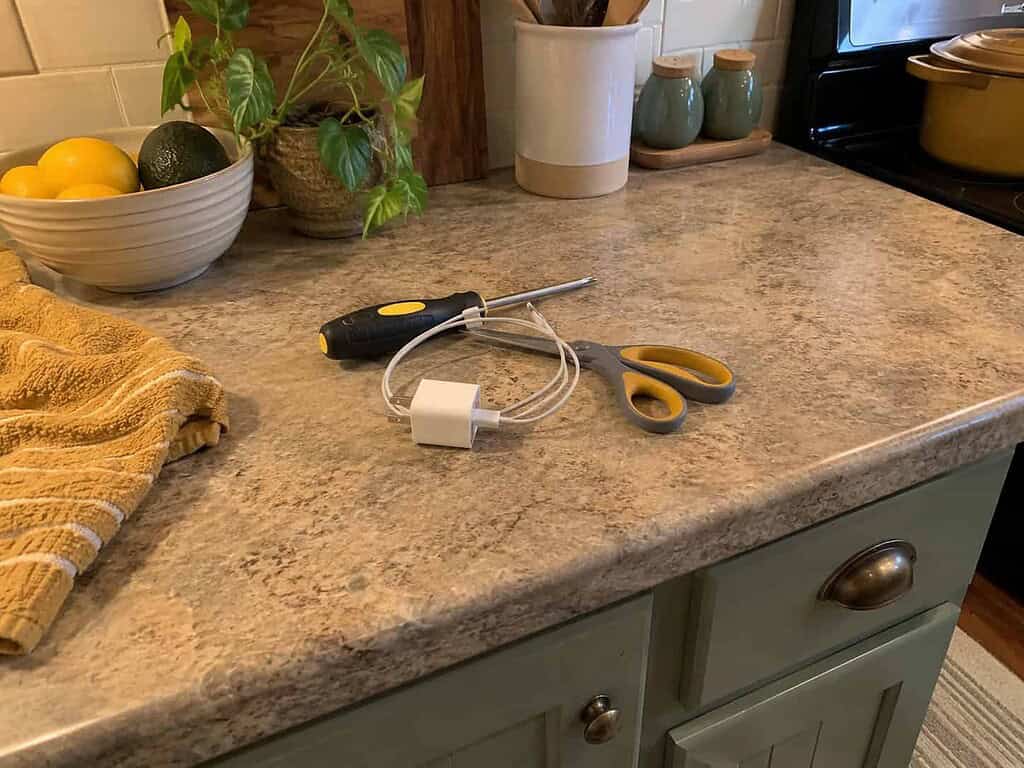
Now I was left with the things that still worked. But not all of them belonged in this drawer.
The screwdriver belonged with the tools. The extra phone charger belonged by the nightstand. The scissors had a real home in another drawer entirely.
So I made a small pile of “belongs somewhere else” and walked it around the house. A junk drawer fills up partly because it becomes the drop spot for things that already have a home. Sending them back is half the battle.
If your kitchen has a few of these catch-all spots, doing the same thing there helps too. It's the same idea I use when I declutter the whole kitchen. Everything gets a home, and goes back to it.
I kept only what earns a spot in the drawer
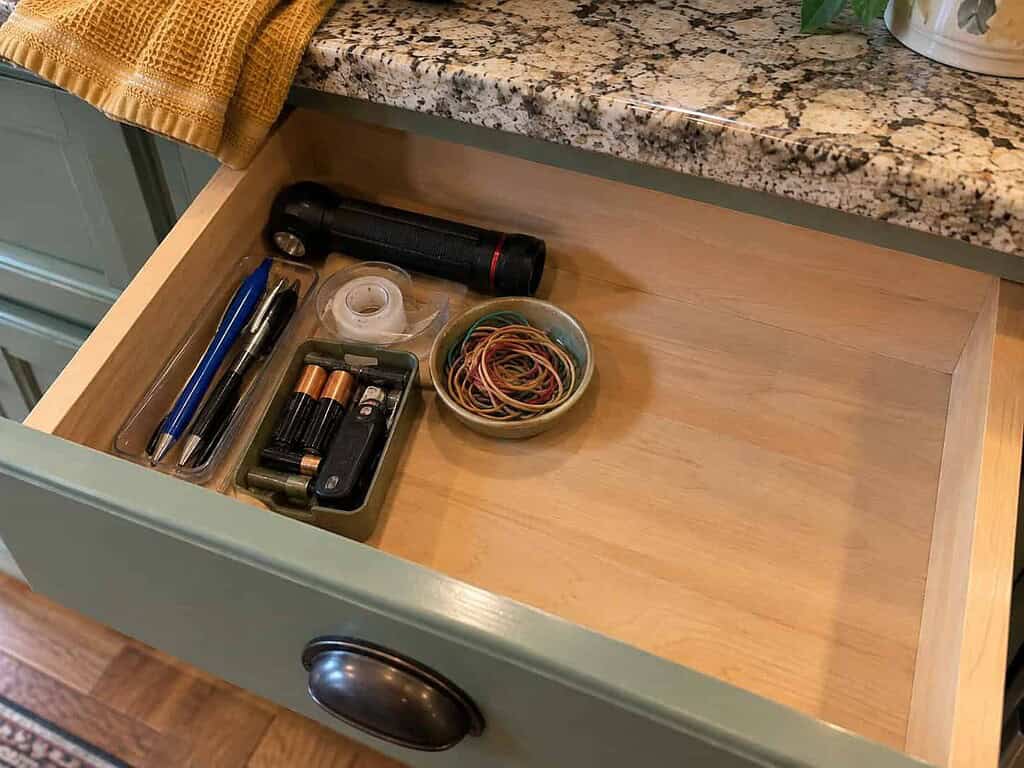
After all that, I was left with a small handful of things that truly earn a place in a kitchen junk drawer.
The good pens. A working flashlight. Fresh batteries. A roll of tape. A few rubber bands. The one key I actually use.
That's it. What had been an overflowing, jammed-up mess now fit easily, with room to spare.
I'll be honest, a kitchen junk drawer is allowed to exist. You don't have to get rid of it.
You just want it to hold a few useful things, not twenty years of maybes.
How I Keep It From Filling Back Up
Clearing the drawer was the easy part. Keeping it clear is the trick, because a junk drawer wants to fill right back up.
Two small things have helped me the most.
First, I added a few little dividers. Nothing fancy, just some small trays to keep the pens in one spot and the batteries in another. When everything has its own little zone, the drawer stops turning into one big jumble. And when things have a place, you're far more likely to put them back.
Second, I do a quick reset every so often. Not a big project. Just a couple of minutes every few weeks to toss what snuck in and doesn't belong.
This is exactly the kind of tiny job the five-minute decluttering habit was made for. You can do the whole drawer before your coffee is done.
The real secret is catching things as they come in.
When I'm tempted to toss a random doodad in there “for now,” I try to give it a real home instead, or let it go on the spot. A few simple habits like that keep the drawer from ever getting back to the state it was in.
It doesn't have to be perfect. It just has to not turn into that overstuffed mess again.
A Drawer That Opens Without a Fight
It's a small thing, a clean junk drawer. I know that.
But the next morning, I went to grab a pen, and the drawer slid open easily. I reached in, and there was the pen, right where it belonged, and it actually worked.
Such a little moment. And it made me smile.
That's the thing about these tiny wins. They don't change your whole life. But they take one small daily annoyance and quietly erase it. No more digging. No more wrestling with a stuck drawer. No more pens that don't write.
You really can do this one in the time it takes to watch part of your morning show. Just pull the drawer, dump it out, and start sorting.
Everybody has one. Yours can be the easy, working kind.
One Drawer Down, and It Feels Good

If emptying one little drawer felt this good, imagine what clearing a whole room could do. My free Declutter for Self Care Checklist carries that same easy feeling through your whole home, room by room, so you're never staring at a big mess wondering where to begin.
The junk drawer was your warm-up. Here's what comes next.
Frequently Asked Questions
Why does everyone have a junk drawer?
Because every home needs somewhere to put the small, useful things that don't fit anywhere else. Spare keys, batteries, tape, a flashlight. On their own, none of them has an obvious home, so they all end up together in one drawer. That's completely normal. The drawer only becomes a problem when it turns into a catch-all for things that are broken, used up, or belong somewhere else.
How do I clean out a junk drawer?
Start by dumping the whole drawer out onto a counter so you can see everything at once. Wipe out the empty drawer, then sort the pile into groups of like items. Test things as you go, since pens dry out and batteries die. Toss what's broken or used up, move things that belong elsewhere back to their real homes, and put only the useful few back in the drawer.
How long does it take to declutter a junk drawer?
About twenty minutes for most people. It's one of the fastest decluttering jobs in the house, which is part of what makes it so satisfying. If you're short on time, you can even do it in two quick rounds, sorting and tossing first, then putting things back and adding dividers later.
What should I keep in a junk drawer?
Keep a small set of genuinely useful, grab-it-fast items. A few pens that actually write, a working flashlight, fresh batteries, a roll of tape, some rubber bands, and the one or two keys you really use. The goal isn't to empty the drawer completely. It's to keep it to a handful of helpful things instead of years of odds and ends.
How do I keep my junk drawer from getting messy again?
Add a few small dividers or trays so each type of item has its own spot, which makes things easy to put back. Do a quick two-minute reset every few weeks to clear out anything that snuck in. And try to catch new clutter at the door, giving small items a real home instead of dropping them in the drawer “for now.”
Follow me elsewhere!

