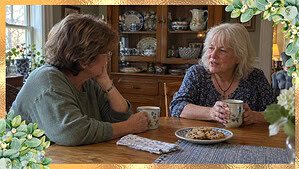
After church last spring, a friend and I sat in the fellowship hall with our coffee. We were talking about my blog, and about the posts I write on decluttering.
She was quiet for a minute. Then she said, “Every article I read says my kids won’t want my things. But I don’t have kids. So where does mine go?”
I didn’t have a good answer for her that day.
I thought about it the whole drive home. So much of what we hear about decluttering at our age is about children. Ask your kids. Your kids won’t want it. Don’t leave a mess for your kids.
But so many women I love don’t have children. And that advice leaves them out completely.
My friend deserved a real answer. So did every woman sitting where she was sitting.
There is nothing sad about this question. It just needs a different answer than the one most of us have been given.
So I’ll share what my friend and I talked through over the next few weeks. Where her things can go, who her people are, and one simple page that gave her real peace of mind.
The Question I’d Never Thought to Answer
My friend has one of the loveliest homes I know.
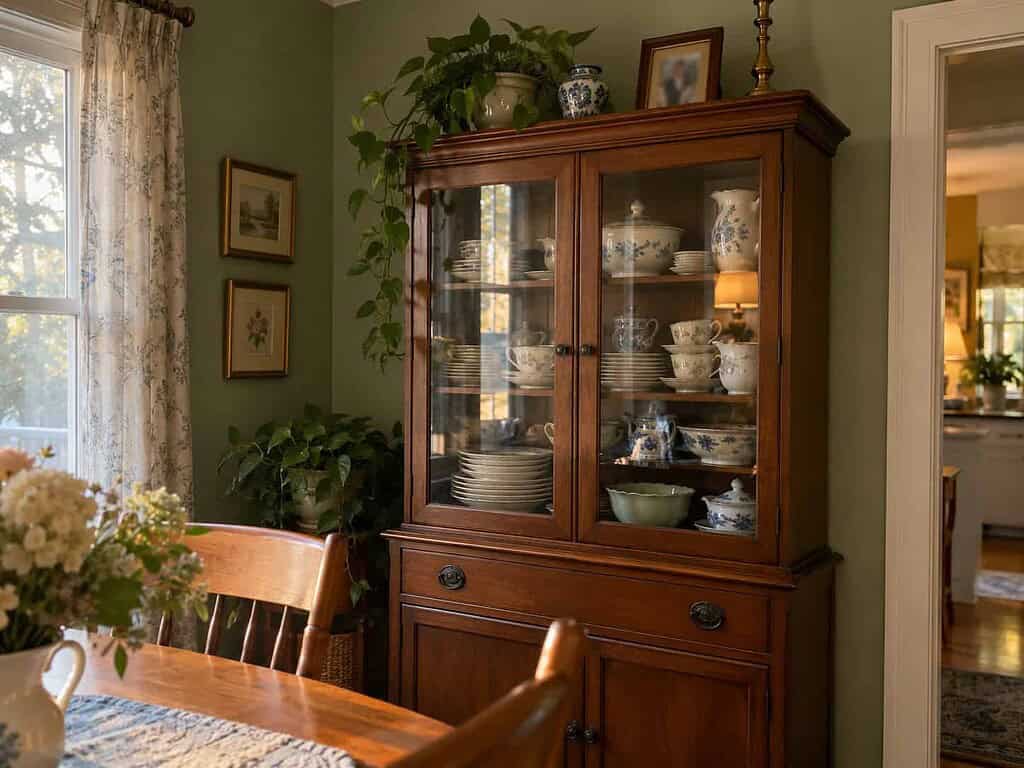
She has a china cabinet full of pretty dishes, and a quilt on the guest bed that her grandmother made. There are paintings she bought on trips, and a shelf of books she has read more than once.
She loves her things. She isn’t ready to give them up, and she shouldn’t have to be.
But she told me something that stayed with me. When she pictures the day she isn’t here, she has no picture at all of where her things go. Just strangers and a dumpster.
That worried her more than she’d ever said out loud.
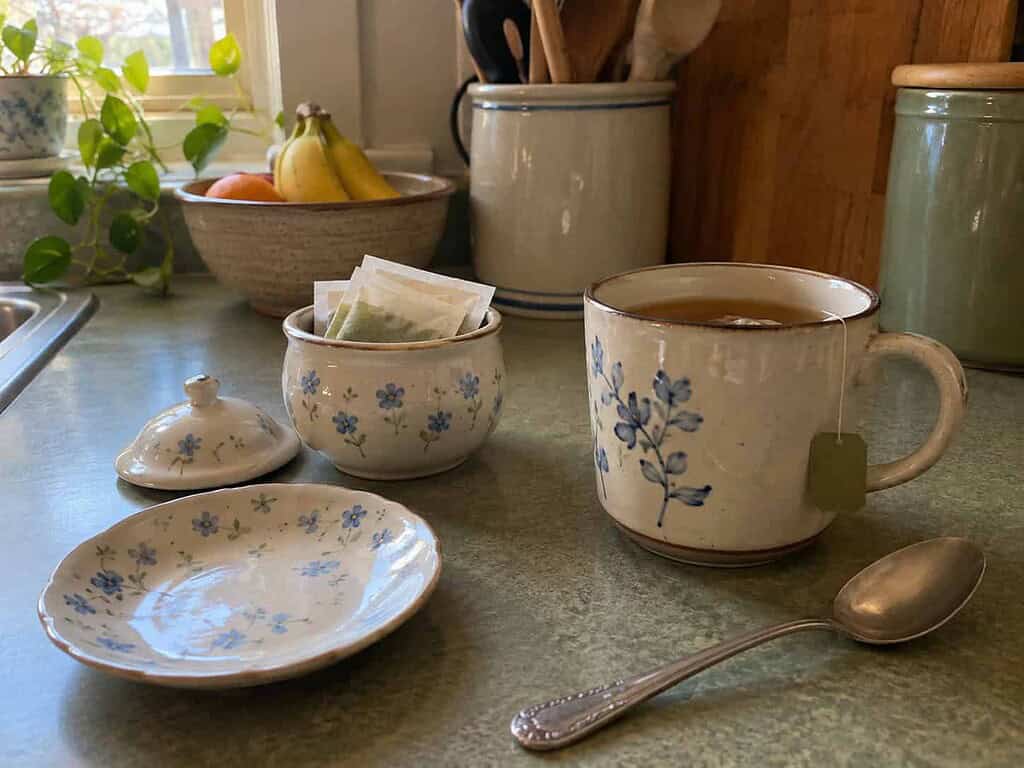
I thought about my own kitchen. On the counter, I keep a blue-flowered sugar bowl that holds my tea bags. It was my Aunt Ruth’s, and so were the everyday plates with little blue flowers that came to me after she passed.
I was her niece, not her child. But her things came to someone who loved her, and I think of her every single morning when I make my tea.
I told my friend about that sugar bowl. And I watched her face change a little.
Things don’t only go to our children. They go to the people who loved us. Our job is just to know who those people are, and to make it clear.
Why the Usual Decluttering Advice Doesn’t Quite Fit
Most of us were raised to think of our things as something we’d hand down to our children one day. It’s how our mothers did it, and their mothers before them.
I’ve written that way myself, many times. For a lot of women, it fits.
But if you don’t have children, that picture skips right over the real question. It doesn’t tell you who to ask. It doesn’t tell you where things should go.
So many women are in this place. Some never had children. Some live far from family (or have family they rarely see). Some have outlived the people they once pictured getting their things.
None of that makes the question harder. It just makes it different.
Instead of “Who in my family wants this?” the question becomes “Who are my people?” And most women have more people than they think.
Five Places Your Things Can Go
My friend and I made a list one afternoon at her kitchen table. These are the five places we came up with, and they work for almost anyone.
The Younger People Already in Your Life
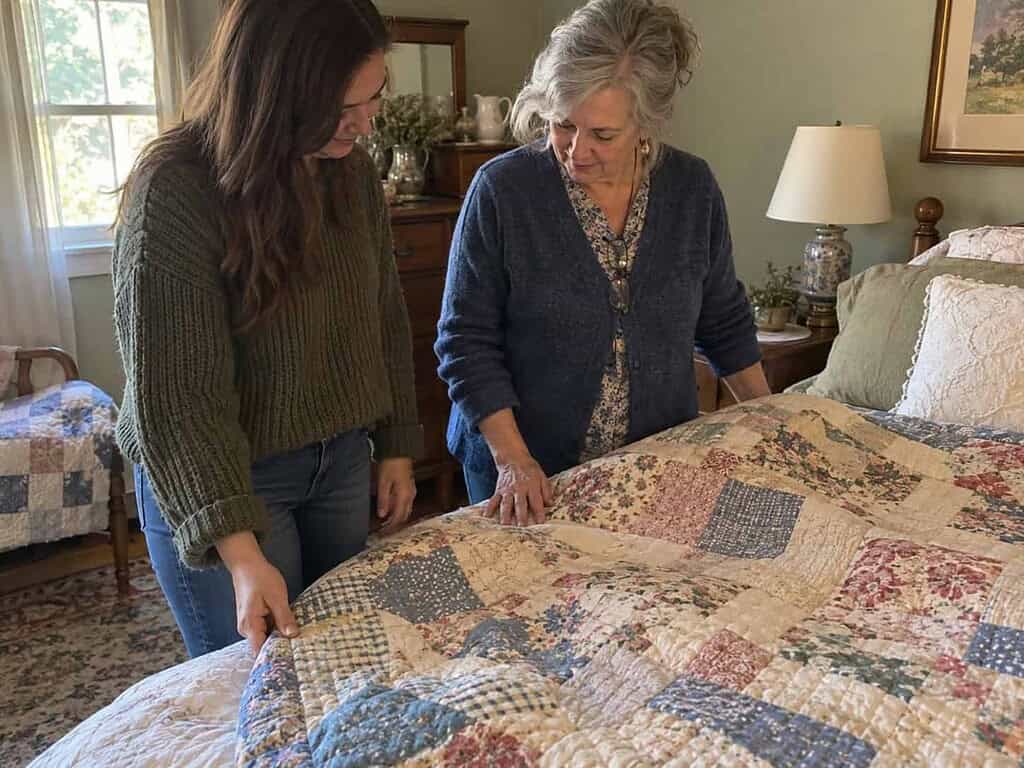
Start with the nieces and nephews. Think about godchildren, cousins’ kids, and the grown children of your close friends.
Young people often care more than we expect. My own niece teases me about my coffee mug cabinet every time she visits. But she also asks where each mug came from, and she remembers the stories.
My friend has two nieces and a nephew. She had never asked them what they might like, because she assumed they didn’t want anything. When she finally asked, her older niece said right away that she’d love the grandmother’s quilt.
You don’t have to promise anything yet. Just ask, “Is there anything in my home that means something to you?”
Your Friends, While You Can See Them Enjoy It
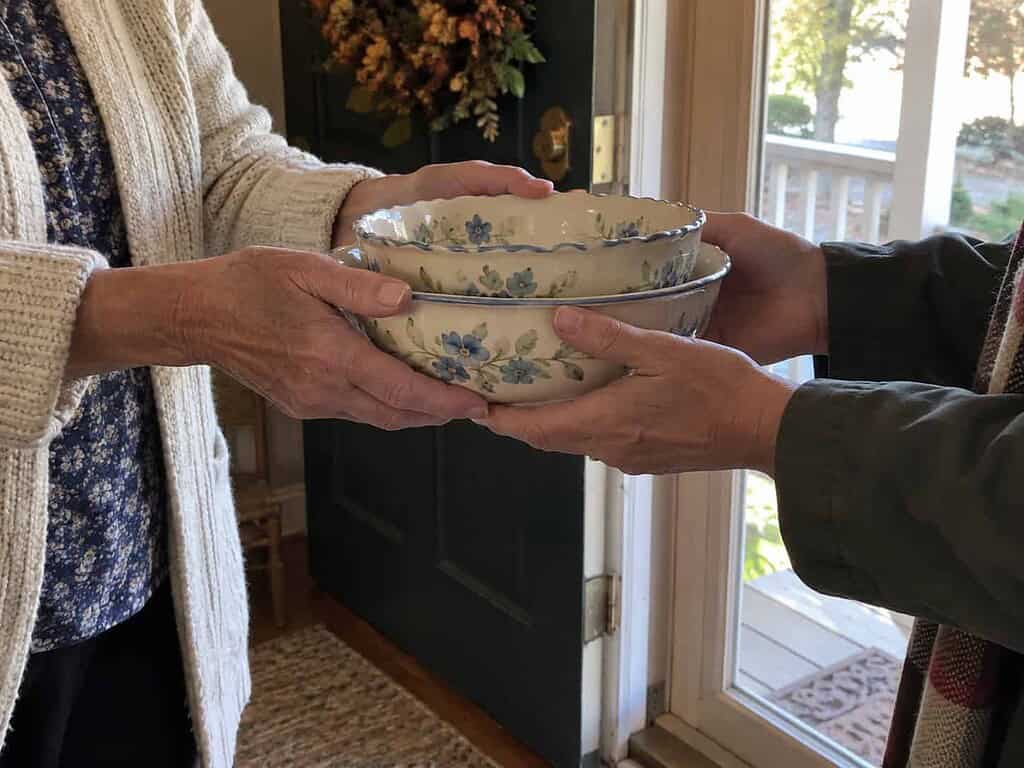
Some of the best gifts my friend gave were to her friends. And she gave them now, not someday.
She gave a set of pretty serving bowls to a friend who hosts Bible study every week. She gave a painting to a neighbor who had always admired it. Every time she visits, she sees them being used.
That’s the part people forget. When you give something away while you’re here, you get to see it bring someone joy (and hear “thank you” in person).
You can also let a friend pick one thing as a birthday gift. It means more than anything from a store.
Your Church and the Causes You Care About
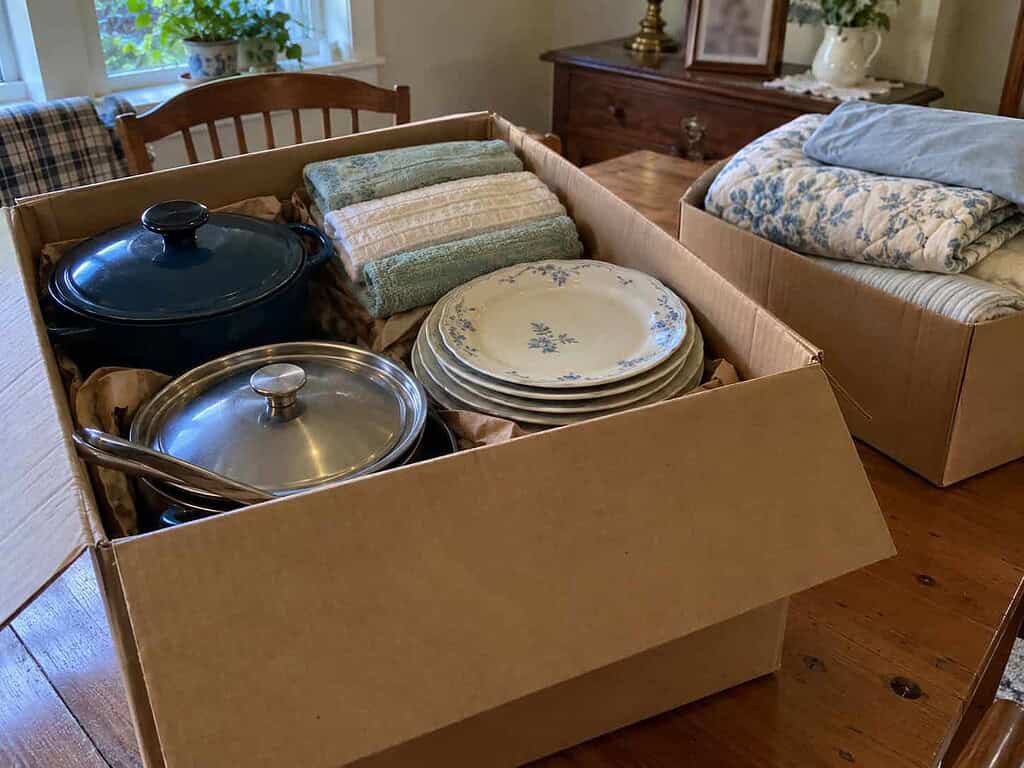
My friend loves our church, and she cares deeply about the women’s shelter in our town. So we called both and asked a simple question. “What do you need, and what can you actually use?”
The church kitchen needed good pots and serving dishes. The shelter needed towels, bedding, and kitchen things for women setting up a new home.
Asking first matters. Not every place can take everything, and it’s better to know now.
If you’re not sure where to start, I wrote about some meaningful places to send your belongings. It’s easier to let something go when you know it’s going somewhere good.
Someone You Trust to Carry Out Your Wishes
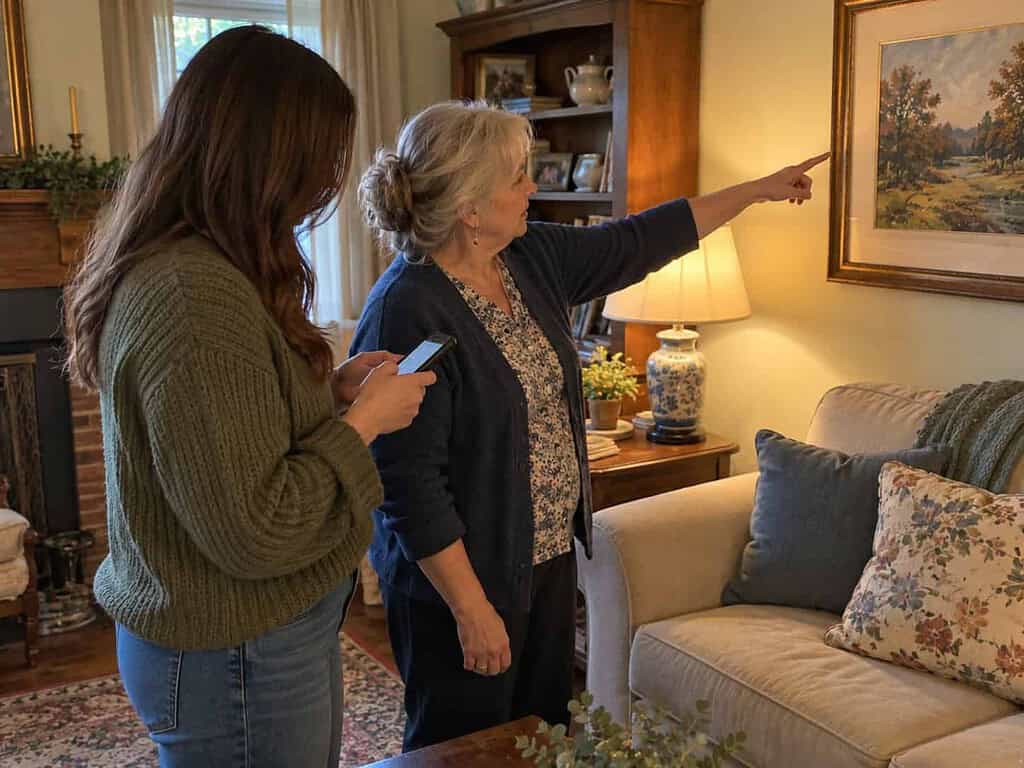
Every woman needs one trusted person. This could be a niece, a close friend, or someone from church. It’s the person who will know where things should go, and will make sure it happens.
My friend chose her older niece. They sat down together, and my friend walked her through the house. She pointed out the quilt, the china, and the paintings, and told the story behind each one.
Her niece took notes on her phone. My friend said it was one of the closest afternoons they’d ever had.
That’s how stories get passed on, just like the ornaments on our family tree. The story matters as much as the thing.
Your Own Home, for as Long as You Love It
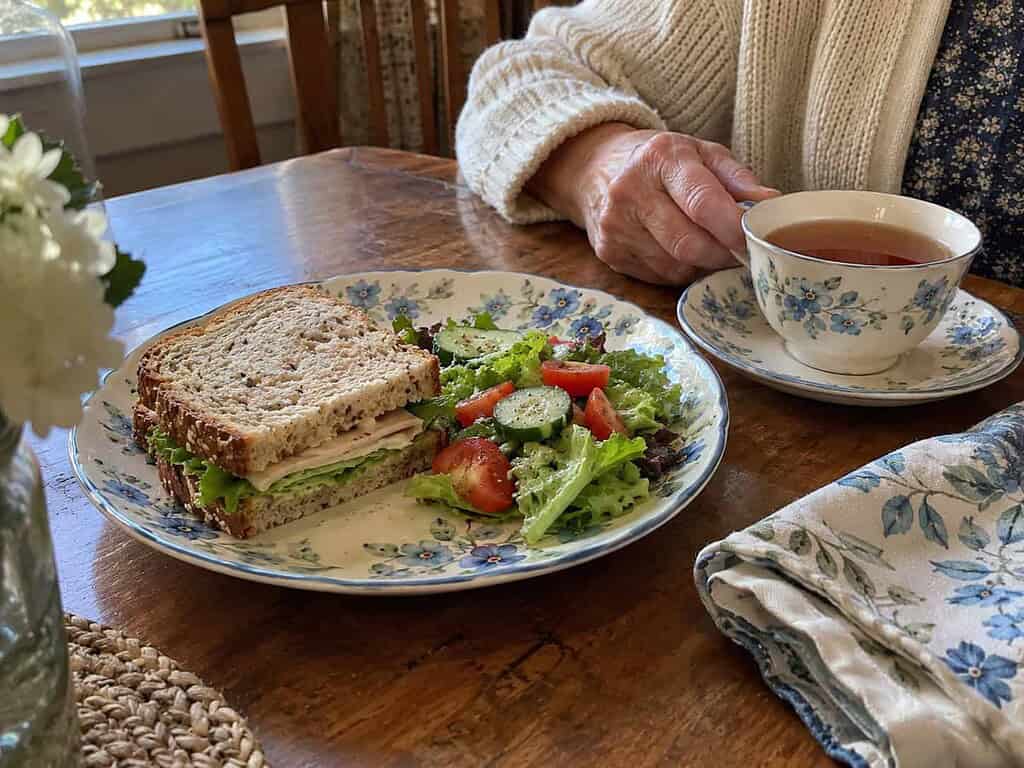
This last one is just as important as the other four.
You do not have to give everything away. If something makes you happy, keep it, use it, and enjoy it every day.
My friend still has her china cabinet full. The difference is that she now uses her pretty dishes for ordinary Tuesday lunches. She told me she stopped saving them for “someday” (and I was so glad to hear it).
If you’ve been saving things for a special day, I hope you’ll use the good stuff now. Your home is for you.
One Simple Page That Brings Peace of Mind
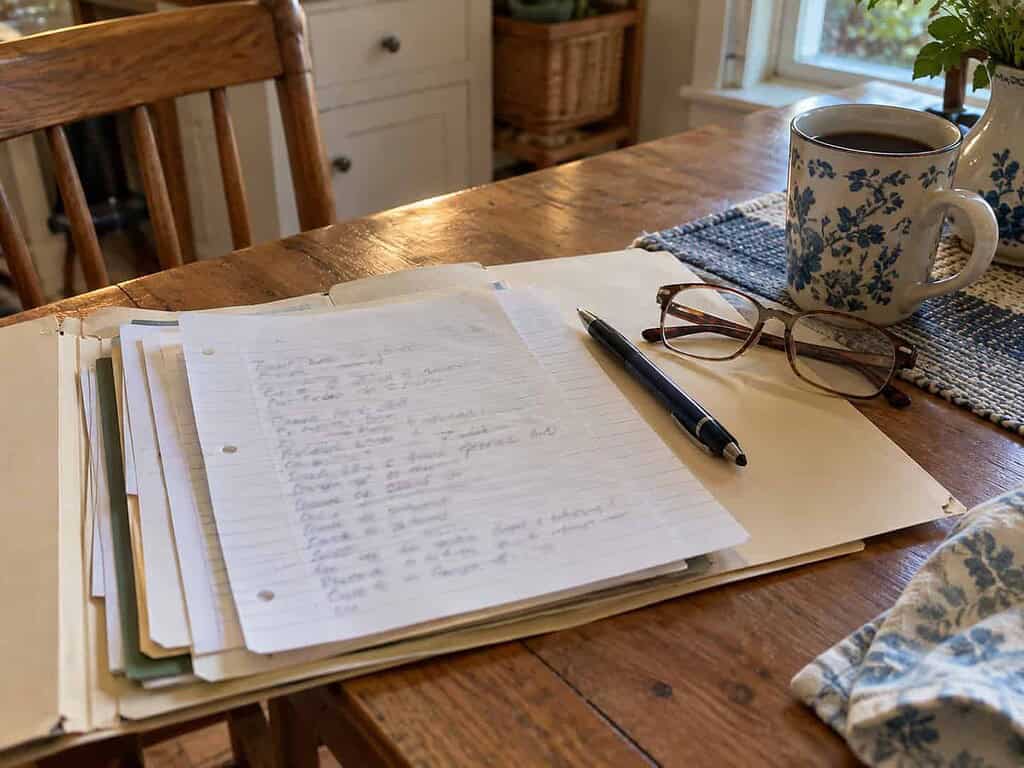
Once my friend knew where her favorite things should go, we wrote it down. Just one page.
At the top, she wrote her trusted person’s name and phone number. Below that, she listed her special things, one per line. Next to each one, she wrote who should get it.
The quilt went to her older niece. The china went to her younger niece. The paintings were split among three friends.
Everything else went to the church and the shelter. She didn’t list every spoon and towel. Just the things that matter.
Then she did three more things. She put the page in the folder with her important papers. She told her niece exactly where that folder is.
And she wrote the date at the bottom, so she’ll remember to look at it again each year.
There’s one more step that’s important. This page is not a legal paper on its own. If you don’t have a will, your state’s laws decide where your things go, and that may not be what you’d choose.
So please talk to a lawyer about a will. You can also ask whether your state lets you attach a list like this to your will. My friend did both, and she said it took a weight off her shoulders she hadn’t even noticed was there.
Family Isn’t Only Children
A few weeks after that coffee, my friend called me.
She said she’d been walking through her house that morning. She looked at the quilt, the china, and the paintings, and for the first time, she could picture exactly where each one would go.
“I feel lighter,” she told me. “And I didn’t even get rid of anything.”
That made me smile. Because that’s what this is really about.
If you don’t have children, your things can still go to people who love you. Nieces and nephews, friends, your church family, the young woman down the street who always admires your garden.
Family isn’t only children. It’s the people who sit with you at the table, remember your stories, and will think of you when they use your things.
I think of my Aunt Ruth every morning when I reach for a tea bag. Someone will think of you that way too.
I wrote once about whether keeping their things really keeps the people we lost, and I believe the memories live in people, not boxes.
So take your time. Choose your people, keep what you love, and write that one simple page. Then go enjoy your home.
Start With the Things You Love Most

Knowing where your favorite things will go is easier when the rest of your home feels calm. A little decluttering now can make the important decisions feel lighter.
My free Declutter for Self Care Checklist helps you choose where to begin and keep going at your own pace.
Frequently Asked Questions
Who gets my things if I have no children?
That depends on whether you have a will. If you have one, your things go where your will says. If you don’t, your state’s laws decide, usually starting with your closest living relatives. To make sure your things go to the people you choose, talk to a lawyer about a will.
How do I decide who to leave my things to?
Start by listing the people who matter to you. Think about nieces, nephews, godchildren, close friends, and your church family. Then ask them, “Is there anything in my home that means something to you?” Their answers may surprise you.
Should I give things away now or later?
You can do both. Giving some things away now lets you see them enjoyed and hear the stories they bring back. Keep the things you still love and use, and decide where they’ll go later. There’s no need to rush.
What if no one in my family wants my things?
Look beyond family. Friends, neighbors, your church, women’s shelters, and local charities can often use good household items. Call first and ask what they need. Knowing your things will help someone makes letting go easier.
Do I need a will if I don’t have children?
Yes, a will is a good idea for anyone, and especially if you don’t have children. Without one, your state’s laws decide who gets your things, and that may not be what you’d want. A lawyer can help you write one and explain your options.
Follow me elsewhere!

