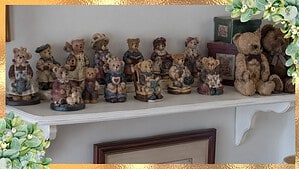
For more than twenty years, I dusted a shelf of Boyds Bears and told myself they would pay for something nice someday.
I bought them one or two at a time in the late 1990s, at a little gift shop I loved. I kept every box in the basement. I was sure that was the smart thing to do.
This fall, I finally looked up what they sell for. It was a lot less than I paid.
If you have a shelf like mine, I want to save you some guessing. These are the facts I found about Boyds Bears, Cherished Teddies and Tom Clark gnomes, and what I decided to do with ours.
Why So Many of Us Have These on a Shelf
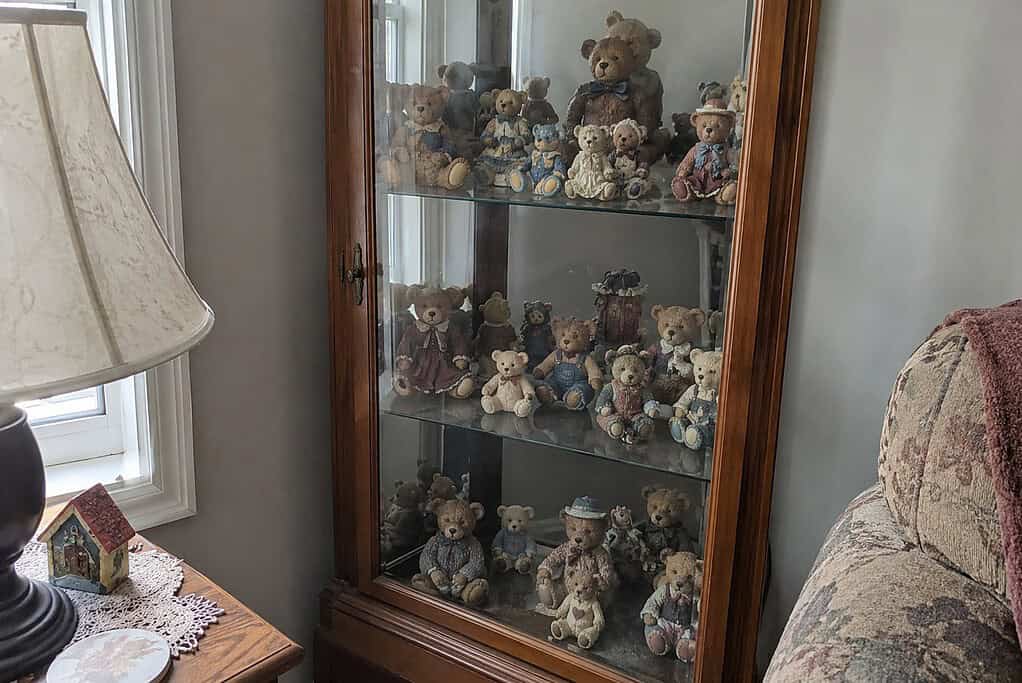
In the 1990s, these little figures were everywhere. Card shops, gift shops and craft stores had whole tables of them.
They made easy gifts. A teacher, a sister or a friend at church could get one for a birthday and know she’d smile.
Lots of us collected them on purpose, too. The companies had collector clubs, and each year some pieces were “retired,” which made us want to get them before they were gone.
But all three lines were made in very large numbers. Boyds alone had sales of about $211 million in 1999, according to its own yearly report. When that many pieces are made, there are lots of them to go around later.
Kovels, the long-running antiques price guide, has written that the women who collected figurines in those years are now downsizing. Younger buyers just aren’t looking for them in the same way. That means more pieces for sale and fewer people shopping for them.
None of this means your collection was a mistake. You enjoyed it, and that counts. It just helps to know the facts before you make a plan.
What Boyds Bears Are Worth Now
Boyds started in 1979 as a small antique business in Boyds, Maryland, run by Gary and Justina Lowenthal. Their first big teddy bear, a jointed wool bear named Matthew, came out in 1984.
The resin figures many of us have, called Bearstones, came out in 1993. In 1996, the company started a collectors’ club called the Loyal Order of Friends of Boyds.
Sales were highest in 1999 and then went down year after year. The company filed for bankruptcy in 2005 to reorganize. In 2008, the gift company Enesco took over the Boyds line, and it shut Boyds down at the end of 2014.
So what are they worth? Prices have been low for a long time. In 2012, a newspaper antiques column looked at eBay sales and found that most plush bears sold for about $4 to $60, and resin bears sold for about $3 to $26.
That same column said many, many bears didn’t sell at all. (That was the part that surprised me most.)
A few things can help a piece sell. A complete set sold together did better in that same look at eBay. A full Noah’s Ark set brought $150.
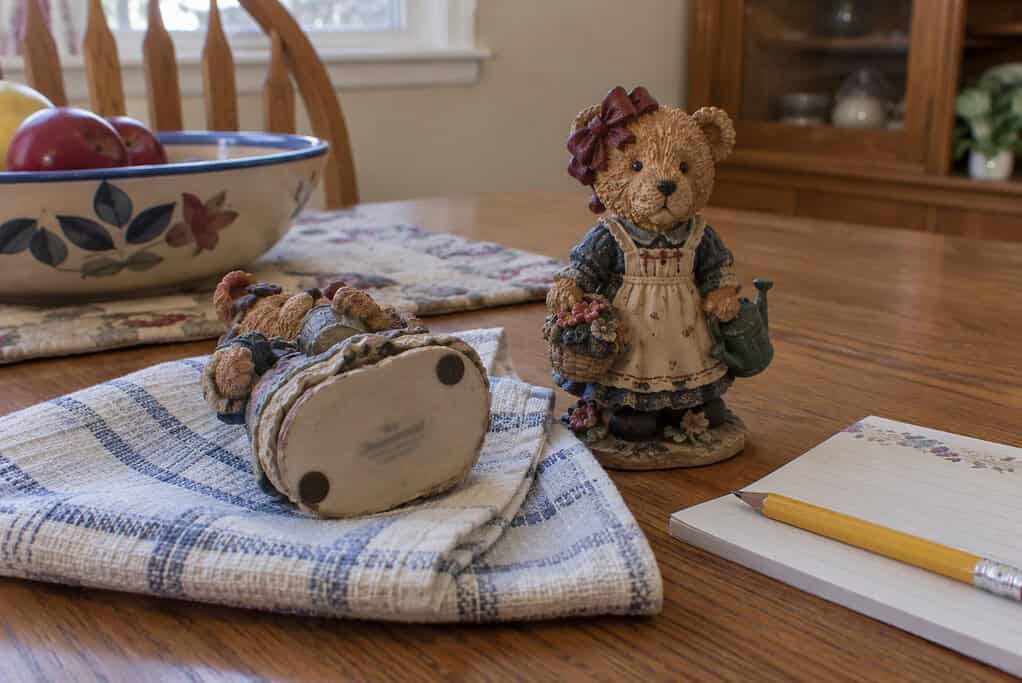
Turn your Bearstones over and look at the bottom. Each one is stamped with its name, its edition and its piece number. You’ll need those to look it up.
The box helps, too. Kovels says that for any limited edition, the original box and paperwork need to be there for it to have much value. (So my boxes in the basement weren’t a total waste after all.)
What Cherished Teddies Are Worth Now
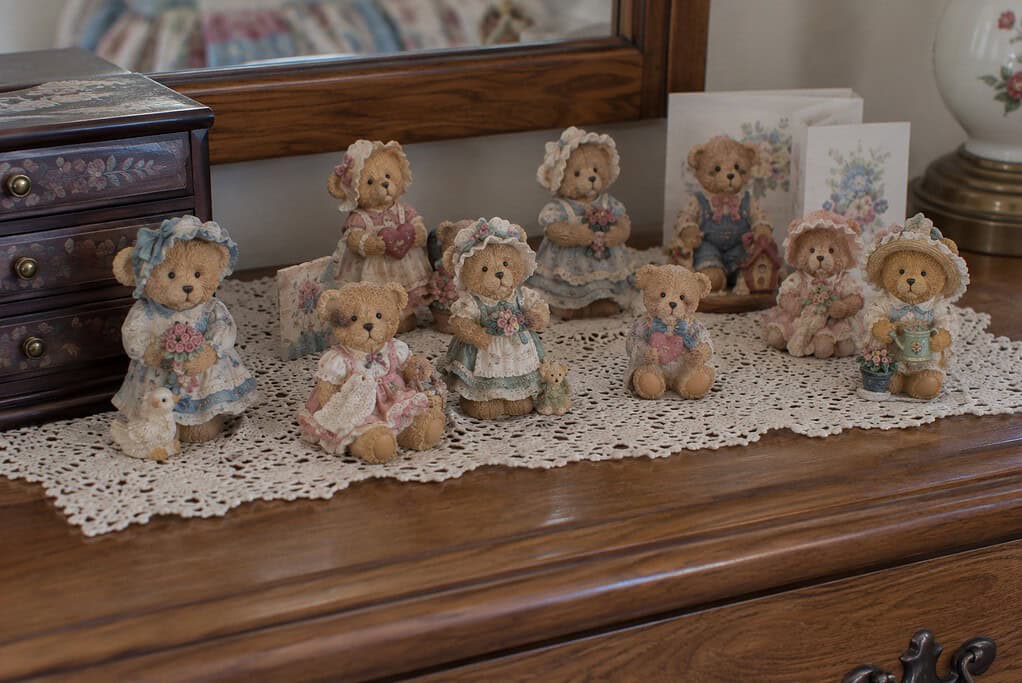
Cherished Teddies came out in 1992 from Enesco. The bears were drawn by an American artist named Priscilla Hillman, who started drawing them while she was getting better after an injury.
The first set had 16 bears. Each one came with a little “certificate of adoption.” A collectors’ club started a few years later.
Most Cherished Teddies sell for small amounts now. Replacements, a big company that sells china and collectibles, lists most regular figures for about $5 to $30 each.
Keep in mind that those are the prices a store asks when it sells to a buyer. If you sell yours, you’ll usually get less than that.
At Replacements, a figure with its box costs only about $2 more than the same one without a box. So with Cherished Teddies, the box helps a little, but not much.
Collectors look hardest for some of the very first bears, like Daisy, Chelsea, Priscilla Ann, Tasha and Alice. Club pieces can bring more, too.
One thing tripped me up. The year stamped on the bottom isn’t always the year the bear was made. It’s the copyright year, so a bear marked 1992 might have been made years later.
What Tom Clark Gnomes Are Worth Now
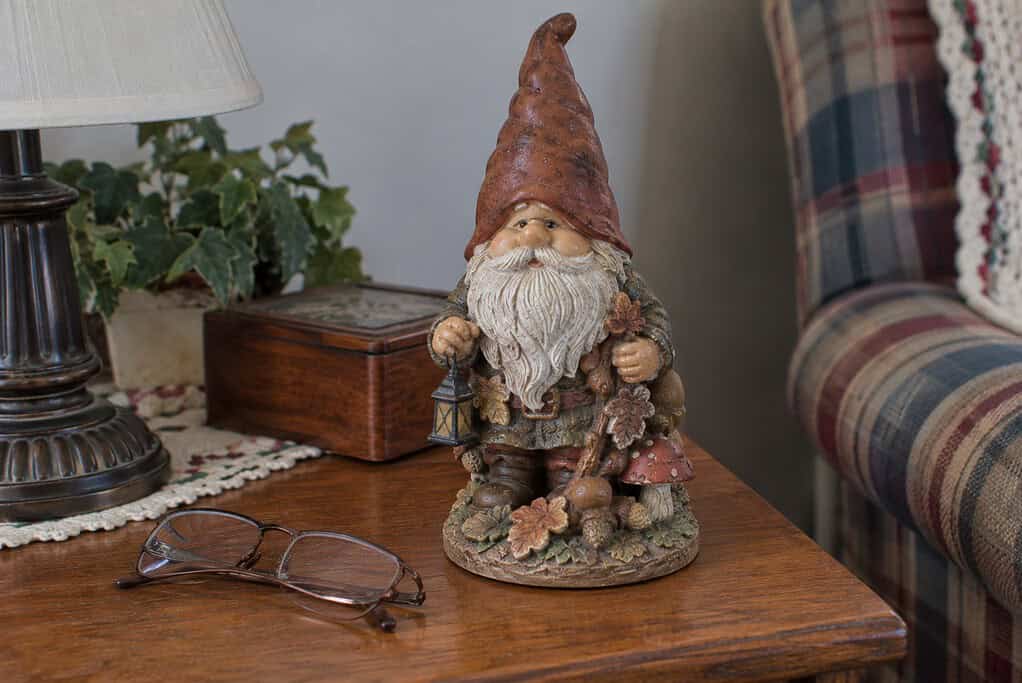
Tom Clark taught religion at Davidson College in North Carolina for 26 years. One day in 1978, while he waited for a student to come sit for a sculpture, he saw a picture of a gnome and started making one.
That first gnome led to more than a thousand different figures from Cairn Studio. According to WBTV news in Charlotte, they were sold in more than 5,000 stores across the country.
Each gnome was signed, numbered and dated. But each design was also made into thousands of copies, so most are easy to find today.
Tom Clark passed in January 2022, at 93.
Replacements lists most of his gnomes for about $14 to $70 each without a box. A few special ones are listed for more than $100. Again, those are asking prices, and a seller gets less.
Look on the bottom or the back of your gnome for its name and number. That’s how you’ll find the right match when you look it up.
How to Find Out What Yours Are Worth
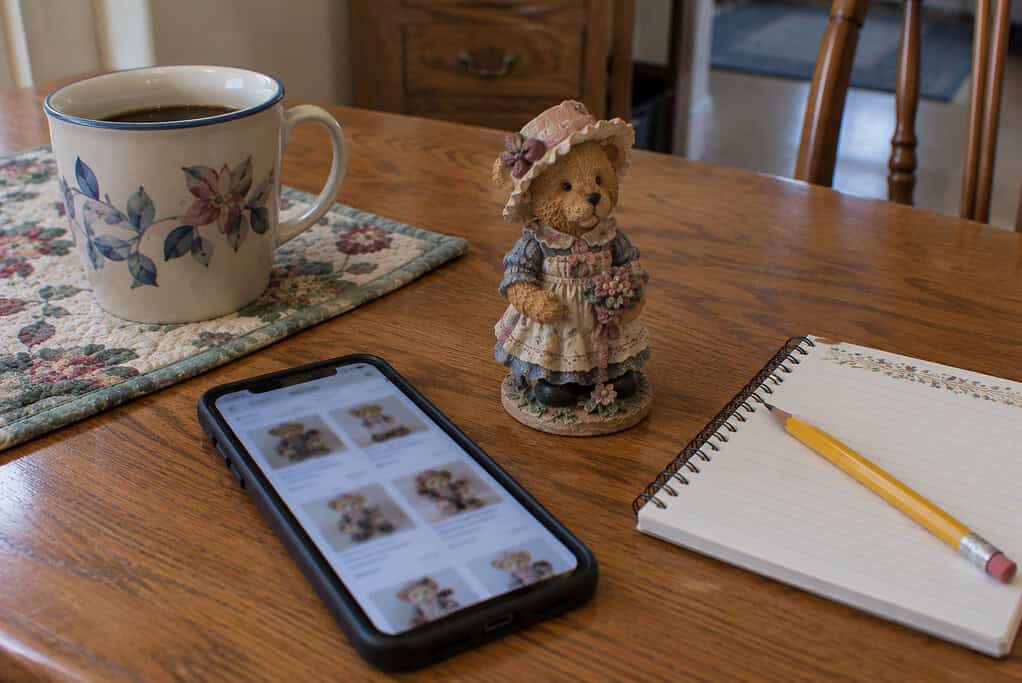
You don’t need an appraiser for most of these. You can find out a lot in one afternoon at the kitchen table.
Start by picking up one piece and writing down everything on the bottom. The name, the number and the year are what you’ll search for.
Then look at what pieces like yours have actually sold for. On eBay, you can search for the name and then choose “Sold Items.” That shows what real buyers paid, not what sellers are hoping for. You may need to sign in to eBay to see it.
My older granddaughter showed me how to do this on her phone. It took her about two minutes. (It took me about twenty to get the hang of it.)
Check the condition of your piece against the ones that sold. A chip, a crack, a stain or a faded spot will lower the price.
Last, think about selling them as one group. Most single figures sell for so little that it’s easier to sell a whole box at once.
I wrote more about how to tell what’s worth selling in my post on what’s worth selling when you declutter.
What I Did With My Shelf
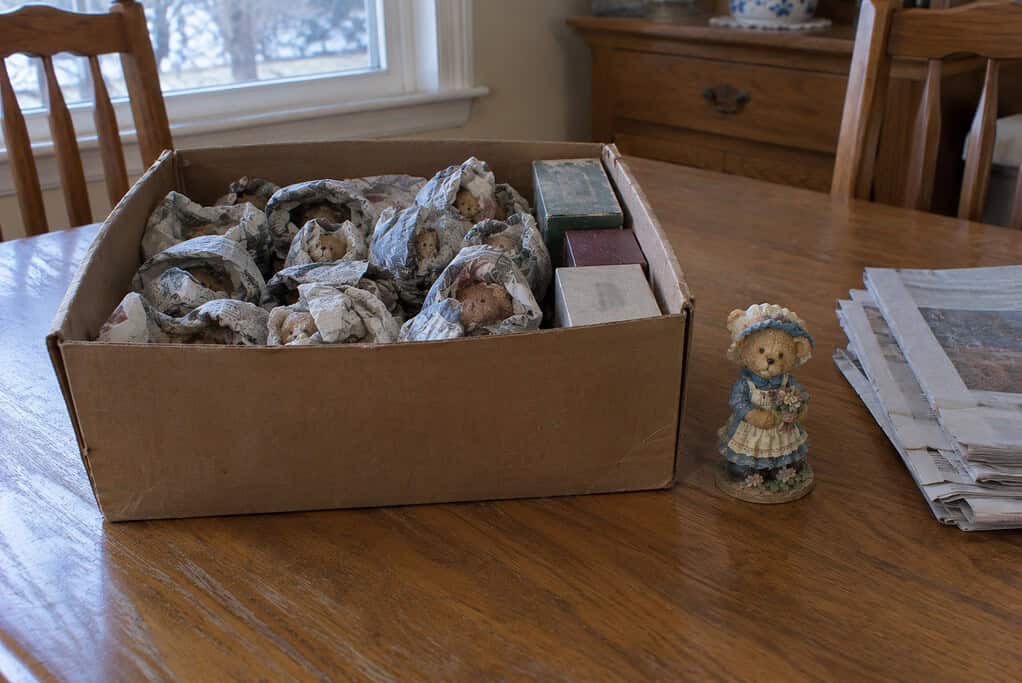
I had 19 Bearstones and four plush bears. I wrapped each figure in newspaper one afternoon, and it went faster than I thought.
I kept three. The bear holding a little watering can, the one reading a book and the one in a nightgown with a candle. Those were the first three I ever bought, and I still love them.
The other 16 sold as one box to a woman from an online Boyds collectors’ group. She paid $40 for all of them, boxes and all. She was so happy, and that made it easier.
The plush bears went to our church’s Christmas rummage sale. I kept the softest one for the grandkids to hold when they visit.
My spare room is slowly becoming my little library. That shelf holds books now, with my three favorite bears at the end of one row.
The Ones That Aren’t About the Money
I also have nine Cherished Teddies, and they aren’t going anywhere.
My daughter gave me one every Mother’s Day when she was a girl. She picked each one herself at the card shop, and her dad helped her pay.
They might sell for a few dollars each. I don’t care. They’re the only things on that shelf that I’d grab first.
If you have pieces like that, keep them. The price doesn’t decide what matters to you. (I shared more about this in my post on what not to declutter.)
The Gnomes in My Husband’s Den

My husband has a row of eleven Tom Clark gnomes on a shelf in his den. He bought most of them at gift shops on his work trips years ago.
When I told him what I’d found, he asked me to look up his gnomes, too. Most of them were in that $14 to $70 range on Replacements.
He laughed and said, “Good. Then nobody will mind if I keep them.”
And that was that. His den is his space, and his gnomes are his call. (I wrote about how we made peace with his keeping in my post on living with a husband who keeps everything.)
If You Decide to Donate Them
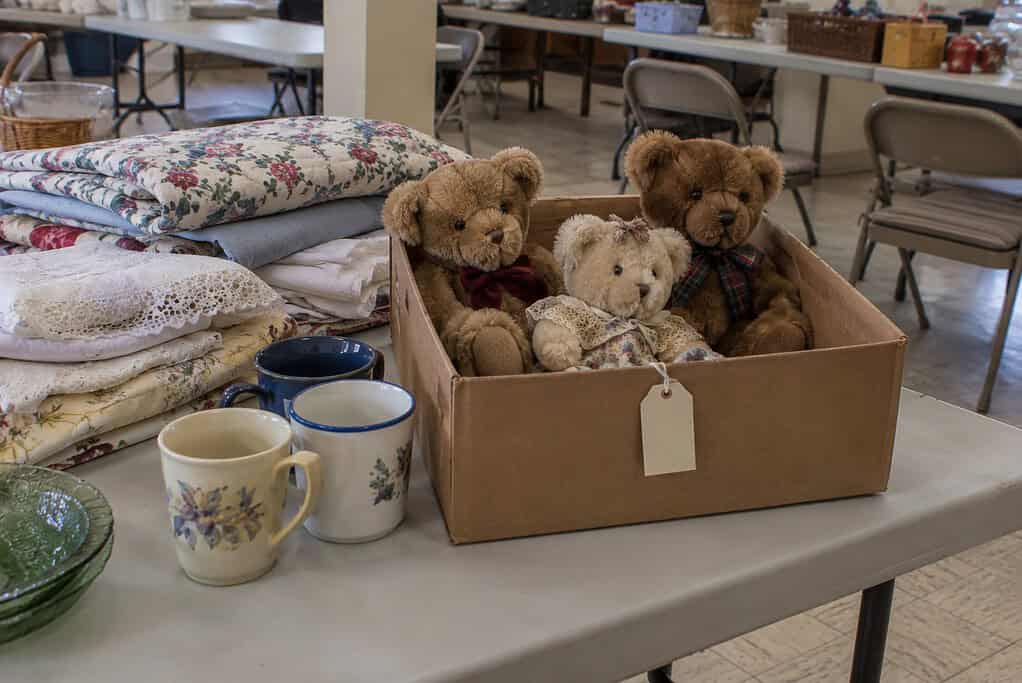
Many thrift stores take figurines and home decor in good shape. Rules are different at each store, so call ahead and ask.
Some Goodwill stores send collectibles to their online auction site, shopgoodwill.com. A church rummage sale is another good choice.
If you want a tax deduction, the IRS says you can deduct the fair market value. That means about what a buyer would pay for it today, not what you paid in the store.
The items need to be in good used condition or better. If your total for donated items is more than $500, there’s an extra IRS form to fill out.
And if a group of similar items, like a whole collection of figurines, is worth more than $5,000, the IRS requires an appraisal. Most collections like these are worth far less than that.
There’s one more thing to know for 2026. A new rule lets people who don’t itemize deduct some charity gifts, but only cash gifts count, not donated items. Ask your tax preparer if you’re not sure what applies to you.
If you’re not sure where things should go, my item-by-item donation guide can help.
Before You Pass Them to the Kids
I’ll be honest. I once thought my kids would want my bears someday.
When I asked, my daughter said she’d like the Cherished Teddies someday, and that was all. Nobody wanted the rest, and I’m glad I asked now instead of leaving them a shelf to figure out.
If you have a collection, ask your family what they’d like to keep, if anything. Then you can make a plan for the rest while you can still enjoy deciding. (My post on the collectibles I thought were worth money has more about Mom’s Hummels and my Christmas plates.)
If you also have Precious Moments, I wrote a separate post on what to do with Precious Moments figurines.
A Shelf That Holds What I Love
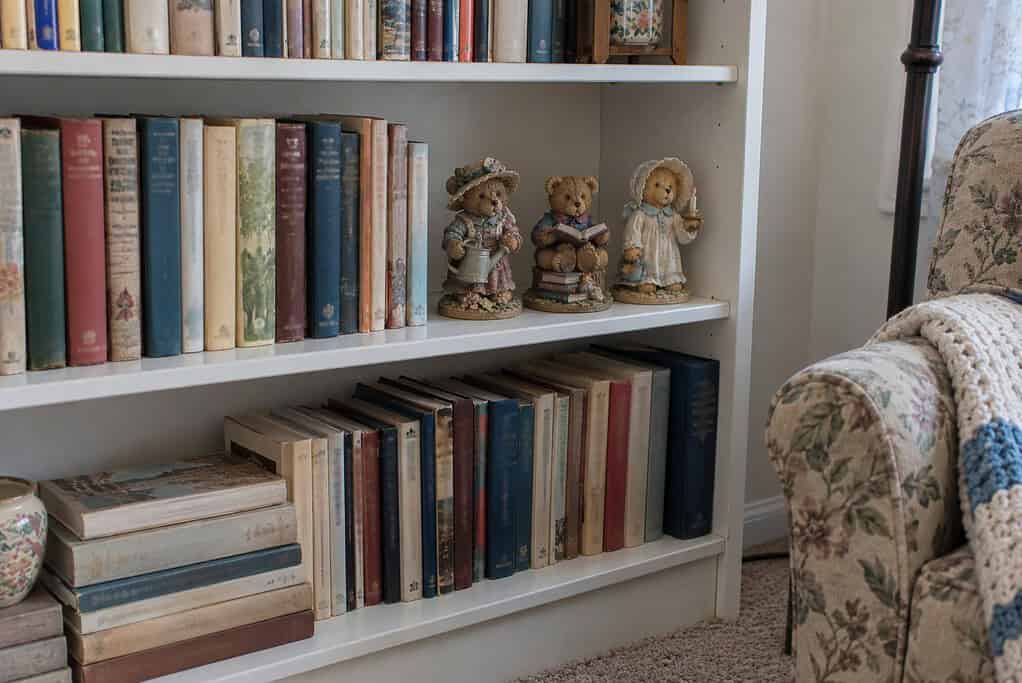
This morning, I stood in the spare room with my coffee and looked at that shelf.
Three bears. Nine Cherished Teddies from a little girl who saved her change. A row of books I’ve been meaning to read.
I don’t need to dust 23 bears anymore. And every piece I see there makes me smile.
If you have a shelf like mine, pick up one piece today and turn it over. Write down what’s on the bottom. That’s all you need to start.
A Little Help for the Next Step

Sorting a collection goes best when you take it one shelf at a time. You don’t have to decide everything today.
My free Declutter for Self Care Checklist breaks your home into small, gentle jobs, one space at a time. It’s a kind way to keep going after the shelf is done.
Frequently Asked Questions
Are Boyds Bears worth any money?
Most Boyds Bears sell for small amounts. When a newspaper column looked at eBay sales in 2012, most resin figures sold for about $3 to $26. Check eBay “Sold Items” for your exact piece to see what buyers have really paid.
How do I know which Boyds Bear I have?
Turn it over. Resin Boyds figures are stamped on the bottom with the name, the edition and the piece number. Use those to search for your piece online.
Are Cherished Teddies worth anything?
Most are worth a small amount, often under $30 even at a store that resells them. Some of the earliest 1992 bears, like Daisy, and club pieces can bring more. Remember that the year on the bottom is the copyright year, not always the year it was made.
What are Tom Clark gnomes worth?
Most Tom Clark gnomes sell for modest prices. Replacements lists most of them for about $14 to $70 each, with a few special pieces listed higher. A seller usually gets less than those asking prices.
Where can I donate old figurines?
Many thrift stores, church rummage sales and some Goodwill stores take figurines in good shape. Call ahead, because each place has its own rules. If you want a tax deduction, the IRS uses fair market value, which is what a buyer would pay today.
Follow me elsewhere!

