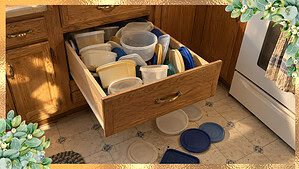
Do you have a drawer in your kitchen that you open very slowly, because you know what will happen?
I do. Or I did, until a few weeks ago.
It’s the drawer under the coffee maker, where we keep our food storage containers. Old margarine tubs, Cool Whip bowls, sour cream tubs, and a pile of lids that never seem to fit anything.
One evening last month, I made a big pot of vegetable soup. I wanted to put some in the freezer for a cold day, so I pulled the drawer open.
The lids came sliding out onto the floor.
I bent down to pick them up, one at a time, while my knee reminded me it had been replaced. (It does that when I bend too far.)
When I stood back up, I did something I had never done before. I counted.
Forty-one containers. Twenty-six lids. And it’s just my husband and me in this house now.
That night, I thought about my mother’s refrigerator. Every time I opened it, I’d find a row of Cool Whip bowls, and not one of them ever held Cool Whip. They held leftover green beans, gravy, and half a pot roast.
I learned this habit from her. (So did most of us, I think.)
But I didn’t want to pick lids up off the floor every time I made soup. So over a few short sessions at my kitchen table, I decided to declutter food storage containers once and for all, without tossing a single one I’d miss.
We Were Raised Not to Waste a Thing
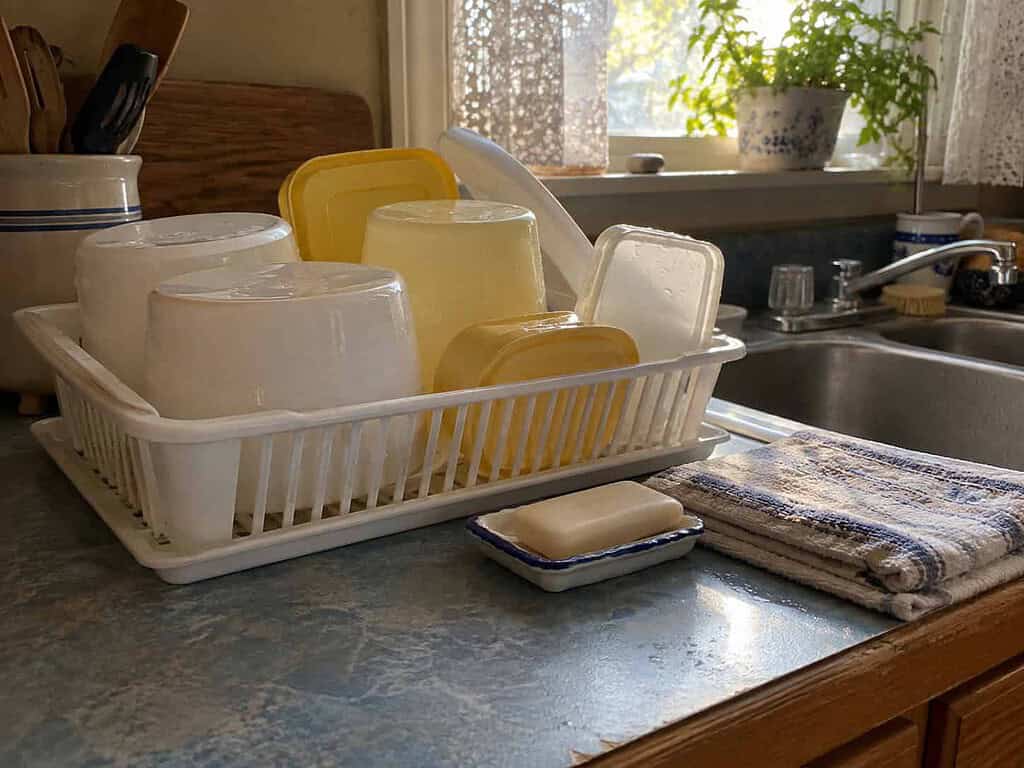
Our mothers grew up when money was tight. Nothing got thrown away if it still had a use.
A margarine tub wasn’t trash to them. It was a free bowl with a lid.
So they washed it, dried it, and put it in the cupboard. We watched them do it year after year (I know I did).
Then we grew up and did the same thing. Every cottage cheese tub, yogurt tub, and sour cream tub got washed and saved. When takeout soup came in a nice round tub, we saved that too.
There’s nothing wrong with that habit. For a long time, it helped us.
When my kids were young, I used those tubs every single day. Lunches, leftovers, and soup for a sick neighbor all went out the door in them.
But our homes changed, and the habit didn’t.
The kids grew up and moved out. We cook smaller meals now, yet the tubs kept coming in, and very few ever went out.
There’s also a feeling a lot of us share. Throwing away something that still works feels wrong to us.
And if you live on a fixed income, keeping things “just in case” can feel like the safe thing to do. I understand that feeling, and I still have it some days.
So before we start, I want to be clear about one thing. You don’t have to get rid of every tub, and you don’t have to buy a new set of matching glass containers either.
You only need to keep the ones you use. Then your drawer can close again.
How to Declutter Food Storage Containers in Five Easy Steps
I didn’t do this all in one day. I did it in three short sessions, about 15 minutes each, sitting at the kitchen table with the coffee my husband made me that morning.
You can go at your own pace too. If you’re following my 12-week fall and winter decluttering plan, this fits right into the kitchen weeks.
And on a tired day, the 5-minute decluttering rule is a nice way to get started.
1. Sit Down and Start With One Shelf
Please don’t pull everything out at once.
I know it’s tempting. But if you dump every tub and lid onto the counter, you’ll end up with a big mess and no energy left to sort it.
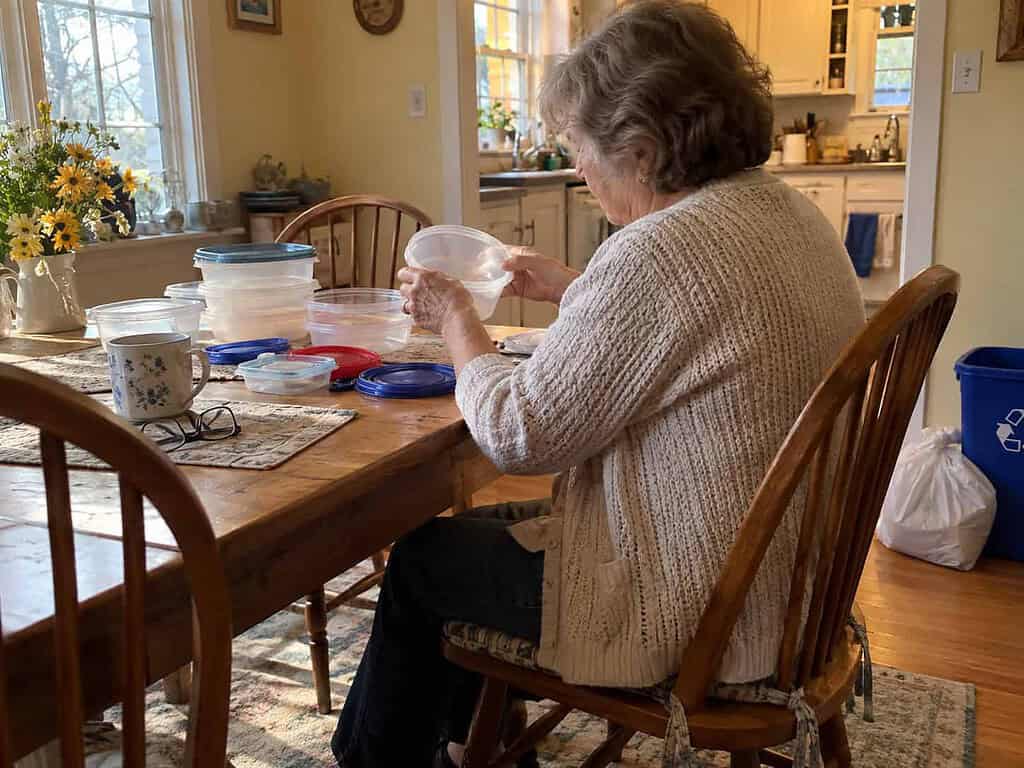
Instead, pick one shelf or one drawer. Carry a few containers at a time to the kitchen table, and sit down.
Sitting is easier on your back and your knees. You’ll also make better choices when you’re not worn out from standing. (I learned this the hard way after my knee replacement.)
Set a small trash bag on one side of your chair and your recycling bin on the other. That way you can sort as you go without getting up every few minutes.
If your containers are spread all over the kitchen, start with the spot that bothers you most. For me, that was the drawer that spilled.
2. Match Every Bowl to Its Lid
This is the step that made the biggest difference for me.
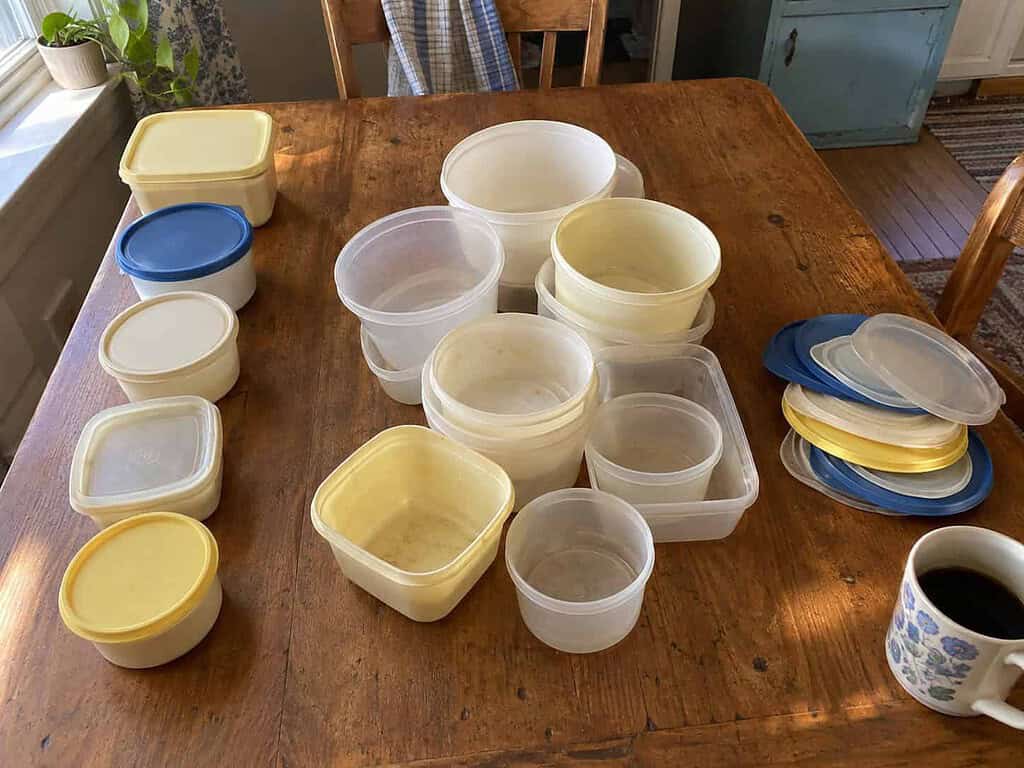
Pick up one bowl and look for its lid. When you find a match, snap the lid on and set the pair to one side.
Keep going until you’ve tried every bowl. At the end, you’ll have two small piles left over.
One pile is bowls with no lid. The other pile is lids with no bowl.
I had twenty matched pairs. I also had twenty-one bowls with no lid and six lids with nothing to go on (some of those lids were older than my grandkids).
Give those two piles one last chance. Check the dish rack, the dishwasher, and the back of the fridge.
Anything that still has no match by the end of your session can go.
A bowl with no lid can’t hold soup in the freezer. And a lid with no bowl can’t hold anything at all.
3. Toss the Cracked, Stained and Warped Ones
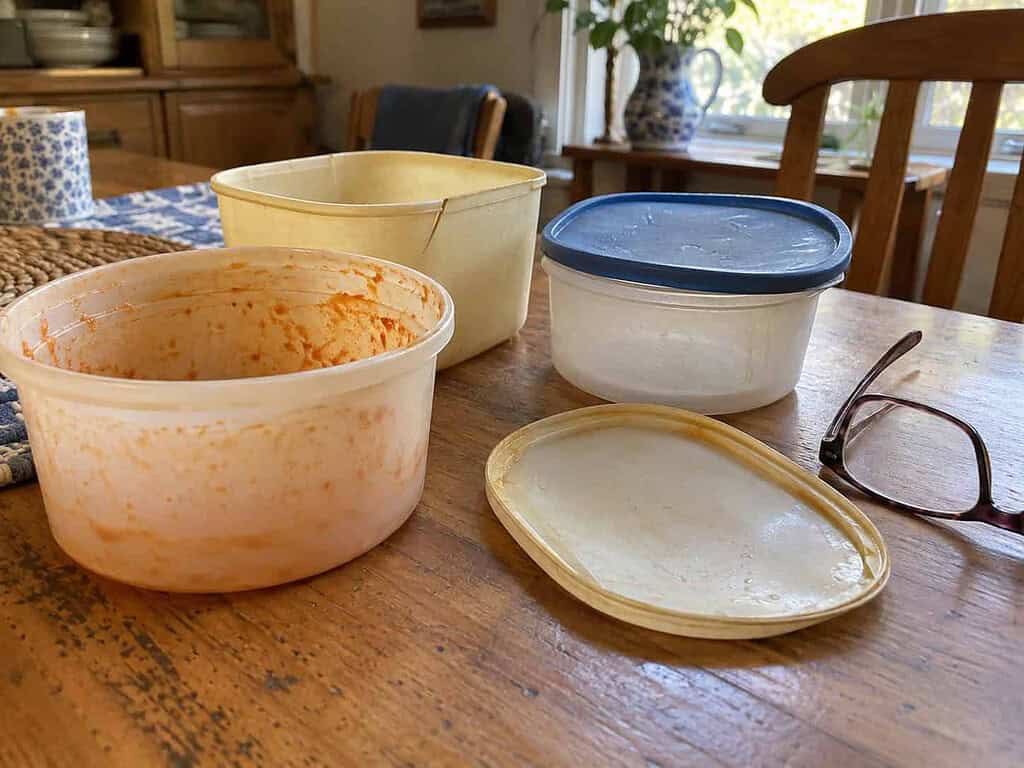
Now look closely at each matched pair. This is easier with your reading glasses on. (Mine were on top of my head the whole time, of course.)
Set aside any container with a crack, even a small one. A cracked tub can split when you fill it, and then you have soup all over the counter.
Look for stains too. Tomato sauce and chili can leave an orange color that never comes out, no matter how hard you scrub.
Then check the shape. Some tubs bend after years in the dishwasher, and the lid won’t snap on tight anymore.
If the lid doesn’t close tight, it won’t keep your food fresh.
Last, give each one a quick sniff. If a tub still smells like onions or garlic after you wash it, let it go.
Out of my twenty matched pairs, five didn’t pass this step. That left me with fifteen.
4. Decide How Many You Really Need
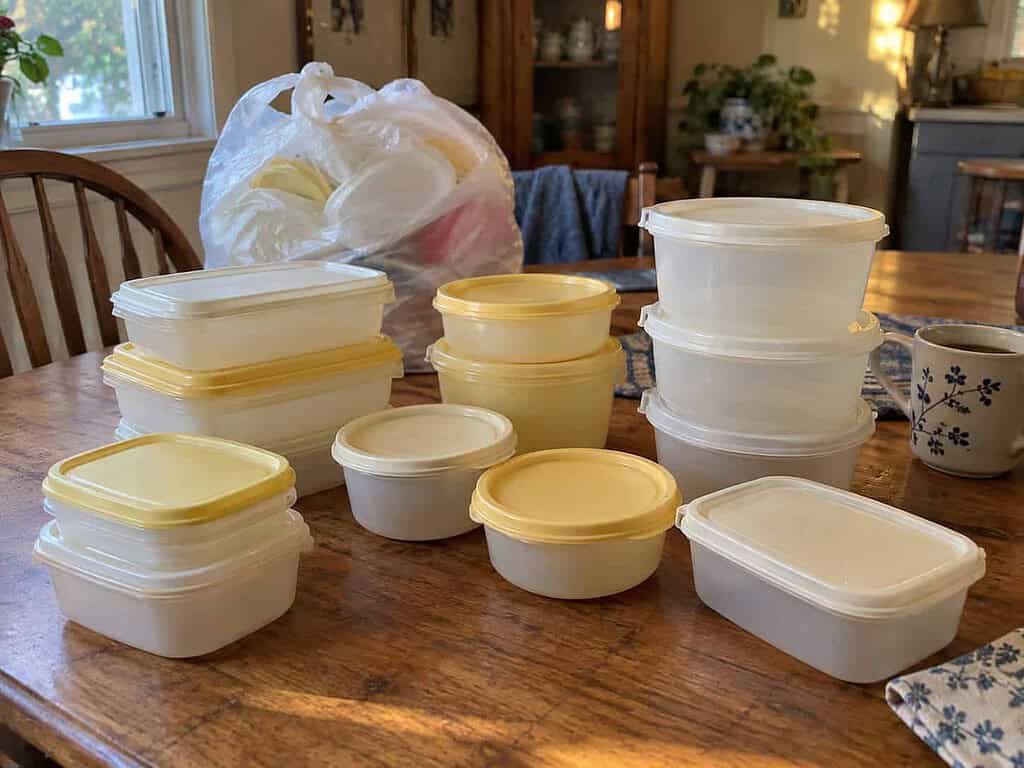
I put this step off the longest. Fifteen containers didn’t sound like very many.
But then I thought about how we live now. There are only two of us, and most nights there’s just a little bit left over, maybe enough for one lunch.
So I asked myself three plain questions. How many leftovers do we have on a normal day? How many tubs do I fill with soup for the freezer?
And how many do I send home with family after a big meal?
For us, the answer was ten small and medium containers for everyday leftovers. I also wanted four big tubs for soup. (I use those every week once it gets cold.)
That came to fourteen, so one more went into the bag.
If counting feels hard, try this instead. Choose one drawer or one shelf for your containers, and keep only what fits there with the lids on.
When the space is full, you have enough.
5. Keep Them Where You Can Reach Them
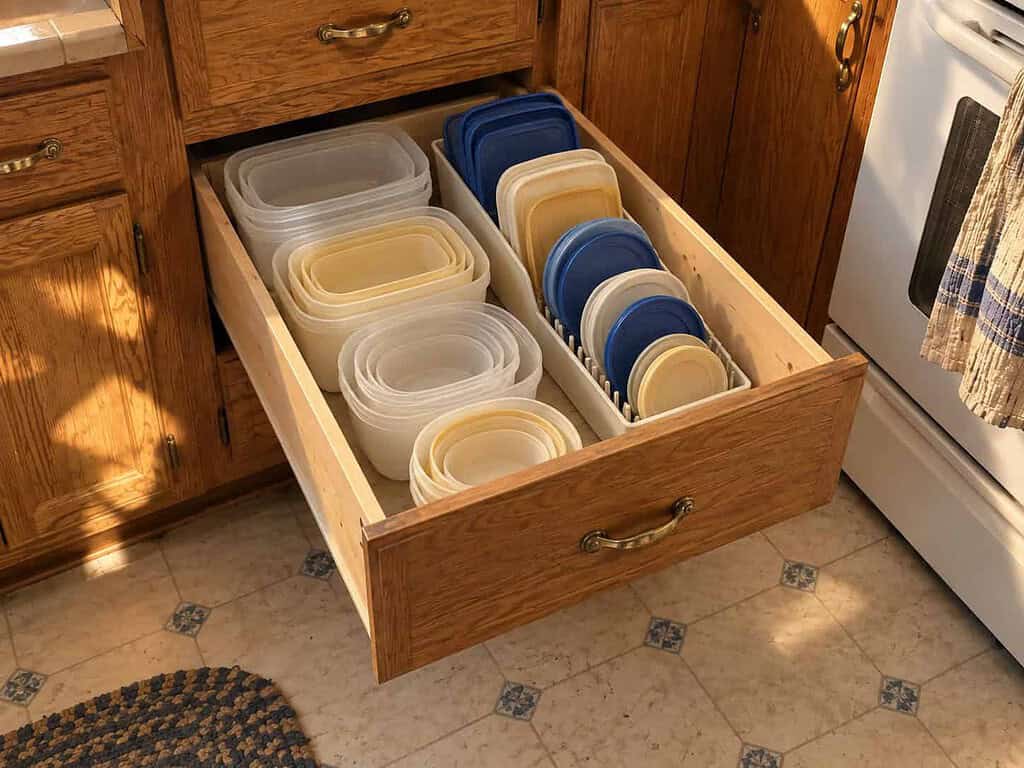
Now give the keepers one home, all in the same place.
Stack the bowls inside each other, from big to small. Then stand the lids up on their sides in a small dish rack or a plain basket, so you can see every one.
My post on kitchen storage ideas has a few more ways to keep lids neat.
Some people like to store each lid on its bowl. It takes up more room, but you never have to look for a match.
Try both ways and see which one you like better.
Pick a spot that’s easy to reach. A low drawer near the stove or a shelf at waist height works best.
You shouldn’t need a step stool. And you shouldn’t have to get down on the floor.
I moved mine to the drawer right next to the stove. Now when the soup is done, the containers are right there waiting.
If the rest of your cupboards need some help too, my guide on how to organize kitchen cabinets walks you through it one cabinet at a time.
Where the Extra Containers Can Go
When I finished, I had a full bag of tubs and lids sitting by the back door. I didn’t want it there for a month, so I sorted it that same day.
First, I checked our town’s recycling rules. Not every town takes every kind of plastic.
Look for the small number inside the triangle on the bottom of each tub. Then check your town’s website or call the recycling office to see which numbers they take.
Some towns want the lids taken off, and some don’t take lids at all. It only takes a few minutes to find out.
Next, I looked for other ways to use a few of them around the house. Three tubs went under my potted plants on the windowsill to catch extra water.
A few more went out to the garage.
My husband was very happy about that. The garage is his space, and he keeps everything out there.
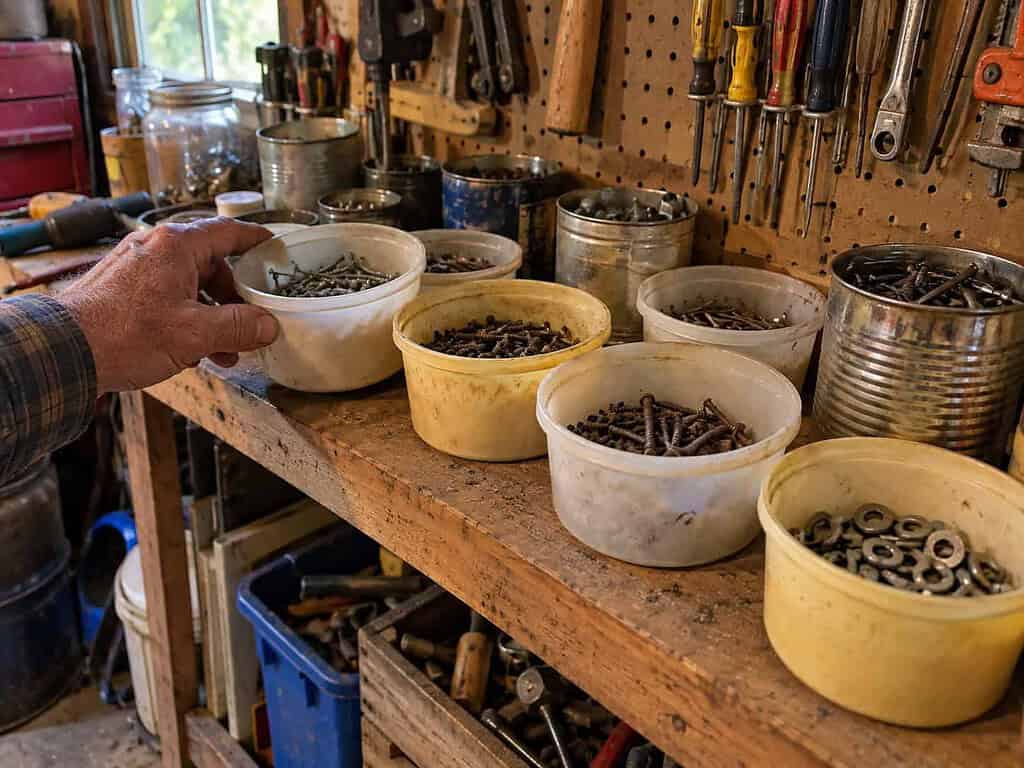
Now he has a row of margarine tubs full of screws, nails, and washers, right next to his old coffee cans. (He says he’s needed them for years.)
If you have clean containers that still match their lids, you can offer them in a Buy Nothing group. A neighbor who cooks a lot might be glad to have a few for sending leftovers home.
Before you donate, though, it’s good to know one thing. Many food pantries and thrift stores can’t take used food containers, so call or ask before you drop them off.
Anything cracked, stained, or not recyclable in your town can go in the trash. It did its job for years, and it’s okay to let it go.
The Few I Kept on Purpose
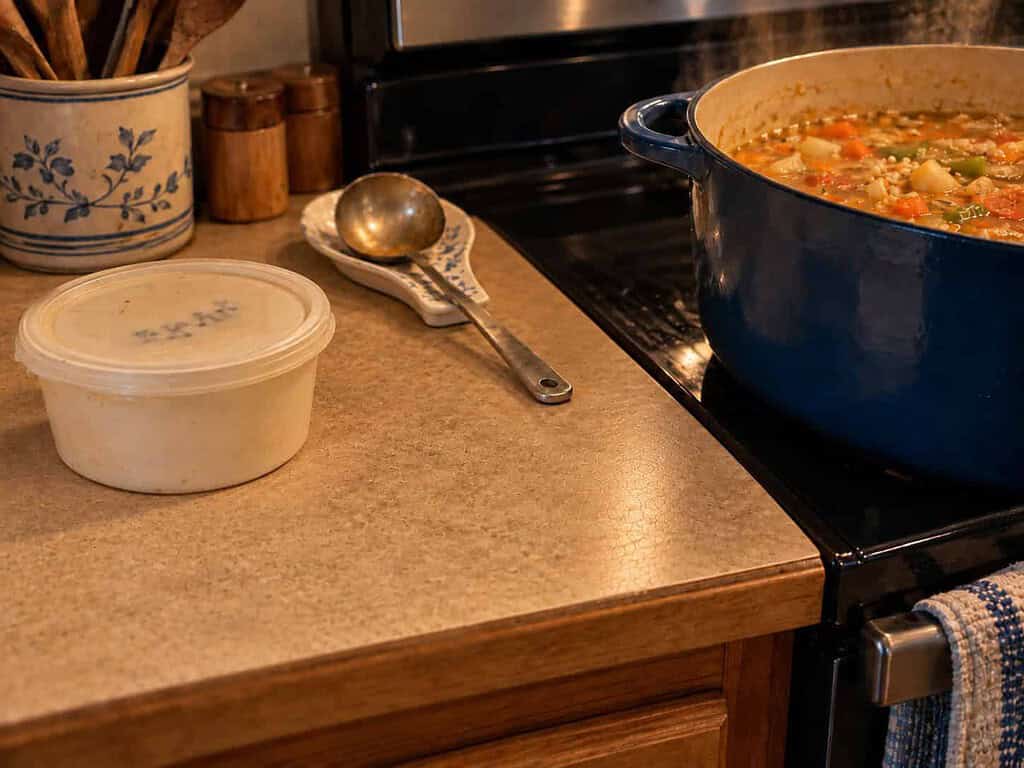
Most of my fourteen containers are plain and simple. But one tub in my cupboard isn’t on that list.
It’s an old margarine tub from my mother’s kitchen. On the lid, in black marker, she wrote one word.
Soup.
When we cleared out her house a few years ago, I almost put it in the recycling bin. Then I saw her handwriting, and I couldn’t do it.
So I kept it, and I use it. When I make soup, a little bit goes into my mother’s tub, and it makes me smile every time.
That’s the kind of thing worth keeping. Not every tub she ever saved, just the one that makes me think of her standing at her stove.
The four big soup tubs from step four have a job too. Most of them go home with my daughter.
When she visits for the weekend, she never leaves without some soup. I don’t ask for the tubs back, and she doesn’t have to worry about returning them.
If you have a container with a story like that, keep it. Then let the rest just be tubs.
A Lid Drawer That Closes
It’s been a few weeks now. Every time I open that drawer, it slides out smoothly and nothing falls on the floor.
I know it’s a small thing. But it’s one less thing that makes me tired and cross at the end of a long day.
To keep it this way, I follow one easy rule. When a new tub comes into the house, like a sour cream tub or a takeout soup tub, an old one goes out.
If I don’t need the new one, it goes straight into the recycling bin.
Once a month, I open the drawer and take a quick look. I pull out anything stained or missing its lid, and it takes about two minutes.
If you’d like to keep going after this, the pantry is a good next spot. My post on decluttering your food pantry walks you through it.
And if the whole kitchen feels like too much, my guide on how to declutter your kitchen breaks it into small pieces.
But start with the tubs. Pull out one drawer, sit down, and see how many lids you can match.
I’d love to hear how many you find. (I promise I won’t tell anyone about my forty-one.)
Clear the Next Spot With Me

Once one drawer is clear, it’s easier to see the next spot that needs a little help.
My Free Declutter for Self Care Checklist helps you choose where to go next and keep going at your own pace, without wearing yourself out.
Frequently Asked Questions
How many food storage containers should I keep?
It depends on how many people you cook for and how you use them. For two people, about ten small and medium containers for leftovers is plenty, plus a few big ones if you freeze soup. If counting is hard, pick one drawer or shelf and keep only what fits there with the lids on.
What should I do with plastic lids that have no containers?
Give them one last chance by checking the dish rack, the dishwasher, and the back of the fridge. If you still can’t find a match, let them go. Check your town’s recycling rules first, since some towns take lids and some don’t.
Can I recycle old margarine and Cool Whip tubs?
Many towns take them, but not all do. Look at the small number inside the triangle on the bottom of the tub. Then check your town’s website or call the recycling office to see if they take that number.
How do I keep food storage container lids organized?
Stack the bowls inside each other from big to small. Then stand the lids up on their sides in a small dish rack or basket so you can see every one. You can also store each lid on its bowl, which takes more room but means you never have to look for a match.
When should I throw away plastic food containers?
Let a container go if it’s cracked, badly stained, or bent so the lid won’t close tight. If it still smells like onions or garlic after washing, it’s time for it to go too. A quick check once a month keeps the worn ones from piling up again.
Follow me elsewhere!

