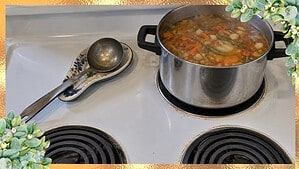
“I haven’t made soup all winter,” my mother told me the year she turned 85.
She loved making soup. But her big soup pot lived on the bottom shelf of a low cabinet, under a heavy roasting pan. Getting it out meant kneeling on the floor and lifting two heavy things, so she just stopped.
Nothing was wrong with her kitchen. It had worked fine for forty years.
It just worked for the woman she was at 60, not the woman she was at 85.
I think about that soup pot a lot now. I’m 64, and I plan to stay in this house for a long, long time. (My husband says he’s not going anywhere, either.)
So this fall, I started making a few changes. I’m not throwing out the things I love. I’m moving them, and letting go of the few things that would only get harder each year.
This is my plan for decluttering for aging in place, room by room and one small job at a time. It’s the house I want to live in at 85.
Why I’m Thinking About 85 Now
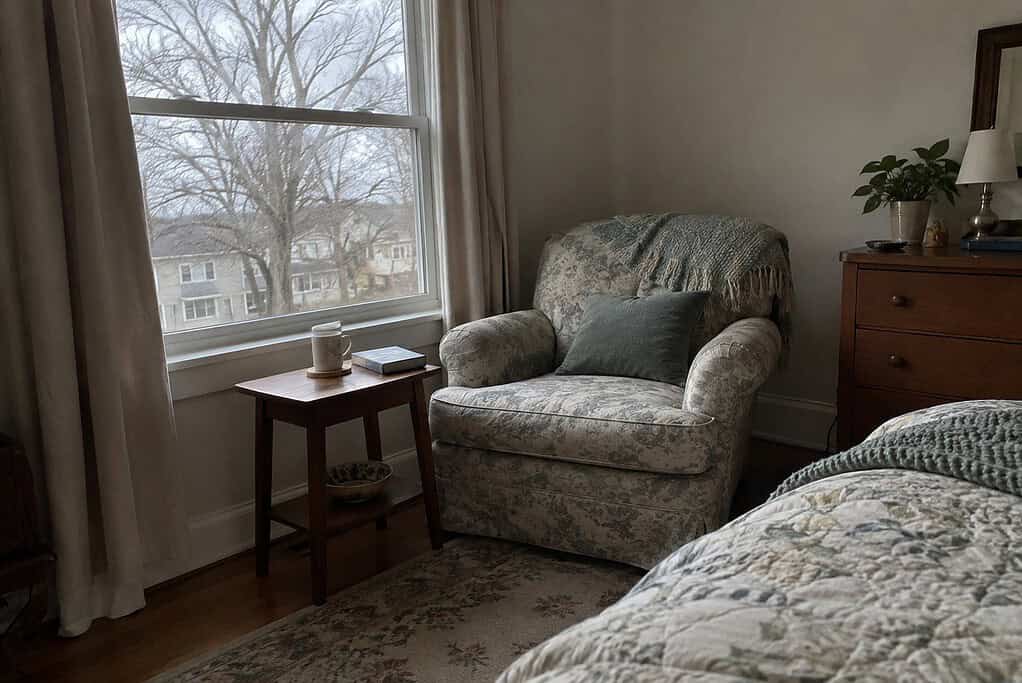
Most of us want to stay in our own homes as we get older. In a 2024 AARP survey, 75% of adults 50 and older said they want to stay in their homes.
I’m one of them. I want my own kitchen, my own chair by the window and my own coffee in the morning.
But a house only works if you can still reach, lift and open what’s in it. The time to fix that is now. I can still lift a box and climb a step stool with someone holding it.
Doing it at 64 means I get to choose. I get to decide where my things go, instead of someone deciding for me later.
I’m Moving Things More Than I’m Throwing Them Away
This isn’t about owning less for the sake of it. I’m keeping my books, my mother’s recipe box and the good china.
Most of this plan is about where things live in my house. The things I use every day are moving to easy spots. The heavy and hard things are moving down, or moving out.
When I asked myself one question, it got much easier. Will this be easy for me to get to and use when I’m 85?
If the answer is no, I either move it or let it go.
Everyday Things Go Between My Hips and My Shoulders
Occupational therapists often say to keep the things you use most between about waist height and shoulder height. That way, you don’t have to bend low or reach up high.
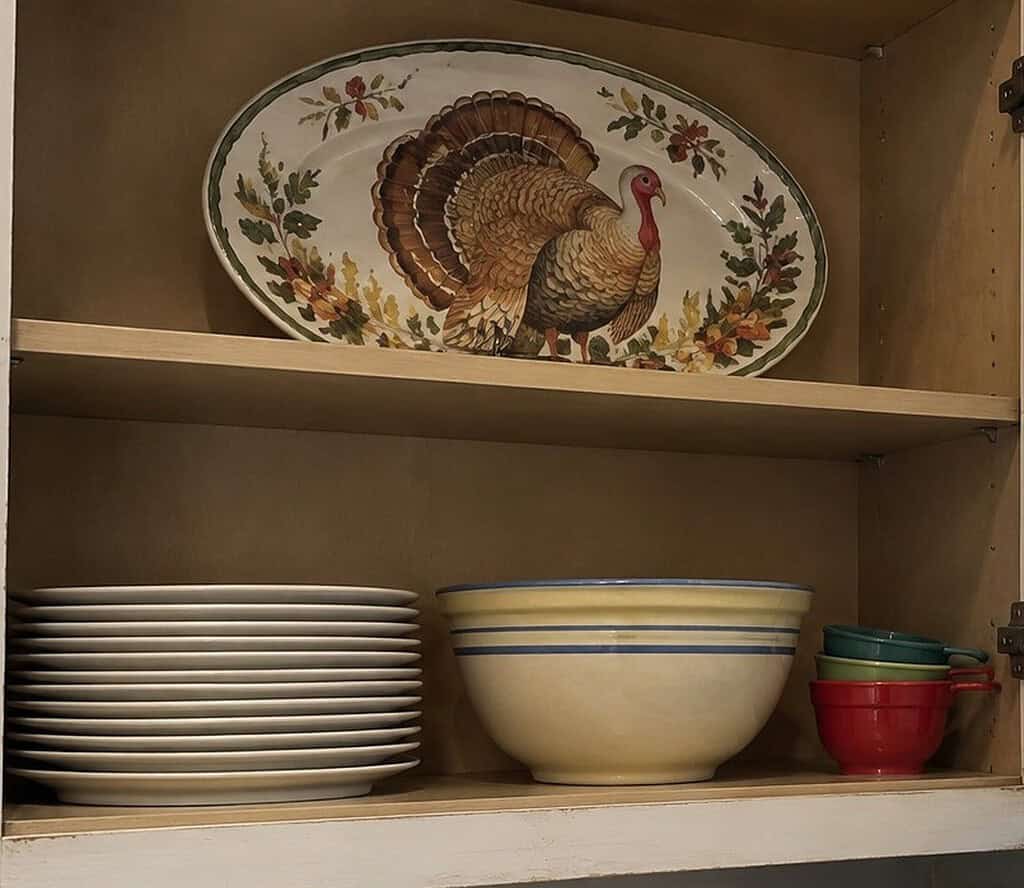
When I looked around my kitchen, most of my everyday things were in the wrong place. (I wrote about the rest of the kitchen in my post on decluttering the kitchen after 60.) My favorite mixing bowl was on a top shelf. My everyday plates were on a low shelf, where I had to bend to reach them.
So I moved them. The bowl, the plates and the measuring cups now live on shelves I can reach standing up. No bending, no stretching.
The things I use once a year moved up or down, out of the way. (The turkey platter can live up high. It comes down once a year, and my husband gets it for me.)
I shared more about what should and shouldn’t go up high in my post on decluttering the top shelf of the closet.
Heavy Things Come Down, and Some Go Out
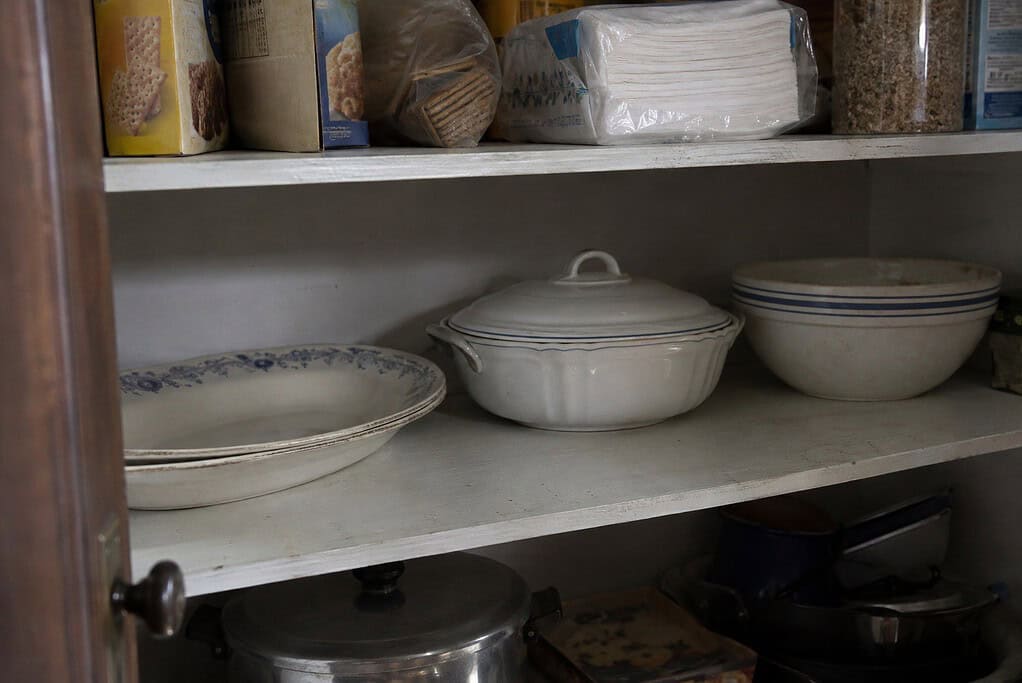
My grandmother’s heavy serving dishes came to me through my mother. I love them, and I use them at Thanksgiving.
But they used to sit on the top shelf of the pantry. Lifting a heavy dish down from over my head is how people get hurt.
Now they sit on a lower shelf, at about waist height. Heavy things should never live up high, where they can slip as you lift them down.
I also took a hard look at the heavy things I don’t use much. A cast-iron skillet I hadn’t cooked in for years went to a young couple at church who love it. A heavy glass pitcher went to the donation tote, and a lighter one took its place.
In the laundry room, I stopped buying the giant jugs of detergent. A smaller jug costs a little more, but I can lift it with one hand.
Fewer Trips Up and Down the Stairs
Fourteen steps go down to our basement. Right now, I go up and down them without much thought.
At 85, every trip will count.
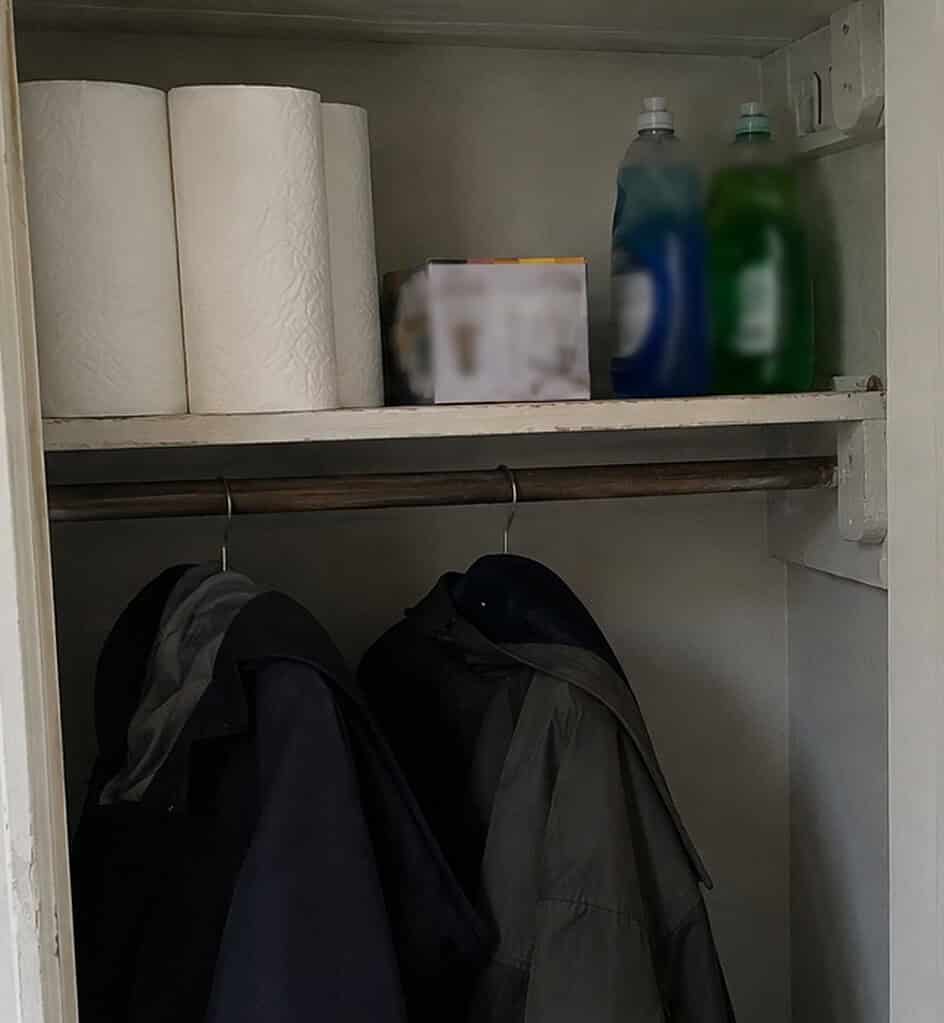
So the things I use every week don’t live in the basement anymore. Extra paper towels, dish soap refills and light bulbs now have a spot upstairs, in the hall closet.
The basement holds things we use once or twice a year, like the Christmas boxes. I wrote about clearing it in my post on decluttering the basement after 60.
What My Knee Surgery Taught Me
A few years back, I had a knee replacement. For a while, I used a walker, and I couldn’t bend down very far.
Those weeks taught me exactly what was in the wrong place. I couldn’t reach the bottom drawer of my dresser, the low pots or the shoes on the closet floor.
I didn’t fix much back then. I just waited until my knee healed. (I’m stubborn like my mother, I’m told.)
Now I’m using those weeks as a guide.
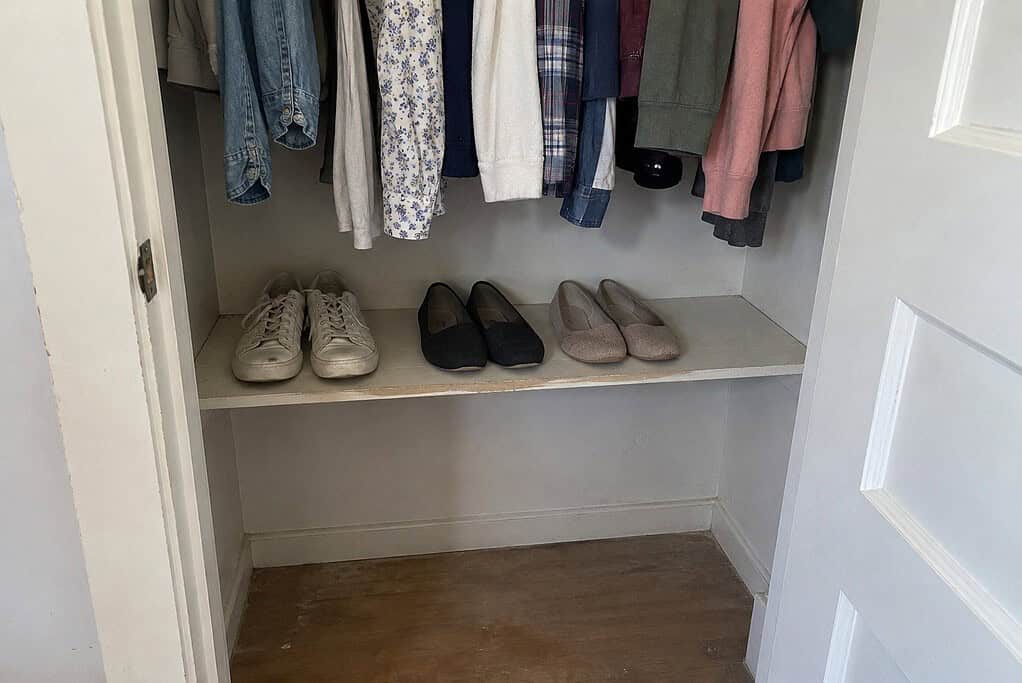
If something was hard to get to with a sore knee, it will be hard to get to at 85. So my everyday shoes are on a shelf now, not the floor. My socks moved from the bottom drawer to the top one.
Things My Hands Can Still Open
My hands are already sore some mornings. My mother’s hands were worse at 85, and she had trouble with jars, tight lids and small buttons.
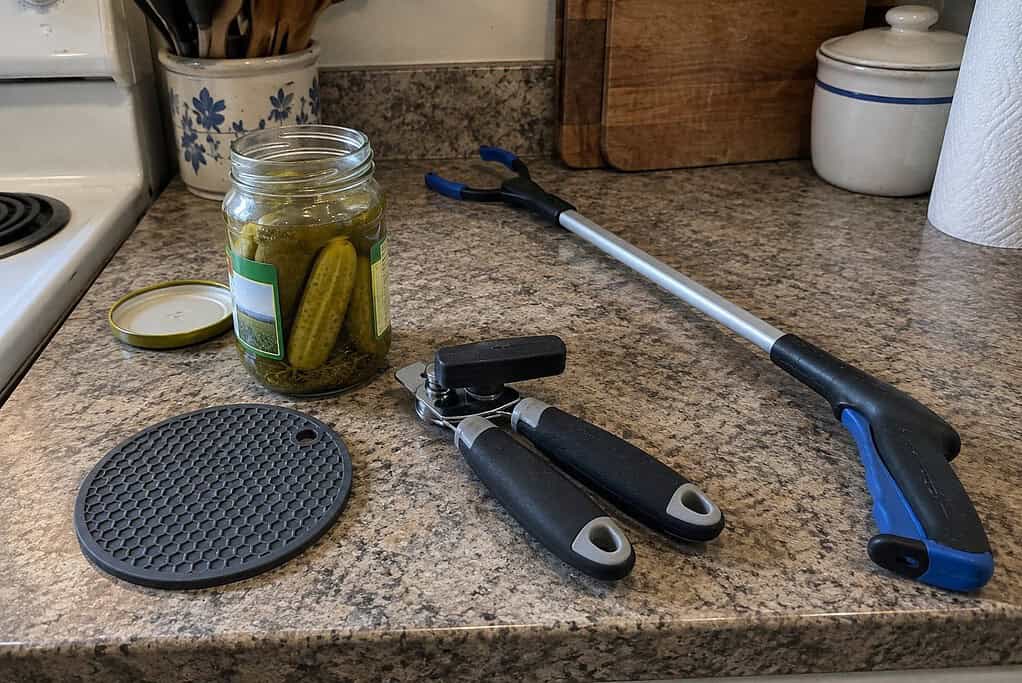
So I’m clearing out the things that fight me. A heavy can opener that pinched my hand went out, and a simple one with big handles took its place. I wrote about swaps like that in my post on would I buy it again.
I kept my jar opener and my grabber, because I use them all the time. I wrote about the few tools I’ll never give up in my post on what not to declutter.
I also let go of a few clothes with tiny buttons up the back. If I need help to get dressed in it now, it won’t get any easier later.
Things I Can See
At 85, I’ll still want to find my things without a magnifying glass. My reading glasses already live on top of my head. (Ask my husband how often I look for them there.)
Crowded drawers make it hard to see what’s inside. So I’m keeping fewer things in each drawer, with space around them.
I’m also labeling bins and shelves in big, clear letters with a thick marker. I used to think labels were silly, and now I swear by them.
And I replaced the dim old lamp by my spot on the couch with a brighter one. Good light makes everything easier to find.
The Bathroom
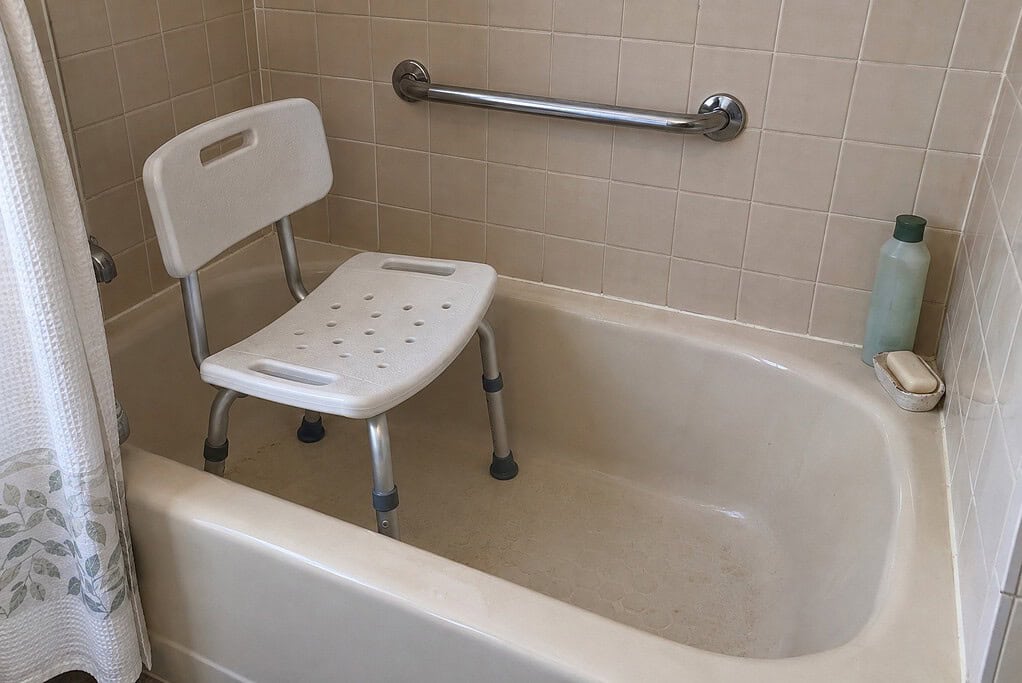
When my husband hurt his hip a while back, we bought a shower chair. It reminded me that the bathroom is where small changes matter most.
I cleared the edge of the tub, where half-empty bottles used to line up. Now there’s one shampoo and one soap in the shower, and the extras live in a cabinet I can reach without bending.
I also stopped buying the giant bottles. A smaller bottle is easier to hold with wet, soapy hands.
One more thing I learned from a friend’s house. A towel bar isn’t made to hold a person’s weight, so it’s no place to grab if you slip. If you ever need grab bars, have someone who knows how put them in, anchored into the wall.
The Bedroom
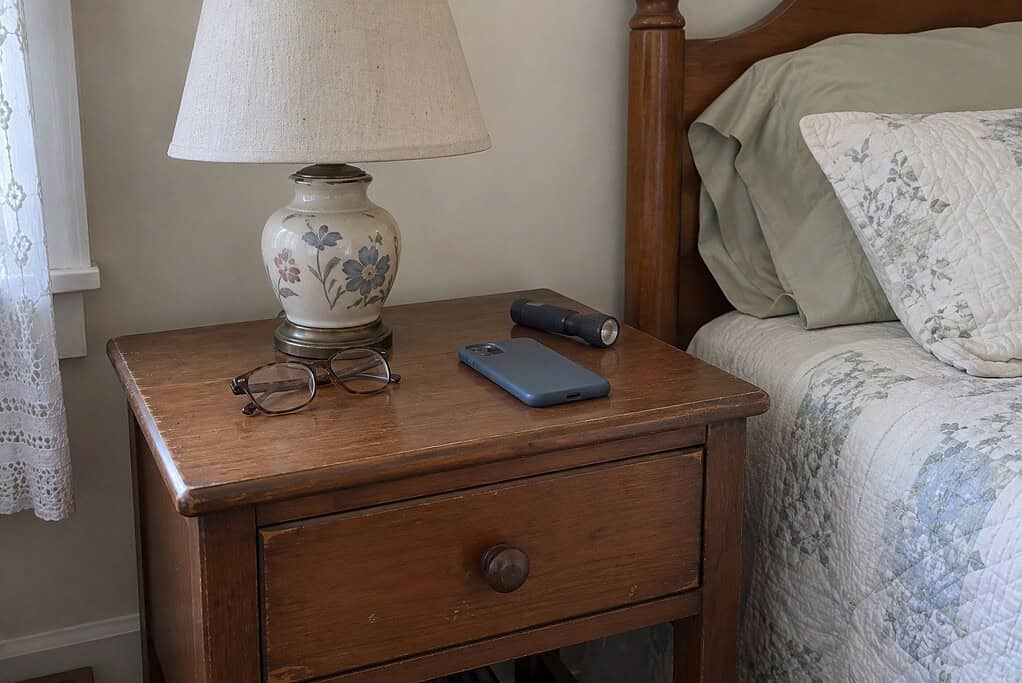
My nightstand used to hold a stack of books, three water glasses and a basket of odds and ends. At night, I’d knock something over reaching for my glasses.
Now it holds a lamp, my glasses, my phone and a small flashlight. That’s all.
The clothes I wear most are in the top two drawers of my dresser. The things I wear once a season moved to the lower drawers, where bending once in a while is fine.
If I ever have a bad night, everything I need is right there, within easy reach of the bed.
Keeping the Floors and Paths Clear
Falls are a real worry as we get older. The CDC says about 1 in 4 adults 65 and older fall each year.
Clear floors help. Every pile, basket or box I clear off the floor is one less thing to trip on.
I wrote about the floors, rugs and cords in my house in my post on decluttering for safety. Those are some of the most important jobs on this whole list.
What I’m Not Giving Up
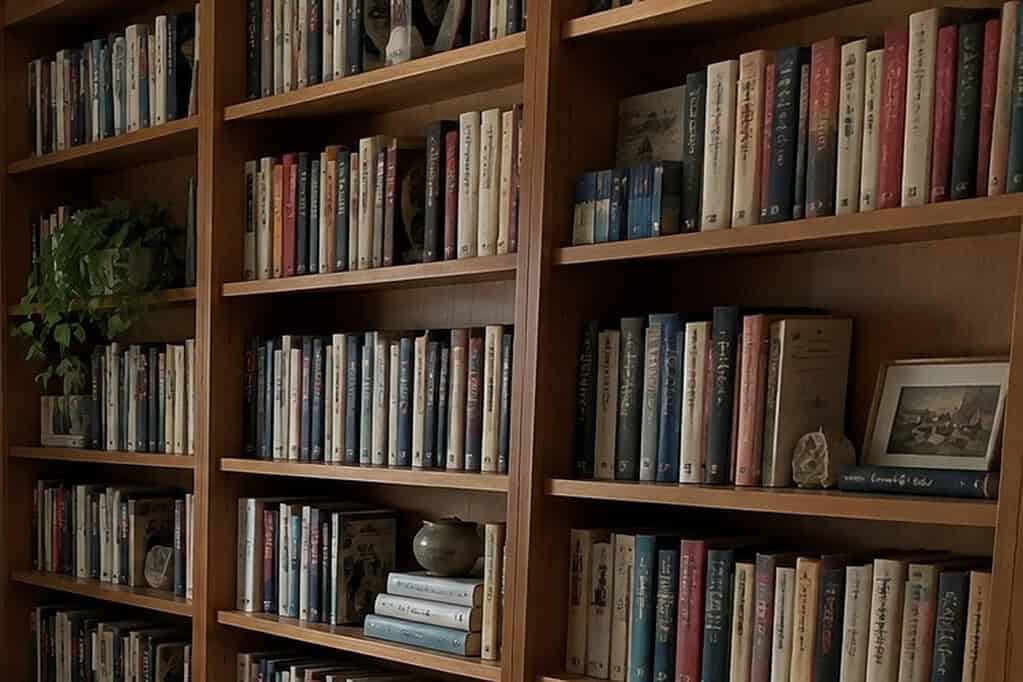
I want to be clear about this part. Planning for 85 doesn’t mean living in an empty house.
I’m keeping my books. In fact, the spare room is slowly becoming my own little library.
I’m keeping the good china, and I use it on Sunday mornings. I’m keeping my mother’s Bible, her recipe box and the photos on every shelf.
A house that works at 85 still feels like home. It’s just easier to live in.
A Little at a Time
I’m not doing all of this at once. I do one small job a week, usually for fifteen minutes at the kitchen table.
One week, I moved the mixing bowls. Another week, I sorted the laundry room shelf. My husband helped me carry the heavy dishes down from the pantry.
That’s how my mother cleared her house at 78, too. A little at a time, sitting down, and stopping while she still felt fine.
I shared the gentle way she did it in her 80s in my post on decluttering for women over 80.
A Note to Myself at 85
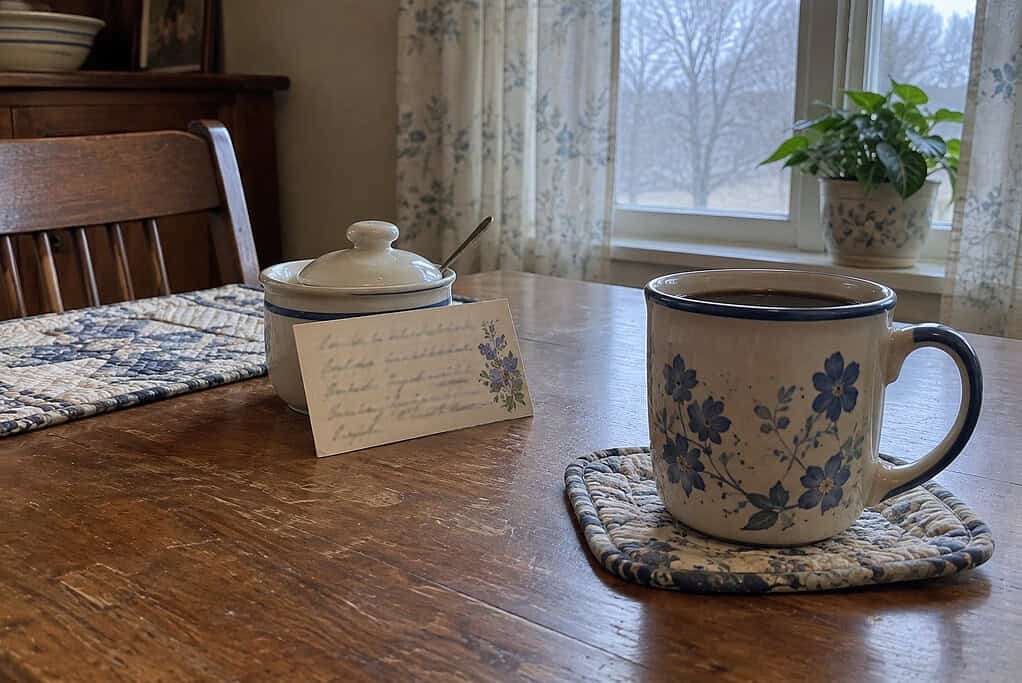
Dear 85-year-old me,
Your soup pot is on a shelf you can reach without kneeling. The heavy dishes are at waist height, and the light bulbs are upstairs.
Your books are still here. So is the good china.
I did this for you, a little at a time, while my knees still let me. I hope you’re making soup.
Love,
Me, at 64
A Little Help for Your Own Plan

You don’t have to plan twenty years ahead all at once. Pick one cabinet this week and ask, “Will this be easy for me at 85?”
My free Declutter for Self Care Checklist breaks your home into small, gentle jobs. It’s an easy way to start, one spot at a time.
Frequently Asked Questions
What is decluttering for aging in place?
It means clearing and arranging your home so you can keep living there safely as you get older. That includes moving everyday things to easy spots, bringing heavy things down from high shelves and keeping floors clear.
Where should I store things I use every day as I get older?
Keep them between about waist height and shoulder height. Then you don’t have to bend low or reach up high. Keep heavy things low, around waist height, and never on a high shelf.
What should I get rid of to make my home easier as I age?
Start with things that are heavy, hard to open or hard to reach, and that you rarely use. That might be a heavy skillet you no longer cook with, giant jugs, a wobbly old stool or clothes you can’t fasten yourself.
When should I start decluttering for my 80s?
The sooner, the better, while you can still lift and decide things easily. Many women start in their 60s or early 70s. Doing a little each week is enough.
Do I have to get rid of my books and keepsakes to age in place?
No. Aging in place is mostly about where things live, not owning nothing. Keep what you love, and make sure you can reach it safely.
Follow me elsewhere!


Thanks I plan to start next week.