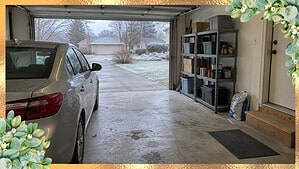
My husband and I have shared almost everything for forty years. The garage was never one of them.
The garage is his space. I made peace with that a long time ago, and I don’t fuss about what’s in it.
So I was surprised one evening in September when he set down his coffee cup and said, “Will you help me with the garage?”
He had a reason. Last winter, my car sat in the driveway because the second side of the garage was full. Every cold morning, he went out in his slippers to scrape the ice off my windshield.
“I’m not doing that again this year,” he said. “I want your car inside before the snow.”
We spent the last four Saturday mornings out there together. We never lifted anything heavy, we never climbed a ladder, and we didn’t have one argument. (I’m still a little proud of that last part.)
If your garage has filled up over the years and you don’t know where to begin, this is the order we used. It’s how I’d start decluttering the garage after 60 all over again.
Our Rules Before We Touched a Thing
Before the first Saturday, we sat at the kitchen table and agreed on a few rules. They kept us safe, and they kept us friends.
His Things Are His Call
This was the most important rule for us. If something was his, he decided whether it stayed or went. If something was mine, I decided.
I could ask, “Do you still use this?” But once he answered, I let it go. (I wrote more about how we got here in my post on making peace with a husband who keeps everything.)
One Hour, Then We Stop
We worked from nine to ten each Saturday. Then we went inside for a second cup of coffee.
An hour doesn’t sound like much. But four Saturdays of one hour got more done than one long, tiring day would have.
Sit Down to Sort
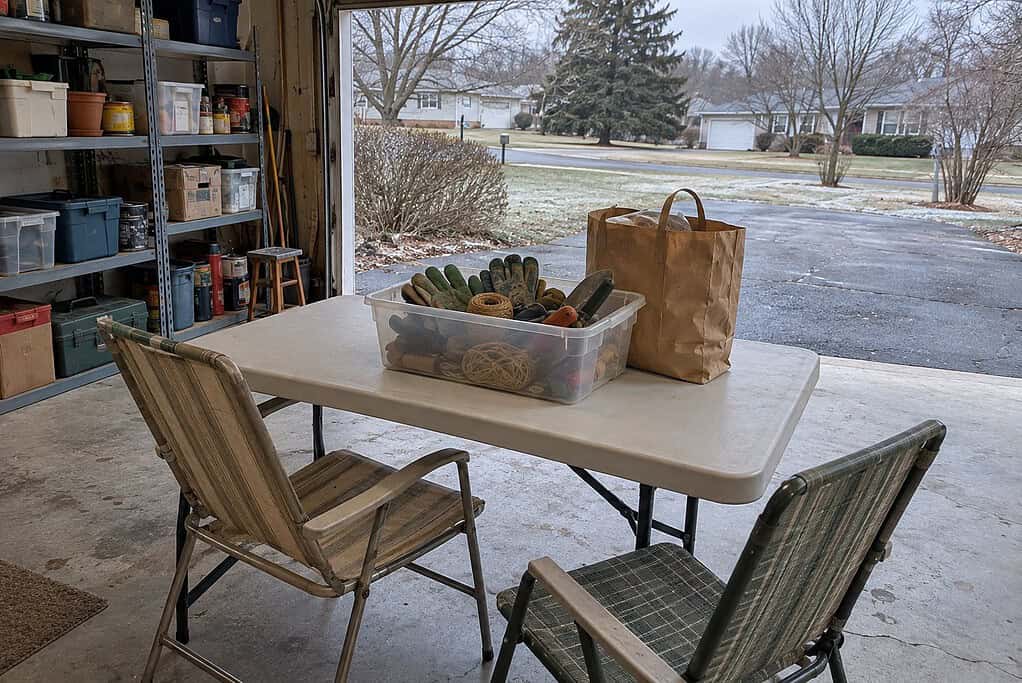
We set up a folding table and two lawn chairs in the open garage door. Instead of bending over boxes on the floor, we brought each box to the table and sorted it sitting down.
My back and knees were so glad. So was my husband’s hip.
No Ladders, No Heavy Lifting
Anything on a high shelf or anything heavy waited for help. We didn’t climb, and we didn’t drag.
The CDC says about one in four adults 65 and older falls each year. A garage, with its cords, steps, and cement floor, is no place to take a chance. (I wrote about other changes I made in 11 things I removed from my home for safety.)
Where We Started, in Order
Most of us want to start with the biggest pile. We did the opposite. We started with the things that made the garage safer and easier to walk through, then worked our way to the harder decisions.
1. The Path From the House Door to the Car
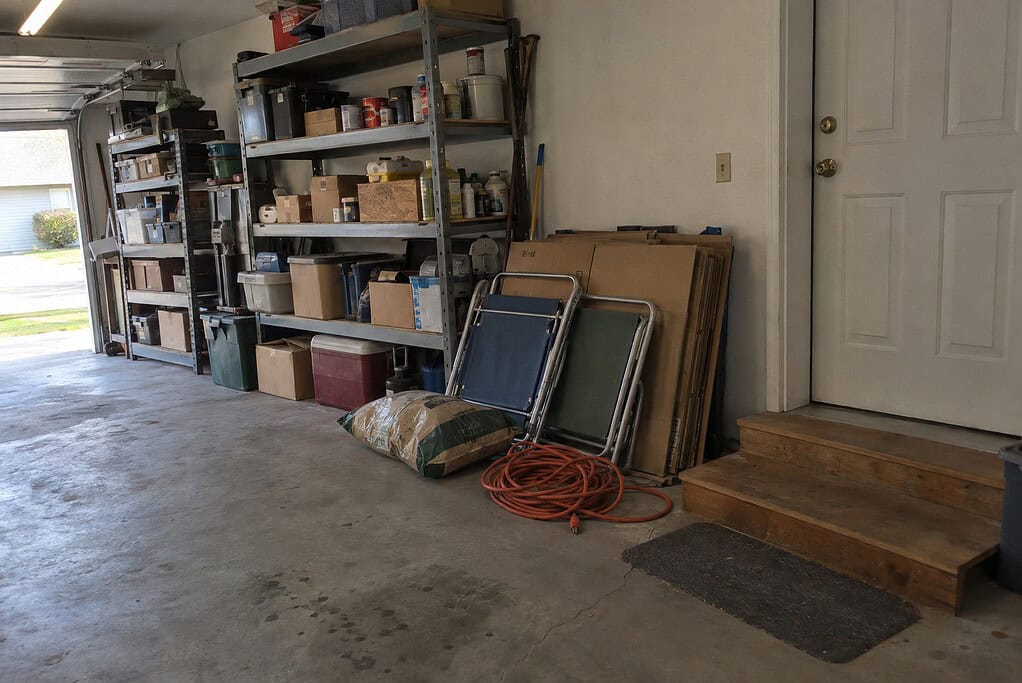
On the first Saturday, we cleared only the walkway. That’s the path from the kitchen door, down the two steps, and over to where my car would park.
We picked up a coiled extension cord, a bag of birdseed, two folded lawn chairs, and a stack of flattened boxes. All of them were sitting right where we walk.
By ten o’clock, I could walk from the door to the car without looking down. That alone made the whole morning worth it.
It also made every Saturday after that easier. We had a clear place to stand, and a clear way to carry things out.
2. The Things That Weren’t Ours
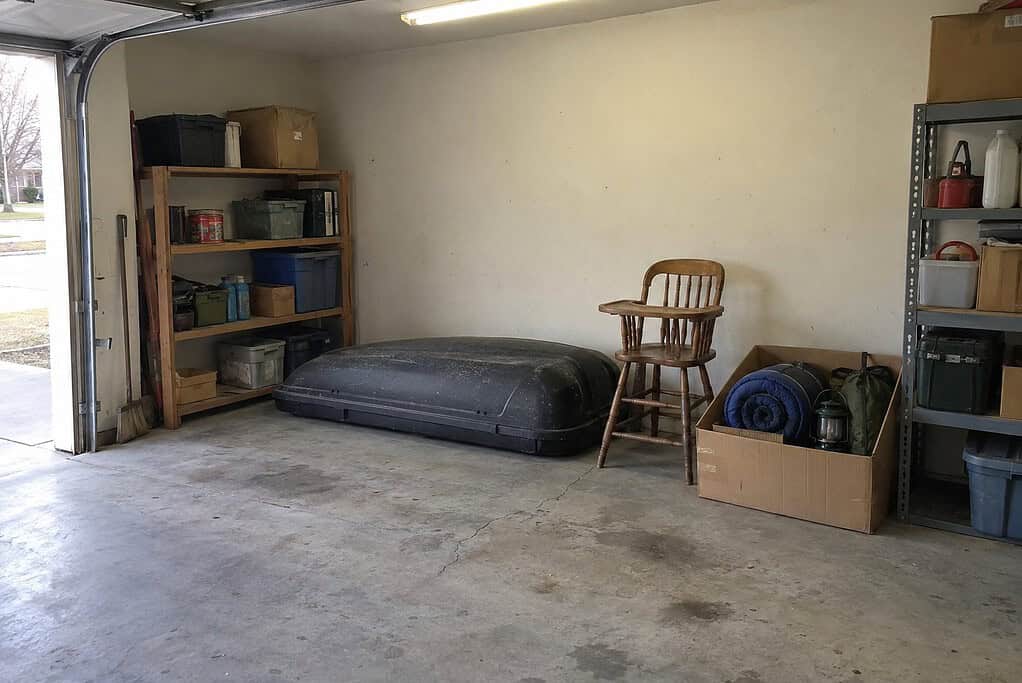
Next, we looked for things we were storing for other people. Every garage seems to have some.
We found a box of camping gear from one of our kids, a car-top carrier from a trip years ago, and a high chair we’d kept “for the grandkids.” Our youngest grandchild has been out of a high chair for years.
I took a photo of each thing and texted it to the family. Our oldest came for the camping gear the next weekend, and everything else went on our give-away list.
3. Anything Broken or Used Up
This step was fast and easy. Nobody needs to think hard about a broken thing.
We let go of a cooler with a cracked lid, a lawn chair with a torn seat, a bike pump that didn’t pump, and a dried-up bag of grass seed. We also found eleven empty cardboard boxes we had saved “in case we need to mail something.”
We kept two good boxes. The rest went in the recycling bin.
4. The Duplicates
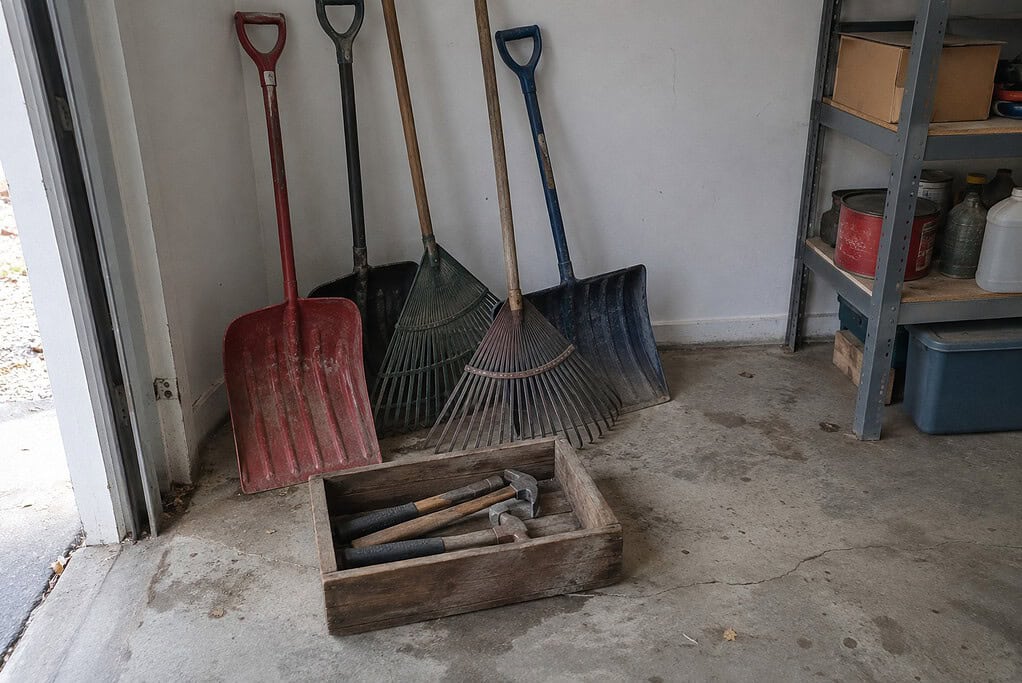
This is where his rule really mattered. My husband had three snow shovels, two rakes, and four hammers.
He picked the best shovel, the best rake, and two hammers. He said he likes having one hammer in the kitchen drawer and one on the workbench, and that’s his call.
He kept his coffee cans of screws and his old glass jar of nails and washers too. I didn’t say a word. (Some things are worth keeping the peace over.)
5. One Shelf at a Time
Once the floor and the walkway were clear, we turned to the shelves. We did one shelf each Saturday, from the middle shelf down.
My husband handed me one bin or box at a time from the shelf. I set it on the folding table, and we sorted it together from our chairs.
Each thing went into one of four places: back on the shelf, a give-away box, the trash, or the recycling. When the bin was empty, we wiped it out and put back only what we kept.
6. A Help Day for the Heavy Things
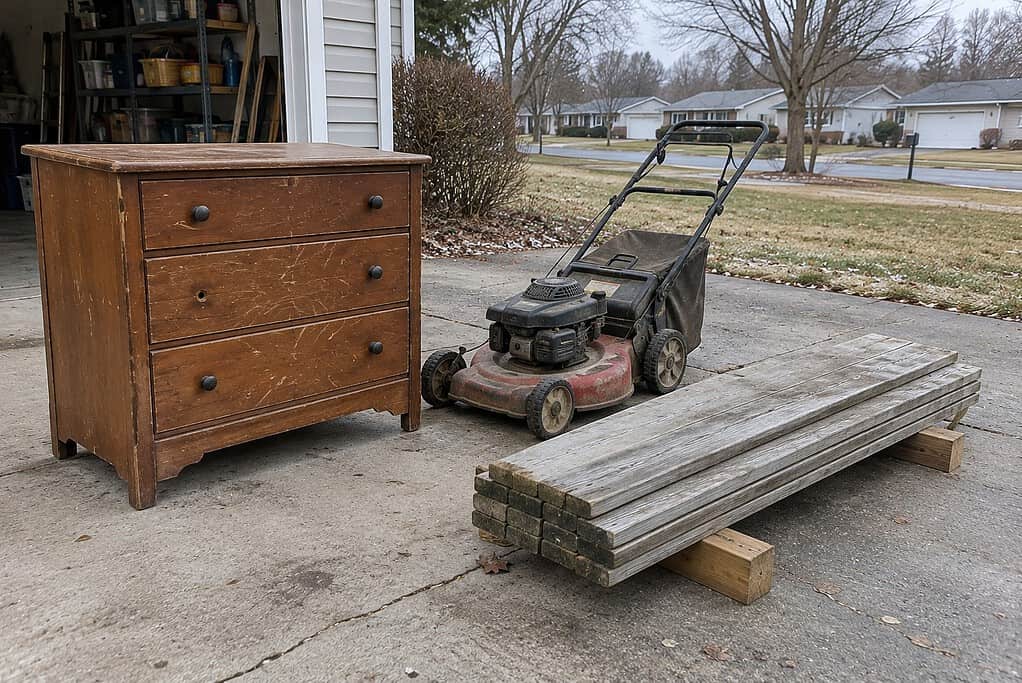
Some things were too big for us to move. There was an old dresser we’d planned to fix up for years, a second lawn mower, and a stack of leftover deck boards.
We saved all of those for one help day. Our grandson came over one Saturday afternoon, since he’s old enough to drive now and strong enough to lift what we can’t.
He carried the small things to my trunk for donation. For the big things, we called our local Habitat for Humanity ReStore. Many ReStores take tools and building supplies that are in good shape, and some will pick them up for free from your driveway or an easy-to-reach spot in the garage.
If you don’t have a grandchild nearby, my post on getting clutter out when you can’t carry it has other ways to get help.
A Word About Paint and Chemicals
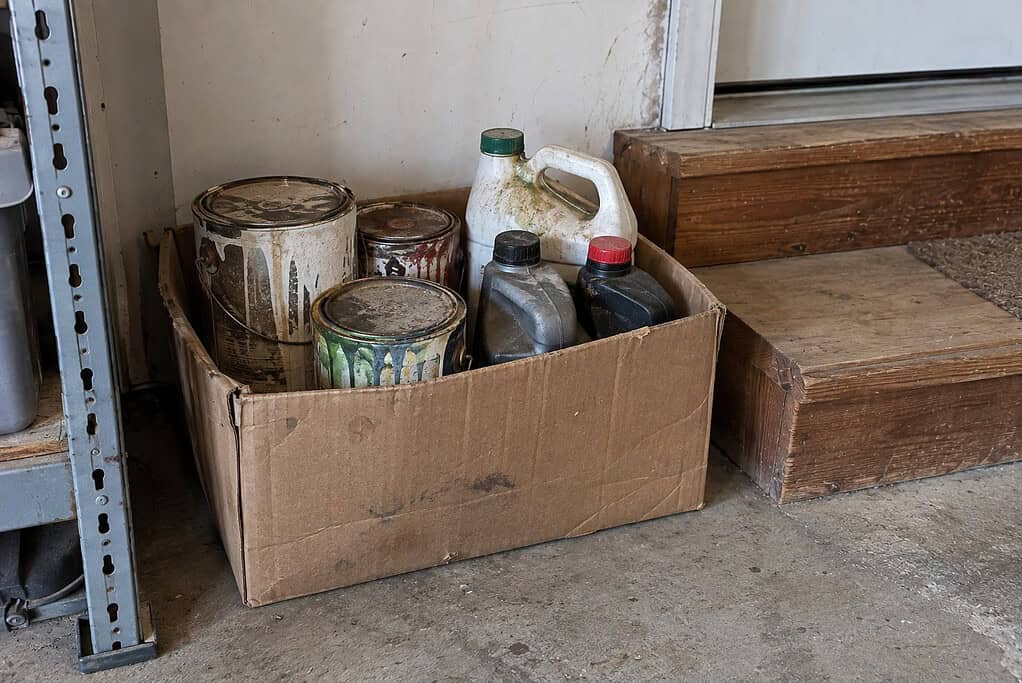
We found old cans of paint, a jug of weed killer, and two bottles of motor oil on the bottom shelf.
These don’t go in the regular trash. Many towns hold a household hazardous waste day, or have a drop-off site where you can bring them for free.
We called our city office to ask. They told us the date and the place, and my husband put everything in a sturdy box on the floor by the door, so it’s ready to go.
Putting the Keepers Within Reach
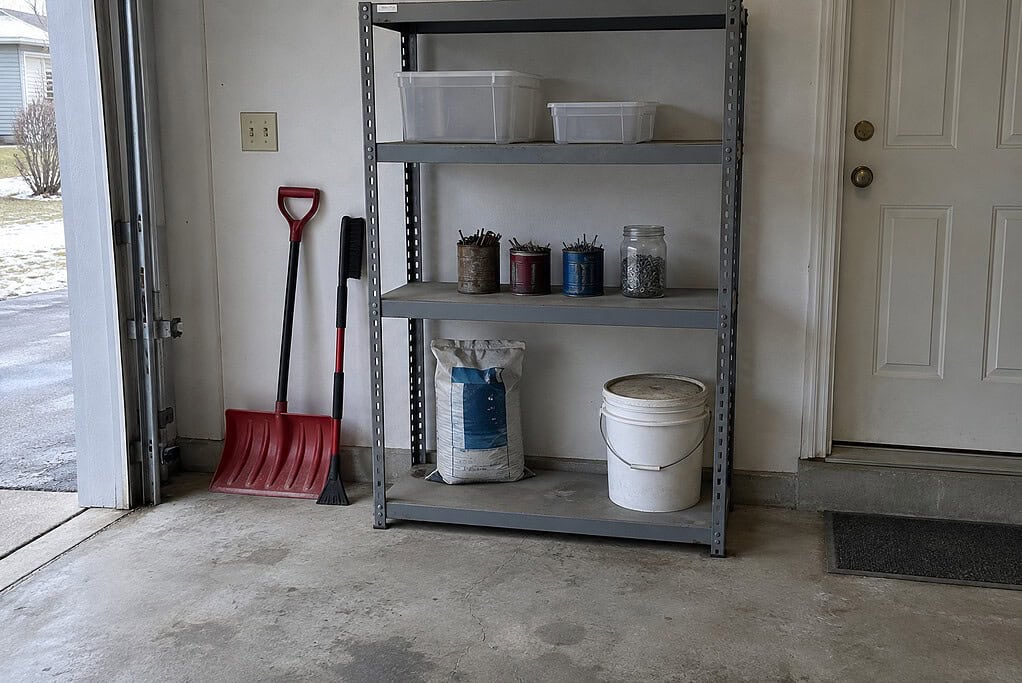
Once the sorting was done, we had much less to put back. That made it easy to put things where we could reach them.
We put the things we use most, like the snow shovel, the ice melt, and the car brush, closest to the door. Heavy things went on the lower shelves, and nothing heavy went up high.
The top shelves now hold only light things we rarely need, like the empty bins and a box of Christmas yard lights. My husband said, “If we need a ladder to get it, it had better be light.”
I didn’t buy anything new. We used the bins we already had, and there were more than enough. (If you’d like more ideas for the space once it’s cleared, I shared 21 garage storage ideas earlier this year.)
Where the Garage Things Ended Up
I like knowing where things end up. It makes it so much easier to let go.
The car-top carrier and the high chair went to a young family through our local Buy Nothing group. The dresser, the deck boards, and the extra lawn mower went to the ReStore.
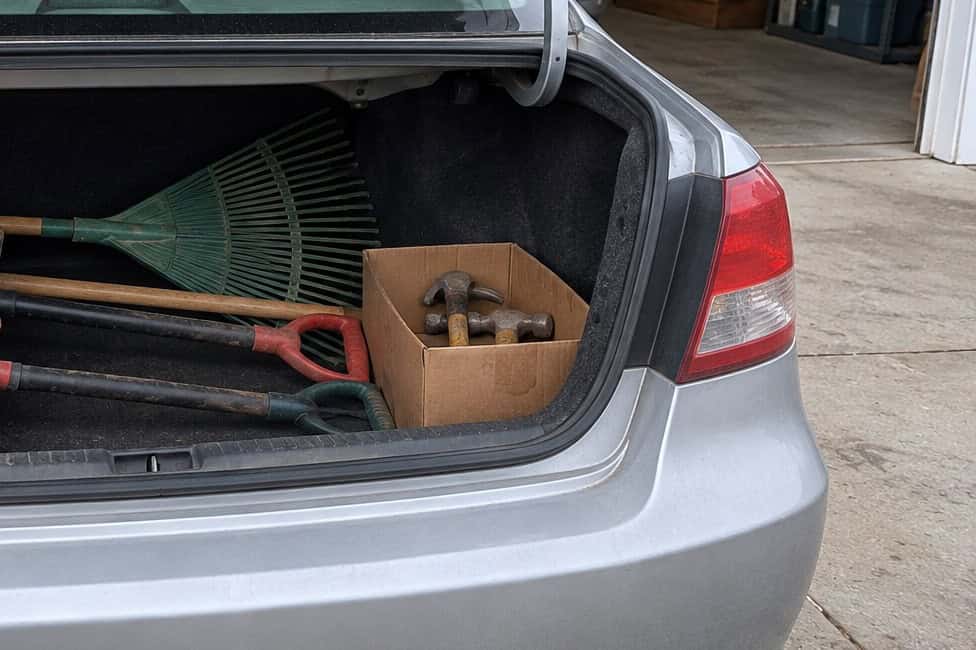
The extra shovels, rakes, and hammers went to the thrift store. The broken things went in the trash, and the boxes went in the recycling.
There used to be a corner out here for the walker and the shower chair we bought when my husband hurt his hip. Those went to people who needed them a while back, and I wrote about where medical equipment can help again. That corner now holds the snow shovel and the bag of ice melt, right by the door.
If you’re not sure who takes what, my item-by-item donation guide can help.
What I’d Tell a Friend Starting Her Own Garage
Start with the path, not the pile. A clear walkway makes the garage safer right away, and it gives you a reason to keep going.
Do it with the person whose things are out there, and let them decide about their own things. It’s slower that way, but nobody’s feelings get hurt.
Keep each session short, and sit down to sort. If your body has limits like mine does, my post on decluttering with a bad back and sore hands has more gentle ways to work.
And save the heavy things for a help day. You don’t have to lift it all yourself to get it out of your life.
The First Cold Morning
Last Tuesday, we had our first frost of the fall.
I went out to the garage with my coffee, and there was my car, parked inside. The windshield was clear. My husband was still inside in his slippers, warm and dry, with no ice to scrape.
I stood in that garage for a minute. I could see the floor, and I could walk to my car without stepping over anything.
And the whole place smelled like cold air and sawdust, not old cardboard.
It’s still his garage. His screws are still in their coffee cans, and his workbench still has his things on it.
But now there’s room for both of us, and for my car too.
If your garage has been waiting for you, pick one Saturday morning this fall. Set up a chair, clear the path from the door, and stop after an hour. That’s a good start.
A Little Help for the Next Step

You don’t have to clear the whole garage at once. One hour and one path at a time is how it gets done.
My free Declutter for Self Care Checklist breaks your home into small, gentle jobs, one space at a time. It’s an easy way to keep going once the garage is clear.
Frequently Asked Questions
Where should I start decluttering my garage?
Start with the walkway from the house door to the car. Clearing that path makes the garage safer right away. Then remove things you’re storing for others, anything broken, and duplicates, before you work on the shelves.
How long does it take to declutter a garage?
It depends on the size and how full it is. We worked one hour each Saturday for four weeks and got most of it done. Short sessions are easier on your body and help you make better choices.
How can seniors declutter a garage safely?
Sit down to sort at a folding table, and don’t climb ladders. Save heavy things for a day when someone younger can help. Keep the walkway clear so there’s nothing to trip over.
What should I do with old paint and chemicals from the garage?
Don’t put them in the regular trash. Call your city or county to ask about a household hazardous waste day or a drop-off site. Keep them in a sturdy box on the floor until you take them.
Who will pick up old tools and building supplies?
Many Habitat for Humanity ReStores take tools and building supplies that are in good shape. Some offer free pickup from your driveway or garage. Call your local store first to ask what they accept.
Follow me elsewhere!

