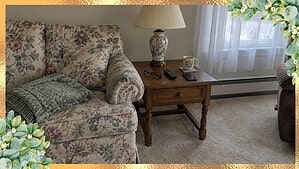
Every fall, once it starts getting dark before supper, our living room turns into the busiest room in the house.
That’s where we eat our popcorn and watch the news. It’s where I read in the evening and where my husband falls asleep in his chair before the weather comes on.
The Bureau of Labor Statistics says people 65 and older watch more than four hours of TV a day, on average. Most of us spend those hours in the living room.
So this fall, I looked hard at ours. It wasn’t messy, exactly. It was just full, the way a room gets when you’ve lived in a house for thirty years.
I didn’t empty the whole room. I started in my own seat on the couch and worked my way out, one small area at a time. If decluttering the living room feels like too much, this is a gentle way to start.
What You Can Reach From Your Seat
Sit down in the spot where you sit every night. Now look at everything you can touch without getting up.
That’s your first job. It’s the place you use most, so it’s the place that matters most.
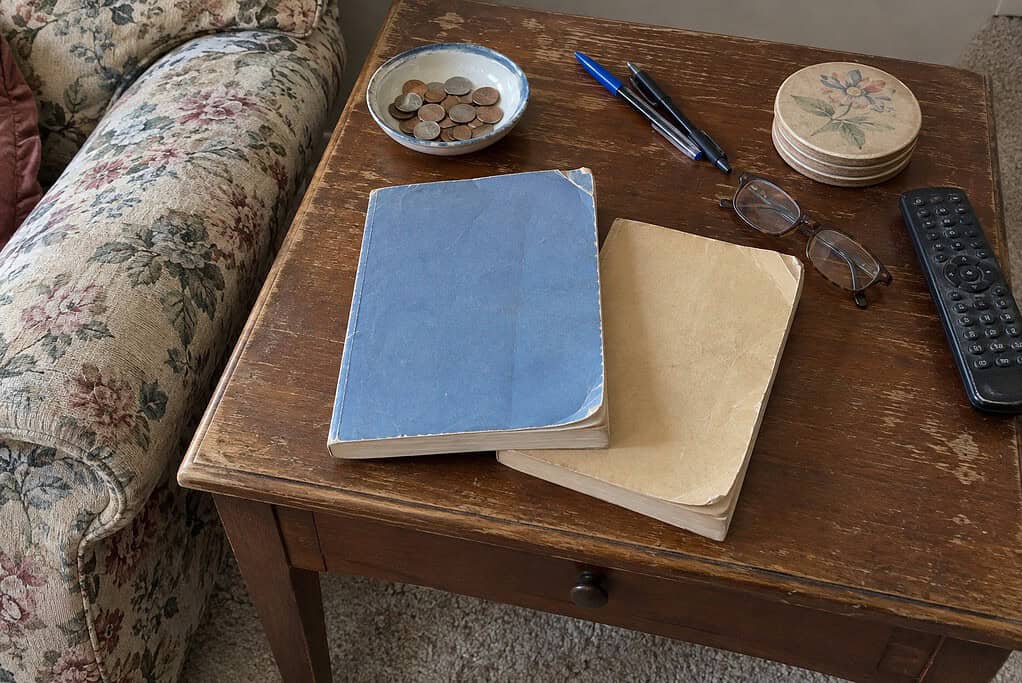
My side table had my reading glasses, a lamp and the TV remote. It also had two old crossword books, a dish of loose change, a pen that didn’t write and three coasters stacked on top of each other.
I made a short list of what I really reach for at night. Glasses, the remote, my phone, a lamp and a coaster for my tea.
Those five things stayed. Everything else found another home or went in the trash.
Now my side table has room to set down a cup without moving something first. (It took ten minutes, and I did it sitting down.)
The Remote Basket
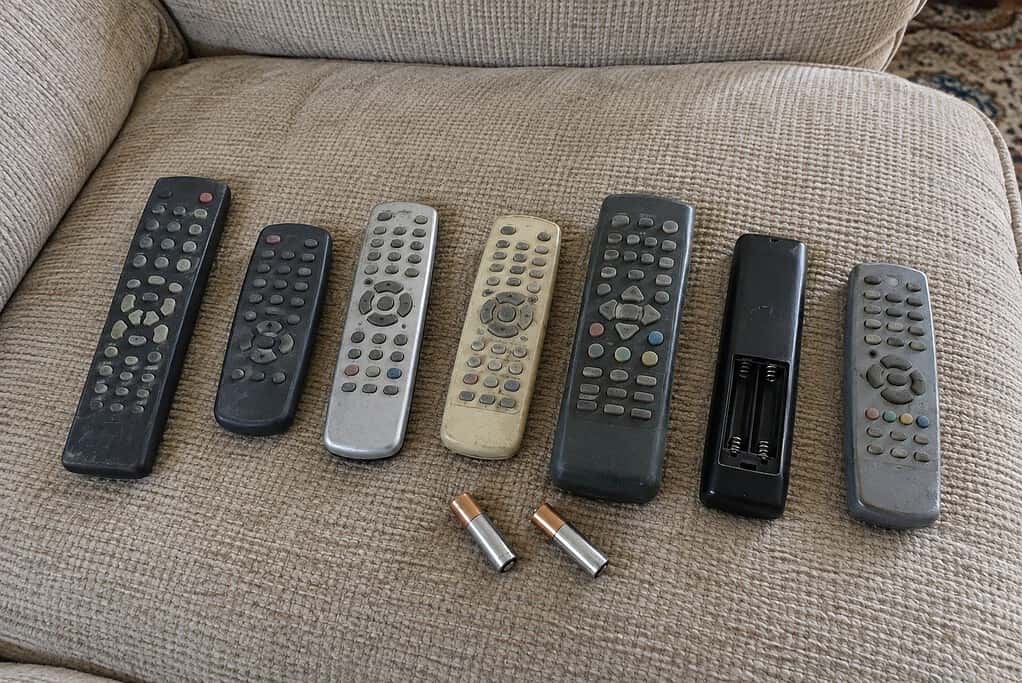
We had seven remotes. I counted them twice, because I didn’t believe it.
Two of them work the TV and the cable box. One was for a DVD player we gave away years ago. Another was for a TV that left our house before my grandson was born, and I couldn’t tell you what the other three were for.
I tested each one by pointing it at the TV and pressing the power button. If nothing happened, it went in a pile.
Before you throw out a remote, take the batteries out. The EPA says regular alkaline batteries can go in the household trash in most communities. Lithium and button batteries should never go in the trash, so ask your town where to drop them off.
Old remotes count as small electronics. Many towns have an electronics recycling day, so it’s worth a call.
If you find an old cable or satellite box, call the company first. Many of them want their equipment back.
Our two good remotes now live in a small basket on the coffee table. When they go missing, I know exactly where to look first.
The Coffee Table
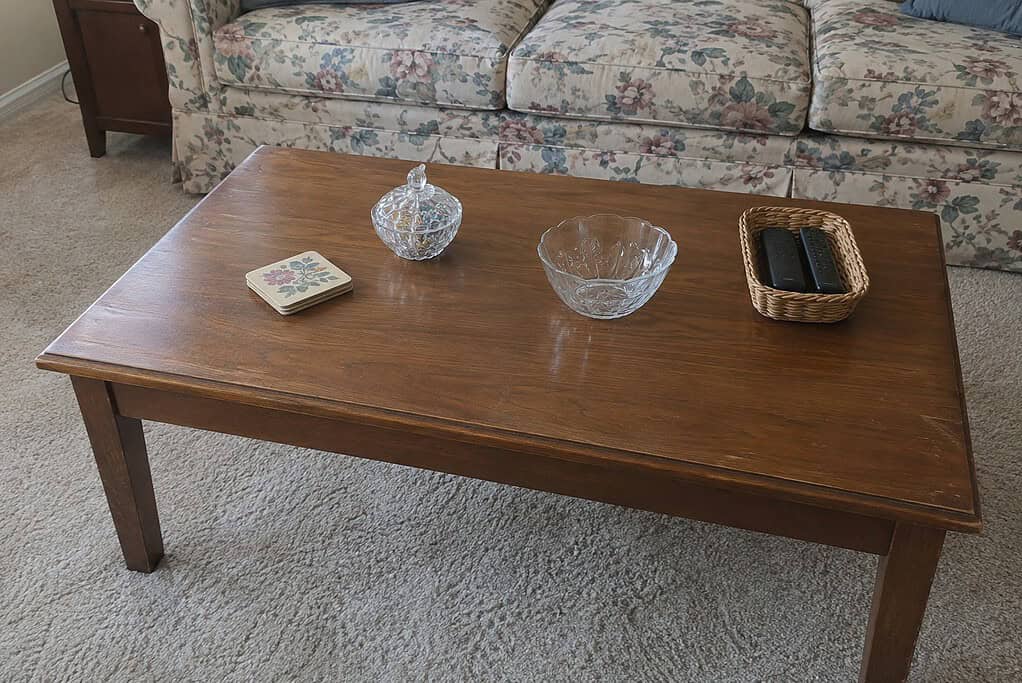
Our coffee table holds a few coasters, a candy dish and a glass bowl my mother gave me.
That’s all it holds now. I cleared it off before my niece’s little boy came to visit, and I wrote about that in my post on childproofing a grandparents’ house.
It looked so much nicer clear that I’ve kept it that way.
A clear coffee table is easier to dust, and it’s ready for a plate of cookies when company comes. If yours is covered, try clearing it for one week and see how it feels.
Magazines and Mail
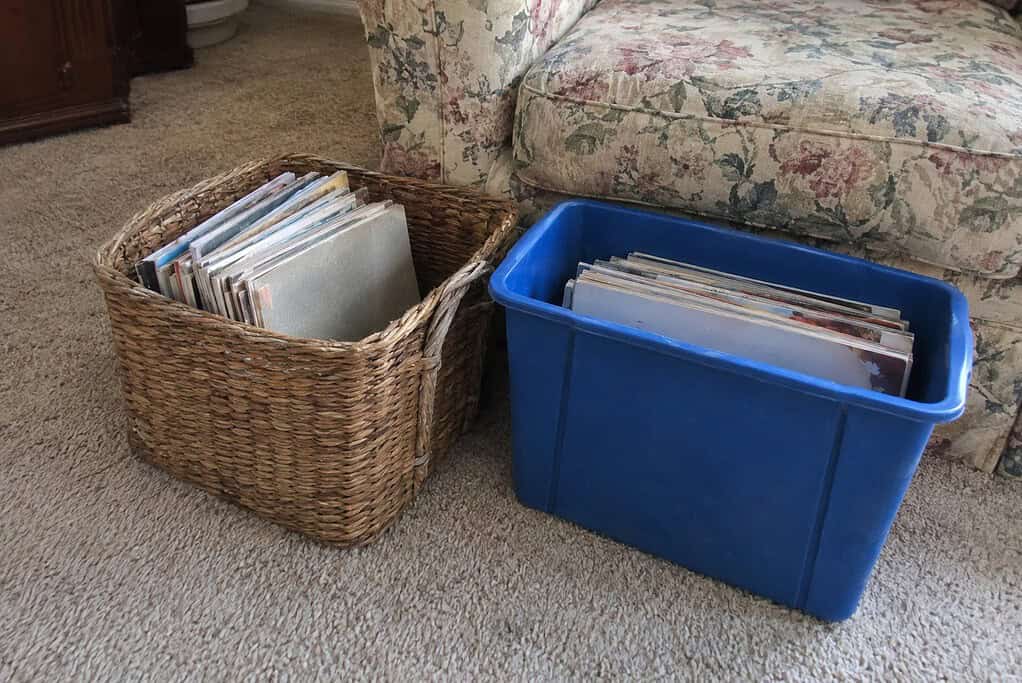
Magazines pile up so slowly that we stop seeing them. I wrote about that in my post on clutter blindness, and the magazine basket by the couch was one of the first things I noticed.
My rule now is simple. I keep this month’s magazines and let the rest go.
Most curbside recycling programs take magazines, but check what yours accepts. A library or senior center near you may take recent issues, so it’s worth asking.
If the same catalogs keep coming, you can stop most of them for free. I shared how I did it in my post on how to stop catalogs in the mail.
Mail doesn’t belong in the living room at all at our house. I open it standing by the recycling bin and deal with the rest that same day.
The TV Cabinet
The cabinet under our TV was the biggest job. It held DVDs, old videotapes and a tangle of cords for things we didn’t own anymore.
I took everything out and set it on the floor in front of me. Then I sorted it into three piles.
Movies You Bought at the Store
Most of our store-bought movies were ones the kids watched when they were little. Nobody had played them in years.
Thrift stores often take DVDs in their cases. I kept three favorites for when the grandkids visit and let the rest go.
Old store-bought videotapes are harder to pass on. I shared what to do with them in my post on old store-bought VHS tapes.
Home Movies
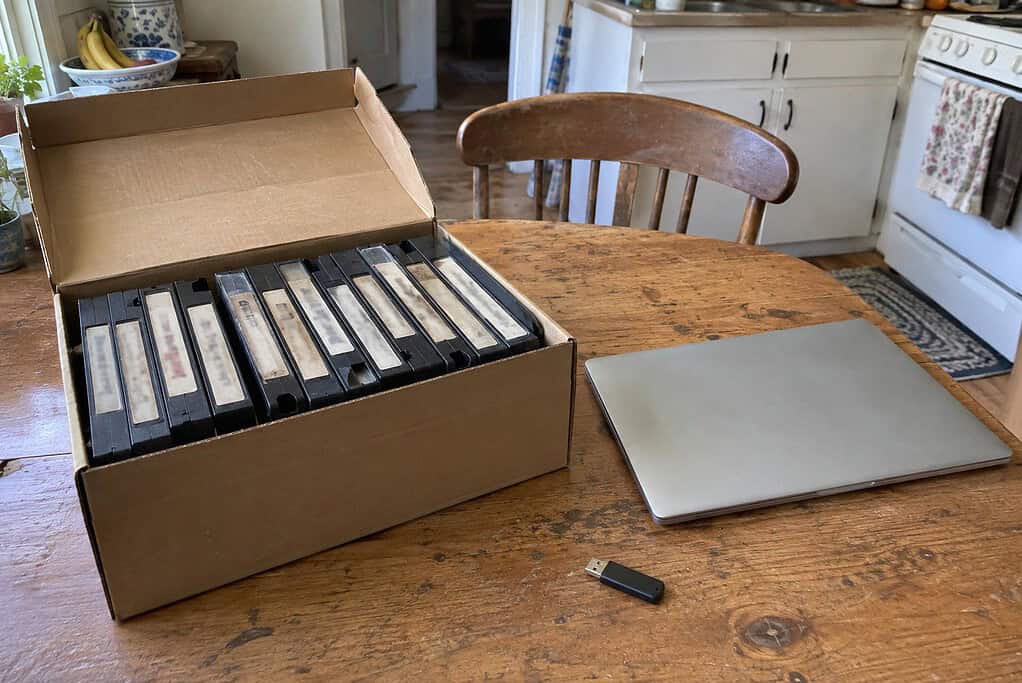
Then I found the tapes we made ourselves. Birthday parties, Christmas mornings, a school play where my youngest forgot every line.
These are different. Nobody else has a copy of these, anywhere.
Old tapes can wear out over time, and the machines that play them are getting hard to find. So instead of keeping the tapes, we had them copied onto a computer file.
Some public libraries have equipment that lets you copy old tapes yourself. Many photo shops and mail-in services will do it for a fee, too.
We sent copies to all three of our kids. My daughter called the night she watched them, and we both laughed until we cried.
Cords and Chargers
Every cord went into one pile. If I couldn’t name what it was for, it went to the electronics recycling.
The cords we still use now have a small piece of tape on them with the name written on it. (My husband teased me about the labels, and then he used them the very next day.)
Pillows and Throws
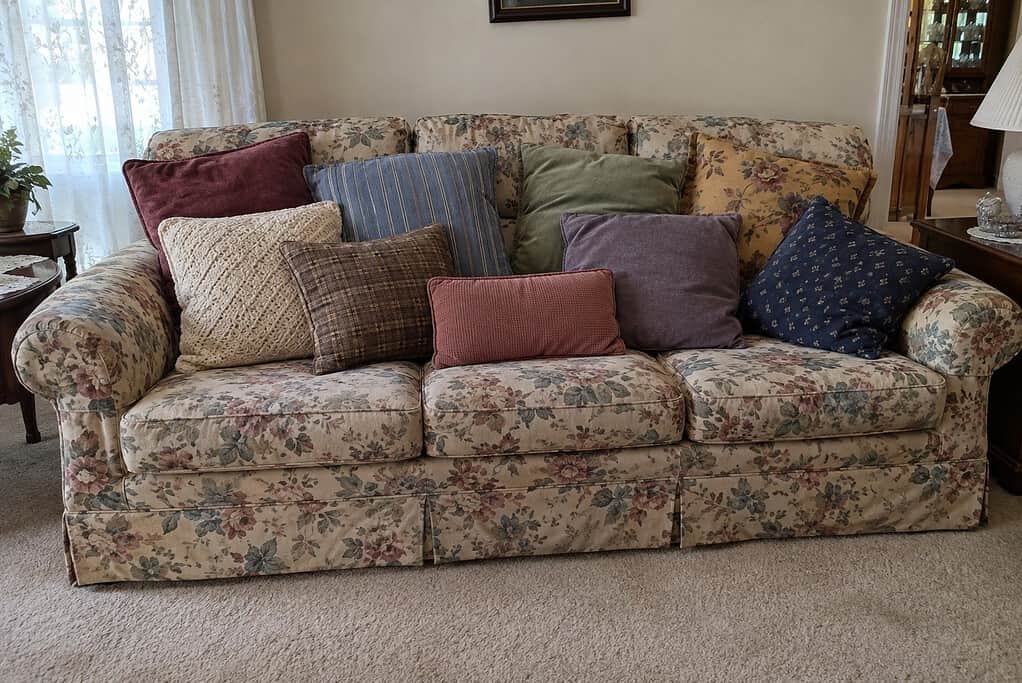
I counted nine pillows on our couch. When I sat down, I had to move three of them just to lean back.
So I kept the pillows I really lean on. Two on the couch for me, and one for company.
Throws are the same. I kept a soft one for my spot, and my husband has his own on his chair.
Earlier this fall, I let go of a throw that shed on everything, and I shared that in my post on would I buy it again. The extra throws went to an animal shelter, where they’ll keep a dog warm this winter.
Shelves and Little Things
My shelves held photo frames, a little vase, a few books, some candles and more small knickknacks than I’d like to admit.
Dusting all of them with sore hands had gotten hard. So I asked myself which ones I’d notice if they were gone.
The photo frames stayed, and so did the little vase. A few of the knickknacks stayed too, the ones that make me smile when I see them.
The rest went into a box. I asked my daughter to look through it first, and she took one small bird my mother loved.
Now my shelves have space between things. Dusting takes five minutes instead of twenty.
The Path Through the Room
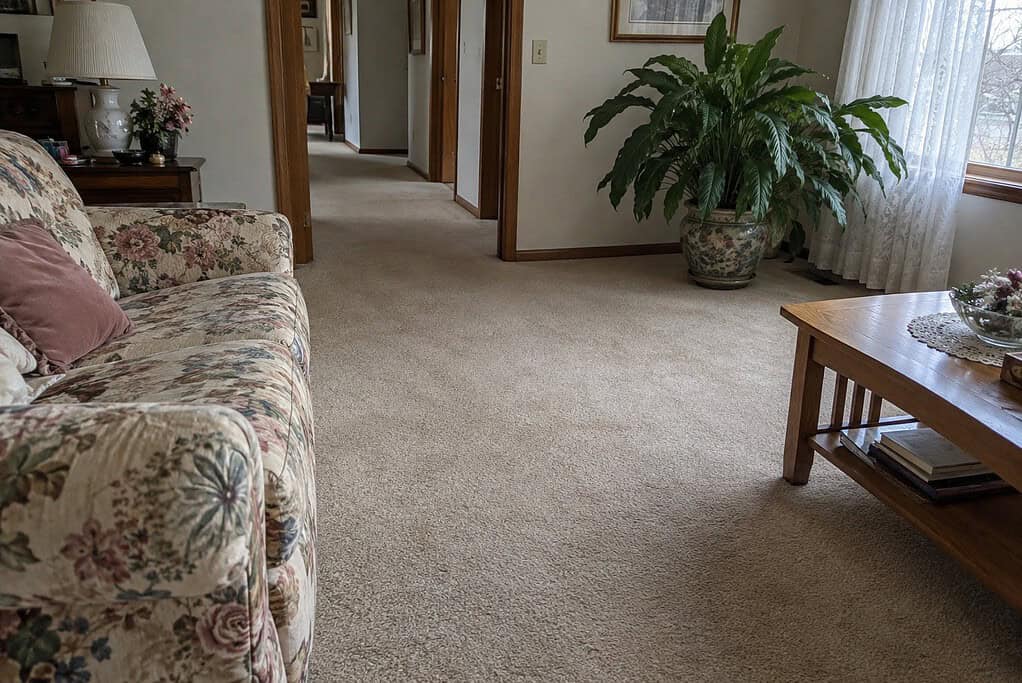
The last thing I checked was the floor. I walked from my seat to the kitchen, then to the hallway, and looked for anything in my way.
The CDC’s home safety checklist asks a good question. Do you have to walk around furniture to get across a room?
If you do, ask someone to help you move it so your path is clear. The CDC also says to pick up things on the floor and keep them off the floor for good.
We had a big floor plant in a heavy pot right in the path to the hallway. My grandson moved it next to the window, and now I walk straight through, even at night.
I shared more about this in my post on decluttering for safety, including what to do about cords and rugs.
One Spot an Evening
I didn’t do all of this in one day. I did one spot each evening, for about two weeks.
Most nights, I worked for ten or fifteen minutes while the news was on. When my back said it was time to stop, I stopped.
Sitting down helped the most. I sorted the TV cabinet from a kitchen chair, with a laundry basket at my feet for things leaving the room.
Anything that belonged somewhere else went in the basket. At the end of the night, my husband carried it out, and I put things away the next morning.
If you can only do one spot this week, pick your own seat. It’s the one you’ll feel every single night.
His Chair Is His Call
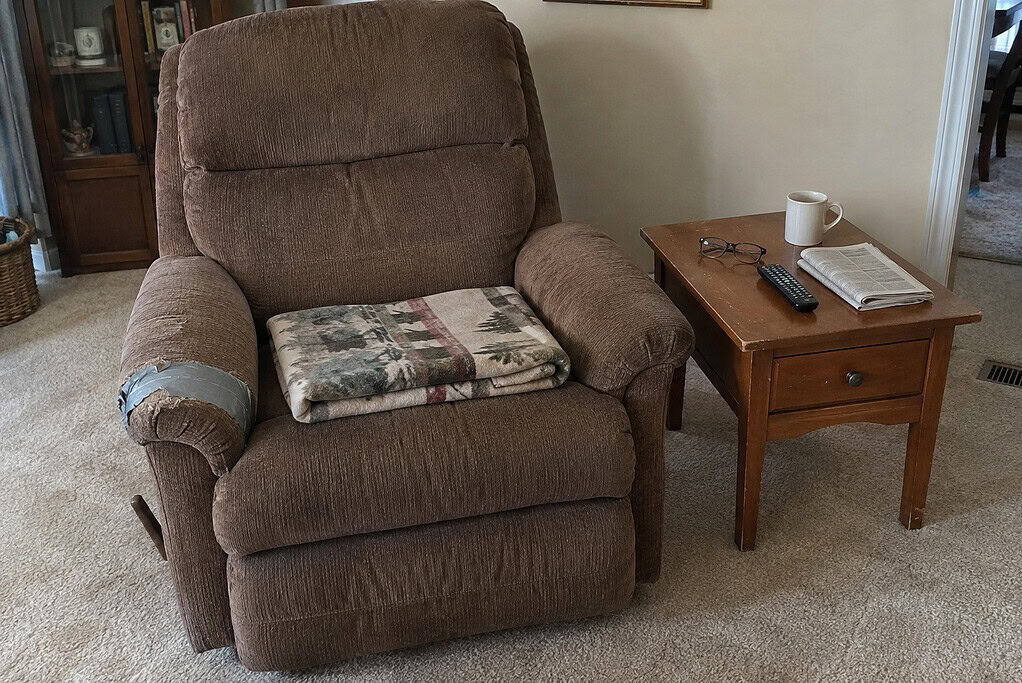
My husband’s side of the room is his.
His recliner still has duct tape on one arm. His things still sit on the little table next to it, and I don’t touch them.
I did ask him one question. “Is there anything by your chair you’d like to go?”
He looked around for a long minute. Then he handed me two old TV guides and said, “That’s it.”
That was enough for me. The rest of the room was mine to work on, and he’s happy with how it turned out.
An Evening in My Spot
Last night, after supper, I sat down in my spot on the couch with a cup of tea.
My glasses were right where I left them. The remote was in its basket, and there was room for my cup on the side table.
My husband was asleep in his chair before the weather came on, the way he always is.
The room looked like ours. Just with a little more space in it.
That’s what I want from my living room after 60. Not a picture from a magazine, but a room that’s easy to rest in.
So tonight, sit down in your own seat and look at what’s within reach. Start there, and let the rest of the room wait for another day.
A Little Help for the Next Room

Once your living room feels easier, you might want to keep going, one small spot at a time.
My free Declutter for Self Care Checklist breaks your home into short, gentle jobs. Each one is small enough to finish in an evening, sitting down if you need to.
Frequently Asked Questions
Where should I start decluttering my living room?
Start in the seat where you sit every night. Clear the things you can reach without getting up, and keep only what you really use, like your glasses, the remote and a lamp. Then work your way out to the rest of the room.
What should I get rid of in my living room?
Remotes for things you no longer own, old magazines, DVDs nobody watches, extra pillows and throws, cords you can’t name, and small decorations you don’t love. Keep the things you use and the ones that make you smile.
How do I get rid of old remotes and cords?
Take the batteries out of each remote first. Old remotes and cords count as small electronics, so check if your town has an electronics recycling day. If you find an old cable or satellite box, call the company, because many want it back.
What should I do with old home movies on tape?
Have them copied onto a computer file before the tapes wear out. Some public libraries have equipment you can use yourself, and many photo shops and mail-in services will do it for a fee. Then you can share copies with your family.
How can I make my living room safer as I get older?
Make sure you can walk through the room without going around furniture or stepping over things. The CDC suggests asking someone to move furniture that’s in your way and keeping things off the floor. Keep the things you use every day within easy reach of your chair.
Follow me elsewhere!

