Decluttering for Women Over 80: A Gentler Way to Lighten Your Home

When my mother was 84, I stopped by her house one afternoon with a bag of groceries.

I called out hello. No answer.

I found her in the hallway, standing on a kitchen chair. She was reaching for a big box on the top shelf of the hall closet.

My heart dropped. I got her down as gently as I could.

“I just wanted to clear out that closet,” she said. “I didn't want to bother anyone.”

That was my mother. She had kept a house for sixty years, and she did not like to ask for help.

But that day taught me something I've never forgotten. Decluttering after 80 has to look different. It can't be big. It can't be rushed. And it can never be worth a fall.

My mother has passed now, and I think about that closet often. We did clear it, in the end. Just not that way. We found a slower, safer way that worked for her body and her energy.

If you're over 80 and looking around your home, wishing it felt lighter, this is for you. You don't need a big weekend or a strong back.

You just need a gentler plan. That's what decluttering for women over 80 should be. Let me show you the one that worked for us.

Why Decluttering Looks Different After 80
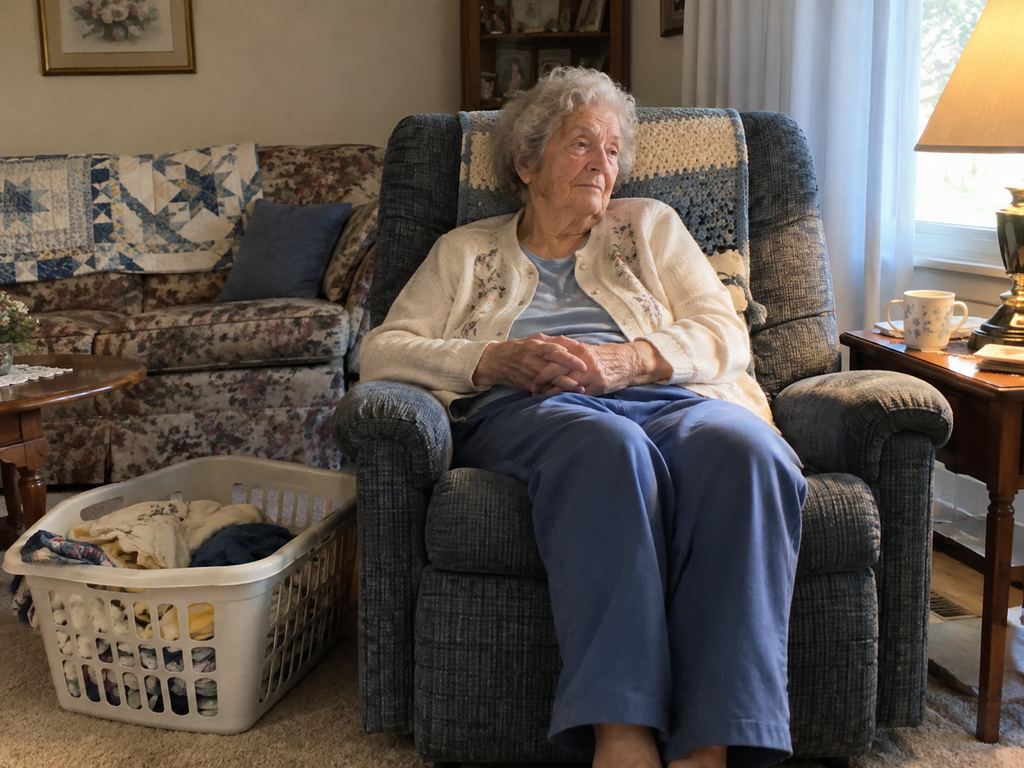
A woman in her 80s resting in an armchair beside a half-sorted basket, taking a break from decluttering

Let's be honest about a few things, kindly.

After 80, your energy runs out sooner. A job that took one morning at 60 might take three short tries now. That's normal.

Your balance may not be what it was. Reaching, bending, and carrying all feel harder, and they can be risky. About 1 in 4 older adults falls each year, and clutter on the floor makes falls more likely.

And many women are doing this alone. About 4 in 10 women over 75 live by themselves. There's no one to hold the other end of the box.

So if you've tried to declutter and ended up worn out, please don't blame yourself. A lot of the usual steps are hard on an older body, and that's okay. This stage of life just needs its own plan.

Doing less is not failing. Doing less is the right plan now.

My mother needed to hear that. She thought going slow meant she wasn't trying hard enough. It didn't. It meant she was being smart.

Read related post:   What is Hoarding?

If you're a little younger, I have a guide for decluttering in your 70s and another for women over 60. But if you're past 80, stay right here. This one is for you.

Five Gentle Rules for Decluttering After 80

These are the five rules my mother and I followed. They're simple. And every one of them is about keeping you safe and keeping you going.

Make the path from your bed to the bathroom your first job

A bedroom with a clear floor path from the bed to the bathroom door and a small night light near the doorway

Before you touch a single drawer, look at the floor.

Walk from your bed to your bathroom. Then from your bathroom to your kitchen. Look down as you go.

Is there anything you could trip on? A basket. A stack of magazines. A shoe. A cord. The corner of a rug that curls up.

Clear those things first. This is the most important decluttering you'll ever do, because it keeps you on your feet.

With my mother, we started right here. We moved a basket of yarn from beside her bed. We picked up a pile of newspapers by her chair. We took up a small rug in the hall (she loved that rug, but it slid every time she stepped on it).

It took about 20 minutes. And it made her home safer that very same day.

There are more ideas in my post on decluttering for safety, if you'd like them.

Do one small job a day, sitting down

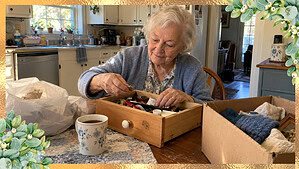
A single kitchen drawer set on the table being sorted, with a cup of coffee and reading glasses nearby

Forget the big weekend. After 80, one small job a day is plenty.

A small job means one drawer. One basket. One shelf of the bathroom cabinet. That's it.

And do it sitting down. Bring the drawer to your kitchen table, if it's light. Or fill a small basket from a shelf and carry that to the table instead.

Sit in a comfortable chair with good light. Put a trash bag on one side and a donation box on the other. Then go through the drawer, one thing at a time.

My mother did one drawer every morning after breakfast, with her second cup of coffee. Some days it took ten minutes. Some days it took thirty.

Over a few months, that added up to her whole kitchen and her whole bedroom. One drawer at a time, sitting down, never rushing.

If you need a way to get started on a hard day, the 5-minute decluttering rule is a gentle place to begin.

Never lift, climb, or carry alone

A young man lifting a box down from a high closet shelf while a woman in her 80s stands safely nearby

This rule matters most. Please don't skip it.

If something is heavy, high up, or awkward, it waits for help. No exceptions.

That means no standing on chairs. No reaching for boxes on the top shelf. No carrying full bags down the stairs. No moving furniture by yourself.

Instead, keep a simple list on your refrigerator. Every time you find a heavy or high job, write it down. “Box on the top shelf of the hall closet.” “Two bags to the car.” “Old lamp to the curb.”

When family or a helper visits, hand them the list. They do the lifting in a few minutes. You stay safe.

Read related post:   5 Significant Questions To Ask When Decluttering (Out with the Old, In with the New)

My mother hated this rule at first. She felt like a bother. But her grandson came over on Sundays and cleared her whole list in half an hour. He was glad to help. And she never stood on a chair again.

Keep your phone in your pocket, and stop while you still feel fine

A woman in her 80s resting with a cup of tea, her phone in her cardigan pocket and a sorting basket set aside

Every time you declutter, keep your phone on you. In your pocket or clipped to your clothes. Not across the room.

If you slip or feel dizzy, you want to be able to call someone right away.

And here's the second half of this rule. Stop while you still feel fine.

Don't wait until you're tired, achy, or out of breath. That's too late. Stop a little before then, while you still feel good. Then rest.

It sounds backward, but it works. When you stop early, you feel good enough to do a little more tomorrow. When you push too hard, you might need three days to recover.

My mother learned this the hard way. One day she cleared two whole closets and could barely get out of bed the next morning. After that, she stopped each day while she still felt fine. And she got more done that way, not less.

Let the big spaces wait for visit days

A woman in her 80s and her daughter sorting one box of keepsakes together at the kitchen table over coffee

The attic. The basement. The garage. The boxes of photos and keepsakes.

These are the hardest spaces. They're heavy, high, or low, and full of memories. So don't tackle them alone.

Save them for visit days, when a family member or a helper is there with you.

You don't have to do them all at once, either. One box per visit is plenty. Your helper carries it to the table. You sit and decide. They carry out what goes.

My mother saved her basement for the weekends my sister and I came over. We'd bring down one box, sit at the table with coffee, and go through it together. Those turned into some of our sweetest afternoons.

It was slow. But it was safe, and it was never lonely.

How to Let Others Help Without Losing Your Say

A handwritten list held to the refrigerator with a magnet and a sheet of small colored stickers on the counter below

Many women over 80 worry about one thing when family offers to help. “What if they throw out something I love?”

It's a fair worry. Helpers mean well, but they can move fast. And they don't always know what matters to you.

So here's a simple way to stay in charge.

First, give everyone a job. The helper carries, climbs, and hauls. You sit and decide. Nothing leaves the house without your okay.

Second, make a keep list before anyone arrives. Walk through the room and write down the things that stay, no matter what. Your wedding photo. The quilt your mother made. Your good reading lamp. Put a colored sticker on each one, too.

Third, check the bags before they go out the door. Just a quick look. It takes two minutes and saves a lot of heartache.

Read related post:   Does Keeping Their Things Really Keep the People We Lost?

With my mother, this made all the difference. She felt safe letting us help, because she knew she was still the one deciding. Nothing she loved went out by mistake.

Things can find a good home, too, not just the trash. If you have a walker, a cane, or a shower chair you no longer use, here's where to donate medical equipment so it helps someone else.

The Little Things That Made the Biggest Difference

I think about my mother's house near the end of her life, and what I remember isn't a spotless home.

It was the clear path from her bed to her bathroom, lit by a little night light. Her kitchen table with nothing on it but her coffee cup and a crossword. The empty spot where that sliding rug used to be.

Those small things kept her safe. And they gave her peace.

We never cleared her whole house. We didn't need to. We did the parts that mattered most, a little at a time, together.

That's what I want for you, too. Not a perfect home. A safe one. A calm one. A home that's easier to live in, today.

You don't have to do it all. You just have to start small and keep going gently.

Clear one path. Do one drawer. Make one list for your helper.

That's enough for now. And it's more than enough.

What's one small thing you could clear this week? I'd love to hear.

Start With a Plan Made for Real Energy

Declutter for Self Care Checklist

When your energy is limited, it helps to know exactly what to do next, so you don't waste it on guessing.

My free Declutter for Self Care Checklist breaks your home into small, simple jobs you can do sitting down, at your own pace, with plenty of room to rest in between.

Frequently Asked Questions

How should a woman over 80 start decluttering?

Start with the floors, not the drawers. Walk from your bed to your bathroom and clear anything you could trip on, like baskets, cords, shoes, and curled rugs. That makes your home safer right away. After that, do one small job a day, like a single drawer, sitting down at the kitchen table.

How can I declutter safely at 80 or older?

Work sitting down whenever you can, and keep your phone in your pocket the whole time. Never stand on a chair, reach for high boxes, or carry heavy bags on your own. Write those jobs on a list and save them for when a family member or helper visits. Keep floors clear as you go, and stop before you get tired.

How much should I declutter in one day?

One small job is plenty. That might be one drawer, one basket, or one shelf. Most days, 10 to 30 minutes is enough. The key is to stop while you still feel fine, not when you're worn out. Small, steady progress adds up faster than one big day that leaves you sore for a week.

What should I declutter first after 80?

Clear the things that could cause a fall first, like clutter on floors and walkways. Next, focus on the spaces you use every day, like your kitchen, bathroom, and bedside table. Leave the attic, basement, garage, and keepsake boxes for last, and only tackle them when someone is there to help you.

How do I get help without losing control of my things?

Before anyone arrives, make a list of the items you want to keep and mark them with a colored sticker. Give your helper the heavy jobs, like lifting and carrying, while you sit and make the decisions. Ask them not to take anything out of the house without your okay, and take a quick look at the bags before they go.

Follow us on PinterestFollow
Follow me elsewhere!

Leave a Comment