I used to think I was bad at decluttering.
I'd read all the rules, get excited, and then stand in the middle of my living room holding a sweater I hadn't worn in two years — completely frozen.
The rule said to let it go. But it was a gift from my sister. And what if I needed it someday?
So I'd put it back, feel defeated, and walk away from the whole thing.
The problem wasn't me. It was that I was treating decluttering rules like they were written in stone. Like breaking one meant I was doing the WHOLE thing wrong.
But over time, I've learned something that changed how I approach clutter entirely.
Rules are just starting points. They're meant to give you a push in the right direction, not make you feel guilty every time your life doesn't fit neatly into a formula.
Some rules have been really helpful to me. Others I've had to bend a little to make them actually work for my home and my life.
And a few I've tossed out completely.
In this post, I'm walking you through 7 of the most popular decluttering rules, why they can make things harder than they need to be, and what I do instead.
My hope is that by the end, you'll feel less pressure and more confidence every time you tackle a pile of stuff.
Common Decluttering Rules That I've Learned to Bend
These rules didn't come from nowhere. Each one has real logic behind it, and I've tried every single one of them at some point. But life has a way of making “simple” rules complicated.
Below, I'll share what each rule gets right, where it falls short, and the small tweak that actually made it work for me.
1. If You Haven't Used It in a Year, Get Rid of It

This is probably the most well-known decluttering rule out there. And I get why people love it. It gives you a clear deadline.
For a lot of things, it works great.
But then, there’s this one time where I stood in front of my closet holding my heavy winter coat (the one I only pull out when temperatures drop below freezing) and the rule suddenly felt silly.
Of course I hadn't worn it in a year. (We'd had a mild winter)
That didn't mean I should donate it and then scramble to replace it the moment a cold snap hit.
The same thing happened with my slow cooker. I use it every fall and winter for soups and stews. Come spring, it goes to the back of the cabinet.
By the rule, it should have been gone two summers ago.
So, what I do instead is I still use the one-year rule, but I give seasonal items and special-occasion pieces like clothes their own category.
Before I let something go, I ask myself, does this have a season or a specific purpose? If the answer is yes, I keep it. And if it's just something I kept telling myself I'd use “someday” but never actually planned for, that's when it goes.
A good way to stay honest with yourself on this one is if you're keeping something seasonal, give it a mental “scheduled use.”
Know roughly when you'll use it next. If you can't answer that, it might be time to let it go after all.
2. Keep Only What Sparks Joy
This rule took the world by storm, and I completely understand why. The idea is simple. Hold an item, and if it doesn't spark joy, let it go.
It's a beautiful concept — until you're standing in your kitchen holding a can opener.
Does my can opener spark joy? No. It does not. But I need it every single week. Same goes for my toilet brush, my box of old tax returns, and the bottle of ibuprofen in my medicine cabinet.
Some things in your home aren't there to make you happy. They're there because life requires them.
So, what I do instead is ask three questions instead of just one. Does this bring me joy? Does this make my life easier? Or would I genuinely miss it if it were gone?
If the answer to any of those is yes, it stays.
I do still use the spark joy test — just not as a one-size-fits-all rule. For clothes, decor, and books, it works really well. For practical everyday items, I let function win over feeling.
It's a small shift, but it stops you from tossing things you'll end up replacing within the month.
And if you're holding onto things because of the memories attached to them, that's a whole separate challenge worth looking into.
3. Declutter Everything Before You Organize
You've probably heard this one a lot. The idea is that buying bins and baskets before you declutter is just organizing your clutter. And there's truth to that.
But here's where it got tricky for me.
Every time I tried to pull everything out first like clothes, papers, or kitchen stuff I ended up with piles on every surface and no energy left to make decisions.
I'd spend the whole afternoon just pulling things out, and by 3pm I was so overwhelmed I just shoved everything back and called it a day.
Nothing got done. And I felt worse than when I started.
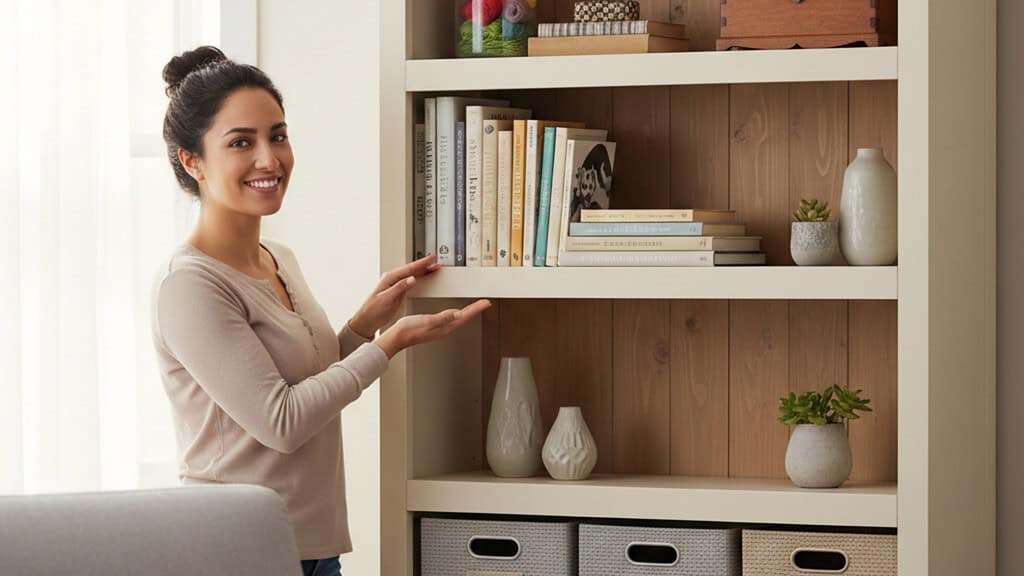
What finally worked for me was flipping the process around a little. Instead of pulling everything out first, I pick a container (a shelf, a drawer, a basket) and I decide upfront how much space that category gets.
Then I edit down to fit that space.
So instead of asking “what do I get rid of?” I'm asking “what makes the cut?“
It's a much easier decision to make. And it keeps the project small enough that I can actually finish it in one sitting without burning out.
If you've ever started a big declutter session and ended up with a bigger mess than you started with, try this instead. Pick one shelf. Decide what fits. Done.
4. Do It All in One Big Weekend
I've tried this one more times than I'd like to admit.
The plan always sounds so good. Clear the whole weekend, put on a podcast, and transform the entire house in one big push. And maybe you've seen those satisfying before-and-after photos online that make it look totally doable.
But what actually happened every time I tried it was by Saturday afternoon, I was tired, cranky, and staring at a dining room table covered in stuff I couldn't make decisions about anymore.
My brain was full. Every item started feeling equally important or equally pointless, and I couldn't tell which was which.
That's decision fatigue. And a whole weekend of decluttering will bring it on fast.
What I do instead is work in 15-minute sprints. I pick one small zone (a junk drawer, one shelf in the closet, the cabinet under the bathroom sink) and I work on just that.
And when the timer goes off, I stop.
Some days I keep going because I'm on a roll. But I don't have to. And that's the part that makes it sustainable.
A little progress every day adds up faster than you'd think. And I never end up with that paralyzed, everything-is-a-mess feeling that used to make me give up entirely.
Small and steady wins this one every time.
5. The 90/90 Rule Works for Everything
The 90/90 rule is simple. If you haven't used something in the last 90 days and don't plan to use it in the next 90, let it go.
For certain things, it's one of the most useful rules I've come across. It cuts through the thinking that you might need that certain thing pretty quickly.
But I ran into trouble when I started applying it to everything.
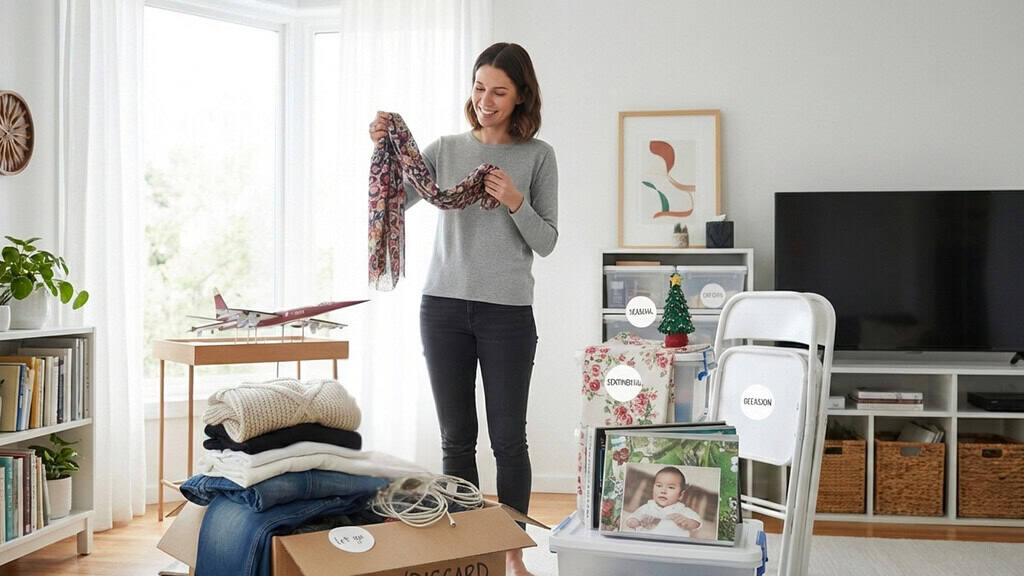
My Christmas decorations hadn't been touched in 90 days. Neither had my good tablecloth, my daughter's baby photos in the storage box, or the extra folding chairs I keep for when family comes to visit. By a strict 90/90 reading, all of it should go.
And that's just not realistic.
So what I do instead is use the 90/90 rule only for high-turnover items. Things like clothes I'm not wearing, gadgets sitting in a drawer, duplicate kitchen tools, or hobby supplies from a phase that has clearly passed.
For anything seasonal, sentimental, or occasion-based, I skip this rule entirely and go back to the question I use for the one-year rule — do I know when I'll use this next? If I can name a specific reason or time, it earns its spot.
The 90/90 rule is a great tool. It just works a lot better when you're honest with yourself about which categories it actually applies to.
6. More Storage Will Fix It
Oh, this one got me good.
I can't count how many times I walked into a home goods store for something completely unrelated and walked out with a set of matching baskets or a new shelving unit. I told myself it was practical. I told myself that once everything had a proper place, the clutter would stop.
It never did.
What actually happened was that the new bins just gave me more room to stuff things I should have let go of a long time ago.
Out of sight, out of mind — until the bins were overflowing too, and I was back at the store looking for a bigger solution.
Professional organizers say it all the time, storage isn't the answer when the real problem is having too much stuff.
And I had to learn that the hard way.
What I do now is hold off on buying any new storage until I've actually gone through the stuff first. If after decluttering I still feel like a category needs a better home, then I'll look for a solution.
But not before.
A simple rule I gave myself is “nothing new comes in until one bag goes out.”
It keeps me honest and stops me from using pretty organization products as a substitute for actually dealing with the clutter.
7. One-In, One-Out Has to Be Perfect
The one-in, one-out rule is one I actually really like.
The idea is simple…
When something new comes into your home, something old leaves. It keeps the amount of stuff in your house from quietly growing over time.
But the word “perfect” is where people, including me, get tripped up.
Because life isn't perfectly one-in, one-out. You buy a multipack of kids' socks. You get three gifts at Christmas. You stock up on pantry items when they're on sale.
Trying to match every single incoming item with an outgoing one gets exhausting fast, and when a rule feels impossible to keep up with, most people just stop trying altogether.
I know I did.
What I do instead is apply this rule by category rather than by individual item.
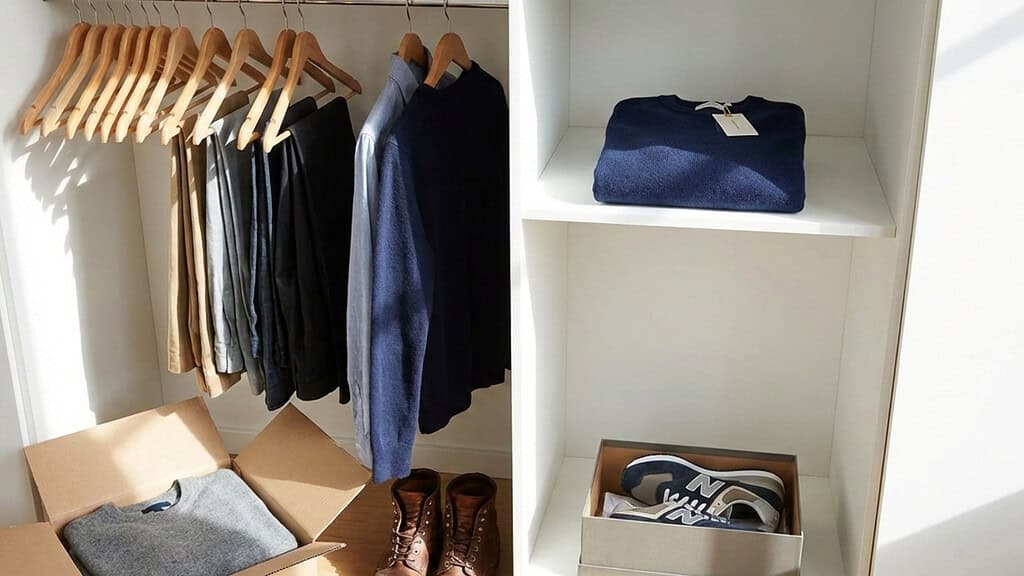
A new sweater means an old sweater goes. A new pair of shoes means I look at my shoe rack and pull out a pair I haven't worn. I'm not tracking every tube of hand cream, I'm just keeping an eye on whether a category is growing beyond what I actually use.
And for times when more comes in than usual (after the holidays, after a big sale, after the grandkids leave a bag of outgrown clothes) I give myself a one-in, two-out month. Just for a little while, until things level back out.
It doesn't have to be perfect to work. It just has to be consistent enough to keep things from piling up again.
The Best Decluttering Rule Is the One You'll Actually Stick To
Decluttering doesn't have to feel like a test you keep failing.
These rules exist because they work — at least some of the time, for some people. But your home is not a magazine spread, and your life doesn't fit neatly into a 90-day window or a one-in, one-out spreadsheet.
What I've found, after years of trying to follow every rule perfectly, is that the goal was never really about the rules. It was about creating a home that feels calm and manageable. A space where you can actually breathe.
And that looks different for everyone.
So take what works, adjust what doesn't, and let go of the guilt when your version looks a little different from what you read online. Progress matters more than perfection here. Even one drawer cleared out is one less thing weighing on you.
Want a Clear Starting Point?

My free Declutter for Self Care Checklist gives you a step-by-step plan to work through your space without burning out halfway through.
It's straightforward, easy to follow, and designed to help you actually finish what you start.
Frequently Asked Questions
What are decluttering rules?
Decluttering rules are simple guidelines that help you decide what to keep and what to let go of. They're meant to take some of the guesswork out of the process so you're not standing in front of a pile of stuff feeling stuck. Think of them as starting points rather than strict instructions.
What is the 90/90 rule?
The 90/90 rule says that if you haven't used something in the last 90 days and don't plan to use it in the next 90, it's time to let it go. It works really well for everyday items like clothes, kitchen gadgets, and hobby supplies. It's less useful for seasonal items, sentimental pieces, or things you only need for special occasions.
Should I follow the one-year decluttering rule?
It depends on what you're decluttering. The one-year rule works well for general everyday items, but it doesn't account for things like winter coats, holiday decorations, or special-occasion dishes. For those, ask yourself if you know when you'll use it next. If you have a clear answer, keep it. If you're just holding onto it out of habit, that's worth looking at more closely.
Do I have to declutter before I organize?
Not necessarily. Decluttering first is the general advice, and it does make sense in most cases. But if pulling everything out at once leaves you too overwhelmed to finish, try a different approach. Pick one small space, decide how much fits there, and edit down to that. It keeps the project manageable and you're more likely to actually see it through.
What is the one-in, one-out rule?
The one-in, one-out rule means that when something new comes into your home, something old leaves. It's a helpful habit for keeping clutter from slowly building back up over time. It works best when you apply it by category — a new sweater means an old sweater goes — rather than trying to track every single item that comes through the door.
Follow me elsewhere!

