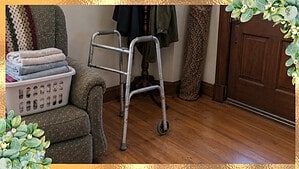
This summer, my friend from church was standing in her front hall with a laundry basket on her hip when she started to cry.
Her husband had come home from the hospital two weeks before. He was using a walker now, after a bad fall. And the walker kept catching on everything.
The rug by the door. The shoe rack. The stack of mail on the floor by the stairs.
“I can’t keep up,” she told me. “Every time he gets up, I’m moving something out of his way.”
I set her basket down and gave her a hug. Then I asked if I could come back on Saturday to help.
That Saturday turned into six of them. What we cleared, and the order we cleared it in, made her days a little easier. If you’re caring for your husband, I hope it helps you, too.
You Are Not the Only One
If you are caring for your husband, you have a lot of company.
About 63 million Americans are family caregivers, according to a 2025 report from AARP and the National Alliance for Caregiving. That’s about one in four adults.
The same report found that older caregivers are more likely to be caring for a spouse. Nearly two out of three caregivers said they feel moderate or high emotional stress.
My friend didn’t know any of that. She just knew she was tired, and everything in the house seemed to be in his way. (She’d been a nurse for years before she retired, and even she felt lost.)
So we started with the house.
Start With the Path He Walks Every Day
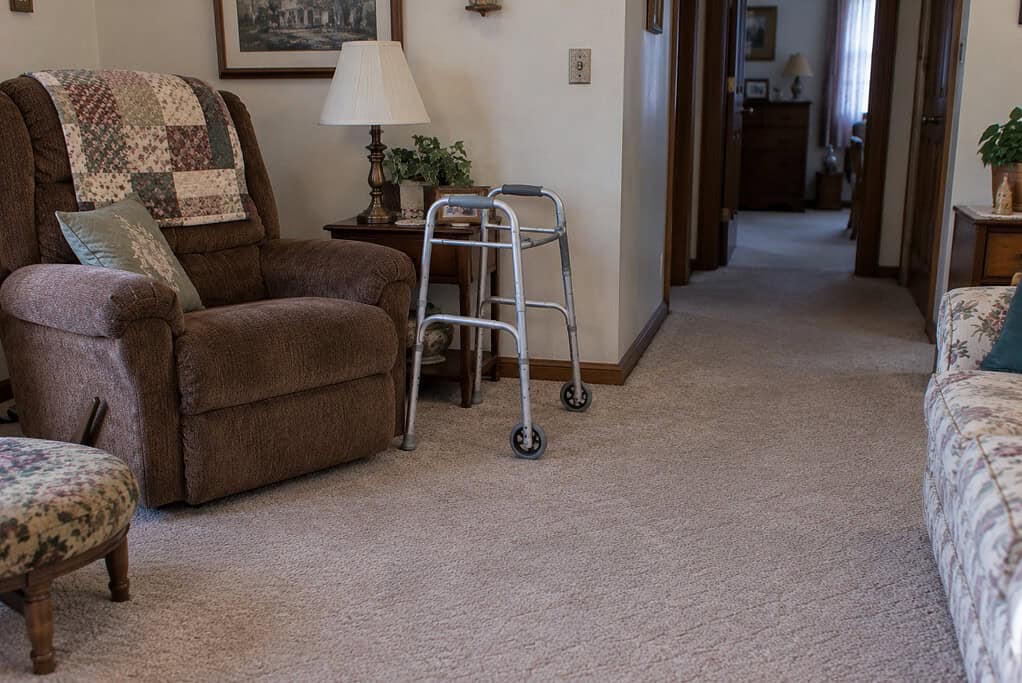
The first thing we did wasn’t a closet or a drawer. It was the path.
We walked the route her husband takes every day. From his chair to the bathroom, from the bedroom to the kitchen, and from the kitchen to the back door.
Anything on the floor along that path had to find a new home. The basket of magazines, the shoe rack, the boxes of Christmas cards she’d been meaning to sort.
The National Institute on Aging says not to leave books, papers, clothes or shoes on the floor or stairs. It also suggests not using throw rugs or small area rugs. We rolled up the rug by the front door that afternoon, and she never put it back.
The CDC’s home safety checklist says to move furniture so your path is clear. We pushed a side table against the wall and moved a footstool to the guest room. It opened up the living room right away.
For a walker or wheelchair, a wide path helps. Public buildings in the U.S. are built with walkways at least 36 inches wide. That’s a good number to keep in mind at home, even though the rule doesn’t apply to houses.
Her husband went from his chair to the kitchen that evening without stopping once. She told me later she sat down and cried again, but this time it was because she was relieved.
Make Room for the New Things
When someone comes home from the hospital, new things often come with him. A walker, a shower chair, a raised toilet seat and boxes of supplies.
My friend’s dining room table was covered in it.
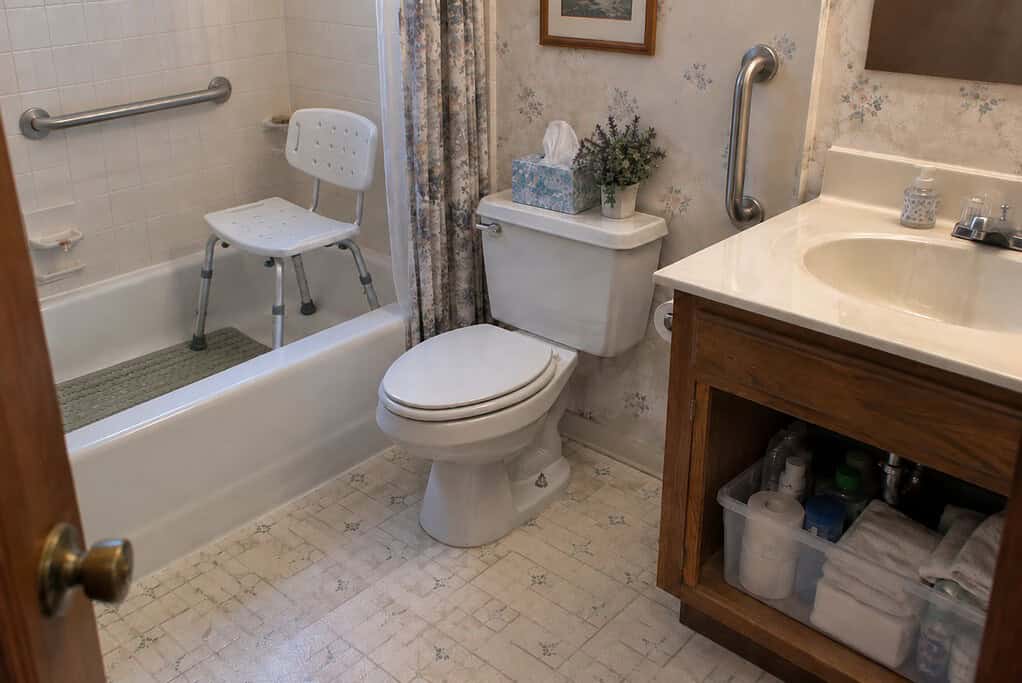
We gave each new thing a place close to where it’s used. The shower chair went right in the tub.
The extra supplies went in one plastic bin under the bathroom sink. The walker got a spot by his chair, where he could reach it without standing up.
To make room, we cleared out the bathroom first. Old towels, half-empty bottles, a basket of hotel soaps she’d kept for years. (She laughed when she counted 31 little soaps.)
The CDC suggests grab bars next to the toilet and inside the tub. Her son-in-law put two in on a Saturday morning, once the clutter around the tub was gone.
If you need a piece of equipment, you may not have to buy it. Medicare Part B covers some medical equipment for home use when a doctor orders it, like walkers, wheelchairs and commode chairs.
Some items can be rented. Many towns also have loan closets, often run by churches or Lions Clubs, that lend equipment for free.
And when you’re done with something, it can help someone else. I wrote a whole post on where to donate medical equipment.
The Pill Bottles and the Paper
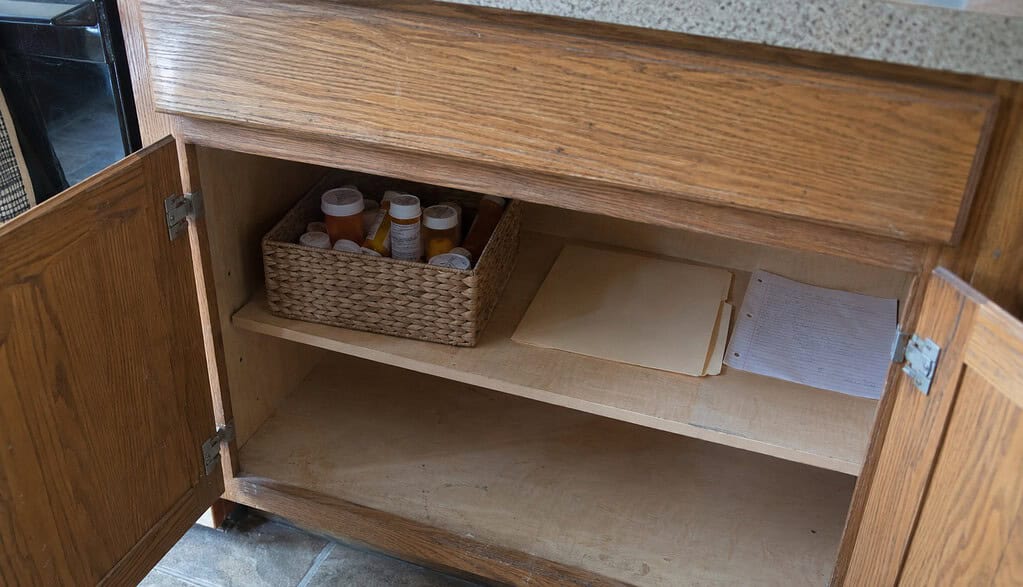
Next, we tackled the kitchen counter. It was covered in pill bottles, hospital papers and sticky notes.
We put all of his medicines in one basket in a kitchen cabinet she can reach without a step stool, away from the stove and the sink. Then we wrote a list of every one, with the name, the strength and what it’s for.
The FDA suggests keeping a list like that for every medicine, vitamin and supplement. It says to keep it up to date and to keep a copy with you. My friend keeps one copy in her purse and one on the fridge.
We found some old bottles from years ago, too. The next National Prescription Drug Take Back Day is Saturday, October 24, 2026.
It happens every spring and fall, and many pharmacies have drop-off boxes all year. (My post on what to do with old medications has more.)
The hospital papers went into one plain folder. Discharge papers, the doctor’s phone numbers, the insurance cards.
Everything else, like old envelopes and ads, went in the recycling. (My post on how to stop hoarding paper can help with the rest of the pile.)
Keep His Things His
This part matters more than it sounds.
When you’re caring for someone, it’s easy to start making every choice for him. But her husband was still her husband. He still had opinions about his own things.
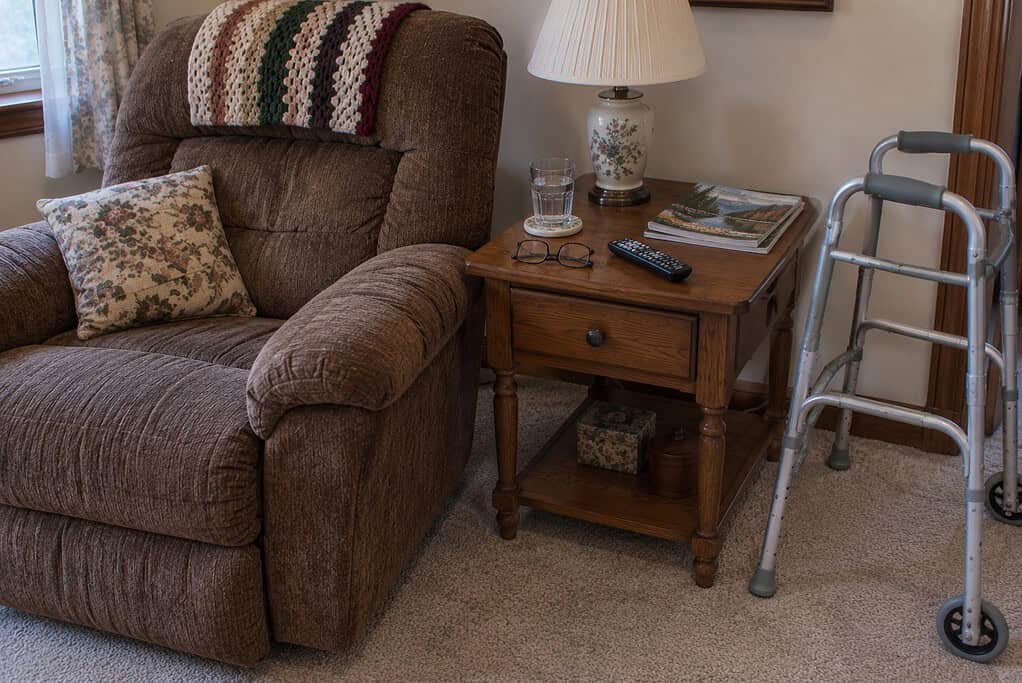
So we asked him. Before we moved his reading glasses, his remote or his stack of fishing magazines, my friend asked where he wanted them.
He picked a little table right next to his chair. He wanted everything within reach so he didn’t have to ask for help every time. That made him happy, and it made her day easier, too.
We also moved his everyday clothes into the top two dresser drawers, so he didn’t have to bend down low. His sweaters and pajamas went in the top drawer, right where he could find them.
His fishing gear in the garage stayed right where it was. He wasn’t using it now, but he hoped to again, and that hope mattered.
(I know a little about this. My own husband keeps everything, and his things are his call.)
Clear One Small Corner Just for Her
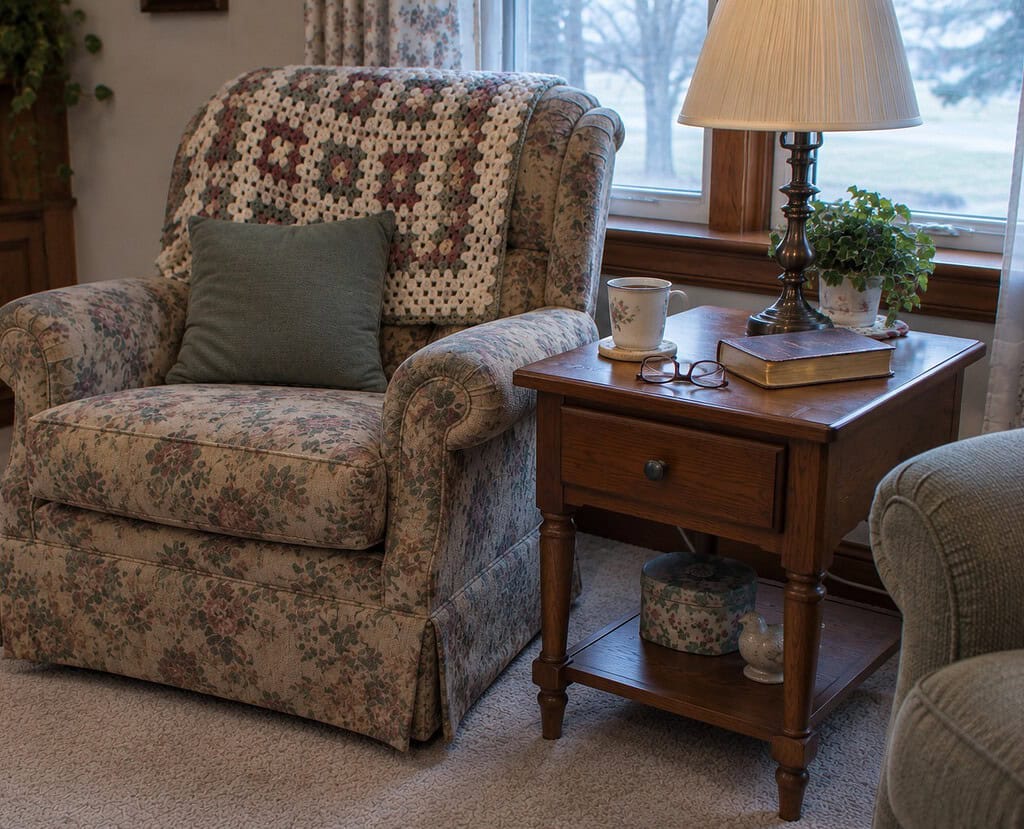
On our fourth Saturday, I asked my friend a question. “Where do you sit down?”
She didn’t have an answer. Her chair in the living room was covered in folded laundry and a bag of his clothes to mend.
So we cleared it. The laundry went in a basket, and the mending went to a church friend who sews.
We put her Bible, her reading glasses and a small lamp on the table beside it.
The National Institute on Aging says caregivers shouldn’t wait until they’re completely worn out to take care of themselves. Feeling tired, angry or alone can be signs you need a break.
That little corner gave her ten quiet minutes each morning. She told me it was the first time in months she’d sat with her coffee while it was still hot.
Say Yes When Someone Offers to Help
My friend had a hard time saying yes to help. Most of us do.
The National Institute on Aging says many caregivers later wish they had asked for more support. It suggests a simple answer when someone offers: “Thanks for asking. Here’s what you can do.”
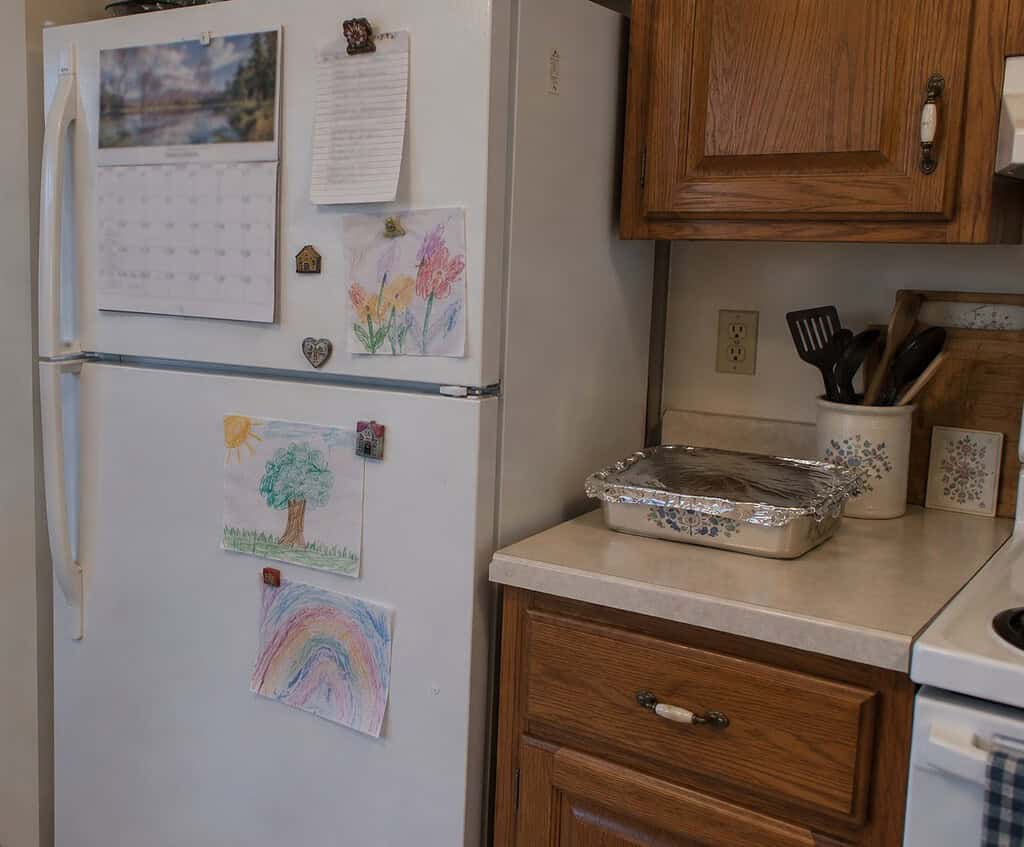
So she made a short list and put it on the fridge. Carry the donation boxes to the car, pick up a prescription, or sit with him for an hour on Thursday.
Our church friends filled that list in a week.
There’s help outside your church, too. The Eldercare Locator can connect you to your local Area Agency on Aging. You can call them at 1-800-677-1116 or visit eldercare.acl.gov.
If you’re caring for a husband who is 60 or older, the National Family Caregiver Support Program may offer training, support groups and short breaks called respite care. Your Area Agency on Aging can tell you what’s in your area.
Take It Slow
None of this happened in one day. We did one area each Saturday, for about two hours.
Some Saturdays, she was too tired, and we just had coffee. That was fine, too. Going slow still gets you there, and I wrote more about that in my post on slow decluttering.
If you can’t lift or carry much right now, that’s okay. My post on decluttering when you can’t carry heavy things has ideas for getting things out of the house with less work.
And if you’re worn out, start with just one thing. A clear path from his chair to the bathroom is a good place to begin.
What I Did in My Own House
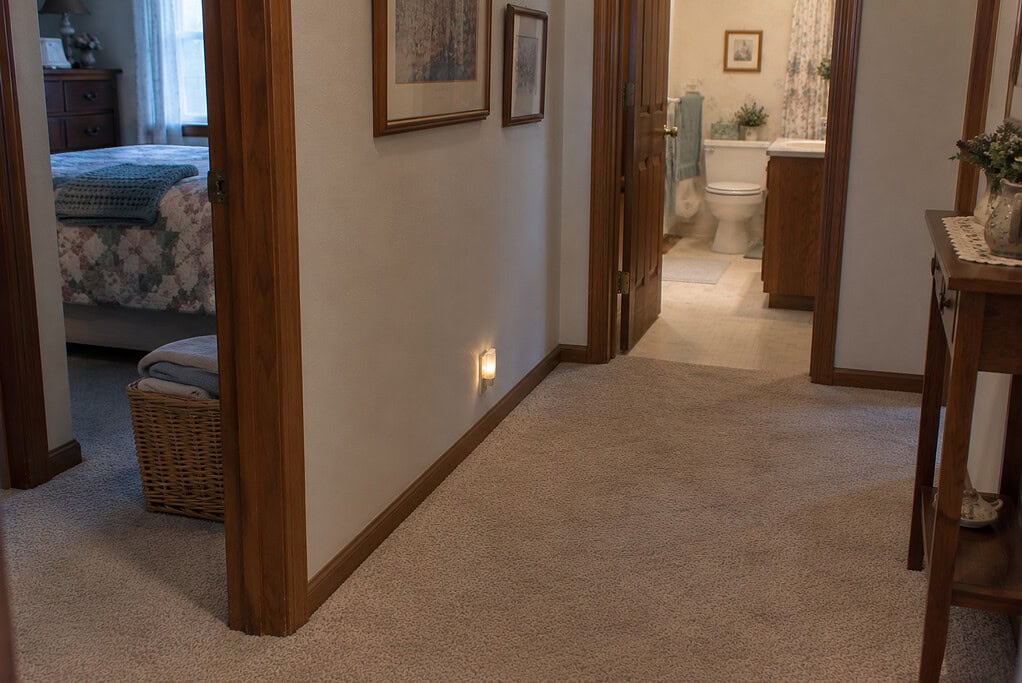
When my husband hurt his hip a few years ago, we bought a shower chair, and I moved a few things so he could get around. I didn’t think much more about it.
Helping my friend made me look at our house with new eyes.
The next week, I walked the path from our bed to the bathroom at night. I moved a basket off the hall floor and put a night light in the outlet by the bathroom door. The CDC suggests a night light on the path to the bathroom, too.
None of it took long. But I sleep better knowing it’s done.
Six Saturdays Later
Last Sunday, I stopped by after church. Her husband was walking from his chair to the kitchen with his walker, slow and steady.
Nothing caught. Nothing tipped. She was sitting in her chair by the lamp with her coffee, watching him.
“I don’t have to watch every step he takes anymore,” she said.
That’s what I want for you, too. Not a perfect house. Just a clear path, a little help and one chair that’s yours.
A Little Help for the Next Step

When you’re caring for someone, there isn’t much time left over. Small steps are enough.
My free Declutter for Self Care Checklist breaks your home into small, gentle jobs, one space at a time. You can do one when you have ten minutes, and leave the rest for another day.
Frequently Asked Questions
Where should I start decluttering when I’m caring for my husband?
Start with the path he walks every day, like from his chair to the bathroom. Take anything off the floor along that path, roll up throw rugs, and move furniture so the way is clear. Then work on one small area at a time.
How wide should a path be for a walker?
There’s no rule for homes, but public buildings in the U.S. are built with walkways at least 36 inches wide. That’s a helpful guide for a walker or wheelchair. Make sure doorways and turns are clear, too.
Does Medicare pay for a walker or shower chair?
Medicare Part B covers some medical equipment for home use when a doctor orders it, like walkers, wheelchairs and commode chairs. You usually pay 20 percent after your deductible. Ask your doctor and check medicare.gov for what’s covered.
Where can I borrow medical equipment?
Many towns have loan closets run by churches, Lions Clubs and other groups that lend equipment for free. Your state may also have a program that lends or reuses equipment. The Eldercare Locator at 1-800-677-1116 can help you find one.
How can I get a break as a caregiver?
Ask family, friends and your church for help with small jobs, and keep a list ready. Your local Area Agency on Aging may offer respite care, support groups and training. You can find yours through the Eldercare Locator at eldercare.acl.gov.
Follow me elsewhere!

