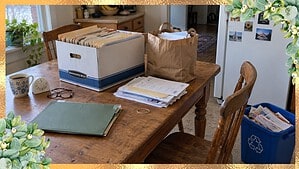
“In case they ask.”
That’s what my mother said every time I asked why she kept every electric bill, every bank statement, and every receipt that came into her house.
I never found out who “they” were.
When my mother passed, my brother and I spent days looking for a handful of papers that really mattered. Her will, the deed to the house, and her insurance papers.
They were in there somewhere, tucked between forty years of bills she had already paid.
Somewhere in the third box, I found a grocery list in her handwriting. Eggs, bread, the good coffee, and “call the church back.”
I sat down on her kitchen floor and cried. Not over the bills. Over that one small list, the only thing in the whole box that sounded like her.
Forty years of paper, and the one page that mattered was almost thrown out with the rest.
After that, I made one folder of important papers for our own family, and I let a lot of old bills go. I thought I was done.
Then a few weeks ago, I went looking for an umbrella in the hall closet. On the top shelf was a box of files from a job I left years ago. Behind it were twenty years of tax returns and a stack of booklets for things we didn’t own anymore.
I was my mother’s daughter after all.
If you were raised to keep every paper too, I want to show you how to stop hoarding paper the gentle way. You don’t have to be careless or brave. You just need to know which papers matter, and which ones are only taking up space.
Before we go any further, I want to say something gently. Keeping a lot of paper doesn’t mean something is wrong with you. Most of us are savers, raised by savers, and we kept things because we were taught to be careful.
A quick note before we go further. This post is based on my own experience and what I’ve learned in my own home. I am not a doctor, a therapist, or a tax expert. If keeping things is affecting your daily life, your safety, or your relationships, please reach out to your doctor or a mental health professional. There is real help available, and asking for it is nothing to be ashamed of.
Why So Many of Us Were Raised to Keep Every Paper
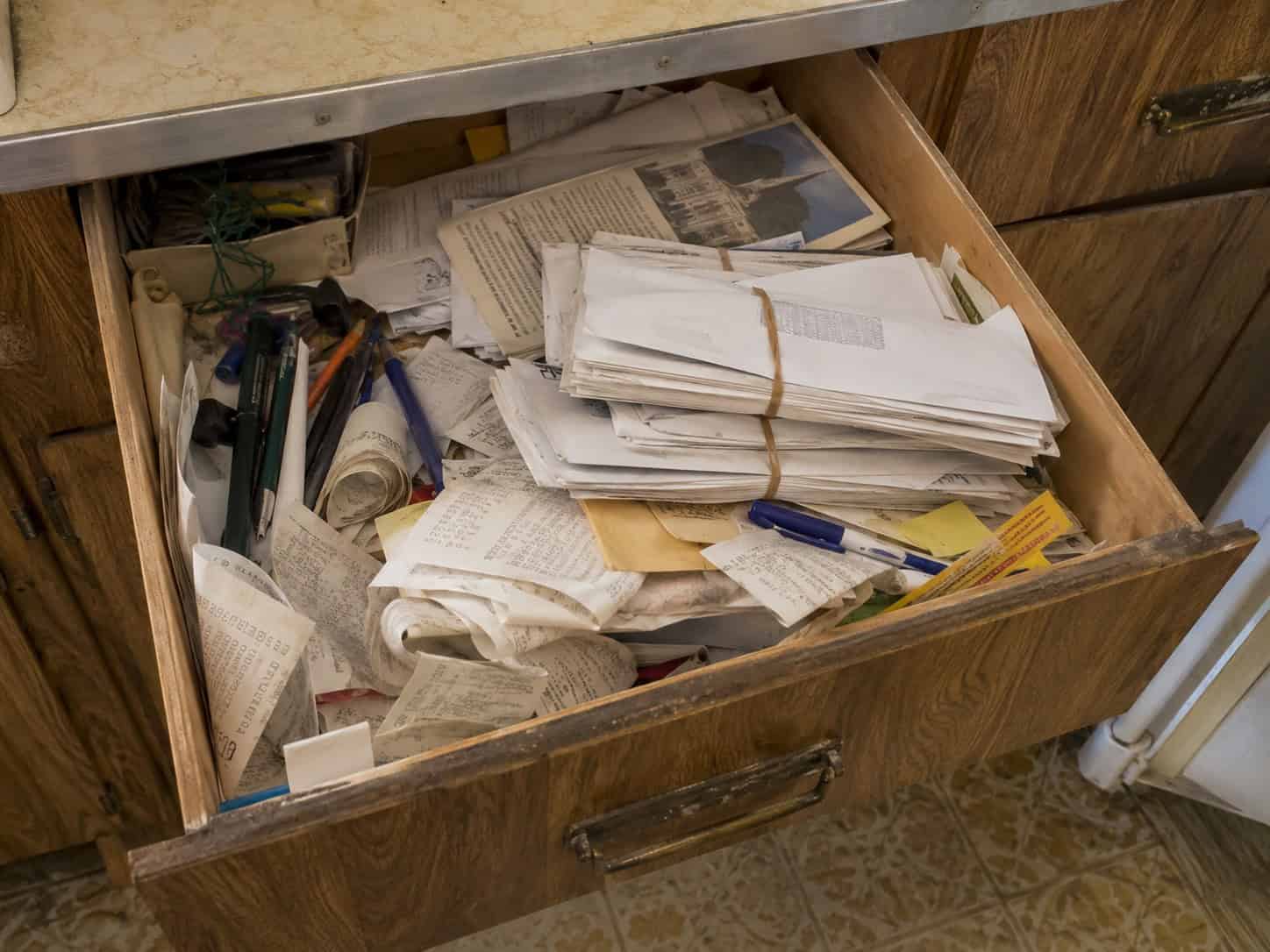
My mother grew up in a house where nothing was wasted. Her parents had lived through hard years, and they saved everything that might be useful later.
Paper was proof. If a bill was ever wrong, you had the receipt.
That lesson stayed with her for life. And she passed it on to me without ever meaning to.
The first time I fed an old electric bill into the shredder, my hand stopped. It felt careless, like I was undoing something my mother worked hard to teach me.
Maybe you’ve felt that too. Throwing away a paper can feel like letting someone down, even when that someone is gone.
Many of you have told me the same story. Some of you grew up with parents who saved foil, wrapping paper, and every envelope with a clean back for writing lists. Money was tight, and keeping things felt like taking care of your family.
That isn’t foolish. It was smart for the life our parents lived.
But our lives are different now. Most bills can be looked up online or with a phone call, and banks keep records for years.
The paper we’re saving “just in case” is often the very thing that hides the papers our families will need someday.
Keeping every paper didn’t keep us safe. It just made the important ones hard to find.
Why Paper Piles Up Even Faster After 60
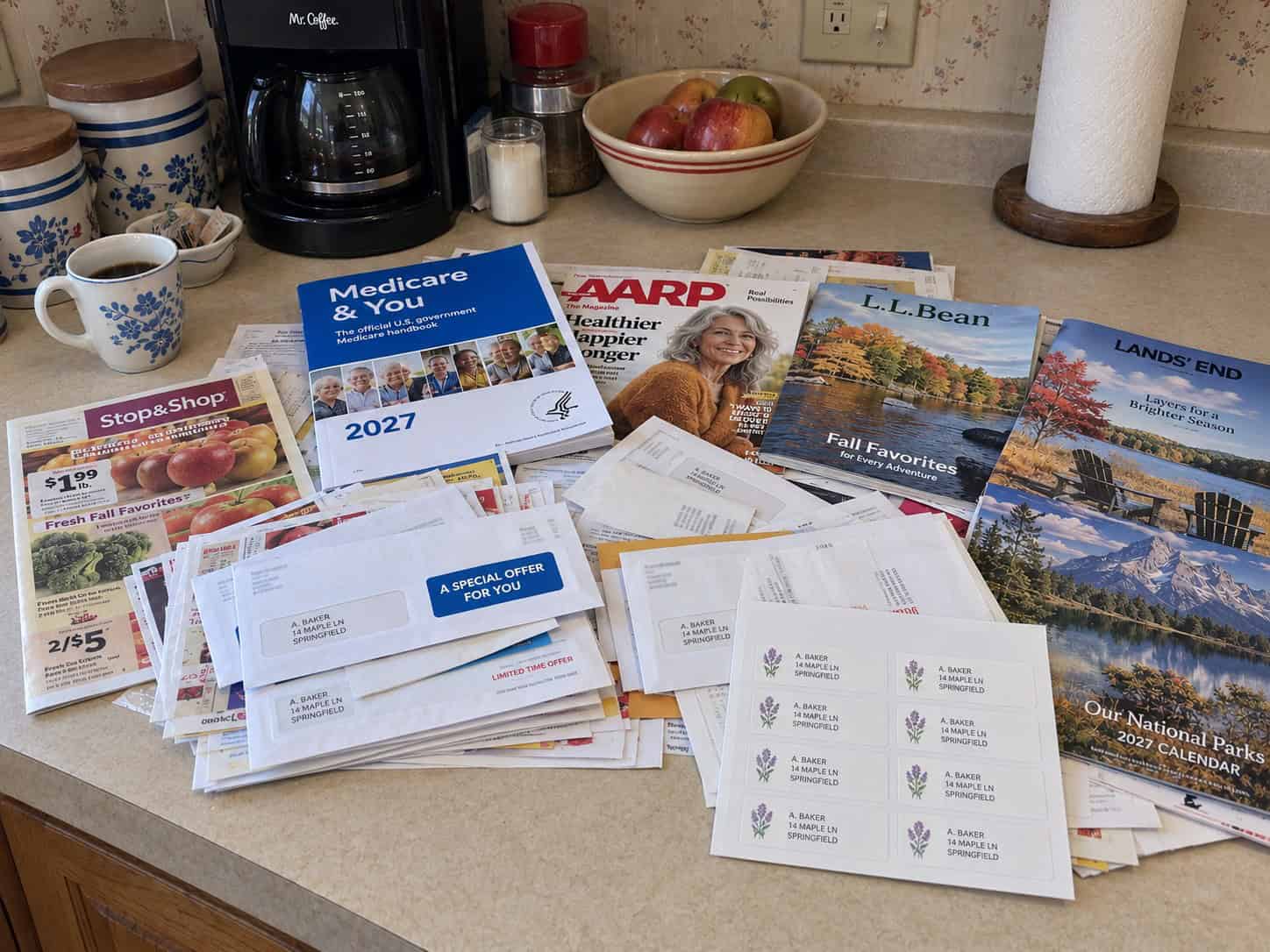
I noticed something after I turned 60. The mail got heavier.
There were letters about Medicare plans I didn’t ask about, charity calendars and address labels, catalogs from stores I hadn’t shopped at in years, and insurance offers every single week.
Each piece of paper is a small decision. Keep it, shred it, or toss it? When you’re tired, it’s easier to set it on the pile and decide later.
Later is how a pile becomes a box. And a box becomes a closet shelf.
A lot of you have told me the hardest part is not being sure what’s safe to throw away. You don’t want to toss the one paper you’ll need. So you keep all of them.
I felt that way too. What finally helped me was learning a few simple rules.
What I Keep, What I Shred, and What Goes in the Recycling
I’m not an expert on money or law. So I looked up what the official sources say, and I checked with the person who does our taxes. (I brought her a plate of banana bread for her trouble.)
This is how I sort my papers now.
The Papers I Keep for Good
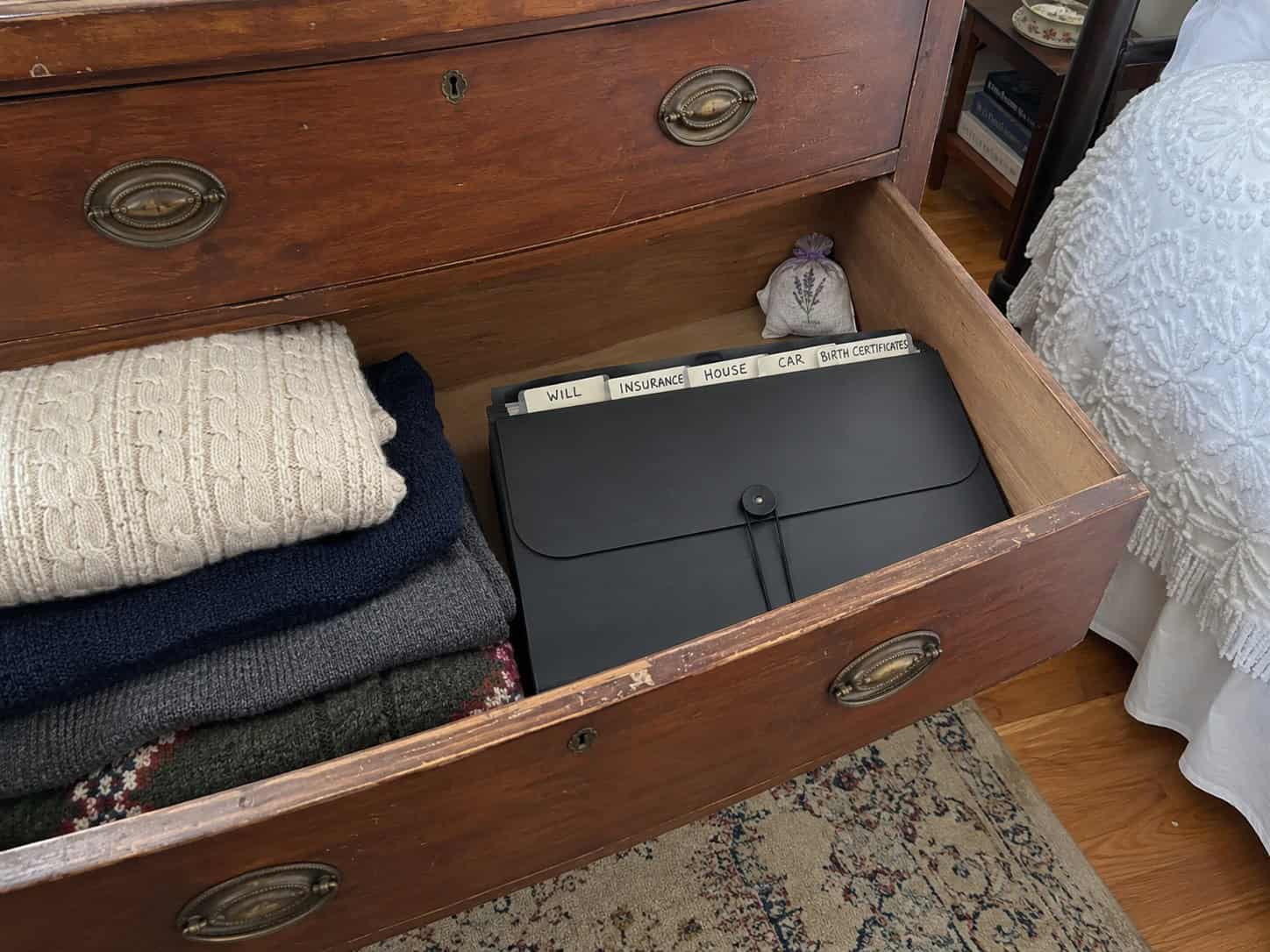
These go in one folder, and the folder lives in the bottom drawer of the dresser in our bedroom.
It holds our birth certificates, our marriage certificate, and our Social Security cards. It also has our will, our insurance policies, the deed to the house, and the title for the car. Military papers belong in a folder like this too, if you have them.
I wrote more about this folder in my post on what not to declutter. It’s one of the best things we’ve ever done for our kids.
Tax Papers: The Rule That Finally Let Me Let Go
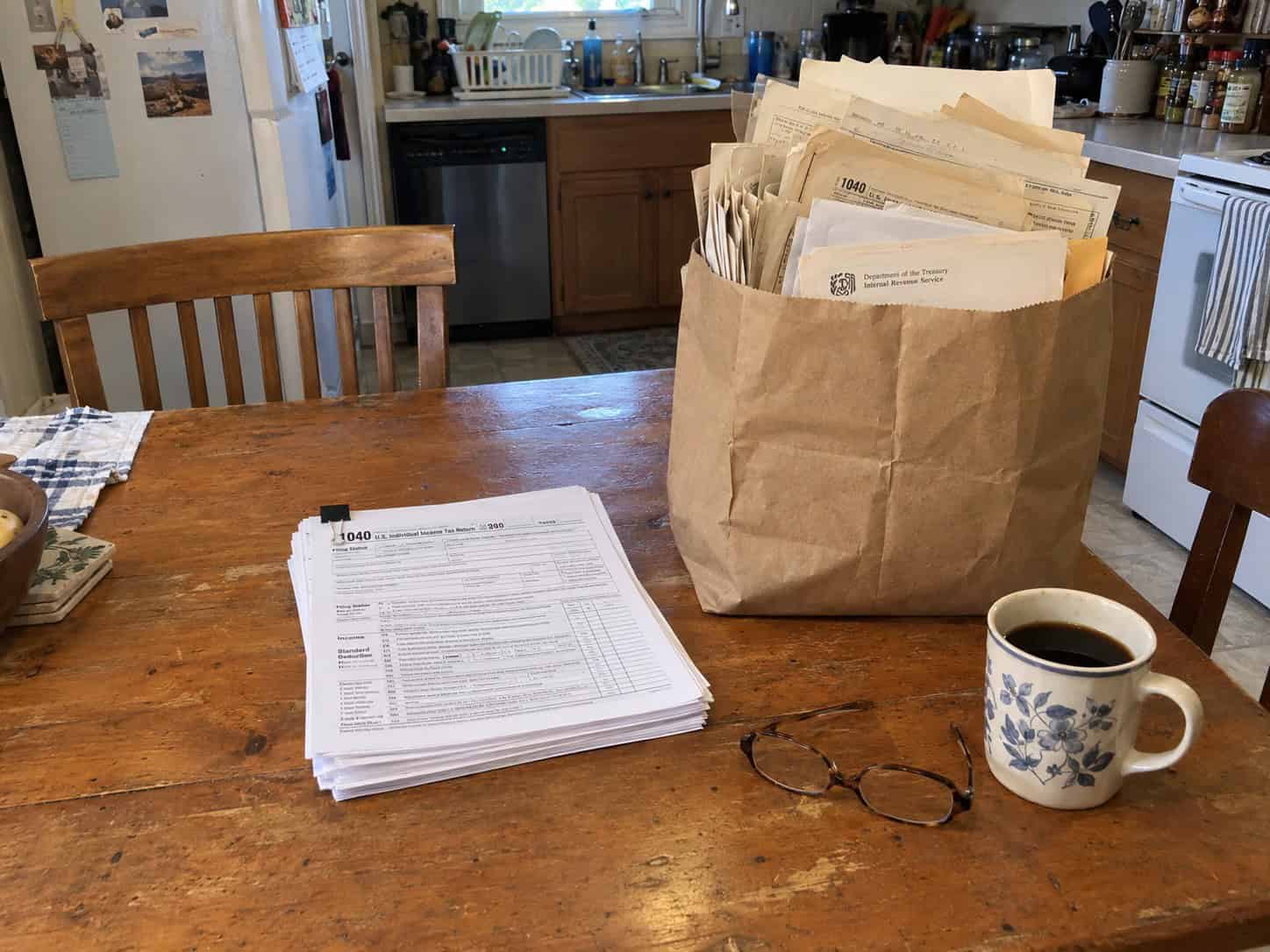
This was the big one for me. I had tax returns going back twenty years.
The IRS says most people need to keep tax records for three years. There are some cases where they say to keep them longer, such as six or seven years, and property records should be kept until a while after you sell the property.
Every family’s situation is different. So before I shredded anything, I asked our tax preparer which years we needed. She told me what to keep, and the rest went into the shred bag.
Twenty years of tax returns became one small, neat stack.
The Papers I Keep for About a Year
The FTC, the government office that helps protect us from scams, says bank statements, pay stubs, and paid medical bills can usually be shredded after about a year. Keep them longer if you need them for taxes, or if a bill is still being argued over.
So I keep one year of these in a simple folder. Each January, the oldest year gets shredded.
The Papers That Can Go Right Away
These are the easiest. Shred anything with your name, address, or account number on it, like ATM receipts, deposit slips, credit card offers, and expired cards.
The rest can go straight into the recycling. Catalogs, old magazines, menus, and booklets for things you don’t own anymore.
I found a warranty for a dishwasher we replaced years ago. (I’m not sure what I thought I’d do with it.)
One of you told me you found the warranty for tires on a car you sold years ago. We all have one of those.
How I Went Through Twenty Years of Paper Without Wearing Myself Out
One thing I don’t touch is my husband’s filing cabinet in his den. That’s his space, and he says he knows where everything is. (I’ve decided to believe him.)
I only sort my own papers and the ones we share. That keeps the peace, and it’s plenty of work for me.
I didn’t do it in one weekend. I tried that once, and I ended up with papers spread across the whole dining room table and a headache by noon.
This is what worked for me instead.
One Box at a Time, Sitting Down
I bring one box to the kitchen table and sit down with a cup of coffee. I set a timer for twenty minutes. When it rings, I stop, even if I’m in the middle of the box.
My back is happier, and I come back the next day without dreading it.
Three Spots, Right in Front of Me
I set up three spots on the table: the keep folder on the left, a paper grocery bag for shredding on the right, and the recycling bin on the floor next to my chair.
Every paper goes into one of those three spots. Nothing goes back into the box.
The Envelope for the Ones I Can’t Decide On
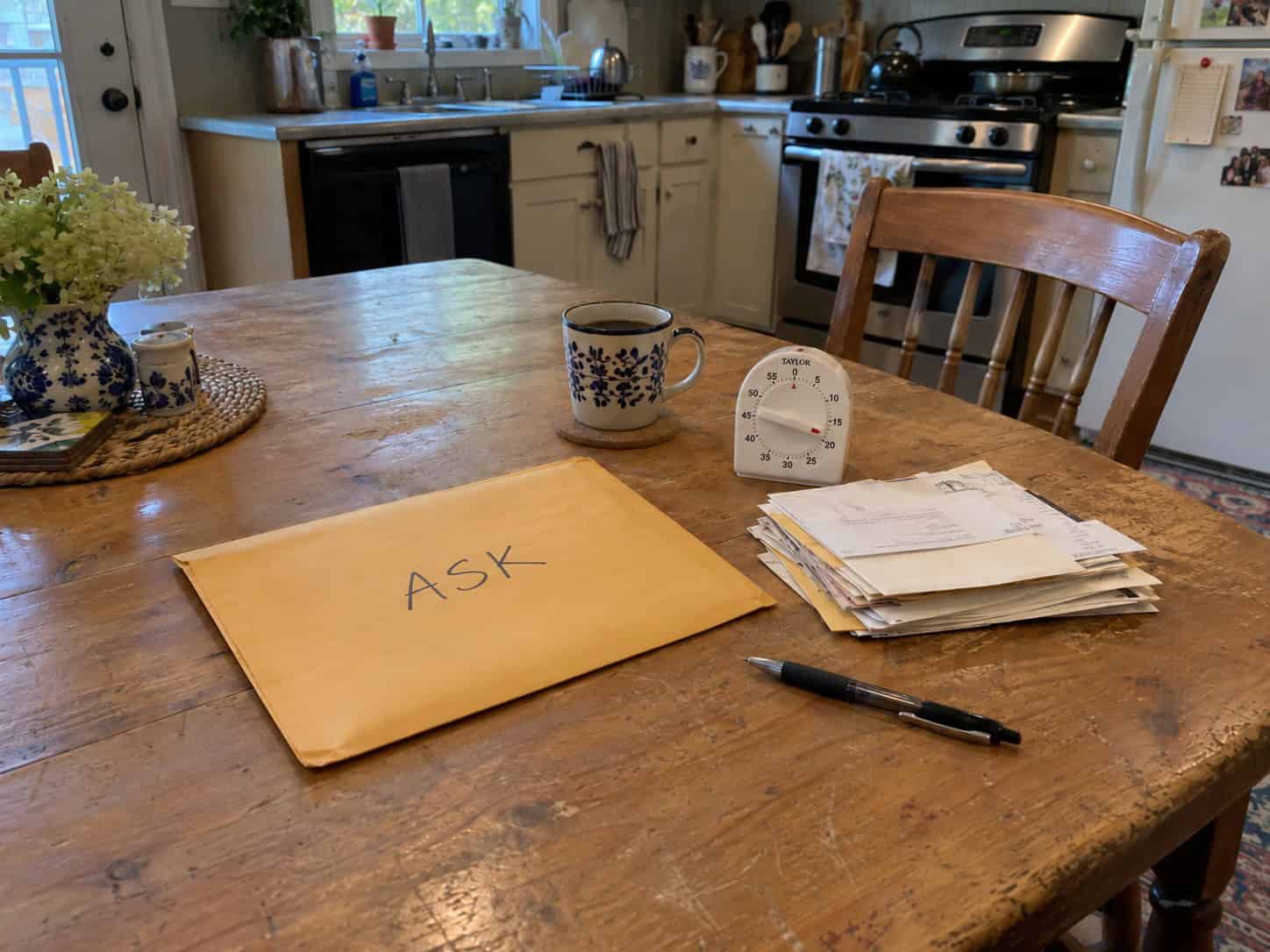
Some papers I just couldn’t decide on. An old letter from the bank I didn’t understand. A form from my mother’s estate.
I didn’t let those stop the whole box. I put them in one big envelope and wrote “Ask” on the front.
Once a year, I bring that envelope to our tax preparer, or I call the bank. Most of what’s inside turns out to be fine to shred. A few things get moved to the keep folder.
That one envelope saved me from sitting at the table for an hour over a single sheet of paper.
I Don’t Read Every Page
This was hard for me. I wanted to read every old letter from the bank and every receipt from 2004.
But I don’t need to read them. I only need to know what kind of paper it is.
A bank statement from twelve years ago is just a bank statement. It goes in the shred bag.
I Save the Shredding for a Free Shred Day
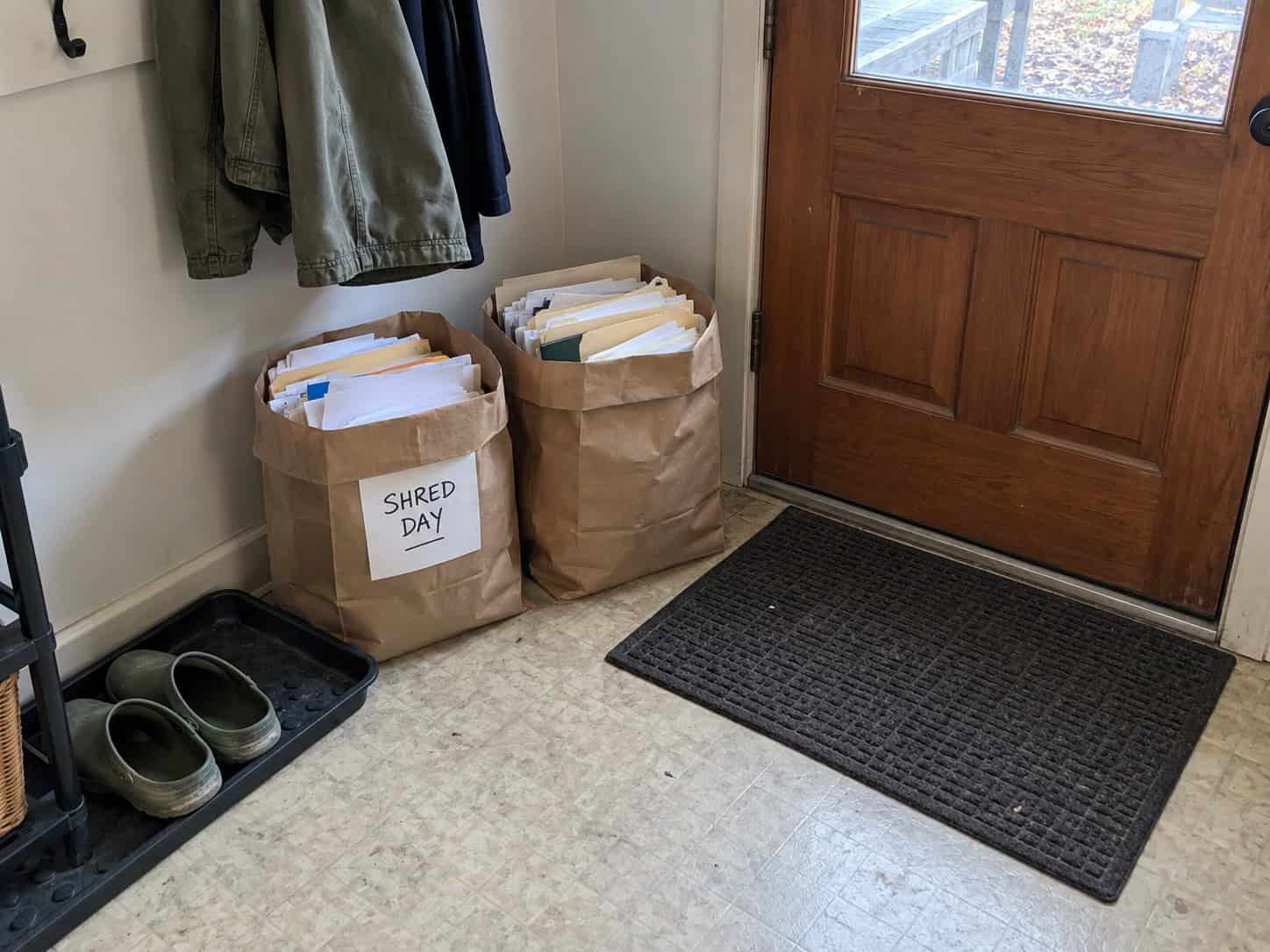
I have a small shredder, but it overheats after a few minutes. So I saved my shred bags for a free shredding event.
AARP has held free “Shred Fest” days in many states, often in the spring after tax season. Some banks, credit unions, and police departments hold free shred days too. Call or check their websites to find one near you.
The box of old work files from my hall closet is sitting in two shred bags by the back door, waiting for the next free shred day in our town. Just carrying it down from that shelf made me feel lighter. I wrote about finding that box in my post on decluttering a house you’ve lived in for decades.
The Papers With a Heart
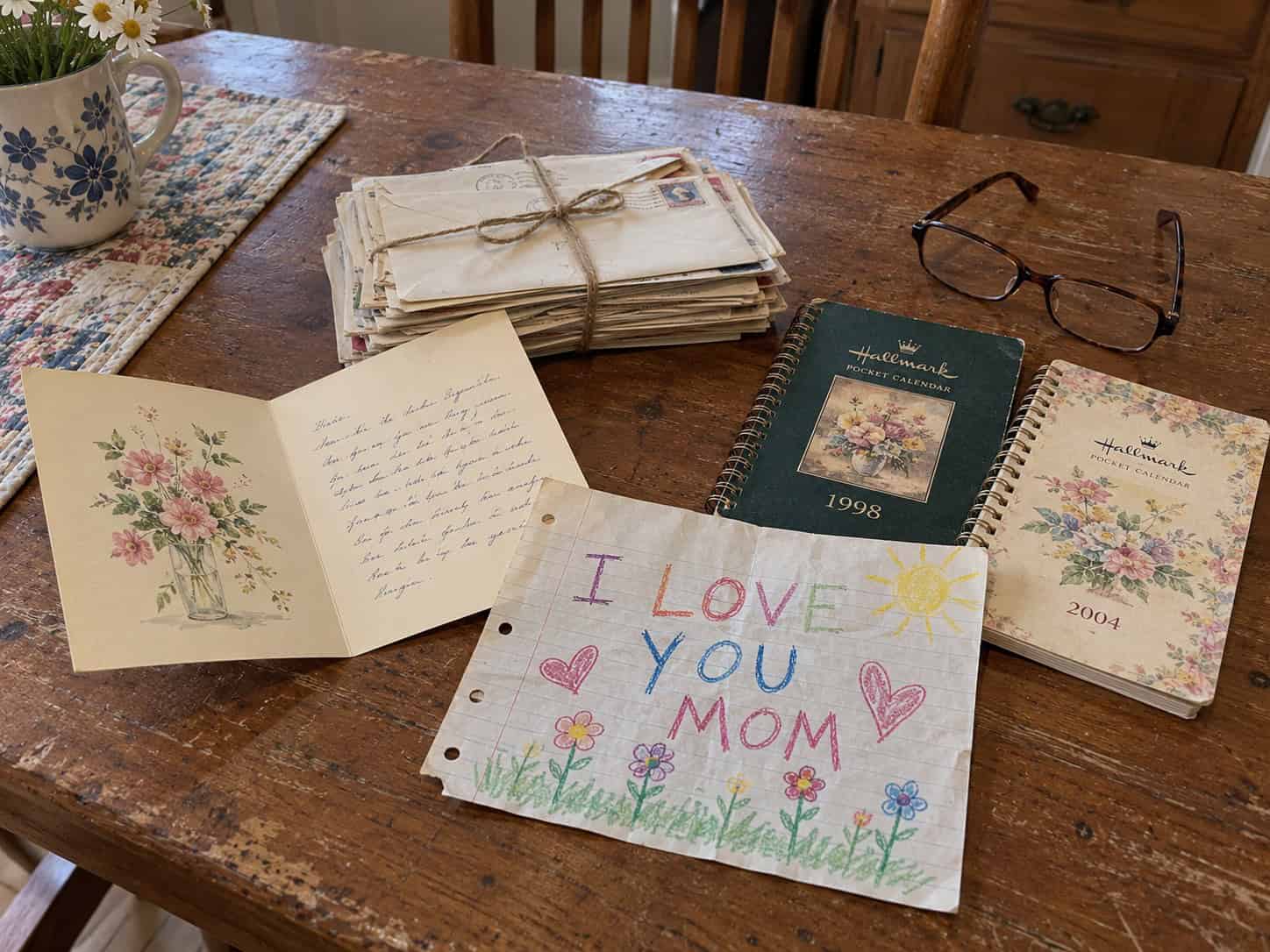
Not every paper is clutter. Some papers are really about a person we love.
A birthday card in my mother’s handwriting. A note my youngest left on the fridge. The letters my husband and I wrote before we had children.
I don’t count those as paper hoarding. Those are keepsakes, and I keep the best of them on purpose. I shared how I chose which ones to keep in my post on old letters and cards from someone you’ve lost.
Some of you have turned your children’s old school papers into a scrapbook and given it to them for Christmas. I love that idea. The papers leave your closet and go to the person they belong to.
A few of you told me you were sorry you shredded your old calendars. They held years of birthdays, trips, and little notes.
So before you toss old calendars or day planners, flip through them once. Keep one or two if they make you smile.
How I Keep Paper From Piling Up Again
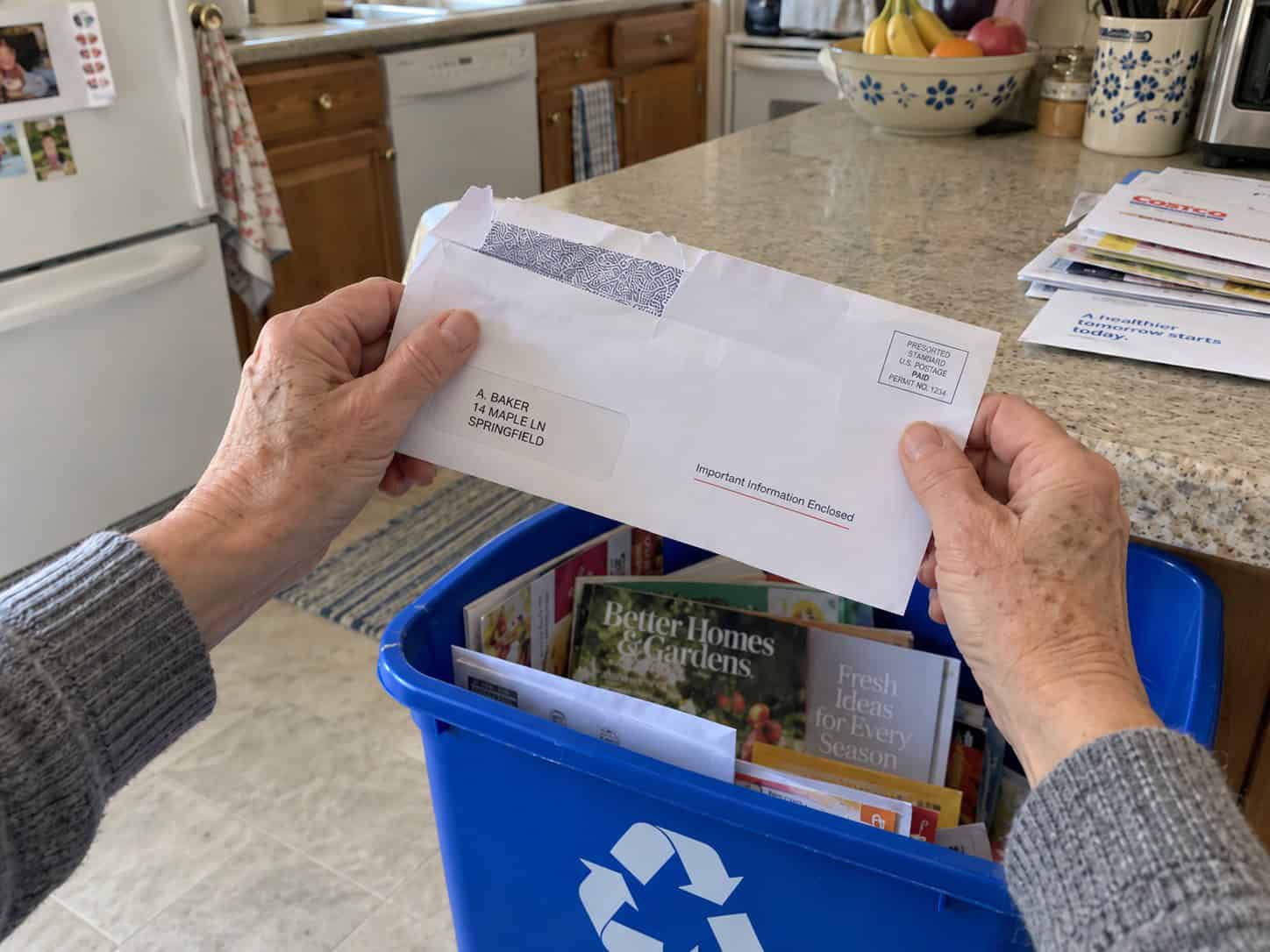
Getting rid of old paper is one job. Keeping new paper from taking over is another.
These small habits keep my house clear now.
I open the mail standing over the recycling bin. Most of it never makes it past the kitchen. The few papers I need go straight into the right folder that same day.
Every Sunday night, I take the receipts out of my purse and throw away the ones I don’t need. I shared that habit in my post on the little annoyances I decluttered in my 60s.
I also stopped a lot of junk mail before it reached my door. The FTC says you can stop most credit card and insurance offers at OptOutPrescreen.com or by calling 1-888-567-8688.
You can choose five years or for good. (Type the website in yourself, since there are copycat sites out there.)
For catalogs and charity mail, I call the number on the back and ask to be taken off the list. It takes two minutes a call.
If paper is only one part of what you’re keeping, you might find my post on why hoarding often starts after 60 helpful too. And if your closet looks like my paper box did, I also wrote about how to stop hoarding clothes.
When It’s More Than Just Paper
For most of us, a closet shelf of old files is just that. A job we’ve been putting off.
But sometimes the keeping gets heavier. I want you to know the signs, not to scare you, but so you can take good care of yourself.
It may be more than paper if stacks are blocking a hallway or a doorway, or piled near the stove or a heater. It may be more than paper if bills are getting lost and going unpaid, or if the thought of throwing away a single page makes your heart race.
It may also be more than paper if you’ve stopped letting people in because of the piles. (So many of you have told me about that feeling, and I understand it.)
If any of that sounds like you, or like someone you love, please talk to your doctor or a therapist who works with hoarding. Needing help with this isn’t a failure. It’s one of the bravest things a person can do.
I also wrote about the question I never expected to ask myself, in Am I a Hoarder? It might help you sort out how you feel.
And if you’re simply a saver, like me and my mother before me, that’s okay too. You can keep being careful. You just don’t have to keep every page to do it.
Someday my children will open my dresser drawer. They won’t find forty years of bills. They’ll find one folder, a few cards in my handwriting, and a note that says I love you.
That’s what I want to leave them.
A Lighter Drawer, and a Clearer Mind

You don’t have to keep every paper to keep your family safe. A few good papers in one known place will help them far more than a closet full of old bills.
My free Declutter for Self Care Checklist helps you take it one small step at a time, so you can clear what you don’t need at your own pace.
Frequently Asked Questions
How do I stop hoarding paper?
Start with one box at a time and sort every paper into three groups: keep, shred, and recycle. Keep important papers like wills, deeds, and insurance policies in one folder. Then stop new paper from piling up by opening mail over the recycling bin and filing what you need the same day.
How long should seniors keep financial papers?
The IRS says most people should keep tax records for three years, and longer in some cases. The FTC says bank statements, pay stubs, and paid medical bills can usually be shredded after about a year. Ask your tax preparer or bank about your own situation.
What papers should you never throw away?
Keep birth and marriage certificates, Social Security cards, wills, insurance policies, deeds, car titles, and military records. Store them together in one folder that your family knows about.
Where can I shred papers for free?
AARP has held free Shred Fest events in many states, often in the spring after tax season. Many banks, credit unions, and police departments also host free shred days. Call them or check their websites for dates near you.
Is it okay to throw away old tax returns?
Most tax records only need to be kept for three years, according to the IRS, but some situations call for longer. Ask your tax preparer which years to keep before you shred anything. Always shred old returns instead of putting them in the trash, since they have personal information on them.
Follow me elsewhere!

