
Is there a stretch every year when nothing in your closet feels quite right?
For a lot of us, it’s the weeks between winter and spring. The mornings are still cold. By lunch the sun is out and a sweater feels like too much. Then it rains on the way home.
Winter clothes start to feel heavy. Spring clothes still feel a little too light. And the closet is full of both.
Getting dressed doesn’t have to be a guessing game every morning, though.
Learning how to wardrobe transition from winter to spring comes down to a few simple steps. You sort what you have, keep the right in-between pieces close, and put the heavy things away so they’re ready for next year.
I’ve gathered eight of them here. None of them ask you to buy a new spring wardrobe.
Most of what you need is already hanging in your closet, my friend. Let’s get into it.
Why The Weeks Between Winter And Spring Are Hard To Dress For
Before the eight ways, it helps to see what makes this time of year tricky. Once you know the cause, the fix gets easier.
The first thing is the temperature swing. A morning can start near freezing and end close to sixty degrees, and one outfit has to handle both.
The second is the weather. Early spring brings rain, wind, and the odd late snow, sometimes all in the same week.
The third is a closet holding two seasons at once. Heavy sweaters and wool coats hang next to light tops, and it gets hard to see what you have.
The fourth is weight. Winter pieces are often heavier than the afternoon calls for, and spring pieces are often lighter than the morning calls for. The in-between pieces are the ones that get you through.
Each of the eight ways below handles one of these. You can do them all over a weekend, or a little at a time as the weather turns.
1. Go Through Your Winter Clothes Before You Put Them Away

The best time to sort your winter clothes is right at the end of the season, while you still remember what you wore.
Take each piece out and ask one plain question. Did I wear this this winter?
If you did, and it still fits and is in good shape, it goes into storage for next year. If it needs a button or a small repair, set it aside and fix it now, so it’s ready when the cold comes back.
If you didn’t wear it at all, think about why. Maybe it’s itchy, or it doesn’t fit the way it used to, or you never had anything to wear it with. Those pieces are good ones to pass on.
Doing this now means that next fall, you’ll open a bin of clothes you actually like to wear.
2. Keep Your Bridge Pieces Out
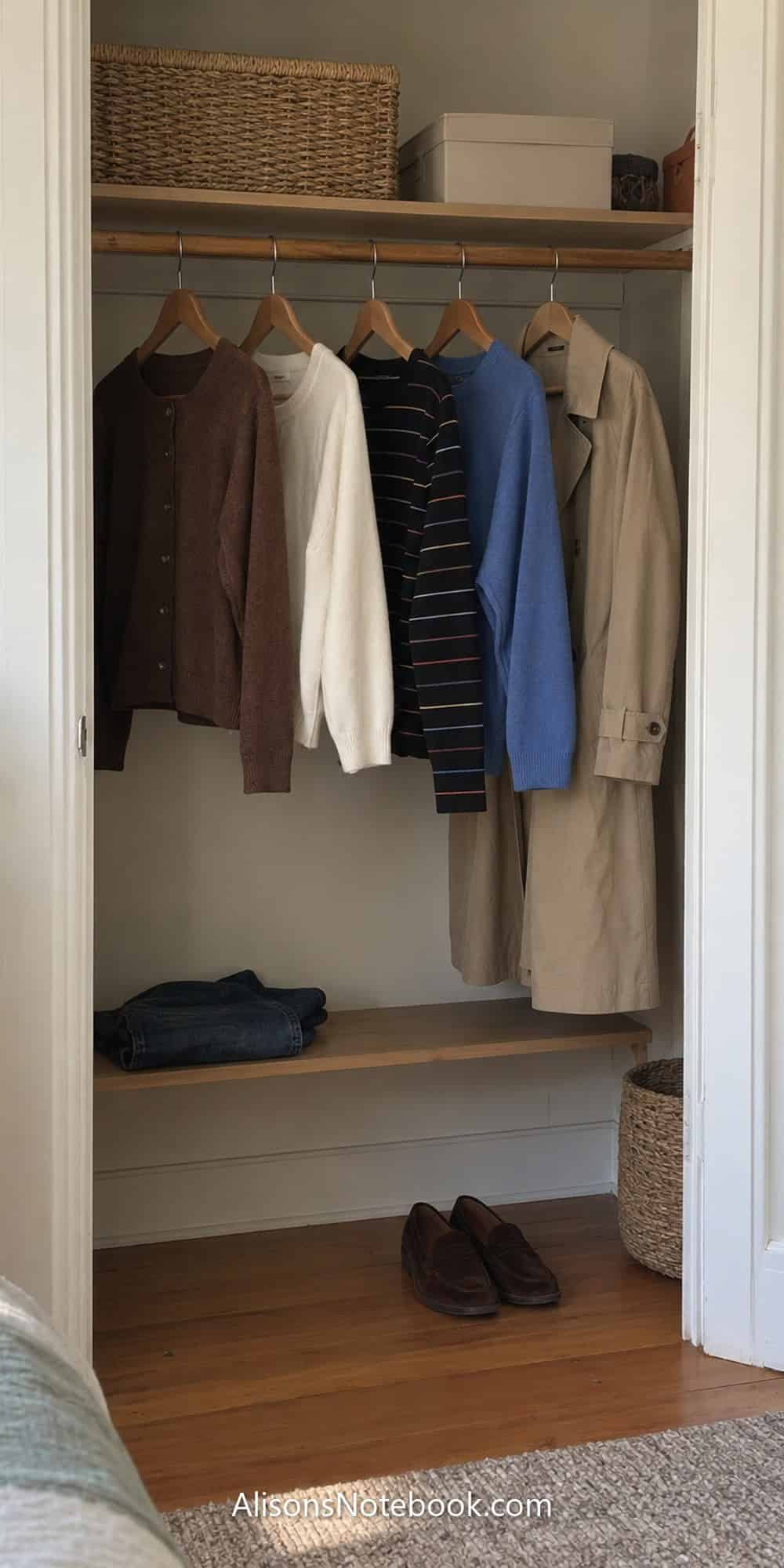
Bridge pieces are the clothes that work in both seasons. They carry you through the in-between weeks, so keep them out where you can reach them.
Good bridge pieces include a lightweight cardigan, long-sleeve tees, a fine-knit sweater, dark jeans or straight trousers, a trench or light jacket, and a pair of loafers.
What they have in common is weight. They’re warm enough for a cool morning, and light enough that you won’t be uncomfortable when the afternoon warms up.
Hang them together at the front of your closet for a few weeks. When you get dressed, you’ll reach for them first.
Many of these probably stay in your closet all year already, which is exactly why they work so well now.
3. Layer Light Instead Of Heavy

In winter, warmth often comes from one thick layer. In the weeks before spring, it comes from two or three thin ones.
Start with a long-sleeve tee or a fine-knit top. Add a light cardigan or an open button-up shirt. Finish with a light jacket for the walk outside.
When a room warms up, you take off one layer and still look dressed. That’s the whole reason to layer thin. A single heavy sweater leaves you only two choices, too warm or too cold.
Keep the layers in colors that go together, so the outfit still looks finished when a piece comes off. If you’d like more on getting layers to sit smoothly, these ways to layer without looking bulky work just as well in spring.
4. Trade Your Winter Coat For A Trench Or Light Jacket

Your winter coat is often the first thing to feel like too much. On a mild day it’s heavy, and it’s hard to carry once you take it off.
A trench coat is the classic in-between coat. It blocks wind and light rain, and it’s thin enough to wear over a sweater now and a tee later in the season.
A quilted jacket, a light wool-blend jacket, or a denim jacket can do the same job, depending on your day.
Choose one that’s long enough to cover your hips and has pockets you can actually use. A collar you can turn up helps on rainy mornings.
Keep your winter coat handy for a few more weeks, though. A cold snap often comes back once before spring settles in.
5. Bring Lighter Colors Up Near Your Face

After months of black, navy, and charcoal, a little light color goes a long way.
You don’t have to switch your whole wardrobe to pastels. Start near your face. A cream, pale blue, blush, or soft green top under a darker cardigan brightens the outfit right where people look.
A light scarf does the same thing, and it keeps your neck warm on a chilly morning too.
Keep your darker pieces on the bottom for now. Navy trousers or dark jeans with a lighter top look fresh for spring and stay practical for wet weather.
If you’re not sure which light colors suit you, choosing a color palette makes it much easier to pick shades that work with what you already own.
6. Move From Boots To Loafers And Sneakers
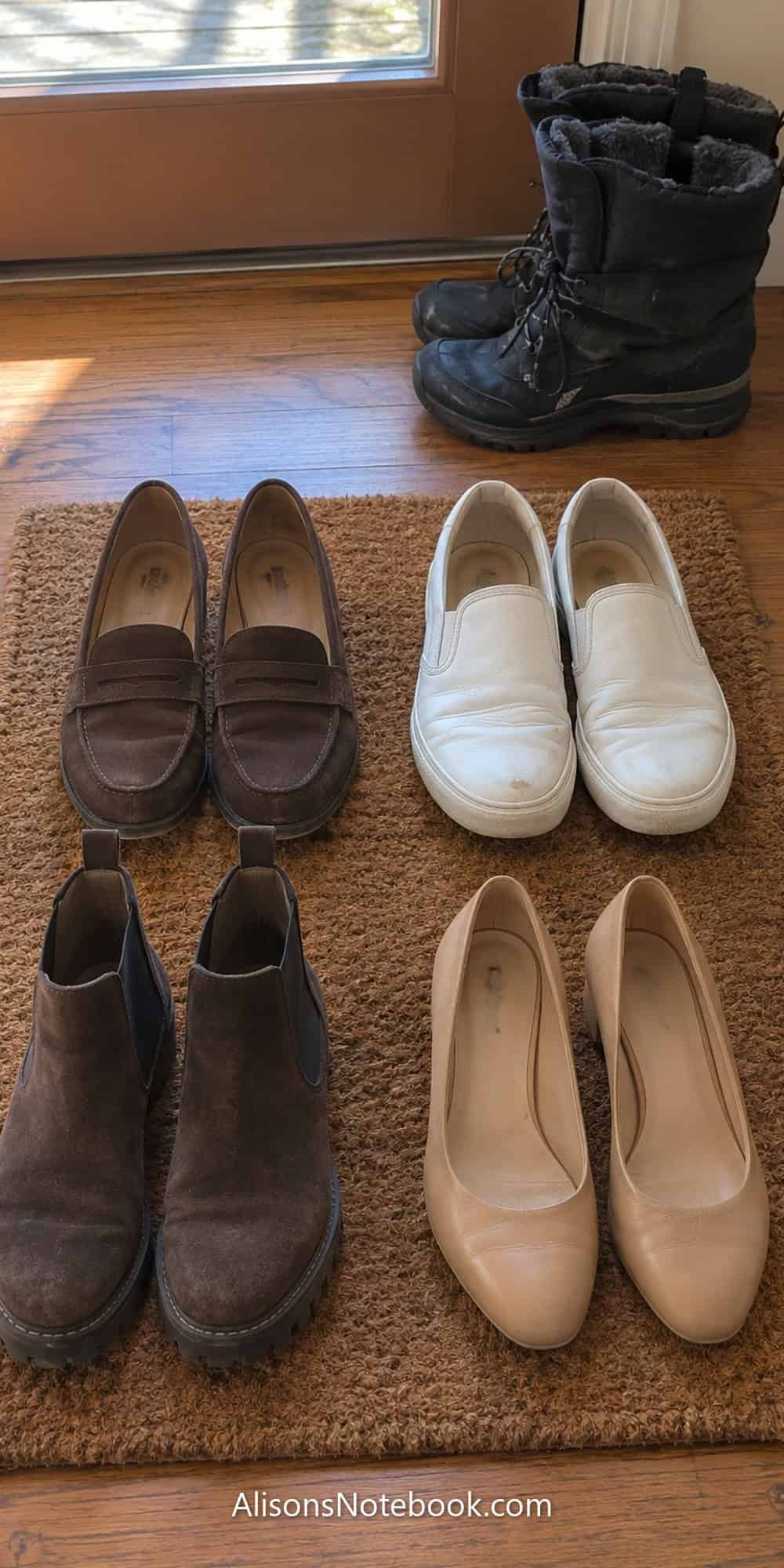
Heavy winter boots start to feel like too much once the snow is gone. But open sandals are still weeks away.
The shoes in between are closed, comfortable, and lighter. Loafers, clean white sneakers, cushioned flats, and low ankle boots all work for early spring.
Look for a firm sole with some grip, since spring sidewalks are often wet. A flat or a low heel is steadier than a tall one.
Ankle boots are worth keeping out longer than your tall winter boots. They handle rain and cool mornings, and they look right with both jeans and trousers.
A few versatile everyday shoes in neutral colors will cover almost every spring outfit you own.
7. Store Your Winter Clothes So They’re Ready Next Year

How you put winter clothes away decides what you’ll find next fall.
Wash or clean everything first. Small stains can set over the summer, and moths are drawn to clothes that have been worn.
Fold sweaters instead of hanging them, so the shoulders don’t stretch. Breathable fabric bins or cotton storage bags are better than sealed plastic, which can trap moisture.
A few cedar blocks or a sachet of dried lavender in each bin helps keep moths away.
Label each bin with what’s inside, and keep the bins somewhere easy to reach, not on a shelf that needs a step stool. Next fall, you’ll know exactly where everything is.
8. Fill One Or Two Gaps Instead Of Shopping A Whole Season
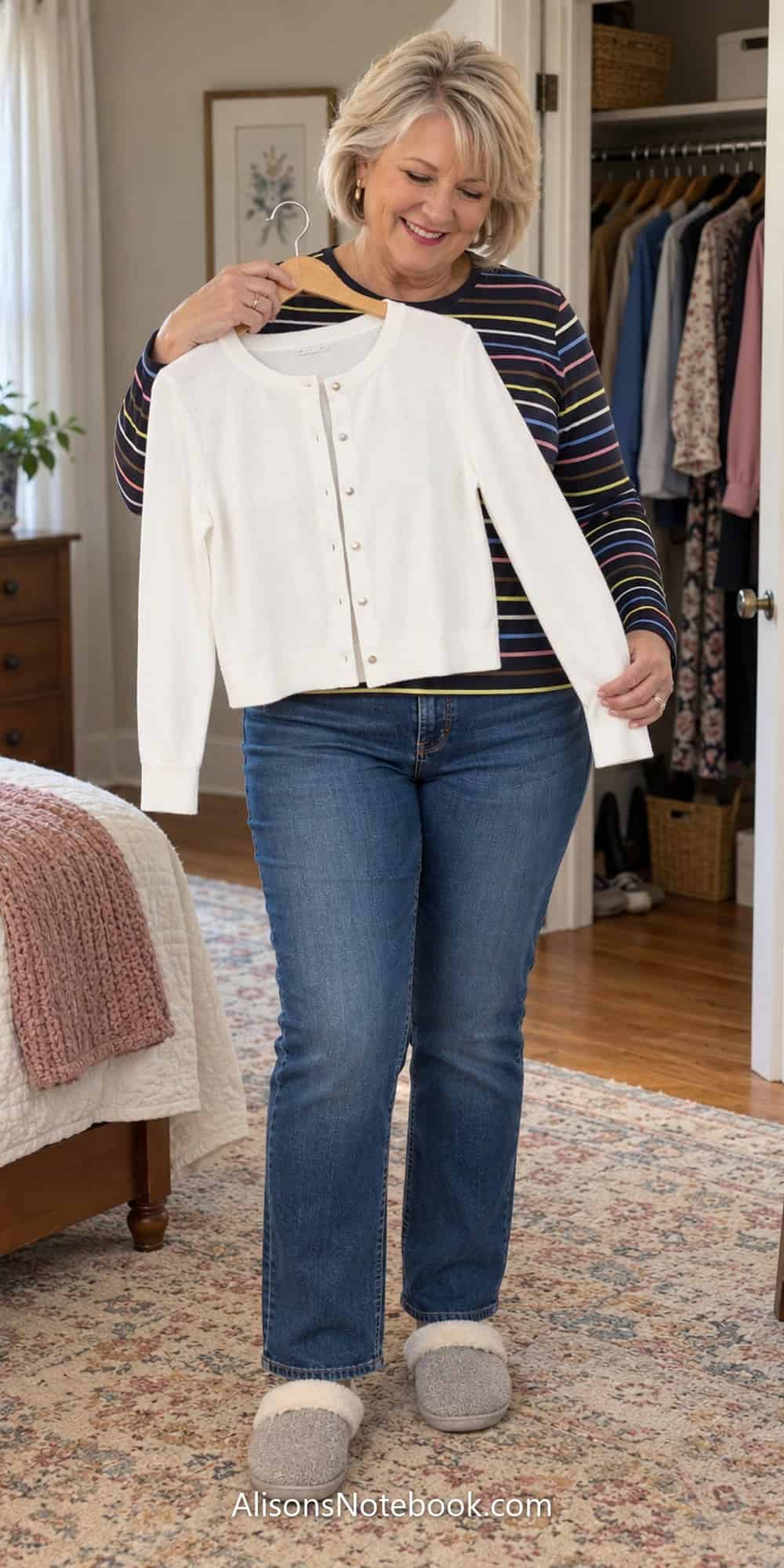
Once your winter clothes are put away and your bridge pieces are out, look at what’s left. You may find you have almost everything you need.
If something is missing, write it down. Maybe it’s a light cardigan, a pair of loafers, or a top in a lighter color.
Then buy just that one or two things, and only after you’ve worn your closet for a week or two. It’s easy to buy a whole new outfit on the first warm day and then find it repeats what you already have.
One well-chosen piece that works with ten things in your closet does more than five new pieces that only go with each other.
If you’re keeping an eye on spending, these tips for building a wardrobe on a budget help you make each purchase count.
How To Put It Together: 3 Easy Transition Looks
Here are three complete looks that use these ideas. Each one handles a cool morning and a milder afternoon. Treat them as starting points and swap in what you already own.
1. A Cool Morning Errands Look

A striped long-sleeve tee, a lightweight button-front cardigan, dark straight-leg jeans, and loafers.
Take the cardigan off when the afternoon warms up, and the tee and jeans still look finished. The loafers are comfortable for walking and much lighter than winter boots.
Shop The Look

2. A Rainy Spring Day Look

A fine-knit sweater in a soft color, a trench coat, slim ankle-length trousers, and water-resistant ankle boots.
The trench handles wind and drizzle, and the thin sweater sits smoothly under it. The ankle boots keep your feet dry without the weight of tall winter boots.
Shop The Look
3. A Lunch Or Church Look

A long-sleeve midi dress in a soft print, a light cardigan, and low block-heel shoes.
The print brings in a little spring color, and the long sleeves and cardigan keep you warm until the day warms up. A low block heel is steady and still looks dressed.
Shop The Look
Once the weather settles for good, these spring outfits for women over 50 pick up right where these looks leave off.
The Best Fabrics For The Weeks Between Seasons
Fabric matters more than usual this time of year, because one outfit has to handle a range of temperatures.
Cotton is the easiest to work with. Cotton tees, cotton-blend knits, and button-up shirts breathe when it warms up and layer well when it’s cool.
Lightweight merino wool is warm without being heavy, and it doesn’t hold on to odors. A thin merino sweater is one of the most useful pieces you can own in early spring.
Denim works in both seasons. Dark jeans and a denim jacket can carry you from March well into May.
For your outer layer, a cotton trench coat is hard to beat. Most are made from gabardine, a tightly woven fabric that sheds light rain.
Save linen and very thin, drapey fabrics for later in spring. On a cold, damp morning, they won’t keep you warm enough.
Spring Colors That Work Well After 50
Spring colors don’t have to mean bright pastels from head to toe.
Soft neutrals make an easy start. Cream, stone, light gray, and khaki feel lighter than winter’s darker shades, and they still go with everything.
Soft colors work well near the face. Pale blue, blush, sage green, and lavender add a little life without looking loud.
You can keep your winter darks too. Navy, charcoal, and chocolate brown look fresh with a cream or pale blue top, and they’re practical for rainy weeks.
A light scarf or a few simple accessories are the easiest way to try a new spring color without buying a whole outfit in it.
Your Closet Can Be Ready For Spring Without Starting Over
None of this is about buying a new wardrobe, my friend. It’s about getting the clothes you already own ready for a new season.
A quick sort. Your bridge pieces at the front. Lighter layers, a lighter coat, and lighter shoes. Winter clothes put away clean and labeled. Each step is small, and you can do them one at a time.
Some of these will matter more to you than others, depending on where you live and how your days go. Take the ones that fit your life and leave the rest.
The weeks between winter and spring can be some of the nicest of the year. The days get longer, and the first warm afternoons finally arrive.
You have most of what you need for them already. It’s mostly a matter of moving a few things around.
Ready To Make Every Season Change Easier?

If changing over your closet each season still feels like a lot of work, a capsule wardrobe can make it much simpler.
A capsule wardrobe is a small set of clothes that all go together. When your pieces are chosen to mix and match, there’s less to sort, less to store, and fewer decisions to make when the weather turns.
I put together a free guide to help you build one, and it’s made for real closets and real budgets. There’s no shopping list and nothing you have to buy.
It takes about ten minutes to read, and over 9,000 women have used it already to simplify their wardrobes and feel more put together with less.
Frequently Asked Questions
When should I switch my wardrobe from winter to spring?
Switch when daytime temperatures stay mild for about a week, not on the first warm day. In many places that means starting in March and finishing by late April. Keep a warm coat and a sweater out for a few more weeks, since a cold snap often comes back.
How do I transition my wardrobe from winter to spring without buying new clothes?
Start with the pieces that work in both seasons, like light cardigans, long-sleeve tees, dark jeans, a trench, and loafers. Layer them thin instead of wearing one heavy sweater, and bring a lighter top up near your face. Most women already own enough to get through the in-between weeks.
What should I wear when it’s cold in the morning and warm in the afternoon?
Wear two or three thin layers you can take off one at a time. A long-sleeve tee under a light cardigan, with a trench or light jacket on top, works well. When the day warms up, you take off a layer and the outfit still looks complete.
What are good transition pieces for spring?
Good transition pieces include a lightweight cardigan, long-sleeve cotton tees, a fine-knit sweater, dark jeans, straight trousers, a trench coat, and loafers or ankle boots. They’re warm enough for a cool morning and light enough for a milder afternoon, so they carry you through both seasons.
How should I store winter clothes for spring and summer?
Clean everything before you store it, since stains can set and moths are drawn to worn clothes. Fold sweaters instead of hanging them, and use breathable fabric bins rather than sealed plastic. Add cedar blocks or lavender, label each bin, and keep the bins somewhere easy to reach.
What colors should a woman over 50 wear in early spring?
Soft neutrals like cream, stone, and light gray are an easy start, and soft colors like pale blue, blush, and sage work well near the face. Your winter navy, charcoal, and brown still look fresh with a lighter top, and they’re practical on rainy days.
Follow me elsewhere!

