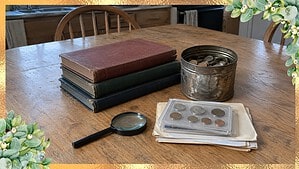
Three stamp albums. One heavy coffee can. Twenty-six coin sets, still in their mailing envelopes.
That’s what my father left in the bottom drawer of his desk. My mother never touched it after he passed. When we cleared out her house, I brought it all home and set it in the closet of my husband’s den.
It stayed there for almost three years.
I didn’t open it because I didn’t know what to do with it.
Part of me was afraid I’d give away a small fortune. Part of me was afraid I’d get cheated. And part of me just wasn’t ready to see my father’s handwriting on all those little labels.
Then last month, my grandson found the coffee can while he was helping my husband in the den. He carried it into the kitchen with both hands and said, “Grandma, this thing weighs a ton. What’s in it?”
So we finally found out. This is what Dad’s stamp and coin collections were really worth, what we kept, and what I learned that might help you with your own.
The Hard Truth About Most Collections
I’ll tell you the hard part first, so it doesn’t surprise you the way it surprised me.
Most stamp and coin collections are worth much less than families hope. That’s not because our fathers did anything wrong. It’s because they collected the same things millions of other people collected.
The American Philatelic Society, a national group for stamp collectors, says most of the value in a collection usually comes from a small part of it. The rest is common stamps that many people have.
The same is true of coins. A few pieces may be worth real money. Most are worth about what they say on them, or a little more.
That doesn’t make a collection worthless. It just means the value is hiding in a few places. Once you know where to look, it’s much easier to sort.
What We Learned About Dad’s Stamps
Dad’s stamps were in three parts. Each one turned out to be worth something different.
The Albums
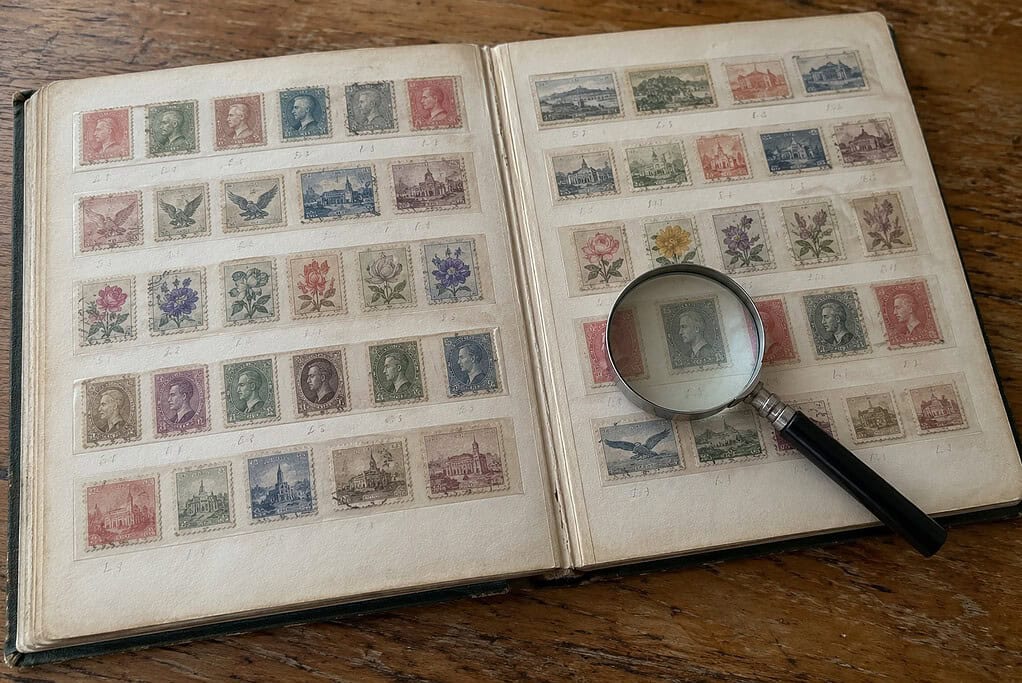
The albums were Dad’s pride. Every page had stamps tucked into neat rows, with his tiny handwriting underneath.
I was sure the oldest ones were worth a lot. A few were worth something. Most were not.
The price printed in a stamp catalog is what a store might charge for that stamp. It’s not what anyone will pay you for it. The APS warns that catalog value is almost never what a collection is worth when you sell it.
What makes one stamp worth more than another is mostly its condition. A clean stamp with bright color, all its little edges, and the design centered in the middle is worth much more than the same stamp with a tear or a crease.
The Sheets of Unused Stamps
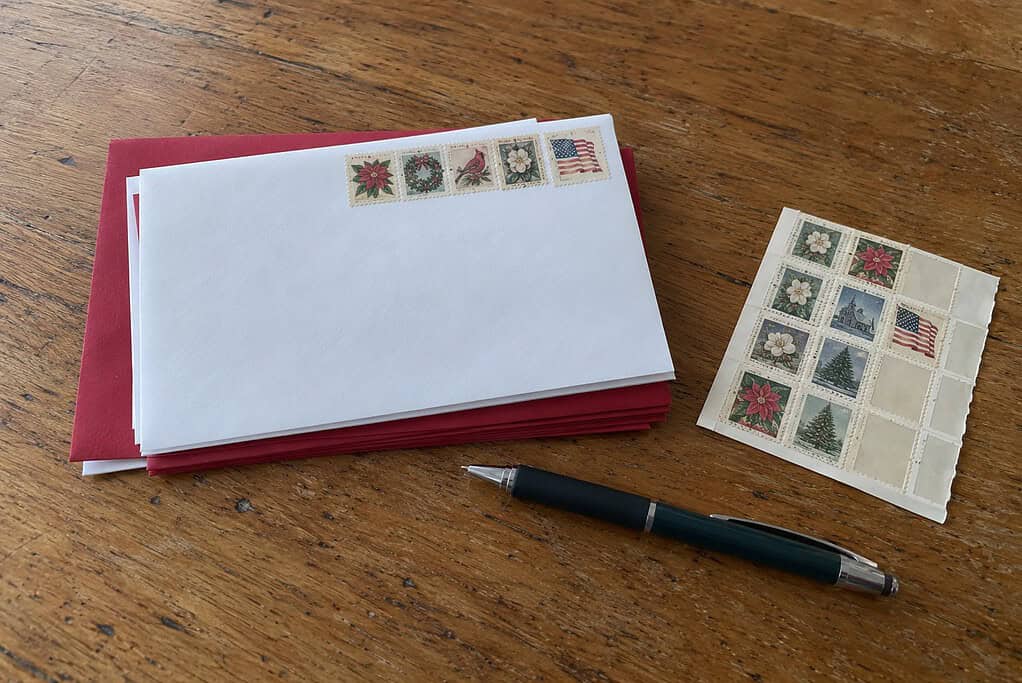
Dad also had big sheets of stamps from the 1950s through the 1990s. They had never been used.
Here’s something that surprised me. Many buyers pay less than the price printed on stamps like these. That’s because there are so many of them.
But here’s the good news. You can still use them to mail letters.
The U.S. Postal Service says postage stamps never expire. Most U.S. stamps from 1860 on are still good for the price printed on them, as long as they aren’t torn or damaged. You just add enough of them to match today’s price for a letter.
So that’s what I’m doing. This Christmas, every card I send will have a few of my father’s stamps on it. (It takes a few more stamps per envelope, but I don’t mind one bit.)
The Envelopes That Came in the Mail
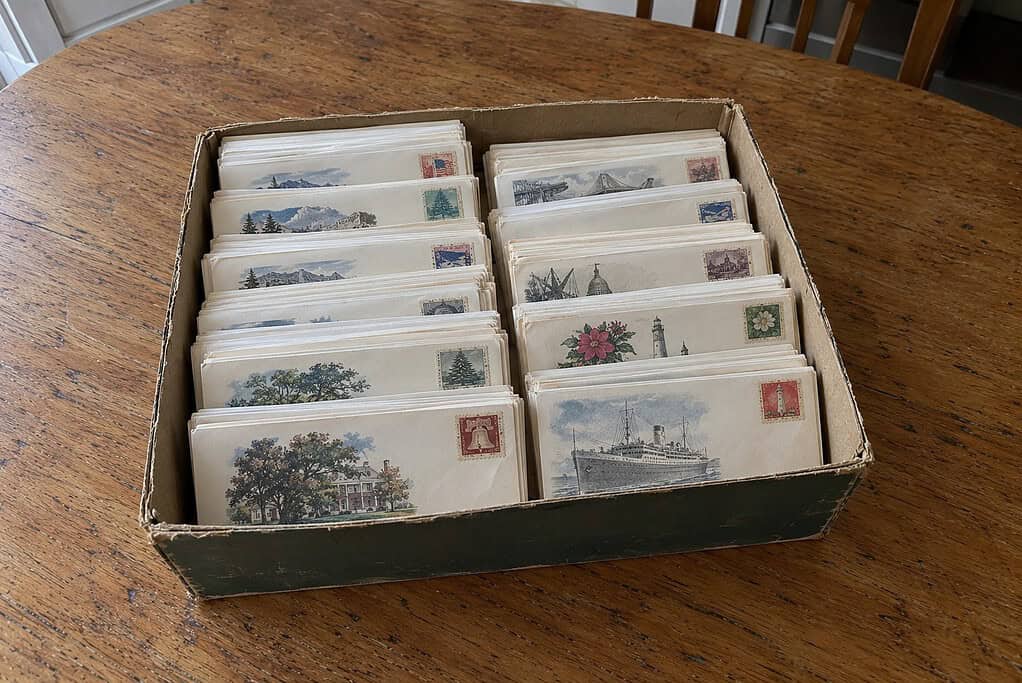
In a shoebox under the albums, there were stacks of fancy envelopes. Each one had a new stamp and a picture printed on the front. Dad got them in the mail for years.
They’re called first day covers, because they were mailed on the first day a new stamp came out. Dad thought they would be worth a lot someday.
Most first day covers from after 1940 are worth very little. Millions were made.
We kept a handful with pictures we liked, and the rest went to a youth stamp program. (More on that below.)
What We Learned About Dad’s Coins
The coins were where the real surprise was. It just wasn’t the surprise I expected.
The Coffee Can
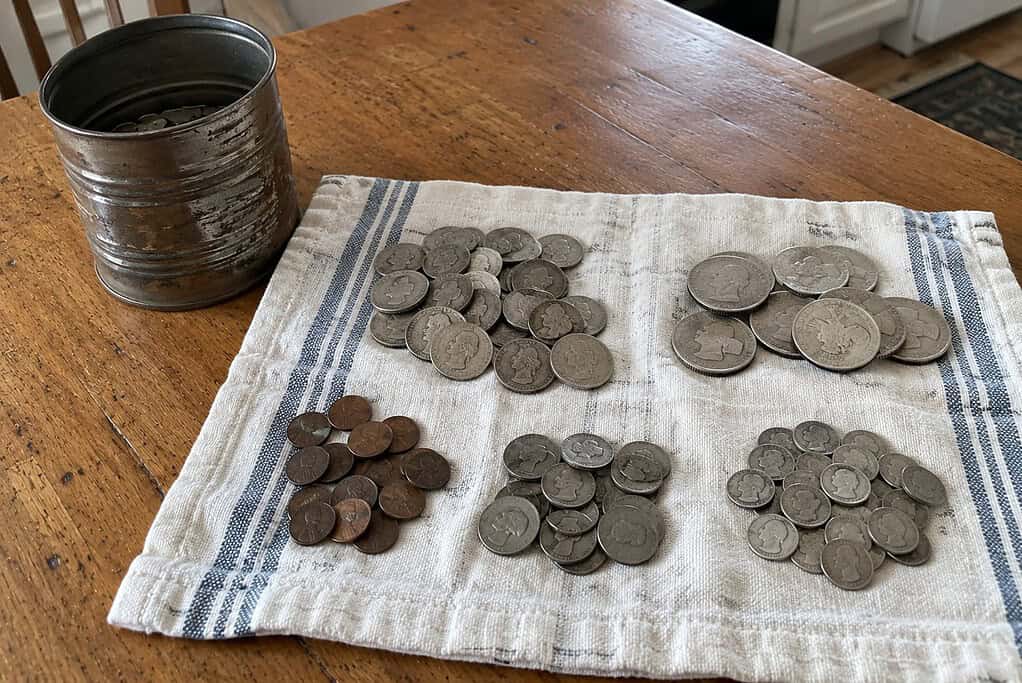
That heavy coffee can was full of old pocket change. Dad had saved coins for years.
At first, I thought it was just change. But my grandson looked up the dates while I read them out loud.
Dimes, quarters, and half dollars from 1964 and earlier are 90 percent silver. Half dollars from 1965 to 1970 are 40 percent silver. Dimes and quarters from 1965 on have no silver, and neither do half dollars from 1971 on.
Some nickels from 1942 to 1945 have silver in them too. You can spot them by a large letter above the building on the back. (Not every 1942 nickel has silver, so look for that big letter.)
These old silver coins are worth more than what’s printed on them, because of the silver inside. In mid-October 2026, silver was selling for a little under $60 an ounce. At that price, one old silver quarter held about $10 worth of silver.
Silver prices go up and down every day. So the coins in your can could be worth more or less when you check.
The Silver Dollars
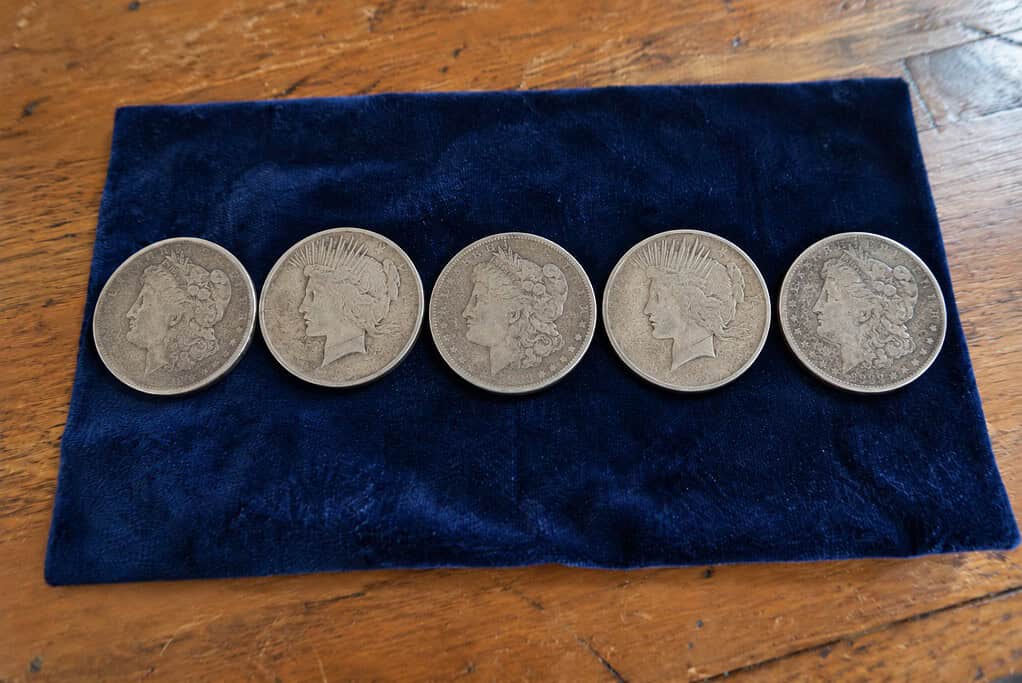
At the bottom of the can were five big, heavy silver dollars. They were Morgan and Peace dollars, made between 1878 and 1935.
Each one has a little over three-quarters of an ounce of silver in it. (If you also have a parent’s silver forks and spoons, I wrote about what to do with inherited silverware.) Some dates are worth much more than their silver to collectors, so these were worth showing to a coin dealer.
The Coin Sets and the State Quarters
The twenty-six coin sets were the ones Dad was proudest of. He ordered one from the U.S. Mint almost every year.
These were the hardest to hear about. Many coin sets from the 1970s to the 2000s now sell for less than their original price. They were made for collectors in very large numbers.
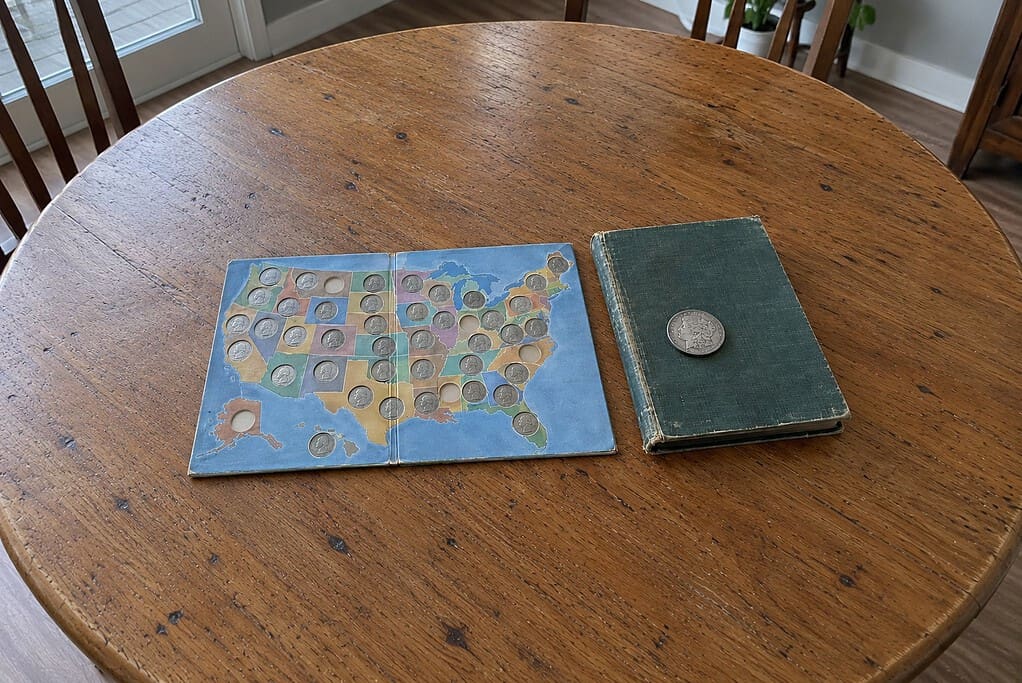
Dad also filled a map with state quarters, one for every state. Those quarters are worth 25 cents each, unless one has a rare mistake on it. Old wheat pennies are usually worth just a few cents each too.
Please Don’t Clean Them
This is the one thing I’m so glad I learned before we started.
When I saw how dull and dark the old coins looked, I wanted to polish them. My grandson stopped me, and I’m so glad he did.
The American Numismatic Association, the big national coin club, says you should not clean old coins. A cleaned coin usually loses value, and experts can tell right away.
So leave them just as you found them. I did the same with the stamps and left them right where Dad put them.
How We Got Honest Offers
I was most afraid of this part. I didn’t want to sell my father’s things to the wrong person.
Start With People Who Know
For the stamps, I called a local stamp club. The APS has a list of clubs and dealers on its website, at stamps.org. A kind man from the club looked through the albums with me at my kitchen table and told me which pages were worth showing to a dealer.
For the coins, we went to a coin shop in town. I checked first that the dealer belonged to the American Numismatic Association. Members agree to follow a code of ethics.
Get More Than One Offer
The APS says to get more than one offer and to be careful of anyone who says you have to decide right now. It says a fair offer can stay good for about 30 days.
So we got two offers on the stamps and two on the coins. The offers were not the same. Comparing them made it easy to choose.
Be Careful of Pop-Up Buyers
You may see ads for buyers who come to a hotel in town for a few days to buy gold, silver, and coins. The Better Business Bureau warns that pop-up buyers often pay much less than the going rate.
My advice is simple. Don’t rush, and don’t sell to anyone who won’t let you think it over.
An Appraisal Is Not an Offer
A dealer’s offer is what they’ll pay you. An appraisal is a paid opinion about what something is worth.
If you have a collection that might be worth a lot, a formal appraisal can help. The APS says one can cost $75 to $250 an hour. A fair appraiser charges by the hour or a flat fee, never a percent of what your things are worth.
And if you sell anything worth a lot, ask a tax preparer first. Inherited collections have their own tax rules.
What We Did With Everything
In the end, we sold the silver coins and the five silver dollars to the coin shop for a little over $400. A stamp dealer bought the best album pages for a few hundred more. The coin sets brought much less than Dad paid, and that was okay.
I texted my brother, who lives three states away, at every step. We sent photos back and forth, the same way we did when we sorted Mom’s things from far away. He and I split the money and put it toward a dinner out for the whole family, in Dad’s name.
The extra first day covers and loose stamps went to the Postal History Foundation in Arizona. It runs a youth program that sends stamps to thousands of students every year. You pay to mail them, and they send you a receipt.
What We Kept
We kept more than I expected, and none of it was about money.
I kept one album, the one with Dad’s neatest handwriting. My younger granddaughter loves to turn the pages with me on rainy afternoons. She picks a favorite stamp every time.
My grandson kept one silver dollar and Dad’s state quarter map. He says he wants to finish the set of coins Dad never got to.
My brother asked for one silver dollar too. I mailed it to him in a little padded envelope, with a note in my handwriting this time.
I already keep my father’s watch. (I wrote about it in what not to declutter.) Now there’s one stamp album beside it, and that feels like plenty.
If You’re Sorting More Than a Collection
A collection is often just one box in a whole house of things.
My post on clearing out my mother’s house in one month walks through the first steps.
If you have other old things you think might sell, I wrote about the old things I almost gave away that sold for more than I expected.
And if a collection of your own is starting to fill the closet, my post on managing collectibles before they take over is a gentle place to start.
The Value Wasn’t in the Price
My father spent decades on those stamps and coins. The money they brought was small compared to all those years.
But I don’t think he collected them for money. He collected them because he loved sitting at his desk on a quiet evening, turning pages and reading dates.
Now my granddaughter turns those same pages. My grandson reads those same dates. And every Christmas card I mail this year will carry a little piece of Dad with it.
That’s what his hobby was really worth to us.
Make Room for What Matters Most

A box of a parent’s things can sit in a closet for years. You don’t have to sort it all at once. You just need a gentle place to start.
My free Declutter for Self Care Checklist breaks your home into small, easy jobs, one space at a time. Start with one drawer, or one coffee can.
Frequently Asked Questions
What is an inherited stamp collection worth?
Most stamp collections are worth less than families expect, because most stamps are common. The value usually comes from a small number of stamps in very good condition. A local stamp club or a stamp dealer can tell you which ones are worth a closer look.
Can I still use old postage stamps?
The U.S. Postal Service says stamps never expire. Most U.S. stamps from 1860 on are good for the price printed on them, as long as they aren’t damaged. Add enough stamps to match today’s postage.
Which old coins are worth more than face value?
Dimes, quarters, and half dollars from 1964 and earlier are 90 percent silver, and half dollars from 1965 to 1970 are 40 percent silver. Old silver dollars and some nickels from 1942 to 1945 have silver too. Their value goes up and down with the price of silver.
Should I clean old coins before I sell them?
No. The American Numismatic Association says cleaning usually lowers a coin’s value. Leave coins just as you found them.
How do I sell an inherited coin collection safely?
Go to a dealer who belongs to a group like the American Numismatic Association, and get at least two offers. Take your time, and be careful of buyers who want you to decide on the spot. If the collection may be worth a lot, think about a paid appraisal first.
Follow me elsewhere!

