I stood in my dining room holding a heavy set of serving dishes, the ones my grandmother passed to my mother, and my mother passed to me.
I'd carried them from house to house for thirty years. I'd never once used them. And every time I opened that cabinet, I felt the same little pinch of obligation.
I couldn't get rid of them. They were an heirloom.
But that afternoon, standing there with my back aching from the weight of them, an honest thought finally came through.
Nobody wants these dishes.
Not me, if I'm being truthful. Not my daughter, who told me kindly but clearly that they're not her taste. Not anyone I could think of.
They weren't an heirloom at all. They were just a heavy set of dishes I felt terrible about. And I'd been calling them something grander so I wouldn't have to face that.
That was the day the word lost its grip on me.
Because here's what I finally understood. That one word, heirloom, had been quietly running my whole cabinet. It made me keep things I didn't want, didn't use, and didn't have room for, all out of guilt dressed up as duty.
Once I saw the word for what it was, everything got lighter. So let me tell you what happens when you stop calling things an heirloom, and start being honest about what you actually want to keep.
The Word That Traps You Into Keeping
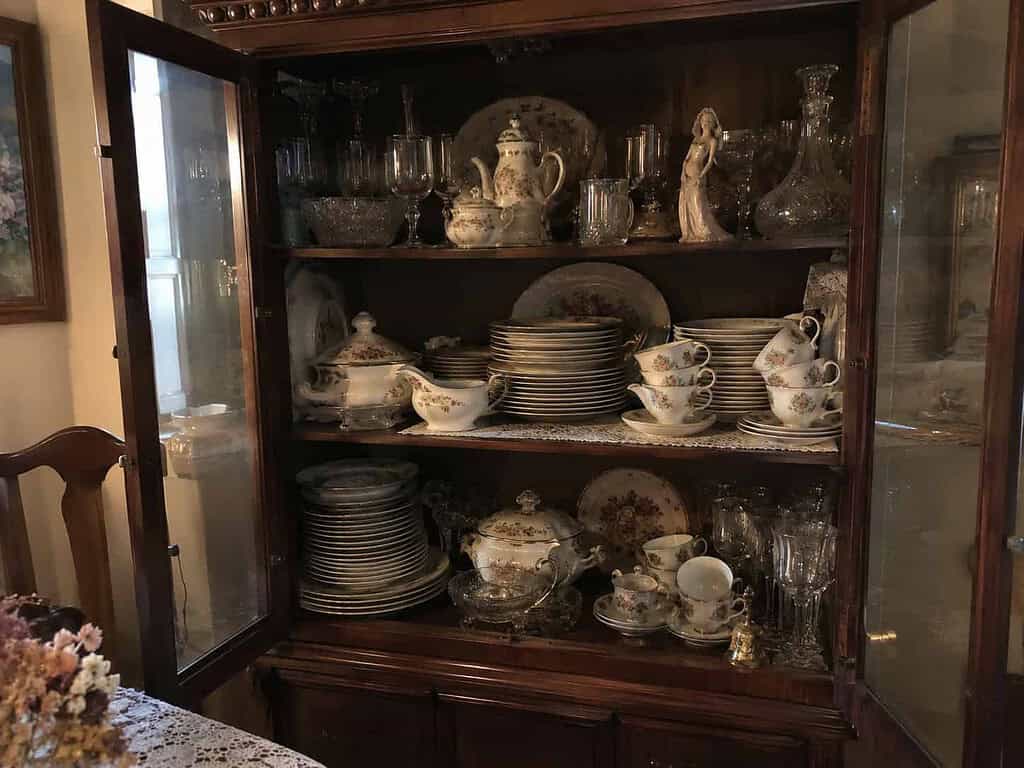
Let me tell you what that word was really doing to me all those years.
An heirloom is supposed to be something the next generation truly wants. Something loved, and passed down because someone was glad to receive it.
That's the idea, anyway. But that's not how most of us use the word.
We use it as a trap.
Here's the honest truth, and it took me far too long to see it. The biggest problem with calling something an heirloom is that it makes you keep the thing out of guilt, instead of because you love it or use it.
The moment you call an object an heirloom, its value shoots up in your mind. Suddenly it's not just a table, or a set of dishes, or a dusty figurine. It's An Heirloom, with a capital H. And who could ever get rid of that?
So you keep it. Even though you don't want it. Even though you never use it. Even though you don't have room for it.
That's the trap. The word turns a simple decision into an impossible one. It takes “I feel a little guilty” and quietly changes it into “I have no choice.”
But you do have a choice. You always did. The word was just hiding it from you.
And the people we're supposedly keeping it all for? Often they don't want it either. I learned that the hard way with my own kids, and it changed how I saw every shelf in my house.
Once I understood that, I could finally look at each thing honestly. Not as an heirloom I was forbidden to release, but as an object I got to decide about, like any other.
The Excuses Hiding Inside That One Word
Once I started paying attention, I noticed the word never came alone. It always brought a little story with it, a reason I had to keep the thing.
Here are the five stories I told myself most. See if any sound familiar.
“It's been in the family for generations”

This was my favorite one. If something had been passed down through the family, keeping it felt like a sacred duty.
But here's the question I never asked. Just because it made it this far, does that mean it has to stop with me and my aching cabinets?
A thing being old doesn't make it wanted. My grandmother kept those serving dishes because she used them for Sunday dinners. My mother kept them because her mother gave them to her. I kept them because I felt I had to.
Not one of us kept them because we loved them. We kept them because the one before us did. That's not a legacy. That's a chain of guilt, handed down link by link.
Somebody gets to break the chain. It might as well be me.
“Someone will want it someday”

This is the story that fills the most attics and basements. We hold onto things for a someday person who may never come.
I told myself my daughter would want the dishes. Or a grandchild. Or someone, eventually.
Then I actually asked. And the answer was a kind but clear no.
That's the thing about “someday.” It lets you avoid the honest conversation. The moment you ask the real people in your life what they actually want, the fog clears. Usually they want far less than you think, and they'd rather you not save a houseful of things on their behalf.
Ask now, while you can. It's so much better than guessing.
“It's worth something”

Oh, this one gets us. We keep things because we're sure they're valuable.
Most of the time, they simply aren't.
The market for old china, brown furniture, and collectible figurines has fallen through the floor. The younger generations don't want them, so there's often no one to buy them. That “valuable” set of dishes is usually worth a fraction of what you imagine, if anything at all.
I looked into selling my grandmother's dishes and nearly laughed. When I sorted through the real story on old china sets nobody wants, I learned that most of it holds far more sentimental value than actual money.
And if it isn't worth much, and nobody wants it, then the only thing keeping it in your cabinet is the word.
“Getting rid of it means disrespecting them”

This is the heaviest story of all, so let me be gentle with it.
We feel that letting go of a loved one's things is the same as letting go of the person, or worse, dishonoring their memory.
It isn't. I promise you it isn't.
My mother is not in those dishes. She's in me. She's in my sister's laugh, and in the way I still set a nice table on Thanksgiving. Keeping a serving dish I never use doesn't honor her one bit. It just clutters my cabinet in her name.
The people who loved us want us to be happy and light, not weighed down by their belongings out of duty. Honoring someone is about how you remember them, not how much of their furniture you store.
“I'm the only one who'll keep the family history alive”

This last one made me feel important, and a little trapped.
I'd cast myself as the keeper of the whole family's history. If I let something go, that history would be lost, and it would be my fault.
That's a lot of weight for one woman to carry. And it isn't even true.
Family history doesn't live in objects. It lives in the stories we tell, the recipes we cook, the photos we share. If I quietly became the keeper of everyone's things, that didn't preserve our history. It just filled my house.
You can keep every story that matters without keeping every single thing. The history is safe with you. It always was.
Choosing Love and Use Over Guilt

So how do I decide now, once the word lost its power?
It comes down to two honest questions. Do I love it? Or do I use it?
If the answer to either is a real yes, it stays, and I enjoy it. If the answer is no, and I'm only keeping it because of that heavy word, it's free to go.
That's it. Love or use. Not guilt.
When something passes the test and stays, I actually use it now, instead of saving it for a someday that never comes. If I'm keeping the good dishes, we eat off the good dishes.
When something doesn't pass, I don't just toss it and feel bad.
I try to give it a good ending. I offer it to family first, honestly, so they can say yes or no without pressure. If they pass, I look for someone who'll truly treasure it, a young person setting up a first home, or a friend who always admired it.
Giving something to a person who wants it feels completely different from guilting it onto someone who doesn't.
And for the things that carry a real memory, I keep the story, not always the object. I'll take a photo, or write down what it meant, or keep one small piece instead of the whole set.
The memory was never in the thing anyway.
When I finally understood that the hardest things to inherit are rarely the valuable ones, it got easier to keep what mattered and release the rest.
If the guilt still tugs at you, and it will at first, be patient with yourself. Letting go of things we've held with love is one of the hardest parts of decluttering. But it gets lighter every time, I promise.
Loved Forward, Not Guilted Forward
Here's what I believe now, after clearing out a lot of things I once called heirlooms.
A real heirloom is something loved forward. Not guilted forward.
It's the piece a granddaughter genuinely asks for. The ring someone can't wait to wear. The quilt a family fights, kindly, over who gets to keep.
Those things aren't a burden. They're a joy, and they'll carry themselves right into the next generation without any pushing from you.
Everything else is just stuff with a heavy word attached. And you're allowed to set that word down.
So the next time you catch yourself about to keep something only because it's “an heirloom,” stop and ask the honest questions. Do you love it? Do you use it? Would anyone actually be glad to have it?
If the answers are no, then it was never really an heirloom. It was a guilt trip with a nicer name.
Keep the things that are loved. Keep the stories always. And let the rest go, with your head high and your cabinets a little lighter.
Set Down the Heavy Words

So much of what we hold onto isn't really ours to carry.
My free Declutter for Self Care Checklist helps you sort the things you love from the things you only feel guilty about, gently and at your own pace, so your home holds your life instead of your obligations.
Frequently Asked Questions
What makes something an heirloom?
An heirloom is usually a family item passed down through generations, but the word really only holds true when the next generation actually wants and treasures it. A piece someone is glad to receive and use is a real heirloom. A piece kept only out of obligation is just an old belonging with a heavy word attached. What makes something an heirloom is love carried forward, not age or guilt.
What should I do with heirlooms nobody wants?
First, ask your family honestly, so you know for certain rather than guessing. Whatever nobody wants, look for someone who would truly treasure it, like a young person furnishing a first home or a friend who always admired it. You can also sell it, donate it, or keep one small piece and a photo for the memory. The goal is a good ending, not keeping something forever out of guilt.
Is it okay to get rid of family heirlooms?
Yes, it is completely okay. Letting go of an item is not the same as letting go of the person or their memory. The people who loved you want you to live lightly, not to store their belongings out of duty. Keep the pieces you genuinely love or use, honor the memory in your own way, and release the rest without guilt.
How do I stop feeling guilty about selling or donating heirlooms?
Remind yourself that the memory lives in you, not in the object. Take a photo or write down the story before it goes, so you keep what really matters. Giving the item to someone who will love it, rather than storing it unused, often turns the guilt into something that feels good. The guilt fades a little more each time, especially once you see how much lighter your home feels.
How do I know if an heirloom is worth anything?
Have it appraised if you truly suspect it's valuable, but be prepared for a surprise. The market for old china, formal furniture, and collectible figurines has dropped sharply, so many pieces are worth far less than people expect. Most inherited items hold more sentimental value than monetary value. Knowing that can actually make it easier to let go, since you're not sitting on a fortune, just a memory.
Follow me elsewhere!