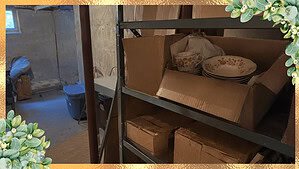
There are three generations of dishes in my basement.
My mother’s good china. My aunt Ruth’s everyday plates, the ones with the little blue flowers. A full set from my mother-in-law that I’ve never once used. Boxes stacked on boxes, some of them taped shut for more than ten years.
I was the one who always said yes. When someone in the family passed, or moved, or downsized, the dishes came to me. I couldn’t bear the thought of them going to a stranger, or worse, to the trash. So I took them. All of them.
For a long time, I told myself I was keeping the family history safe. Somebody had to.
But that’s not the whole truth. The real reason I kept every plate and cup and saucer was something I didn’t say out loud for years. I believed that as long as I had their things, I still had a piece of them. That letting go of my mother’s china would be like letting go of my mother all over again.
Maybe you understand that feeling. It might not be dishes for you. It might be your dad’s tools, or your grandmother’s quilts, or a coat still hanging in the closet that smells a little like the person who wore it. Whatever it is, you keep it because getting rid of it feels like losing them twice. If you’ve quietly become the family member who ends up holding everyone’s things, you might recognize yourself in the signs that you’ve become the keeper of everyone else’s belongings.
I’ve started to wonder, though, if that’s really how it works. If keeping all their things truly keeps them. That’s what I want to think through with you, gently, because I know this one runs deep.
There’s a Reason We Can’t Let Their Things Go
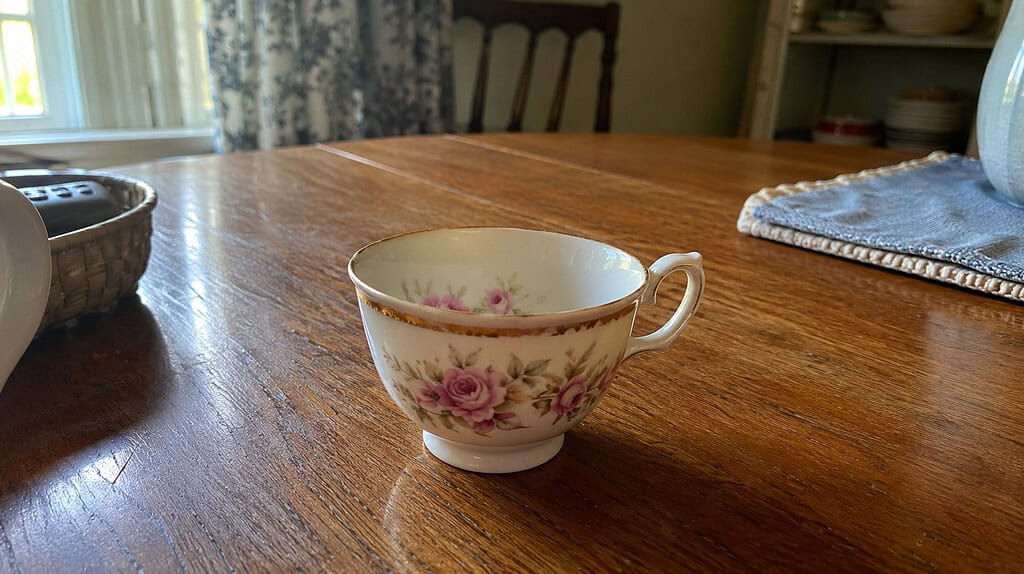
If you’ve ever held onto something long after the person was gone, you already know this isn’t about being messy or sentimental in some silly way. It’s deeper than that.
When you lose someone you love, the world suddenly feels like it has a hole in it. And their things become a way to fill that hole, even a little.
You can touch them. You can hold them. In a world where you can’t hold