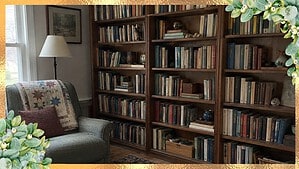
My friend from church was a school librarian for thirty-one years, and she couldn’t give away a single book.
At school, she cleared out old books every summer. She knew which ones had to go, and she never felt bad about it.
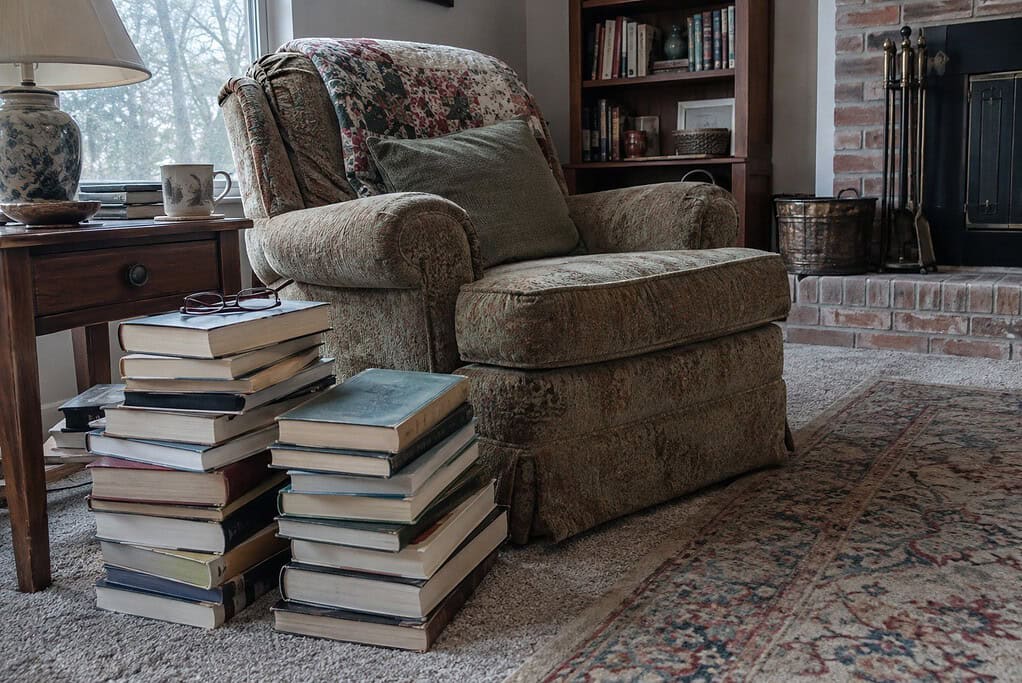
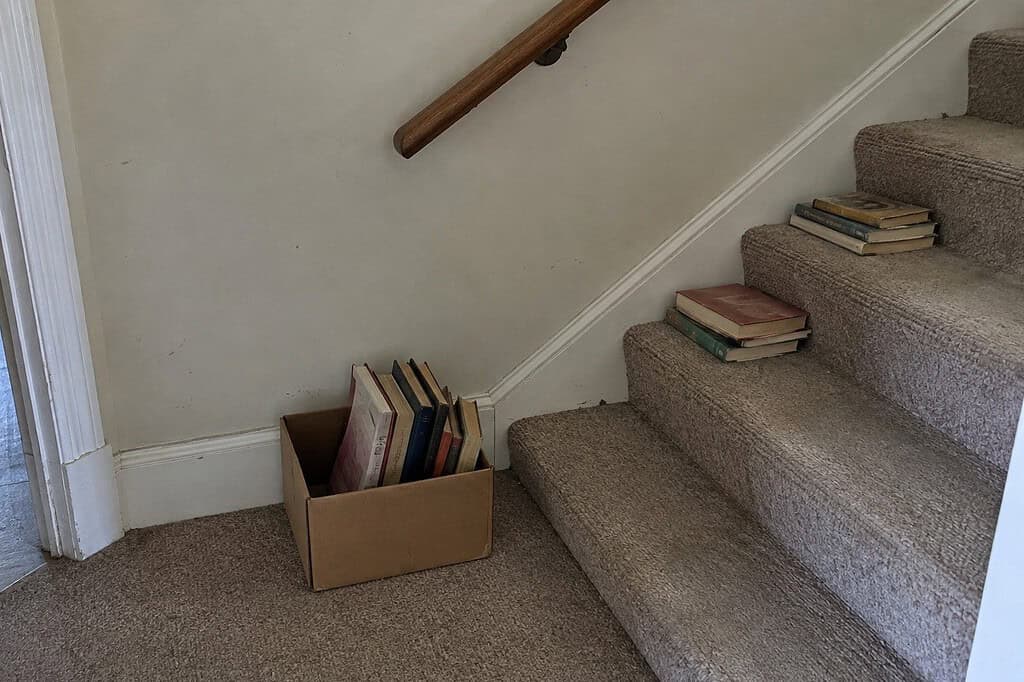
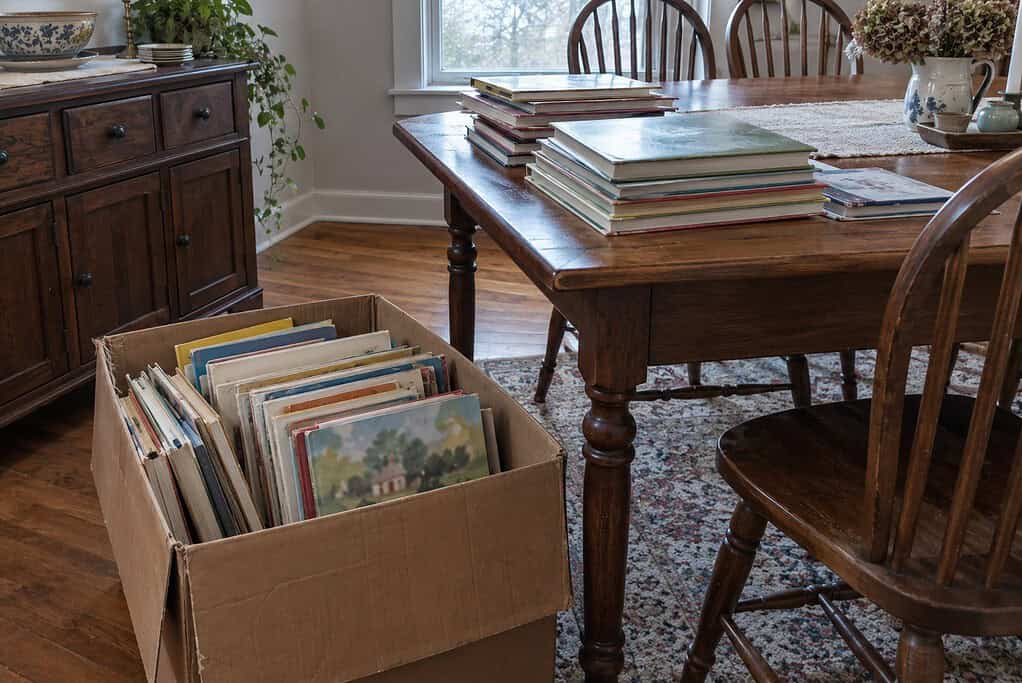
But at home, her books filled four bookcases, two rows deep. They were stacked on the floor by her reading chair and in a box on her stairs.
“I can do it for the school,” she said. “I can’t do it for me.”
This fall, she finally did. Then she taught me the rule librarians use. I went home and found ten more books on my own shelves that I didn’t need. That surprised me, because I’d already sent eleven boxes of books out of our house this fall.
So this is the librarian’s rule for books. It’s how I learned to weed my home library, and I’m still reading every single night.
What Librarians Mean by Weeding
When a library takes old books off its shelves, librarians call it “weeding.” It works the same way weeding a garden does. You pull out what’s crowding the shelf, so the good books have room.
Libraries weed all the time. It keeps the shelves fresh, so people can find the books they want. A shelf packed with old, worn-out books makes it harder to find the good ones.
My friend said the hardest part of her job was explaining that to people. “They think we’re throwing away books. We’re making room for readers.”
I’d never thought of it that way. I’d always felt that giving away a book was a little bit wrong. Like I was saying it didn’t matter.
A Librarian Who Couldn’t Weed Her Own Books
My friend is 70. She retired about ten years ago, and she still reads every day. Mysteries, history, poetry and the newspaper, front to back.
Her books came from everywhere. There were books from her own childhood and books her students gave her at the end of the year. Then there were the books from library sales, at a dollar or two each, and books from her late husband’s shelves.
The trouble started when she tripped on a stack of books by her chair last spring. She wasn’t hurt, but it scared her. Her daughter came over that weekend and said, “Mom, these books are going to hurt you.”
Clear floors and stairs matter more every year. I wrote about that in my post on what I’m clearing now so this house still works when I’m 85.
So she called me. “I need someone to sit with me while I do this,” she said. “Someone who won’t rush me.”
We sat in her living room for three Saturday mornings. She did the deciding, and I held the boxes.
The MUSTIE Rule
Many librarians use a simple checklist to decide which books to weed. It’s called MUSTIE, and each letter stands for a reason a book might go.
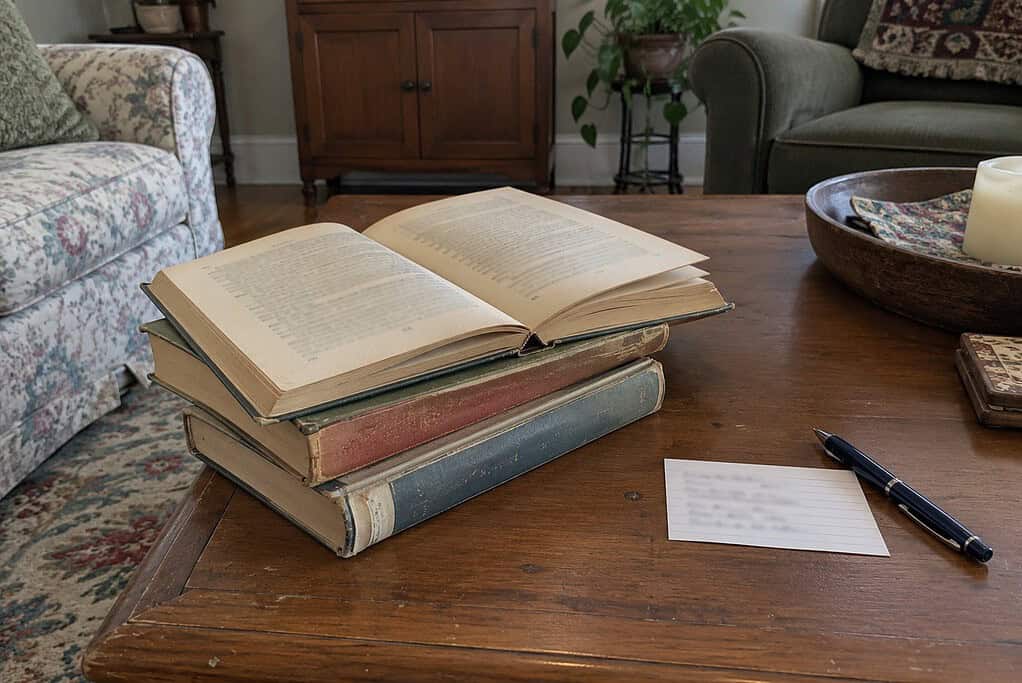
My friend wrote it on an index card and set it on the coffee table. We used it for every single book.
You don’t have to use all six letters. Even one or two can help you see your shelves in a new way.
M Is for Misleading
These are books with facts that aren’t true anymore. Old health books, old diet books, old money guides and old computer books all go stale.
My friend had a health book from the 1980s. “Half of this advice has changed,” she said. “I don’t want my grandkids reading it and thinking it’s right.”
A book with wrong facts isn’t a treasure. It’s only taking up room.
U Is for Ugly
This means a book that’s falling apart. The cover is torn, the pages are loose or yellow, or it smells musty.
My friend had a few paperbacks so worn that pages fell out when she opened them. She loved those stories, so she checked the library first. They had all of them.
Any book with mold or water damage should go in the trash, not the donation box. Mold can spread to your other books.
S Is for Superseded
That’s a big word for a simple idea. It means a newer book has taken its place.
She had three dictionaries, two atlases and two copies of the same cookbook. She kept the newest dictionary and the cookbook with her notes in the margins.
If you have two copies of anything, keep the one you’d rather hold. Let the other one go.
T Is for Trivial
These are books that were fun for a while but don’t mean much now. Joke books, gift books, quiz books and books about a fad that faded.
My friend laughed when she found a book of diet recipes from a TV show she’d forgotten. “I never made one thing in here,” she said. It went straight into the box.
I Is for Irrelevant
This means a book that doesn’t fit your life anymore. It may be a good book. It’s only not your book now.
My friend had shelves of teaching books from her school years. She also had books about a hobby she gave up long ago, and books about raising teenagers. (Her youngest is 45.)
She kept one teaching book she loved. The rest went to a young teacher at our church, who was thrilled.
E Is for Elsewhere
These are books you can easily get somewhere else. Most popular novels and classics are at the library, any time you want them.
This was the letter that helped my friend the most. “I don’t need to own every book I love,” she said. “The library owns them for me.”
She kept her favorites. She let the others go, knowing she could check them out again whenever she wanted.
The Books That Never Get Weeded
The MUSTIE rule isn’t about getting rid of every book. Even libraries keep some books forever.
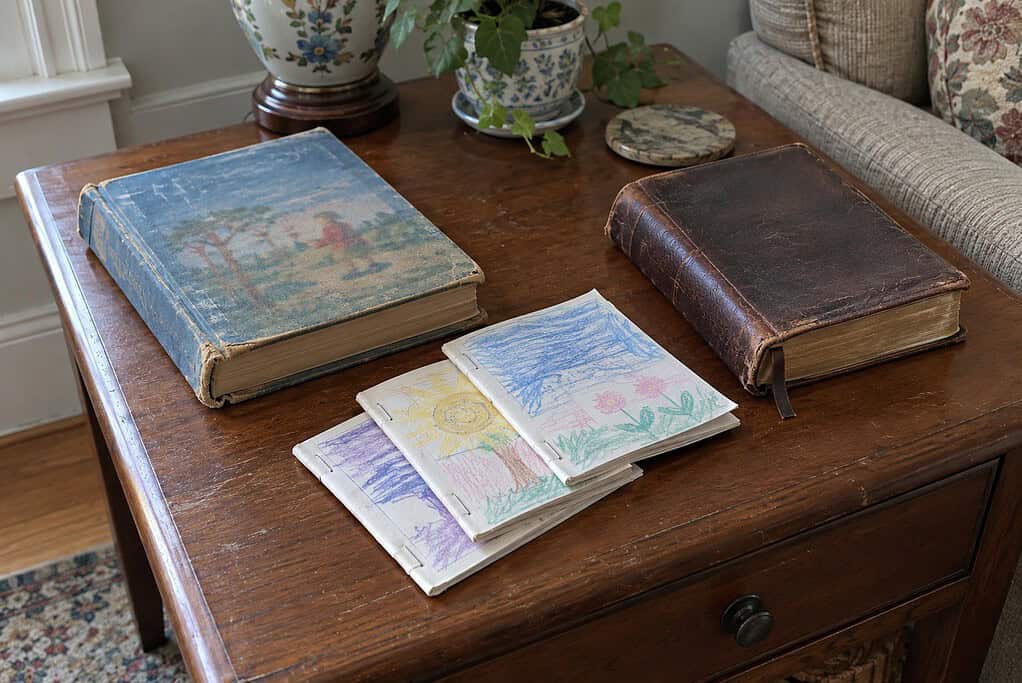
My friend kept the copy of Charlotte’s Web she read out loud to her students every year. She kept the books her students wrote and illustrated for her, and her mother’s Bible. And she kept a few of her husband’s favorite westerns, with his name written inside the covers.
“Every one of these reminds me of someone I love,” she said.
I feel the same way. My mother’s Bible stays in my nightstand, and her cookbook with her notes stays in my kitchen. No checklist will ever change that.
If you’re not sure which books belong in that group, my post on how to decide what to keep when decluttering might help.
What I Found on My Own Shelves
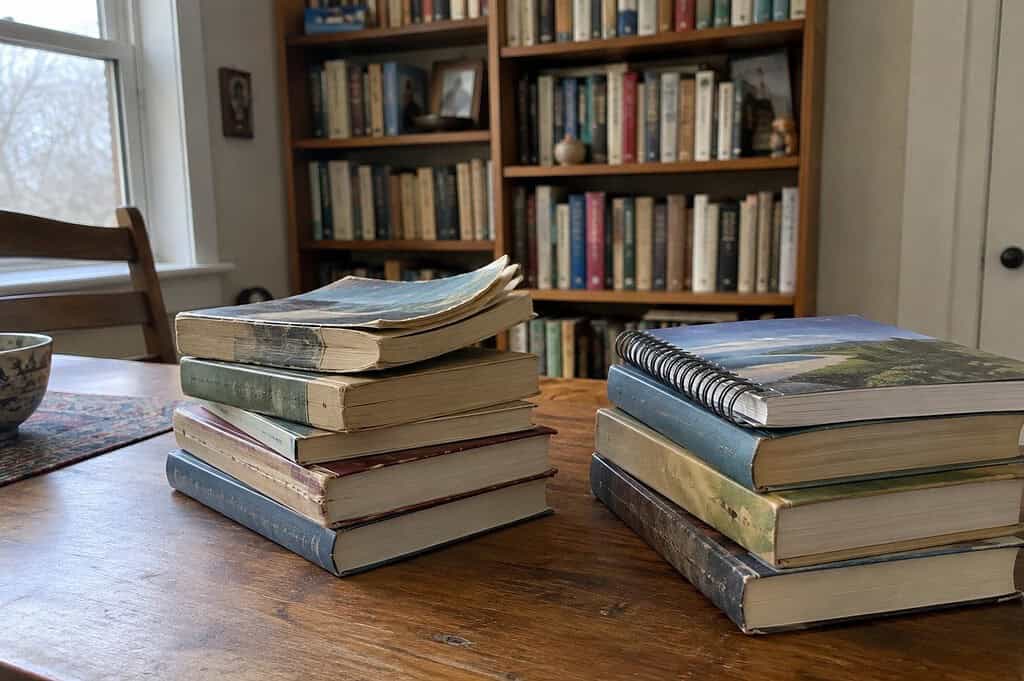
After her third Saturday, I went home and stood in front of the wall of shelves in our spare room. I was sure I’d find nothing. I’d cleared so many books this fall.
When I sorted those books, I asked one question: “Will I read this again, or hand it to someone I love?” I wrote about that in my post on where to donate books. But MUSTIE asked different questions, and it found ten more books.
There was a Medicare guide from 2019 and a diet book from the 1990s. Both were Misleading. A paperback mystery was falling apart, so that was Ugly, and the library has it.
I had two copies of the same novel, so one was Superseded. A little joke book a coworker gave me years ago was Trivial.
A guidebook for a trip we took long ago was Irrelevant. So were two books about raising teenagers, since my kids have kids of their own now. And two bestsellers I’d read once were easy to find Elsewhere.
That made ten. My shelves look a little roomier now, and I can see every book I love.
Where the Weeded Books Went
Not every weeded book should be donated. My friend was firm about that.
Outdated health, money and travel books went to recycling. She said a library sale or a thrift store can’t use them, because nobody wants old facts. Moldy books went in the trash.
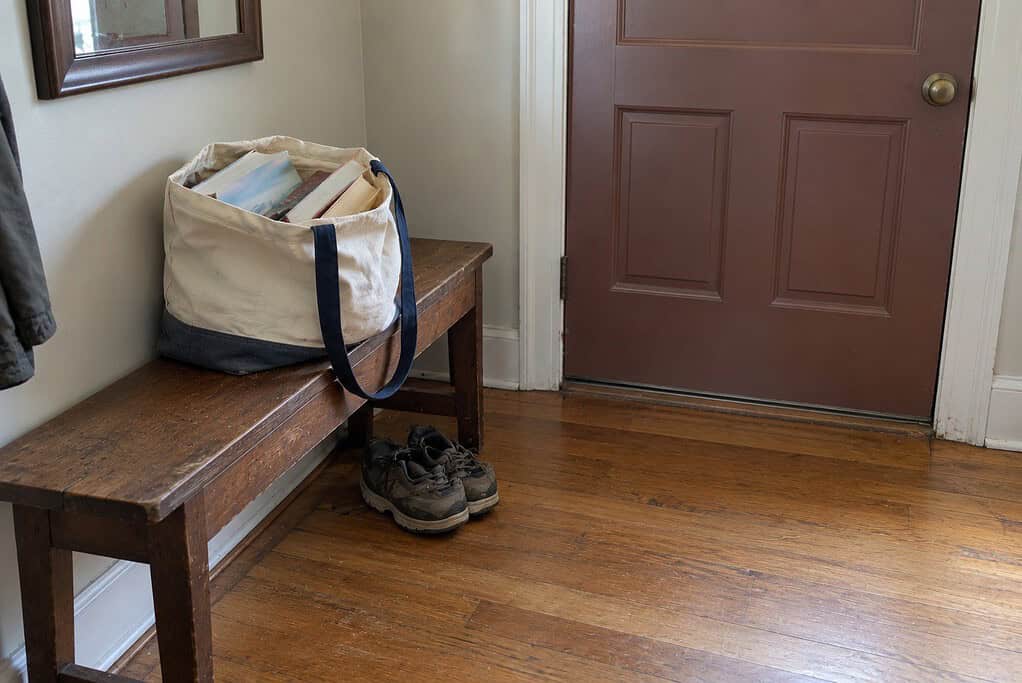
Good books in nice shape went to our library’s Friends of the Library sale, after we called to ask what they take. A few went to the Little Free Library a few streets over, in the tote bag by my front door.
The teaching books went to the young teacher at church. And my friend’s old atlases went to her grandson, who loves maps.
How to Keep Reading With Fewer Books
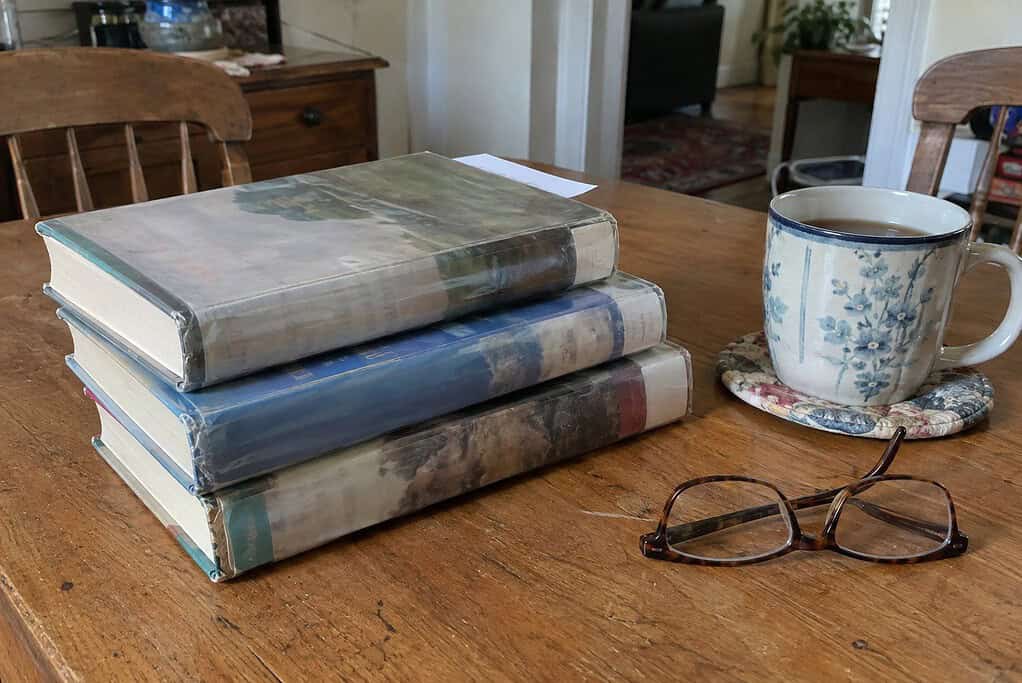
Weeding your shelves doesn’t mean you stop reading. My friend reads more now, because she can find what she wants.
Her best tip is to use the library like your own bookshelf. You can borrow a book, read it and take it back, and somebody else dusts the shelf. Many libraries also let you put a book on hold from home and pick it up when it’s ready.
If small print is getting hard to read, ask your library about large print books. Many libraries have a whole section.
And when a new book comes into your house, let one book go out. That’s my rule, and it keeps my wall from filling back up.
Weeding Once a Year
At school, my friend weeded every summer. Now she weeds her home shelves every January, with a cup of coffee and her index card.
“It only takes an hour now,” she said. “That first time took three Saturdays. Now it’s easy.”
I’m going to do the same thing. One morning every January, I’ll walk along my shelves with her six letters in my head. It’s a small habit, and it’ll keep my little library a place I love. (I shared a few other small habits in my post on habits to keep a home clutter-free.)
Her Living Room Now
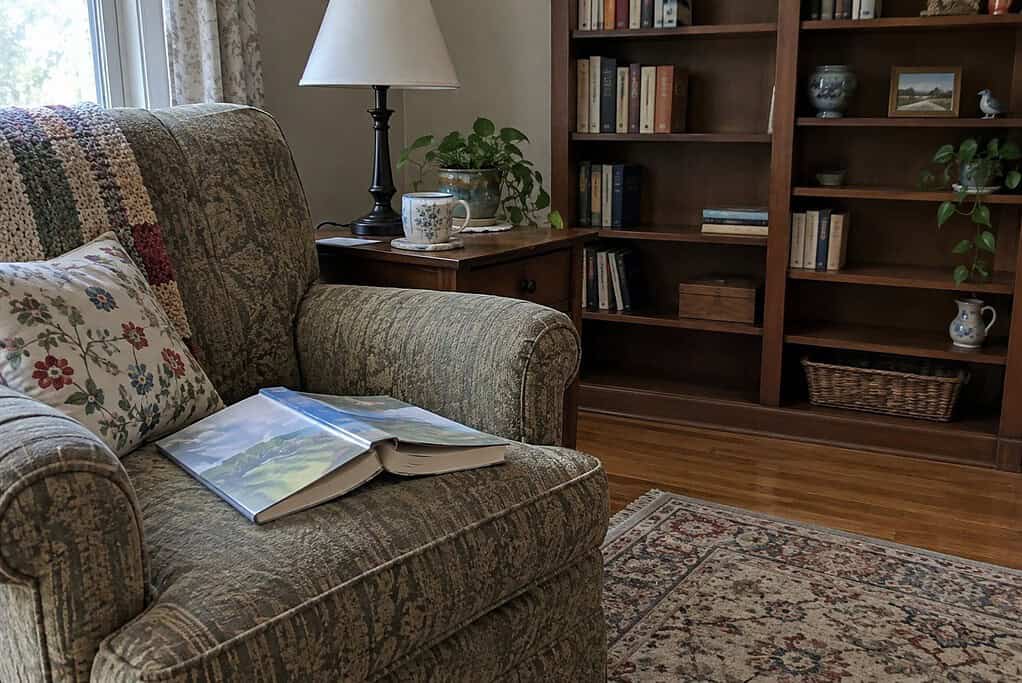
Last week, I stopped by my friend’s house with a loaf of banana bread. Her floor was clear, and the stairs had nothing on them. Two of her four bookcases had empty space on every shelf.
She was in her reading chair with a library book on her lap and a cup of tea beside her.
“Look at that,” she said, pointing to an empty shelf. “Room for new books.”
She loves books as much as she ever did. She keeps fewer of them now, and she can find every one.
If your own shelves are part of a bigger clean-out, my post on decluttering for the life you live now is a good place to start.
A Little Help for Your Next Shelf

You don’t have to weed every bookcase this week. Pick one shelf, and ask about each book with one letter at a time.
My free Declutter for Self Care Checklist breaks your home into small, gentle jobs, one shelf at a time. Start where you read, and enjoy the room you make.
Frequently Asked Questions
What does weeding books mean?
Weeding is what librarians call taking old, worn or outdated books off the shelves. It makes room so readers can find the good books more easily. You can weed your home bookshelves the same way.
What is the MUSTIE method for books?
MUSTIE is a checklist many librarians use to decide which books to weed. The letters stand for Misleading, Ugly, Superseded, Trivial, Irrelevant and Elsewhere. Each one is a reason a book might be ready to go.
How do I decide which books to get rid of?
Look for books with outdated facts, books that are falling apart, extra copies and books that no longer fit your life. Keep the books you love, the ones you’ll read again and the ones with family memories inside.
Where can I donate books I don’t want?
Try a Friends of the Library sale, a Little Free Library, a nursing home or a church. Call ahead to ask what they take. Outdated, moldy or damaged books usually go to recycling or the trash.
How often should I go through my bookshelves?
Once a year is plenty for most homes. Pick a month, like January, and walk along your shelves with a simple checklist. It goes quickly once the first big sort is done.
Follow me elsewhere!


I am still re-reading all my books when I can. I have always used a version of MUSTIE but it doesn’t get me very far