
My house feels different now.
I can open the closet without holding my breath. The garage has floor space I forgot existed. I gave away more than I ever thought I would, and I don't miss any of it.
But getting here wasn't the clean, satisfying process I expected it to be.
I spent two months ruthlessly purging my home. Room by room, closet by closet, drawer by drawer. And almost none of it went the way the articles and YouTube videos said it would.
Nobody told me I'd end up sitting on the floor of my spare bedroom crying over a box of things from my mother's house.
Nobody mentioned that my husband and I would have three separate arguments about a set of golf clubs he hasn't touched since 2016.
And not a single blog post warned me that the hardest part wouldn't be deciding what to get rid of. It would be figuring out where it all goes after you've made the decision.
I'm not writing this as someone with a method or a system. I'm writing it as someone who just came out the other side of a full house purge and wants to be honest about what it actually looked like.
Because it didn't look like a before-and-after photo.
It looked like a mess. For a while, it felt like one too.
But I'd do it again. Every uncomfortable minute of it.
Here's why.
Why Every Piece of Advice I Read Made It Sound Easier Than It Was

Before I started, I did what I always do. I read everything I could find.
Blog posts. Facebook groups. YouTube videos. Books with words like “gentle” and “simple” in the title.
And every single one of them made it sound like the same basic process. Sort your stuff. Keep what you use. Let go of the rest.
It sounds so reasonable when you read it on a screen.
It does not feel reasonable when you're standing in your kitchen holding a casserole dish your best friend gave you twenty years ago that you've used maybe twice but can still picture her handing to you at your housewarming party.
“Keep what you use” doesn't account for that.
What Nobody Prepared Me For
The guilt was constant. Not dramatic. Just a low, steady hum of “but this is still perfectly good” and “someone spent money on this” running through my head with almost every item I touched.
The decisions were exhausting. Not individually. But hundreds of them, back to back, hour after hour. By the third afternoon I didn't care what stayed or went. I just wanted to stop deciding.
My husband and I were not on the same page. I was ready to clear out half the garage. He wanted to keep every power tool he's owned since 1998 (including the ones that don't work anymore).
And the “just donate it” advice? That assumes you know where to take things, that donation centers will accept what you have, and that you have the energy to make six trips in a week.
None of that was simple.
What actually got me through it wasn't a method. It was lowering my expectations, being honest about what was really making it hard, and giving myself permission to do it badly for a while.
I Started With the Things That Didn't Make Me Think Twice
The best advice I got from all that reading was this: start with the stuff that carries no emotional weight.
Not the sentimental things. Not the expensive things. Not the things tied to a person or a memory.
Just the obvious stuff. The things you already know should go but haven't gotten around to dealing with.
That's where I started. And it made all the difference.
Expired Everything

Under the bathroom sink. The back of the pantry. The medicine cabinet I hadn't sorted in years.
Expired vitamins. Sunscreen from 2021. A bottle of cough syrup my kids used when they still lived at home. Spices so old the labels had faded.
None of that required a decision. It just required a trash bag.
The Duplicates I Didn't Know I Had
Three vegetable peelers. Two identical sets of measuring cups. Four flashlights (none of them with working batteries). An entire drawer of pens where maybe five actually wrote.
When you start grouping the same types of things together, the extras become impossible to ignore.
The Broken Things I Was Never Going to Fix
The lamp with the wobbly base. The picture frame with the cracked corner. A blender that only worked on one setting. An alarm clock with a dead display.
I had kept every single one of them because throwing away something “fixable” felt wasteful.
But I hadn't fixed any of them. Some had been sitting there for years. And if I'm honest with myself (which is the whole point of this), I was never going to.
The Boxes From the Last Move

We moved into this house over a decade ago.
There were still three boxes in the garage that I had never opened. Not once. In over ten years.
I almost opened them before putting them in the donation pile. Then I stopped myself.
If I hadn't needed anything inside them in ten years, opening them now was just going to create decisions I didn't need to make. They went straight to donation, sealed shut.
That was one of the most freeing moments of the entire process.
The Clothes That Were Easy to Spot
I didn't tackle the whole closet yet (that came later). But I pulled out the things I already knew about.
The shoes I can't comfortably walk in anymore. The stained t-shirts I only wore to paint in but kept four of. The jacket that hasn't fit right in years.
No guilt. No hesitation. Just done.
All of this took about a week of short sessions. And by the end of it, I had twelve bags by the front door and a momentum I didn't have before.
That momentum mattered. Because the easy stuff gave me the confidence to face the stuff that wasn't easy at all.
Then There Was the Stuff I Couldn't Decide On
The easy stuff gave me momentum. The hard stuff took it right back.
These weren't broken things or expired things or duplicates. These were things that worked perfectly fine. Things that still looked good. Things that carried a feeling I couldn't shake just by looking at them.
This is the part of ruthlessly purging your house that nobody talks about honestly. The part where you stand in the same spot for ten minutes holding something and genuinely don't know what to do.
The Things That Cost Too Much to Let Go
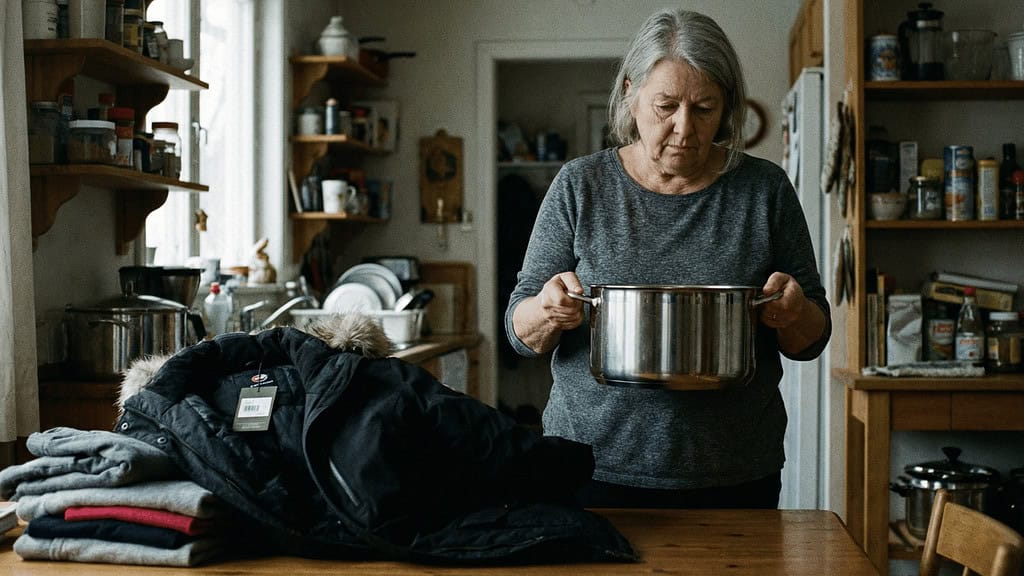
A set of pots I bought when we remodeled the kitchen. High-end. Barely used. I'd switched to a different set years ago but couldn't bring myself to give away something I'd paid that much for.
A winter coat that still had the tags on it. Full price. Wrong color. I kept it because getting rid of it felt like admitting I'd wasted the money.
What finally got me past this was something I'd read in one of those articles that actually stuck. The money is already gone whether you keep it or not. Keeping it doesn't get the money back. It just takes up space and reminds you of a purchase you wish you'd made differently.
That one sentence got more things out of my house than any other piece of advice.
The Gifts I Felt Guilty About
A ceramic vase from my sister-in-law. A set of decorative candles from a friend who picks one up for me every Christmas. A blanket my neighbor crocheted by hand.
None of them were my taste. All of them were given with love.
I kept the blanket. I let the rest go.
And I stopped pretending that keeping a gift I don't use is the same as honoring the person who gave it. It isn't. It's just guilt dressed up as gratitude.
My Mother's Things

This was the hardest part of the entire two months.
A box of her kitchen things I'd taken from her house after she passed. Some of her jewelry. A few of her sweaters that still smelled faintly like her perfume.
I didn't rush through this. I sat with that box for an entire afternoon on the floor of my spare bedroom. I cried. I held things. I put them down and picked them back up again.
I kept three pieces. A ring she wore every day. A wooden spoon she used every Sunday. And a small framed photo of the two of us from years ago.
The rest I gave to my niece, who was setting up her first apartment and needed kitchen things. Knowing exactly where they went made it bearable.
Not easy. Just bearable.
The Golf Clubs (and Everything Else That Wasn't Mine)
My husband's golf clubs had been leaning against the garage wall for at least five years. He hadn't played a round since before the pandemic.
But when I suggested they go, you would have thought I'd asked him to sell the car.
We had that conversation three times before he finally agreed to let them go. What worked wasn't logic. It was asking him how the clubs made him feel when he looked at them.
He admitted they mostly made him feel guilty for not playing anymore. And once he said that out loud, they were in the donation pile by the end of the week.
If you're living with someone who holds onto things differently than you do, pushing harder almost never works. But asking the right question sometimes does.
Getting It Out of the House Was Only Half the Job
Making the decisions was hard. But at least I was prepared for that part.
What I wasn't prepared for was what happened after.
You put it in a bag. You feel good about it.
And then the bag sits by your front door for three weeks because you have no idea where to take it.
That almost derailed the whole process for me. At one point I had fourteen bags and six boxes lined up along the wall of my garage and my husband said, “Are we just moving the clutter from inside to out here?”
He wasn't wrong.
Getting stuff out of your closets means nothing if it never actually leaves your house. So I had to figure that part out too.
Give It Directly to Someone
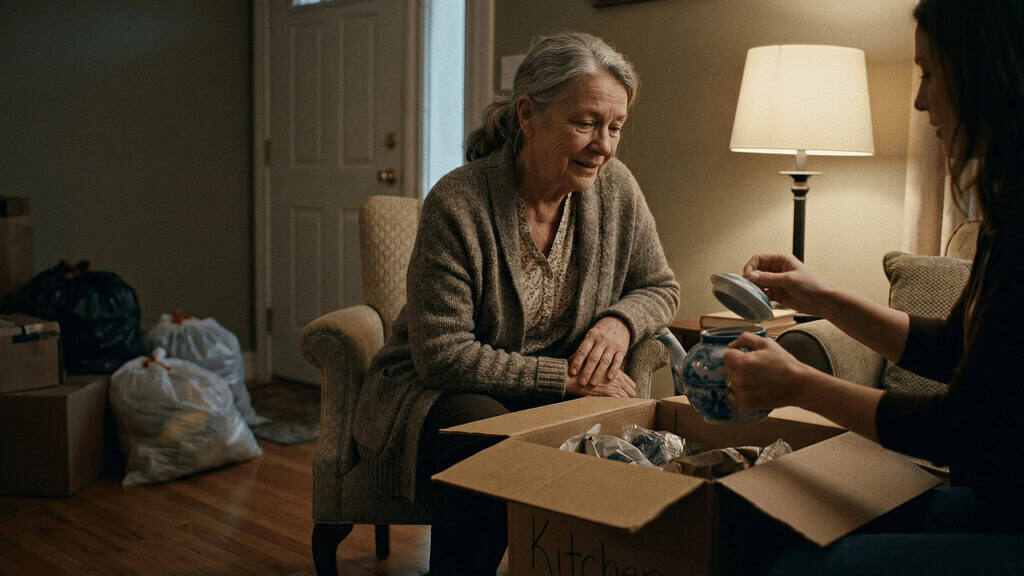
This was my favorite option every single time.
A neighbor who had just moved into a new apartment got my extra kitchen things. A woman at church who was starting over after a divorce took the set of pots I couldn't bring myself to donate to a stranger. My niece got my mother's kitchen box.
When you hand something to a specific person and watch them actually want it, the guilt disappears.
Completely.
Sell What's Worth Selling
I used Facebook Marketplace for the bigger things. A piece of furniture. A set of barely used cookware. A few items from the garage.
It took more time than I expected. The messages, the no-shows, the people who wanted to negotiate over five dollars.
But for the things that had real value, it was worth the effort. Not just for the money (though that helped) but because knowing someone chose to buy it made letting go easier.
I gave myself a two-week rule. If it didn't sell in two weeks, it went to donation. No extensions.
That rule saved me from becoming the person with a garage full of “for sale” items that never actually sell.
Donate With Intention
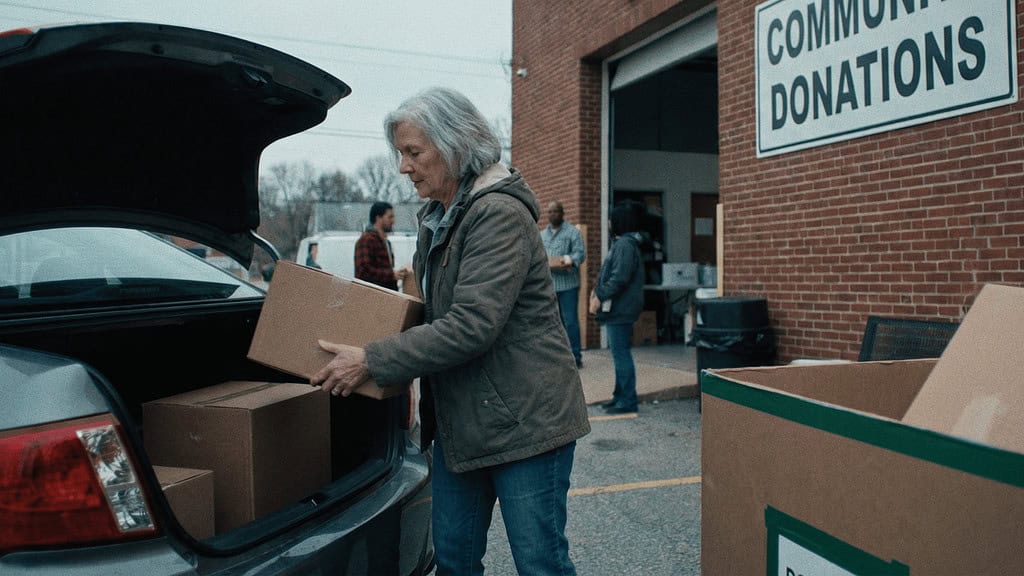
I learned quickly that not every donation center takes everything.
Some won't accept furniture. Some don't take electronics. Some have limited hours that don't match your schedule.
What worked for me was finding three or four places in advance and knowing what each one accepted. A women's shelter that takes housewares. A church that runs a clothing closet. A retirement home that accepts books and puzzles.
Having a plan for where things were going before I started sorting made the whole process move faster. I wasn't standing in the garage wondering. I was loading the car and driving.
Let the Rest Go
And then there were the things nobody wanted.
The stained tablecloth. The broken picture frame. The mystery cables. The plastic containers with no lids. The magazines from 2014.
Those just needed to go in the trash.
I struggled with this at first. The guilt of putting something in a garbage bag when it's “not really broken” felt wasteful. But a friend said something that changed how I thought about it.
“If it's been sitting in your closet untouched for five years, it's already waste. Your house is just the storage facility.”
That made it easier. Not guilt-free. But easier.
If I Had to Do It All Over Again
Two months of sorting, deciding, arguing, crying, and hauling bags to the car. If someone asked me whether I'd do it again, the answer is yes.
But I'd do a few things differently.
I Wouldn't Try to Do a Whole Room in One Day

I made that mistake with the kitchen. Pulled everything out of every cabinet on a Saturday morning thinking I'd be done by dinner.
By 2pm I was sitting on the floor surrounded by pots, dishes, and gadgets I hadn't seen in years, completely out of energy. Most of it went back in the cabinets that night because I didn't have anything left to make decisions with.
The rooms I did in short sessions over several days went ten times better. One closet. One shelf. One drawer. Then stop.
I Would Have Asked for Help Sooner
I spent the first three weeks doing this alone. I don't know why. Maybe pride. Maybe not wanting to bother anyone.
When my friend Karen finally came over and helped me sort through the spare bedroom, we got more done in two hours than I'd done in a week by myself.
She asked questions I wouldn't ask myself. And she didn't let me put things back “for now.”
If you have someone like that in your life, call them before you start. Not after you're already burned out.
I Would Have Stopped Shopping While I Was Purging

This one is embarrassing to admit.
In the middle of ruthlessly purging my house, I stopped at HomeGoods on the way home from dropping off a donation and came back with a candle and a new set of dish towels.
My daughter would have had something to say about that.
It took me a couple of weeks to realize that bringing new things in while trying to get old things out is like bailing water out of a boat with a hole in it. Once I stopped shopping for anything that wasn't groceries or essentials, the progress finally started to stick.
I Would Have Been Easier on Myself
I expected to feel proud and accomplished every step of the way. That's how it looks in the articles.
The reality was messier than that.
Some days I felt great. Some days I felt sad about things I'd let go. Some days I didn't want to open another closet. And one afternoon I pulled three things back out of a donation bag because I changed my mind.
All of that is normal. I just wish I'd known that going in instead of thinking something was wrong with me when the process didn't feel like a victory every single day.
My House Has Less in It Now. But Somehow, It Feels Like More.
I got rid of more than I ever expected to. Bags and boxes and carloads of things I'd been stepping around, storing, and ignoring for years.
My closets close. My garage has room to walk through. The spare bedroom is actually a bedroom again.
And the strange thing is, I don't miss any of it.
Not the pots I overpaid for. Not the decorations I hadn't used in a decade. Not even most of what was in my mother's box (though I still think about it sometimes, and that's okay).
What I do notice is how the house feels now. Lighter. Quieter. Like it finally has room to breathe.
And so do I.
If you've been thinking about doing this but keep putting it off because it feels too big or too hard or too emotional, I'm not going to tell you it's easy.
It isn't.
But it is worth it. Every uncomfortable, messy, tear-filled minute of it.
Even my husband admitted the garage looks better. He hasn't said a word about the golf clubs. (I'm taking that as a win.)
Thinking About Doing This to Your Own House?

If reading this post has you looking around your home a little differently, my free Declutter for Self Care Checklist can help you work through it without the trial and error I went through.
It gives you a clear path from room to room so you're not standing in the middle of your kitchen at 2pm wondering what just happened.
Frequently Asked Questions
How do I ruthlessly purge my house without getting overwhelmed?
Start with the things that don't require any emotional energy. Expired products, obvious junk, duplicates, broken things you've been meaning to fix for years. Those quick wins build momentum and give you the confidence to move on to the harder stuff. And do it in short sessions rather than full-day marathons. An hour or two at a time is enough to make real progress without burning out.
What do I do with stuff after I've decided to get rid of it?
Have a plan before you start sorting. Know which donation centers are near you and what they accept. Set aside anything worth selling and give yourself a deadline (two weeks works well). Give directly to people you know will use the items whenever you can. And for the things nobody wants, let them go without guilt. If something has been sitting untouched for years, keeping it isn't saving it from waste. It's just storing it.
How do I get my spouse on board with purging the house?
Don't touch their stuff without asking. That never ends well. Instead of arguing about specific items, talk about how the clutter makes you feel. That tends to land differently than “you need to get rid of those golf clubs.” Start with your own things and your own spaces. Most partners come around once they see the results and realize the house feels better without the excess.
How do I let go of things I spent a lot of money on?
The money is already spent whether you keep the item or not. Holding onto something expensive that you never use doesn't get your money back. It just takes up space and quietly reminds you of a purchase you wish you'd thought through differently. If it's in good condition, sell it and recoup what you can. If not, donate it and let someone else get the use out of it that you didn't.
How long does it take to ruthlessly purge a whole house?
It depends on how much you have and how much time you can give it. For me it took about two months of short sessions spread across weekends and the occasional weekday afternoon. Going slower actually worked better than trying to power through it all at once. The people who try to do their whole house in a weekend are usually the ones who burn out and quit halfway through.
Follow me elsewhere!

