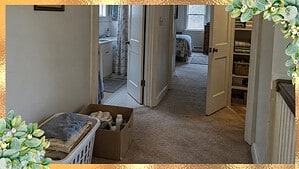
It was a Saturday morning years ago, and I had made up my mind. Today was the day I would clear out the spare room.
I picked it because it was the worst room in the house. If I could fix that one, I figured, the rest would be easy.
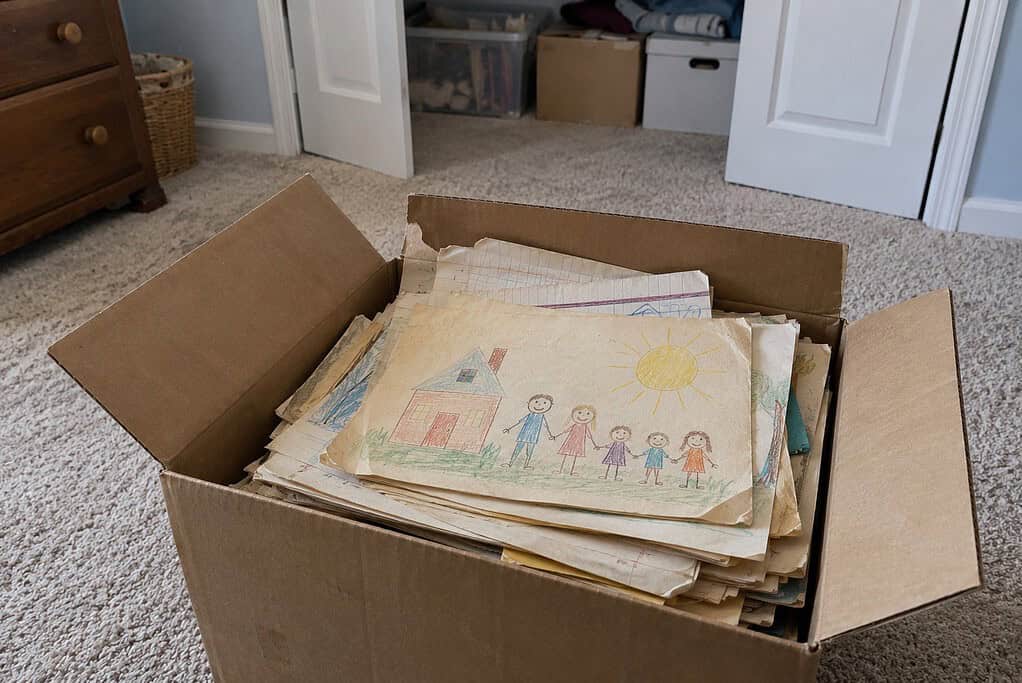
I sat down on the floor with the first box. It was full of my kids’ old school papers.
On top was a drawing my youngest made in second grade. A house, a sun and five stick people holding hands.
That was as far as I got. I spent the whole morning on that floor, reading spelling tests and crying a little. By lunch, I had cleared nothing at all.
I didn’t try again for a long time. (I told myself I was busy. I wasn’t.)
When I finally did, I started somewhere else. I started in the bathroom, and I was done in twenty minutes. That small win got me to the next room, and the next.
The order you go in matters more than I ever knew. Start with the rooms that hold the fewest feelings, and save the hardest ones for last.
This is the room-by-room decluttering order that worked for me after 60, from easiest to hardest. You don’t have to follow it exactly. But if you’ve been stuck, it might help you get going again.
Why Easy Rooms Come First
Every time you pick something up, you make a choice. Keep it, or let it go?
In some rooms, those choices are quick. Nobody cries over an old bottle of shampoo.
In other rooms, every single thing has a story. A sweater from a friend who has passed. A drawing from a child who is now 40.
Those choices take a lot out of you. If you start there, you can get too tired to go on before you’ve cleared one shelf. That’s what happened to me in the spare room.
When you start with the easy rooms, you get quick wins. You learn what it feels like to let things go. And by the time you reach the harder rooms, you’re ready for them.
Not sure how to begin even one session? My post on where to start decluttering when you’re a senior walks you through your first fifteen minutes.
Room 1: The Bathroom
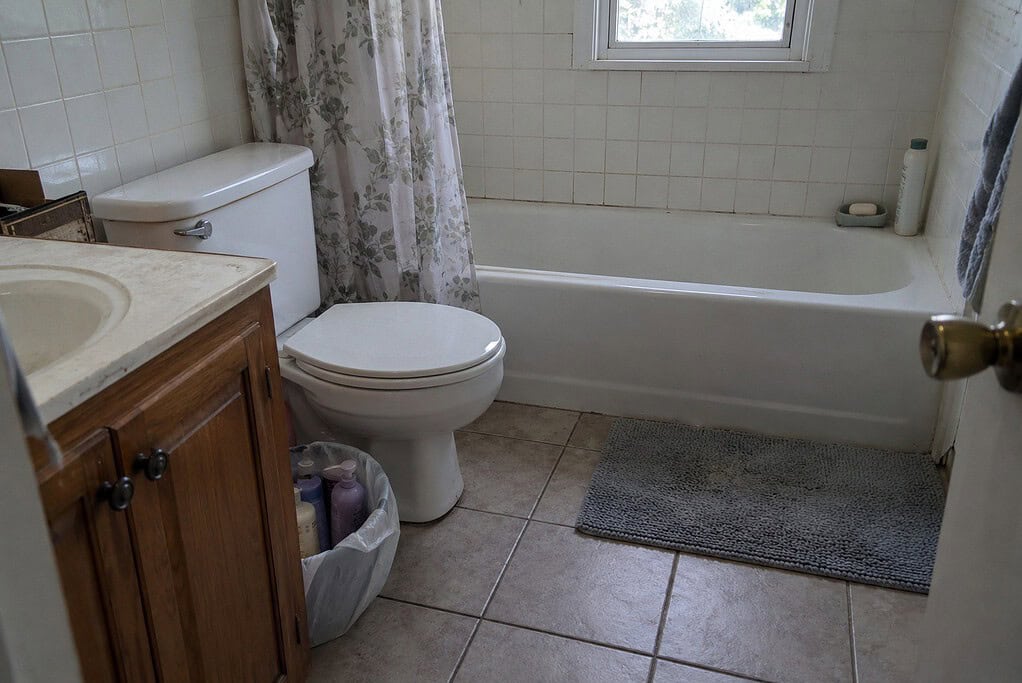
The bathroom is the easiest room in the house to start with. It’s small, and almost nothing in it has a memory attached.
Most of what’s in there gets used up, runs out or goes bad. That makes the choices fast.
Start with the edge of the tub. I had half-used bottles of shampoo lined up all along mine. Now there’s one shampoo and one bar of soap, and the tub takes half as long to clean.
Then open the cabinet under the sink. Look for old lotions, dried-up nail polish and hotel shampoos you’ll never use.
Check the medicine cabinet, too. The FDA says the best way to get rid of old or expired medicine is a drug take-back site.
Many pharmacies have drop-off boxes for old medicine. You can also find a drop-off site near you on the DEA’s website by typing in your ZIP code. I shared more about this in my post on what to do with old medications.
Most bathrooms take less than an hour. You can do it in two short sessions, sitting on a closed toilet lid if your back needs a break.
Room 2: The Linen Closet
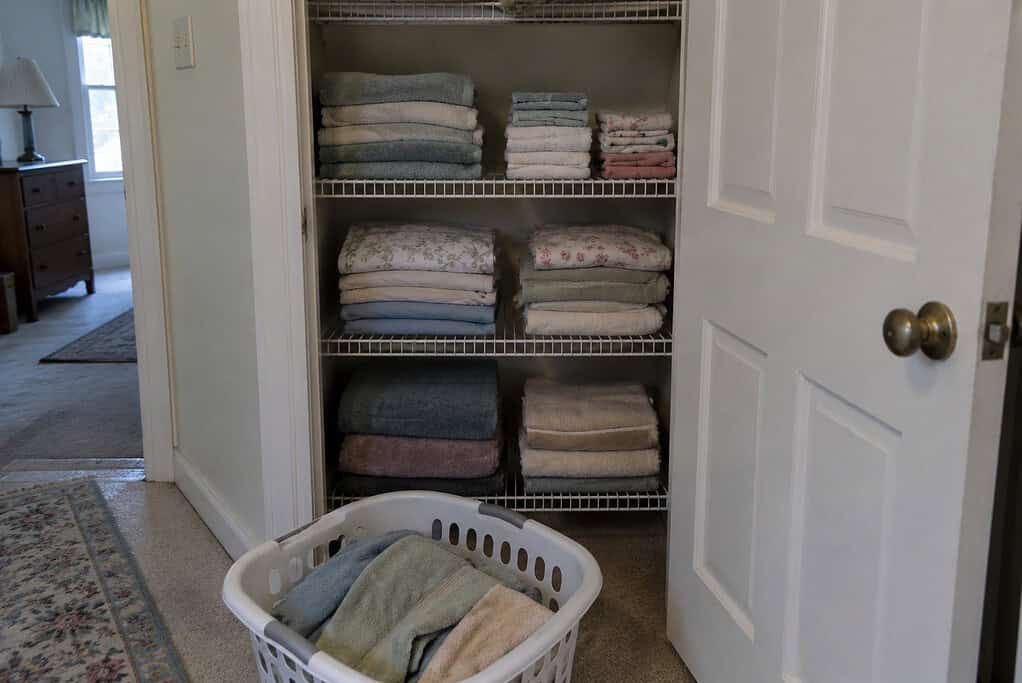
The linen closet is easy for the same reason. Towels and sheets don’t usually come with stories.
Take everything off one shelf at a time. Fold the keepers, and set aside anything thin, stained or scratchy.
The real question here is how many you need. For the two of us, I keep six bath towels, three for each of us. I also keep two bath towels and two hand towels for each guest bed.
For sheets, I keep two sets for each bed we sleep in every night. The guest bed gets one set. I wrote those numbers on a card and taped it inside the linen closet door.
Old towels don’t have to go in the trash. Many animal shelters are glad to get them, so call yours and ask. That’s where my scratchy ones went.
Look for gifts you never used, too. My sister-in-law’s candle set sat in my linen closet for three years before I let it go. (I never liked the smell.)
If you want help finding your own numbers, I shared my method in how much is enough after 60.
Room 3: The Kitchen
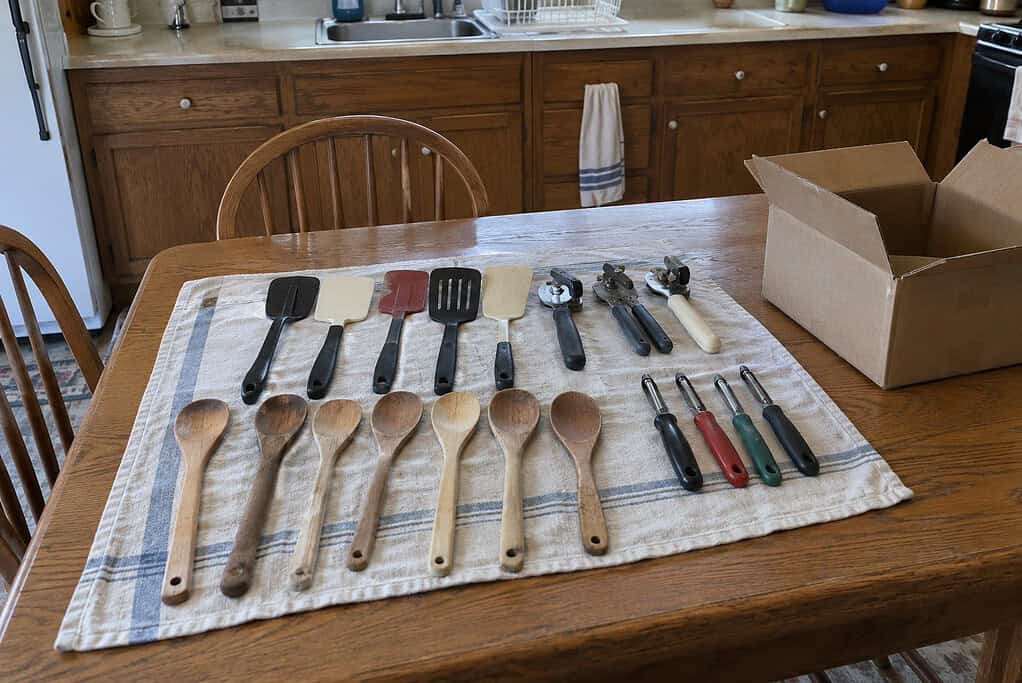
The kitchen is a bigger job, but most of it is still easy. Spatulas and storage containers don’t make anyone cry.
Start with the utensil drawer. When I emptied mine, I found three can openers, five spatulas, four peelers and seven wooden spoons. I kept one or two of each. The rest went to a young couple from church and the thrift store.
Then count your coffee mugs. My mother had 37 when we cleared her house. I keep eight now, and that’s plenty for the two of us and a few guests.
Clear the counter last. Mine holds only the coffee maker, the toaster and one jar of cooking spoons. Wiping it takes about two minutes.
There will be a few things in the kitchen that stop you. For me, it was my mother’s recipe box.
When that happens, don’t stop the whole job. Set that one thing aside in a box for later, and keep going with the easy things.
Room 4: The Hall Closet
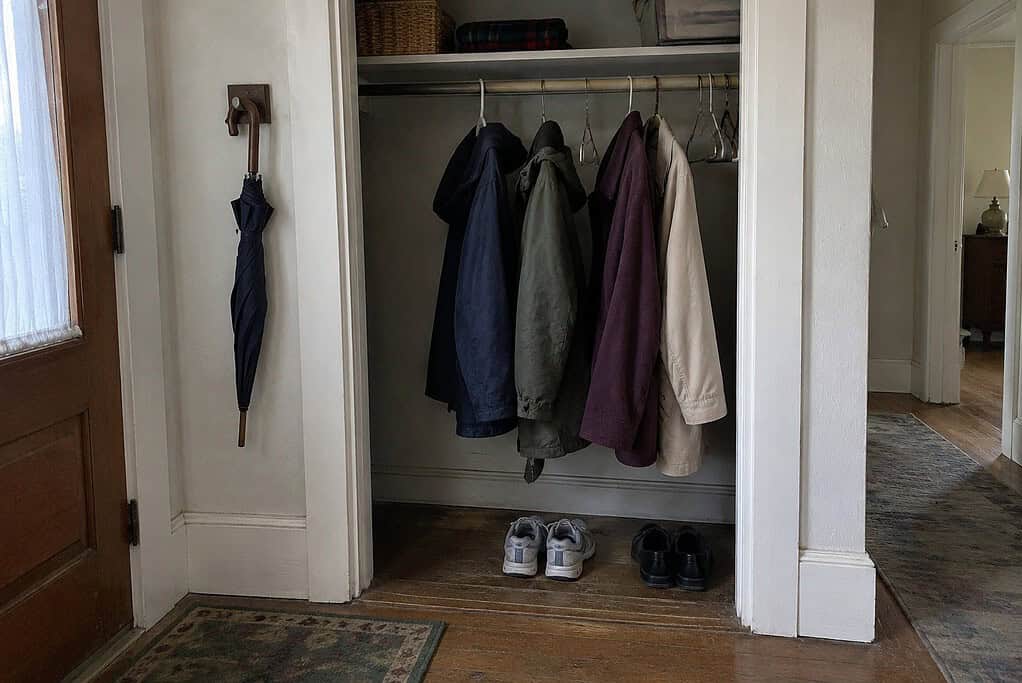
The hall closet is a mix of easy and forgotten things. Most of it hasn’t been touched in years.
Take it one section at a time. The floor first, then the rod, then the shelf.
In mine, I found three umbrellas, a stack of old Christmas cards and a puzzle that was missing six pieces. I filled a whole bag in about fifteen minutes.
Now the floor holds my walking shoes in front and my church shoes beside them. My umbrella hangs on a hook by the door, where I can grab it on the way out.
If you can’t reach the top shelf, don’t climb. Ask someone taller to hand things down to you, and sort them sitting down.
Room 5: The Bedroom Closet
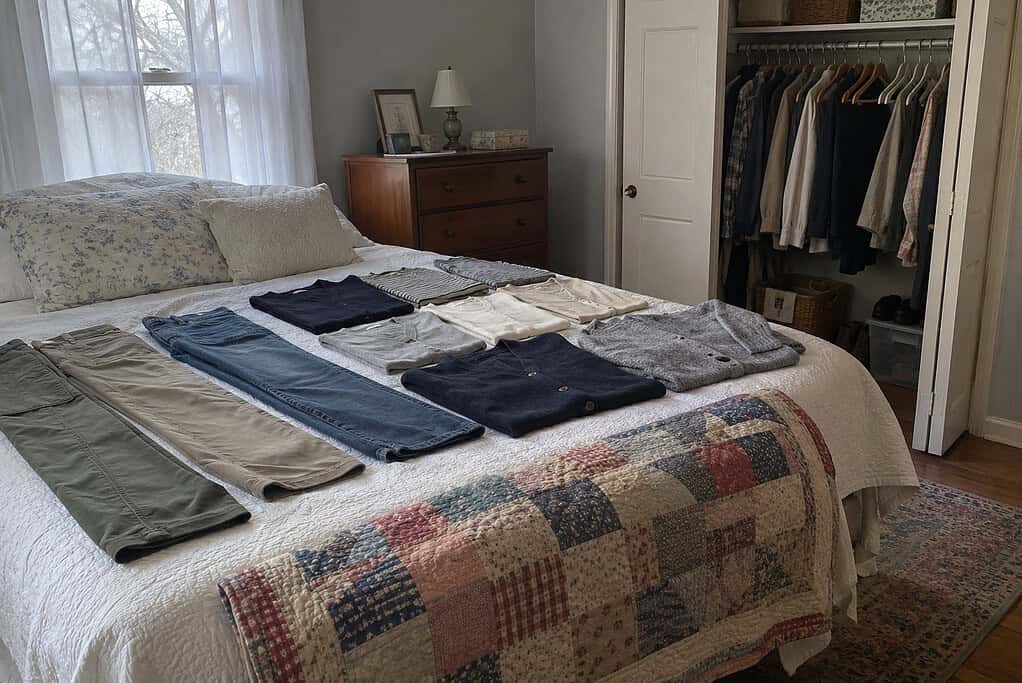
This is where feelings start to show up. Clothes can hold memories of who we were, where we wore them and who gave them to us.
That’s why the bedroom closet comes in the middle, not the beginning. By now, you’ve had practice letting go.
Start with what you wear. This September, I laid out on my bed every piece I had worn in the last two weeks. Those were the clothes I really wear.
Then I looked at everything else. I found eleven pieces that didn’t go with anything I own, and they went to the church clothing closet.
The hardest one was a bright red sweater from a dear friend who has passed. I’d worn it twice in ten years. I took a picture of it before I let it go, and that helped.
I shared the whole closet story in my post on the flight attendant’s packing rule.
Room 6: The Living Room
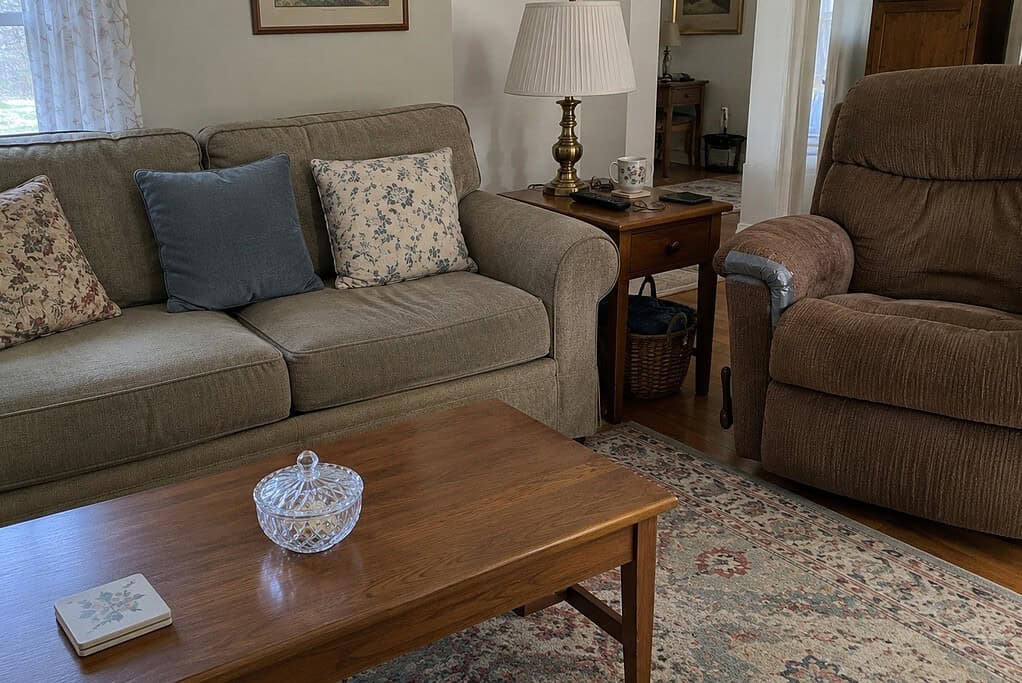
The living room is where we spend our days, so it fills up without us noticing. Magazines, pillows, remotes and little things on every shelf.
There are a few memories here, like photos and gifts. But most of it is everyday stuff.
I cleared mine one spot an evening, for about ten to fifteen minutes during the news. It took about two weeks.
We had seven remotes, and only two worked. We had nine pillows on the couch. Now there are two for me and one for company.
My side table holds five things now. My glasses, the remote, my phone, the lamp and a coaster for my tea.
My husband’s recliner and side table are his call. (The duct tape on the arm is staying, too.)
You can read how I cleared it spot by spot in decluttering the living room over 60.
Room 7: The Spare Room, Basement and Garage
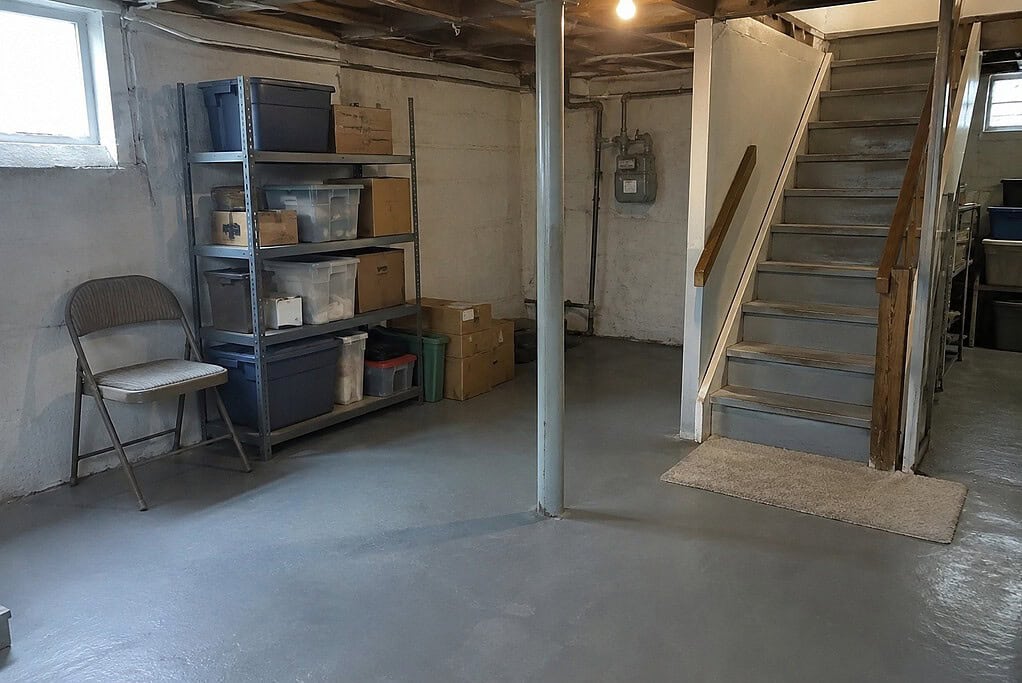
These are the storage rooms. They hold the boxes we packed and never opened, and things we kept “just in case.”
They come late in the order for two reasons. They take the most lifting, and they hide a lot of feelings inside those boxes.
Please don’t do these rooms alone. My grandson carried eleven boxes and bags up from our basement over two Saturdays. I sat in a chair and decided, and he did the carrying.
I worked one shelf at a time, about an hour each. I asked myself one question about every box. “Have I gone down the stairs to get this in the last year?”
If something belongs to someone else, ask them to come get it. My oldest picked up their camping gear the weekend after I asked.
The garage is my husband’s space, so his things are his call. When we cleared it together this fall, I helped, and he decided.
I shared the full basement plan in where to start decluttering the basement after 60.
Last: Photos, Letters and Keepsakes
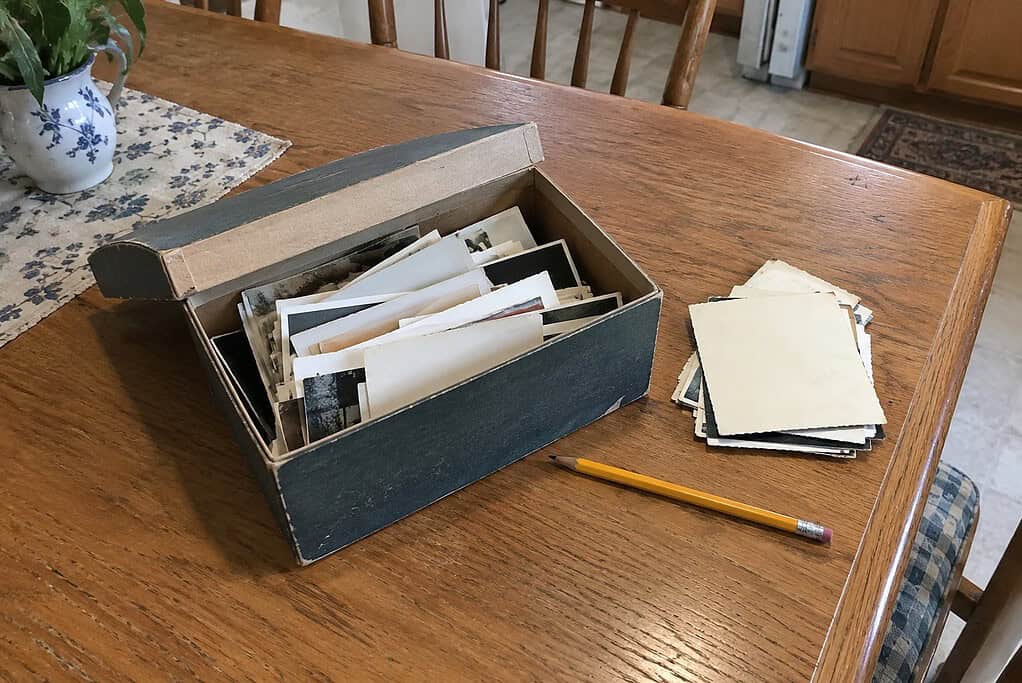
These belong at the very end. Not because they don’t matter, but because they matter the most.
By now, you’ve made hundreds of small choices. You know what it feels like to let something go and be fine. That makes this part a little easier.
Go slowly here. Sort keepsakes on a good day, when you feel rested and steady. Stop when you start to feel tired or sad.
Keep the things that mean the most, and find a way to use or show them. My mother’s recipe box sits in my kitchen, and Grandma’s quilt lies at the foot of my bed.
For photos, I write names on the backs in pencil, so my family will know who’s who. I explained how in my post on labeling old family photos.
And that box of school papers from the spare room? I finally opened it again this fall.
I asked my three kids if they wanted any of their papers. Two of them did, so I mailed them a small stack each. I kept that second-grade drawing.
This time, I didn’t cry for a whole morning. I smiled, and I finished the box.
A Few Things to Remember Along the Way
You don’t have to finish a room before you move on. If the kitchen is mostly done, it’s okay to start the hall closet.
You can change the order to fit your house. If your living room has more memories than your bedroom closet, swap them.
Keep a box for “not yet” things. When something stops you, put it in the box and keep going.
And stop while you still feel fine. Ten or fifteen minutes is enough. The rooms will still be there tomorrow.
The Room I Was Afraid Of
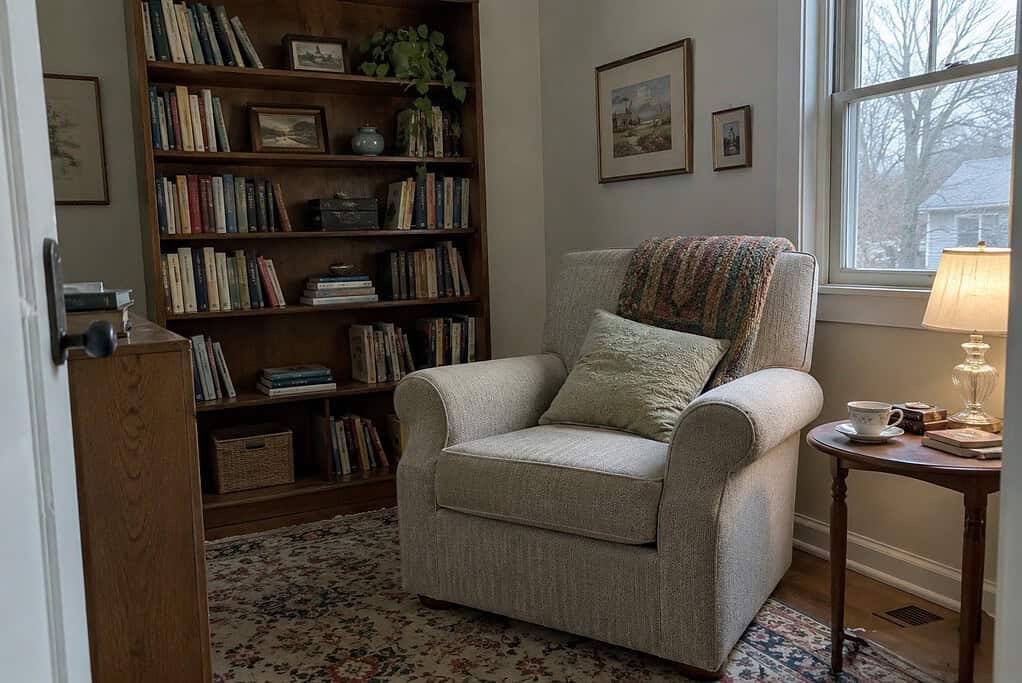
The spare room was the room I started with years ago and couldn’t finish. Now it’s slowly turning into a little library.
There’s a shelf of books I really read, a lamp and a chair. Some afternoons, I sit there with a cup of tea.
I didn’t get there by being brave on that first Saturday. I got there by starting small, in the bathroom, and working my way up.
You can, too. Start with the room that asks the least of you. The harder rooms will feel easier by the time you get to them.
Start With One Easy Room

You don’t have to start with your hardest room. Pick an easy one, and let that first win help you start the next.
My free Declutter for Self Care Checklist breaks your home into small, gentle jobs. You can follow it room by room, at your own pace.
Frequently Asked Questions
What room should you declutter first?
Start with a room that holds few memories, like the bathroom or the linen closet. The choices are quick, and you’ll finish fast. That first win makes the next room easier.
What is the best order to declutter a house?
Go from the easiest rooms to the hardest. Start with the bathroom, linen closet and kitchen.
Then move to closets and living areas, then storage rooms. Save photos and keepsakes for last.
How long does it take to declutter a house room by room?
It depends on the size of your home and how much you have. Working in short sessions, a bathroom may take an hour or two. A basement or garage can take several weeks.
Why should you save sentimental items for last?
Sentimental things take the most out of you. By the time you get to them, you’ve had lots of practice letting go. That makes the hard choices a little easier.
How can seniors declutter room by room without getting tired?
Work in short sessions of ten to fifteen minutes and sit down to sort. Do one shelf or drawer at a time. Ask family to do the lifting and carrying.
Follow me elsewhere!

