Slow Decluttering: The Gentler Way to Clear Your Home After 60

A few years back, I decided to declutter my whole house in one weekend.

I'd read that you had to be ruthless. Rip the bandage off. Pull everything out, make fast decisions, fill the bags, and don't look back. So that's what I set out to do.

By Sunday night, I was wrecked.

My back ached. My feet hurt. I'd made so many decisions that my brain felt like mush. There were still half-filled bags sitting in the hallway, waiting for a trip to the donation center I was too tired to make.

And this is the part that really got me. Within a month, the house looked almost the same as before. The clutter had crept right back in, and I didn't have the energy to fight it again.

I felt like a failure. I thought I'd done it wrong.

But I hadn't done it wrong. The method was wrong, at least for me. That big, all-at-once purge was never built for a woman my age, with my energy, and my knees (my knees have opinions these days).

It took me a good while to find a better way. A slower, kinder way that I could actually keep up with. And once I did, my home got lighter and stayed that way, without wearing me down.

If you've ever thrown yourself at a huge decluttering weekend and ended up sore, discouraged, and right back where you started, I want you to know there's another road.

It's called slow decluttering. And for those of us past 60, I think it's the only way that truly works.

The Big Purge That Left Me Worn Out
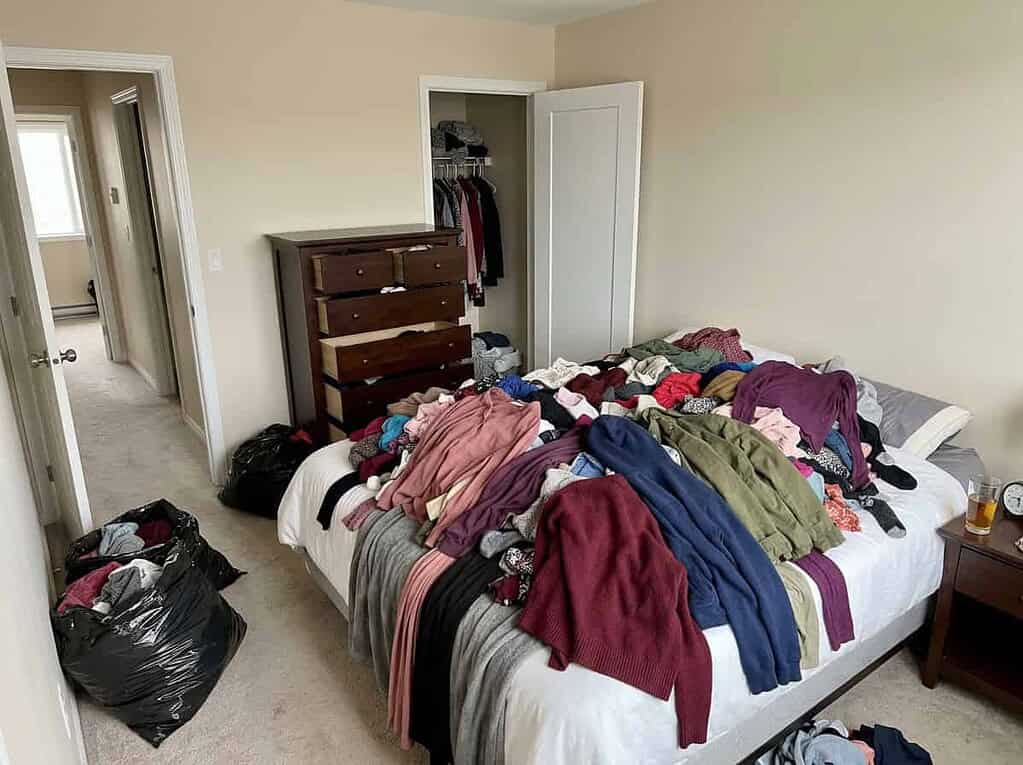
A bed piled high with dumped-out clothes and half-filled bags in the hall, the exhausting big decluttering purge

For years, the advice was all the same. Be ruthless. Go hard. Clear the whole house in a weekend and be done with it.

You've probably heard it too. Dump every drawer onto the bed. Touch each thing once. Decide fast, no dawdling. Make three piles and don't second-guess yourself.

And look, the big one-day clear-out works fine for some people. Younger folks with energy to burn, or anyone with a rare free weekend and a strong back.

But for a lot of us, it's just too much.

An all-day purge asks your body to bend and lift and haul for hours. It asks your mind to make hundreds of hard choices in a row, which is draining in its own right. By the end, you're not thinking clearly. You're just tired and cranky and ready to keep things you don't even want, because deciding one more time feels impossible.

I always thought the problem was me. That I wasn't disciplined enough, or that I'd gone soft.

Turns out I'm in good company. Even the professional organizers are backing away from the brutal purge now. The hard, fast, throw-it-all-out approach is falling out of fashion, and something gentler is taking its place.

Read related post:   Power Over Clutter (Tips How To Be In Control Of Your Clutter)

That was a relief to hear. It was never a failing in me. It was a method that asked more than most of us have to give. (Especially on a Monday.)

What Slow Decluttering Actually Means

One small drawer being tidied gently with a cup of tea nearby, the unhurried pace of slow decluttering

So if not the big purge, then what?

Slow decluttering is exactly what it sounds like. You clear your home a little at a time, at a pace that feels kind instead of punishing.

There's no timer running. No dumpster in the driveway. No marathon that leaves you sore for a week. You do a small bit, then you stop and go on with your day.

Some days that might be one shelf. Other days it might be a single drawer, or even just deciding about one box you'd been avoiding (we've all got that box). It all counts.

The heart of it is simple. Keep what you truly love and use. Let the rest go gently, in small handfuls, over weeks and months instead of one brutal weekend.

It fits right in with a slower way of living in general, the kind where you stop rushing and start paying attention to what actually matters to you.

Slow decluttering isn't lazy, and it isn't giving up. It's choosing a pace your body and your heart can actually sustain. For a lot of women our age, that's the difference between a home that slowly gets lighter and one that never changes at all.

Slower, it turns out, is what finally gets it done.

How to Declutter Slowly, One Small Bit at a Time

Slow decluttering is less a strict system and more a handful of gentle habits.

Here are five that made it work for me. Take the ones that fit your life and leave the rest.

Work in Small Windows, Not Whole Days

A calm, lightly decluttered but lived-in room that stays tidy, showing why the slow way lasts

Instead of clearing your calendar for a whole weekend, give it fifteen or twenty minutes.

That's it. Set a small window, do what you can, and quit when it's up. A short stretch is long enough to make real progress and short enough that your body doesn't rebel.

I like to do mine in the morning, when I have the most in me (which isn't much these days, but it's something). You might prefer after lunch, or while the coffee brews. Pick whatever suits you.

The beauty of a small window is that it never feels like too much to start. And starting, if the whole thing feels overwhelming, is usually the hardest part of all.

Twenty minutes here and there adds up faster than you'd think. And you never have to lose a whole day to it again.

Take On One Small Zone at a Time

Don't think about the whole house. Don't even think about the whole room.

Think about one small zone. One drawer. One shelf. The top of the nightstand. That's your whole job for today.

When you shrink the target down that small, it stops being scary. A single drawer is something anyone can face, even on a low day. The whole bedroom is not.

I worked through my kitchen one cabinet at a time, over a couple of weeks (some cabinets took more than one try). Nobody would have noticed day to day. But by the end, the whole kitchen was clear, and I'd never once felt overwhelmed.

Read related post:   Decluttering For Women Over 60 (A Graceful Guide)

You can go room by room at your own pace, and there's no rule about how fast. Slow is the whole point.

One small zone, then you're done till next time.

Keep a Donation Box Going

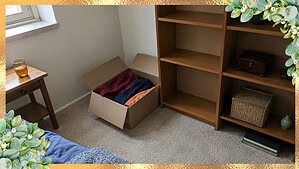
An always-open donation box in a bedroom corner with a sweater dropped in, the quiet ongoing habit of slow decluttering

This one little trick changed everything for me.

I keep a box tucked in the corner of my bedroom, always open, always ready. Whenever I come across something I don't want anymore, I drop it in. No big event required.

A sweater I never reach for. A mug I don't like. A gadget I've never once used. Into the box it goes, one thing at a time, as I notice it.

When the box gets full, I take it to the donation center and start a fresh one.

There's no pressure and no big pile. The decluttering just happens quietly in the background of my normal days. (You'd be surprised how fast that box fills up.)

It's the easiest habit on this list, and maybe the most powerful.

Give Yourself Time to Decide

The fast purge tells you to decide in a split second. Keep it or toss it, right now, go.

Slow decluttering lets you think.

If you pick something up and you're not sure, you're allowed to set it aside and come back to it another day. You don't have to force a decision while you're tired or rushed.

I keep a “maybe” box for exactly this. Things I'm not ready to part with, but suspect I don't need. I revisit it every few weeks. More often than not, when I look again with fresh eyes (a week does wonders), letting go feels easy.

Rushing a decision is how we end up with regret, or how we freeze up and keep everything. A little time takes that pressure right off.

There's no prize for deciding fast. There's only peace in deciding well.

Stop While You Still Have Energy Left

A neatly finished drawer left with a cozy chair and tea waiting, the stop-while-you-still-feel-good idea in slow decluttering

This is the one I wish someone had told me years ago.

Stop before you're worn out, not after.

The old way had me going until I dropped, until I was sore and grumpy and hating the whole thing. No wonder I dreaded doing it again.

Now I quit while I still feel good. I do my little bit, notice I've still got a bit of pep left, and I stop anyway. On purpose.

Ending on a good note is what makes me willing to come back tomorrow. If every session leaves you wrecked, your body learns to avoid it. If every session feels manageable, you keep going.

Leave a little in the tank. (Your future self will thank you for it.)

Slow and steady only works if you're still standing at the end.

Why the Slow Way Is the One That Lasts

What I noticed once I switched to the slow way surprised me.

It stuck.

The big purge always undid itself. I'd clear everything out, feel great for a week, and then watch the clutter drift right back, because nothing about my habits had actually changed.

Slow decluttering is different. Because you're doing a little all the time, it becomes part of how you live, not a once-a-year event you dread.

It's also so much gentler on an older body. No aching back, no wiped-out weekend. Just small, easy efforts your knees and shoulders can handle.

And it's kinder to your heart. When you're not rushing, you have room to feel what comes up, to honor a memory before you pass something on. Done this way, clearing your home eases the stress instead of adding to it.

Read related post:   What to Do With All of the Plastic Hangers If You Don’t Want to Use Them Anymore

Bit by bit, the slow way builds a calmer, more peaceful home that actually stays that way. Not because you attacked it once, but because you tend to it gently, all the time.

Fast feels productive. Slow is what lasts. (I'll take lasting every time.)

Enough, and No More Than That

For a long time, I believed decluttering had to be big to count. A hard weekend, a full car, a house turned upside down.

I don't believe that anymore.

The slow way taught me that small and steady beats big and brutal every single time. A drawer today. A shelf tomorrow. A quiet box by the door, always filling.

None of it is dramatic. All of it adds up. And none of it leaves me sore, discouraged, or ready to give up.

If the big purge has burned you out before, please give yourself permission to go slow. You are not behind. You are not doing it wrong. You're just choosing a pace that respects the body and the life you actually have.

Clear a little. Rest. Come back when you're ready. That's not the lazy way. For a woman past 60, it's the wise way.

Do enough, and no more than that. It really is enough.

A Gentle Plan for the Slow Road

If the slow way sounds like the kind of decluttering you could actually stick with, I put together something to help you walk it.

My free Declutter for Self Care Checklist is made for exactly this pace. Small, doable, and easy on your energy, so you can clear your home a little at a time without ever burning out. It treats a calmer home as a way of caring for yourself, which is really what all of this is about.

Frequently Asked Questions

What is slow decluttering?

Slow decluttering means clearing your home gradually, in small steps, instead of all at once. Rather than a marathon weekend, you do a little at a time, a drawer or a shelf, at a pace that feels comfortable. You keep what you love and let the rest go slowly over weeks or months. It's designed to be gentle on your body and your emotions.

Is slow decluttering better than a big purge?

For many people, yes, especially if a big purge tends to leave you exhausted or right back where you started. Slow decluttering is easier to keep up because it becomes a habit rather than a one-time event. A fast purge can work for some, but the slow way is usually more sustainable and far kinder on an older body.

How do I declutter my house without getting overwhelmed?

Shrink the job down as small as it needs to be. Work in short windows of fifteen or twenty minutes, and focus on one small zone, like a single drawer, at a time. Stop before you're tired, not after. When each session feels manageable, you'll keep coming back, and small efforts add up to a big change over time.

How long does slow decluttering take?

Longer than a weekend, and that's the point. Slow decluttering unfolds over weeks or months, depending on how much you have and how much time you give it. There's no deadline. Because you're building a gentle habit, your home keeps getting lighter and tends to stay that way, instead of filling back up after one big clear-out.

Is slow decluttering good for seniors?

It's an excellent fit. Slow decluttering asks far less of your body than an all-day purge, with no heavy lifting marathons or hours on your feet. It also gives you time to make thoughtful decisions about meaningful belongings. For anyone with limited energy or achy joints, the slow, steady approach is often the only one that truly works.

Follow us on PinterestFollow
Follow me elsewhere!

Leave a Comment