
For the longest time, I thought my closet was just too small.
I'd stuff shirts into the drawer until it barely closed, shove towels onto the shelf any way they'd fit, and tell myself that a bigger dresser would fix everything.
So I'd reorganize, run out of space again within a week, and wonder what I was doing wrong.
But as it turns out, it wasn't the closet at all.
It was how I was folding things.
Once I started folding things differently, the same drawers and shelves I'd been fighting with for years suddenly had breathing room. Not because I got rid of more stuff (though that helped too) but because I stopped wasting space with bulky, uneven folds that left half the drawer unusable.
In this post, I'm walking you through 9 folding hacks that made a real difference in my home — for shirts, towels, sheets, jeans, hoodies, and more. Some of them took me a few tries to get right. Others I picked up in five minutes and never looked back.
If your drawers are always overflowing no matter how many times you tidy them, this is worth a read.
9 Space Saving Folding Hacks (Step-by-Step)
These hacks work because they all do one of the same things — fold into a small, flat rectangle, roll into a tight bundle, or store items upright so you can actually see what you have.
Most of them take less than two minutes once you get the hang of them.
1. Store T-Shirts Upright
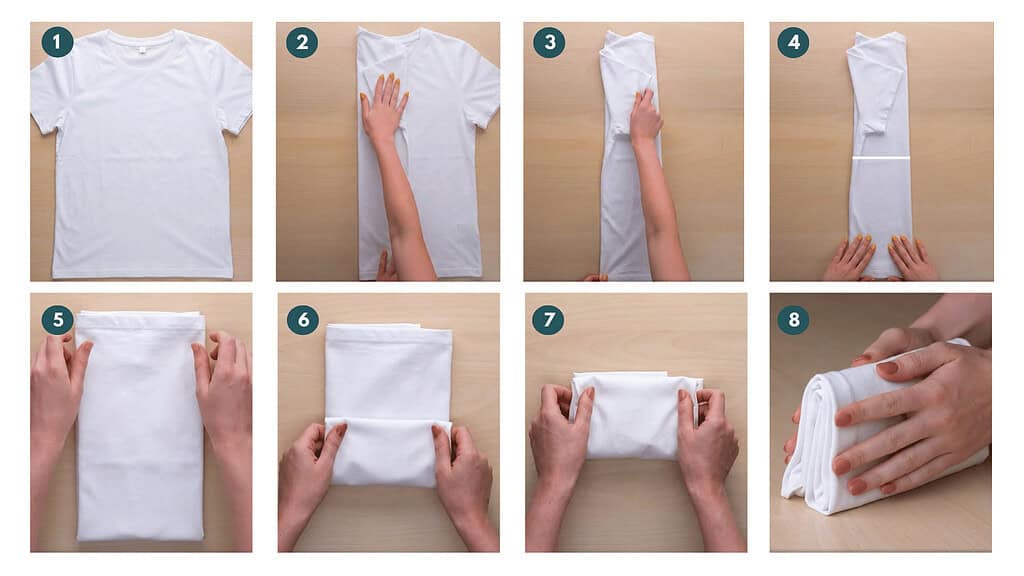
This one changed my dresser more than any other hack on this list.
I used to fold my shirts into flat rectangles and stack them on top of each other. The ones at the bottom never got worn because I couldn't see them. And every time I pulled one from the middle of the pile, the whole stack collapsed.
File-style folding fixed both of those problems at once.
Instead of stacking, you fold each shirt into a small, upright rectangle and stand them side by side in the drawer (the same way files sit in a filing cabinet).
Every shirt is visible the moment you open the drawer. You can grab one without touching the others.
To fold a shirt this way, lay it flat and fold one side toward the middle, then the other side over it so you have a long rectangle.
Fold the bottom third up, then fold again until the shirt is small enough to stand on its own. Then set it upright in the drawer.
It takes about 30 seconds once you've done it a few times. And the difference in drawer space is immediate. (most people fit nearly twice as many shirts in the same drawer)
2. Fold a Fitted Sheet Into a Neat Rectangle
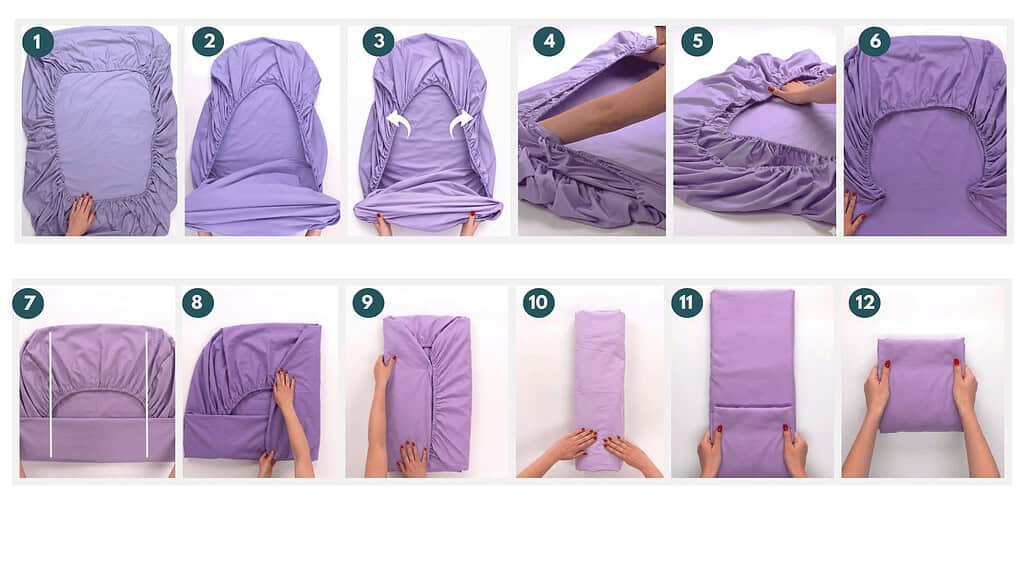
Fitted sheets were the one thing I avoided folding for years. I'd shake them out, bunch them up loosely, and stuff them onto the shelf hoping they'd stay put. They never did. The whole pile would slide off the moment I touched anything near it.
Once I learned this method, fitted sheets actually stayed where I put them.
Start by holding the sheet with one hand inside each of the two top corner pockets.
Bring your hands together and tuck one corner into the other so they nest. Do the same with the bottom two corners, then bring both ends together and tuck them into each other one more time.
At this point the curved edges are tucked away and you have something that actually resembles a rectangle.
Lay it flat on the bed, smooth out the edges, and fold the long sides inward toward the middle. Then fold the whole thing into thirds until you have a compact, flat rectangle that sits neatly on a shelf without unraveling.
The first time I did this it took me a few extra minutes (and one do-over) to get the corners right. But by the third or fourth sheet it felt completely natural. Now my linen closet shelf looks like something out of a magazine — and more importantly, nothing slides off anymore.
3. Fold a Hoodie Into a Compact Drawer Bundle
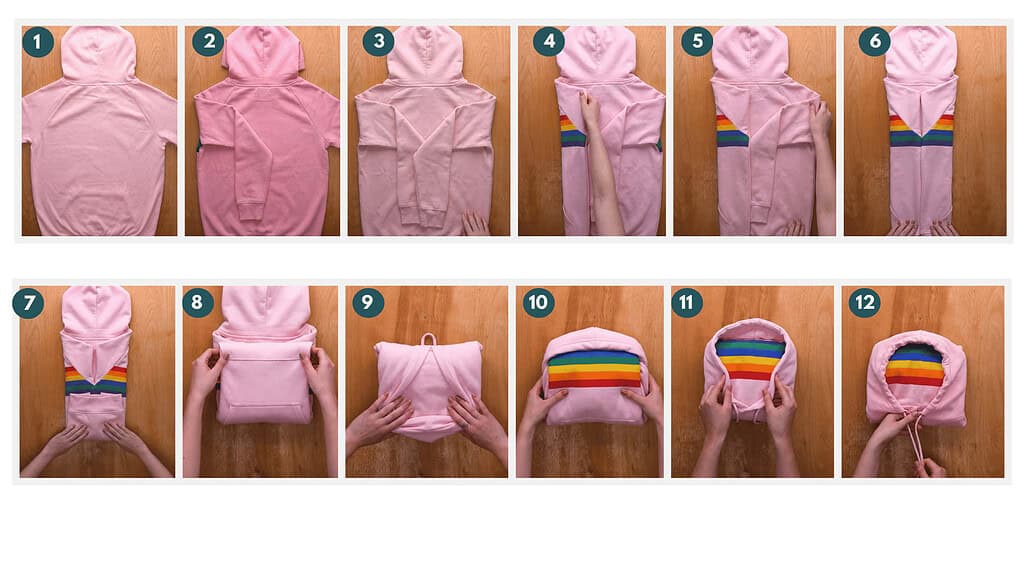
Hoodies are one of those things that take up way more space than they should.
They're thick, the sleeves go everywhere, and a loosely folded hoodie can eat up half a drawer on its own.
This method keeps them compact and (the best part) they don't unfold on their own once they're stored.
Start by laying the hoodie face down on a flat surface. Fold one sleeve across the back toward the opposite side, then do the same with the other sleeve so they overlap in the middle. You should have a long rectangle at this point.
Fold both sides in toward the middle so the hoodie is about the width of the hood. Then starting from the bottom hem, roll it up tightly toward the hood (not too loose or it won't hold its shape).
Once you reach the hood, stretch it open and flip it down over the entire rolled bundle to lock everything in place.
The hood acts like a little pouch that holds the whole thing together. It won't unravel in the drawer, it won't puff out, and you can store it upright just like a t-shirt.
I have six hoodies in one drawer now. Before this method, I could barely fit three.
4. Roll Towels for Tight Storage
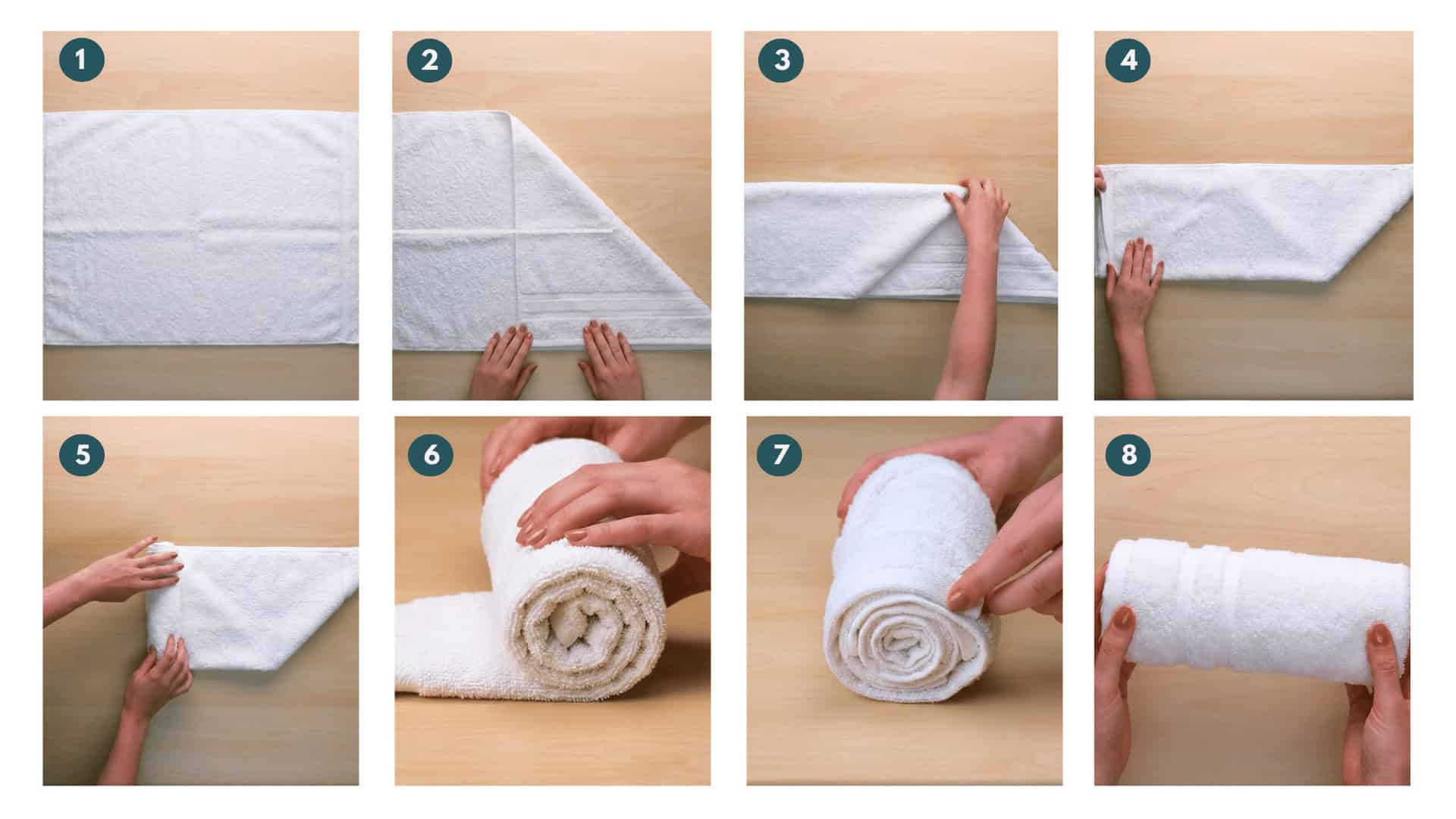
I used to fold my towels in thirds and stack them on the shelf the way I'd seen them in every linen closet growing up. It worked fine — until the stack got too tall and the whole thing toppled every time I grabbed one from the middle.
Rolling changed that.
Start by laying the towel flat and folding one corner diagonally toward the opposite edge so you have a straight edge along the bottom. That folded edge becomes your starting point.
Roll the towel tightly from that straight edge all the way to the pointed end, then tuck the point in underneath the roll to keep it secure.
What you end up with is a tight, self-contained roll that doesn't unravel when you pick it up.
You can store them upright in a basket, line them up in a cabinet, or stack them in a small linen closet without the pile collapsing. They also take up noticeably less space than a flat fold — especially with thicker towels (the kind that always seemed to eat up an entire shelf on their own).
The first time I switched to this method I fit every single bathroom towel I owned into one basket. Before, they were spread across two shelves and still looked messy.
5. Keep a Full Bedding Set Together
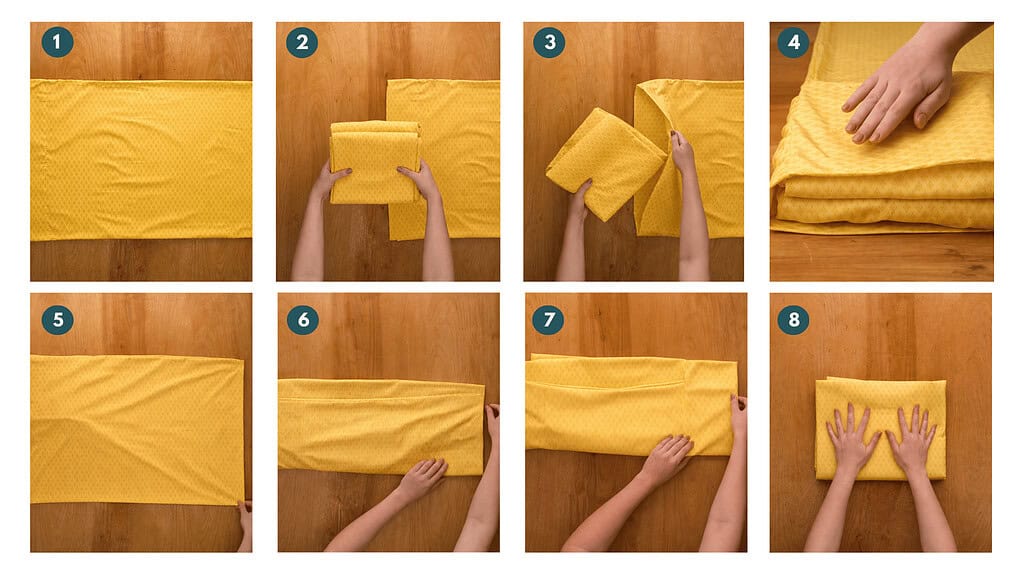
This one isn't just about folding — it's about never hunting for a matching pillowcase again.
I used to store sheets and pillowcases separately. Flat sheet on one shelf, fitted sheet on another, pillowcases tucked somewhere in between.
Every time I needed to change the bed I'd spend ten minutes pulling things out trying to find the matching set (and usually knocking over everything else on the shelf in the process).
This method keeps the whole set together in one tidy bundle.
Fold your flat sheet and fitted sheet into neat rectangles the way we talked about earlier. Fold one pillowcase into a rectangle as well. Stack everything together into a small, even pile.
Then take the second pillowcase and slide the entire stack inside it. Fold the open end of the pillowcase over the bundle like an envelope, tucking it underneath so everything stays in place.
What you end up with is one grab-and-go bundle that holds the complete set — sheets, fitted sheet, and both pillowcases — all in one spot.
When it's time to change the bed, you grab one bundle and everything you need is already together. No searching, no mismatched sets, no half-empty shelves.
I do this for every bed in the house now and my linen closet has never been easier to manage.
6. Roll a Puffer Jacket for Winter Storage
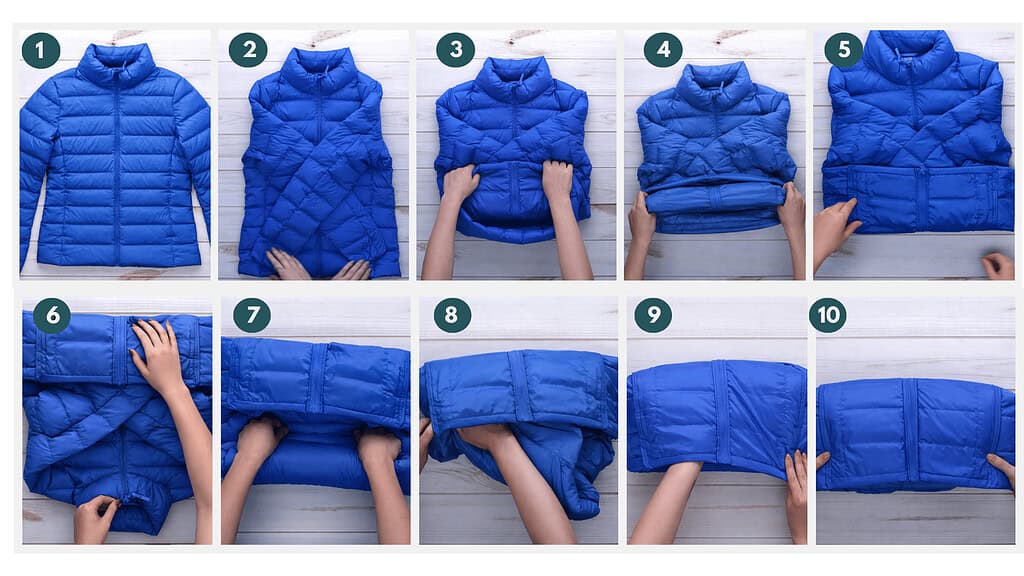
Puffer jackets are the bulkiest thing most people try to store, and they have a way of taking over an entire shelf or bin all on their own. The good news is that they compress down much smaller than they look.
I used to fold mine in half and lay it flat in a storage bin. It took up the whole bin. Now I roll it, and it sits in the corner of the same bin with room to spare.
Start by laying the jacket flat and zipping it all the way up. Fold one sleeve across the front toward the opposite shoulder, then fold the other sleeve over it the same way. You should have a long, fairly even rectangle at this point.
Fold the jacket in half lengthwise so the two sides meet, then start rolling from the bottom hem up toward the collar. Roll as tightly as you can without forcing it (puffer jackets have a little give, so don't be shy about pressing down as you roll).
Tuck the collar flap over the top of the roll to keep it from loosening.
Store it upright in a bin or on a shelf. If you're putting it in an under-bed storage box, you can fit two or three rolled jackets in the same space that one flat-folded jacket used to take up.
It's one of those things that feels a little fussy the first time and completely obvious the second time.
7. Fold a Button-Up Shirt Into a Small Rectangle
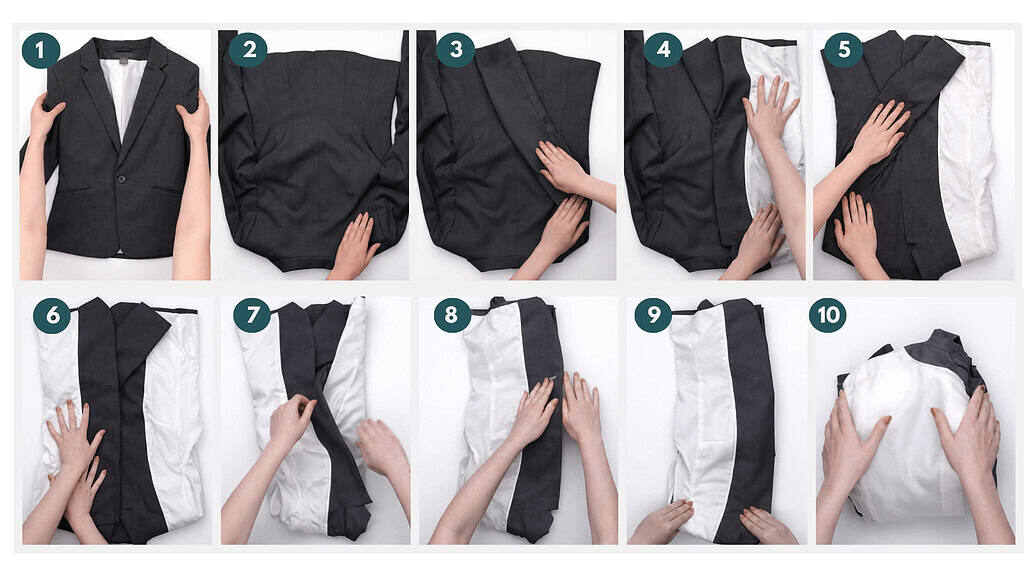
Button-up shirts and long sleeves are tricky. They're longer than t-shirts, the sleeves get in the way, and if you fold them without a plan they end up in a lumpy pile that wrinkles everything underneath.
This method keeps them flat, compact, and wrinkle-free.
Start by buttoning the shirt all the way up (just the middle buttons are enough — you don't need every single one) and lay it face down on a flat surface.
Fold one side of the shirt toward the middle, bringing the sleeve with it. Fold the sleeve back down so it runs parallel to the side of the shirt and doesn't stick out past the edge. Do the same on the other side.
You should have a long, even rectangle at this point with both sleeves tucked neatly behind.
Now fold the bottom third of the shirt up toward the middle to create a pocket. Fold the top third down and tuck it into that pocket so the whole thing holds together without unraveling.
What you end up with is a small, flat rectangle that sits cleanly in a drawer or packs flat in a suitcase when you need to travel without taking up unnecessary space.
I started doing this with my husband's button-ups and the drawer that used to overflow now closes with room to spare. He noticed this within a week (and has never once offered to fold them himself, but that's a different story).
8. Fold Sweaters Compactly
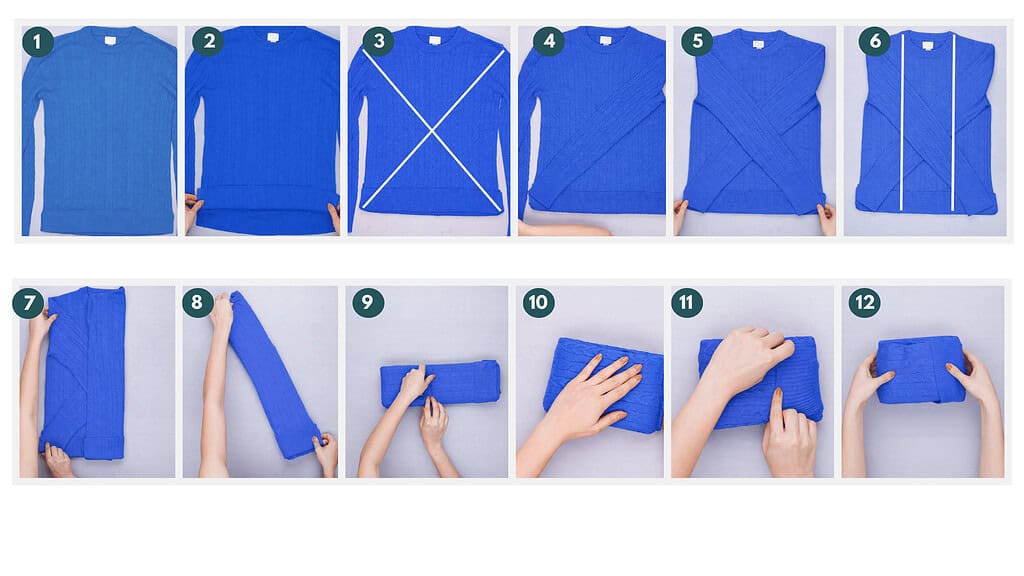
Sweaters are another one that quietly takes over more space than they deserve. They're thick, they stretch out of shape easily, and a loosely folded sweater never stays neat for long.
This method keeps them compact without stretching the fabric.
Start by laying the sweater flat and folding one sleeve diagonally across the front toward the opposite shoulder.
Do the same with the other sleeve so both sleeves are crossed over each other in the middle. You should have a clean rectangle with no sleeves sticking out.
Fold both sides of the sweater inward toward the middle so you have a narrower rectangle about the width of the body.
Then fold the whole thing from the bottom up into thirds (or in half if it's a shorter sweater) until you have a compact bundle that's small enough to stand upright in a drawer or sit flat on a shelf.
The key with sweaters is not to roll them the way you would a t-shirt. Rolling puts pressure on the fabric and can stretch the neckline over time. The fold-and-tuck method keeps the shape intact.
I store mine upright in a deep drawer, and I can finally see every sweater I own without pulling half of them out first. Before, I only ever wore the ones on top because the rest were buried.
9. Roll Pants and Jeans to Take Up Less Space
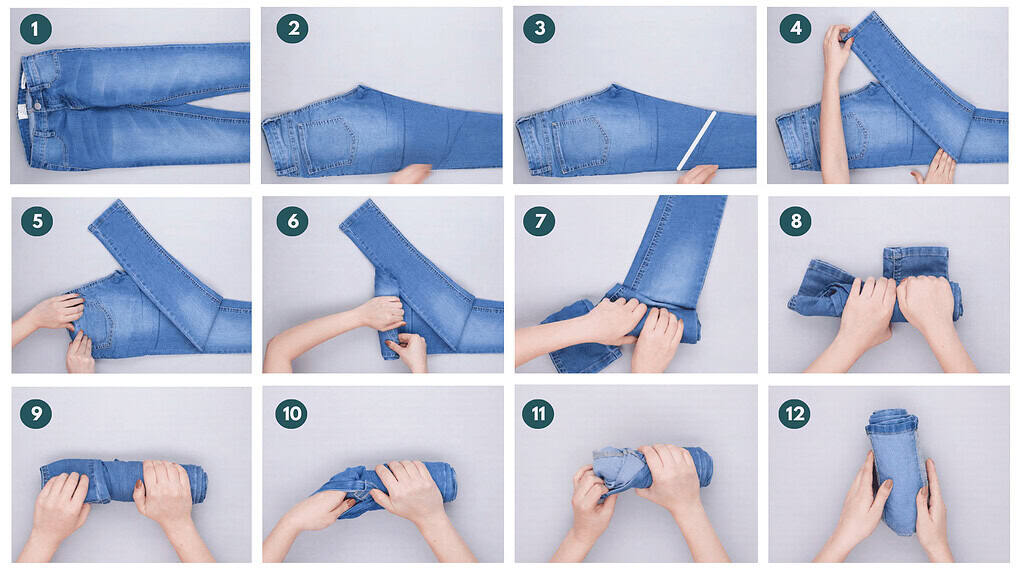
Jeans are heavy, stiff, and awkward to fold neatly.
Most people fold them in half and stack them, which works until the stack gets four pairs high and starts sliding all over the place. And the pair you want is always at the bottom.
Rolling fixes that.
Start by laying the jeans flat and folding one leg directly on top of the other so the seams line up. Take the crotch area and fold it inward to create a clean, straight edge at the top (this is the part most people skip, and it's what makes the roll stay tight).
You should have a long, even rectangle at this point with a flat edge at the waistband end.
Starting from the waistband, roll the jeans tightly down toward the cuffs. Keep the roll as even as you can as you go. Once you reach the cuffs, tuck the end underneath the roll to keep it from loosening.
Stand the roll upright in the drawer with the waistband facing up so you can see each pair at a glance.
The difference in drawer space is noticeable right away. I fit nearly double the pairs in the same drawer once I switched to this method.
And because they're stored upright, I can actually see every pair of jeans I own without digging through a pile to find the ones I want.
It works just as well for dress pants, leggings, and workout pants (basically anything with two legs).
Same Closet, But With More Space
None of these hacks require you to buy anything new, move furniture around, or spend a whole weekend reorganizing. You just fold things differently.
And that's what makes them worth trying.
If you're not sure where to start, pick three categories. (t-shirts, towels, and jeans are the best first choices because the difference is immediate and you'll see it every single day) Once those feel natural, work your way through the rest of the list at your own pace.
The fastest way to see the biggest difference?
Start with file-style folding for your shirts and rolling for your bulkier items like towels and jeans. Those two alone will change how your drawers look and feel more than anything else on this list.
You see, you definitely don't need a bigger closet.
You just need a better fold. 😉
Want to Take It a Step Further?

My free Declutter for Self Care Checklist pairs perfectly with these folding hacks. Once your drawers are organized, it helps you keep them that way — one small, manageable step at a time.
Frequently Asked Questions
What are the best space saving folding hacks for drawers?
File-style folding and rolling are the two methods that make the biggest difference in drawer space. File-style folding works best for t-shirts, jeans, and sweaters because you store them upright and can see everything at once. Rolling works well for towels and bulkier items like hoodies and jeans. Start with one drawer, try both methods, and see which one works best for what you're storing.
Is rolling or folding better for saving space?
It depends on what you're storing. Rolling is great for towels, jeans, and hoodies because it compresses bulk and keeps things tight. Folding into a flat rectangle works better for button-up shirts and sweaters where you want to avoid stretching the fabric. For most drawers, a combination of both methods gives you the best results.
How do you fold a hoodie so it doesn't unfold in a drawer?
The key is using the hood to lock the bundle in place. After folding the sleeves in and rolling the hoodie from the bottom up, stretch the hood open and flip it down over the entire roll. It acts like a pouch that holds everything together so it won't come loose on its own.
How do you fold a fitted sheet neatly?
Start by tucking the corners into each other until the curved edges are hidden and you have something close to a rectangle. Lay it flat, fold the long sides inward, then fold the whole thing into thirds. It takes a few tries to get comfortable with the corner tucking, but once it clicks it becomes second nature.
How do you store a bedding set together so it's easy to grab?
Fold your sheets and one pillowcase into neat rectangles and stack them together. Then slide the entire stack into the second pillowcase and fold the open end over the bundle like an envelope. The whole set stays together in one tidy bundle — sheets, fitted sheet, and both pillowcases — ready to grab whenever you need it.
Follow me elsewhere!

