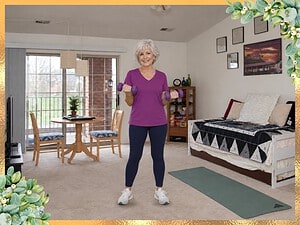
Do grocery bags feel heavier than they used to? Or does getting up from a low couch take a little more push?
You’re not alone. As we get older, we slowly lose muscle, and everyday jobs start to feel harder.
The good news is that muscles can still grow stronger at any age.
Strength training for women over 50 doesn’t mean a gym or heavy barbells. You can do it at home with a chair, a wall, and a pair of light weights.
In this post, you’ll learn why it matters, how often to do it, and seven simple moves to get you started.
What Is Strength Training?
Strength training means making your muscles work against some kind of push or pull.
That push can come from hand weights, a stretchy band, or even your own body weight. When you stand up from a chair without using your hands, your leg muscles are doing strength work.
Each time you do this, your muscles get a little stronger. Over a few weeks, you’ll feel the difference in your daily life.
Why Strength Training Matters After 50
Our bodies slowly lose muscle as the years go by. This starts quietly, often in our 30s or 40s, and it adds up over time.
For women, menopause brings another change. Our bodies make less estrogen, and bone loss speeds up in the years after menopause.
Strength training helps with both. Here’s how.
It Keeps Your Muscles Strong
Regular strength work helps you keep the muscle you have and build some back.
Strong muscles make daily life easier. Carrying groceries, climbing stairs, and lifting a grandchild all take less effort.
It Helps Protect Your Bones
When your muscles pull on your bones, your bones get a signal to stay strong.
That matters a lot after menopause. Stronger bones are less likely to break if you ever fall.
It Helps With Balance
Strong legs and hips help keep you steady on your feet.
Studies show that strength training lowers the risk of falls in older adults. For more ways to stay steady, try these balance exercises.
It Supports Your Overall Health
Strength training can also ease the signs of some long-term health problems, like arthritis and type 2 diabetes.
And many women say it helps them sleep better and feel more confident. Feeling strong is a good feeling at any age.
How Often Should You Do It?
Health experts say adults, including older adults, should do strength training at least two days a week.
Each time, work all your main muscle groups. That means your legs, hips, back, belly, chest, shoulders, and arms.
Give each muscle group a day of rest before you work it again. So you might do your moves on Monday and Thursday, or on Tuesday and Friday.
Strength training is only one part of staying active, though. Experts also suggest about 150 minutes a week of activity that gets your heart going, like a brisk walk. Here are some good heart-healthy exercises to try.
What You’ll Need
You don’t need a gym or fancy machines. A few simple things at home will do.
First, find a sturdy chair with no wheels. Push it against a wall so it can’t slide.
Next, get a pair of light hand weights. Many women start with 2 or 3 pounds. Water bottles or soup cans work too, if you’d like to try the moves before you buy anything.
A resistance band is also handy. It’s a stretchy band that you pull against, and it’s light enough to take anywhere.
Last, wear comfy clothes that let you move and supportive sneakers. An exercise mat helps too, for floor moves. If you’d like some cute workout outfits, see these leggings outfits.
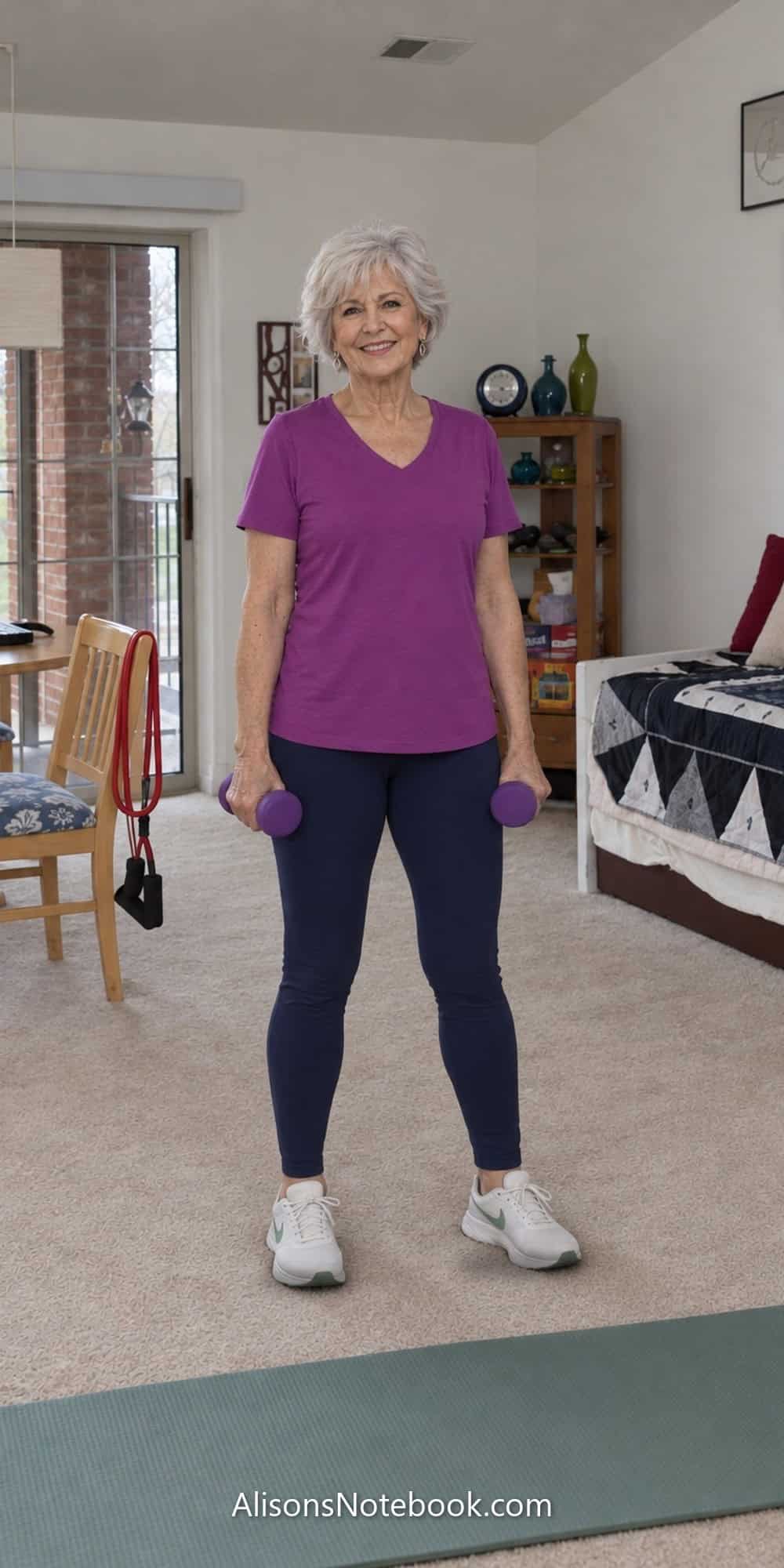
Shop The Look

Safety Tips Before You Start
Strength training is safe for most people. Still, a few simple habits will help you stay comfortable.
If you have a health problem like heart disease, high blood pressure, diabetes, or arthritis, check with your doctor first. The same goes if you haven’t been active in a while.
Warm up for about five minutes before you start. A short walk around the house or marching in place works well.
Move slowly and smoothly, and never jerk the weight. Keep a slight bend in your elbows and knees instead of locking them straight.
Breathe out as you lift or push, and breathe in as you relax. Try not to hold your breath.
Your muscles may feel a little sore for a day or two at first. That’s normal. But if you feel sharp pain, stop that move and rest.
7 Simple Strength Exercises For Women Over 50
These moves work all your main muscle groups. Do them in order, and the whole routine takes about 20 to 30 minutes.
Start with 10 to 15 slow repeats of each move. When that feels easy, add a second round, or move up to a slightly heavier weight.
1. Chair Squats
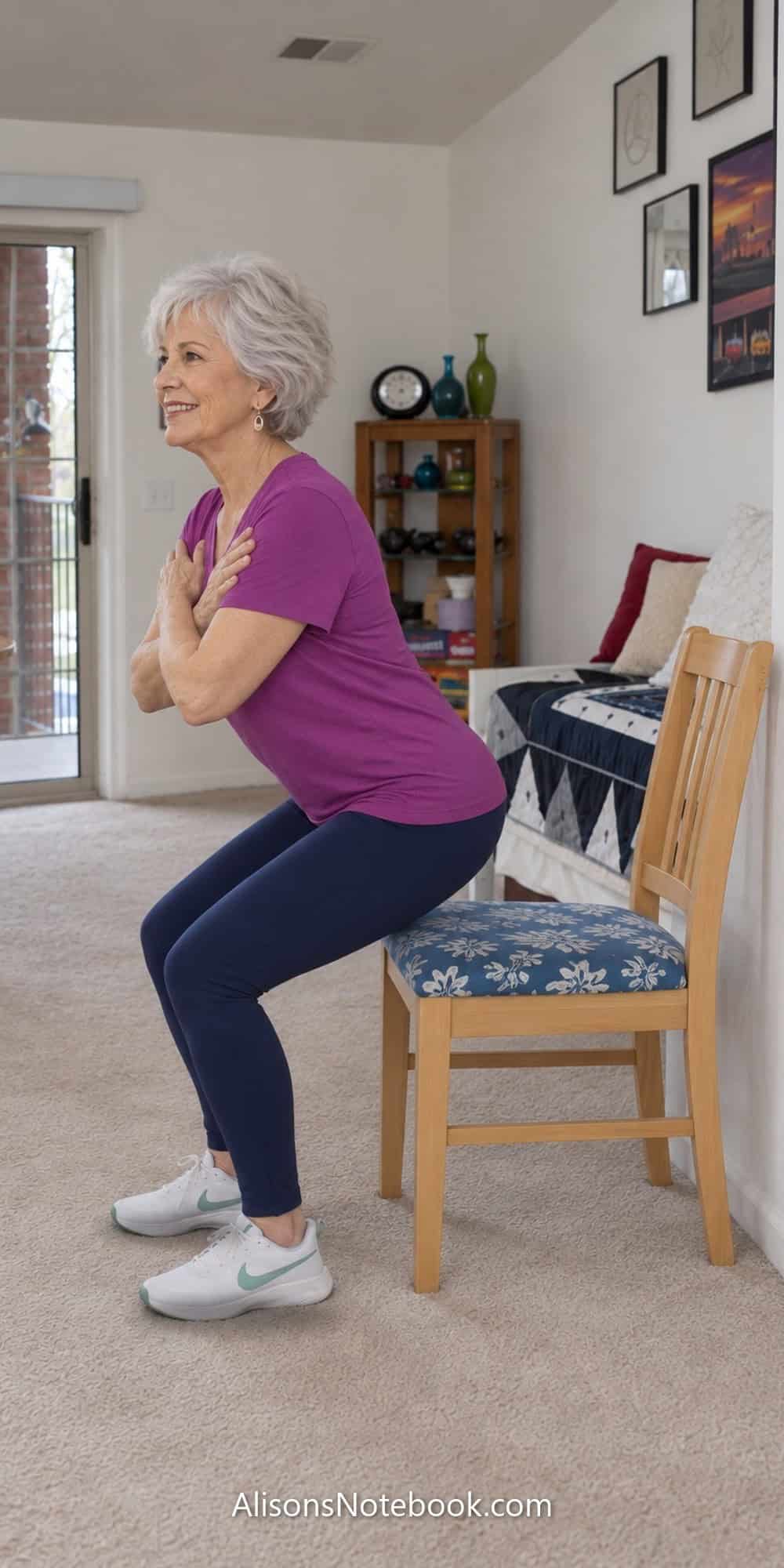
Chair squats make your legs and hips stronger. They train the same muscles you use to get out of a car or off the couch.
Sit near the front of your sturdy chair with your feet flat and hip-width apart. Cross your arms over your chest, or reach them out in front of you.
Lean forward a little, then press through your heels to stand up. Slowly sit back down, as if you’re barely touching the chair.
If standing up is hard at first, use your hands on the armrests. Over time, try to use your hands less.
2. Wall Push-Ups
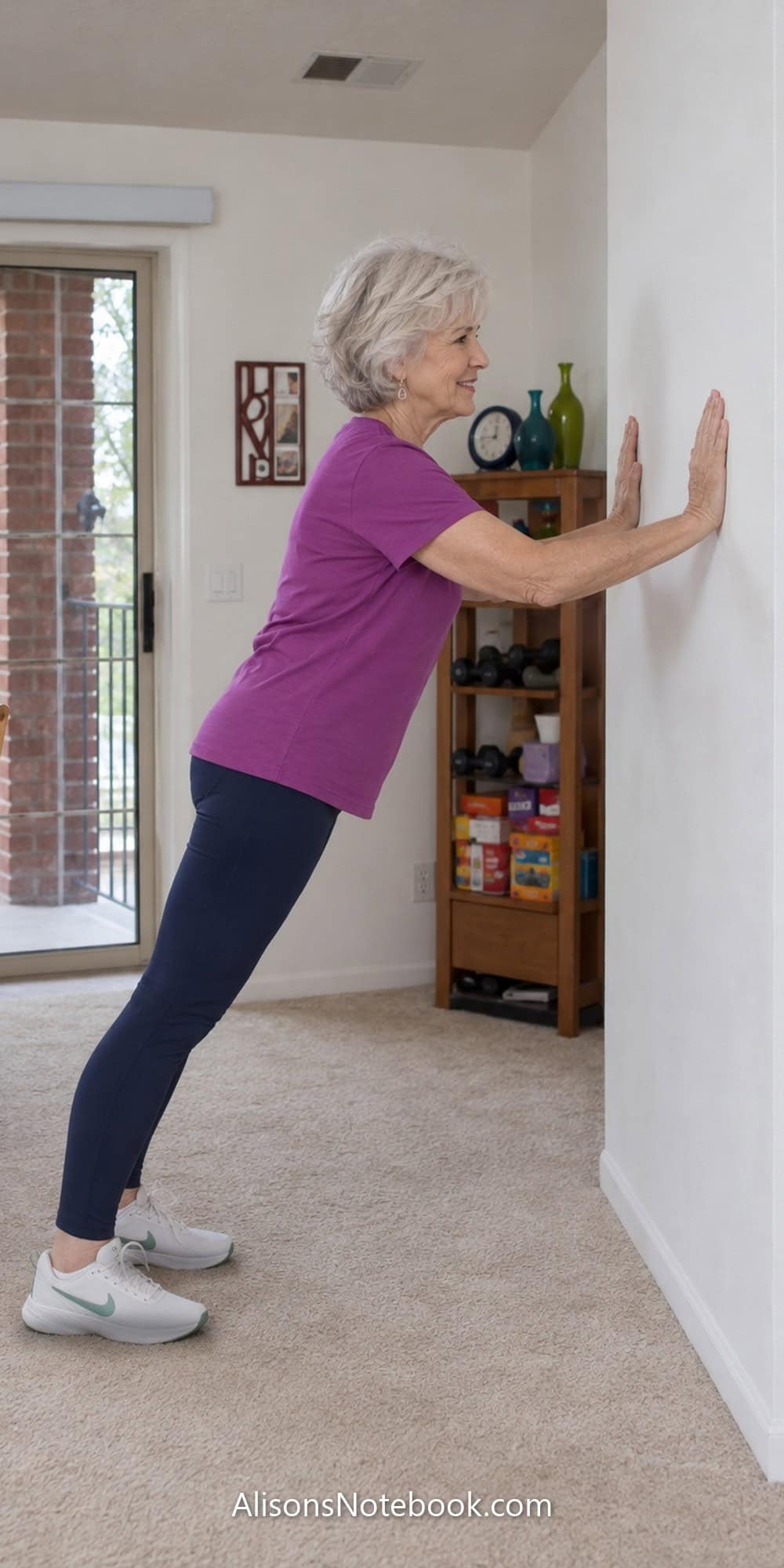
Wall push-ups work your chest, shoulders, and the backs of your arms. They’re much gentler than push-ups on the floor.
Stand about an arm’s length from a wall. Put your palms flat on the wall at shoulder height, a little wider than your shoulders.
Slowly bend your elbows and lean your body toward the wall. Keep your feet planted and your body straight like a board.
Then push back to where you started. To make it harder, step your feet a little farther from the wall.
3. Seated Band Rows
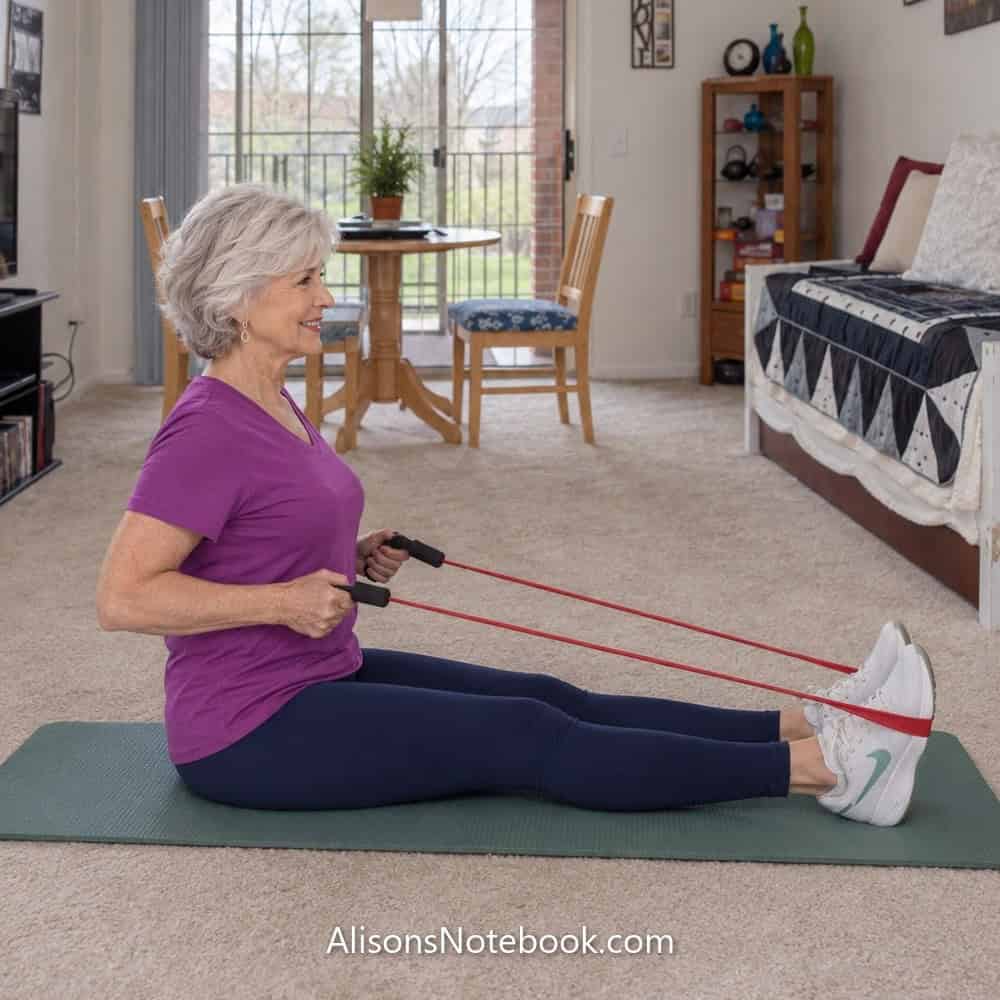
Rows make your upper back stronger. A strong back helps you sit and stand up tall.
Sit up straight on the floor or on your mat with your legs out in front of you. Wrap the middle of your band around the bottoms of your feet and hold one end in each hand.
Pull your elbows back close to your sides, and squeeze your shoulder blades together. Then slowly let your arms go forward again.
Is sitting on the floor hard? Then sit in your chair instead, and loop the band around a sturdy post or table leg in front of you.
4. Overhead Press
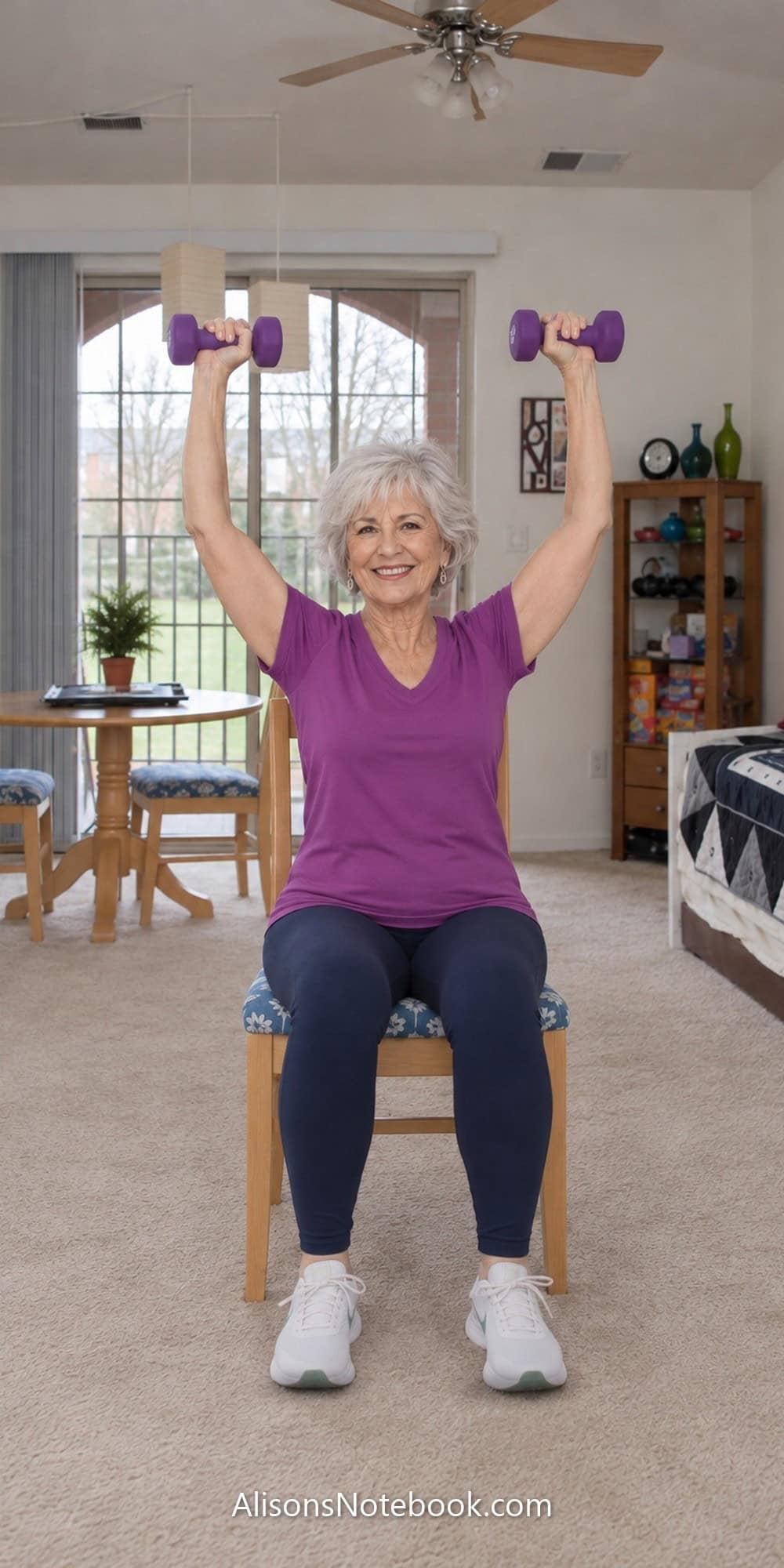
This move works your shoulders and arms. It makes it easier to reach up to a high shelf.
Sit tall in your chair with a weight in each hand. Hold the weights at shoulder height with your palms facing forward.
Slowly push both weights up over your head. Keep a slight bend in your elbows at the top.
Then lower the weights back to your shoulders. Keep your back against the chair and your belly gently tight.
5. Biceps Curls
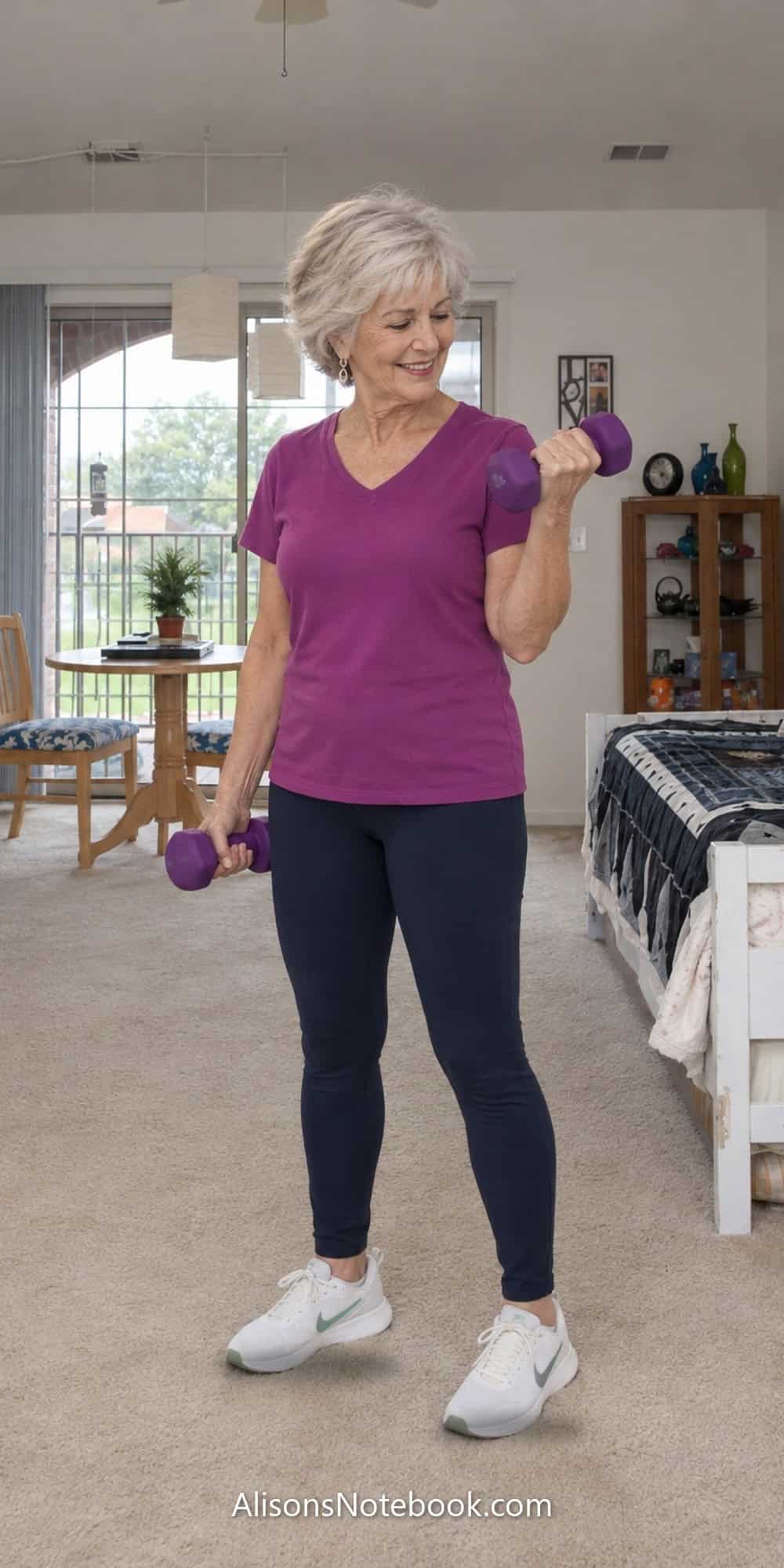
Biceps curls work the fronts of your upper arms. You use these muscles to carry bags, baskets, and babies.
Stand or sit tall with a weight in each hand. Let your arms hang at your sides with your palms facing forward.
Keep your elbows close to your sides as you slowly bend them and bring the weights up toward your shoulders.
Pause for a moment, then lower the weights slowly. Don’t swing your arms or lean back.
6. Side Leg Raises
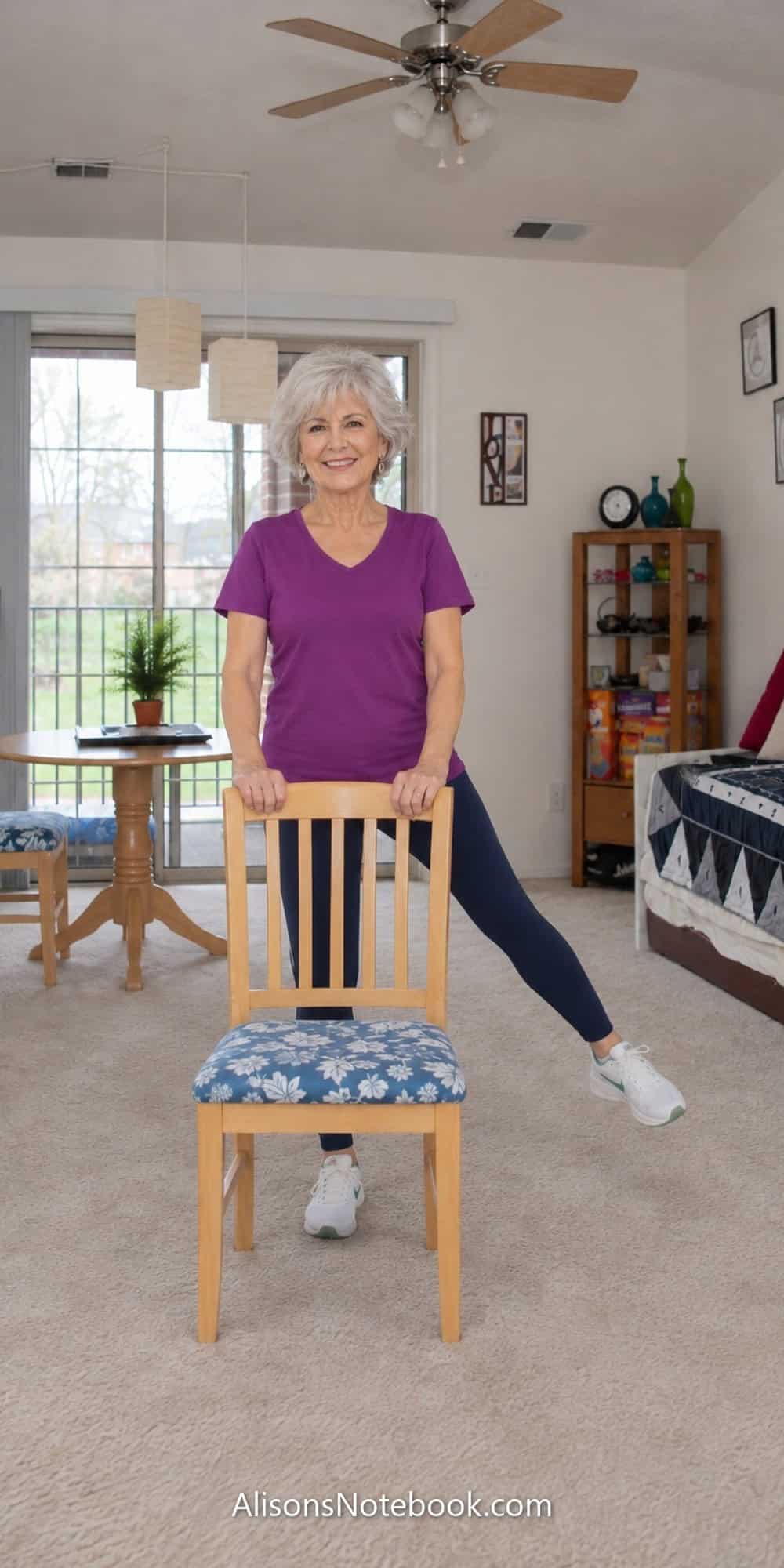
Side leg raises work the muscles on the outside of your hips. These muscles help you stay steady when you walk.
Stand behind your chair and hold the back of it with both hands. Stand tall with your feet close together.
Slowly lift one leg out to the side, keeping your toes pointing forward. Hold for a second, then lower it slowly.
Do all your repeats on one side, then switch legs. Keep your back straight, and don’t lean over the chair.
7. Bridges
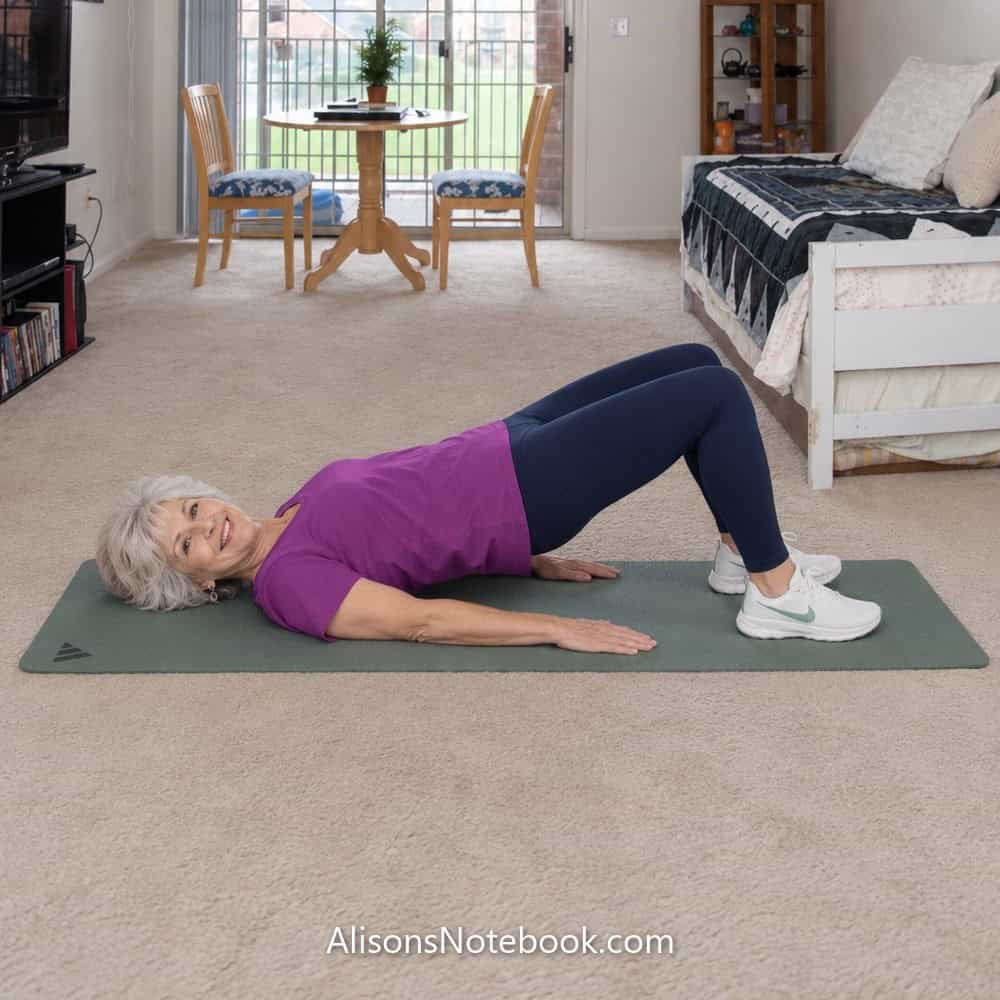
Bridges work your back, hips, and the backs of your legs. They can also help your lower back feel stronger.
Lie on your back on your mat with your knees bent and your feet flat on the floor. Rest your arms at your sides.
Squeeze your bottom and lift your hips until your body makes a straight line from your shoulders to your knees. Hold for a few seconds, then lower slowly.
If getting down to the floor is hard, you can do bridges on your bed. For more floor and belly moves, see these core exercises.
A Simple Weekly Plan
Here’s an easy way to fit strength training into your week.
Do the seven moves on two days that aren’t back to back, like Monday and Thursday. On most other days, take a walk or do something that gets your heart going.
On your rest days, a few gentle stretches can help you feel loose. Try these morning stretches to start your day.
If standing moves are tiring, you can do many of them sitting down. These seated exercises are a great place to start.
Once two days feel easy, you can add a third day. Just keep a rest day between your strength days.
How To Know When To Move Up
Your muscles grow stronger when you ask them to do a little more over time.
Pick a weight that feels hard by the last few repeats, but that you can still lift with good form. When you can do 15 easy repeats, it’s time to make it a little harder.
You can add a second round, choose a slightly heavier weight, or use a tighter band. Change only one thing at a time.
Go slowly. Small steps add up, and you’ll be surprised how far you come in a few months.
Stronger Every Week
Strength training for women over 50 is one of the best gifts you can give your body.
It helps your muscles, your bones, and your balance. And it makes everyday life feel a little easier.
So pick two days this week and try these seven moves. Your future self will thank you.
Take Care Of You

You now have seven simple moves and an easy plan to build your strength at home.
Want a little more help taking care of yourself? Grab my FREE Self-Care Toolkit. It has simple guides and checklists for easy daily habits and calm routines.
It’s a nice next step if you want your days to feel a little lighter.
Frequently Asked Questions
How often should a woman over 50 do strength training?
Aim for at least two days a week. Work all your main muscle groups, and rest a day between strength days.
What weight should I start with?
Many women start with 2 or 3 pound weights, or with no weights at all. Choose a weight that feels hard by the last few repeats but still lets you move with good form.
Can I build muscle after 50?
Yes. Muscles can grow stronger at any age when you work them regularly and add a little more over time.
Is strength training good for my bones?
Yes. Strength training helps keep your bones strong, which is very important after menopause.
Do I need to go to a gym?
No. You can do all of these moves at home with a chair, a wall, light weights, and a resistance band.
Is it normal to feel sore after strength training?
A little soreness for a day or two is normal at first. If you feel sharp pain, stop that move and talk to your doctor.
Follow me elsewhere!

