
I first heard the term “Swedish death cleaning” a few years ago, and I’ll be honest. I almost closed the article.
Death cleaning? That sounded heavy. Morbid. Like something you’d only think about if you were sick or very, very old.
But something made me keep reading. And by the time I finished, I wasn’t thinking about death at all.
I was thinking about my hall closet.
The one crammed with coats nobody wears, bags I forgot I owned, and a box of scarves I keep meaning to sort through. I’ve walked past that closet a thousand times without opening it. Not because I didn’t notice the mess, but because I didn’t know what to do about it.
Swedish death cleaning gave me a way to think about it that finally made sense.
It’s not about preparing to die. It’s about deciding, while you’re healthy and clear-headed, what actually deserves space in your life. And just as importantly, what doesn’t need to follow you (or your family) into the next chapter.
Once I understood that, I started seeing everything in my home a little differently. Not with panic or sadness, but with a different sense of clarity I hadn’t felt before.
In this post, I’m sharing what Swedish death cleaning actually is, why it hit me so personally at this point in my life, and how I started working through my own home without losing my mind in the process.
If the name made you flinch the way it made me flinch, stick around. It’s not what you think.
It’s Not as Morbid as It Sounds
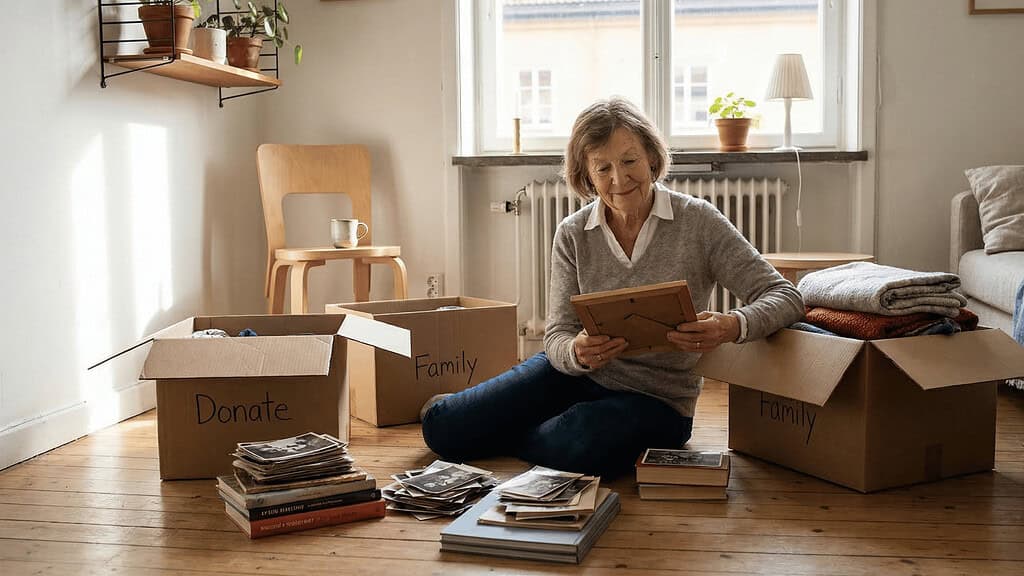
Swedish death cleaning comes from a Swedish word, döstädning. “Dö” means death, and “städning” means cleaning.
Put together, it’s the practice of going through your belongings and simplifying your home so the people you love won’t have to do it for you someday.
The concept has been part of Swedish culture for a long time, but most of us first heard about it through Margareta Magnusson’s book, The Gentle Art of Swedish Death Cleaning.Â