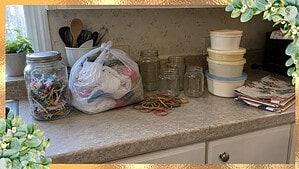
If you grew up with a mother who washed out bread bags and saved them in a drawer, this list is for you.
My mother saved everything. Twist ties, rubber bands, glass jars and every box that ever came into the house. She folded used wrapping paper so neatly you’d think it was new.
I learned it all from her. And this fall, I found out how well I’d learned it.
Up in our attic, I counted eleven empty boxes from things we’d bought over the years. Some of those things weren’t even in our house anymore.
Under my kitchen sink was a bag full of plastic bags. In a drawer was a jar of twist ties I’d been adding to for twenty years.
None of it was hurting anyone. But none of it was helping, either.
So I went through the things our generation was told to keep, one at a time. Here is what was true back then, what’s true now, and the little bit of each I decided to keep.
Why We Were Taught to Save Everything
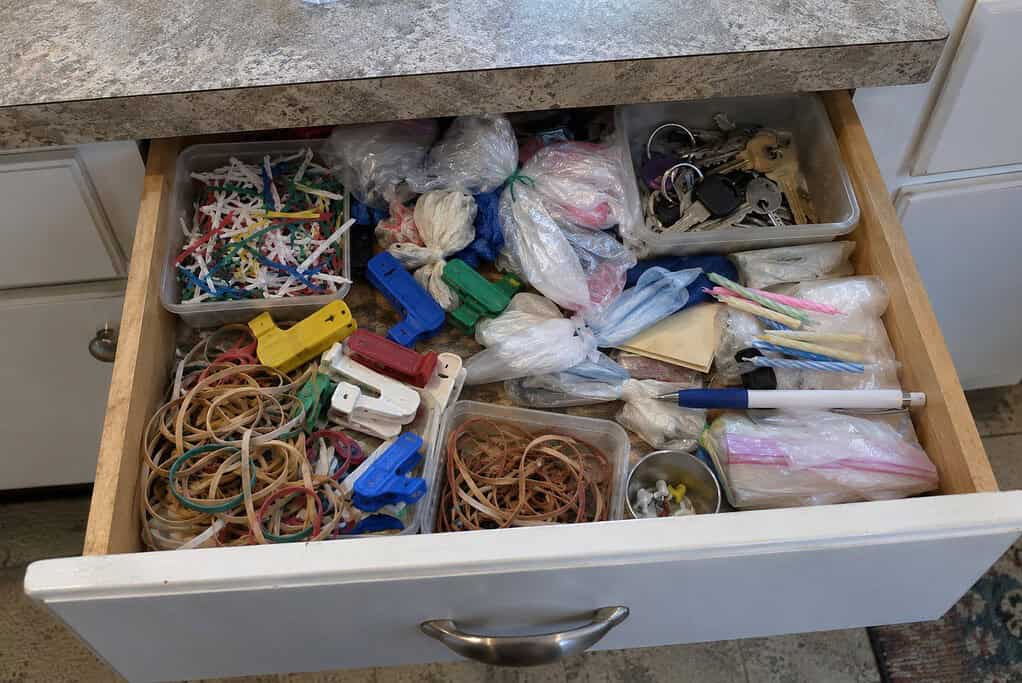
My mother’s parents lived through the Great Depression. Back then, people couldn’t run to the store for a new jar or a new string. If you had something, you saved it, because you might not get another.
My mother learned that from them, and I learned it from her. “Waste not, want not,” she’d say, and drop another twist tie in the drawer.
That habit kept families going through hard years. There’s nothing silly about it. It came from love and from being careful.
But our lives are different now. Most of what we saved is easy to find, cheap to replace or free.
And a house full of “might need it someday” leaves less room for the life we’re living today. (I wrote about that feeling in my post on just-in-case clutter.)
12 Things We Were Told to Keep
1. Empty Electronics Boxes
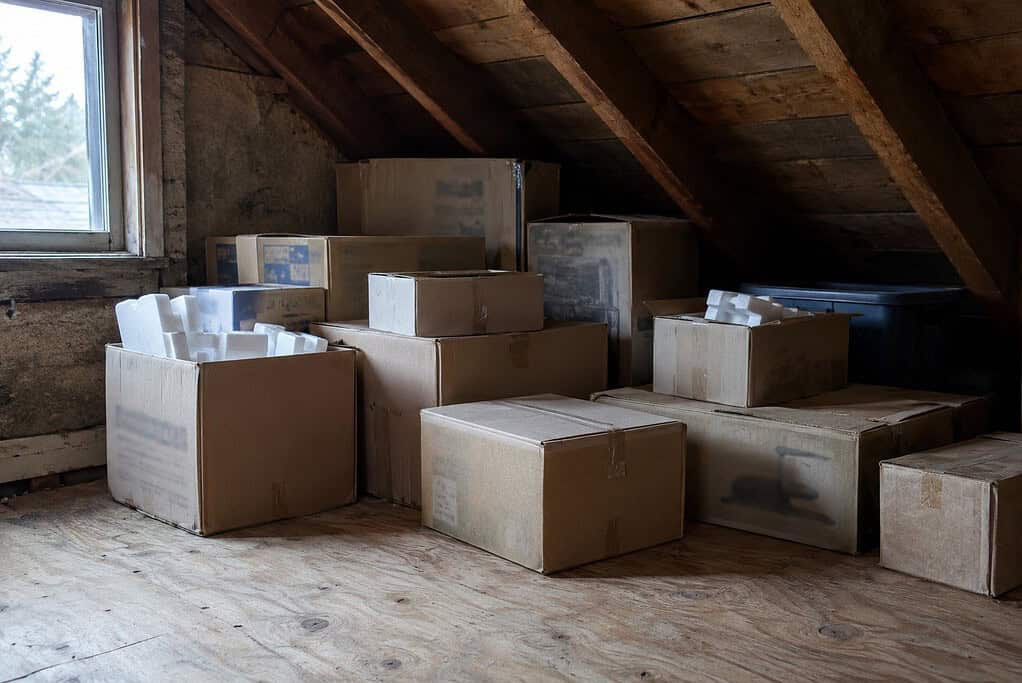
We were told to keep the box in case we had to send something back, or in case we moved.
That’s why our attic had eleven boxes.
There was one for the TV and one for the microwave. There were two for old phones, and one for a printer we gave away years ago. My grandson carried them all down, one Saturday morning.
It makes sense to keep a box until the store’s return window ends. After that, most warranties ask for proof that you bought it, like a receipt, more than the box. And if you ever move, you can get boxes then.
Every box went flat into the recycling. The attic floor looked twice as big.
2. Every Single Receipt
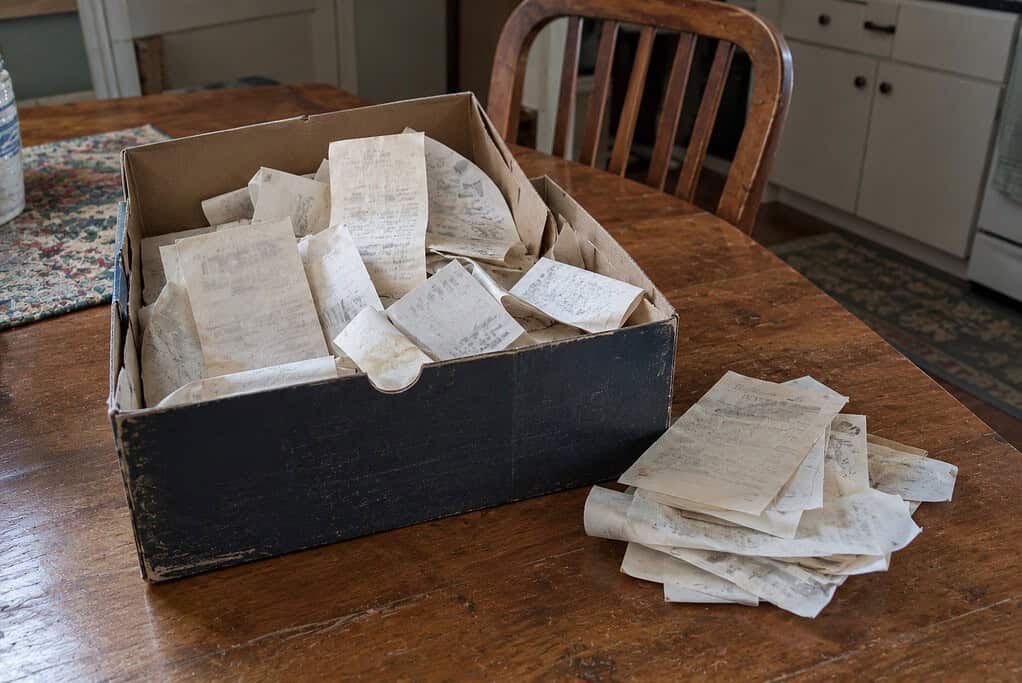
My mother kept a shoebox of receipts going back years. Grocery receipts, gas receipts and receipts for things she’d used up long ago.
Now I keep receipts for big things, like appliances and electronics, that have a warranty. I staple each one to the front of its manual. I wrote about that in my post on what to do with old owner’s manuals.
Everyday receipts can usually go once you’ve checked them against your bank statement. Many store receipts are printed on shiny paper that fades over time, so old ones are often blank anyway.
For tax papers, the rules are different. I shared what I learned in my post on how to stop hoarding paper.
3. Twist Ties
My jar of twist ties was full to the top. I’d been saving them from bread bags for twenty years, and I’d used maybe ten.
Today, most bread bags come with a new tie or a plastic clip every time. You’ll never run out.
I kept a small handful in a cup in the kitchen drawer. The rest went in the trash, and I didn’t feel one bit guilty.
4. Plastic Grocery Bags
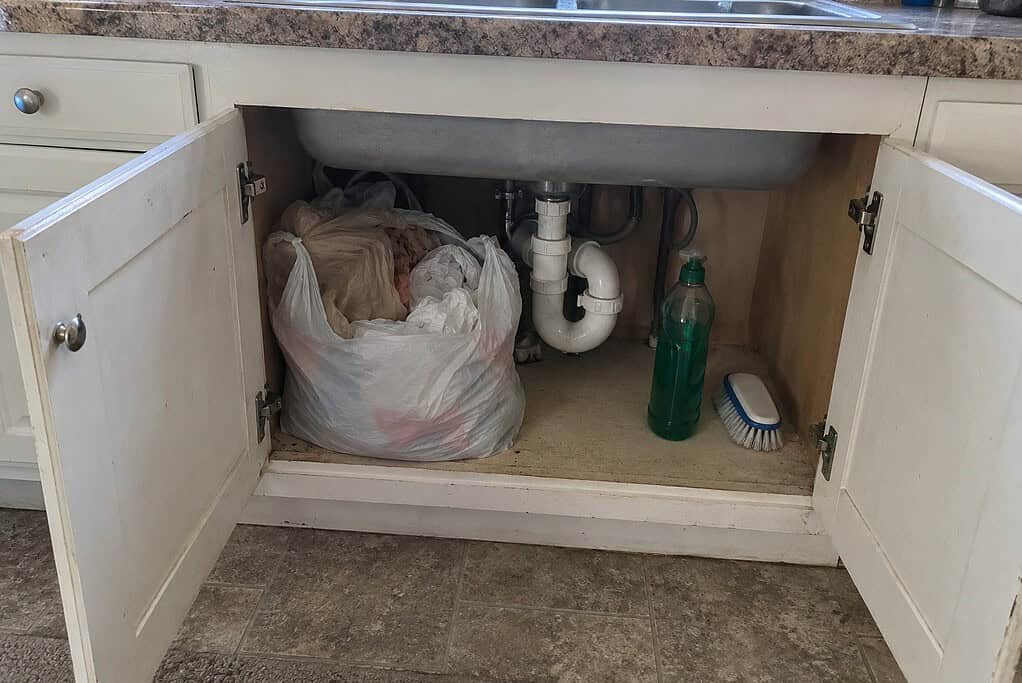
Under my sink was a plastic bag stuffed with plastic bags. (My mother called it “the bag of bags.” I think every house in America had one.)
I kept enough to line the small trash cans in the bathrooms. That’s about ten.
Many grocery stores have a bin by the door where you can drop off plastic bags to be recycled. Check with your store, because not every store has one. The rest of mine went there.
5. Rubber Bands
My father used to save the rubber bands from the newspaper. He hung them on the kitchen doorknob until it looked like a ball of yarn.
Old rubber bands dry out over time. They get stiff and snap when you stretch them. Most of mine broke when I tried them.
I kept a small handful of good ones in the kitchen drawer. The dried-out ones went in the trash.
6. Wrapping Paper, Bows and Tissue Paper
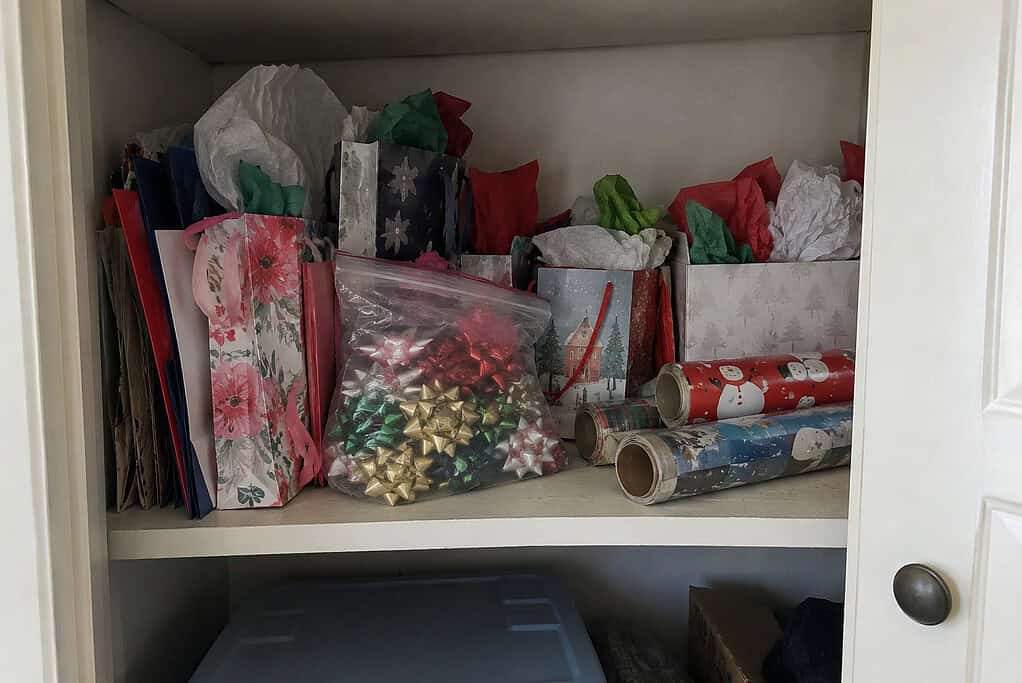
My mother carefully unwrapped every gift so she could save the paper. She saved the bows in a big bag, and the tissue paper too.
I had a whole closet shelf of used gift bags, crushed bows and wrinkled tissue. Some of it was older than my grandkids.
I kept a few nice gift bags and one roll of plain paper that works for any holiday. The rest went to the trash or recycling. Shiny or glittery paper usually can’t be recycled, so check your town’s rules.
7. Glass Jars
Spaghetti sauce jars, pickle jars and jam jars all went under my counter “for later.” I had more than forty.
A few jars are handy. I use them for leftovers, buttons and nails for my husband’s projects.
But store jars aren’t made for home canning. If you can foods at home, food safety experts say to use jars made for canning. So I kept six jars and recycled the rest.
8. Margarine Tubs and Cool Whip Bowls
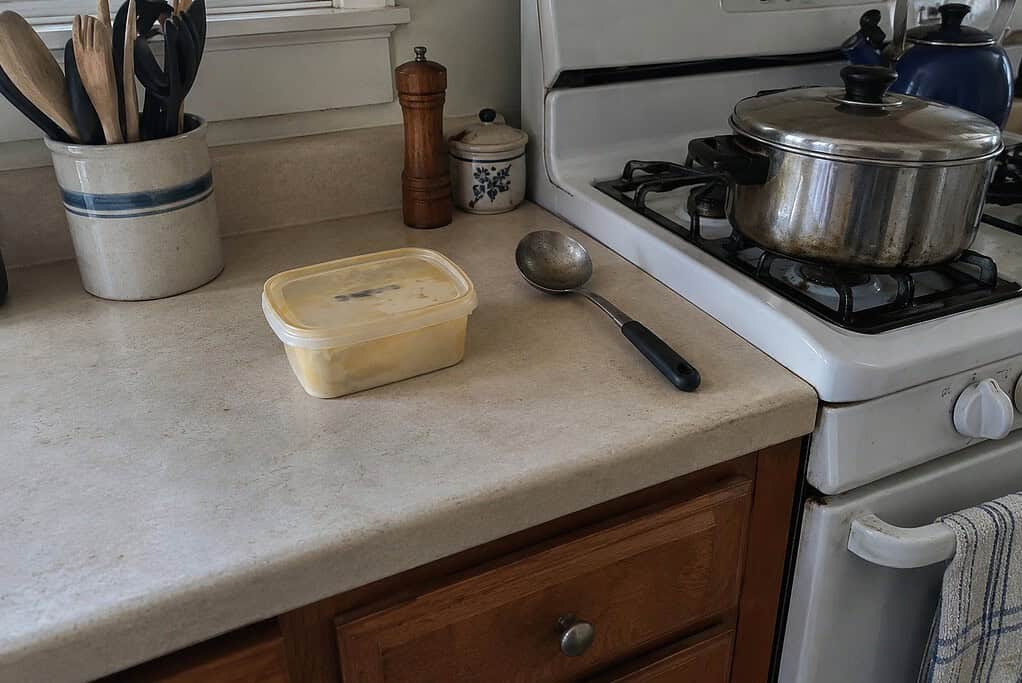
My mother hardly ever bought a food storage container. She used margarine tubs and Cool Whip bowls, and she wrote what was inside on the lid in black marker.
I kept one of her tubs, the one that says “soup” in her handwriting. I still use it every winter.
My own stack of old tubs went to the recycling.
I use a few matching containers now, and the lids fit. (My husband still keeps his screws in old margarine tubs in the garage. Those are his call.)
9. Gift Boxes From the Department Store
Shirt boxes, sweater boxes and those sturdy boxes with the store’s name on the lid. My mother saved them flat behind her coats, and so did I.
I kept three in different sizes for Christmas. The rest went in the recycling. Most gifts fit in a gift bag now anyway.
10. Old Keys
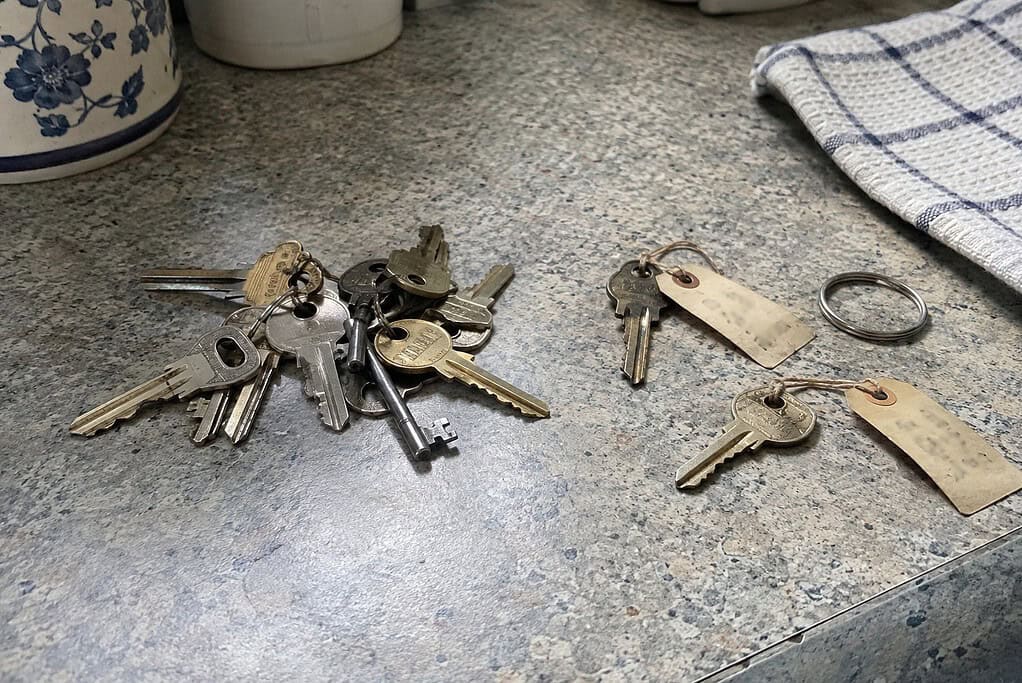
In a box in my mother’s basement, we found a whole bag of old keys. Nobody knew what any of them opened.
I had my own little pile in a kitchen drawer. I tried each key in every lock in the house. Only two of them still worked, and I put a tag on each one.
Old keys are usually brass or steel, so they can be recycled with scrap metal. The rest of mine went in a bag for the metal bin at our town’s recycling drop-off.
11. Old Batteries
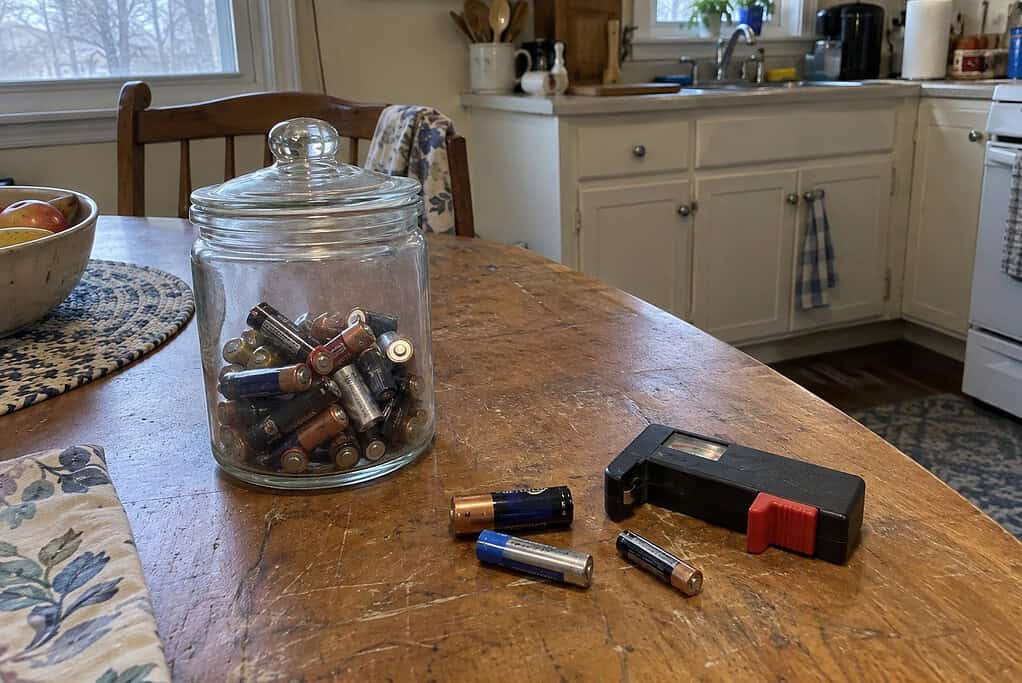
I had a lidded jar of loose batteries, up high where the grandkids can’t reach. Some were new, some were dead and some I couldn’t tell.
I bought a small battery tester for a few dollars. Dead regular batteries, the kind called alkaline, can go in the trash in most places, though recycling is better where you can.
Rechargeable batteries, like the ones from old phones, should never go in the trash or curbside recycling.
They can start fires. Tape the ends and take them to a drop-off spot. Check your town’s rules, since they’re not the same everywhere.
12. Spare Buttons
New clothes often come with a tiny bag holding a spare button. I had dozens of those little bags, for clothes I gave away years ago.
I poured the buttons into my button jar by my sewing basket and threw away the little bags. Now if I need a button, I have one jar to look in, not forty bags.
What I Kept
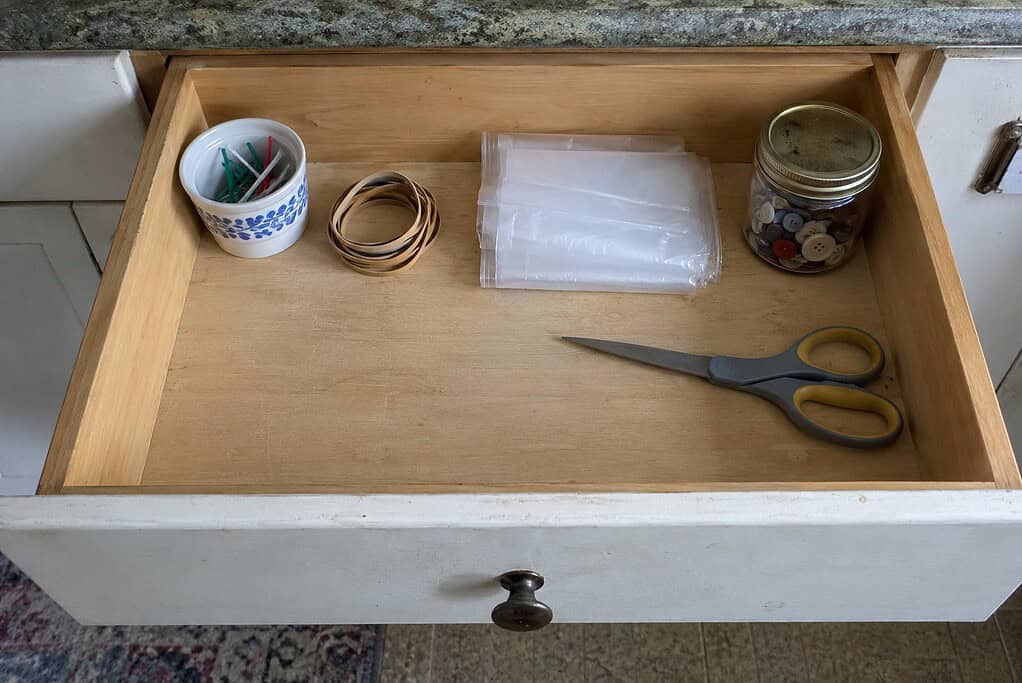
After all that, I didn’t throw out every saved thing. I kept a little of almost everything.
A cup of twist ties, a handful of rubber bands and six jars. Ten plastic bags, three gift boxes and a few gift bags. Mom’s soup tub and a jar of buttons.
It all fits in one kitchen drawer and one small shelf.
That’s the difference. I still save a little, the way my mother taught me. I don’t save it all.
How to Let Go Without Feeling Wasteful
This was the hard part for me. Throwing things away felt like going against everything my mother taught me.
So I tried to find a good place for each thing.
Boxes, jars and paper went to recycling. Plastic bags went to the store bin, and keys went to the metal bin.
Batteries went to a drop-off. (For other things, I keep a list in my post on where to donate household items.)
The things that couldn’t be used again went in the trash, and I let that be okay. Keeping something in a drawer for twenty years doesn’t save it. It only stores it.
If you’re sorting a whole junk drawer of saved things, my post on how to declutter a junk drawer might help. Thinking about your kids someday? My post on how to declutter so your kids don’t have to is a gentle place to start.
What Mom Would Say
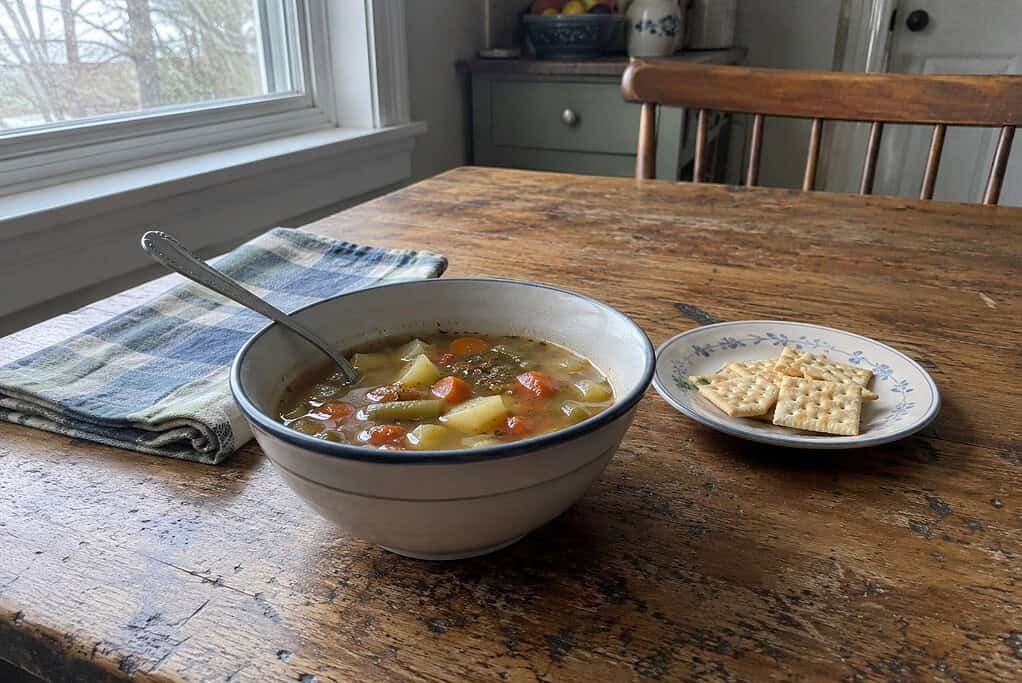
I’ve thought a lot about what my mother would say if she saw my kitchen drawer now.
I think she’d laugh at the cup of twist ties. Then she’d pick up her soup tub and smile.
She saved things because she had to, and because she wanted to take care of us. I keep a little because I love her. But I don’t need a jar of twenty years of twist ties to remember her.
I remember her every time I open that tub and fill it with soup.
A Little Help for One Drawer

You don’t have to clear out every saved thing this week. Pick one drawer, keep a small handful of each thing, and let the rest go.
My free Declutter for Self Care Checklist breaks your home into small, gentle jobs. Start with the drawer you open every day, and enjoy how easy it closes.
Frequently Asked Questions
Should I keep boxes from electronics?
Keep the box until the store’s return window ends. After that, most warranties need proof of purchase, like a receipt, more than the original box. You can flatten the box and recycle it.
How long should I keep store receipts?
Keep receipts for big purchases with a warranty, and keep any receipts you need for taxes. Everyday receipts can usually go once you’ve checked them against your bank statement.
Can I recycle plastic grocery bags?
Plastic bags usually can’t go in your curbside recycling bin. Many grocery stores have a drop-off bin for plastic bags, so check with your store.
Can I throw old batteries in the trash?
Regular alkaline batteries can go in the trash in most places, though recycling is better where you can.
Rechargeable batteries, like lithium-ion phone batteries, should never go in the trash. Tape the ends and take them to a drop-off spot. Check your local rules.
Why do older people save so many things?
Many of us were raised by parents who lived through the Great Depression, when saving was how families got by. The habit was passed down. It came from being careful, not from being messy.
Follow me elsewhere!

