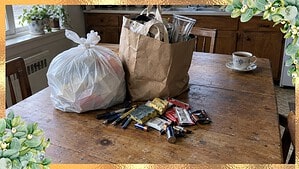
Three bags. That’s what my mother and I filled one Saturday when she was 78.
Not one thing in those bags made either of us cry. There were no photos, no letters, and no good china. Just dried-up pens, old sponges, and a drawer full of ketchup packets.
When we carried the last bag to the car, my mother stood in her kitchen and looked around. “I can breathe in here,” she said.
She had been putting off decluttering for years, because she thought it had to start with the hard things. It doesn’t.
So here are 15 easy things you can let go of this weekend. None of them are sentimental. Most of them take ten minutes or less, and you can do almost all of them sitting down.
Why Start With the Easy Things
When you’re over 70, energy matters. Some days you have a lot of it, and some days you don’t.
If you start with Mom’s dishes or a box of old letters, you can use up all your energy in one afternoon. Then you feel worn out and stuck, and nothing else gets done.
The easy things work the other way. Each bag you fill gives you a little lift. By Sunday night, you have a lighter house and the good feeling of having started.
My mother used to say, “I’ll get to the big stuff when I feel up to it.” The easy weekend is what helped her feel up to it.
The women I know who have done this well all say the same thing. Start small, and get it out of the house the same day. (I shared more of their tips from women over 70.)
Before You Start
You only need three things: a trash bag, a grocery bag for donations, and a comfortable chair.
Pick one spot at a time. Bring the drawer or the basket to the kitchen table, sit down, and sort it there. Don’t stand at a cupboard bending over.
Give yourself ten or fifteen minutes for each item on this list. When the timer goes off, you can stop or keep going. Both are fine.
In the Kitchen
1. Dried-Up Pens and Markers
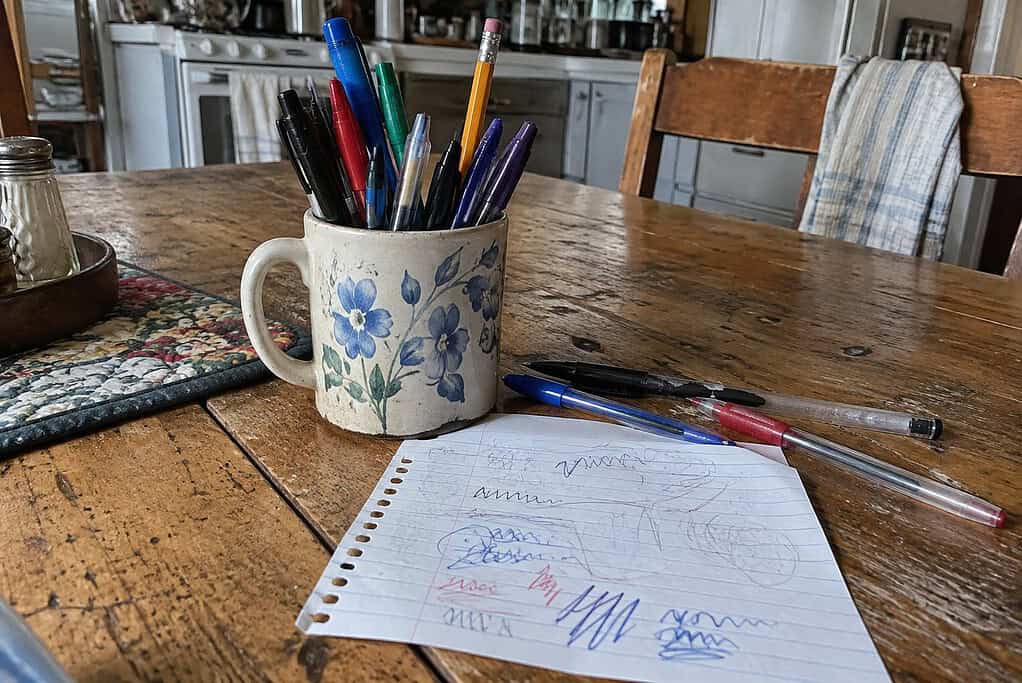
Every house has a cup of pens by the phone. Half of them don’t write.
Grab a scrap of paper and test each pen with a quick scribble. If it skips or doesn’t write at all, it goes in the trash.
Keep three or four good ones by the phone. That’s all you’ll ever need at once.
2. Old Spices
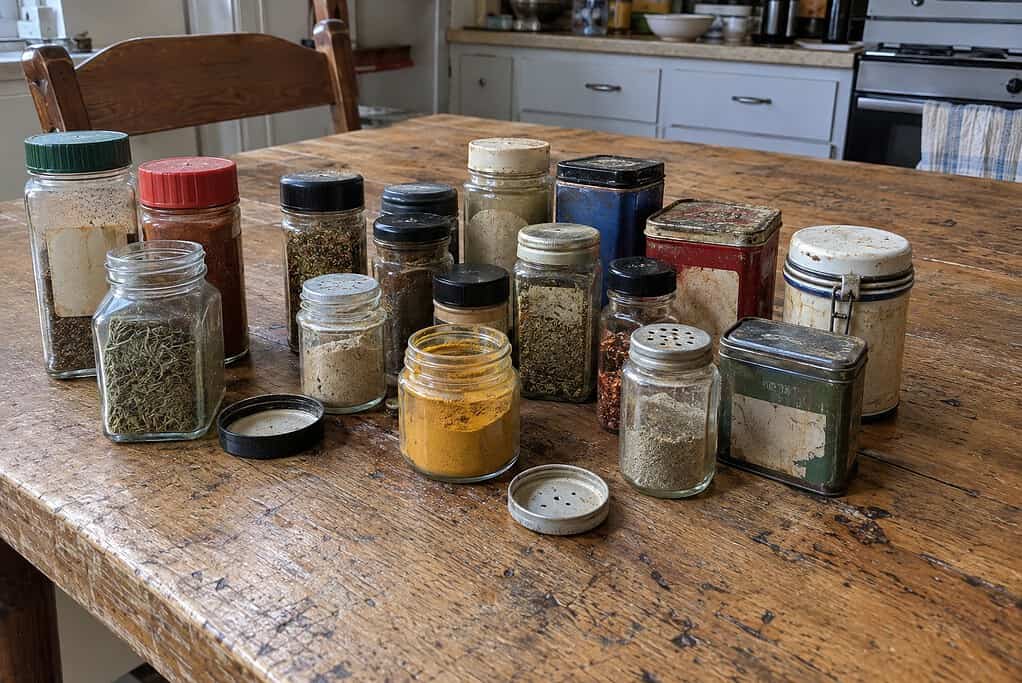
Open your spice cabinet and look at the dates on the jars. Some of mine were older than my grandson, and he’s old enough to drive.
McCormick says most ground spices last about two to four years, and whole spices about three to four. Old spices usually aren’t harmful, but they lose their flavor and smell.
Here’s a simple test. Open the jar and sniff. If you can barely smell anything, it’s time to let it go.
3. Condiment Packets and Plastic Forks
My mother had a whole drawer of ketchup, soy sauce, and mustard packets. She also had plastic forks from every takeout meal for ten years.
Keep a small handful if you like them for lunches. Throw away any packets that look puffy, dried out, or very old.
The plastic forks can go too. You have real forks in the next drawer.
4. Cans That Are Too Old or Damaged
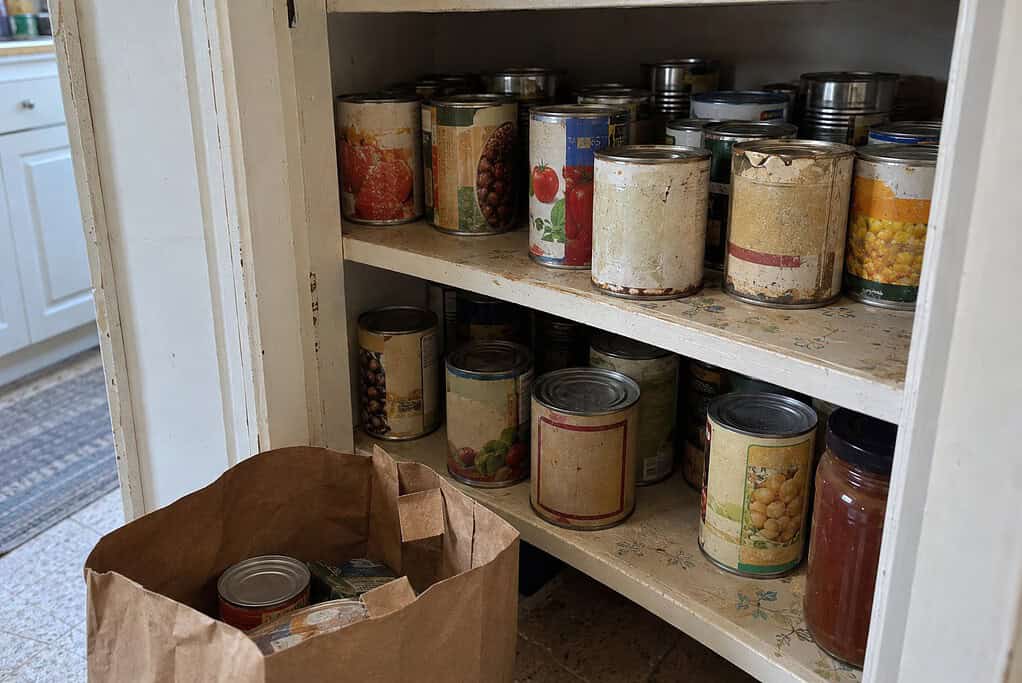
Look at the back of your pantry. There are often cans that got pushed behind the others years ago.
Food safety experts say canned foods with a lot of acid, like tomatoes and fruit, keep their best quality for about 12 to 18 months. Low-acid cans, like vegetables and soup, keep for about two to five years.
Throw away any can that is bulging, leaking, rusty, or badly dented, no matter the date. Cans that are still good but that you won’t eat can go to a food pantry.
5. Worn-Out Sponges and Dish Brushes
Sponges and dish brushes wear out faster than we think. If yours is stained, smells sour, or is falling apart, toss it.
Keep one sponge and one brush for each sink. When they wear out, replace them.
In the Bathroom and Bedroom
6. Old Makeup and Nail Polish
Makeup doesn’t last forever, and eye makeup can grow germs once it’s been opened for a while.
If a lipstick smells odd, a cream has changed color, or a nail polish has gone thick and gummy, let it go. If you can’t remember when you bought something, that’s a good sign it’s time.
Keep only what you actually wear. For most of us, that fits in one small bag.
7. Worn-Out Slippers
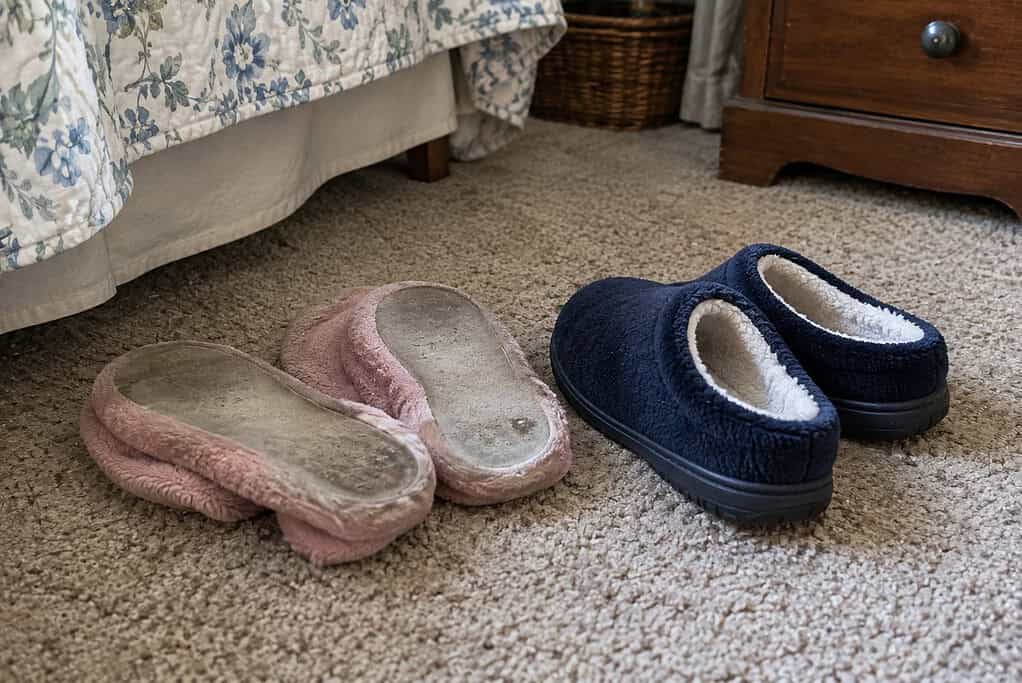
This one is about more than space. Slippers with smooth, slick bottoms or stretched-out backs can make you slip or trip.
Look at the bottoms of your slippers. If the grip is worn flat or the back folds down under your heel, they go in the trash.
Keep one good pair with a firm back and grippy soles. Your feet and your balance will thank you. (I wrote about other things I cleared for safety in 11 things I removed from my home.)
8. Lone Socks and Stretched-Out Knee-Highs
Everyone has a few socks with no partner. Mine waited in a basket for years for their match to come back.
Give them one last look. If the match hasn’t turned up by now, it isn’t coming.
The same goes for knee-highs with stretched-out tops or runs. Some towns have clothing recycling bins that take worn socks. Otherwise, they can go in the trash or become dust rags.
9. Free Tote Bags
Tote bags come from everywhere. The bank, the library, the church raffle, the hospital fair.
Keep the two or three you really use. The rest can go to a food pantry or a thrift store. Many food pantries are glad to have sturdy bags for families to carry groceries home.
10. Tired Gift Bags and Crushed Bows
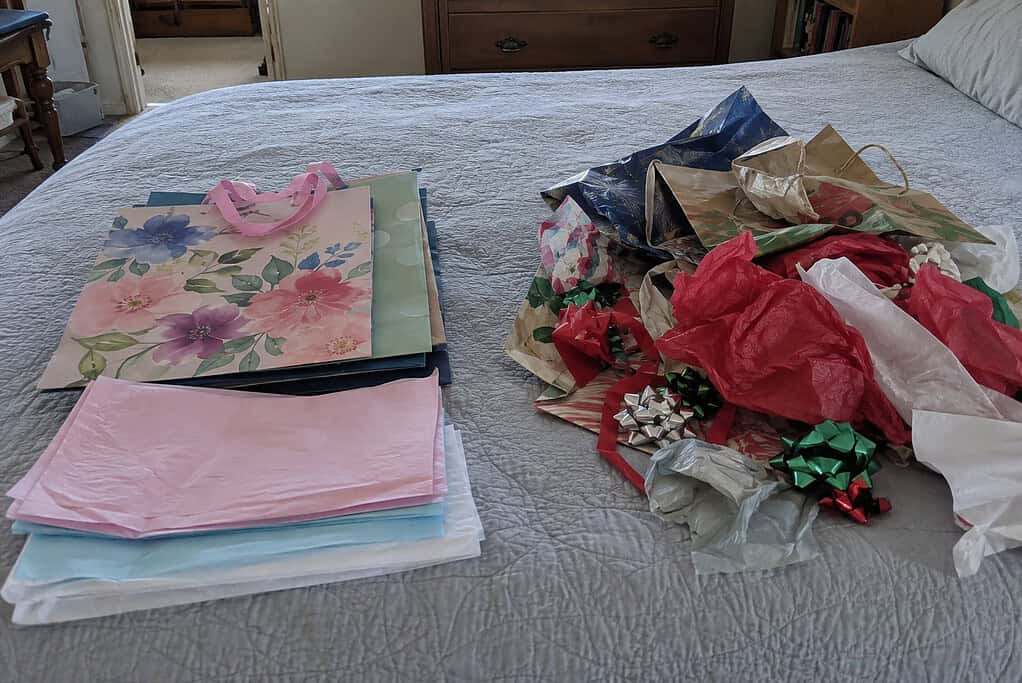
I used to save every gift bag that came into the house. Some of them had been used four or five times and looked it.
Go through your gift-wrap stash. Keep the bags that are still crisp and clean, and enough tissue paper to use them.
Let go of anything torn, wrinkled, or faded. Crushed bows go too. (I promise no one has ever been disappointed by a gift because the bow was new.)
Around the House
11. Florist Vases
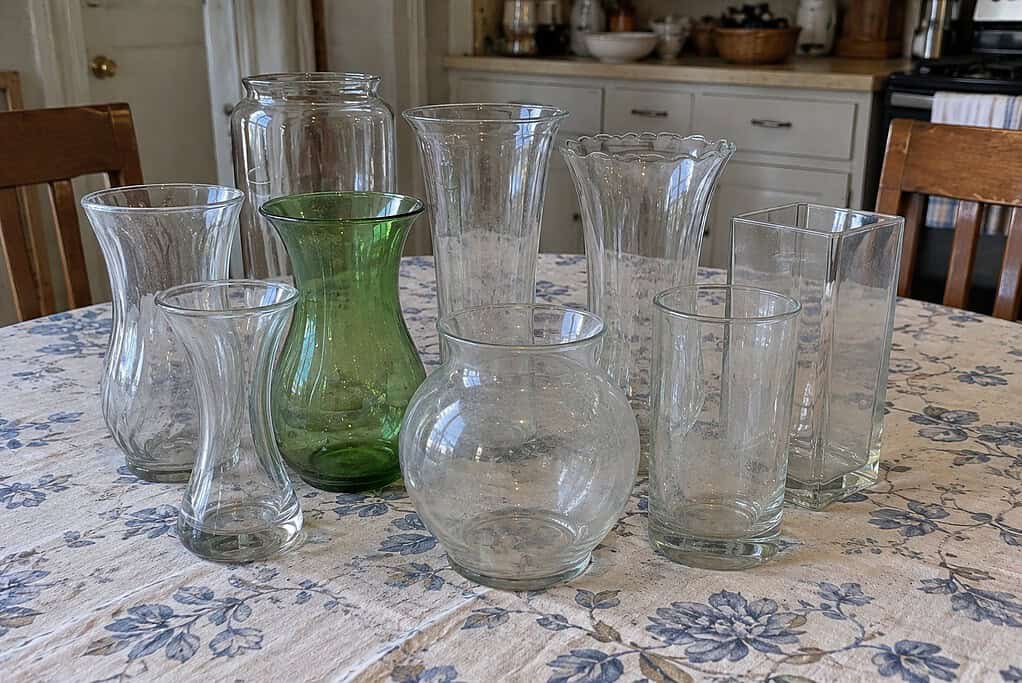
Every bouquet comes in a vase, and the vases stay long after the flowers are gone. I once counted eleven in my mother’s basement.
Keep one or two of your favorites. Some local florists will take clean vases back to reuse, so call and ask first. Thrift stores are often glad to have them too.
12. Takeout Menus and Old Phone Books
If you still have a drawer of paper menus, most of those places have new prices by now. Some of them may not even be open anymore.
Old phone books can go too. Most numbers are easy to find online now, and a grandchild can help you look one up.
Both can go right into the recycling bin.
13. Old Batteries
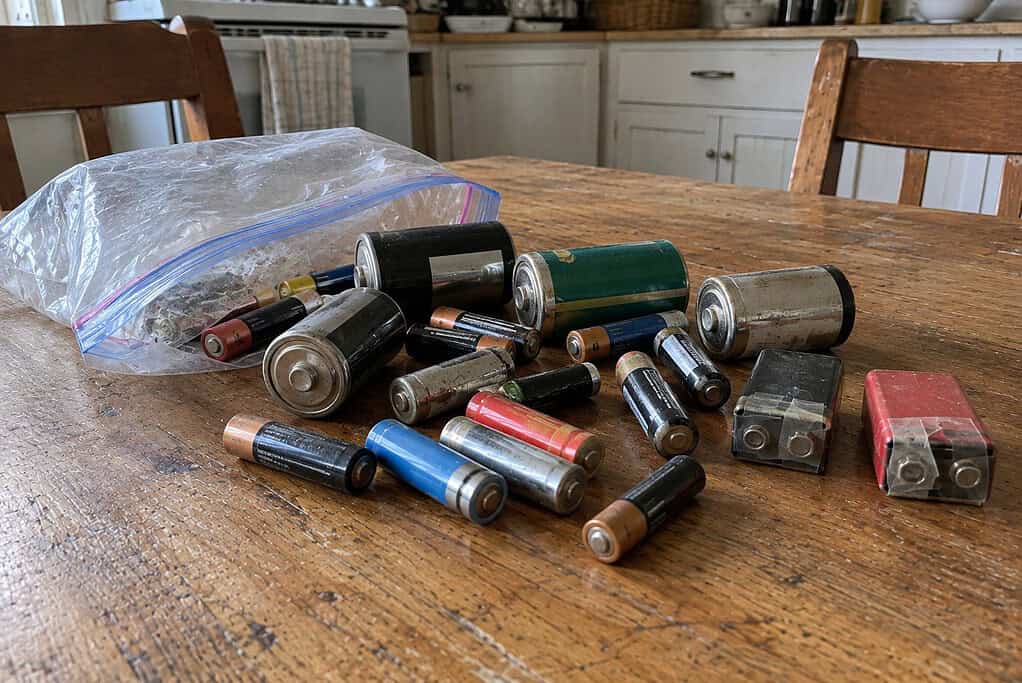
Most of us have a bag of loose batteries in a drawer, and we’re never sure which ones still work.
Regular AA, AAA, C, and D batteries can usually go in the trash, except in California, where all batteries have to be recycled. Rechargeable batteries should always be recycled. Many hardware stores have a drop-off bin for them.
Before you throw away a 9-volt battery or any battery marked “lithium,” put a small piece of tape over the ends. That keeps them from causing a spark.
14. Broken Umbrellas
An umbrella with a bent spoke or a broken handle never works right when you need it. And it always seems to be the one you grab on the way out the door.
Keep one or two umbrellas that open and close easily. Let the rest go in the trash.
15. Keychains and Little Trinkets
These are the small things that collect in junk drawers and on windowsills. Keychains from trips, little magnets, the tiny figures from a cereal box.
Hold each one for a second. If it makes you smile, keep it somewhere you’ll see it. If you don’t remember where it came from, it can go.
This is the only item on the list that might tug at your heart a little. That’s why I saved it for last.
A Simple Weekend Plan
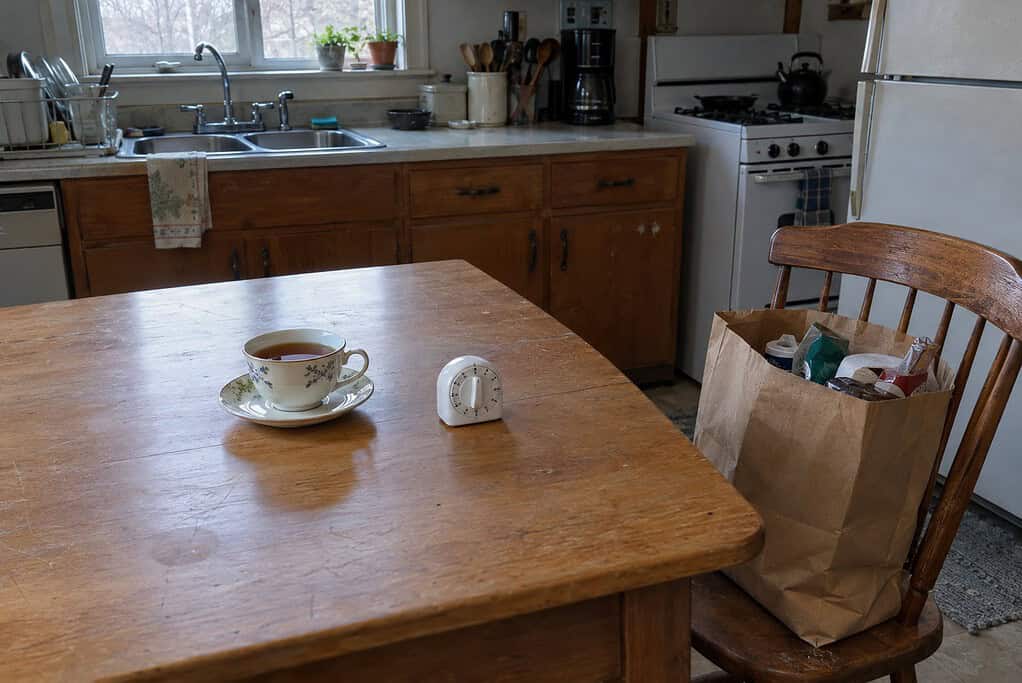
You don’t have to do all 15 at once. Here’s an easy way to spread them out.
On Saturday morning, do the kitchen, numbers 1 through 5. Sit at the table and sort one drawer or shelf at a time.
On Saturday afternoon, rest. Have a cup of tea and enjoy your cleaner kitchen.
On Sunday, do the bathroom, bedroom, and the rest of the house, numbers 6 through 15. Do as many as you feel like.
If you only finish five, that’s still five things lighter. The rest will be waiting for next weekend.
Getting It Out of the House
The most important step is the last one. Take the bags out the same day, before they can sit in the corner for a month.
Put the trash in the trash bin and the recycling in the recycling bin. Put the donation bag in your car so it goes with you the next time you run an errand.
If carrying bags is hard for you, I wrote about getting clutter out when you can’t carry it. And my item-by-item donation guide lists who takes what.
What Comes After the Easy Things
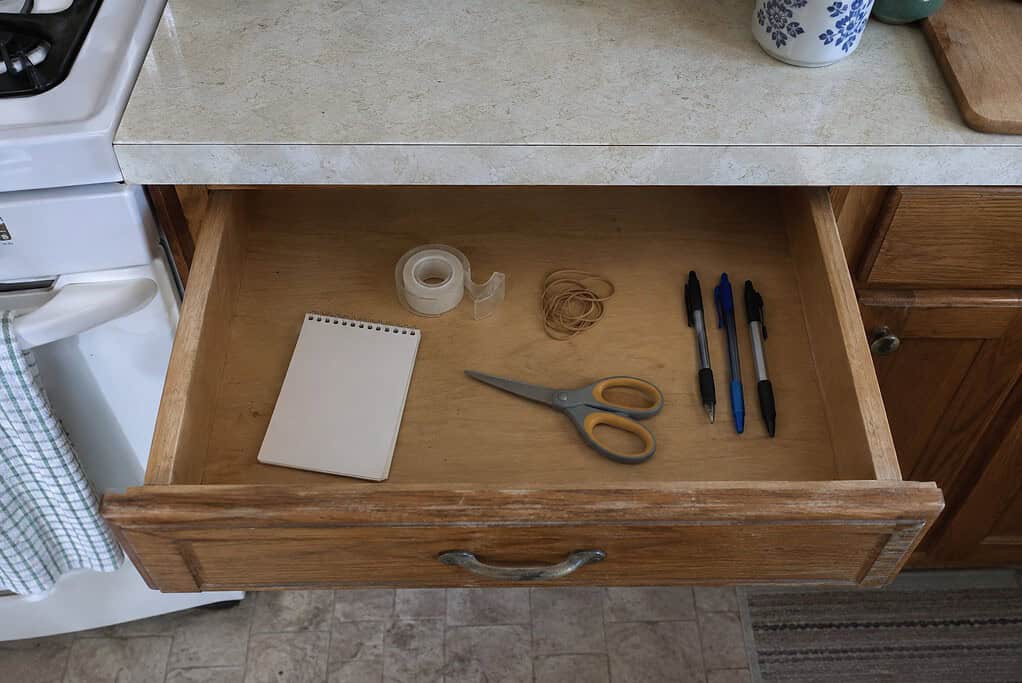
Once you’ve cleared the easy things, the bigger jobs start to feel possible. That’s what happened with my mother.
A few weeks after our three-bag Saturday, she called me.
“I think I’m ready to look at the linen closet,” she said. Then the hall closet. Then, much later, the boxes in the basement.
When you’re ready for more, my guide to decluttering for women over 70 goes room by room, gently. And the checklist I wish my mother had at 75 covers the papers and the things you want to pass on.
But there’s no rush. You can stop at the easy things for as long as you like.
Lighter by Sunday
My mother’s kitchen didn’t look very different after that Saturday. But it felt different.
The drawers closed. She could find a pen that worked. And she said that, for the first time in years, she didn’t sigh when she opened the cupboard under the sink.
I’m in my 60s now, and I do my own easy weekend twice a year. It still surprises me how good it feels. (My list looks a little different, and I wrote about the little daily annoyances I cleared in my 60s.)
So pick one thing from this list today. Just one. Fill one small bag, and see how your kitchen feels tomorrow morning.
A Little Help for the Next Step

You don’t have to tackle your whole house at once. Small, easy wins are how real change begins.
My free Declutter for Self Care Checklist breaks your home into small, gentle jobs, one space at a time. It’s a kind way to keep going after your easy weekend.
Frequently Asked Questions
What should I declutter first after 70?
Start with small, easy things that have no memories attached, like dried-up pens, old spices, worn-out sponges, and lone socks. They’re quick to sort and easy to let go of. Each small win gives you energy for the next one.
How long do spices really last?
McCormick says most ground spices keep their best flavor for about two to four years, and whole spices for about three to four. Old spices usually aren’t harmful, but they lose their taste and smell. If you can barely smell a spice, it’s time to replace it.
How do I throw away old batteries safely?
In most states, regular AA, AAA, C, and D batteries can go in the trash, but in California all batteries must be recycled. Rechargeable batteries should always be recycled. Put tape over the ends of 9-volt and lithium batteries before you get rid of them.
When should I throw away canned food?
Throw away any can that is bulging, leaking, rusty, or badly dented. Foods with a lot of acid, like tomatoes, keep their best quality for about 12 to 18 months, and low-acid foods, like vegetables, for about two to five years. Good cans you won’t eat can go to a food pantry.
How can I declutter when I don’t have much energy?
Work in short sessions of 10 to 15 minutes, and sit down at a table to sort. Start with easy, non-sentimental things, and take bags out of the house the same day. Stop while you still feel good.
Follow me elsewhere!

