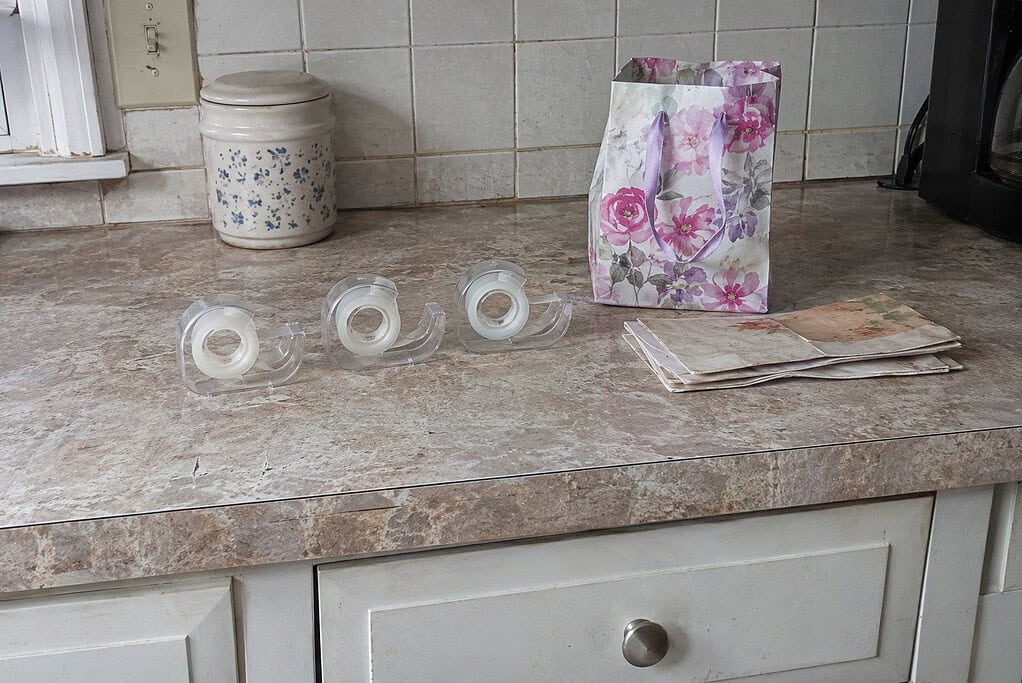
The roll of tape cost me about four dollars. I already owned two just like it.
I just couldn’t find them. I had a birthday gift to wrap and a party to get to. I hunted for twenty minutes, gave up and drove to the store.
I wrapped that gift in the car, in the parking lot. (My husband held the paper.)
A week later, I found the other two rolls. One was in the junk drawer, under a stack of old menus. The other was in a gift bag on a closet shelf.
I set all three on the kitchen counter and laughed. Then I stopped laughing, because I started to wonder what else all this keeping was costing me.
I had always thought keeping things was free. It’s already paid for, isn’t it? It just sits there.
But keeping things does cost us. The cost of clutter doesn’t come in the mail as a bill, so it’s easy to miss. It comes out of your money, your time, your safety and your peace, a little at a time.
So I sat down and added it up.
What You Paid Is Already Gone
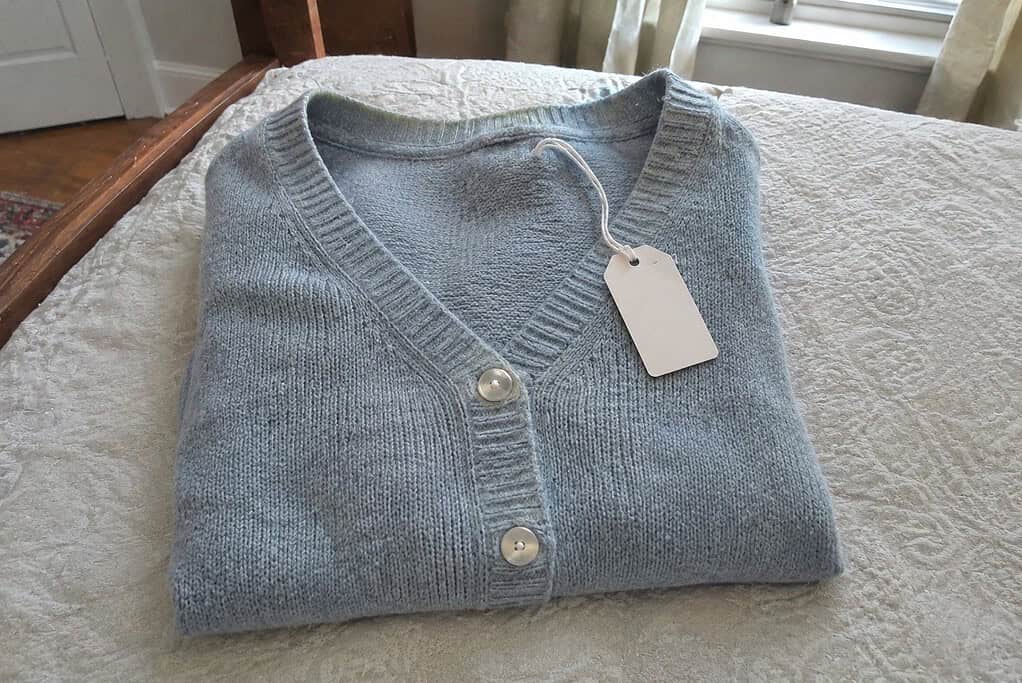
Let me clear up one thing first, because it kept me stuck for years. I would hold up a sweater and think, “I paid good money for this.” Then I’d put it back.
But that money left my purse a long time ago. Keeping the sweater won’t bring it back. Giving it away won’t make me lose it a second time.
So when I talk about what keeping costs, I don’t mean what you paid. I mean what it costs you from today on. That’s the only part you can still do something about.
If the old price still bothers you, I wrote about what to do with things you spent money on. (That one took me a long time to learn.)
Buying What You Already Own
The tape wasn’t the only time. I once bought new scissors, then found five more pairs around the house. I found three jars of cinnamon in one spice cabinet.
None of these was a big purchase, and that’s why I never noticed. A few dollars here and a few dollars there don’t feel like much. But I was paying for the same things twice because I couldn’t see what I had.
The fix was simple. Now each kind of thing lives in one place. All the tape is in one drawer, and all the batteries are in one jar.
Before I buy more, I look in that one place. It has saved me more than I ever guessed. You can read about it in the things I stopped buying after decluttering.
Paying to Keep It Somewhere Else
We’ve never rented a storage unit. Our basement did that job, and I thought that made it free. (More on that soon.)
A storage unit is one cost you can put a number on.
A small one is five feet by ten feet. It rents for about $74 a month on average, according to StorageCafe, a storage rental website. That’s close to $900 a year.
In ten years, that’s nearly $9,000, even if the rent never goes up. So try this one question. If those boxes were for sale today for $900, would you buy them?
If the answer is yes, then keep paying and be glad. Some things are worth it. But if you can’t remember what’s in there, go open that door and take a look.
For more ways to stop paying for what you don’t use, see my post on decluttering on a fixed income.
The Room You Already Pay For
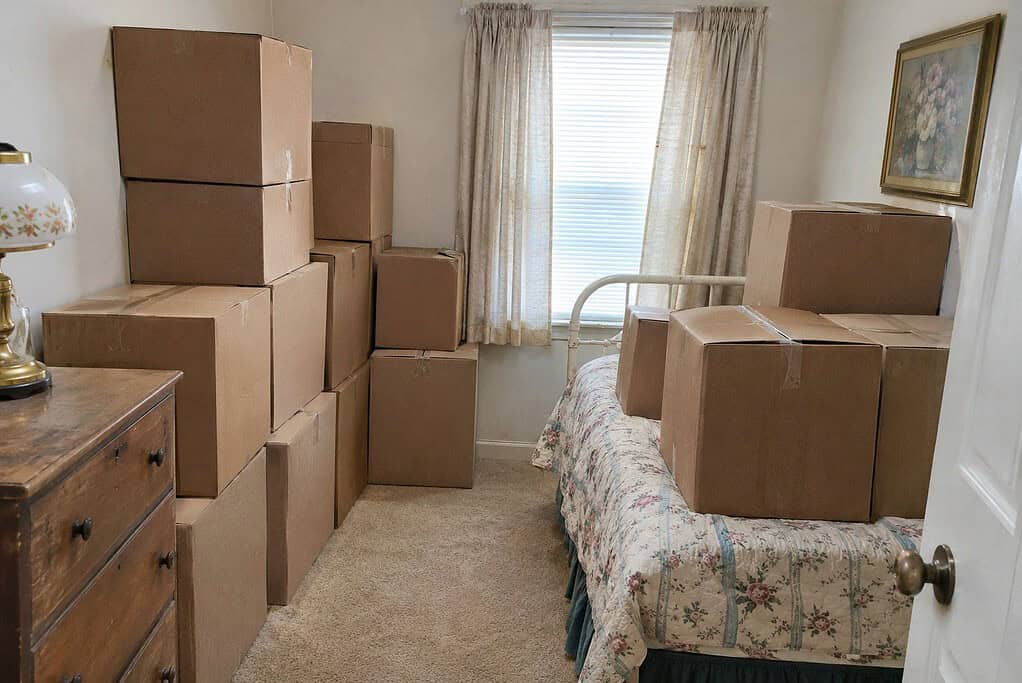
For years, our spare bedroom held boxes. It was our youngest’s room once, and after that it slowly filled up. We heated it all winter, and nobody ever sat down in it.
I won’t tell you that clearing it lowered our bills. It didn’t, not by a penny. The heat and the taxes cost the same either way.
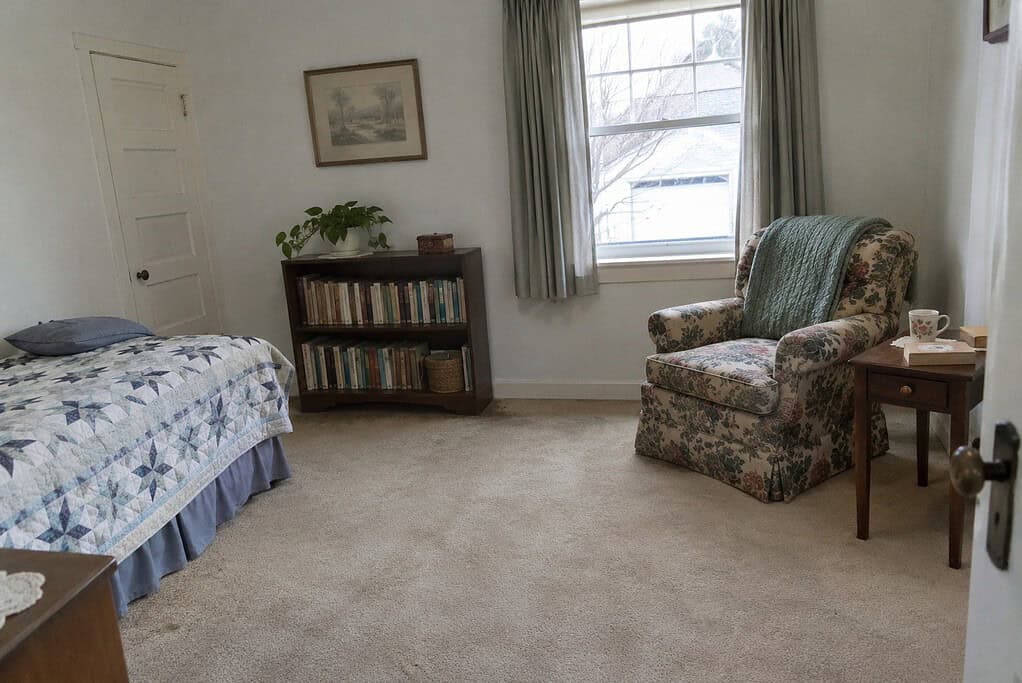
What changed is that I finally got the use of it. That room now has a chair and my books. I was paying for that room the whole time, and all it did was hold boxes.
So walk through your house and look for a room or a corner like that. You’re already paying for it. You might as well get to sit in it.
The Repairs You Don’t See Coming
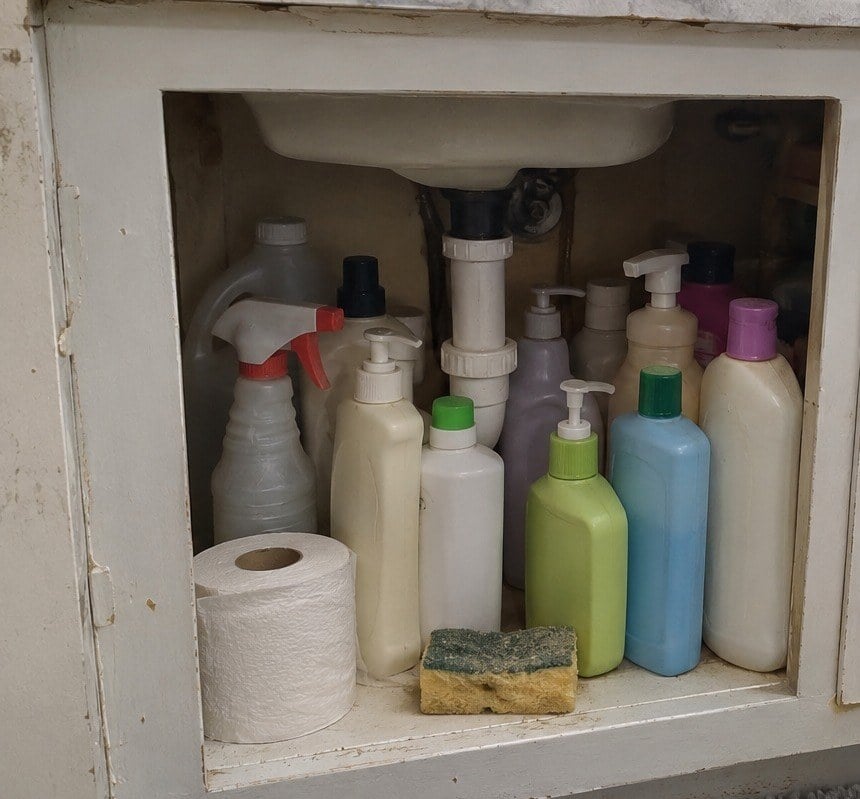
I used to keep so many bottles under my bathroom sink that I couldn’t see the back of the cabinet. One day, I pulled them all out to find the cleanser. The cabinet floor was stained and soft.
A slow drip had been leaking on it for who knows how long. My husband fixed the drip, but that cabinet floor has never looked right since. Clutter hides things, and a small leak is one of them.
Our basement had a worse surprise.
When I cleared it, I found empty boxes and old rags right beside the water heater. I cleared them out that same day. Fire safety groups say to keep anything that can burn at least three feet from heating equipment, like a furnace.
So keep a clear path to your furnace, your water heater and your breaker box. Anyone who comes to fix them needs to reach them. (And if you’re paying by the hour, you don’t want to pay someone to move your boxes.)
The Hours You Never Get Back
Think about how long you spend looking for things. Your glasses, your keys, that one good pan. Now say it’s ten minutes a day.
Ten minutes a day is about 60 hours a year. That’s a lot of phone calls with the grandkids. That’s a lot of good books in my chair by the window.
Clutter takes time in other ways, too. My Saturday dusting used to take an hour and forty minutes, because I had to lift so many things. Now it takes about thirty-five minutes, and I told that whole story in how less stuff means faster cleaning.
I think about hours differently now that I’m in my 60s. Money can sometimes be saved up again. An hour can’t.
What It Can Cost You on the Stairs
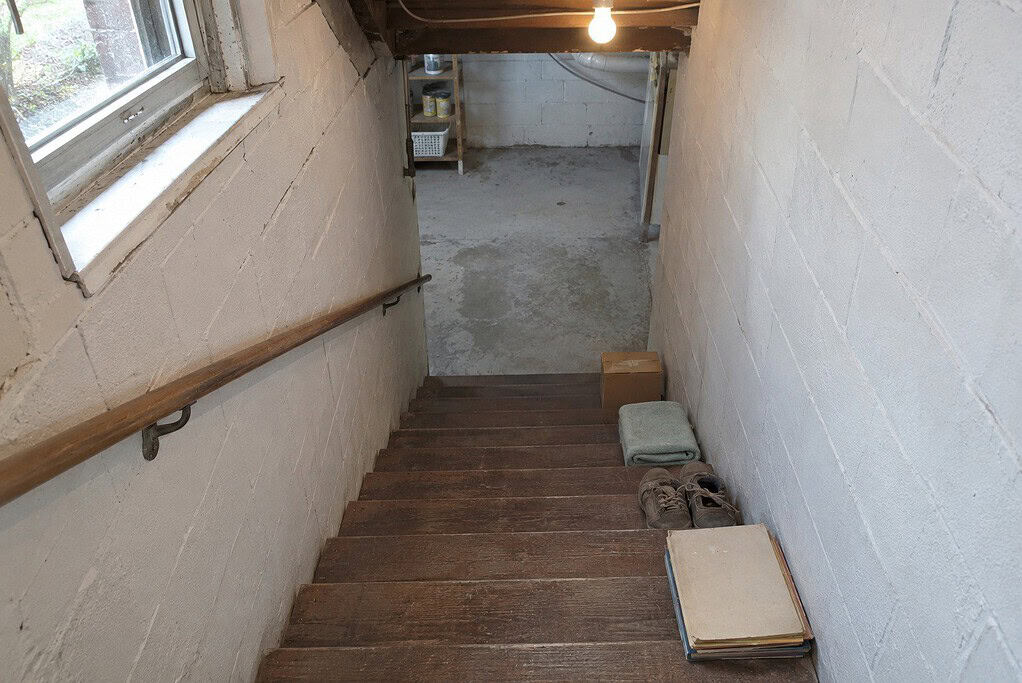
This is the cost that matters most to me. The CDC says about 1 in 4 adults age 65 and older report a fall each year. Falls are the leading cause of injury at that age.
Not every fall comes from clutter, of course. But clutter is one cause we can do something about.
The CDC’s home safety checklist asks if you have papers, shoes, books or other things on your stairs. It asks about your floors, too.
We have fourteen steps down to our basement. One winter morning, I started down with a full laundry basket and couldn’t see my feet. That scared me more than any bill ever has.
I already have one new knee, and I’m not risking the other one for a pile of old things. If you want to start here, my post on decluttering for safety shows you where to look first.
What It Costs the People You Love
Whatever we keep, somebody will have to sort someday. I learned that at my mother’s house.
My first day there, I worked nine hours. I had toast for supper because I was too tired to decide on anything else.
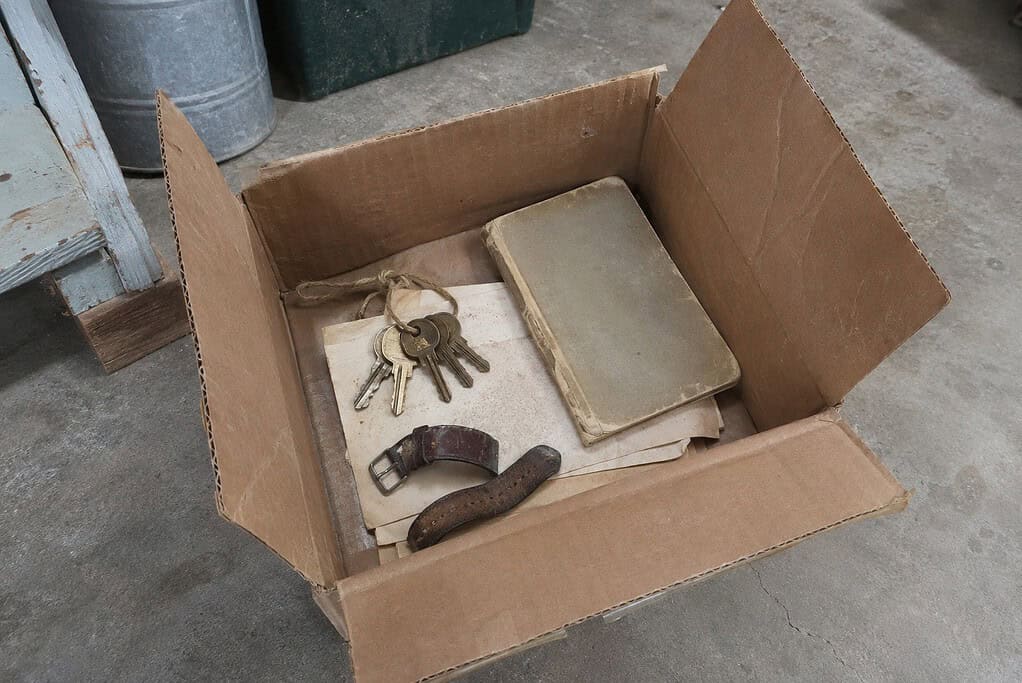
One box in her basement just said “Misc.” Inside were old keys, a 1979 church directory and a broken watch band. It took me most of an hour, and two old savings bonds were at the very bottom.
That kind of work can cost real money, too. One hauling company puts the job of clearing a three-bedroom house at about $1,000 to $2,500. And that doesn’t count the days off work, the long drives or the tears.
I don’t blame my mother one bit. She saved what her parents taught her to save.
But I want my kids to remember my kitchen table, not my basement. I wrote more about that in how to declutter so your kids don’t have to.
Add Up One Closet
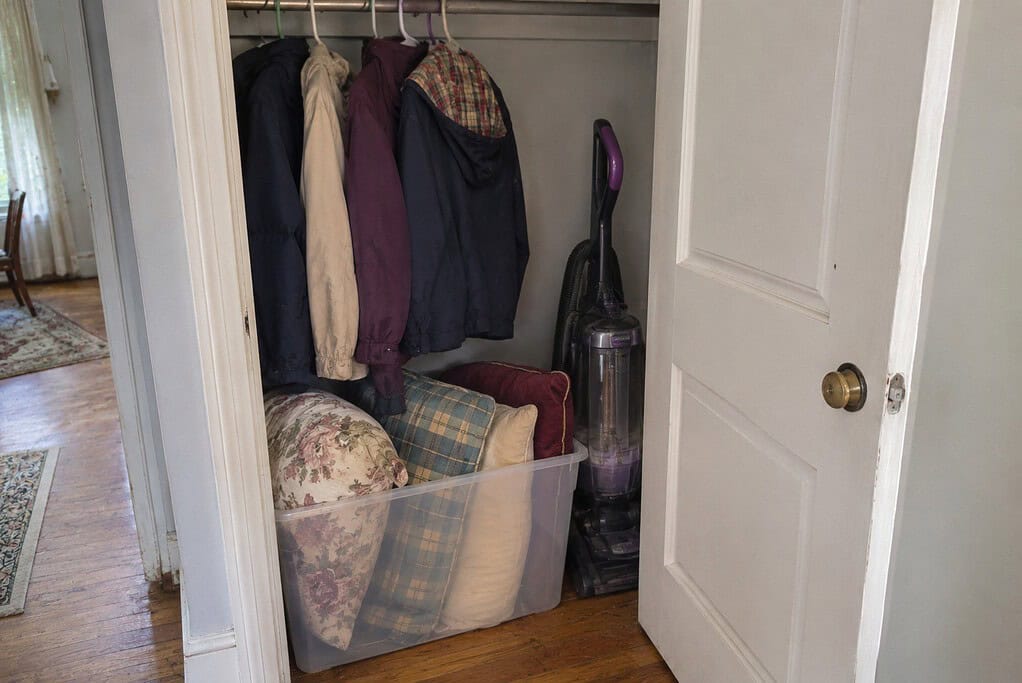
All of this can feel like too much to think about. So don’t add up your whole house. Pick one closet, open the door and ask four questions.
First, what did I buy twice because I couldn’t find it? Second, how much time does this closet take from me?
Third, what’s in here that I can’t reach or can’t see? And fourth, how do I feel when I open this door?
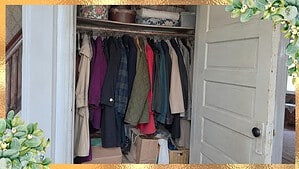
I tried this on my front closet.
A bin of six throw pillows sat in front of the vacuum. I had to move that bin every single Saturday. There was no room for a guest’s coat, and I had bought the same light bulbs twice.
It didn’t add up to a fortune. (I was almost let down.) It added up to a closet I didn’t like opening. I had been paying that price every week for years.
One pillow went on the couch. The other five went to charity with their tags still on. Now the vacuum comes out with one hand.
What’s Worth Keeping at Any Price
I want to be clear about something. I’m not telling you to keep nothing. Everything you keep has a cost, and some things are worth that cost every day of the week.
I still have my mother’s soup pot, and I use it all winter. I still have the letters my husband wrote me when his work took him away. They take up room, and I’m so glad they do.
The question was never “How little can I live with?” It’s “Is this worth what it’s costing me?”
Only you can answer that. My post on what not to declutter might help you decide.
What You Get Back
I still think about those three rolls of tape. Now there’s one roll in one drawer, and I know right where it is.
Last week, I wrapped a gift at the kitchen table. It took five minutes.
Nobody had to hold the paper in a parking lot. I even had time left over to sit down with my coffee.
That’s what clearing out has given me. I got back my mornings and my Saturdays. I got back a room with a chair in it, and stairs I can see.
You’ve spent years taking care of your things. Let them go, a few at a time, and use that time to take care of you.

You don’t have to add up your whole house. Start with one closet, and see how good it feels to get something back.
My free Declutter for Self Care Checklist breaks your home into small, gentle jobs. Pick one today, and let it be enough.
Frequently Asked Questions
What is the real cost of clutter?
It’s more than money. Clutter can cost you when you buy things you already own or pay for storage. It also takes your time, makes your home less safe and leaves work for your family someday.
Is it cheaper to keep things than to buy them again later?
Sometimes it is, so keep what you use every year and what would be hard to replace. For the rest, think about how often you’ve really needed it. Many things you might need someday can be borrowed or bought again for very little.
Is a storage unit worth the money?
It can be, if what’s inside is dear to you or you only need it for a short time. Add up what you pay in a year, then ask if you’d buy those things today for that price. If not, it may be time to clear it out.
How do I let go of something I paid a lot for?
Remember that the money is already gone, whether the thing stays or goes. Keeping it won’t bring that money back. See if it’s worth selling, or give it to someone who will use it.
Can clutter really make a fall more likely?
Yes, things on your floors and stairs are easy to trip on. The CDC’s home safety checklist tells you to look for them. Clutter isn’t the only reason people fall, but you can fix it, so start with your stairs and the paths you walk every day.
Follow me elsewhere!

