Have you ever given something away and then wished, just once, that you hadn’t? It doesn’t happen to me often. But there’s one thing I came very close to giving away, and I still think about it.
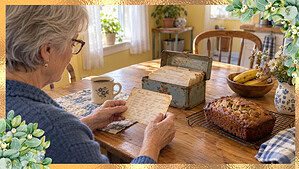
Last Sunday I made my mother’s banana bread.
I pulled her recipe card out of the old tin box, and there it was. Her slanted handwriting, a butter stain in one corner, and a note at the bottom that says “Bake till it smells right.” (She never did trust a timer.)
About three years ago, I almost put that whole recipe box in the donate pile.
It was the month we emptied her house after she passed. I was tired, and there were so many cupboards left to go. My sister came over that Saturday to help, and she picked the box up out of the pile.
She opened the lid and said, “You can’t give this away. This is Mom.”
She was right. I just couldn’t see it that day.
I’ve thought about that box a lot since then. Over the last few years I’ve let go of so much, starting with the month I spent emptying my mother’s house. It made my home lighter and my days easier.
But that box taught me something too. Decluttering isn’t about getting rid of everything. It’s about knowing what to keep.
So I made a list of what not to declutter. These are the things I’m so glad I held on to, and a few of them might surprise you.
Decluttering Was Never Supposed to Mean Keeping Nothing
When some women hear the word “decluttering,” they picture bare shelves and empty rooms. They worry someone is about to tell them to toss their mother’s dishes and every photo they own.
I know that worry. I’ve felt it too.
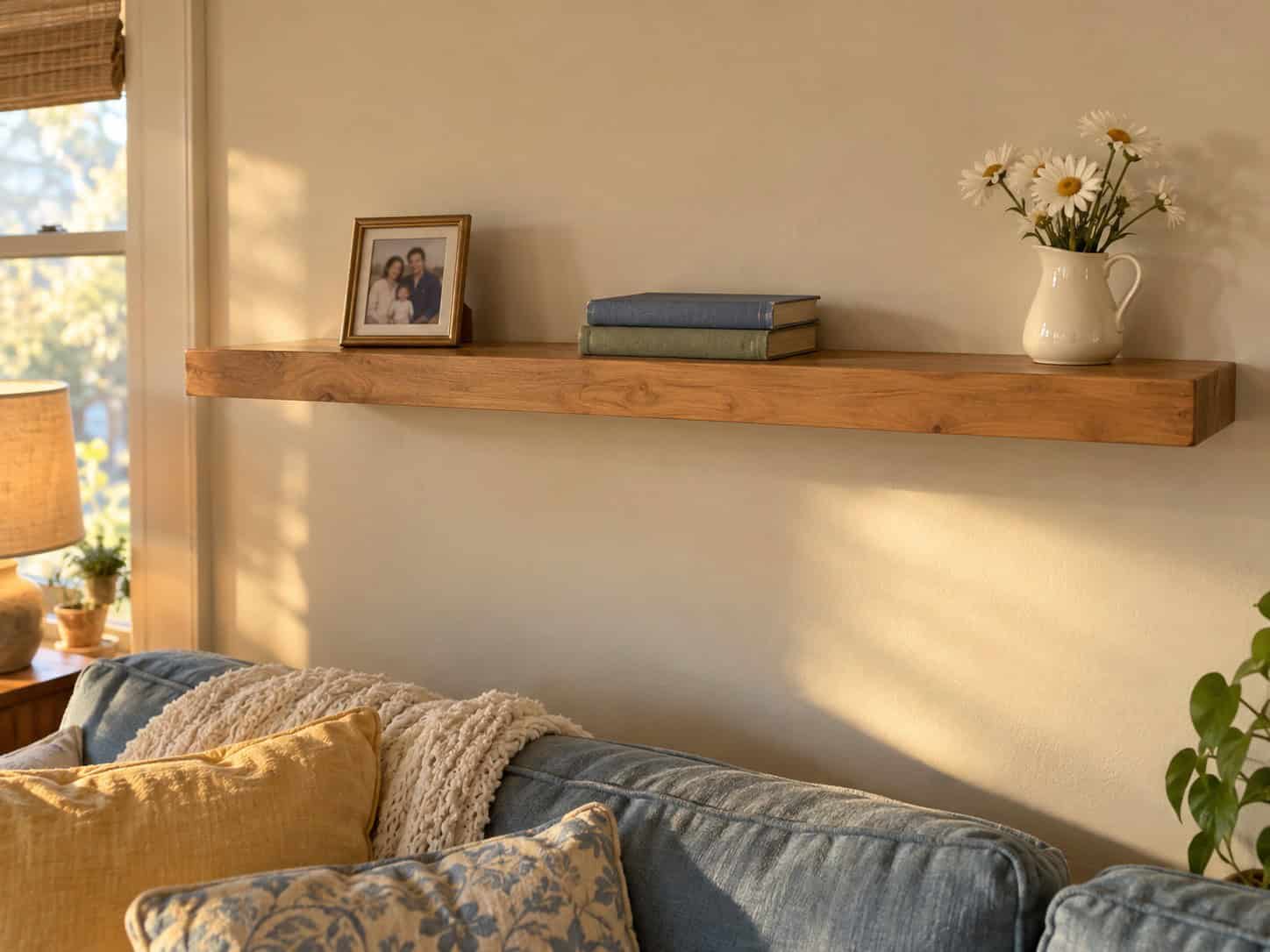
But an empty house was never my goal. I cleared out my closets so the things I love would have room to be seen and used.
Think about a crowded shelf. When it holds 30 things, you stop seeing any of them. When it holds three, you notice each one every time you walk by.
The more I let go, the more I cared about what stayed.
For a long time, my biggest problem was fear. I was scared I’d give something away and be sorry later. (I wrote about the fear of regretting what I gave away a while back.)
What helped most was having one easy question to ask. Before anything leaves my house now, I ask myself three things.
Do I use it? Do I love it? Would someone I love miss it?
If the answer to all three is no, it can go.
If the answer to even one of them is yes, it stays. No guilt either way.
That one question is behind every item on this list.
What Stays in My House, No Matter What
These are the five kinds of things I plan to keep for as long as I live in this house. They don’t take up much room. But they mean more to me than whole closets of things I’ve let go.
Anything Written in a Loved One’s Handwriting
Handwriting is the one thing you can never buy again.
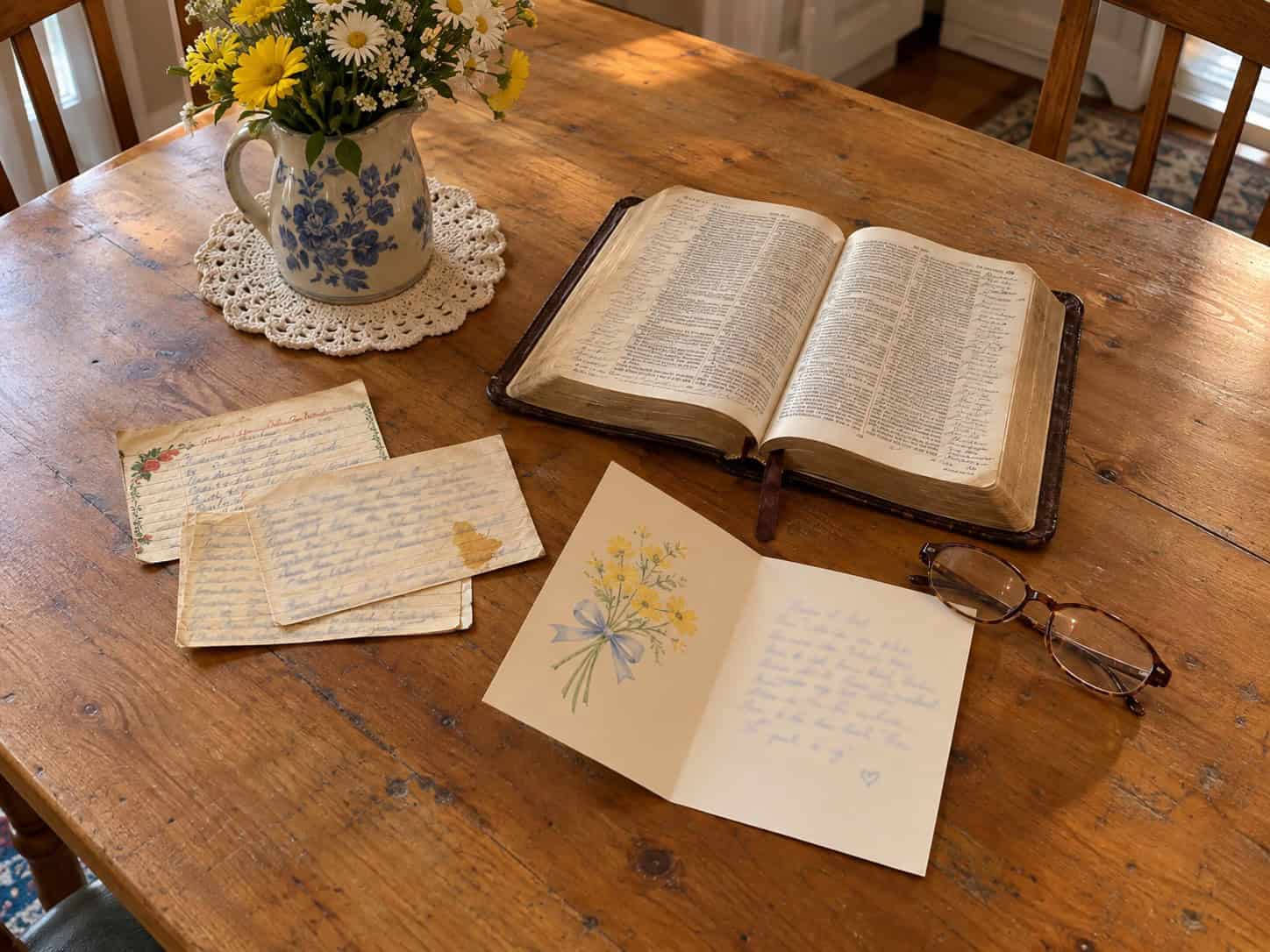
You can find another set of dishes just like your mother’s. You can buy a new copy of a book she loved. But you can’t get one more note in her handwriting.
So I keep them, starting with my mother’s recipe cards.
I keep a birthday card my father signed with just “Love, Dad.” I also keep the little notes my mother wrote in the margins of her Bible. It sits in my nightstand now.
And I keep the letters my husband and I wrote to each other back when his work took him away for weeks. Every anniversary, we read a few of the letters we wrote before email over coffee. (We always end up laughing at something.)
I don’t keep every card or every note, though. I keep the ones that sound like the person.
A grocery list in my mother’s writing made the cut. A stack of store-bought cards with only a name signed inside did not.
If you’re not sure about one, read it slowly. If it sounds just like them, keep it.
One Small Piece From Each Person I’ve Lost
When someone we love passes, we often end up with a whole house full of their things. Their dishes, their coats, their good towels. It can feel wrong to let any of it go.
But I’ve learned that one small piece can remind me of them just as much as a whole room of their things.
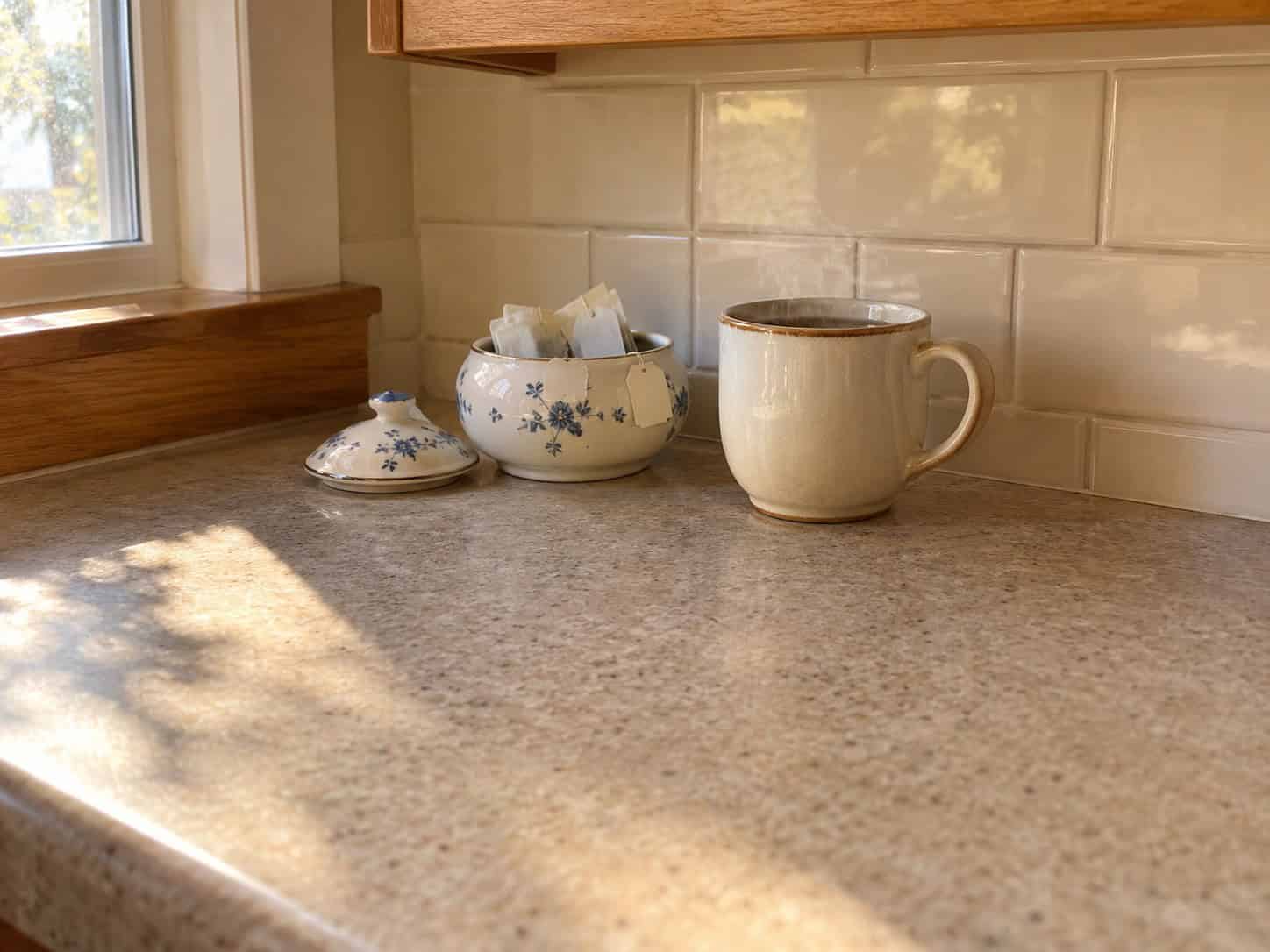
From my Aunt Ruth, I kept one sugar bowl with little blue flowers. Her plates went to people who needed them. That sugar bowl sits on my counter and holds my tea bags, and I think of her every single morning.
From my mother, I kept her Bible and four place settings of her good china. From my father, I kept his watch.
And from our sweet dog, who passed this spring, I kept his collar. It sits in a little dish on my dresser. (Some days it makes me smile, and some days it makes me cry a little.)
The key is to choose something you will see. A box in the attic is easy to forget. A bowl on the counter is part of your day.
I wrote more about this in a post that asks whether keeping their things really keeps the people we lost.
For me, the answer was simple. I don’t need everything they owned. I need one thing that brings them to mind every time I see it.
The Jar Opener, the Grabber and the Good Lamp
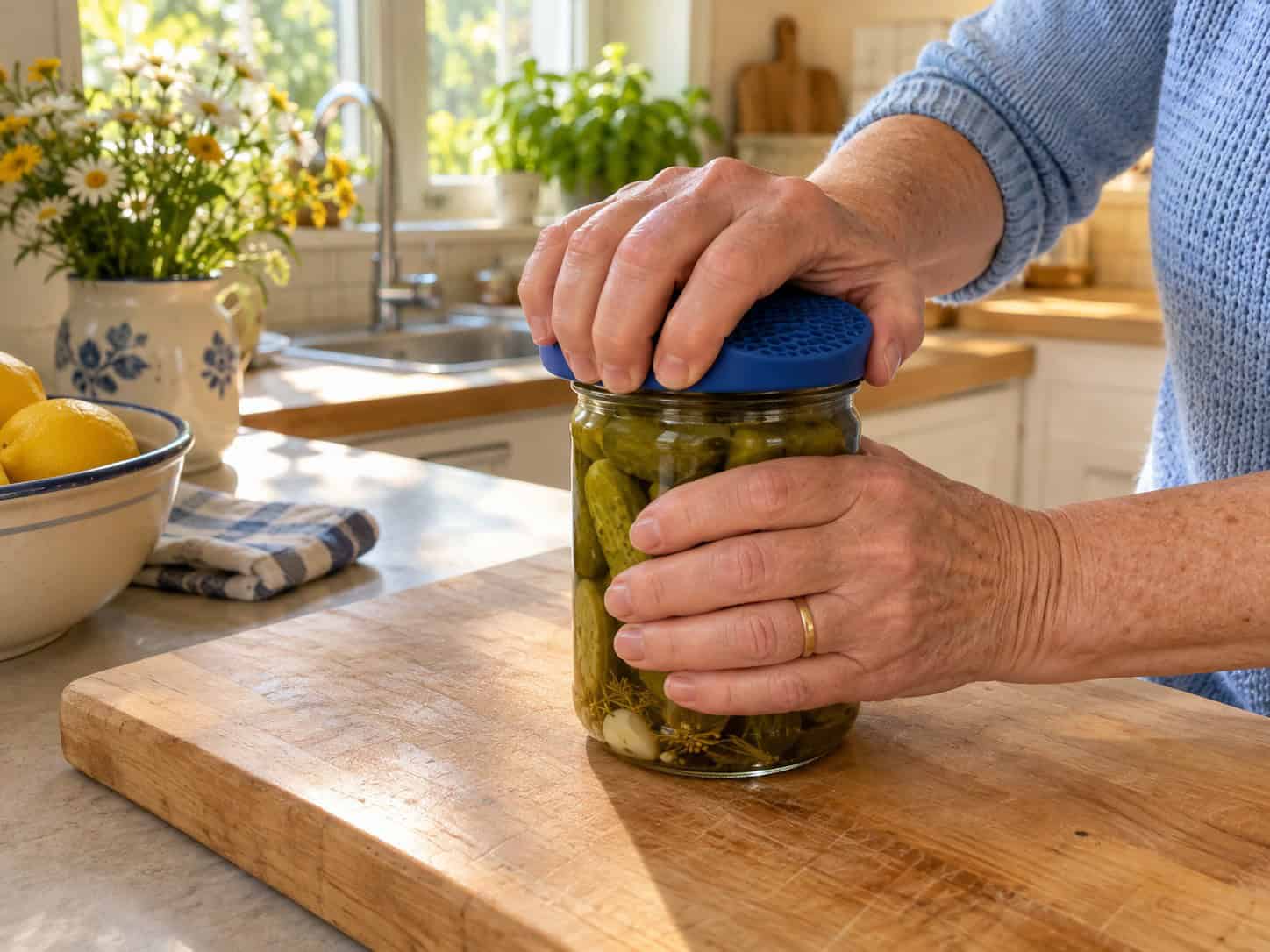
This one might surprise you. Not everything worth keeping is pretty or sentimental.
Some of the things I’m most glad I kept are plain, everyday helpers. My hands are sore most mornings, and my back gets tired fast. (My knees have their limits too, ever since my knee replacement.)
So I keep a rubber jar opener in the kitchen drawer. I keep a long-handled grabber by the bed and another one in the laundry room.
I also keep a sturdy step stool with a handrail. That way, nobody in this house ever has to stand on a chair to reach a high shelf.
And I keep the good lamp. It sits next to my chair by the bedroom window. It’s bright enough that I can read without squinting, even with my reading glasses on (when I can find them).
When I cleared out my kitchen gadgets, I almost let the jar opener go. It looked like one more thing in a crowded drawer. Then I tried to open a jar of pickles without it.
It went right back in the drawer.
These helpers may not look special. But they let me do things for myself, and I want to keep doing things for myself for as long as I can.
If you have aches and pains of your own, you might like my post on decluttering with a bad back and sore hands.
Before you let a helper go, ask one thing. Does it make my day easier? If it does, it stays.
The Papers My Family Will Need
I’m not a papers person. I open the mail standing over the recycling bin, and most of it never makes it past the kitchen.
But when my mother passed, my brother and I spent days hunting for a handful of important papers. Some were in her desk. Some turned up in places we never would have thought to look.
That taught me which papers to keep, and where to keep them.
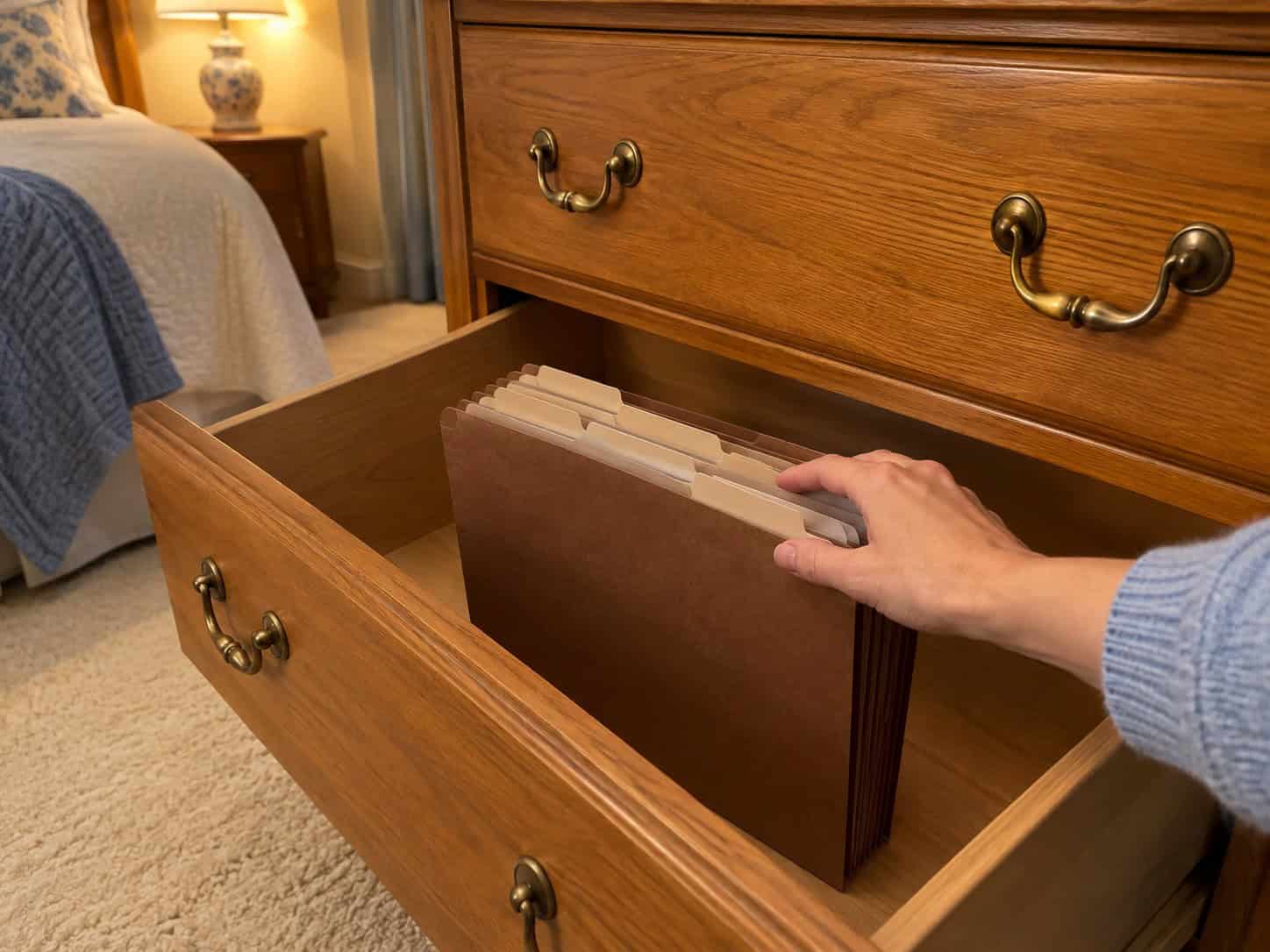
Now my husband and I keep one folder with the papers our family would need. If they ever have to step in and help us, it’s all in one spot.
It holds our will, our insurance papers, and the papers for the house and the car. It also holds our birth and marriage certificates, plus a list of our doctors and the medicines we each take.
The folder lives in one place, and our kids know where it is. That part matters just as much as the folder.
I let go of a lot of other papers along the way. Old bills, store receipts, and booklets for things we don’t own anymore all went out. (I felt lighter with every bag.)
If you’re not sure how long to keep old tax or bank papers, ask the person who does your taxes. You can also call your bank and ask what you need to hold on to.
A few good papers in one known place make things so much easier for the people you love.
The Things That Bring People to My Table
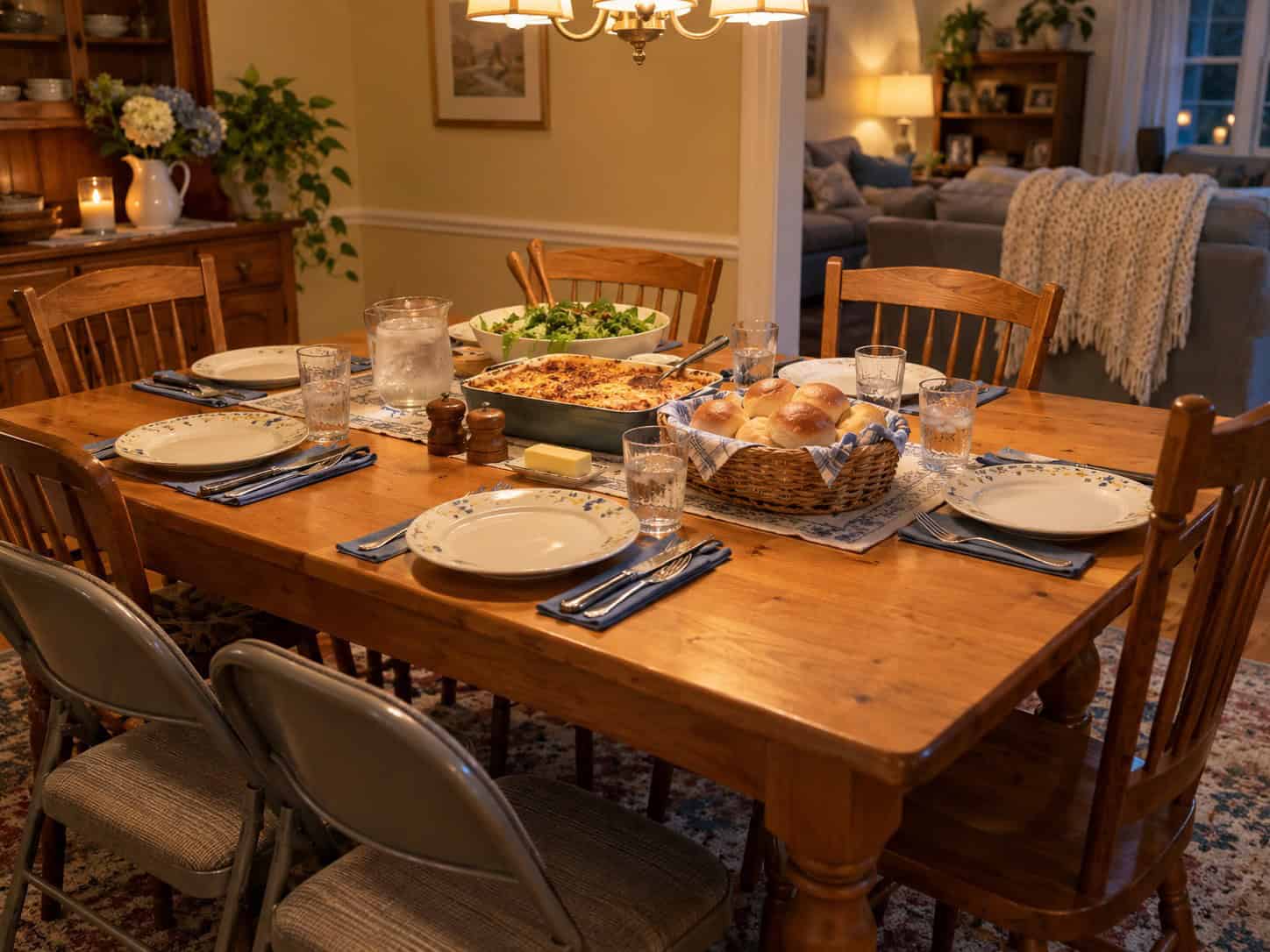
Some things earn their spot because of who they bring together.
I still use my mother’s good china every Sunday morning. When the whole family comes for dinner, we pull the folding chairs out of the hall closet. Then we squeeze everyone around the table.
(It’s a tight fit, and nobody minds.)
For the grandkids, I keep a few board games, a box of crayons, and a tin of cookie cutters. Every December we make sugar cookies together, and somebody always ends up with flour on their nose.
I also keep a soft blanket on the back of the couch. It’s the one the grandkids always want during movie night.
None of these things sit in a box. They get used, they get a little worn, and they bring us together.
That’s the best kind of thing to keep. If it gets used with the people you love, it has earned its spot. I wrote more about why you should use the good stuff every day, and I still believe every word.
Giving the Things I Keep a Real Home
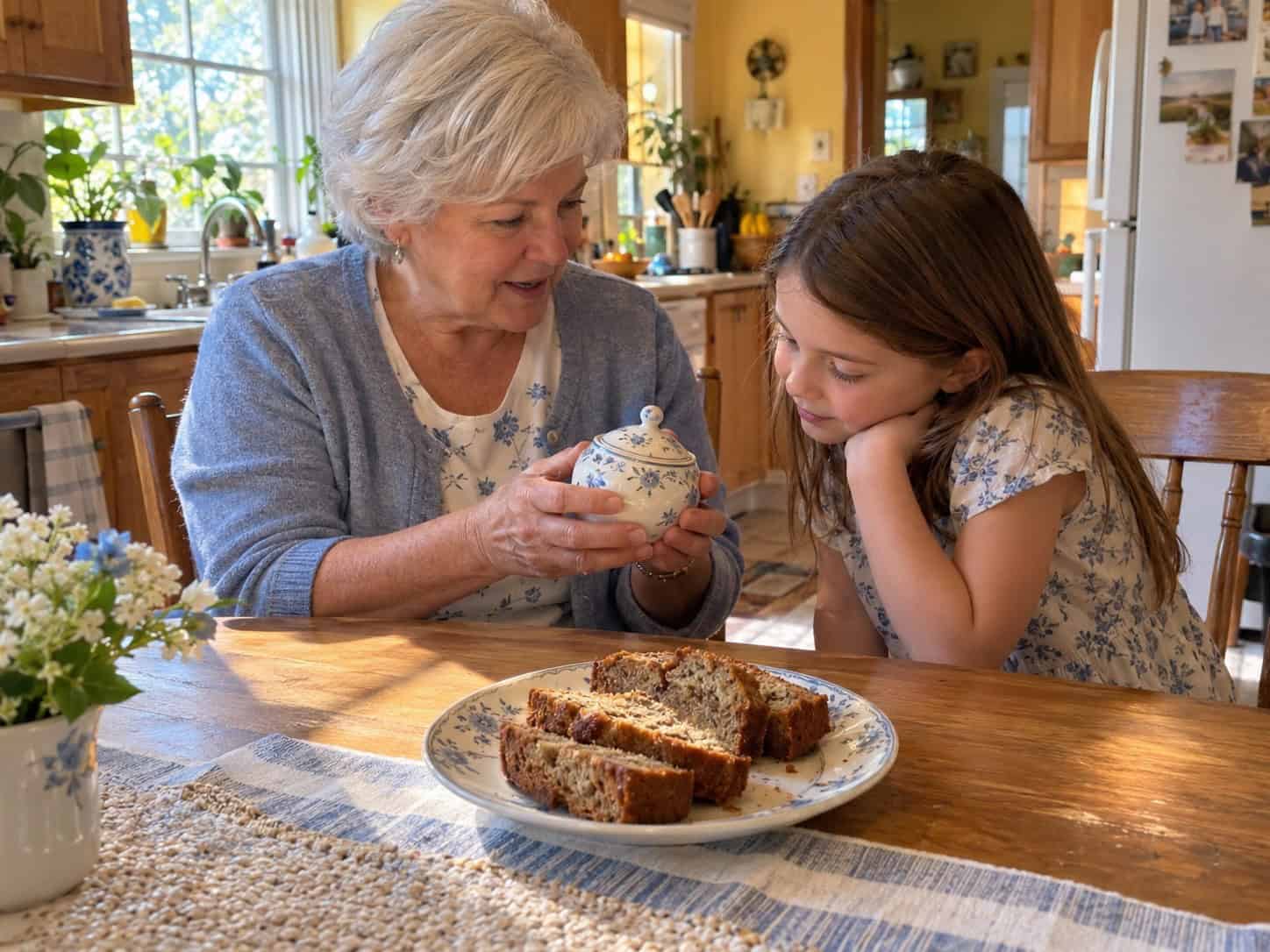
Keeping the right things is only half of it. The other half is giving them a place, so they don’t end up back in a pile.
This is what works for me.
First, every keeper gets a home I can name. My mother’s recipe box lives on the kitchen shelf by the stove.
The papers folder lives in the bottom drawer of the dresser in our bedroom. Each of my children has one small box with their name on it, on the shelf in my closet.
Second, I use my keepers or set them out where I can see them. A sugar bowl hidden in a cupboard is easy to forget. A sugar bowl on the counter gets used every day.
Third, I write down where things came from. I put a small piece of tape under the sugar bowl that says “Aunt Ruth.” I wrote my mother’s name inside the lid of the recipe box.
It only takes a minute, and it means my kids won’t have to guess someday.
I did the same thing with our old pictures when I started labeling the backs of my photos. (My granddaughter helped me with that one.)
Last, and this is my favorite part, I tell the stories.
When my granddaughter asks about the sugar bowl, I tell her about Aunt Ruth. When we make banana bread, I tell the grandkids how their great-grandmother never trusted a timer.
Someday my things may go to new homes. But the stories will stay with my family.
The Things I Kept on Purpose
Last week I stood in my kitchen with a cup of coffee and looked around.
The counter was clear except for the sugar bowl. The recipe box sat on its shelf. The jar opener was in the drawer, right where I need it.
There wasn’t much there. But every single thing was there on purpose.
That’s how I want my whole house to feel. Not empty. Chosen.
If you’re in the middle of letting go right now, I hope you’ll give yourself permission to keep the good things too.
The handwriting. The one small piece. The helpers.
The papers. The things that bring your family to the table.
Let the rest go, and enjoy what stays.
Ready to Decide What Stays?

If you’re ready to sort out what stays and what goes, my free Declutter for Self Care Checklist can help you get started. It walks you through your home at a pace your body can handle.
Keep what matters most, and give yourself the room to enjoy it.
Frequently Asked Questions
What should you never throw away when decluttering?
Hold on to anything in a loved one’s handwriting, like recipe cards, letters, and notes, because you can never get more of it. Keep one small piece from each person you’ve lost, plus your important papers and the everyday helpers that make your day easier. The dishes and games your family uses together are worth keeping too.
How do I decide what to keep when decluttering?
Ask yourself three things. Do I use it, do I love it, and would someone I love miss it? If the answer to all three is no, you can let it go, and if even one answer is yes, keep it and give it a real home.
Is it okay to keep sentimental items?
Yes. Decluttering isn’t about keeping nothing, it’s about keeping what truly matters to you. Instead of keeping everything a loved one owned, choose one or two small pieces you can see or use every day.
What should seniors keep when decluttering?
Keep the things that help you stay independent, like a jar opener, a long-handled grabber, a sturdy step stool with a handrail, and a good reading lamp. Keep your important papers together in one folder. Keep the things you use with family, and a few keepsakes you truly love.
What important papers should I keep in one place?
Many families keep a will, insurance papers, house and car papers, birth and marriage certificates, and a list of doctors and medicines together in one folder. Keep it in one known spot, and make sure someone you trust knows where it is. If you’re not sure how long to keep tax or bank papers, ask the person who does your taxes or call your bank.
Follow me elsewhere!


I tried to get the free “Declutter for Self Care” by clicking on the box above the FAQs. I got to that page, but there was no place to put my email address. I would like that free page(s). Thank you.
Hi Margaret, thank you for letting me know, and I’m sorry it gave you trouble. The sign-up is on this page: https://alisonsnotebook.com/declutter-for-self-care-free-checklist/ Scroll down a little and you’ll see a box for your email.
If it still doesn’t show up, try opening the page on a computer or in a different browser. And if that doesn’t work, let me know here and we’ll help.