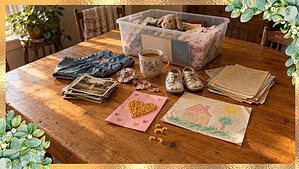
A woman told me something not long ago that I haven’t stopped thinking about.
Her children are in their forties now, and she still has every school paper they ever brought home, packed away in her closet. Then she added, a little sadly, that her kids don’t care about any of it.
I smiled when she said it. Then I stopped smiling, because I knew exactly where my own boxes were.
Up in our attic closet, there are three plastic bins, one for each of my children. (I could find them in the dark.)
They hold baby shoes, report cards, crayon drawings, and a Mother’s Day card made of macaroni. That card has been losing noodles for a very long time.
I never meant to keep so much. But every paper felt like a little piece of them, and how do you throw away a piece of your child?
That’s why these boxes are so hard. They don’t feel like clutter to us, because they’re full of love we can hold in our hands.
Still, I didn’t want my kids to open those bins someday and feel the way her children do. So this fall, I finally sat down and figured out what to do with childhood keepsakes, gently, one child at a time.
One Question I Asked About Every Keepsake
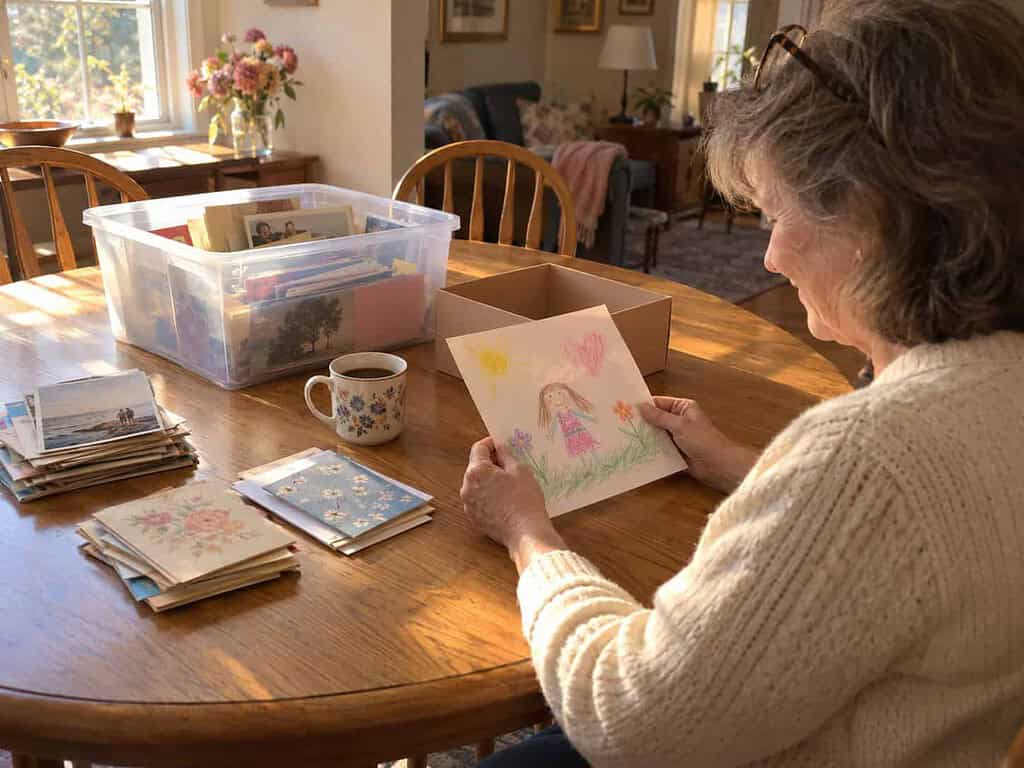
Before I opened a single bin, I made myself one simple rule. Each child would get one box.
Not three bins. One box, about the size of a shoebox or a small file box, and whatever fit inside was what I’d keep.
That rule scared me a little at first. But it made every choice easier, because the box decided how much was enough, not my guilt.
Then I picked one child to start with. I carried their bin down to the kitchen table on a quiet afternoon, poured a cup of coffee, and took things out one at a time.
For every item, I asked myself one question: would this make them smile, or would it only make me smile?
Both answers are okay. But the question helped me see which things were for them and which things were really for me.
Then everything went into one of three piles. Keep it in the box, give it back to them, or take a picture of it and let it go.
I also set a time limit: one child per afternoon, and no more. (Sorting your children’s childhood is more tiring than it sounds.)
If some of what you’re holding is stuff your grown kids left behind, like old sports gear or college papers, that’s a little different. I wrote about that in my post on becoming the keeper of everyone else’s things.
What to Do With Childhood Keepsakes You’ve Saved for Years
Every bin had the same kinds of things in it, just in different amounts. So I sorted them by kind, and that made it much easier.
These are the five kinds I found, and what I did with each one.
1. Baby Clothes and First Shoes
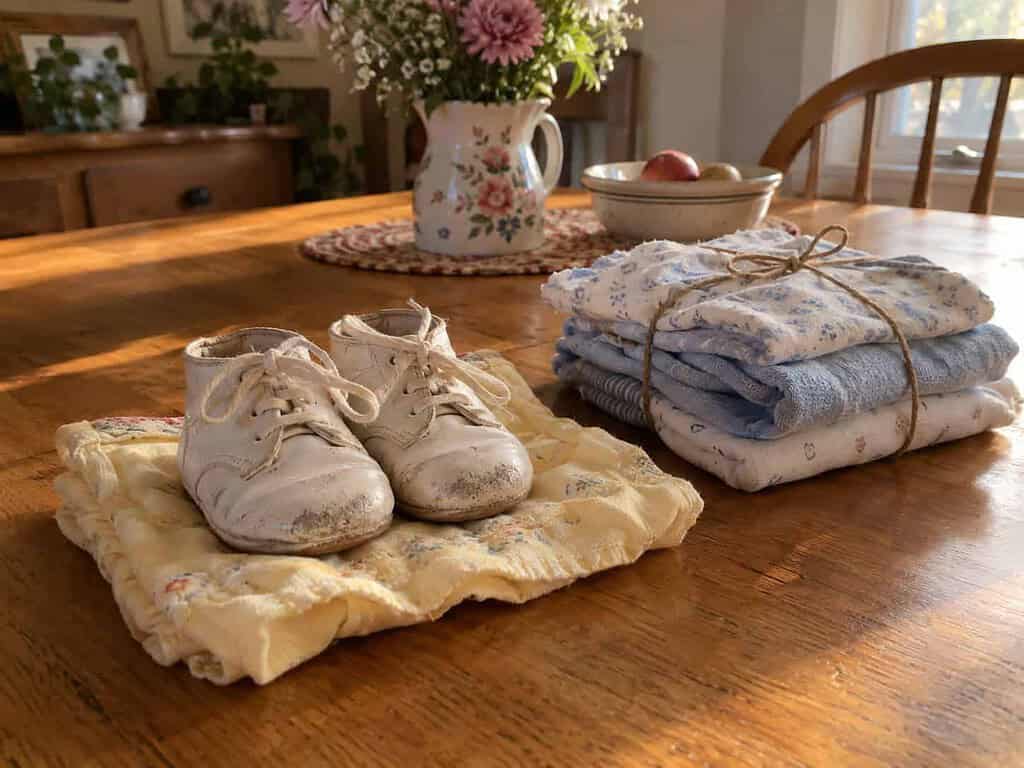
My daughter’s first shoes were right on top. They were tiny white leather shoes, scuffed at the toes from her first wobbly steps.
I held them for a long time. (I may have cried a little.)
Baby clothes are hard, because they’re so small and so sweet. But most of them don’t hold a real memory, only the idea of a baby.
So I kept only the pieces that came with a story. For my daughter, that was her first shoes, and for my other two, it was one small outfit each that I remember them wearing on a special day.
The rest of the baby clothes were still in good shape. I washed them and gave them to a young family at church with a new baby. You could also ask a church nursery or a local pregnancy center if they can use them.
If you find outgrown toys tucked in with the clothes, my post on old toys your kids or grandkids have outgrown can help.
2. Every Report Card and School Paper
I had kept every single report card. I also had every spelling test with a gold star and every page of handwriting practice.
That added up to a lot of paper.
When I read through it all, most of it looked the same. There were A’s and B’s, a few notes about talking too much in class, and a lot of cursive letters.
So I picked one favorite report card for each child, choosing the ones with a sweet note from the teacher. My son’s second-grade teacher wrote that he was kind to everyone, and I wasn’t about to let that one go.
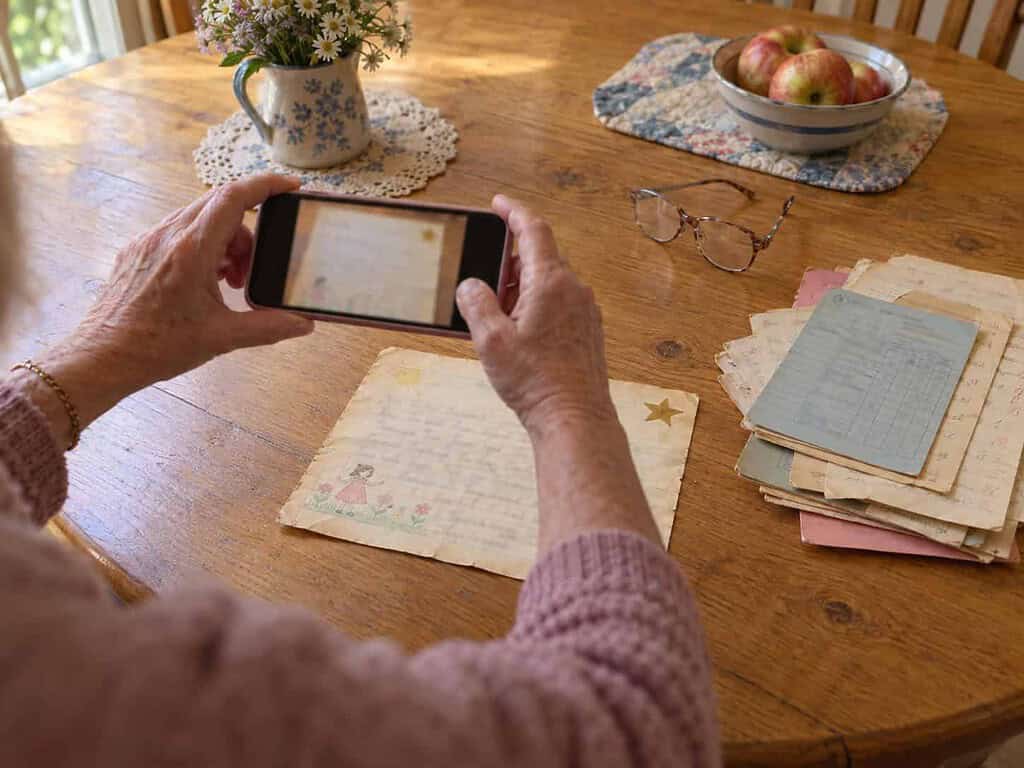
For the rest, I took pictures with my phone. You can also scan them, and some libraries have scanners you can use for free or for a small fee.
Then the papers went into the recycling bin.
While I was sorting, I remembered something. After my mother passed, I found my own third-grade report card in one of her shoeboxes, kept all those years.
It made me so happy to see it. But it also showed me that one report card is enough to hold the memory. I didn’t need twelve years of them.
If you have school pictures mixed in with the papers, write the child’s name and the year on the back. I share more about that in my post on labeling old family photos.
And if trophies and ribbons are taking up space too, my post on trophies, plaques, and awards nobody displays anymore might help.
3. Artwork and Macaroni Art
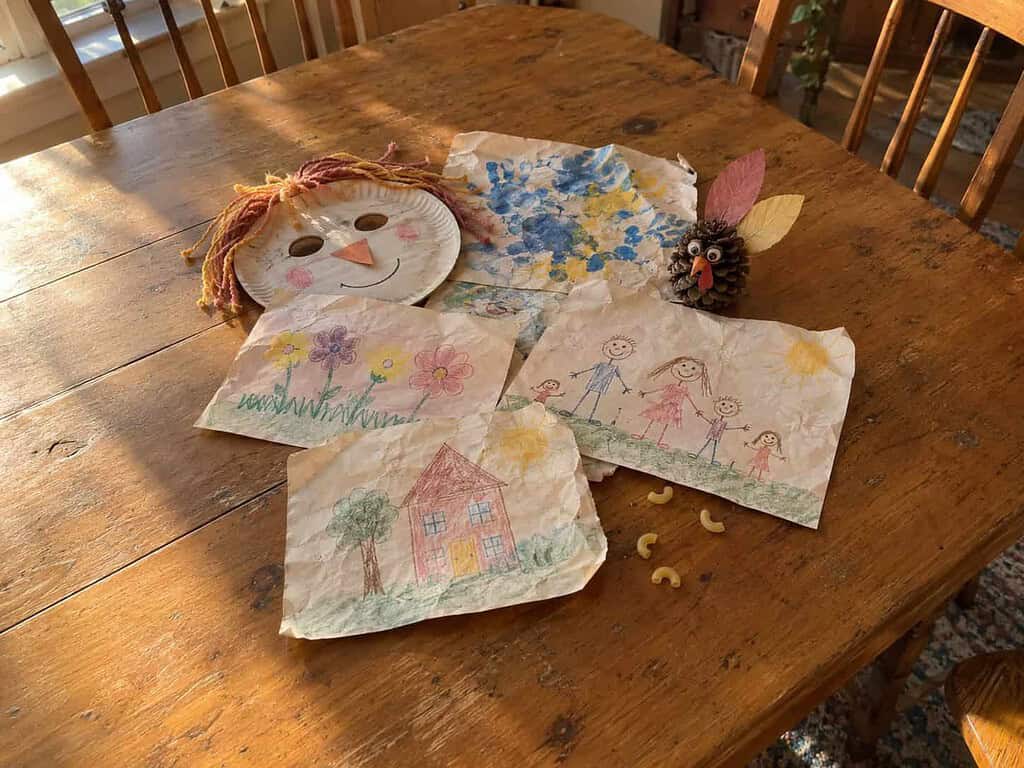
This was the biggest pile by far. There were crayon drawings, finger paintings, paper plate masks, and a pine cone turkey missing most of its feathers.
All of it hung on my refrigerator once. Each piece was a big deal on the day it came home.
But old art doesn’t keep well. The crayon fades, the glue dries out, and the macaroni falls off a little more every year.
So I kept the one or two pieces from each child that made me laugh out loud. Then I took a photo of every other piece, laid flat on the kitchen table in good light.
Those photos turned out to be better than the real thing in some ways. They don’t fade, they don’t crumble, and they don’t take up a single inch of the attic. (I had a special plan for them, too, which I’ll tell you about below.)
Once I had the photos, I let the rest go. I said a quiet thank you as each piece went into the bag, and even though it sounds silly, it helped.
4. Baby Teeth and Other Small Treasures
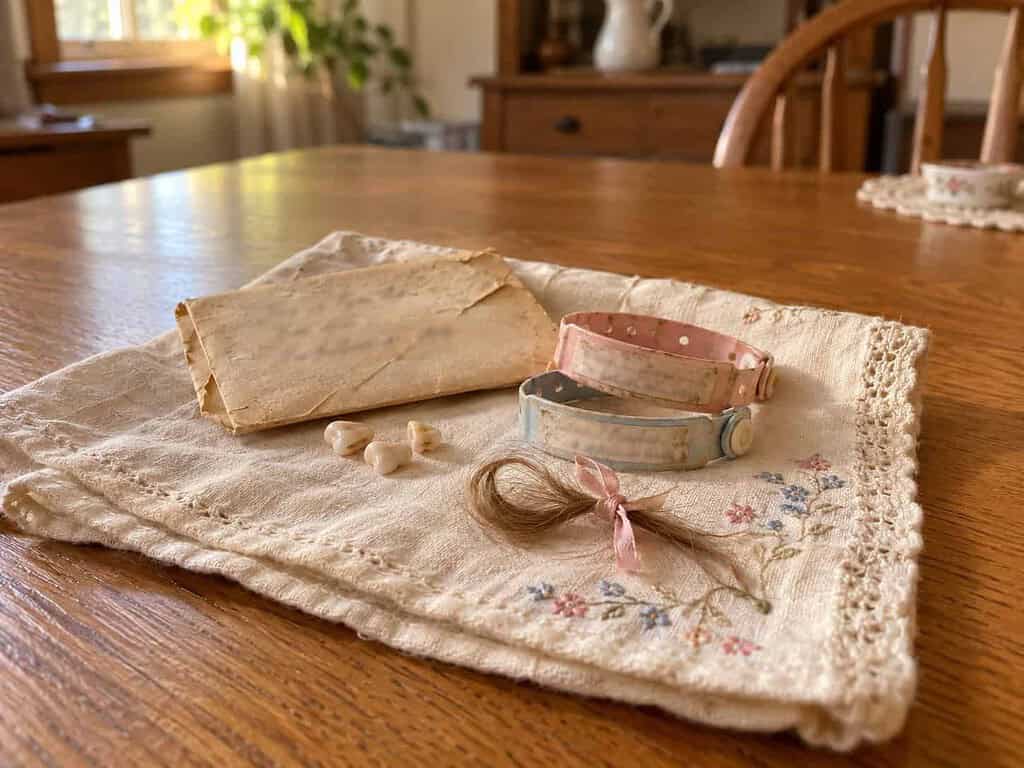
In each bin, I found a small envelope of baby teeth, labeled in my own handwriting.
I laughed out loud when I found them. Why did I keep them? I honestly don’t know.
So many women I’ve talked to kept their kids’ baby teeth too. Some keep them just because, and some let them go long ago, and both are completely fine.
I also found the little hospital bracelets with each child’s name on them. Those stayed, because they’re tiny and they mark the day each one was born.
The baby teeth were a harder choice. In the end, I kept one tooth from each child and let the rest go. (My husband thinks this was very brave of me.)
These small treasures take up almost no room. So if they make you happy, tuck them into your one box and don’t think twice.
5. Cards and Notes They Made for Me
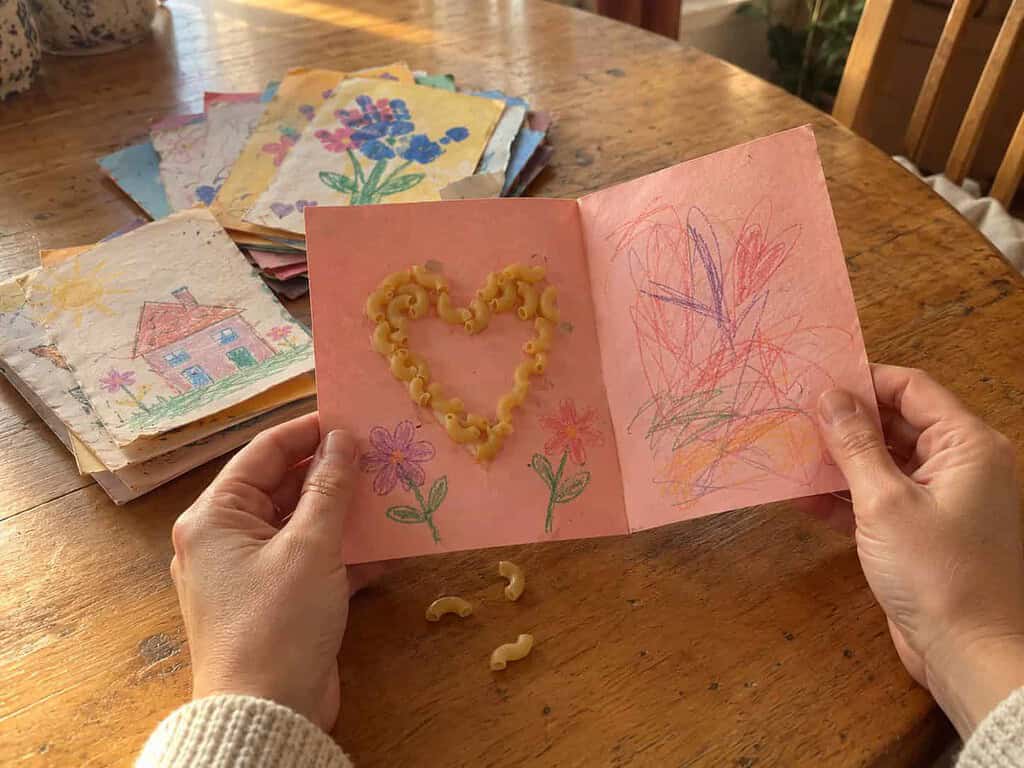
The last thing in each bin was a stack of cards: homemade birthday cards, Mother’s Day cards, and little notes that said “I love you, Mommy” in big, crooked letters.
These were the hardest of all, because they weren’t things I saved for my kids. They were things my kids made for me.
So I let myself keep a few more of these than anything else. I kept a small handful from each child, including the macaroni Mother’s Day card from my youngest, even though it drops a noodle every time I pick it up.
The rest I read one last time, slowly, and then let go.
If you also have a big stack of cards from family and friends, my post on decluttering greeting cards and thank you notes walks you through it.
What If They Don’t Want It?
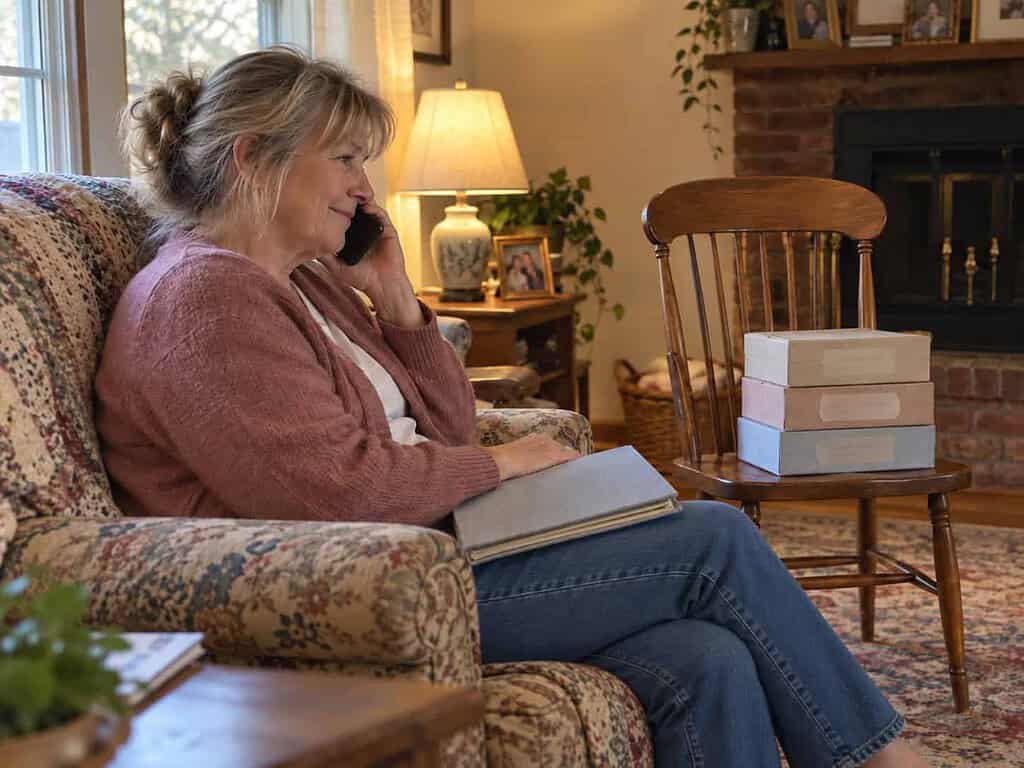
Once I had three small boxes, I had one more thing to do. I asked my kids if they wanted them.
I called each one and asked plainly whether they’d like their box or would rather I keep it here. I told them there was no wrong answer, and I meant it.
My daughter wanted hers right away. She laughed and said she couldn’t wait to look through it.
One of my other two said, “Just keep what you love, Mom.” That stung for a second, but then I understood it was a kind thing to say.
So this Christmas, I’m giving each of them a small gift instead of a bin. I took all those photos of artwork and school papers and made a little photo book for each child.
You can order photo books online or at many drugstore photo counters. A book is light and fits on a bookshelf, and nobody has to store a bin.
I don’t think the real gift is the paper anyway. It’s the moment they open the book and laugh at the drawing they made when they were five.
If one of your children doesn’t want their box, please don’t take it to heart. It doesn’t mean they don’t love you or don’t care about growing up. (They probably have their own kids’ drawings on their own refrigerators by now.)
You’re allowed to keep the few things that are really yours, and you’re allowed to let the rest go. I wrote more about this feeling in I Thought My Kids Would Want My Things.
Keeping the Love, Not Every Paper
The attic closet looks different now. Where three big plastic bins used to sit, there are three small boxes with each child’s name written on the side.
I also kept one thing from each of them in my dresser drawer, just for me. My daughter’s white baby shoes, my son’s report card with the sweet note, and the macaroni card from my youngest, still dropping noodles. (The shoes still fit in the palm of my hand.)
When I open that drawer, I don’t feel sad. I feel thankful that I got to be their mom.
I learned that the love was never in the papers. It was in all those years of hanging drawings on the fridge and signing report cards at the kitchen table.
You can keep the love and still let go of the paper. If that’s hard for you, my post on how to let go of sentimental items is a gentle place to start.
And if your own bins are still up in the attic, start with one child and one afternoon. Pour a cup of coffee, sit down, and open the lid.
You might cry a little. I did. But you’ll also laugh, and that part makes it worth it.
Ready for Your Next Small Step?

Sorting your children’s things takes a big heart. Once you’ve done it, the rest of the house can feel a little easier.
My free Declutter for Self Care Checklist helps you pick a gentle place to start next, so you can keep going without feeling overwhelmed.
Frequently Asked Questions
What should I keep from my child’s childhood?
Try giving each child one box, about the size of a shoebox or a small file box. Fill it with the things that have a real story, like first shoes, a favorite report card, one or two drawings, and a few cards they made for you. Take photos of the rest before you let them go.
How do I let go of my kids’ artwork without feeling guilty?
Take a photo of each piece first, laid flat in good light. Keep the one or two that make you laugh out loud. You can turn the photos into a small photo book, which keeps the memories without the boxes.
Should I keep my children’s baby teeth?
That’s a personal choice, and there’s no wrong answer. Some people keep one tooth from each child, some keep them all, and some let them go. Since they take up so little room, you can tuck a few into your keepsake box if they make you happy.
What do I do if my grown children don’t want their childhood things?
Try not to take it to heart, because it isn’t about how much they love you. Keep the few pieces that mean the most to you. You can also make them a photo book from pictures of their art and school papers, which is easy to keep and fun to look through.
How do I save old report cards and school papers?
Keep one favorite report card or paper for each child, like one with a sweet note from a teacher. Take pictures of the rest with your phone, or scan them. Some libraries have scanners you can use, and the pieces you keep can go in one box stored in a dry place.
Follow me elsewhere!

