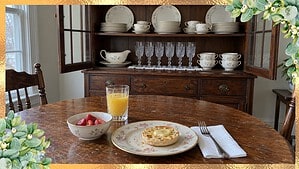
Until this fall, there was a set of dishes in our house that had never held a single meal.
Gold rims, little gray leaves, and not one chip. My mother-in-law gave them to us when we got married, almost forty years ago.
Not one chip, because we never used them. Not once.
For most of those years, they sat in a taped-up box in the basement. When I cleared out the basement last spring, that was the one box I couldn’t decide about. So I carried it upstairs and set the dishes in the dining room hutch, next to six crystal glasses from our wedding and a gravy boat I couldn’t remember filling.
They looked lovely there. And they still never got used.
My mother’s four place settings were a different story. They live in my kitchen cabinet, and I’ve eaten off them every Sunday morning since she passed. It’s still my favorite part of the week.
One morning in September, I stood in front of the hutch with my coffee and asked myself a simple question. Which of these dishes would I really miss?
I had no idea. So I decided to find out.
If you’ve ever wondered what to do with good china you never use, here’s what happened when I used mine every single day for a month.
Why I Finally Took the Good Dishes Out
A while back, I made myself a promise. If I’m keeping the good dishes, we eat off the good dishes.
I wrote about it in my post on the day I stopped calling things an heirloom. But I have to admit something. I’d only kept that promise for my mother’s four place settings.
The rest was still being saved.
Saved for what, I couldn’t tell you. Even at Thanksgiving, when I set a nice table, I only bring out my mother’s plates and the turkey platter. The rest stayed put.
Many of you have told me the same thing. The good dishes come out once or twice a year, or not at all. And deep down, we all know our kids probably won’t want them.
So I tried something a little different. Instead of asking “Should I keep this?” I asked “Will I use this?”
Then I let a month of real life answer.
How My 30-Day Good China Test Worked
I kept the rules simple, because simple is the only kind I’ll stick to.
I Boxed Up the Everyday Dishes
I packed our everyday plates, bowls, and glasses into a box and set it in the basement. If I needed something, I’d have to go downstairs to get it.
I left out the coffee mugs. (I’m brave, but I’m not that brave.)
I Used Only the Good Dishes
Every meal for thirty days came off the good china. My mother’s plates, my mother-in-law’s gold-rimmed set, the crystal glasses, and the serving pieces.
Toast in the morning. Soup at lunch. My husband’s grilled cheese on a Saturday.
I Kept a Tally on the Fridge
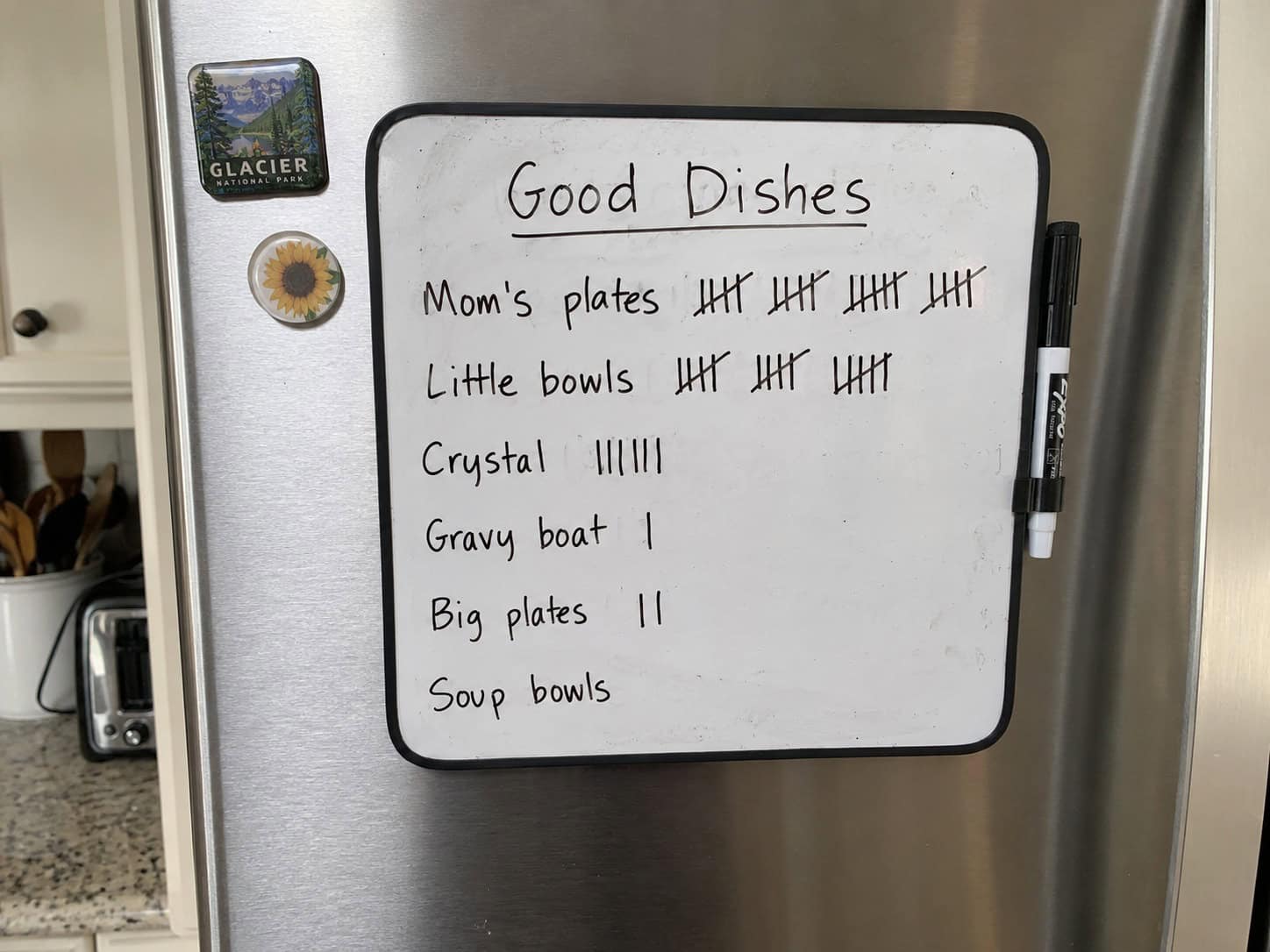
I have a little whiteboard on the side of my fridge. Every time I used a piece, I made a mark next to its name.
By the end of the month, that whiteboard told me more than I’d figured out in forty years of not deciding.
What I Reached For Every Single Day
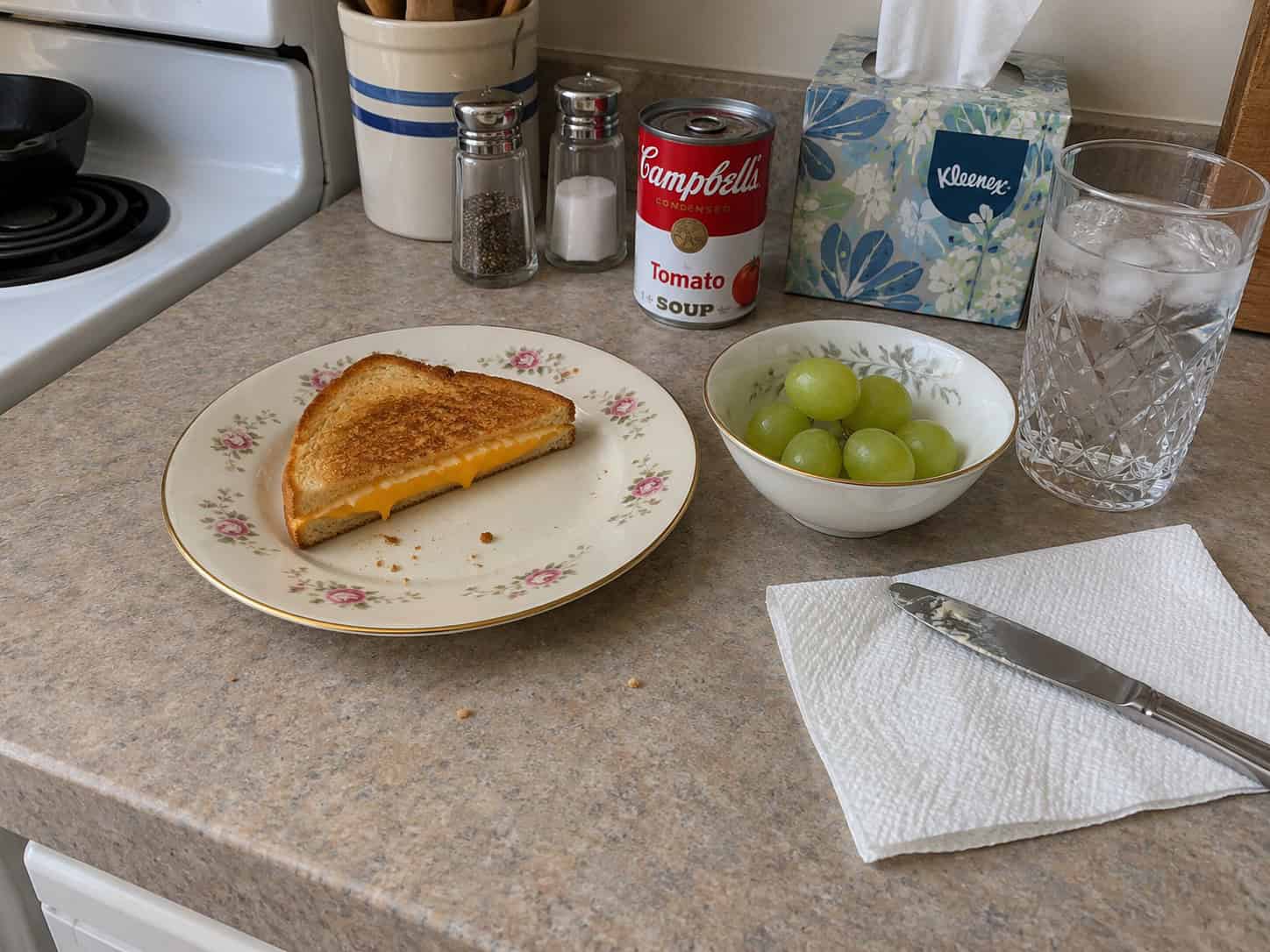
Some pieces got used so often that I forgot they were ever “the good dishes.”
My Mother’s Dinner Plates
These were the clear winner. They’re a little smaller than our everyday plates and a lot lighter, so they’re easy on my sore hands.
I used them for breakfast, lunch, and supper. By the second week, I was setting the table with them without even thinking.
The Small Bowls
My mother-in-law’s set came with little bowls I’d always thought were for fancy desserts. It turns out they’re the perfect size for oatmeal, a scoop of applesauce, or a handful of grapes.
They had more marks on the whiteboard than anything else in the set.
Two of the Crystal Glasses
I’ll admit I was nervous about the crystal. But I drank my orange juice out of a crystal glass every morning, and it made an ordinary Tuesday feel a little special.
A lot of you do this too. Some of you told me you’ve been drinking juice from your crystal for years, and you’ve never looked back.
I used two of the six glasses all month. The other four never left the shelf.
One of you told me you keep just one small crystal bowl, the one your mother always filled with cranberry sauce at Thanksgiving. Now you fill it every year too. That’s the kind of keeping I understand.
What Never Left the Hutch
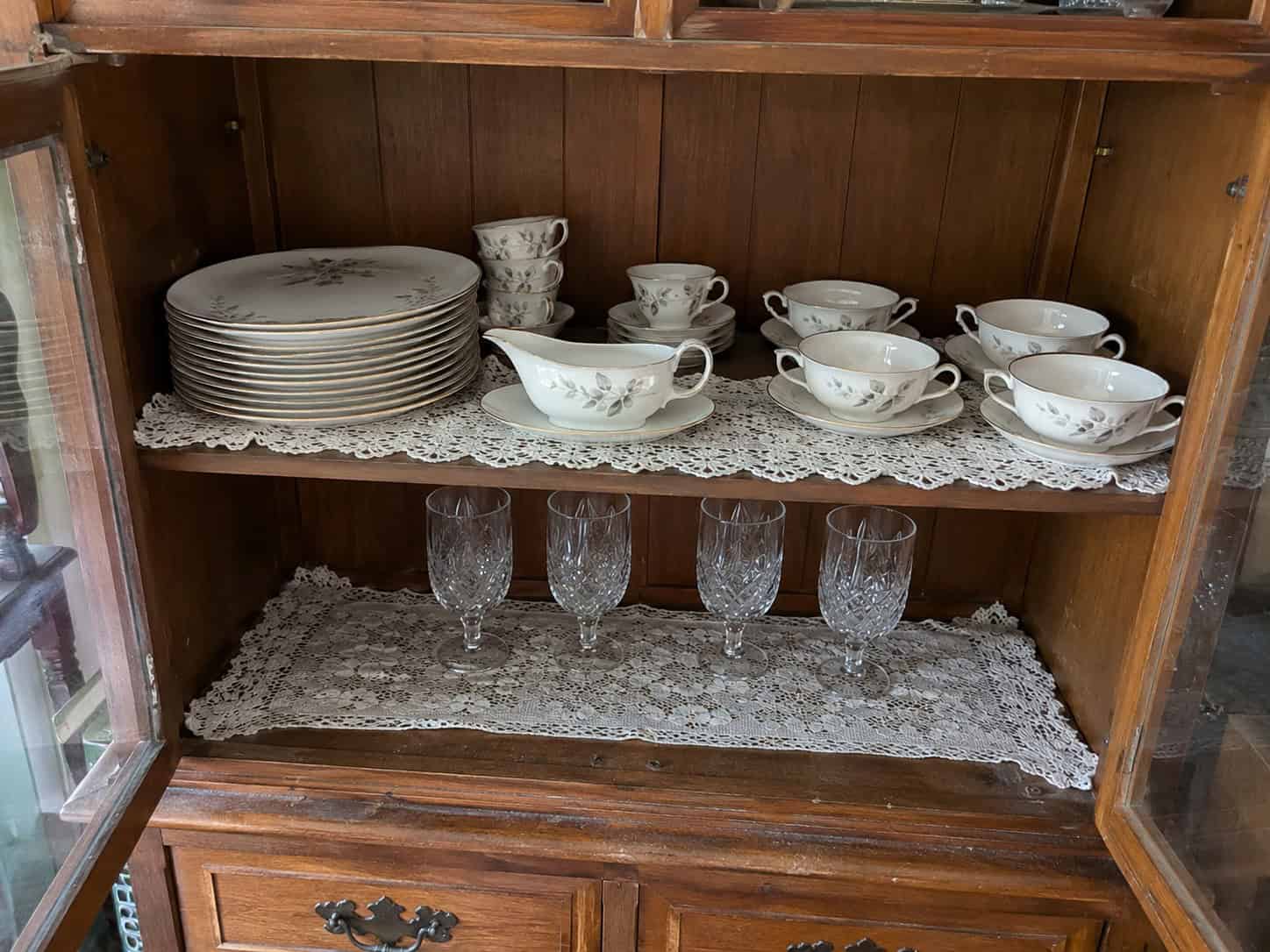
This was the part that surprised me most. Some pieces didn’t get a single mark.
The Gravy Boat and the Cream Soup Bowls
I used the gravy boat once, for a pot roast, and then washed it and put it back. The cream soup bowls with two little handles never came out at all.
I don’t make cream soup. I’m not sure I ever have.
The Big Dinner Plates
My mother-in-law’s dinner plates are beautiful. They’re also heavy, and they’re too big for my kitchen cabinet and too big for my portions.
I used them twice in the first week. After that, I reached for my mother’s lighter plates every time.
Anything With Gold Trim in the Microwave
The gold rims on my mother-in-law’s set were lovely. But you can’t put dishes with metal trim in the microwave, so warming up leftovers meant moving them to another plate.
That happened enough times that I stopped bothering. By the third week, the gold-rimmed pieces had slid to the back of the stack.
What the Month Taught Me
A month of real use told me the truth in a way that thinking never could.
Using Something Is the Fastest Way to Decide
For forty years, I couldn’t decide about that set. It felt rude to give away a wedding gift, and wasteful to keep it boxed up.
But after thirty days, I didn’t have to decide anything. The whiteboard decided for me.
It’s a lot like the idea behind upside-down decluttering. You stop guessing, and you let your own habits show you what matters.
Heavy Dishes Are Harder on Us Now
I didn’t think about the weight of my dishes until my wrists ached from lifting a stack of the big plates. If your hands or back hurt too, light dishes aren’t a small thing.
I wrote more about this in my post on my kitchen after 60, where I kept what’s light, handy, and loved.
The Good China Is Tougher Than We Think
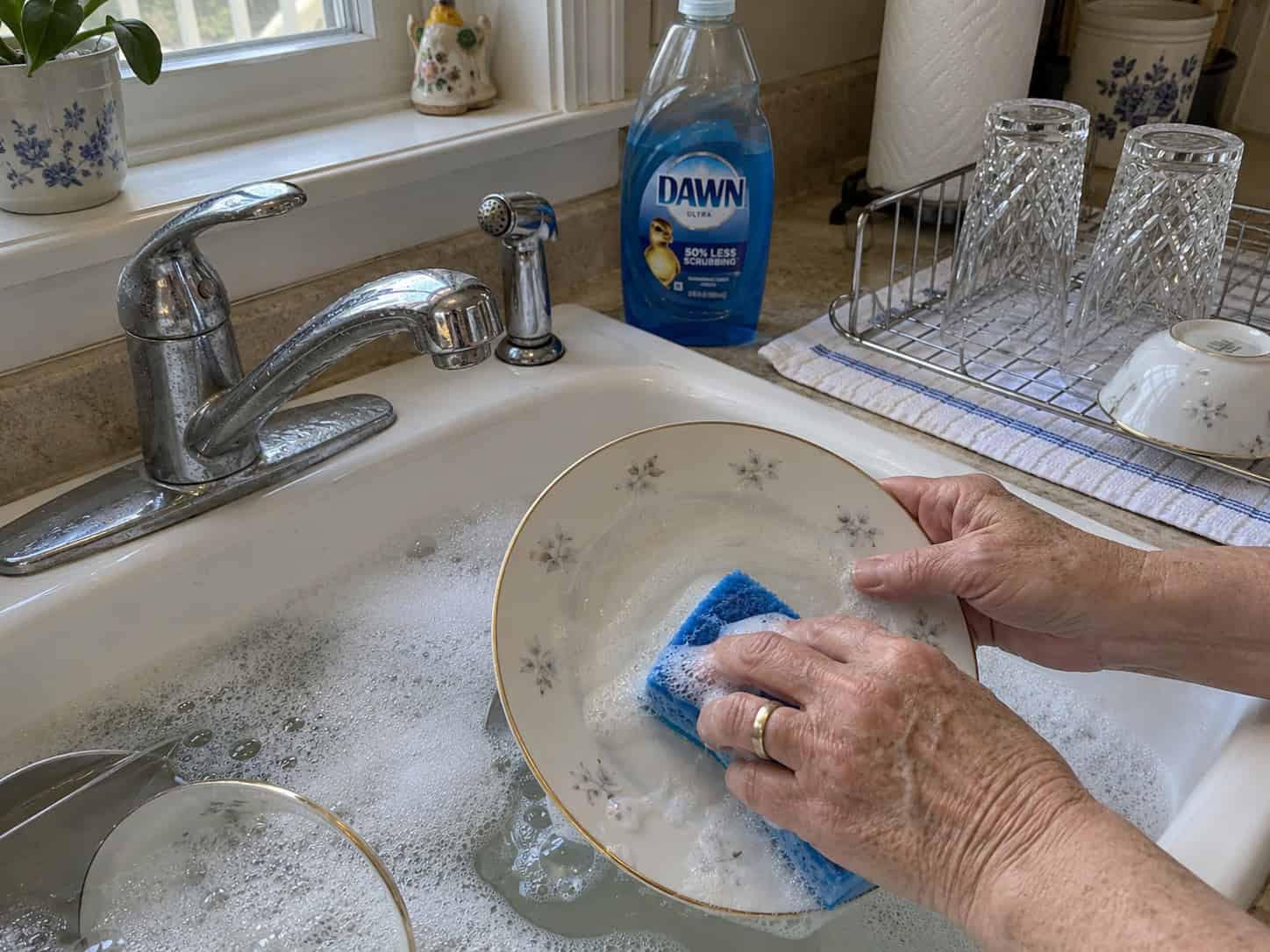
I was sure something would break. Nothing did, except one saucer that I knocked off the counter with my elbow. (It was already chipped, so I didn’t cry over it.)
Many newer china sets say “dishwasher safe” on the bottom, so it’s worth turning a plate over and checking yours. Anything with gold or silver trim, and most fine crystal, is safer washed by hand.
Using Them Felt Like Having My Mother at the Table
This is the part I didn’t expect.
Eating off my mother’s plates every day, instead of only on Sundays, made me think of her at every meal. Not in a sad way. In a warm way, like she was sitting across from me with her coffee.
The dishes I loved weren’t the most expensive ones. They were the ones with a person behind them.
The Hardest One to Let Go Was a Wedding Gift
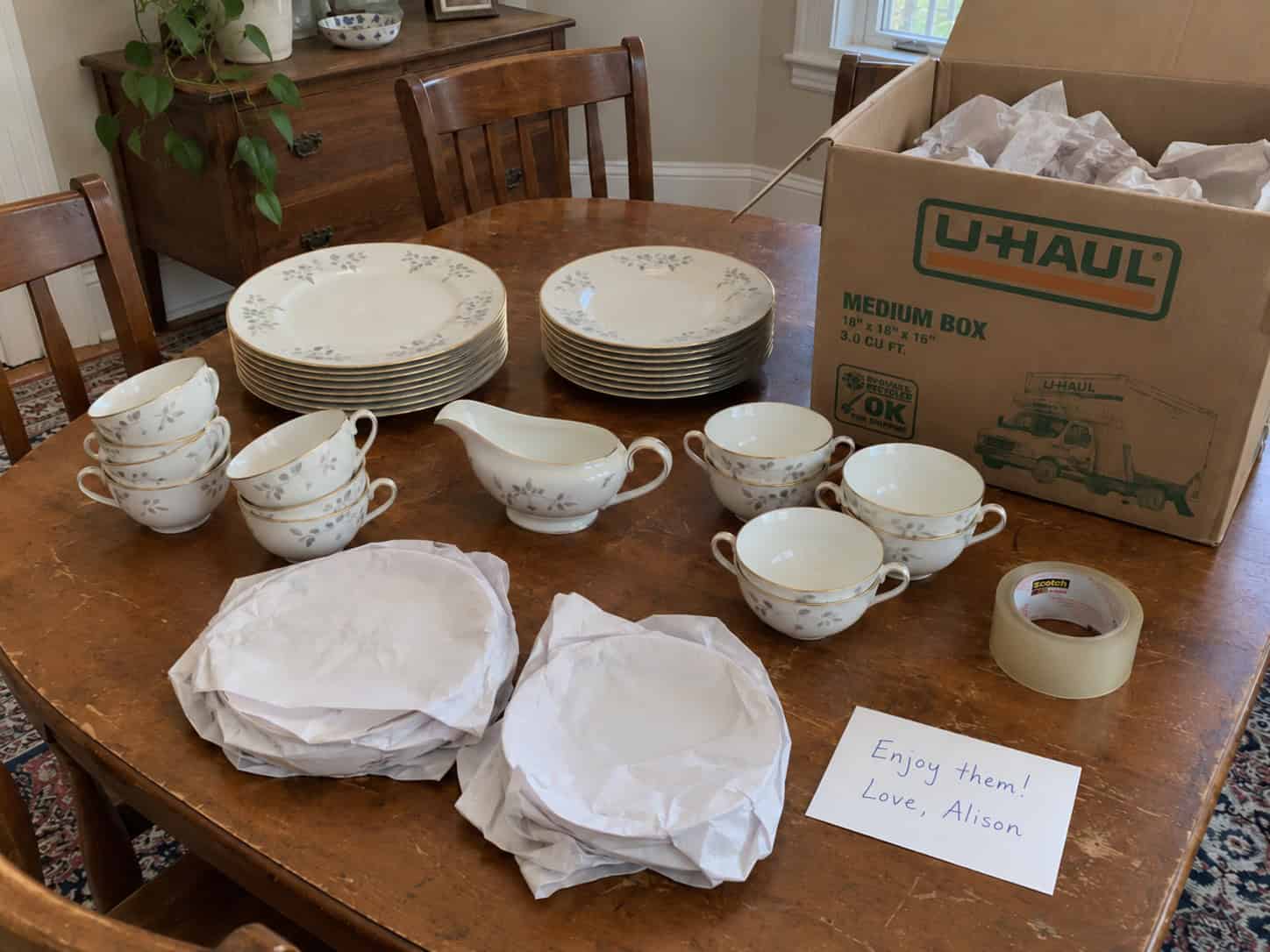
The whiteboard made the decision easy. My heart took a little longer.
That gold-rimmed set was a wedding gift. Someone picked it out for us, wrapped it, and hoped we would love it.
For forty years, I kept it because giving it away felt ungrateful. Every time I walked past that box in the basement, and later every time I dusted the hutch, I felt a small pinch of guilt.
What I finally understood was simple. A gift is given to make us happy. It isn’t meant to sit behind glass and make us feel guilty for four decades.
The kindest thing I could do with that set was let someone use it. A plate that gets used is a plate doing what it was made for.
The estate sale lady who helped us empty my mother’s house told me something that stayed with me. She said families rarely keep full sets of china. They keep one teacup, or one plate, with a story attached.
So I kept the little bowls from that set, the ones I fill with oatmeal every morning. Those bowls carry the thank-you. The rest could go.
Which Dishes Stayed, and Where the Rest Went
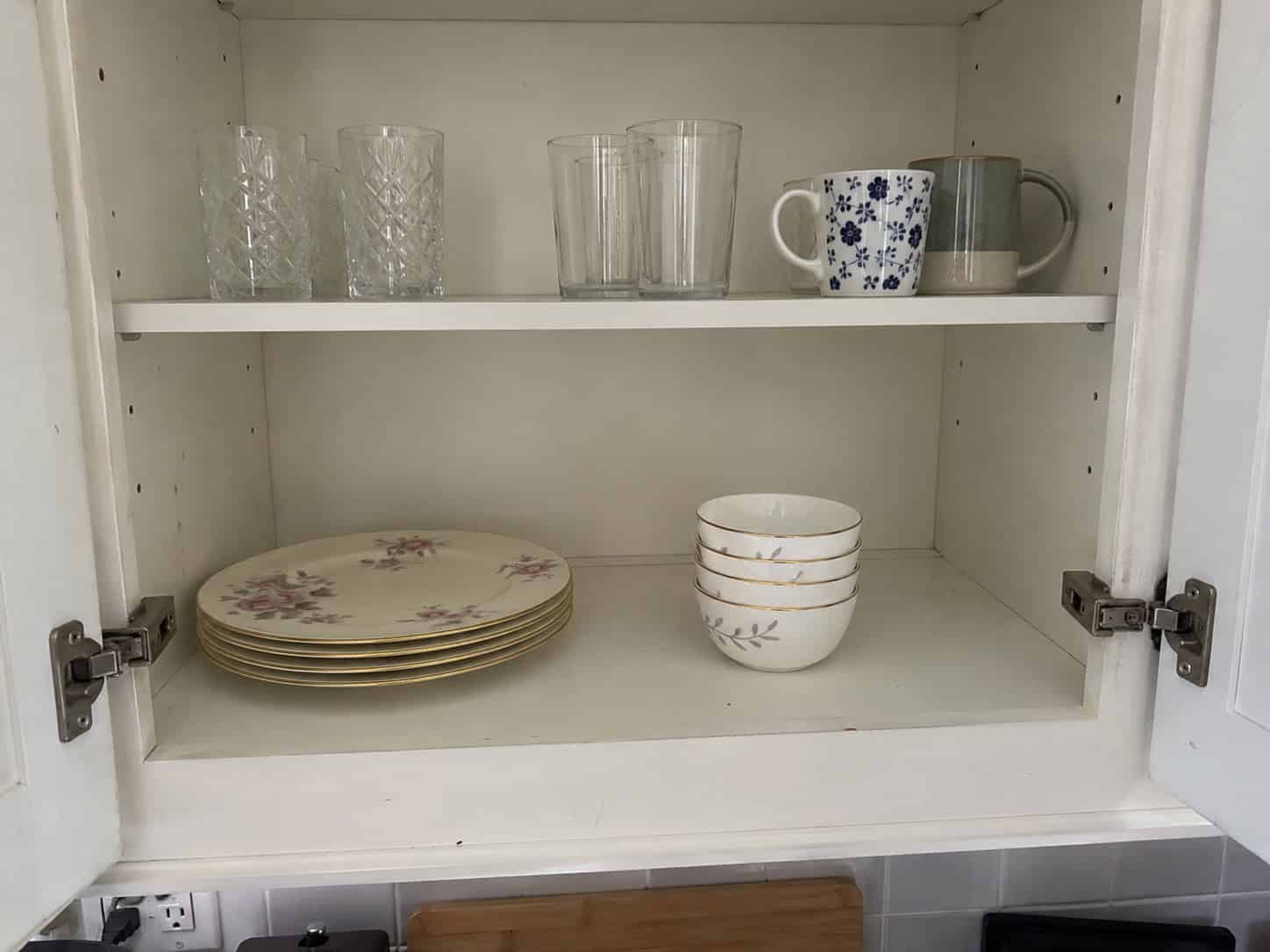
At the end of the month, I sat down with my coffee and the whiteboard and made my decisions in about ten minutes.
What I Kept
My mother’s four place settings stayed, of course. Now they’re our everyday plates, not just our Sunday plates.
I kept the small bowls from my mother-in-law’s set, two crystal glasses, and the one turkey platter I already use every year. Our old everyday dishes stayed in the box in the basement, waiting to go to someone who needs them.
What I Offered to Family First
Before anything left the house, I asked my daughter if she wanted any of it. She took two of the crystal glasses for her own Sunday breakfasts, which made me happier than she’ll ever know.
Some of you have told me your grandchildren wanted the very dishes your own kids passed on. So it’s worth asking the grandkids too.
Where the Rest Went
The rest of my mother-in-law’s set went to a young teacher at church who was setting up her first apartment. She was thrilled, and I know those plates will finally get used.
If you don’t know someone who needs dishes, there are other good places to try. Some nursing homes and senior centers welcome teacups and pretty plates for tea parties or as small prizes, but call the activity director first and ask.
Replacements, Ltd. buys some patterns, though they usually pay far less than people expect. Local thrift stores, church sales, and Buy Nothing groups are often easier.
I shared more ideas in what to do with old china sets that nobody wants and in my list of meaningful places to send your belongings.
Try Your Own Good China Test
You don’t need to do a whole month, and you don’t need to box up your everyday dishes. Even two weeks will tell you a lot.
Here’s a gentle way to start.
Take the good dishes out of the hutch and put them where you can reach them easily. Use them for your regular meals, the same way you’d use your everyday plates.
Keep a little tally on the fridge or a scrap of paper on the counter. Mark each piece every time you use it.
At the end, look at your marks. The pieces you reached for again and again are the ones worth keeping. The pieces that never moved can go to someone who will love them.
And whatever you keep, use it. That’s the whole point. If you need a little more encouragement, I wrote out 9 reasons to use the good stuff every day.
Make Room for What You Truly Use

You don’t have to keep every dish to honor the people who gave them to you. Keep the ones you love and use, and let the rest bring joy to someone else’s table.
My free Declutter for Self Care Checklist helps you go one small step at a time, so your home holds the things that make your days easier and warmer.
Frequently Asked Questions
What should I do with good china I never use?
Try using it for your everyday meals for two to four weeks and keep track of which pieces you reach for. Keep the pieces you use and love. Offer the rest to family first, then to a young couple, a church family, a thrift store, or a Buy Nothing group.
Is it okay to use good china every day?
Yes. Using it is the best way to enjoy it, and many china sets are sturdier than people think. Check the bottom of each piece for dishwasher and microwave labels, and wash anything with gold or silver trim by hand.
Can you put china with gold trim in the microwave?
No. Dishes with gold, silver, or platinum trim should not go in the microwave, because the metal can spark and damage the trim. Warm your food on a plain plate instead.
Does anyone buy old china anymore?
Some companies, like Replacements, Ltd., buy certain patterns, but they usually pay much less than retail. Many families have better luck giving their china to someone who will use it, or donating it to a thrift store or church sale.
How do I decide which dishes to keep?
Keep the dishes you use often, the ones that are easy to lift, and the few that carry a special memory. If a piece hasn’t left the cabinet in years, it’s probably ready for a new home.
Follow me elsewhere!

