The Letters My Husband and I Wrote Before Email

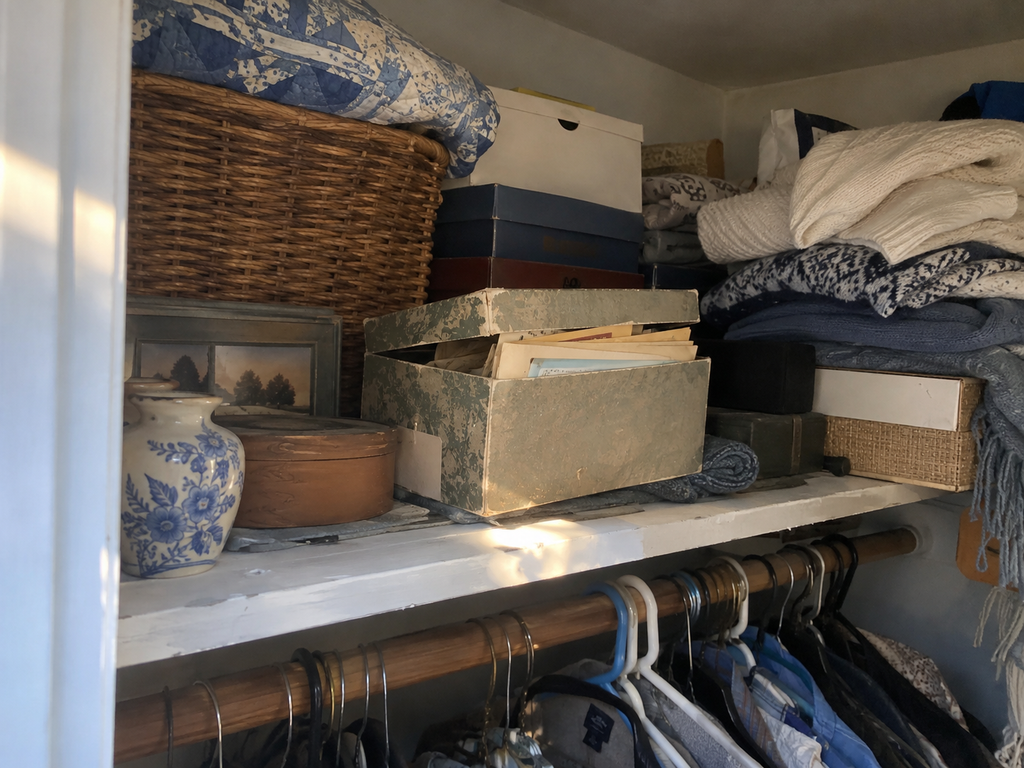
I was clearing out the top shelf of our bedroom closet, the one I can barely reach, when my hand landed on an old shoebox I didn't recognize.

I pulled it down, expecting old tax papers or a tangle of cords.

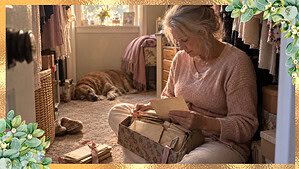
Instead, it was letters. Dozens of them, tied with a ribbon gone soft with age. And the handwriting on the top envelope was my husband's, from back when it was still young and hurried.

I sat right down on the closet floor and forgot all about decluttering.

These were the letters we wrote each other before email, before texting, before you could reach a person in your pocket any hour of the day. From when we were courting. From the years his work took him away for weeks at a time, and a letter in the mailbox was how we stayed close.

I'd forgotten I even kept them. (I'd forgotten a lot of what he said in them, too, and reading it again undid me a little.)

There I was, in the middle of getting rid of things, holding the one box I'd never let go of.

And it reminded me of something we don't say often enough about clearing out a home. It's not all about throwing things away. Sometimes the whole point is finding what to do with old love letters and the handful of things that turn out to matter most.

Let me tell you what I learned.

Decluttering Isn't Only About Letting Go

An old box of letters pulled forward from behind stacked boxes and clothes on a cluttered closet shelf

For years, all I heard about decluttering was the same two words. Let it go.

And there's truth in that.

Most of us are holding onto far too much, and learning to release it is a real gift. I've written plenty about how to let go of sentimental items myself, because it's hard, and it matters.

But sitting on that closet floor with those letters in my lap, I realized something the “let it go” advice leaves out.

Decluttering isn't only about getting rid of things. It's also about finding the few that are worth keeping.

Think about it.

When your closet is stuffed to the top, you can't even see what's in there. The treasures get buried under the junk. The box of letters gets lost behind the old tax papers and the coats you never wear.

Clearing out the clutter is how those treasures finally rise to the top. It's how you find them again.

I never would have opened that shoebox if I hadn't been decluttering that shelf. The letters would have stayed hidden up there, forgotten, maybe for good.

Read related post:   7 Best Ways To Organize Paper Clutter (Guide To Decluttering Your Household Paper Trail!)

So yes, let go of what you don't need.

BUT…

Keep your eyes open while you do. Because somewhere in all of it are the handful of things you'll be so glad you kept.

For me, it was the letters. (And if your box holds letters from someone you've lost, that's a tender kind of keeping all its own, and I wrote about those letters here.)

How I Keep the Few Things Worth Keeping

Once I decided the letters were staying, I wanted to keep them properly. Not shoved back on a shelf to yellow and crumble.

It turns out there are a few simple things that make old letters last, and a couple of common mistakes that quietly ruin them. Here's what I did.

I keep one small box, not ten

A small keepsake box holding a chosen stack of old letters with a few set aside nearby to let go

The first thing I did was be honest about how much to keep.

I didn't keep every scrap of paper we ever passed between us. I kept the letters that still meant something. The ones that made me laugh, or teared me up, or told a story I wanted to remember.

A few didn't make the cut. A short note about picking up milk on the way home is sweet, but it isn't a keepsake.

What I ended up with fit in one small box. And that's the point. A treasure box works because it's small. When you keep everything, nothing feels special. When you keep only the best, every single piece matters.

One box. The good ones. That's the whole rule.

I took off the rubber bands and paper clips

An older woman's hands removing a dried rubber band and rusty paper clips from a stack of old letters

This one surprised me, but it makes sense once you hear it.

Those letters had been tied with a rubber band, and a few had paper clips on them. Over the years, that's exactly what damages old paper.

Rubber bands dry out, get sticky, and leave marks. Paper clips and staples rust and stain right through the page. So I gently took all of it off.

I kept each letter with its own envelope, since the envelope is part of the story too. Then I set them loose in the box instead, no metal, no rubber, nothing pressing into the paper.

It took ten minutes, and it's the kind of thing that helps them last for another fifty years.

I keep them out of the attic

A simple archival box of old letters stored safely on a cool interior closet shelf, away from attic heat

Here's the big mistake most of us make. We put our most precious papers in the worst possible spot.

The attic gets blazing hot. The basement gets damp. Both of those, heat and moisture, are what turn old letters brittle, yellow, and moldy.

So keep them in the main part of your house instead. A cool, dry, dark spot, like an inside closet shelf, is perfect. Away from bright windows too, since sunlight fades the ink over time.

If you want to do it right, tuck them in an acid-free box. You can find them online, and they're made to protect paper. A plain cardboard box slowly harms it.

And please, whatever you do, never laminate an old letter. I know it seems like it would protect it. But the heat and plastic ruin the paper for good, and there's no undoing it. The same goes for tape and glue. Keep all of it far away from anything you treasure.

Read related post:   12 Life-Changing Tips For Kitchen Cleaning

I made a copy of every one

An older woman's hands photographing an old handwritten letter with a phone to make a digital copy

This is the step that gives me real peace of mind.

I took a photo of each letter with my phone, front and back. You could also scan them if you have a scanner. Now I have a copy of every single one.

That way, if anything ever happens to the originals, a fire, a flood, a spill, I haven't lost the words. And I can read them any time without handling the fragile paper.

I keep those photos in a couple of places, on my phone and backed up, so they're safe. If you save copies like this, it helps to have a simple way of keeping your digital photos organized so you can actually find them later.

The paper is precious. But the words are what I really want to keep. Now I have both.

I actually read them now

This is the step people forget, and it might be the most important one of all.

A keepsake you never look at isn't really being treasured. It's just being stored.

So I don't hide the letters away and forget them again. I read them. I put the box somewhere I'll come across it. Every year on our anniversary, I take a few out and read them with my husband over coffee, and we both go quiet and a little misty.

I even framed one, my favorite, and hung it where I see it. It makes me smile every time I walk past.

That's the difference between keeping something and honoring it. One sits in a box. The other becomes part of your life.

There's a Difference Between Treasuring and Hoarding

A single small keepsake box on a clear side table with calm, uncluttered space around it

Now, I know what a few of you are thinking. But isn't keeping things the opposite of decluttering?

It's a fair question. And there's a real line here, so let me be honest about it.

Keeping a small, chosen box of true treasures is not hoarding. Keeping ten boxes of “I might want this someday” is a different story.

The difference is in the choosing. A treasure box is small on purpose. You picked each thing because it genuinely matters. That's not clutter. That's the whole reason you declutter in the first place, to make room for what you love.

Hoarding is when the keeping runs away from you. When every item feels impossible to release, and the boxes multiply, and you can't walk through the room. If you ever wonder which side of that line you're on, I've written about when saving sentimental things tips into too much.

For me, the test is simple. Could I name why I kept it? For the letters, yes, easily. For most of what was in that closet, not really. So the letters stayed, and a lot of other things went.

If you're working through a whole pile of sentimental things and it feels heavy, be gentle with yourself. It's the hardest kind of decluttering there is. My practical guide for sentimental items walks through it slowly, one piece at a time.

Keep the treasures. Let go of the rest. That's not a contradiction. That's the whole point.

What Stays When the Rest Goes

I finished decluttering that closet eventually. A lot of it went out the door, and the shelf feels good and clear now.

Read related post:   Decluttering And Organizing Your Home In 6 Easy Ways

But the letters came down for good.

They live in their little box, out of the attic, off the top shelf, somewhere I'll actually see them.

That's what I want you to take from all this.

Decluttering was never about throwing your life away. In fact, it's the opposite.

When you clear out the clutter, the things that truly matter finally have room to breathe. You can see them. You can hold them. You can keep them close instead of buried.

The rest can go. The letters stay.

So as you work through your own home, don't just ask what you can get rid of. Ask what you'd be heartbroken to lose. Then keep those few things well, and let everything else go with an open hand.

You might just find a shoebox of your own up there…

… waiting to remind you what all of this was really for.

Room for What You Love

Decluttering makes space for the things that matter most, the letters, the photos, the handful of treasures you'd never part with.

My free Declutter for Self Care Checklist helps you clear away the rest gently, room by room, so the things you love aren't buried under the things you don't.

Frequently Asked Questions

What should I do with old love letters?

Keep the ones that still mean something to you, and don't feel you have to keep every single one. Store the keepers in an acid-free box in a cool, dry spot in your home, not the attic or basement. Take a photo or scan of each letter so you have a backup, and then enjoy them. Read them on an anniversary, or frame a favorite. A keepsake is meant to be treasured, not just stored away and forgotten.

How do I store old letters so they don't fall apart?

Remove any rubber bands, paper clips, and staples, since they dry out or rust and damage the paper. Keep each letter with its envelope, and store them in an acid-free box or folder, not an ordinary cardboard box. Keep the box somewhere cool, dry, and dark, away from heat, damp, and bright light. Never laminate an old letter, and never use tape or glue, because that damage can't be undone.

Should you keep old love letters?

That's entirely up to you, and there's no wrong answer. Many people find old letters are among the most precious things they own, a real voice from a real moment in time. If they bring you joy or comfort, keep them, and keep them well. If they no longer feel meaningful, it's perfectly fine to let them go. The goal is to keep what matters to you, not what you think you're supposed to keep.

How do I preserve old letters at home?

You don't need anything fancy. Take off any metal and rubber, place the letters in an acid-free box or safe plastic sleeves, and store them somewhere cool, dry, and out of the sun. Handle them with clean, dry hands. Make digital copies by scanning or photographing them, and save those copies in a couple of places. That's really all it takes to help them last for many more years.

Is it okay to throw away old letters and cards?

Yes, it is. You are not obligated to keep every letter and card you've ever received. Keep the ones that hold real meaning, and feel free to recycle the rest without guilt. If it helps, take a quick photo before you let one go, so you keep the memory even if you don't keep the paper. Holding onto a few treasured letters is lovely. Holding onto every card you've ever gotten is a weight you're allowed to set down.

Follow us on PinterestFollow
Follow me elsewhere!

Leave a Comment