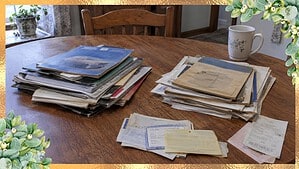
One skinny folder now holds every manual we need in our house. It used to take a whole desk drawer, and the drawer barely closed.
I didn’t throw them all away. I want to say that first, because I know how many of us feel about our manuals.
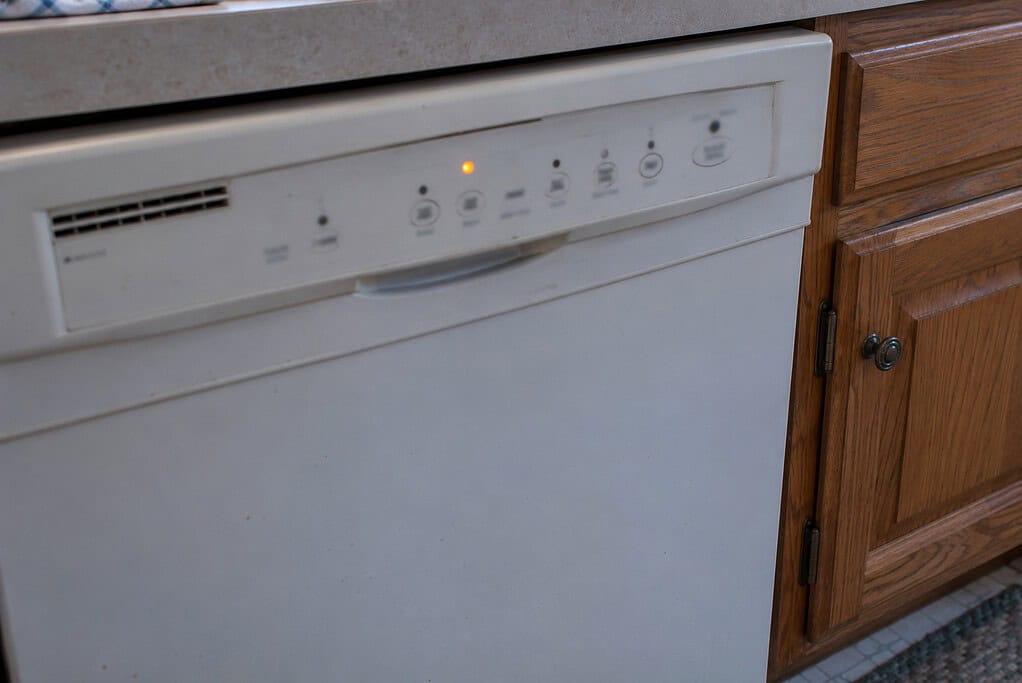
Some of them, I’m keeping on purpose. When the dishwasher starts beeping at seven in the morning, I don’t want to hunt online for a model I can’t even name.
But when I finally emptied that drawer onto the kitchen table, I found something funny. Most of the manuals were for things we didn’t own anymore.
The toaster from years ago. A VCR. The fridge we replaced.
A car we sold. Two cell phones I couldn’t picture if you paid me.
So this is the gentle way I sorted ours. It keeps what’s useful and lets go of the rest.
Why We Keep Every Manual
I think most of us keep manuals for good reasons.
We paid for that appliance. Something might break. And when it does, we want the little book that tells us what the blinking light means.
Looking things up online isn’t always easy, either. You need the model number, the right website and a good pair of glasses. (I need all three, and I still get lost sometimes.)
So keeping the manual feels safe. The trouble is that we keep them long after the thing itself has left the house.
The One Question That Sorted My Drawer
I sat at the kitchen table with the whole stack and asked one question about each manual. Do we still own this?
If the answer was no, the manual went in the recycling pile. The coffee maker is gone, so its booklet can go, too.
If the answer was yes, it went in a keep pile. That was it.
That one question cleared more than half the drawer in about twenty minutes. (I wish I’d done it ten years sooner.)
There were a few I wasn’t sure about. Was the blender in the cupboard the same one as in the manual? I walked over and checked the model number on the bottom.
Keep These Together for Things You Still Own
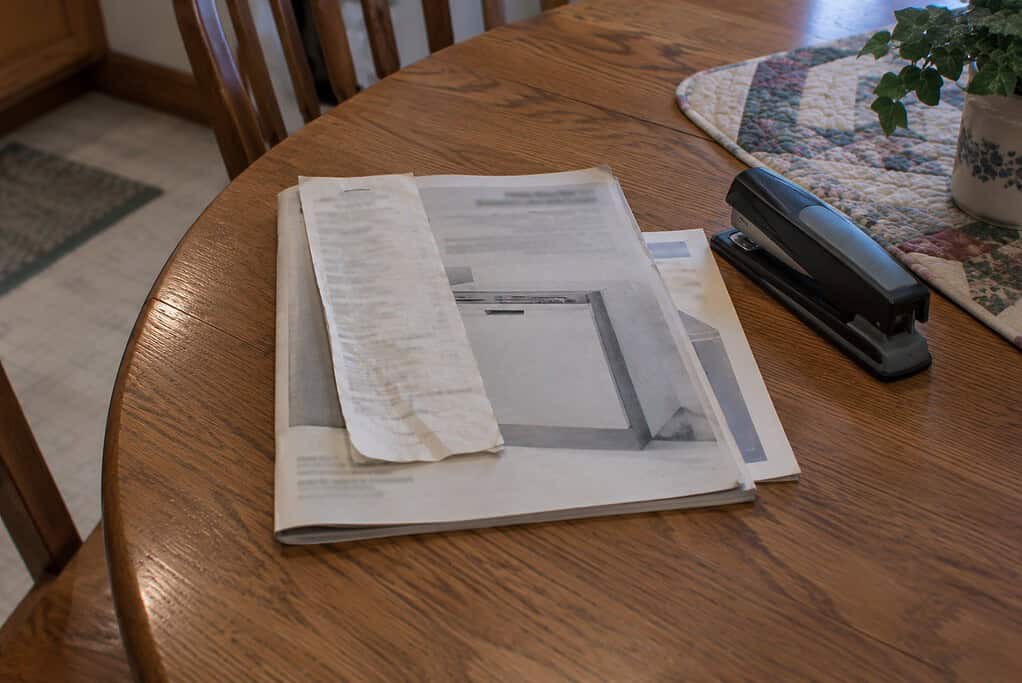
For every appliance we still own, I kept three things together. The manual, the warranty and the receipt.
The Federal Trade Commission says to save your receipt with the warranty. It says the receipt proves the date you bought the product and that you’re the first owner.
The FTC also says that sometimes you have to send back a registration card to get warranty service. So if a card is still in the box, it’s worth reading what the warranty says.
I stapled each receipt to the front of its manual. Now, if the washer has a problem, everything I need is in one place.
Write Down the Model Numbers
This is the most useful thing I did, and it took ten minutes.
I made a short list of every big appliance in our house. The fridge, the stove, the dishwasher, the washer and the dryer.
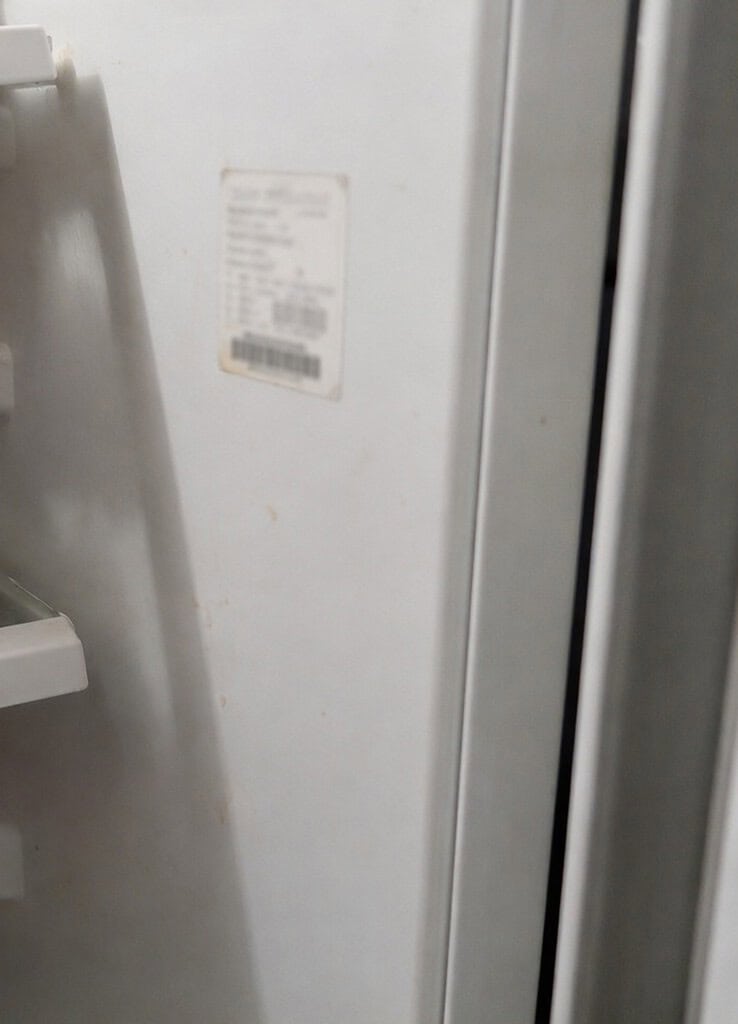
Next to each one, I wrote the brand, the model number and the year we bought it. I found the model numbers on the little labels.
Whirlpool and Frigidaire say the label on many fridges is inside the fresh food section, on a side wall. On a front-load washer, it’s often inside the door, on the rim. On a dishwasher, it’s often on the side of the tub or the inside of the door.
The spot is different on every model, so look around with a flashlight. I also took a photo of each label with my phone, in case the list ever goes missing.
Now, if I ever need a part or a manual, I have the one number that makes the search easy.
Check Whether It’s Online Before You Toss It
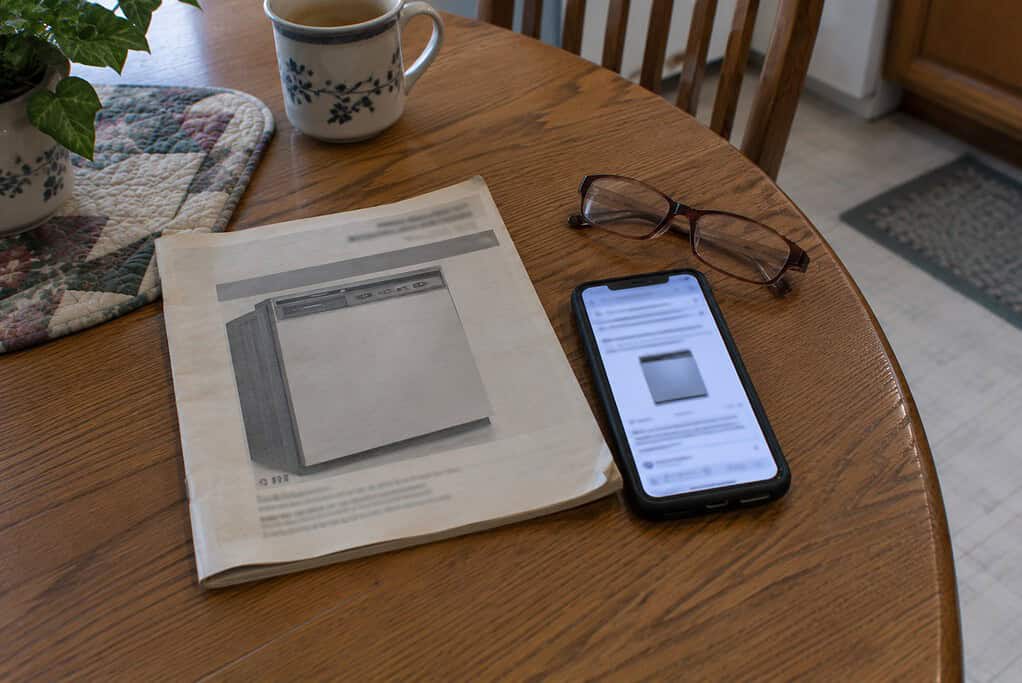
Many big appliance makers put their manuals online for free.
GE Appliances has a page where you type in your model number to download the owner’s manual and the care guide. Whirlpool says you can use your model number to find product manuals, too.
Car makers do it as well. Ford says you can get a free digital copy of your owner’s manual on its website, by your car’s model and year.
So for some things, I let the paper manual go once I’d found it online. I saved the link in a note on my phone.
But I didn’t do this for everything. For the dishwasher and the furnace, I kept the paper.
I want to be able to grab it when something stops working. (And I wasn’t sure our old furnace would even be online.)
Old Warranties That Ran Out Years Ago
Next, I looked at the warranty cards. Most of them had run out years ago.
A one-year warranty from 2009 isn’t doing anything for us now. Those went in the recycling with their manuals.
The FTC says an extended warranty or service contract is different from the warranty that comes with a product. It costs extra and is sold on its own.
We had one service contract that was still good, for our washer. That one went right into the keep folder with the washer’s manual.
If you’re not sure whether a warranty is still good, look for the dates printed on it. Most will say how many years it lasts from the day you bought the product.
Shred the Old Receipts
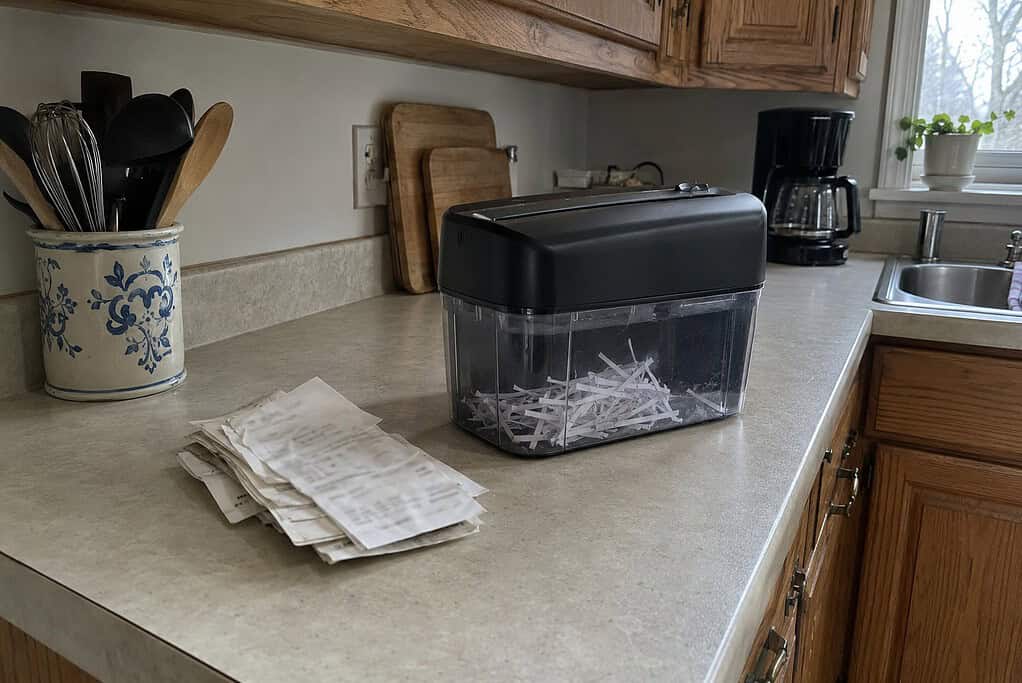
The drawer also had a pile of old receipts, some so faded I couldn’t read them.
The FTC says that printed card receipts aren’t supposed to show more than the last five digits of your card number, or the expiration date. But some of mine were very old, and some were handwritten.
So I didn’t put them in the trash whole. I shredded every receipt we didn’t need. (My post on how to stop hoarding paper has more on what to keep and what to shred.)
The receipts for things we still own stayed, stapled to their manuals.
Check for Recalls While You’re at It
Here’s something I didn’t expect to do that afternoon. I checked our appliances for recalls.
The U.S. Consumer Product Safety Commission has a page at cpsc.gov/Recalls where you can search for recalls. You can also sign up there to get recall emails.
I typed in a few of our model numbers. Nothing came up, and I felt better knowing for sure.
If you ever find something unsafe in your home, the CPSC says you can report it on SaferProducts.gov.
Where the Old Manuals Went
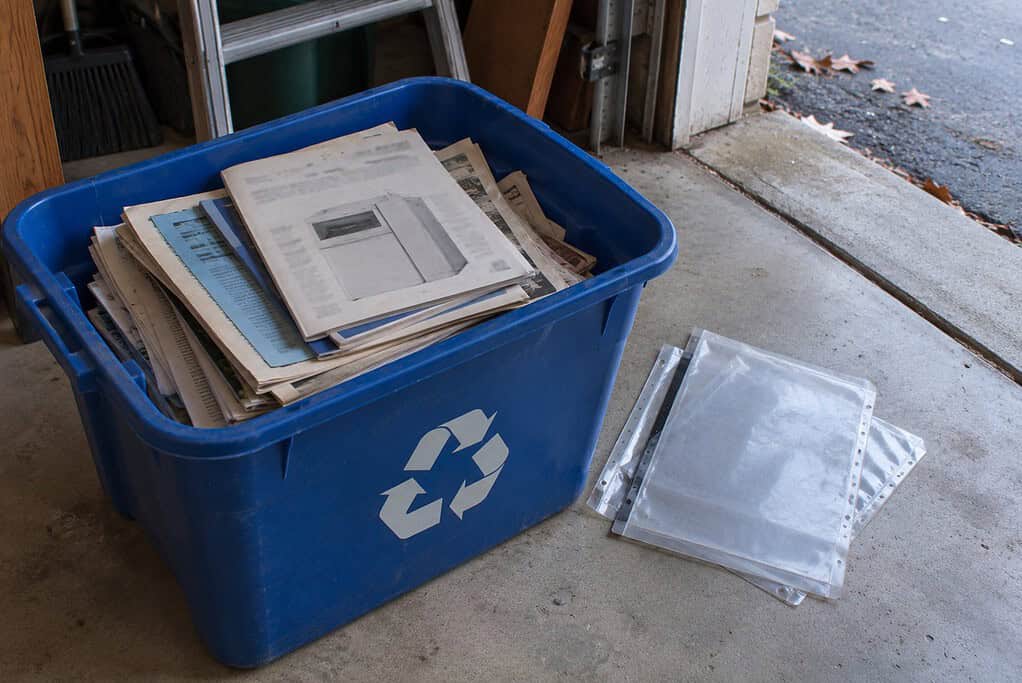
Most paper manuals can go in the recycling. The EPA says many curbside programs take paper products like books, catalogs and office paper.
Rules are different in every town, though. Some places don’t want hard covers or plastic binders, so check your town’s list.
I pulled the plastic covers off two of ours and put them in the trash. The paper went in the blue bin.
A few manuals came in plastic sleeves with a CD tucked inside. The CDs went in the trash, since we don’t have anything that plays them anymore.
What I Found in Mom’s Kitchen Drawer
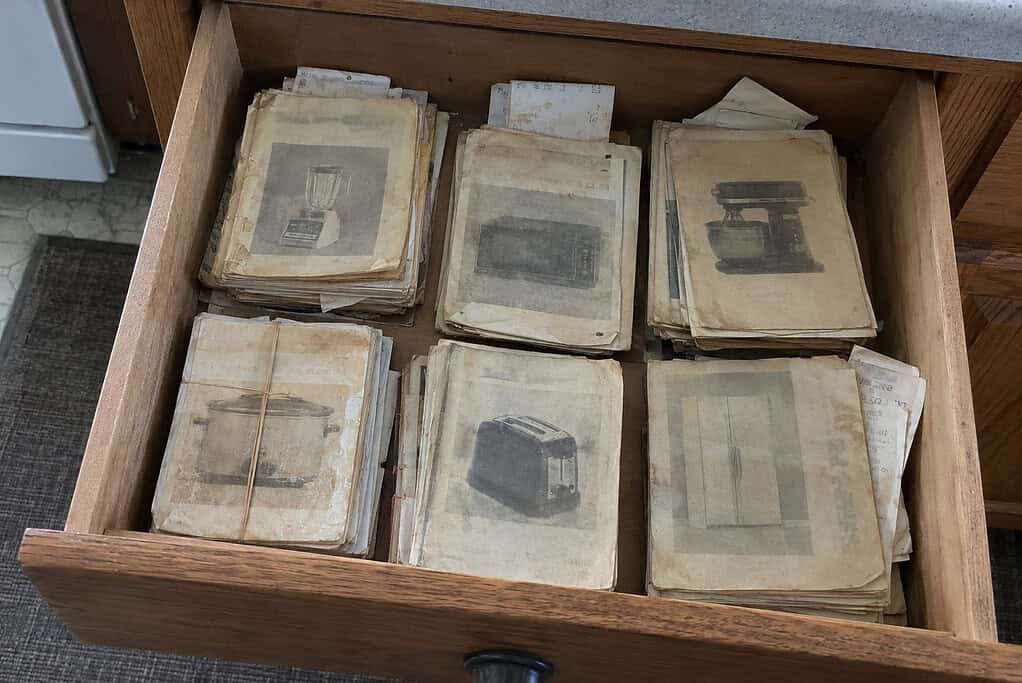
I learned this lesson first at my mother’s house.
When my sister and I cleared Mom’s kitchen, we found a drawer full of manuals. There was one for a mixer from the 1970s, one for a toaster oven and one for a radio she’d given away years before.
None of those things were in the house anymore. But the booklets were all there, neat and flat, with the receipts tucked inside.
My sister laughed and said, “Mom kept the instructions for things she didn’t even have.” Then she looked at me and said, “So do you.”
She was right. That’s part of why I finally sorted my own drawer. (If you’re clearing a parent’s home right now, my post on how to clear out a parent’s house might help.)
My Husband’s Manuals Are His Call
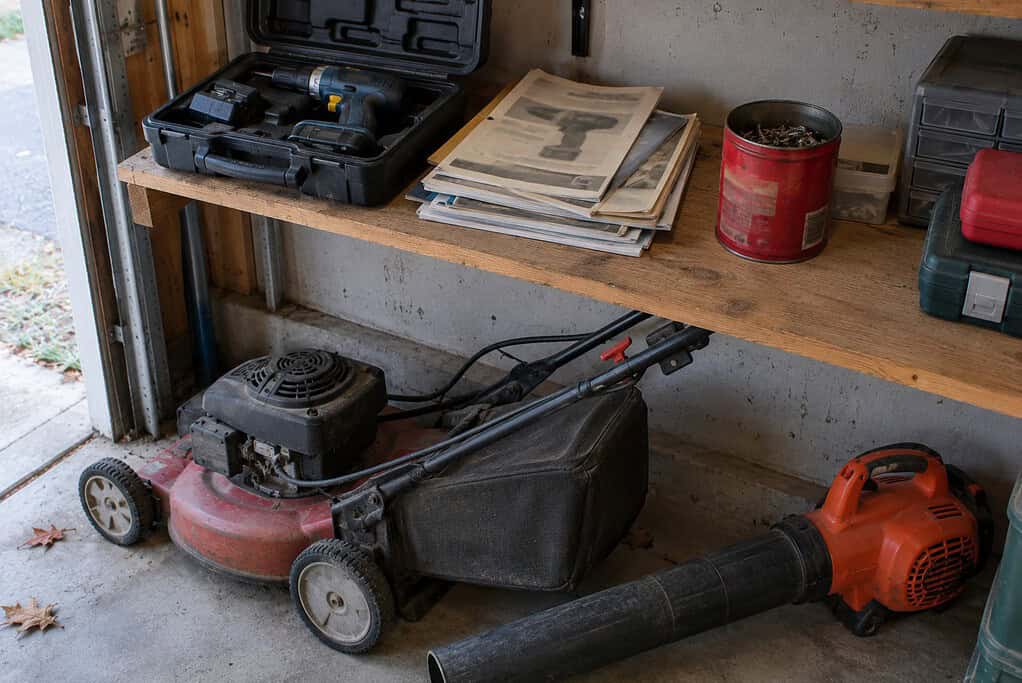
My husband has a stack of manuals for his tools in the garage. A drill, a saw, the lawn mower and a leaf blower.
He uses all of those things, and he likes having the books close by. So the garage manuals stay, and I don’t touch them.
That’s the rule in our house. His things are his call. (I wrote about how we made peace with that in my post on living with a husband who keeps everything.)
My Simple Manual Folder
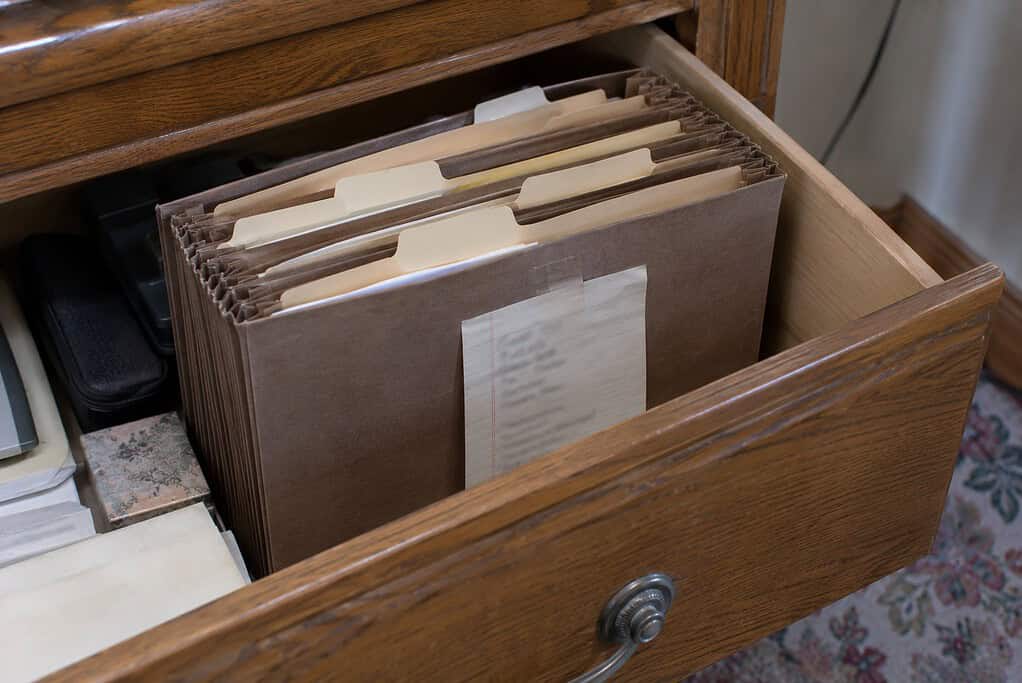
Everything we kept now fits in one accordion folder with a pocket for each room.
The kitchen pocket holds the fridge, stove, dishwasher and microwave. The laundry pocket holds the washer, dryer and the service contract. One pocket holds the furnace and water heater, and one holds the TV and the phone.
On the front of the folder, I taped the list of model numbers. The folder lives in the desk drawer where the whole messy pile used to be.
When we get a new appliance, the manual and receipt go in the right pocket. When an appliance leaves the house, its manual leaves, too.
That’s the whole system. It’s not fancy, but it works, and the drawer closes now. (My post on how to declutter a junk drawer has the rest of my drawer tricks.)
What This Small Job Gave Me
Last month, our dishwasher started blinking a little orange light. I didn’t panic, and I didn’t go digging.
I opened the folder, pulled out the kitchen pocket and found the right page in about one minute. The light meant the filter needed cleaning.
That’s what I wanted from this job. Not an empty drawer, just the right manual when I need it, and none of the ones I don’t.
If you have a drawer like mine, pull it out this week and ask one question about each manual. Do we still own it? You’ll be surprised how much can go.
For more small jobs like this one, my list of 30 things to let go of after 60 has a task for every day of the month. And my post on just in case clutter can help with the other things we keep “for someday.”
A Little Help for the Next Step

One drawer at a time is a kind way to make your home easier. You don’t have to do the whole house this month.
My free Declutter for Self Care Checklist breaks your home into small, gentle jobs, one space at a time. It’s a good next step after the manual drawer is done.
Frequently Asked Questions
Should I keep owner’s manuals?
Keep the manuals for things you still own, especially big appliances, the furnace and anything you might need to fix. Let go of the manuals for things that have left your house. If a manual is easy to find online, you can save the link instead.
What should I do with old owner’s manuals?
Most paper manuals can go in your curbside recycling, but check your town’s rules. Some places don’t take hard covers or plastic binders, so remove those first.
Do I need to keep receipts for warranties?
The FTC suggests saving your receipt with the warranty, because it shows the date you bought the product and that you’re the first owner. Keep it with the manual for anything still under warranty.
How do I find my appliance model number?
Look for a small label on the appliance. On many fridges it’s inside the fresh food section on a side wall, and on many washers and dishwashers it’s on the door rim or the side of the tub. The spot is different on every model, so check with a flashlight.
How can I check if my appliance has been recalled?
Search for your product on the Consumer Product Safety Commission’s page at cpsc.gov/Recalls. You can also sign up there for recall emails.
Follow me elsewhere!

