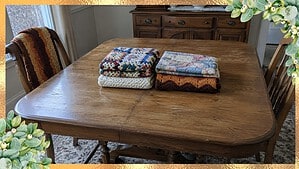
My mother never sat down in the evening without a crochet hook in her hand.
She kept her yarn in a basket by the bed. She watched the news with a half-made afghan in her lap. When one was finished, she folded it over the back of a chair and started the next one that same night.
So when we cleared out her house, there were afghans everywhere. They were on the couch, in the hall closet, at the foot of every bed, and in a cedar chest in the spare room.
There were two quilts too. One was from a store. The other was made by my grandmother, every stitch by hand.
I couldn’t sort them then. I packed them all into one big plastic tub and brought it home to our basement.
That tub sat there for almost three years. This fall, my sister came over on a Saturday, and we finally opened it together.
This is what we found, how we decided what to do with old quilts and afghans, and where the rest of them went to keep someone warm.
The Tub in the Basement
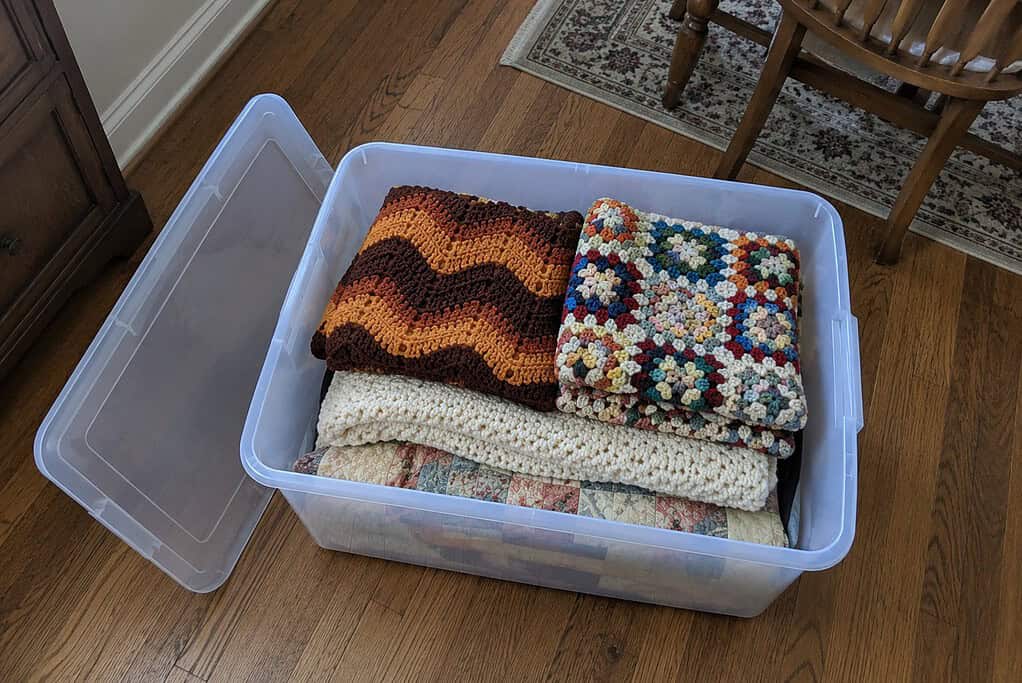
My sister brought coffee cake, and I made a pot of coffee. We carried the tub up to the dining room and set it on the floor.
(My husband carried it. We just told him where.)
When I lifted the lid, the smell of my mother’s house came out. I had to sit down for a minute.
There were eleven afghans. Some were ripple stripes in brown and orange, from the 1970s.
Some were granny squares in every color she had left over. One was a soft white baby blanket she made and never gave away.
At the bottom were the two quilts.
We laid everything out across the dining table and the chairs. It covered every surface in the room.
My sister looked at it all and said, “We can’t keep all of this.” She was right. But we also couldn’t just give it all away without a look.
First, Find Out What You Have
Before we decided anything, we looked at each piece more closely. This part only took about half an hour, and it changed some of our choices.
Hand Quilting or Machine Quilting
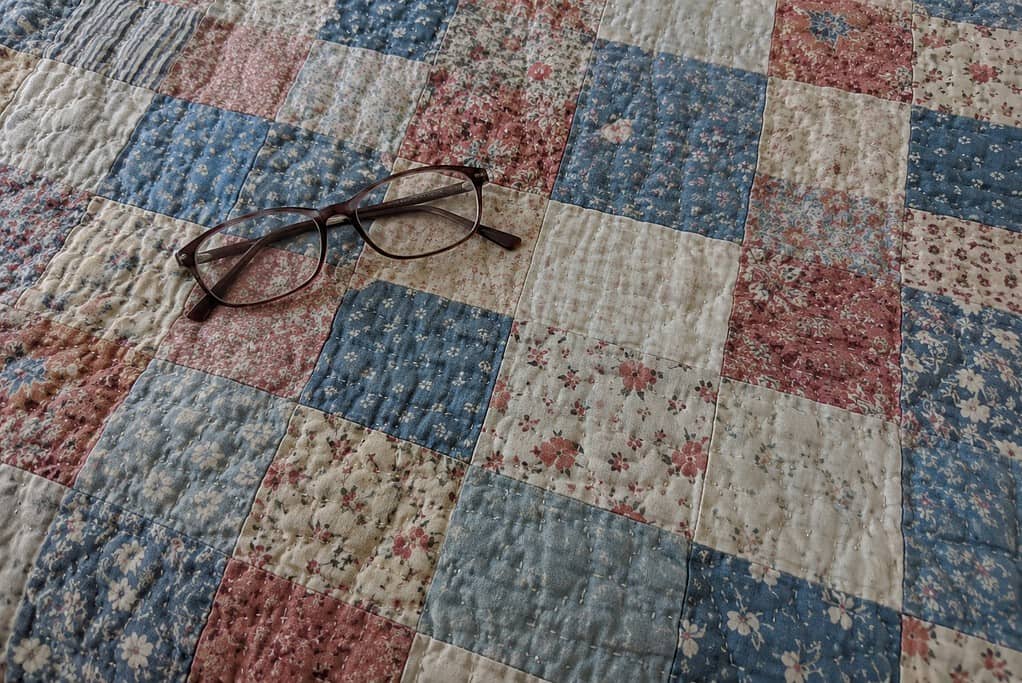
A quilt has three layers. There’s the pretty top, a soft middle, and the plain back. The small stitches that hold all three layers together are called the quilting.
If those stitches are perfectly even, like a straight row of dashes, a machine made them. If the stitches are a little uneven, with small gaps that aren’t all the same size, they were probably made by hand.
My grandmother’s quilt had uneven stitches all over it. You could see where her hands had worked, one small stitch at a time. The store quilt had perfect, even lines.
Why It Matters
Older quilts that were made all by hand can be worth real money. Some sell for a few hundred dollars, and a few rare ones sell for much more.
If you think you have a very old quilt, a quilt appraiser can tell you what it’s worth. The American Quilter’s Society has a list of certified appraisers, and many will look at photos first. Ask what they charge before you send anything.
Most afghans are a different story. Even beautiful ones usually sell for very little. Their value is the hours of love that went into them, and that’s not something you can sell anyway.
Check for Damage
We also looked for holes, stains, and spots where the yarn had worn thin. Three of the afghans had moth holes. One had a big stain from something spilled long ago.
Damaged pieces can still be useful. They just need a different kind of home.
The Ones We Kept
We didn’t make rules about how many to keep. We just asked, “Will someone use this or love it?”
The estate sale lady who helped us at my mother’s house said families keep the everyday things that have a story. I wrote about what families actually keep, and she was right again here. Every afghan we kept came with a memory.
My Grandmother’s Quilt
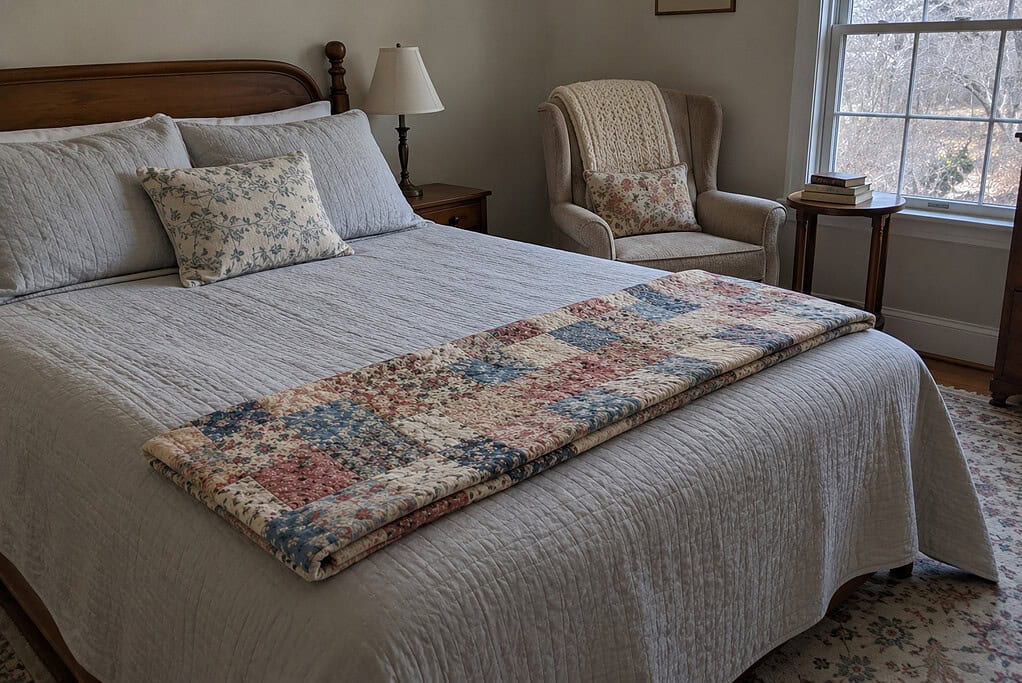
This one was never a question. I kept it.
But I didn’t put it back in the tub. It now lies folded across the foot of our bed, where I see it every day. On cold nights, I pull it over my knees while I read in my chair.
My grandmother made it to be used. I think she’d rather see it on a bed than in a box. (I wrote about that same feeling in my post on using the good stuff every day.)
One Afghan Each
My sister and I each picked one afghan. She chose the ripple one that was always on our parents’ couch. I chose a blue one that I remember from the hall closet.
I called my brother, who lives three states away. He asked for the brown and orange one, because it was on his bed when he was a boy. I mailed it to him that week, folded in a clean pillowcase.
My daughter came by the next weekend and took one too. She laughed when she saw the granny squares, and for a second she sounded just like my mother.
The Granny Squares
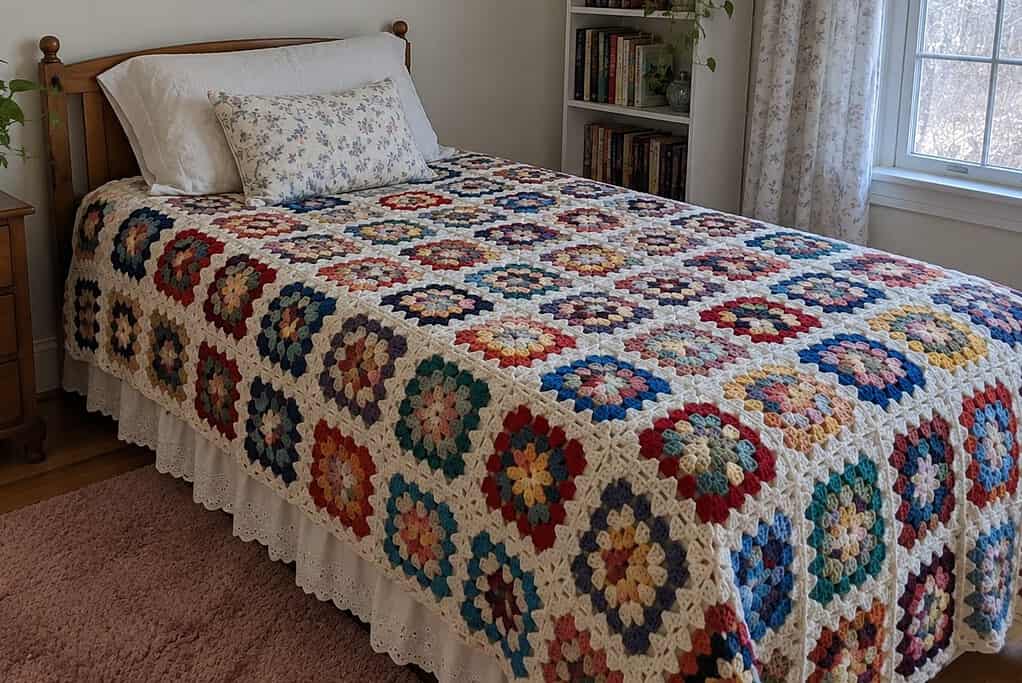
Here’s something that surprised me. My older granddaughter loves granny squares.
She said they’re popular again with girls her age. She took two of my mother’s granny square afghans. One is on her bed right now, and she sent me a picture.
I never expected my mother’s leftover yarn to end up on a teenager’s bed. My mother would have laughed out loud.
If you have grandchildren, ask them before you give anything away. Sometimes the grandkids want what the kids didn’t. I learned that when I asked my own family what they wanted to inherit.
Where the Rest Did Good
After all of that, there were still five afghans and the store quilt left. None of us needed them, and that was okay.
We decided they should all keep someone warm. These are the places we called, and what each one said.
A Winter Shelter in Our Town
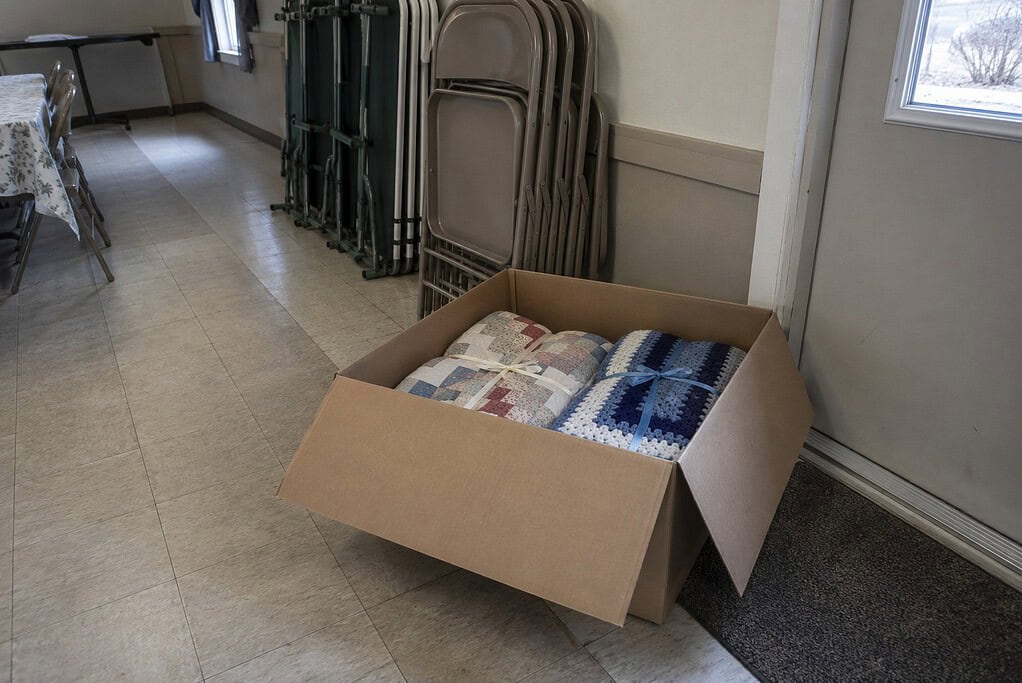
Our winters get very cold. A church in our town runs a warming shelter on the coldest nights of the year.
I called and asked if they could use clean, warm blankets. The woman said yes right away. People often leave with a blanket wrapped around their shoulders, and they always need more.
The store quilt and one of the afghans went there. I washed them first and tied each one with a ribbon so they’d stay folded.
A Nursing Home Near My Sister’s House
Many people in nursing homes feel cold, even indoors. Small blankets that fit over a lap, or over the knees in a wheelchair, are often welcome.
My sister called a nursing home near her and asked first. Not every home can take used blankets. This one said yes to a small yellow afghan, as long as it was clean.
My sister dropped it off. The activity director told her one of the ladies picked it out right away and asked who made it.
The Animal Shelter
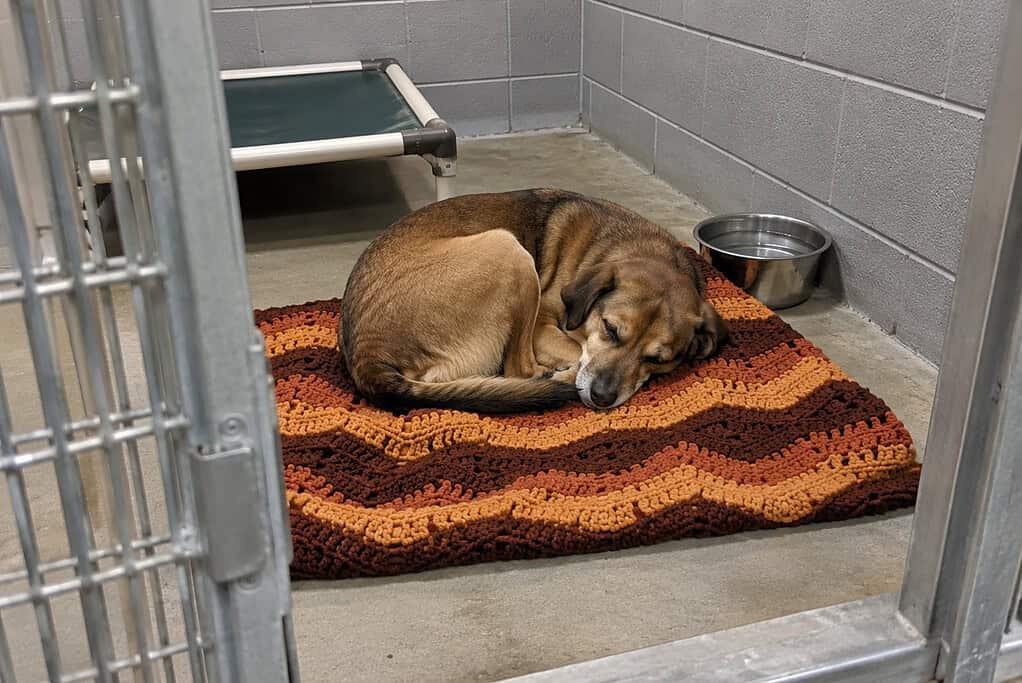
The three afghans with moth holes and the one with the stain went to our local animal shelter. Shelters use old blankets and towels to make the cages softer and warmer for the dogs and cats.
I called first, because some shelters have rules about what they can take. Ours was glad to have them.
I’ll admit, I felt a little sad leaving my mother’s afghans there. But then I thought about a scared dog curled up on one of them, and I felt better.
My mother loved animals. (She used to slip our dog bits of toast when she thought I wasn’t looking.)
A Note About Children’s Blanket Charities
My first idea was a group called Project Linus, which gives blankets to children who are sick or going through a hard time. It’s a wonderful group.
But I learned that Project Linus only accepts new, handmade blankets, not used ones. So if you knit or crochet, they would love your new work. Older afghans need to go somewhere else, like the places above.
If you have a quilt top that was never finished, some quilt guilds will finish it and give it to charity. I have one of my own that I pieced years ago, and I wrote about it in my post on decluttering my craft supplies.
For more ideas, my item-by-item donation guide lists who takes old towels, sheets, and blankets.
How I Care for the Ones I Kept
I learned that the plastic tub was not a good home for any of them. Plastic can trap damp air, and that can cause mildew and musty smells.
Now I store the quilts and afghans I’m not using in clean cotton pillowcases or wrapped in an old cotton sheet. I keep them in a closet inside the house, not in the attic or the basement, where it gets too hot or too damp.
I also learned that old wood, like a cedar chest, can stain a quilt over time if the quilt touches the wood. If you use a chest, lay a clean cotton sheet in it first.
Every few months, I take them out and fold them a different way. Old fabric can wear thin along a fold that’s been there for years.
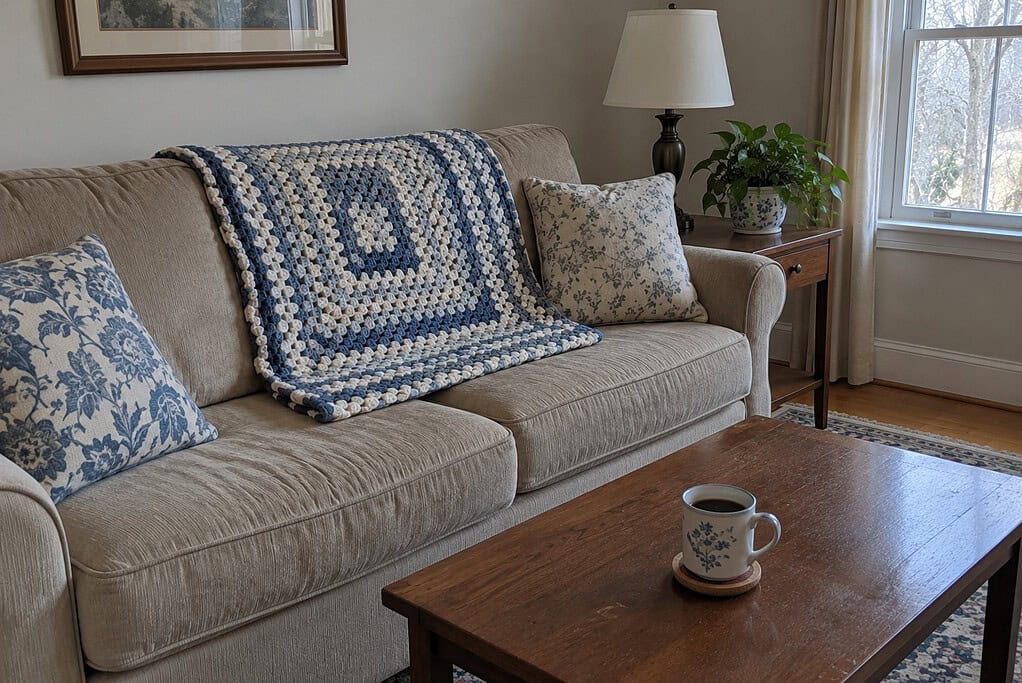
But the best care is simple. I use them. A quilt on a bed or an afghan on the couch gets aired out and looked at every day, and that’s what they were made for.
If You’re Not Ready Yet
You may open a box like mine and close it again. That’s okay.
You don’t have to decide about everything in one afternoon. Take out one afghan and put it on your couch this week. Use it, and see how it feels.
When you’re ready, call your sister, your daughter, or a friend. It was so much easier with my sister beside me, and we laughed more than we cried.
If the box came from a parent’s house, I wrote about how I handled clearing out my mother’s house in one month, and how I learned that not every box has to be opened right away.
Still Keeping People Warm
The tub is gone from our basement now. The space it left is small, but I notice it every time I go down for laundry soap.
My mother’s afghans are in my sister’s living room, my brother’s house three states away, and my granddaughter’s bedroom. They’re in a nursing home and a winter shelter. A few are at the animal shelter, under dogs who need somewhere soft to sleep.
My grandmother’s quilt is on our bed, where I can see it every day.
My mother made those afghans to keep the people she loved warm. Now they’re keeping more people warm than she ever could have imagined. I think that’s exactly what she would have wanted.
Make Room for What Matters Most

A box of a loved one’s things can feel too heavy to open. You don’t have to do it all at once, and you don’t have to do it alone.
My free Declutter for Self Care Checklist breaks your home into small, gentle jobs, one space at a time. Start with one box, one afternoon, and one cup of coffee.
Frequently Asked Questions
What do you do with old quilts?
Keep the ones that someone will use or love, and use them on a bed or couch. Check very old, hand-stitched quilts with a quilt appraiser before you sell or donate them. Clean quilts in good shape can go to winter shelters or nursing homes, and worn ones can go to animal shelters.
Are old handmade quilts worth any money?
Older quilts that were stitched by hand can sell for a few hundred dollars, and rare ones for much more. Machine-made and store-bought quilts are usually worth much less. A certified quilt appraiser can tell you what yours is worth.
Where can I donate old afghans?
Call winter shelters, homeless shelters, nursing homes, and animal shelters in your area. Ask first, because each place has its own rules. Worn or stained afghans are often welcome at animal shelters.
Does Project Linus take used blankets?
Project Linus only accepts new, handmade blankets for children. If you knit, crochet, or quilt, they would welcome your new work. Older, used afghans can go to shelters instead.
How should I store old quilts?
Keep them in clean cotton pillowcases or cotton sheets, not plastic. Store them inside the house, away from the attic, basement, and sunlight. Refold them a different way every few months, or better yet, use them.
Follow me elsewhere!

