Walkers, Wheelchairs and the Spare Cane: Where Medical Equipment Helps Again

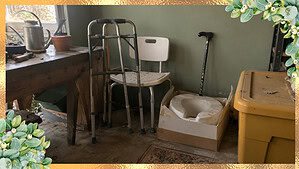
There's a corner of my garage that tells a story.

A walker from my knee replacement a few years back. A shower chair we bought when my husband hurt his hip. A spare cane, and a raised toilet seat still in its box. Some of it was my mother's, from her last year.

None of us need any of it right now. But there it sits.

I couldn't bring myself to throw it out. This equipment isn't cheap, and most of it is barely used. Tossing a perfectly good walker in the trash felt wrong, and honestly, a little wasteful.

But I didn't know where else it could go, either. The thrift store down the road doesn't take most of it. And it's not the kind of thing you can just leave at the curb.

So it stayed in the garage, gathering dust, for longer than I'd like to admit.

If you have a corner like mine, this one is for you.

Because it turns out there are real places, built for exactly this, that will take your used medical equipment and get it to someone who needs it. Someone who can't afford a new one. Someone waiting to come home from the hospital.

I finally sorted mine out, and it felt wonderful. So let me show you where to donate medical equipment, so yours can help again instead of collecting dust.

Too Good to Throw Away, Too Useful to Keep
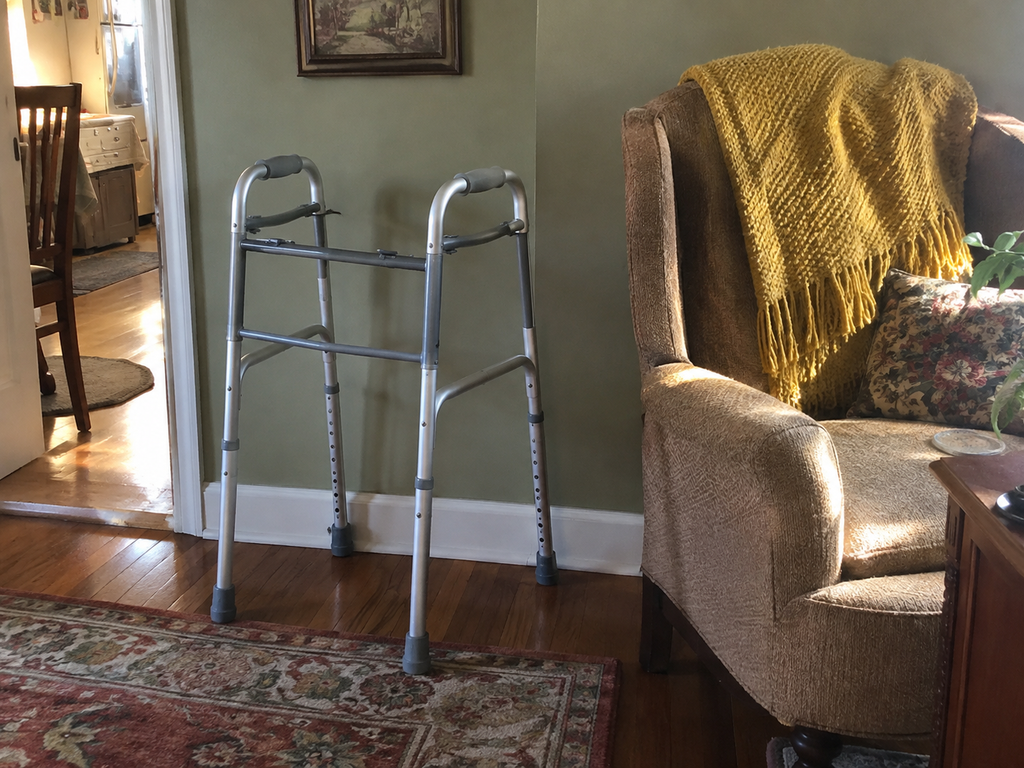
A barely-used folding walker in good condition standing in an ordinary home, still useful but no longer needed

If you're staring at a walker or a wheelchair you don't need, you're probably feeling two things at once.

You know you should let it go. It's taking up space, and you're not using it.

But you also can't stand the thought of wasting it.

A good walker can cost a hundred dollars or more. A wheelchair, far more than that. It feels wrong to bin something that still works perfectly well.

That waste-not feeling is a good one. Hold onto it. Because it's exactly why this equipment shouldn't go in the trash.

Somewhere near you, someone needs the very thing sitting in your garage. An older person coming home from the hospital. A family that can't afford a shower chair. A neighbor recovering from surgery.

I keep a spare cane and a few things for myself, and there's nothing wrong with keeping what you truly might use again. But holding onto things just in case is different from letting good equipment sit unused for years while someone else goes without.

Some of what I had came from clearing my mother's home after she passed. If you're facing that too, sorting through a loved one's belongings is hard enough without wondering where the walker and the wheelchair are supposed to go.

Read related post:   21 Space-Saving Garage Storage Ideas to Make Room for Your Car Again

The good news is simple. There are real places for all of it. And someone gets to walk again because you passed it on.

Where It Can Actually Go

Here are the best places to send used medical equipment. One quick thing to know first: always call ahead. What each place takes can vary a lot from one town to the next, so a two-minute phone call saves you a wasted trip.

The local loan closet

This is the best-kept secret of the whole list, and my favorite by far.

A loan closet is a free lending library for medical equipment. People donate gear they no longer need. The closet cleans it, checks it, and lends it out to anyone in the community who needs it, usually at no charge at all.

They almost always want walkers, canes, crutches, wheelchairs, shower chairs, and bedside commodes. Clean ones, with all the parts, and no rust.

Loan closets are often run by churches, senior centers, Lions Clubs, or local nonprofits. To find one, search “loan closet” or “medical equipment lending” along with your town's name. Then call to make sure they have room, since many run on limited space.

When I dropped my walker at one, they told me it would likely be back out the door within the week. That felt a whole lot better than the garage.

One phone call that points you to the rest

If you don't know where to start, there's one number that can point you to everything local.

It's the Eldercare Locator, a free national service. Call 1-800-677-1116, or visit eldercare.acl.gov. Tell them what you have and where you live, and they'll connect you to your local Area Agency on Aging.

That local office knows the loan closets, the reuse programs, and the charities in your area. They do this all day long.

While you're at it, ask about your state's assistive technology reuse program. Every state has one. These programs refurbish equipment like power wheelchairs, scooters, and shower chairs, and get them to people who need them, often for free. You can look yours up through the AT3 Center directory online, or just ask the Eldercare Locator to point you to it.

One phone call, and you have your whole local map.

Charities and groups that take the big stuff

A hospital bed and power wheelchair set near an open garage door, clean and ready for a charity pickup

The heavy, powered items are harder to place. Not every spot can take a hospital bed or a power wheelchair. But some are built for exactly that.

Groups like FODAC (Friends of Disabled Adults and Children) and the F.R.E.E. Foundation take all kinds of home medical equipment, including the big pieces, and many will even come pick it up. The ALS Association and the Muscular Dystrophy Association run loan closets too, and often arrange pickup through their local chapters.

Some Goodwill locations run dedicated medical equipment programs, though many do not, so this is one to call about first. The same goes for Habitat for Humanity ReStore, which often takes things like grab bars in good condition.

For anything powered, like a scooter or a power chair, they'll usually need a working battery and charger, so have those ready. If you want a fuller list of where things can go, I keep a list of good places to donate after any kind of decluttering.

Read related post:   Decluttering After a Death: The Burden We Leave for the People We Love

Wheelchairs that travel the world

A clean folding manual wheelchair, wiped down and complete, ready to be donated

If you have a manual wheelchair, one that you push rather than one that runs on a battery, there's a lovely option.

An organization called Wheels for the World collects used manual wheelchairs, along with walkers, canes, and crutches. They refurbish them and get them to people with disabilities in countries where a wheelchair can change a life completely.

They take manual chairs in just about any condition, but they don't take electric or power wheelchairs. You can find a drop-off spot or arrange a pickup through their website.

It's a wonderful thought, isn't it? Your old wheelchair, halfway around the world, giving someone their independence.

A neighbor who needs it, same day

A clean cane and shower chair set out on a front porch, ready for a neighbor to pick up

Sometimes the fastest, warmest option is right on your street.

If you're on Facebook, your local Buy Nothing group is perfect for this. You post a photo of what you have, and a neighbor who needs it comes and picks it up. No charge, no shipping, no fuss. Freecycle works the same way.

This is also the best home for things the charities can't take. An opened package of supplies, or a piece that needs a small repair, might be exactly what a handy neighbor is looking for. Just be honest about the condition, so no one ends up with something unsafe.

There's something nice about knowing exactly where your things went, and who they helped.

Before You Hand It Over

A few small steps make sure your equipment actually helps the next person, instead of getting turned away at the door.

First, give it a good clean. Wipe everything down and disinfect the surfaces, especially anything that touches the skin, like a walker's handles or a shower chair's seat. It's a kindness to the next person, and most places require it.

Second, gather all the parts. The footrests, the cushion, the charger, the manual if you still have it. Equipment that's missing pieces often gets refused.

Third, if it's an electronic item, wipe off any personal information. A few devices store health data, so clear it or remove the memory card before it leaves your hands.

Now, a couple of honest limits, because not everything can be passed on.

Used masks, tubing, and filters from breathing machines like a CPAP can't be donated, for hygiene reasons. The machine itself sometimes can, to special sleep programs, but the used parts always go in the trash. The same goes for any opened package of personal supplies. Charities can only take those new and sealed.

And if something is broken, rusted, or has been recalled, please don't pass it on. A wobbly walker or a wheelchair with bad brakes is a fall waiting to happen for the next person.

But here's the reassuring part. Even broken equipment doesn't have to weigh on you. Metal frames can go to scrap metal recycling, and electronics to an e-waste program. The materials get used again, even when the item can't. So it still helps, just in a different way.

If the pile in your garage feels like a lot to face, remember you can do this the same way you'd tackle any clutter. One item, one phone call at a time. If you need a gentle nudge on beginning, here's where to start when it feels like too much.

Read related post:   11 Things I Removed From My Home Once I Started Taking Decluttering for Safety Seriously

It Gets to Help Again

I think about my mother's walker sometimes.

For a while, it just sat in my garage, a sad reminder taking up space. Now it's out there somewhere, helping another woman stay steady on her feet. That feels so much better than the corner it came from.

That's the gift of this one. You're not just clearing out your garage, though that feels good too. You're handing something useful to a person who genuinely needs it, and may not be able to afford it.

The walker, the wheelchair, the spare cane. None of it has to gather dust, and none of it has to go in the bin.

It gets to help again. And so do you, just by picking up the phone.

So pick one item this week. Make one call. You'll be surprised how good it feels to know exactly where it went.

One Corner Cleared, and a Whole Home Waiting

Clearing out that medical equipment is one of the most satisfying corners you'll ever tackle, because you know exactly who it helps.

If it left you wanting to clear a little more, my free Declutter for Self Care Checklist walks you through the rest of your home the same gentle way, so nothing sits gathering dust that could be doing some good.

Frequently Asked Questions

Where can I donate a used walker or wheelchair?

The best places are your local medical equipment loan closet, your state's assistive technology reuse program, and disability charities like FODAC or the F.R.E.E. Foundation. Manual wheelchairs are also welcomed by Wheels for the World. If you're not sure what's near you, call the Eldercare Locator at 1-800-677-1116 and they'll point you to local options. Always call the specific place first, since what they accept varies from town to town.

Does Goodwill take medical equipment?

It depends entirely on the location. Some Goodwill stores run dedicated medical equipment programs and will take walkers, wheelchairs, and more. Many others only accept canes and manual walkers in good condition, and won't take beds, lifts, or electronics. Call your local store and ask before you load up the car. If they can't take it, a loan closet or a reuse charity usually can.

How do I find a medical equipment loan closet near me?

Search online for “loan closet” or “medical equipment lending” along with your town or county name. They're often run by churches, senior centers, Lions Clubs, and local nonprofits. You can also call the Eldercare Locator at 1-800-677-1116 or your local Area Agency on Aging, and they'll know the closets in your area. Call ahead to check they have space, since many run on limited storage.

Can you donate a used CPAP machine?

The machine itself can sometimes be donated to a sleep apnea assistance program, if it still works and hasn't been recalled. But the used mask, tubing, and filters cannot be donated for hygiene reasons, so those go in the trash. Never pass on a recalled breathing machine. If you have a CPAP to give, look up a reputable CPAP donation program online and check their current requirements first.

What do I do with a broken wheelchair or walker?

Please don't donate anything broken, rusted, or unsafe, since it could cause a fall for the next person. Instead, recycle it. Metal frames from walkers and wheelchairs can go to a scrap metal recycler, and any electronic parts or batteries to an e-waste program. That way the materials still get a second life, and you're not sending a hazard to someone else. Your city's recycling office can tell you where to take it.

Follow us on PinterestFollow
Follow me elsewhere!

Leave a Comment