Have you ever kept something for years, not because you loved it, but because you didn't know what else to do with it?
That's the silverware for me.
When my mother passed, a lot of her things found homes pretty quickly. My brother took the clock. A neighbor wanted the plants.
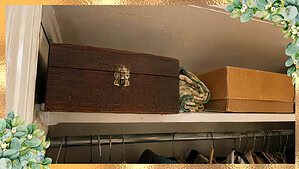
But the silverware chest, the big wooden one with the felt lining, came home with me and went straight to the top shelf of my hall closet.
And there it sat.
I told myself I'd deal with it later. Later turned into a couple of years (I'd like to say I'm exaggerating, but I'm not).
Every so often I'd see that box up there and feel a little tug of guilt.
It was my mother's good silver. She was proud of it. Setting it out was her way of saying a day mattered.
But I don't host big holiday dinners the way she did. My kids have made it clear they don't want it. And selling it felt wrong, like I was putting a price on her.
So I kept it. And it kept sitting there, doing nothing for anybody.
If you've got a set like that of your own, tucked away because you can't use it, can't pass it down, and can't bring yourself to let it go, you're not alone. This is one of the most common things women my age write to me about.
So let's walk through what to do with inherited silverware, one step at a time, without the guilt that usually comes with it.
First, Find Out What You Actually Have
Before you decide anything, you need to know one thing. Is it real silver, or is it silver-plated?
Real silver (the kind called sterling) has real value by weight. Silver-plated pieces have only a thin layer of silver over a cheaper metal, so they're worth very little, no matter how pretty or heavy they feel. Your whole plan changes depending on which one you have.
Finding out takes about two minutes.
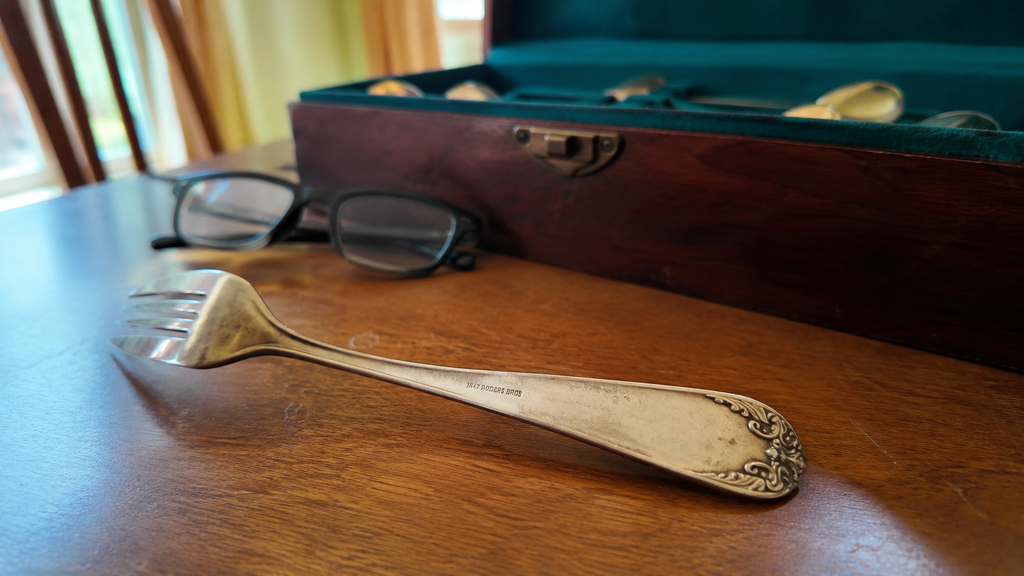
Pick up a fork or a spoon and turn it over. Look on the back of the handle, down near the base, for a small stamp.
You might need your reading glasses (I always do). That little stamp tells you almost everything.
If you see the word “sterling,” or the number “925,” or a tiny picture of a walking lion, you've got real silver. Some older American pieces say “coin” instead, which also means real silver, just an older kind.
If you see letters like “EPNS” or “A1,” or words like “triple plate” or “silver soldered,” that's silver-plated. Those letters EPNS stand for electro-plated nickel silver, which is just a fancy way of saying a thin coat of silver over another metal.
A few things trip people up, so watch for these.
If your set says “1847 Rogers Bros.,” that 1847 is the year the company started, not the year your silver was made. And that line is silver-plated, not sterling.
A mark that reads “Sterling Inlaid” is also plated, even with the word sterling sitting right there in it. And the knife blades in almost any set are stainless steel, so they don't count as silver even when the handles do.
A stamp is a very good clue, but it is not proof. Marks wear down over the years, and there are fakes and mismarked pieces out there, especially online.
One quick check at home is a magnet. Real silver is not magnetic, so if a magnet pulls hard on a piece, it is not solid silver (that one test isn't enough on its own, but it helps).
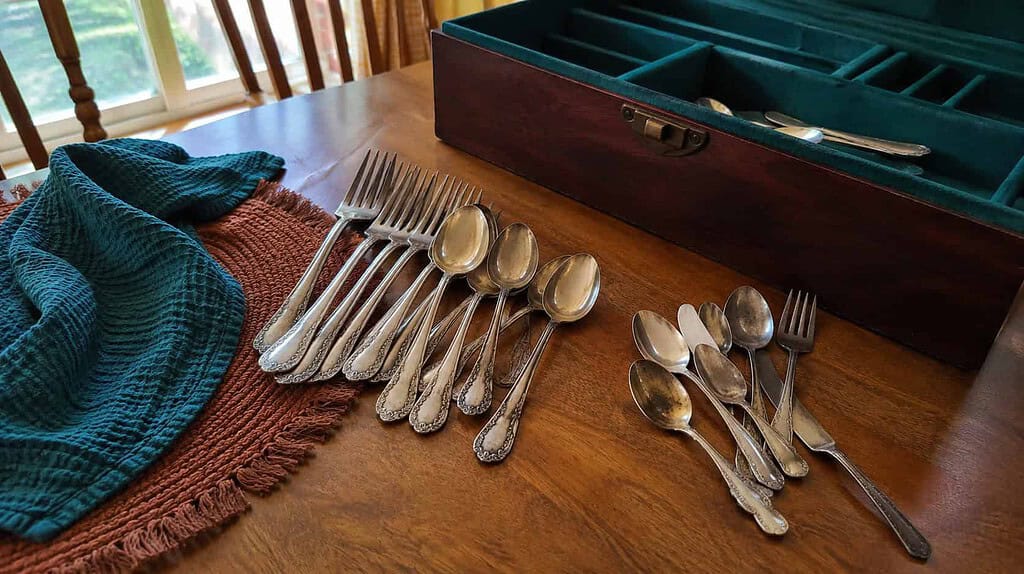
So use the stamps to sort your set into two piles, real silver in one and plated in the other. Then, before you sell anything you believe is real, take it to a jeweler or a trusted silver buyer and have it tested. They can check the metal without hurting the piece, and then you'll know for sure.
Once you know which pile is which, every decision after this gets a whole lot easier.
What It's Really Worth, and What It's Not
A lot of us get our hopes up here. We've all heard a story about someone's old silver turning out to be worth a lot of money.
Every so often that's true. Most of the time, it isn't.
Let me tell you what to really expect, so you're not disappointed and you're not taken advantage of either.
If your pieces are real silver, they do have real value. Silver is sold by weight, and your forks and spoons are made of the stuff.
A buyer weighs them, checks the price of silver that day, and pays you based on that. A full set can come to a few hundred dollars, and sometimes more if it's heavy or it's a pattern collectors want.
But the price of silver moves all the time. It's up one month and down the next. So the only number that really counts is the one on the day you sell (which is why it pays to check before you go).
Now, the silver-plated pieces.
I wish I had better news there. Plated silverware is worth almost nothing when you go to sell it.
That thin layer of silver is too little for a buyer to pay for. This isn't a reflection of your set or your family. It's just how plated silver works.
That was hard for me to accept with a few of my mother's pieces. I'd assumed the whole chest was worth something. It wasn't.
And once I let that idea go, I felt lighter, because I could stop holding onto those pieces as if they were valuable and start deciding what would actually make me happy.
If your set turns out to be plated, don't let anyone talk you into believing it's worth a lot. And if it's real silver, don't let anyone hand you a low offer without weighing it in front of you first.
Knowing what you have, and what it's really worth, takes a lot of the pressure off. You don't have a fortune on your hands, and you're not throwing money away either. You're just deciding what to do with a set of silverware that once meant something.
Where It Can Go From Here
Once you know what you have, you've got a handful of good options. None of them is wrong. Pick the one that fits your life and how you feel about the set.
If It's Sterling and You Want to Sell It
If your pieces are real silver and you'd rather have the money than the box, selling is a fine choice. Nothing to feel bad about.
You can take it to a local coin shop or silver buyer, a jeweler, or a company that buys silver by weight. If your pattern is one people collect, an antique dealer or a company that matches and buys patterns (like Replacements) may pay more than the weight alone.
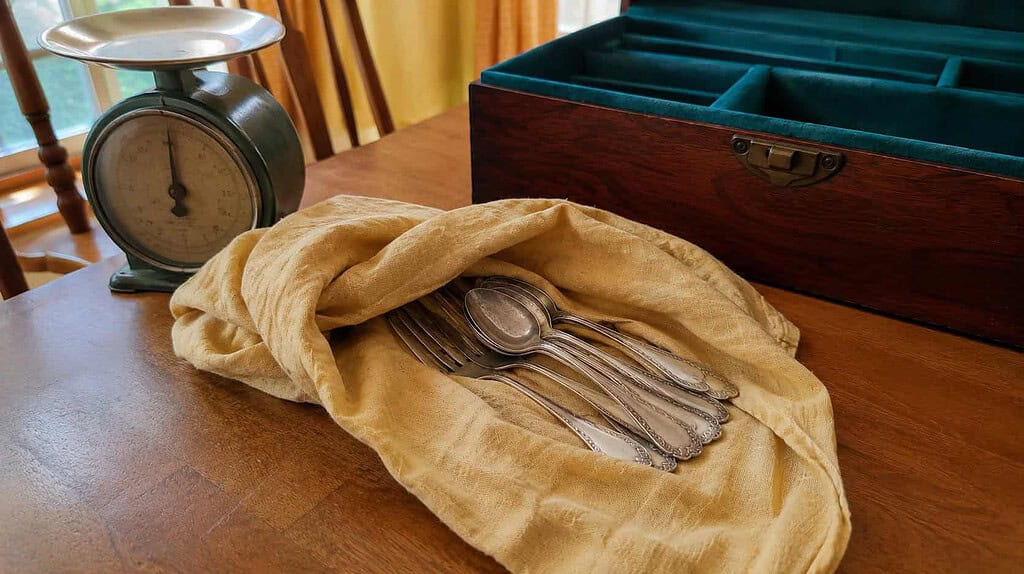
A few rules will protect you. Get it weighed in front of you.
Ask what the price of silver is that day. And get two or three offers before you say yes. A fair buyer won't mind at all.
You also don't need to polish it first. If it's going to be melted down, shiny makes no difference to the price.
If It Turns Out to Be Silverplate
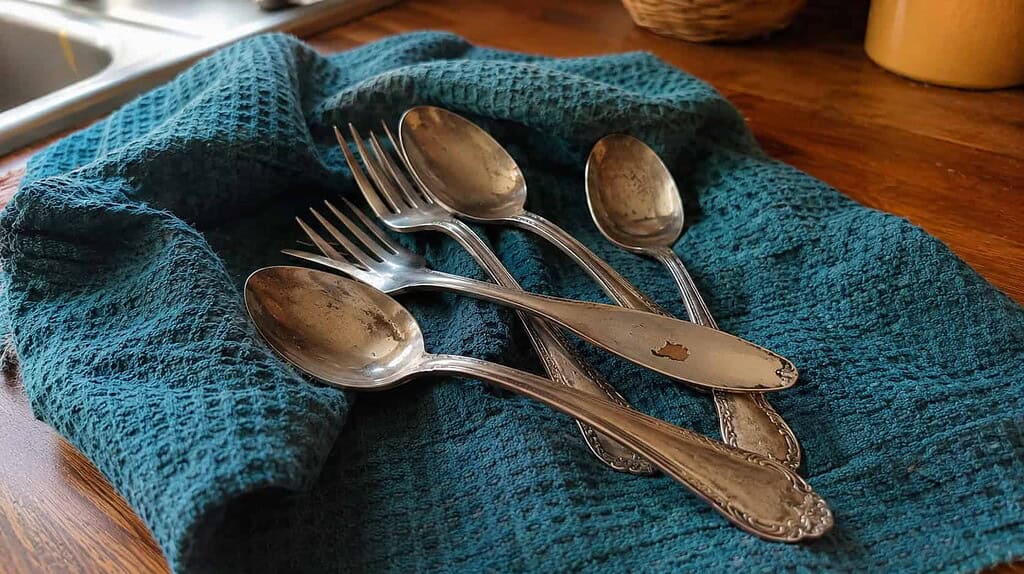
Plated pieces won't bring much, so I'd skip the selling headache with those. That doesn't make them junk. It just means their worth was never in the metal.
You can still donate them, use them, or turn them into something new. All three of those come next.
Give It to Someone Who Will Use It
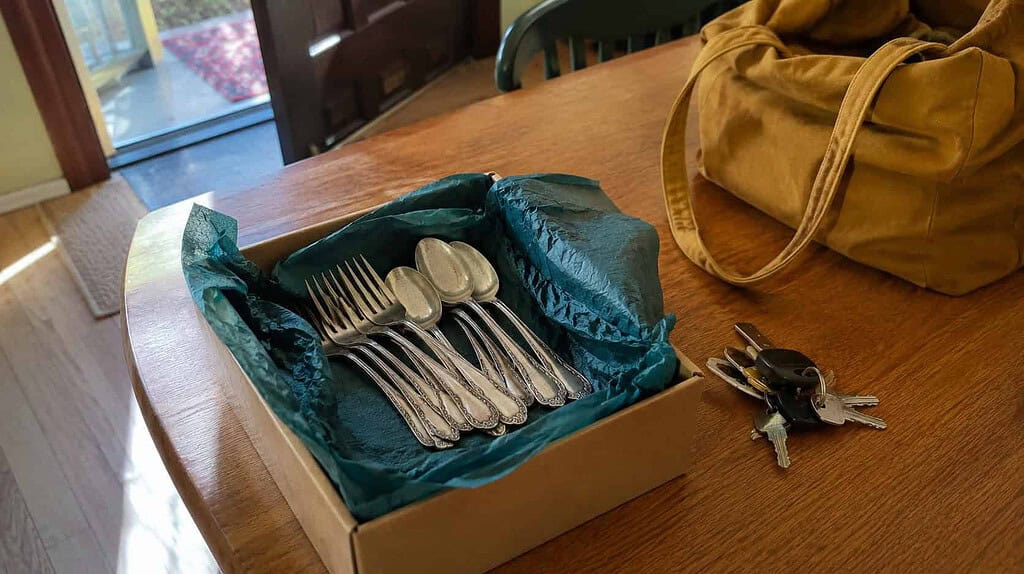
Sometimes the nicest thing is to hand it to a person who will actually use it.
A young person setting up a first apartment. A neighbor. The daughter of a friend who loves the look of old silver.
If nobody in your circle wants it, you can donate it somewhere it will truly be used. Some shelters, charity shops, and community kitchens take flatware. Call ahead first, because not every place accepts it.
Repurpose a Piece or Two
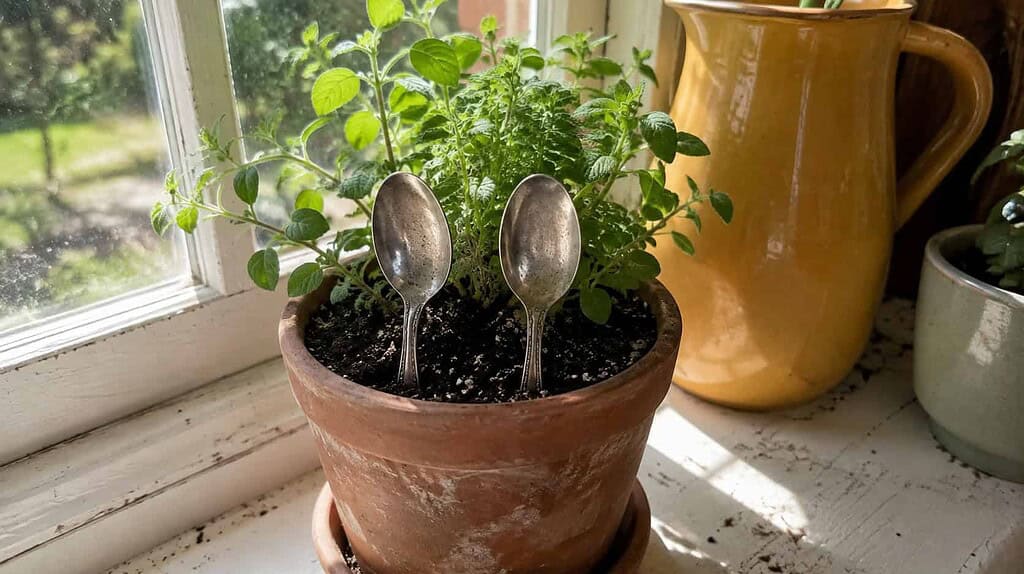
If you're a little crafty, or you know someone who is, a few pieces can become something you'll actually see and enjoy.
People bend old spoons into garden markers, turn forks into little wall hooks, or make jewelry from the handles.
This works best with the plated pieces, since you're not cutting up anything valuable. (I turned two of my mother's teaspoons into hooks by the back door, and I smile a little every time I hang my keys there.)
Keep Just a Few Pieces
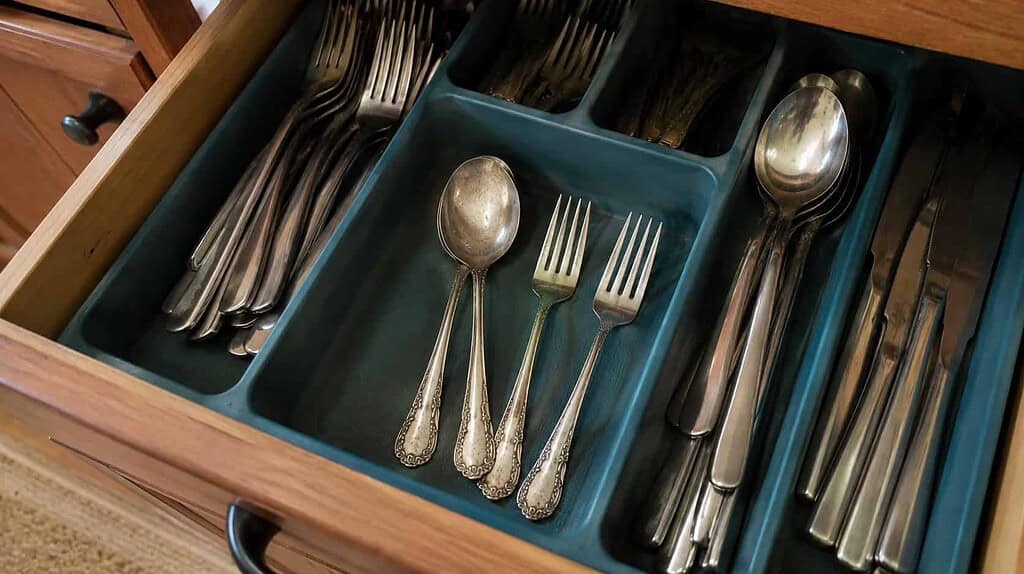
You don't have to keep the whole set to keep the memory. This was the one that freed me.
I picked out one serving spoon and two forks, the ones I remember her using most, and I let the rest go.
Those three pieces sit in my everyday drawer now, and I use them without thinking twice.
If you struggle with letting go of sentimental things, choosing a few favorites to keep is a kind way to meet yourself in the middle.
Or Just Start Using It
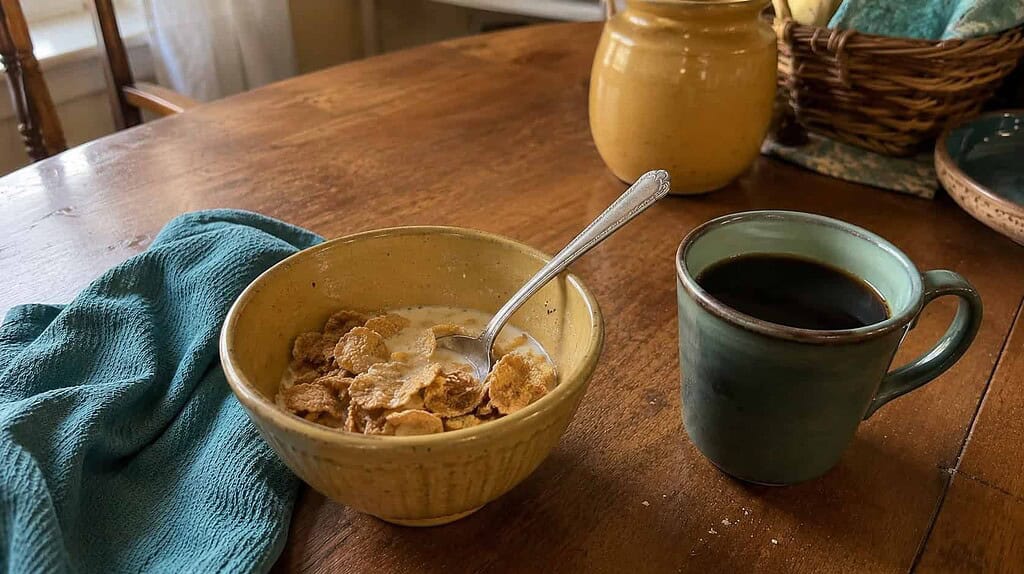
People forget this one. Use it. All of it, every day.
There's no rule that says good silver is only for holidays. Eat your cereal with the good spoon.
Real silver used often actually stays nicer, because it isn't sitting in a drawer turning dark.
And there's something lovely about using the good stuff every day instead of saving it for a someday that keeps not coming.
Why Letting It Go Isn't Letting Her Go
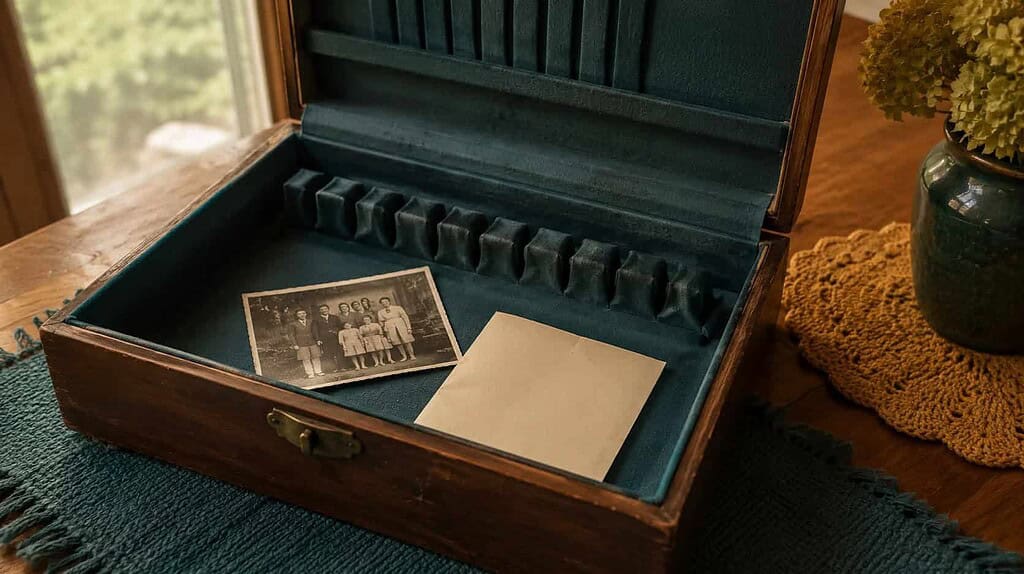
The hardest part of all this was never the silver. It was the feeling that letting it go meant letting her go too.
A lot of us carry that. We hold onto a thing because it belonged to someone we loved, and getting rid of it feels like losing them all over again.
But the silver isn't my mother.
The memory of her isn't in a fork. It's in me.
It's in the Sunday dinners, the way she set the table when company came, and the stories I still tell my grandkids about her. None of that leaves when the silverware does.
I've wondered before whether keeping their things really keeps them, and the answer I came to is no. The people we love live in us, not in the boxes in the basement.
If it helps, take a picture of the set before it goes. Write down a memory or two.
And if you hand it to someone, tell them the story that came with it. That way the story lives on, even when the object doesn't.
If you've got the good china boxed up too, the old china nobody wants either, the same thinking works for all of it. You're not erasing anyone. You're keeping the love and letting the object go.
It Was Never Really About the Silver
That chest sat on my closet shelf for two years because I thought the decision was about silver. It wasn't. It was about guilt, and about not seeing that letting go could be a loving choice too.
Once I understood that, the rest came easy.
I kept a few pieces. I used them. I passed the rest to people who wanted them.
My closet shelf is clear now. And my mother is exactly as close to me as she always was.
If you've got a set of your own up on a shelf somewhere, you don't have to decide today. But you can. Whether you keep it, use it, sell it, or give it away, there's no wrong answer here.
The only thing I'd gently steer you away from is letting it sit there for years the way I did, tugging at you every time you walk past.
You deserve a home that feels lighter, and a little less guilt sitting on the shelf.
Want Help Deciding What Stays and What Goes?

Sorting out one boxed-up heirloom is one thing. A whole house full of things you've been meaning to deal with is another.
If that silverware chest isn't the only thing sitting on a shelf waiting on a decision, my free Declutter for Self Care Checklist can walk you through the rest at a pace that won't wear you out. It's the same gentle approach I used on that closet shelf, and it's yours for free.
Frequently Asked Questions
How do I know if my silverware is real silver or silver-plated?
Turn a piece over and look for a small stamp near the base of the handle. Words like “sterling,” the number “925,” or a little walking lion mean real silver. Letters like “EPNS” or “A1,” or words like “triple plate” or “silver soldered,” mean it's plated.
Stamps can wear off and fakes do exist, so if you think you have real silver, have a jeweler or silver buyer test it before you sell.
Is sterling silver flatware worth anything?
Yes, real sterling has value because it's sold by the weight of the silver in it. A full set can bring a few hundred dollars, and more if it's heavy or a pattern collectors want.
The price of silver changes all the time, though, so the only number that matters is the one on the day you sell. Silver-plated flatware, on the other hand, is worth very little when you go to sell it.
Where can I sell inherited silverware without getting ripped off?
Try a local coin shop, a jeweler, or a company that buys silver by weight. If your pattern is collectible, an antique dealer or a pattern-matching company may pay more.
Wherever you go, ask them to weigh it in front of you, ask the price of silver that day, and get two or three offers before you agree to anything.
What can I do with silverware nobody wants?
You have more choices than you might think. If it's real silver, you can sell it.
You can give it to someone starting out, or donate it to a shelter or charity shop that takes flatware. You can repurpose a few pieces into something you'll enjoy, keep just one or two as keepsakes, or simply start using it every day.
Should I sell or keep my grandmother's silver?
There's no single right answer, and it depends on what feels best to you. If the money would help more than the memory, selling is perfectly okay.
If the set means a great deal to you, keep a few favorite pieces and use them, and let the rest go. What you don't want is to keep the whole set boxed away out of guilt, where it can't be enjoyed by anyone.
Follow me elsewhere!

