How to Part With Old Bibles and Religious Keepsakes Without Feeling Guilty

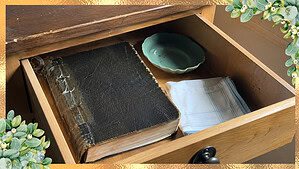
My mother's Bible sat in my nightstand drawer for three years before I could look at it honestly.

It's worn soft at the corners, and the spine is held together with a piece of tape she put there herself (she taped everything).

Inside the front cover, in her own handwriting, are the dates that mattered to her. Births, a wedding, the day her own mother passed.

I don't read from it. I have my own Bible for that.

But I couldn't bring myself to put hers anywhere near the trash. So it stayed in the drawer. And every time I opened that drawer, I felt a small tug of guilt.

Getting rid of it felt like getting rid of a piece of her faith, and a piece of her.

Maybe you have something like that too. An old family Bible, a stack of worn prayer books, a rosary, a box of holy cards you don't know what to do with.

You hold onto them because getting rid of them feels wrong, even disrespectful. So they sit, and the guilt sits right there with them.

If that's you, take a breath. There are kind, respectful ways to handle these things, and not one of them asks you to feel guilty.

So let's talk about how to part with old Bibles and the religious keepsakes you can't throw away, gently and with the respect they deserve.

Start With a Few Honest Questions

Before you decide anything, it helps to know what you're actually holding. Not every religious item is handled the same way. A few simple questions will point you in the right direction.

You don't need to answer all of them at once. Just start with the one in front of you.

Is It Still Usable, or Truly Worn Out?

Two old Bibles on a wooden dresser, one with a broken spine and loose pages and one still intact with a ribbon bookmark

Pick up the item and really look at it. Is the Bible still readable, with its pages and cover intact? Or is it falling apart, with loose pages and a broken spine?

A Bible or prayer book in good shape can still be used by someone else, so giving it away is on the table. One that's truly worn out is a different question, and we'll get to that.

This one answer splits your whole pile into two groups. (It's the fastest way to make the job feel smaller.)

Read related post:   How to Declutter Paper Clutter

Is It a Blessed Item?

This matters mostly for Catholic families. Items that a priest has blessed, like a rosary, a crucifix, or palms from Palm Sunday, are treated with extra care and are not simply tossed in the trash.

If you're not sure whether something was blessed, it's kindest to treat it as if it was.

Bibles and prayer books usually aren't blessed in that same way, so they have more options. We'll cover blessed items in their own section below.

Does It Hold Family History?

An old family Bible open on a table with a pressed flower, faded photographs, and a folded letter tucked between the pages

Open the front and back covers and look for handwriting. Many old family Bibles have births, marriages, and deaths written inside, sometimes going back generations.

If yours does, that changes things. Those pages can be the only record of a family that ever existed, and they're worth protecting before you do anything else.

While you're looking, check every page. Old Bibles are famous for holding pressed flowers, photos, letters, and even cash tucked away for safekeeping.

And if you're the one who ended up with all of it, you may have become the keeper of the family's things. That's a lot to carry, and it's okay to set some of it down.

What You Can Actually Do With It

Once you know what you have, you've got several good options. None of them is disrespectful, and none of them requires guilt. Pick the one that fits the item and your heart.

Give It to Someone Who Will Use It

A single old Bible resting on a simple nightstand beside a small plant and a teal lamp in a bright bedroom

The nicest thing you can often do with a usable Bible is put it in the hands of someone who will read it. A book being used is a book being honored.

Think of a grandchild being baptized or confirmed, a young couple starting out, or someone new to faith who doesn't own one. A new church or a small congregation may welcome them too.

Giving my aunt's Bible to my granddaughter felt a hundred times better than leaving it in a drawer. (She keeps it on her own nightstand now.)

Donate It Where It's Truly Needed

An open cardboard donation box holding a few old Bibles and books on the floor near a front door

If no one in your circle needs it, plenty of places do. Churches, prison and jail ministries, hospitals, nursing homes, and shelters often welcome Bibles and prayer books.

There are also missions that send used Christian books overseas, where Bibles are in short supply. A quick search will turn up a few that take donations by mail.

Call before you drop anything off, since churches and charities don't always have room. And send it somewhere it's truly needed rather than leaving a box at a door. (Torn or badly damaged books usually can't be donated, so those are for the next section.)

Save the Family History First

A smartphone beside an old family Bible open to its front cover, set up to photograph the record page

If your Bible has handwriting inside, protect that before you decide its future. This is the one step people regret skipping.

Take clear photos of every page that has writing, plus the title page that shows the date. Share the photos with your relatives, since someone in the family may treasure them.

If you want the records kept safe for good, historical and genealogical societies, local libraries, and state archives often accept them. Some of them collect family Bible records on purpose, so a phone call is worth it.

Read related post:   Why You Need To Start Decluttering (Importance And Facts)

If a relative wants the actual Bible, that's the simplest home of all. If no one does, you can keep just the record pages and pass the rest along.

Retire a Worn-Out Bible Respectfully

A very worn old Bible partly wrapped in cloth resting on a wooden bench in a quiet backyard garden

This is the part that lifts the most guilt, so let me say it plainly. It is not a sin to get rid of a worn-out Bible.

Most pastors will tell you the words are what's holy, not the paper and glue and thread. When a Bible is too far gone to use, you're allowed to let it go.

There are three respectful ways to do it. You can recycle it, the same as any book.

You can wrap it and bury it in a quiet spot. Or you can burn it gently and, if you like, bury the ashes.

Think of it the way we retire a worn American flag. We don't trash it in shame. We lay it to rest with respect, and that's exactly the spirit here.

If any of that still feels hard, that's okay too. Letting go of something that means this much is never simple, and you don't have to rush it.

For Blessed Items Like Rosaries and Palms

Dried braided palm fronds and a rosary resting together on a wooden windowsill in warm light

Blessed items get a little more care, and the steps are simple.

If a rosary, crucifix, or medal was blessed, don't put it in the trash. You can return it to your parish, give it to someone who will use it, or bury or burn it the same respectful way. Blessed items shouldn't be sold, but they can always be handed on.

Palms from Palm Sunday have their own tradition. Many churches collect old palms and burn them into the ashes used the next Ash Wednesday, so ask your parish if they'd like them back.

Customs vary from parish to parish, so when in doubt, a quick call to your church clears it up. (They get asked this all the time.)

Keep the One That Means the Most

A single worn taped Bible on a nightstand beside a framed verse and a small vase of sage sprigs in morning light

You don't have to keep the whole shelf to keep the memory. Sometimes one is enough.

Choose the single item that holds the most of the person you loved. Maybe it's your mother's Bible with her handwriting, or the rosary your grandmother prayed with. Keep that one, and let yourself release the rest.

You can even frame a meaningful page or a favorite verse so it's out where you'll see it. If you feel the guilt that comes with sentimental things, remember that keeping one on purpose is not the same as keeping everything by default.

Keep the Faith, Not the Guilt

This was the part that took me the longest to feel, not just believe.

For a long time, letting go of my mother's Bible felt like letting go of her faith. As if her belief lived in that taped-up cover, and I'd lose it if the book ever left the house.

But her faith was never in the paper. It was in her.

Read related post:   How To Downsize Your Life (10 Practical Steps For A Simpler And More Fulfilling Lifestyle)

It was in the prayers she said over our dinners, the way she trusted through hard years, and the steady example she set every single day. That doesn't disappear when a worn book does.

I've come to believe that keeping their things doesn't really keep them. The people we love live in us. A Bible is a reminder, and a reminder can be released once you know the real thing is safe inside you.

Every faith has its own gentle way of laying these things to rest. Underneath all of them is the same idea, that we handle what was holy to someone with love, and then we let it go in peace.

You're Allowed to Set It Down

My mother's Bible isn't in my nightstand drawer anymore. I kept it, actually, because it holds her handwriting and it's the one that means the most. But I let go of the stack of others without any guilt at all.

The difference was seeing that I got to choose. I wasn't trapped between keeping everything and doing something disrespectful.

You have that same choice. Give what's usable, protect the family records, retire what's worn, and keep the one that matters most.

Whatever you decide, decide it with love, and then let the guilt go too. Holding onto a drawer full of things out of fear doesn't honor anyone.

You're allowed to set it down. And your faith, and theirs, comes with you either way.

Not Sure Where to Start With Everything Else?

Religious keepsakes are some of the hardest things in the house to face, because the guilt is wrapped up in love. If you can make peace with these, the rest of the clutter starts to feel a lot less heavy.

My free Declutter for Self Care Checklist gives you a gentle, doable way to work through the rest of your home without wearing yourself out. It's the same kind approach that finally cleared my nightstand drawer.

Frequently Asked Questions

Is it a sin to throw away a Bible?

No. Most pastors agree that the words of the Bible are holy, not the paper and binding, so letting go of a worn-out copy is not a sin. If it still feels uncomfortable, you can choose a gentler method like recycling, burying, or reverently burning it instead of using the trash.

How do I respectfully dispose of an old or worn-out Bible?

There are three common ways. You can recycle it like any other book, wrap and bury it in a quiet spot, or burn it gently and bury the ashes if you'd like. Many people compare it to retiring a worn flag, laying it to rest with respect rather than throwing it away in shame.

Where can I donate old Bibles that are still usable?

Churches, prison and hospital ministries, nursing homes, and shelters often welcome them, and some missions send used Bibles overseas where they're needed. Always call first, because storage space varies and torn or damaged copies usually can't be accepted.

What should I do with a family Bible that has genealogy written in it?

Protect those pages before anything else, since they may be the only record of that family. Photograph every page with handwriting, share the images with relatives, and keep the Bible if someone wants it. If no one does, historical or genealogical societies, libraries, and state archives often accept family Bible records.

What do I do with old rosaries, blessed palms, or other blessed items?

Blessed items shouldn't go in the trash or be sold, but they can be returned to your parish, given to someone who will use them, or buried or burned respectfully. Old palms can often go back to church to be burned into next year's ashes. Customs vary, so a quick call to your parish is the surest way to know.

Follow us on PinterestFollow
Follow me elsewhere!

Leave a Comment