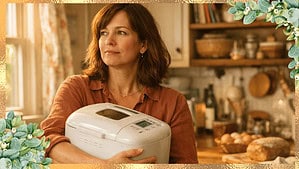
There's a bread maker sitting in the back of my kitchen cabinet that I've been meaning to get rid of for over a decade.
My sister gave it to me for Christmas. I want to say 2011, but it might have been 2012. I used it twice. The first loaf came out fine. The second one came out like a brick, and I never tried again.
But every time I opened that cabinet, there it sat. Pushed behind the slow cooker, still in the box, still in perfectly good condition.
I pulled it out at least three or four times over the years with every intention of donating it. And each time, I asked myself the question I'd read in every decluttering article I'd ever come across.
“Do I need this?”
And I'd stand there. Because technically it worked. Technically I could use it. And my sister gave it to me, so there was that.
So back in the cabinet it went. Every single time.
It wasn't just the bread maker, either. It was the fondue set I've never once used. The sewing machine I was sure I'd get back to. The exercise bike in the corner of the bedroom that had become a very expensive place to hang my robe.
I kept asking myself “do I need this?” and the answer was always some version of “well, not exactly, but…”
And that “but” was enough to keep everything right where it was.
It took me a long time to figure out that the question wasn't the problem. It was that I was asking the same question for every situation, and it only worked for the easy stuff.
The expired coupons, the junk drawer, the mystery cables. For anything with even a little weight behind it, “do I need this?” just left me standing there.
Once I started asking different questions (ones that actually matched the reason I was stuck), things finally started moving.
These are the questions I use now. They're not complicated. But they're honest. And that's why they work.
Why the Most Common Decluttering Question Never Worked for Me
“Do I need this?” is the first piece of advice you'll find in almost every decluttering book, blog post, and YouTube video out there.
And I understand why. It's simple. It's direct. It gives you a yes or no.
And for a certain kind of clutter, it works perfectly.
Nobody needs expired medicine. Nobody needs a drawer full of dead batteries. Nobody needs four broken umbrellas and a stack of takeout menus from 2019.
That stuff is easy. You ask the question, you get a clear answer, and it goes in the bag.
But then you move past the junk drawer and into the rest of the house. And suddenly “do I need this?” doesn't cut it anymore.
Because need was never the reason you were keeping most of it.
You weren't keeping your mother's dishes because you needed them.
You were keeping them because putting them in a donation bin felt like betraying her memory.
You weren't keeping that expensive coat because you needed it.
You were keeping it because getting rid of something you paid that much for felt like admitting you wasted the money.
Need had nothing to do with any of it.
The real reasons we hold onto things are guilt, fear, grief, identity, and habit. And “do I need this?” doesn't touch a single one of them.
It just leaves you standing in the middle of your kitchen holding something you know you should let go of, with no idea how to get there.
That's where I was for years. Asking the right question for the wrong situation and wondering why nothing ever left my house.
What I needed were questions that matched the actual reason I was stuck. And once I found them, everything changed.
For the Stuff You Forgot You Even Had
Before you get anywhere near the hard stuff, start here. These questions are for the things that don't carry any emotional weight.
They're just taking up space because no one ever stopped to make a decision about them.
Do I Even Remember Owning This?
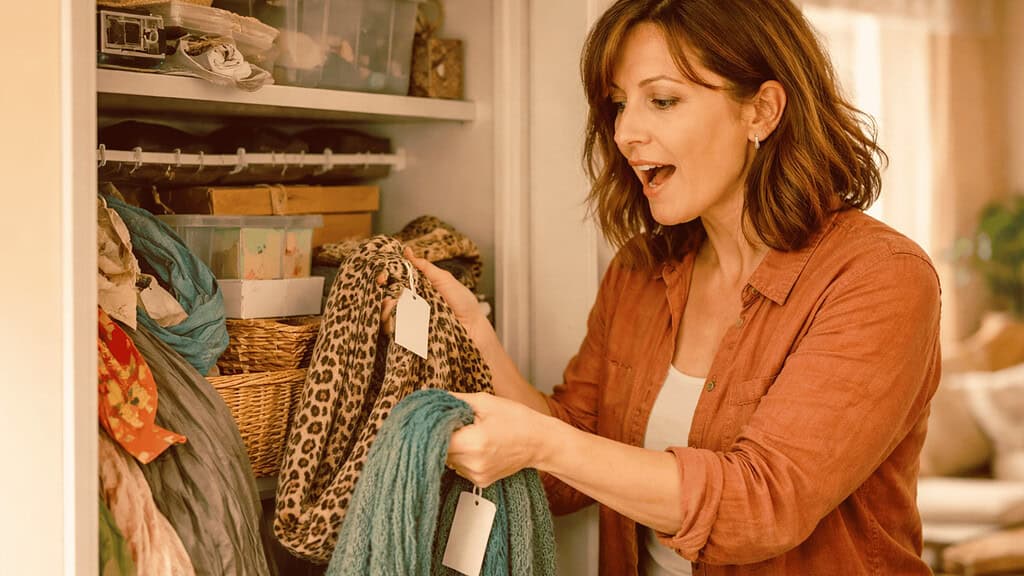
This one sounds almost silly, but it came up more than I expected.
When I finally cleaned out my hall closet, I found a bag of scarves I hadn't opened in at least three years. I didn't remember putting them there. I didn't remember buying half of them. One still had the tag on it.
If something has been sitting in your home long enough that finding it feels like a surprise, that tells you everything you need to know. You didn't miss it. You won't miss it when it's gone.
Do I Already Have Something That Does the Same Job?
This is the question that cleared out half my kitchen.
I had three different things that could peel a vegetable. Two sets of measuring cups. A hand mixer and a stand mixer doing the exact same job (the hand mixer hadn't come out of the drawer in years).
When you start grouping similar items together, you realize how much space is being taken up by backups you never actually reach for. Keep the one you use and let the doubles go.
Does This Fit the Life I'm Living Right Now?
Not the life I lived ten years ago. Not the life I'm hoping to live someday. Right now.
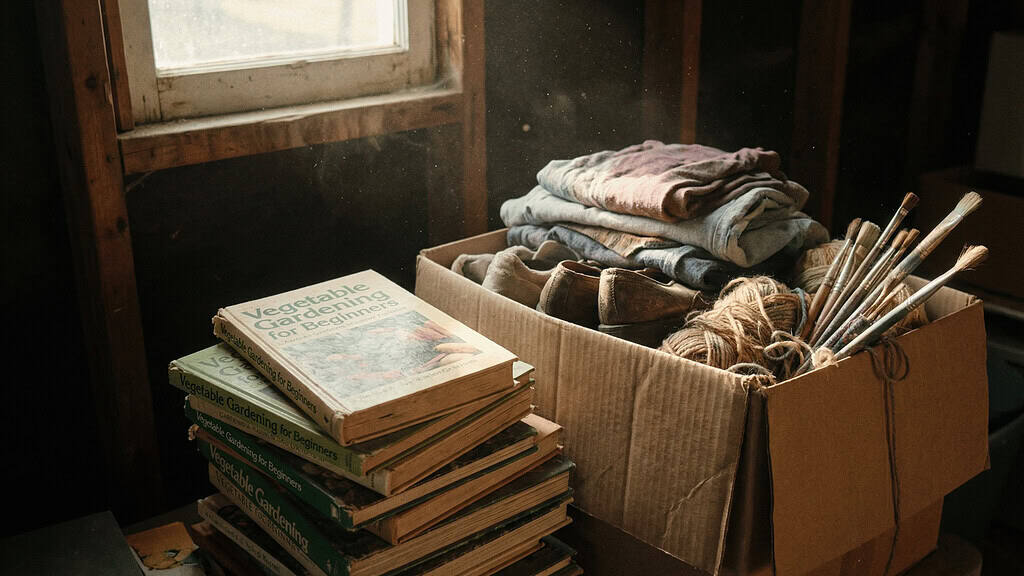
I had an entire shelf of books about gardening from when I was convinced I was going to turn my backyard into a vegetable garden. That was eight years ago. The backyard still looks the same (and honestly, I've made my peace with that).
I also had clothes for a job I retired from, shoes for events I no longer attend, and supplies for hobbies I quietly moved on from a long time ago. Once I gave myself permission to let go of who I used to be, the decisions got a lot simpler.
Questions for the Stuff You Keep Out of Fear
This is where things start to get a little harder. The items in this category aren't broken or forgotten.
You know exactly where they are.
You just can't let go of them because somewhere in the back of your mind, a voice keeps saying “but what if?”
What Would I Actually Do If I Needed This and Didn't Have It?
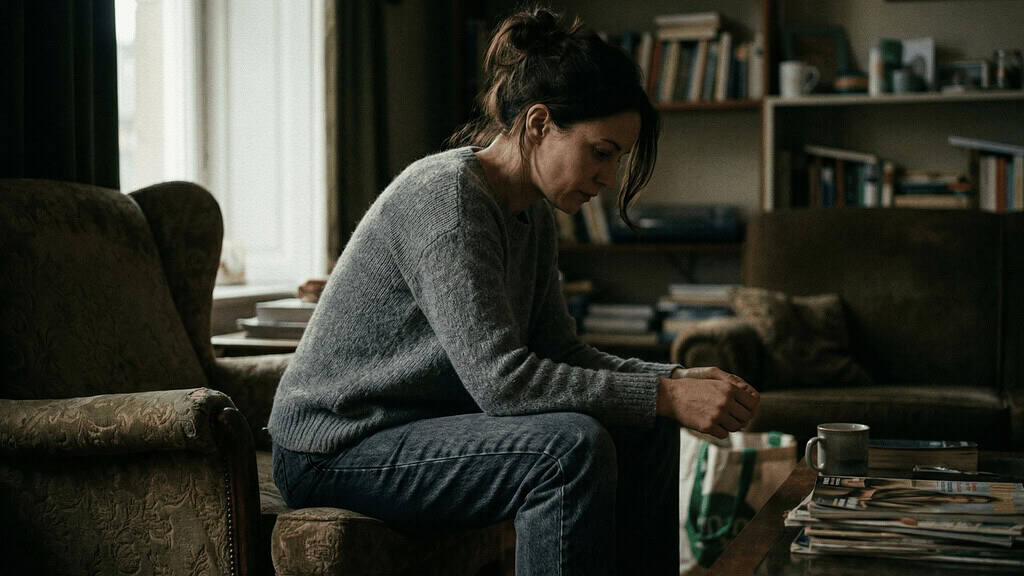
This question changed everything for me.
I had a spare set of curtains in my linen closet that I'd been holding onto for years. Just in case. In case of what, I couldn't really say. In case the ones in the living room spontaneously fell apart, I guess.
When I actually thought about what I'd do if that happened, the answer was obvious. I'd go buy new ones. It wouldn't be an emergency. It wouldn't ruin my week. I'd just handle it.
Most of the “just in case” items in your home fall into this category. The backup blender. The extra set of sheets for a bed you don't own anymore. The seven reusable shopping bags when you only ever grab the same two.
If the worst-case scenario is a quick trip to the store, it's not worth giving up the space.
How Many Times Have I Actually Needed This in the Last Few Years?
Not how many times could I have needed it. How many times did I actually reach for it?
I kept a toolkit in the garage with every possible attachment and adapter you could imagine. My husband had put it together years ago. I told myself I needed all of it.
But when I really thought about it, I'd used maybe four tools out of the whole set in the last five years.
The rest just sat there looking important.
Fear of needing something someday is one of the strongest reasons we keep things. But when you look at the actual track record, most of those “someday” moments never come.
If I Got Rid of This and Needed It Later, Could I Borrow One or Find Another?
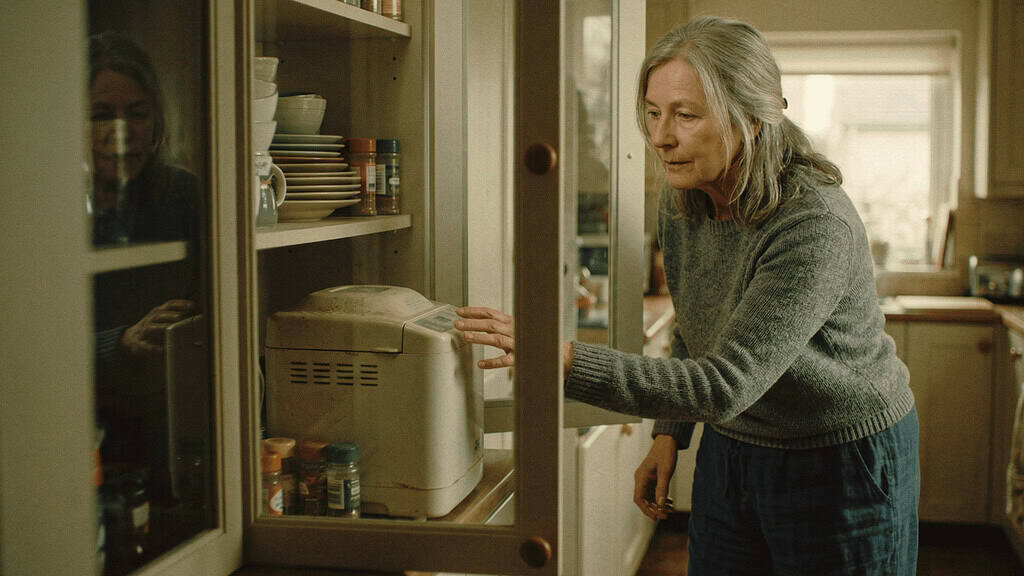
This is the question that finally got the bread maker out of my cabinet.
Could I borrow one from a friend if I suddenly felt like baking bread again? Yes. Could I find one at a thrift store for a few dollars? Absolutely. Was I ever going to suddenly feel like baking bread again? We both know the answer to that.
Most of the things we keep out of fear can be replaced, borrowed, or worked around. Once I started being honest about that, the “just in case” pile got a whole lot smaller.
For the Things You Feel Guilty Getting Rid Of
This is the section I almost didn't write. Because guilt is the one that gets me every time.
Not fear.
Not even practicality.
Guilt.
It's the reason I kept a set of crystal glasses I never used for over fifteen years. They were a wedding gift. I didn't even like them (they were too delicate to actually drink from without worrying).
But the thought of giving away something someone chose for me with care made my stomach turn.
If guilt is what's keeping things in your house, these are the questions that helped me work through it.
Am I Keeping This for Me, or for the Person Who Gave It to Me?

This is the one that finally got those crystal glasses out of my cabinet.
The person who gave them to me hadn't thought about them in years. She wouldn't have been hurt. She probably wouldn't have even remembered. I was the only one carrying the weight of that gift, and I'd been carrying it for no reason.
When you realize that letting go of a gift doesn't mean letting go of the person, something shifts. The guilt doesn't disappear completely. But it gets quiet enough that you can finally make a decision.
Would the Person Who Gave This to Me Want It to Be a Burden?
I started asking this one after the crystal glasses, and it helped with almost everything else.
My aunt gave me a set of serving platters that I used maybe three times. They were heavy, they took up an entire shelf, and I dreaded pulling them out.
Would she want me keeping something that made me sigh every time I saw it?
Absolutely not. She'd probably tell me to give them to someone who'd actually use them (and she wouldn't be gentle about it, either).
Did I Already Get the Value Out of This?
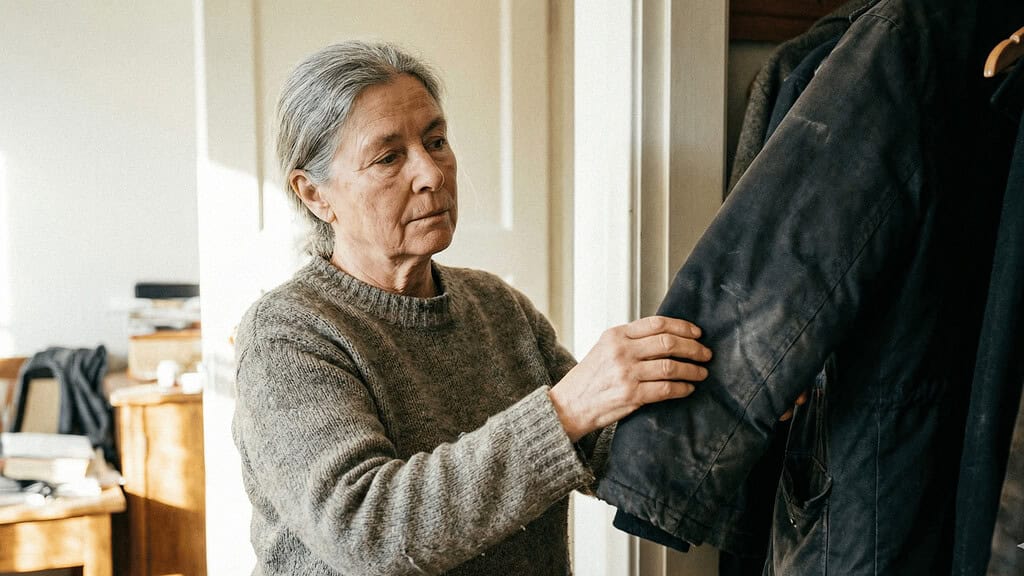
This helped me with the expensive things.
I had a coat I paid too much for that I wore for two solid winters. It didn't fit right anymore, but getting rid of it felt like throwing away money. Then I asked myself, did I already get my use out of it? And the answer was yes. I wore it. I liked it at the time.
The money was spent whether I kept it or not.
Holding onto something expensive doesn't get your money back. It just takes up space and reminds you of a purchase you wish you'd thought through differently.
Questions for the Stuff That Carries the Most Weight
I saved this section for last on purpose.
Because these aren't decisions you rush through.
The things I'm talking about here aren't clutter in the usual sense.
They're the items that are tied to people you love, chapters of your life that have closed, and memories you're afraid of losing if the physical thing disappears.
This is where most of us get completely stuck. And it's where the standard decluttering advice falls the shortest.
Am I Keeping the Memory, or Am I Keeping the Object?
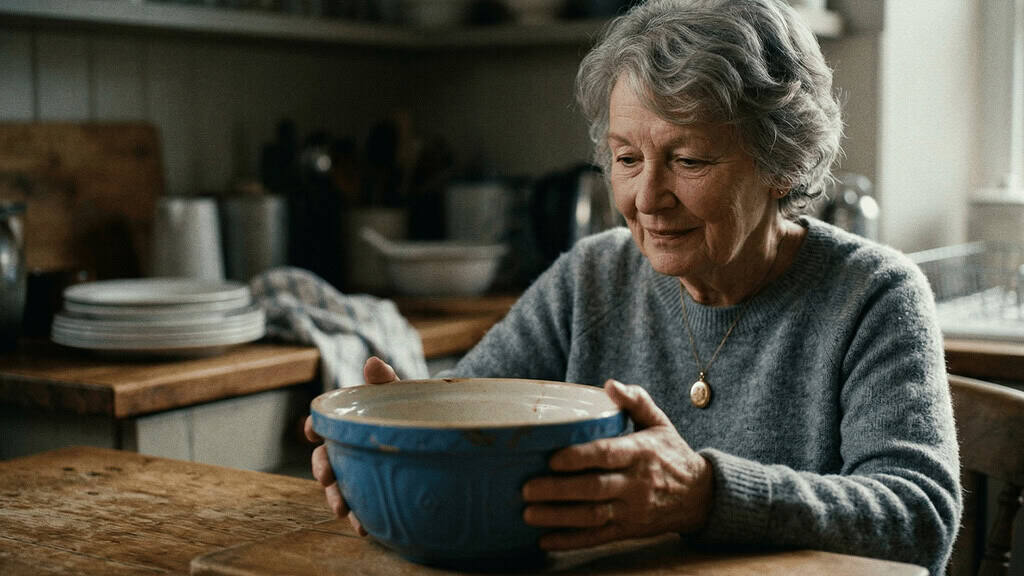
My mother had a set of mixing bowls she used every weekend. After she passed, I kept all four of them in my cabinet for years. I never used them. I just liked knowing they were there.
Eventually I realized I wasn't holding onto the bowls. I was holding onto Sunday mornings with her. And those mornings were already safe inside me, whether the bowls were in my cabinet or not.
I kept one. The big blue one. The one I can actually picture her hands in. The other three went to my niece, who was just setting up her first kitchen. And that felt right.
You don't have to keep everything to keep the memory. Sometimes one piece is enough.
If I Passed Tomorrow, Would This Be a Gift to My Family or a Burden?
This is Margareta Magnusson's thinking, straight from her book on Swedish death cleaning. And it's the question that finally got me to deal with the boxes in my garage.
Three bins of old holiday decorations. A box of my kids' school projects I'd been saving since the nineties. A crate of VHS tapes we can't even play anymore.
None of it was something my children would have wanted to sort through during an already hard time. Keeping it wasn't a gift to them. It was a job I was quietly leaving behind.
Once I saw it that way, I was able to go through those boxes with a lot more honesty. I kept a few pieces that truly mattered, and the rest I let go.
Can I Honor This in a Way That Doesn't Require Storing It?
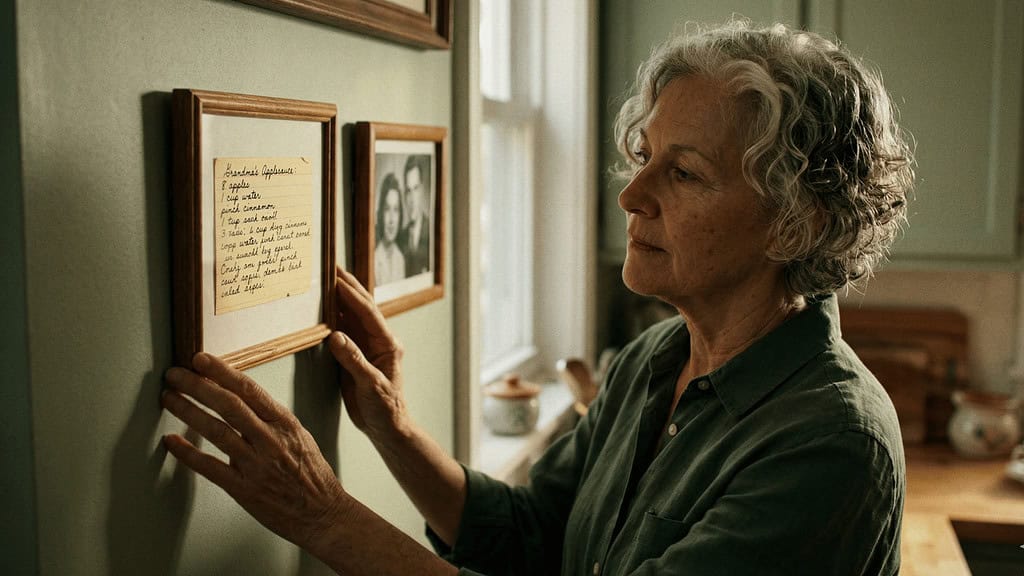
Not everything meaningful needs to live in a box in the back of a closet.
I took photos of my kids' artwork before I let most of it go. I kept one of my mother's handwritten recipe cards framed on the kitchen wall instead of buried in a drawer. I gave my father's old watch to my son, who actually wears it now.
There are ways to honor the things that matter without letting them take over your home.
A photo. A single piece on display. Passing something along to someone who will use it. Those are all ways of saying “this mattered” without needing a storage bin to prove it.
Decluttering Gets Easier When You Stop Asking the Wrong Thing
I wasted years standing in front of cabinets and closets asking “do I need this?” and getting nowhere. Not because I wasn't trying. But because that one question couldn't carry the weight of everything I was actually feeling.
Guilt doesn't respond to logic. Fear doesn't care about shelf space. And grief doesn't fit neatly into a yes or no answer.
Once I started matching the question to the real reason I was stuck, things started to move. Not all at once. Not perfectly. But enough that my home started to feel lighter, and so did I.
You don't need to memorize these questions or write them on an index card (though you can if that helps). You just need to notice the next time you're standing there holding something and going back and forth. When that happens, stop and ask yourself, “Why am I really keeping this?”
The answer will tell you which question to ask next.
And that bread maker? It finally left my kitchen last spring. I gave it to my neighbor's daughter who had just moved into her first apartment. She was thrilled.
My sister never asked about it. Not once.
Want to Start Making These Decisions With Confidence?

If you've been going back and forth on the same things for months (or years), my free Declutter for Self Care Checklist can give you the structure to actually start moving through your home without getting stuck at every shelf.
It's built for real life, not perfect life.
FAQ
What are good questions to ask when decluttering?
The best decluttering questions are the ones that match the reason you're holding onto something. For everyday clutter, asking “do I already have something that does the same job?” works well. For sentimental items, try “am I keeping the memory or am I keeping the object?” The more honest the question, the easier the decision becomes.
Why is decluttering so hard for me?
Most of the time it's not about the stuff itself. It's about what the stuff represents. Guilt over money spent, fear of needing something later, or emotional attachment to a person or a time in your life. Those feelings are real and valid. But recognizing them is what helps you move forward instead of standing there frozen.
How do I declutter without regret?
Go slow and start with the things that carry the least emotional weight. Build your confidence with the easy decisions first. For the harder items, ask yourself whether you're keeping something because it adds to your life right now or because letting it go feels uncomfortable. Most people find that the regret they were afraid of never actually shows up.
What should I declutter first?
Start with the category that feels the least emotionally loaded. For most people that's kitchen duplicates, expired products, or clothes they haven't worn in over a year. Those quick wins give you momentum and make the harder decisions feel more manageable when you get to them.
How do I let go of sentimental items without feeling guilty?
Give yourself permission to keep the one piece that matters most and let the rest go. You can also honor sentimental items in ways that don't require storing them, like taking a photo, framing a single piece, or passing something along to a family member who will actually use it. The memory stays with you whether the object does or not.
Follow me elsewhere!

