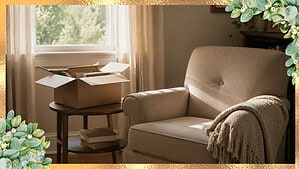
Nobody Warned Me That Decluttering Gets Harder When Your Body Hurts

There's a difference between not wanting to declutter and not being able to.

For years I thought having a messy room was a motivation problem. But it's not.

There was this one morning before, where I'm standing in the doorway with a coffee in hand, fully ready to finally deal with the clutter. My mind was willing. My body was another story.

Ten minutes of bending over boxes and my lower back would start to ache. Another ten and the ache turned into something sharper, the kind that tells you to sit down before you regret it. So I'd sit. And the room would stay exactly as it was.

Then came the guilt. Why can't I just push through and get this done? Other people manage it. What's wrong with me?

Nothing was wrong with me. My body simply had a limit, and every bit of bending, lifting, and reaching used up what little I had. If your knees, your hips, your hands, or your back have their own opinions about how long you can work, you already know this feeling.

Most decluttering advice pretends this part doesn't exist. It assumes you can spend a whole weekend hauling bags to the car. But decluttering with chronic pain is a different thing altogether, and it needs a gentler plan.

That's what I want to share with you. Not how to push harder. How to work with the body you have, so you can finally make progress without paying for it for three days after.

A gentle note before we begin. I'm writing as a friend who's lived this, not as a doctor. You know your body and its limits better than anyone. Please listen to it, and check with your own doctor before any lifting, bending, or reaching that could set you back. Nothing here is worth an injury.

Why the Usual Decluttering Advice Doesn't Work When You're in Pain

An open closet with red, mustard, and navy clothes piled on a bed with a deep teal quilt in soft daylight

Look up decluttering tips and you'll see the same advice everywhere. Set aside a whole weekend. Pull everything out of the closet at once so you can see what you have. Don't stop until the room is done.

That advice sounds fine, until you try to follow it with a body that hurts.

Pull everything out of the closet at once, and now you're standing in a room you physically cannot put back together in one go. The “power through it” weekend leaves you flat on the couch for three days after. The tips assume you can bend, lift, carry, and stand for hours without paying a price. When you can't, following them doesn't make you tidier. It makes you hurt.

Read related post:   15 Ways To Organize Your Laundry Room (From Chaos To Order)

For a long time I thought the problem was me. Everyone else seemed able to do it the way the articles said, so I figured I just wasn't trying hard enough.

That wasn't it at all. The advice was written for a body that cooperates, and mine doesn't always. Yours may not either. That's not a personal failing. It's just a mismatch between the usual plan and the real bodies of the women reading it. I've felt that same mismatch trying to declutter more than one room when your body is already worn out.

Once I stopped trying to force my body through a method built for someone else, everything got easier. I needed my own way of doing this. A way that treats my pain as a real thing to plan around, not a weakness to muscle past.

Here's what that looks like.

What Helps When Every Movement Costs You Something

None of these are about doing more. They're about doing it in a way your body can actually handle, so the progress sticks instead of setting you back.

Declutter Sitting Down

A wooden kitchen chair at a butter-yellow table with junk drawer contents spread out, two piles started, and a terracotta mug at the edge in soft daylight

Somewhere I picked up the idea that decluttering had to be done on my feet, moving around the whole time. It doesn't.

Now I bring the work to me. I'll sit in a comfortable chair and have someone set a single drawer, a box, or a basket on the table in front of me. Then I sort through it right there, sitting down, at my own pace.

A junk drawer, a box of old cards, the contents of one shelf, so much of decluttering is really just deciding, and deciding doesn't require standing up. It can help to have a few honest questions ready to guide those keep-or-let-go decisions. You can do the thinking part from the most comfortable seat in the house.

When my back is having a rough day, sitting down to sort is the difference between getting something done and getting nothing done at all. (Some of my best progress has happened from a kitchen chair.)

Work in Ten-Minute Windows, Not Whole Days

A small round red kitchen timer on a sage-green counter with a tidy stack of colorful items beside it in soft natural light

The weekend-long cleanout is off the table for me, and it might be for you too. So I stopped aiming for it.

Instead, I work in short windows. Ten minutes, maybe fifteen on a good day. When the timer's up, or my body says so, I stop, even if I'm not finished.

It doesn't sound like much. But ten minutes a few times a week adds up faster than you'd think, and none of it wipes me out. Little by little, these short windows became some of the habits that reshaped how I keep my home. I'm never trading one productive afternoon for three painful days in bed.

Small and steady is not the slow way. When your body has limits, it's the only way that actually reaches the finish line.

Keep Everything You Need Within Arm's Reach

A navy-blue armchair with a black trash bag on one side and a donate box lined with bright orange cloth on the other, both within arm's reach, in soft daylight

A lot of the hurt in decluttering comes from the back and forth. Up to standing, over to the trash, back down, across the room to a donation box, and repeat. Every trip costs you something.

So I set up first, before I start. A trash bag on one side of my chair. A donate box on the other. A little pile for things that go to other rooms, which someone else can carry later.

Everything I need stays within arm's reach, so I'm not popping up and down a hundred times. I make the decisions from one spot and let the sorted piles wait until there's help to move them.

Read related post:   How Should You Handle a Loved One’s Belongings After They Pass?

Cutting out those extra trips saved my body more than any other single change. Less movement, same result.

Let Yourself Stop the Moment It Hurts (No Guilt)

An empty forest-green armchair with a red mug of tea on a wooden side table and a folded golden-yellow throw on the arm in soft daylight

This was the hardest one for me to learn, and the most important.

For years I treated pushing through pain as a virtue. Learning to work with my limits instead of against them is a big part of living intentionally when you have a chronic illness. If I quit when it started to hurt, I felt weak, like I'd given up. So I'd keep going and pay dearly for it.

Now I stop the moment my body tells me to. Not when the box is empty. Not when the timer says so. The very moment the pain speaks up, I'm done for the day, and I've made my peace with that.

Stopping isn't quitting. It's how you protect your ability to come back tomorrow. The pile will wait. Your body pushing back is information, not a challenge to beat. (I ignored that information for years, and it never once worked out well.)

Ask for the Lifting, Do the Deciding

Two sealed cardboard donation boxes stacked beside a cheerful blue front door with a green potted plant nearby in soft daylight

Here's a truth that took me too long to accept. Decluttering has two parts, and they're not the same.

There's the deciding, which is looking at a thing and choosing whether it stays or goes. And there's the lifting, which is the hauling, carrying, and moving that comes after.

The deciding is the part only you can do. The lifting is the part anyone can help with.

So I ask. When my grandson visits, he carries the donation boxes to the car. My daughter hauls the bags to the curb. I do all the deciding, sitting down, and I let the strong backs in my life handle the heavy part.

Asking for help used to feel like admitting defeat. Now I see it as being smart about what my body can and can't do.

You're not less capable for needing a hand with the heavy lifting. You're just being wise with the energy you've got.

Pick the Spot That's Hurting You Most, Not the Biggest Mess

A cleared nightstand with a teal ceramic lamp and a red-covered book beside a bed with a mustard-yellow blanket in soft evening light

When you can only do a little, where you spend that little bit matters.

I used to start with whatever was messiest, which usually meant the biggest, hardest project in the house. I'd run out of body before I made a dent, get discouraged, and quit. If that overwhelm sounds familiar, this gentler way to start decluttering when it all feels like too much may help.

Now I start with the spot that's actually bothering me day to day. The cluttered nightstand I glare at every night. The kitchen counter I need clear just to cook. The path to my own side of the bed. If the room you glare at most is where you sleep, it may help to make your bedroom feel like a place to rest again.

Fixing the spot that's genuinely in your way gives you the biggest relief for the least effort. You feel the payoff right away, and that little lift is often what gives you the heart to do the next small bit. Save the big projects for later, or for the helpers. Start where the relief is closest.

Your Worth Isn't Measured in How Much You Can Lift

If you take one thing from all of this, let it be this.

Read related post:   How To Downsize for a Move

The state of your home is not a report card on your character.

For a long time I believed a cluttered house meant I was lazy or that I'd let myself go.

But I wasn't lazy.

I was in pain, doing my honest best inside a body that had changed on me. Those are not the same thing, no matter how it feels at three in the afternoon when the room still isn't done.

Your body has carried you through your whole life. Through work, maybe through raising a family, through more than anyone else will ever fully know.

It's earned some patience now, not punishment for the things it can't do as easily anymore.

So measure your progress by a different yardstick.

Not by whether the whole room is finished, but by the one drawer you sorted from your chair. Not by how you stack up against someone whose body doesn't hurt, but by the small, steady kindness you showed yourself today.

A little bit done gently is worth more than a lot done in a way that lays you up for a week.

You are not behind. You are working with what you have, and that is enough.

Be as patient with yourself as you'd be with a dear friend in the same spot. She wouldn't deserve the harsh words, and neither do you.

A Gentle Place to Begin

If this sounds like your life, the willing mind and the aching body, I put together something that might make starting a little easier.

It's my free Declutter for Self Care Checklist. I built it around small, manageable steps, the kind you can take a few minutes at a time, sitting down, at whatever pace your body allows. It doesn't ask you to power through anything. It meets you exactly where you are, sore days and all.

You deserve a home that feels lighter, and you deserve to get there without hurting yourself for it.

FAQ

How do I declutter when I'm in too much pain to stand for long?

Bring the work to you and do it sitting down. Have someone place one drawer, box, or basket on a table in front of your chair, then sort through it from your seat. So much of decluttering is really just deciding what stays and what goes, and you can do that from the most comfortable chair in the house. Save the standing and carrying for a helper, or for a better day.

How long should I declutter for if I have chronic pain?

Work in short windows rather than long sessions. Ten minutes at a time, maybe fifteen on a good day, and then stop, even if you're not done. Short, gentle bursts a few times a week add up steadily without wiping you out. The goal is progress you don't have to recover from for three days afterward.

Is it okay to ask family for help with decluttering?

Absolutely. Think of decluttering as two separate jobs. The deciding, which only you can do, and the lifting, which anyone can help with. There's no shame in doing the deciding yourself while someone else carries the boxes to the car. Asking for help with the heavy part isn't a weakness. It's a smart way to protect your body and still get the job done.

Where should I start decluttering when I can only do a little at a time?

Start with the spot that bothers you most in daily life, not the biggest mess. Clear the nightstand you look at every night, or the counter you need to cook. Fixing the thing that's actually in your way gives you the most relief for the least effort, and that quick payoff often gives you the heart to keep going in small steps.

How do I stop feeling guilty about my clutter when my body won't let me do more?

Try to separate the state of your home from your worth as a person. A cluttered house doesn't mean you're lazy. It means you're doing your best inside a body that has limits, and that's a very different thing. Measure yourself by the small, kind efforts you make, not by whether everything is finished. You're working with what you have, and that is genuinely enough.

Follow us on PinterestFollow
Follow me elsewhere!

Leave a Comment