This Odd Little Method Helped Me Finally Decide What to Keep

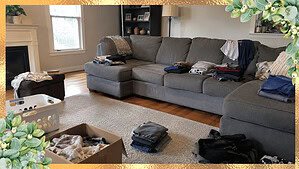
Last month I set aside a whole Saturday to declutter my living room. I had trash bags, a donation box, and every intention of getting it done.

Four hours later, I sat down worn out, and the room looked almost exactly the same.

It wasn't that I didn't work. I picked up nearly everything in that room at some point. A candle here, a stack of magazines there, a little dish my aunt gave me years ago. I'd hold each thing, look at it, and think, do I keep this or not? And most of the time, I couldn't answer.

So I'd put it back down and reach for the next thing.

By the end of the day, I'd handled half the room and gotten rid of almost nothing.

You might know this feeling. The trash bag is ready. You want a clearer home. But every single item turns into a little argument in your head, and by the end you're tired and the piles are still there.

For years, that's where I got stuck. Not on the cleaning. On the choosing. It turns out there are real reasons we can't let go of clutter, and understanding them helped me stop blaming myself for it.

Then a friend told me about an odd little way of sorting your things. It sounded strange at first, almost too simple to work. You look at each thing you own and decide if it's a friend, an acquaintance, or a stranger. Like people.

I felt a little funny trying it. But I was tired of picking things up and putting them right back down, so I gave it a go.

And for the first time in ages, the choices came easy.

This is the method I want to share with you. If you've ever struggled with how to decide what to keep when decluttering, this might be the thing that finally makes it click, the way it did for me.

Why Deciding What to Keep Is the Hardest Part

A folded wool sweater on the edge of an open dresser drawer with clothes jumbled around it, the kind of item that's hard to decide whether to keep when decluttering

For most of us, the hard part of decluttering isn't the cleaning. It's the deciding.

It's when you pick up a sweater you haven't worn in two years. Part of you knows you could let it go. But another part says, what if I want it next winter? What if I get rid of it and wish I hadn't? That fear of getting rid of the wrong thing is one of the biggest reasons we hold on, even when we know we should let go.

Read related post:   Lemon Juice For Cleaning (Time To Spruce Things Up)

So you just keep it, and then you move on, and nothing really changes.

Do that a hundred times in one afternoon, and you can see why decluttering wears us out. It's not the lifting or the sorting. It's making the same hard choice over and over, with no clear way to know if you're getting it right.

The choosing is tiring because most of us have no rule to go by. Every item feels like its own separate puzzle. Should this stay? Should it go? You're left going back and forth on each thing, and that back and forth is exhausting.

That's exactly why this little method helped me so much. It finally gave me a simple way to decide, one that didn't leave me stuck on every single thing. It took the guessing out of it.

Treat Everything You Own Like a Person

The idea is simple. You look at each thing you own and ask yourself what it would be if it were a person in your life. A friend, an acquaintance, or a stranger.

I can't take credit for it. A professional organizer named Judith Kolberg came up with this way of sorting years ago, and once I tried it, I understood why people still talk about it.

It turns a hard, fuzzy choice into an easy one, because we already know how we feel about the people in our lives. We just borrow that same feeling for our things.

Here's how each group works, and how I sorted my own living room using it. If you've been putting off starting because it all feels like too much, this gives you an easy place to begin.

Your Friends: The Things You Love and Use

A well-worn comfy reading chair with a soft blanket, a lamp, and well-loved books, the kind of things you love and use and keep when decluttering

Your friends are the things you'd be sad to lose.

You use them, you love them, or both. The comfy chair you read in every night. The mixing bowl you've had for thirty years that still feels right in your hands. The photo on the wall that makes you smile every time you pass it.

These are easy. They stay. No second-guessing.

When I went through my living room, my friends were obvious the moment I picked them up.

My reading lamp. A soft blanket my daughter gave me. The books I actually go back and read again.

I didn't have to think hard about any of them, because you rarely have to wonder whether someone is your friend. You just know.

Sorting the friends first felt good, too. It reminded me that decluttering isn't about throwing everything out. It's about keeping what you truly love and making more room for it. Some of those keepers will be sentimental things that are harder to weigh, and that's okay, they can still be friends.

Your Acquaintances: The Things You're Not Sure About

A small pile of in-between items like coasters, a throw pillow, and finished books, the kind you're unsure whether to keep when decluttering

Acquaintances are the in-between things. The maybes.

You don't love them, but you don't quite want to let them go either. They're fine. They're useful sometimes. You might miss them, or you might not. These are the things that usually leave us stuck for ages.

Read related post:   10 Home Decluttering And Organizing Tips For A Better Space

The trick with acquaintances is to ask one simple question.

If this were a person, would I go out of my way for them? For a true friend, yes. For an acquaintance you feel lukewarm about, probably not.

In my living room, the acquaintances were things like a set of coasters I never really used, a throw pillow I was tired of, and a few books I'd finished and would never open again. Nice enough, but nothing I'd truly miss.

Once I saw them as acquaintances and not friends, letting most of them go got a lot easier. A few I kept, because I decided they earned their spot. But most of them, I realized, I was only holding onto out of habit.

When you're weighing these in-between things, it can help to have a few honest questions ready to ask yourself, the ones that cut through the maybe.

Your Strangers: The Things You Feel Nothing For

A dusty decorative bowl and a stack of old forgotten magazines on a shelf, the kind of things to let go of when decluttering

Strangers are the things you feel nothing for at all.

You forgot you even owned them. They're taking up space and you get no use and no joy from them. If they vanished tomorrow, you wouldn't notice, and you certainly wouldn't miss them.

These are the easiest of all to let go, once you see them for what they are.

My living room was full of strangers I'd stopped noticing years ago.

A dusty decorative bowl on the shelf. Old magazines I was never going to read. A gadget from a hobby I gave up on. A candle I didn't even like the smell of.

None of it meant a thing to me, and letting it go felt like nothing but relief.

The surprising part was how many strangers I found once I started looking. Things that had been sitting in plain sight for so long that I'd stopped seeing them at all.

Naming them as strangers was like finally noticing them again, and realizing there was no reason on earth to keep them.

This is the same kind of honest look that made the move-out method click for me a while back, where you picture what you'd actually bother to take with you.

Deciding Doesn't Have to Be So Hard

A cardboard donation box filled with sorted items sitting by the front door, showing how much easier decluttering decisions can be

By the time I finished my living room, I had a small pile of friends I kept, a few acquaintances I decided to hold onto, and a whole stack of strangers ready to go out the door.

It took me a fraction of the time it used to.

The reason is simple.

I wasn't treating every single item like a brand-new puzzle anymore. I already knew how to tell a friend from a stranger, because I do it with people all the time.

Borrowing that same feeling for my belongings took all the hard thinking out of it.

That's really the gift of this little method. It doesn't ask you to be ruthless or to get rid of everything. It just gives you an easy way to know how you truly feel about a thing, so you can stop going back and forth.

Read related post:   How To Deal With A Messy Home (From Cluttered To Cozy)

Your friends get to stay. That's the part I love most.

You're not stripping your home down to bare walls. You're keeping the things you love and use, clearing out the things you feel nothing for, and making a real decision about the maybes in between.

That's it.

So the next time you're standing in a room, holding something and unable to decide, try asking yourself one question. Is this a friend, an acquaintance, or a stranger?

You already know the answer.

You just needed a simple way to hear it.

Ready to Make Decluttering Feel Easier?

If deciding what to keep has always been the part that trips you up, I put together something to help you start.

It's my free Declutter for Self Care Checklist. It walks you through clearing your home in small, gentle steps, so you're never stuck staring at a whole room wondering where to begin. It's made for real life, at a pace that feels kind instead of overwhelming.

You already know how to tell what matters to you. This just helps you act on it, one easy step at a time.

FAQ

What is the friends, acquaintances, and strangers decluttering method?

It's a simple way to decide what to keep by sorting your belongings the way you'd sort the people in your life. Your friends are the things you love and use, so they stay. Your acquaintances are the in-between things you're unsure about. Your strangers are the things you feel nothing for and won't miss. Because you already know how you feel about people, borrowing that same feeling for your things makes each choice much easier.

How do I decide what to keep when decluttering?

Try looking at each item and asking how you'd feel about it if it were a person. If it's like a dear friend you love and use often, keep it. If it's like a stranger you feel nothing for, let it go. For the in-between things, ask whether you'd go out of your way for them the way you would for a real friend. This simple question takes a lot of the guessing out of deciding.

What do I do with the “acquaintance” items I'm unsure about?

Ask yourself one honest question: if this were a person, would I go out of my way for them? If the answer is no, it's probably an acquaintance you're keeping out of habit, and you can let it go. If you decide it truly earns its place in your home, keep it without guilt. The point isn't to get rid of everything, it's to stop letting the maybes keep you stuck.

Isn't this method too simple to really work?

That's exactly why it works. Deciding what to keep gets exhausting when every item feels like its own hard puzzle. This method gives you one easy way to judge everything, based on a feeling you already understand. Simple is what makes it possible to keep going without wearing yourself out, and it's often the simple approaches that actually stick.

Who came up with the friends, acquaintances, and strangers method?

It comes from professional organizer Judith Kolberg, who introduced this way of sorting belongings in her work on getting organized. It has stayed popular over the years because it makes a hard task feel manageable. Plenty of people have found that thinking about their things the way they think about the people in their lives is a gentle, doable way to finally decide what to keep.

Follow us on PinterestFollow
Follow me elsewhere!

Leave a Comment