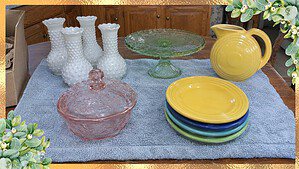
Every Thanksgiving, Mom set her pink glass candy dish in the middle of the table. It was always full of the hard ribbon candy that stuck together in the bag.
After she passed, that candy dish came home with me in a box. So did her green cake stand, a few white glass vases and a stack of bright yellow, blue and red plates.
The box sat in our basement for almost three years. This fall, I finally opened it and asked a simple question. What do you do with dishes like these when nobody in the family wants them?
The Box of Colored Dishes From Mom’s House
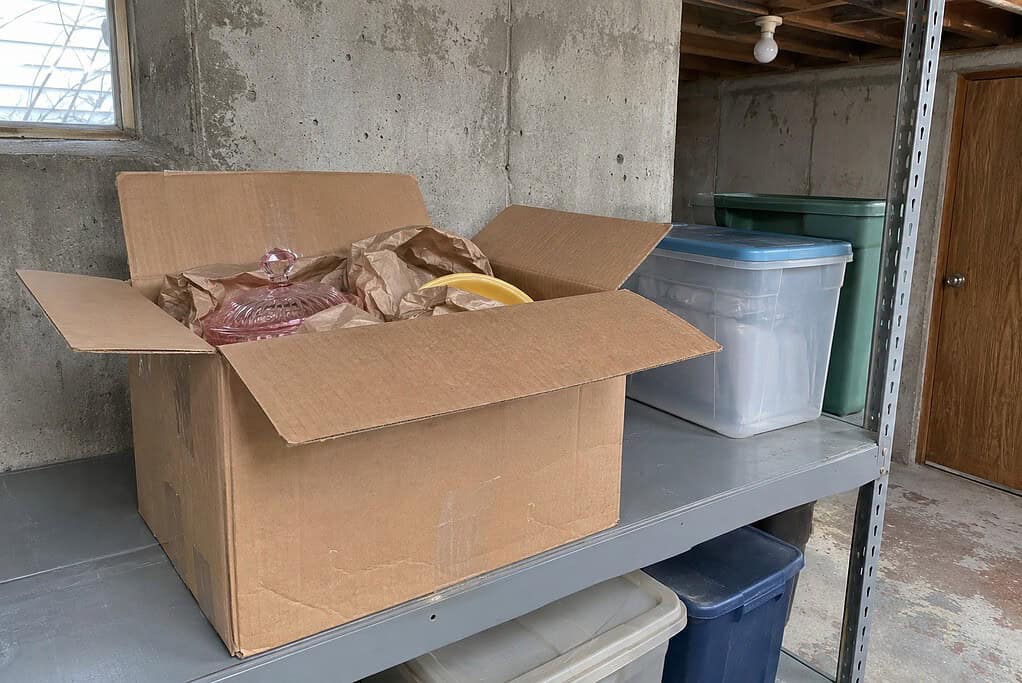
When we cleared out Mom’s house, most of her dishes went to the estate sale. But I couldn’t let these go that week. They were the dishes I remembered from her table.
This fall, my husband carried the box up from the basement for me. I unpacked it on the kitchen table, one piece at a time, on a folded towel.
There was the pink candy dish with its lid, and the green cake stand.
There were four white vases with little raised bumps all over them. And there were six heavy plates in different colors, plus a yellow pitcher. (I had forgotten all about the pitcher.)
Why So Many of These Dishes Are Out There
I learned something that helped me right away. Most of these dishes were made in huge numbers, so lots of families still have them.
Depression glass is cheap, machine-made glass from about the 1920s to the 1940s. It came in colors like pink, green, amber and yellow.
Some of it was given away free with other things people bought, or at the movies on “dish night,” one piece each week. (Mom’s candy dish may have come that way, but I’ll never know.)