11 Meaningful Places to Send Your Belongings After Decluttering

Decluttering is supposed to feel good, right?

Especially if you spend a whole day going through your closet, filling three bags with things you haven't worn in years, loading them into the car, and dropping them off somewhere.

The hard part is supposed to be over after that.

But sometimes it isn't.

Sometimes you pull into the Goodwill parking lot, hand off the bags to the man at the back door, and drive away feeling a little hollow about it.

Like you just sent off a piece of your life to a giant warehouse.

And you have no idea where any of it is actually going to end up.

That feeling is real.

And it's part of why so many of us put off decluttering in the first place. We want our things to mean something to someone, not just disappear into a bin.

But what I've learned is that there are so many other places willing to take your belongings.

Places where what you've decluttered will actually be used, loved, or genuinely needed.

Places where the answer to “where to donate after decluttering” is something far more specific and far more meaningful than the closest big-box drop-off.

Some of these places I'd never thought of until a friend mentioned them. Some I stumbled into by accident.

And once I started using them, the whole experience of letting go felt different.

Lighter. Kinder. More like passing something forward than throwing it away.

Why Where Your Stuff Goes Actually Matters

A man handing a wrapped gift to another person

For a long time, I told myself it didn't matter where my decluttered things ended up.

As long as they were out of my house, I was doing the right thing.

But somewhere along the way, that stopped feeling true.

The first time it really hit me, I was watching a friend hand over a box of her grandmother's china to a stranger from a Buy Nothing group.

The woman opened the box right there in my friend's driveway, gasped, and started crying.

She'd been searching for that exact pattern for years to complete the set her own grandmother had left her.

My friend cried too. (I almost did, and they weren't even my dishes.)

That's when I understood.

The place a thing goes after it leaves your home is part of the story. Not just for the item, but for you. And for the person on the other end.

When something you've held onto for decades ends up loved and used by someone who actually needs it, the whole experience shifts.

Decluttering stops feeling like a loss and starts feeling like a quiet, generous trade.

You give up the space. Someone else gets the gift.

That's why where your stuff goes actually matters.

It's not just about getting rid of things. It's about letting go of items in a way that feels right, to you and to whoever ends up with them next.

Where Your Things Can Actually Make a Difference

These are the places I've come to know and trust over the years.

Some are obvious. Some I'd never thought of until someone else pointed them out.

You don't need to use all of them, and you don't have to figure it out perfectly.

Read related post:   17 Efficient Shoe Storage Ideas for Any Home

But knowing your options makes the whole process feel less like a dump-and-run and more like a thoughtful pass-along.

1. Women's Shelters and Domestic Violence Programs

A neatly folded pile of towels next to a small bag on a wooden table

Women's shelters are often the most overlooked donation spot, and one of the most needed.

Most of the women who arrive at a shelter come with very little. Sometimes just the clothes they're wearing.

Things like gently used clothing, toiletries, makeup that's still sealed, kids' clothes and shoes, school supplies, and small home goods make a real difference for someone trying to start over.

Call ahead and ask what they need most, because each shelter is different.

Some have storage limits. Some can accept furniture. Some are looking for very specific things, like new bras or work-appropriate outfits for women heading back into job interviews.

(I had a closet full of business attire I hadn't worn in years. Knowing they went to women rebuilding their careers was one of the best decluttering moments I've ever had.)

2. Animal Shelters

This one was a game-changer for me, because animal shelters take things you'd otherwise throw away.

Old towels. Worn-out blankets. Sheets with holes in them. Pillowcases past their best days.

Pet shelters use these for bedding, for cleaning kennels, and for keeping animals warm.

They also welcome unopened pet food, old leashes and collars, dog toys your dog never liked, cat carriers you no longer need, and even old crates or beds.

Call your local shelter or animal rescue first. Some have specific drop-off hours.

And if you've got more than they can take, they'll often point you to another rescue that needs the overflow.

3. Local Libraries

A cardboard box filled with books sitting on a wooden table

Books are heavy. Books are sentimental.

And books are one of the hardest things for most of us to actually let go of.

Your local library can help.

Most accept book donations year-round, either to add to their shelves or to sell at their annual library sale (which usually funds children's programs, summer reading, and community events).

Beyond books, many libraries also accept DVDs, audiobooks on CD, board games, puzzles, and magazines.

Some even take craft supplies for their kids' programs.

If you've got a stack of books staring at you and you're not sure where to start, this is where I'd start.

4. Schools and Teachers

Teachers spend an enormous amount of their own money on classroom supplies.

And almost every teacher I've ever met has a long mental list of things they wish they had more of.

Craft supplies. Children's books. Art materials. Picture frames. Office supplies. Small organizational tools. Even old magazines for collage projects.

If you have grandkids in school, ask their teacher first.

If not, your local elementary school office can almost always point you to a teacher who'd love whatever you have.

(One of my neighbors gives all her old craft supplies to her granddaughter's preschool teacher, and she says it's the single most thanked-for donation she makes every year.)

5. Senior Centers and Assisted Living Homes

A puzzle box, folded towel, and a lamp arranged on a wooden table

This is one I learned about from my mother before she passed.

She used to say that the things she missed most after moving into assisted living were the small comforts.

A new puzzle. A nice lamp. A soft throw blanket. Large-print books. A fresh deck of cards.

Senior centers and assisted living facilities often welcome donations of these exact things.

Especially around the holidays, when many residents don't have family nearby.

If you have unused puzzles, board games, paperback novels, or even nice toiletries you never opened, those are gold.

Call the activities director and ask what they're working on or what their residents would enjoy.

6. Hospice and Care Facilities

Hospice volunteers have told me they're always on the lookout for two things: comfort items for patients, and craft supplies for the family members sitting bedside.

That means soft blankets, stuffed animals, journals, knitting supplies, yarn, fabric, sewing kits, and warm socks all find a home.

Some facilities collect handmade items (knit caps, lap blankets, prayer shawls) and welcome the raw materials, too.

If you've been holding onto craft supplies you never quite got around to using, this is one of the kindest places they can go.

Read related post:   How to Organize a Small Wardrobe So You Can Easily Find and Wear What You Need

7. Local Religious or Community Thrift Shops

The facade of a local vintage thrift shop with a bicycle parked outside

Big-box donation centers are convenient, but the money usually goes far away.

Smaller, locally run thrift shops are often connected to a specific cause.

A church food pantry. A community shelter. A scholarship fund for local kids. A cancer support group.

Every dollar made on your old sweater goes back into your own community.

Ask around. Most towns have at least one or two of these shops, and they're usually run by volunteers who love what they do.

The vibe is different the moment you walk in. (And the smell of those places, all old books and lavender soap, takes me right back to my grandmother's neighborhood.)

8. Specialty Resale or Replacement Services

This is the one almost nobody knows about, and it's worth its weight in gold for the right kinds of items.

There are companies that specifically buy and resell things like discontinued china patterns, vintage silverware, antique glassware, and old crystal.

Replacements Ltd. is the most well-known, but there are smaller specialty shops too, especially for things like fountain pens, vintage cameras, antique linens, and old jewelry.

If you've got family heirlooms that nobody in the family wants but feel too valuable to donate, this is where they belong.

They'll go to someone who's been searching for that exact pattern, that exact maker, that exact era.

(My friend sold her aunt's full set of china this way and put the money toward her granddaughter's first car. The whole family loved that.)

9. Buy Nothing Groups and Neighborhood Pages

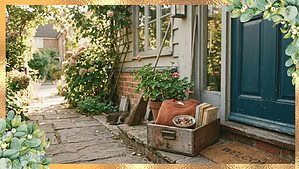
A cardboard box full of miscellaneous household items placed outside a house

If you're on Facebook, Buy Nothing groups changed the way I think about decluttering forever.

These are small, hyper-local groups where you post a photo of something you no longer need, and someone in your neighborhood comes to pick it up.

No money changes hands. The whole point is keeping things in the community.

The best part is, you usually meet the person.

You can hand the item to them directly. You hear why they wanted it. (Sometimes it's a story you'll think about for weeks.)

It's slower than just dropping things at a bin. But it makes letting go feel like passing something forward, not throwing it away.

10. Community Theaters, Costume Departments, and Dance Studios

This is the answer to “what do I do with old formal wear I'll never use again?”

Community theaters and high school drama programs are almost always looking for clothing they can use as costumes.

Vintage dresses, old suits, formal gowns, hats, scarves, costume jewelry, and even old shoes find new life on stage.

The same goes for dance studios that put on recitals. They often have a costume closet they're trying to build.

If you've got a closet full of bridesmaid dresses or your husband's old suits, this is the place.

You'll see them on stage at the next play, which is its own kind of fun.

11. A Friend, Neighbor, or Family Member Who Would Actually Love It

A pair of earrings displayed in a small gift box on a wooden table

I saved this one for last because it's the most overlooked, and the most meaningful.

Sometimes the right place for an item is just down the street.

A friend who's always admired your quilt. A neighbor who mentioned she's looking for a stand mixer.

A daughter-in-law who would treasure a piece of jewelry you've outgrown wearing. A grandchild who would actually use the books you loved at her age.

Don't be shy about asking. People love being asked.

(I gave my best friend a pair of vintage earrings last year because she once mentioned she liked them. She still texts me a photo every time she wears them. That's worth more than any donation receipt.)

This is also a kind alternative to letting them sit on a shelf for years until someone else has to figure out what to do with them.

What About the Rest of It?

A pile of folded clothes in a wicker basket on wooden flooring

Even with all these options, some things just don't have an obvious home.

Stained towels. Broken electronics. Underwear and socks that have seen better days. Old toiletries you never opened but won't pass safety dates much longer.

Read related post:   What to Do with Old Toys Your Kids or Grandkids Have Outgrown

For those items, here's what's worked for me.

Old textiles (towels, sheets, ratty t-shirts) can almost always go to an animal shelter, even if they're past donation quality.

Many cities also have textile recycling programs, where worn-out fabric gets turned into rags or insulation.

Old electronics often get accepted at Best Buy or Staples. Some libraries take old technology, too.

Expired toiletries you never opened can sometimes still be donated to shelters that accept them within a year of expiration.

Otherwise, the trash is okay. Truly.

And for everything else, sometimes the kindest answer really is the garbage.

Not everything has a second life, and giving yourself permission to accept that is part of making peace with the decluttering process instead of getting stuck in it.

You're not failing if some things have to be thrown away. You're just being honest about what they are.

Letting Go Feels Lighter When You Know Where It's Going

The hardest part of decluttering, for most of us, isn't the sorting. It's the goodbye.

We hold onto things long after we've stopped using them because we're not sure we can bear to let them go.

We tell ourselves we'll deal with them later. We move them from one drawer to the next.

And underneath all of it, there's this quiet question we never quite answer: where will this end up if I let it go?

When you know the answer, everything changes.

A pile of old towels stops being a question mark and starts being something an animal shelter is genuinely grateful for.

A box of children's books becomes a gift to a teacher.

A set of unused puzzles makes its way into the hands of someone in a senior center who hasn't had something new to do in months.

The thing itself doesn't change. But your relationship to it does.

You stop feeling like you're throwing pieces of your life away.

You start feeling like you're handing them to the next person who needs them.

That, more than any tidy closet or cleared-out drawer, is what makes decluttering feel like an act of self-care instead of a chore.

Before You Donate, There's a Step Before This One

Mockup of the free Declutter for Self Care Checklist printable guide from Alison's Notebook

Knowing where to send your belongings is the easy part.

Knowing what should leave your home in the first place is where most of us get stuck.

If you've been standing in the middle of a room trying to figure out what to keep and what to release, my free Declutter for Self Care Checklist can help.

It walks you through your home, room by room, with the gentle questions that make those decisions a lot less overwhelming.

It's the kind of guide that meets you where you are. No big purges. No guilt.

Just a clearer path from a cluttered space to a calmer one.

Frequently Asked Questions

Where is the best place to donate after decluttering?

The best place depends on what you're donating.

Clothing in good condition is welcomed at women's shelters and local thrift stores. Books, DVDs, and puzzles do well at libraries and senior centers. Towels and old blankets are a treasure for animal shelters.

Specialty items like china, silver, and vintage pieces do better with replacement services.

The most meaningful destination is usually whichever one matches the item to a real need.

What items should I not donate?

Skip donating anything broken, stained, ripped, or expired (unless a shelter has specifically asked for things like worn towels for animal bedding).

Most thrift stores aren't allowed to sell stained or damaged goods, so those items end up in their landfill anyway.

When in doubt, ask the donation center first or look for a textile recycling program in your area.

Where can I donate clothes near me besides Goodwill?

Look for women's shelters, domestic violence programs, career closets, smaller community thrift shops, religious organizations, and Buy Nothing groups in your area.

A quick search for “women's shelter donations” plus your zip code is usually a good place to start.

Local Facebook neighborhood groups are also a great way to find specific people who need specific things.

What should I do with sentimental items I can't donate?

Sentimental items often need extra time and a personal touch.

Consider passing them to a friend or family member who will appreciate them, selling them through a specialty service, or taking a photo of them before letting them go.

The goal isn't to discard the memory, just to release the object. The memory stays with you no matter where the thing ends up.

How do I find local places to donate?

Start with a quick search for your town plus the kind of donation you have, like “library book donation” or “animal shelter donations” plus your city.

Most places list what they accept and don't accept on their websites.

You can also ask around in your community.

Friends, neighbors, and local Facebook groups almost always know the best local spots that don't show up in a Google search.

Follow us on PinterestFollow
Follow me elsewhere!

Leave a Comment