
Have you ever looked at the same pile of clutter every single day and done absolutely nothing about it?
Not because you're lazy. Not because you don't care. But because something between your brain and your hands just won't connect.
You know what needs to happen. You've read the articles. You've watched the videos. You've probably bookmarked more decluttering tips than you've ever actually tried (I had seventeen saved on my phone at one point, which is its own kind of clutter if you think about it).
And yet the stuff stays right where it is.
I lived in that cycle for longer than I want to admit. I'd get a burst of motivation, start pulling things out, and then an hour later I'd be sitting in the middle of a bigger mess than I started with, exhausted and frustrated, shoving everything back where it came from.
I kept thinking the problem was that I hadn't found the right method yet. The right system. The right time.
But it wasn't any of those things.
It was what I was telling myself every time I thought about starting. Little stories I'd repeated so often they felt like facts. And every single one of them was covering up something I didn't want to feel.
Once I stopped believing those stories and started looking at what was actually underneath them, things finally began to move.
These are the decluttering reminders I actually needed. Not tips. Not tricks. Just the honest truths I had to face before anything in my house changed.
And if you've been stuck in that same loop of knowing what to do but not being able to make yourself do it, these might be the reminders that get you moving again.
Every Excuse Had a Real Feeling Hiding Behind It
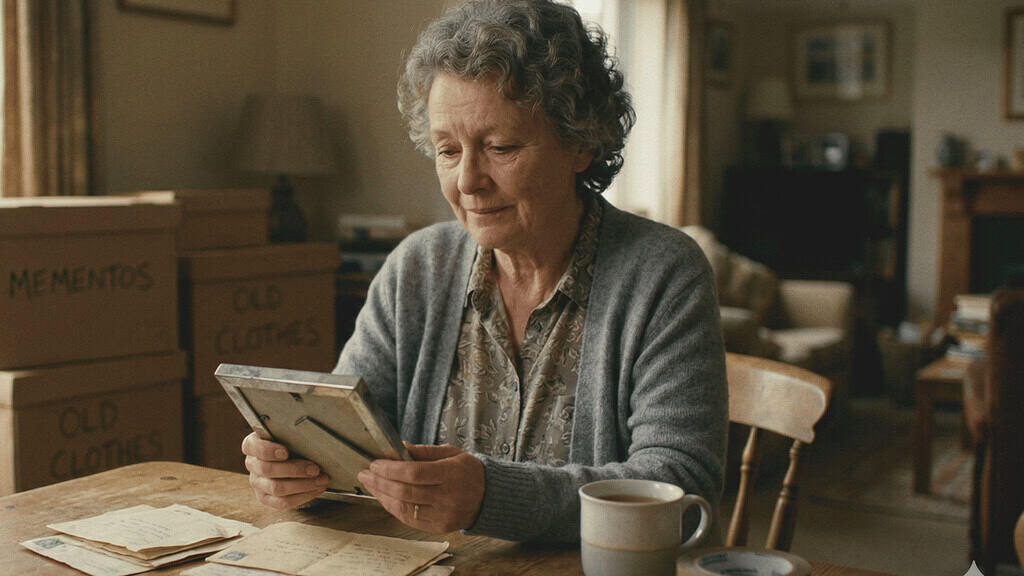
When I finally sat down and thought about why I kept stalling, I realized something uncomfortable.
Every reason I gave myself for not decluttering sounded perfectly logical on the surface.
But underneath each one was a feeling I didn't want to deal with.
“I don't have time” wasn't really about time. It was about not wanting to face the emotional weight of the decisions.
“I might need it someday” wasn't about being practical. It was about fear.
“It was expensive” wasn't about the money. It was about regret.
Once I started peeling back those layers, one excuse at a time, I stopped feeling stuck and started feeling honest. And honest, it turns out, is what actually gets things moving.
Here are the seven truths I had to face before a single thing left my house.
7 Truths I Had to Face Before Anything in My House Changed
If you've been stuck in that loop of reading advice and not following any of them, these might sound familiar. Not because I'm guessing.
But because I lived every single one of them.
1. “I might need it someday” really means “I'm afraid of not having enough.”
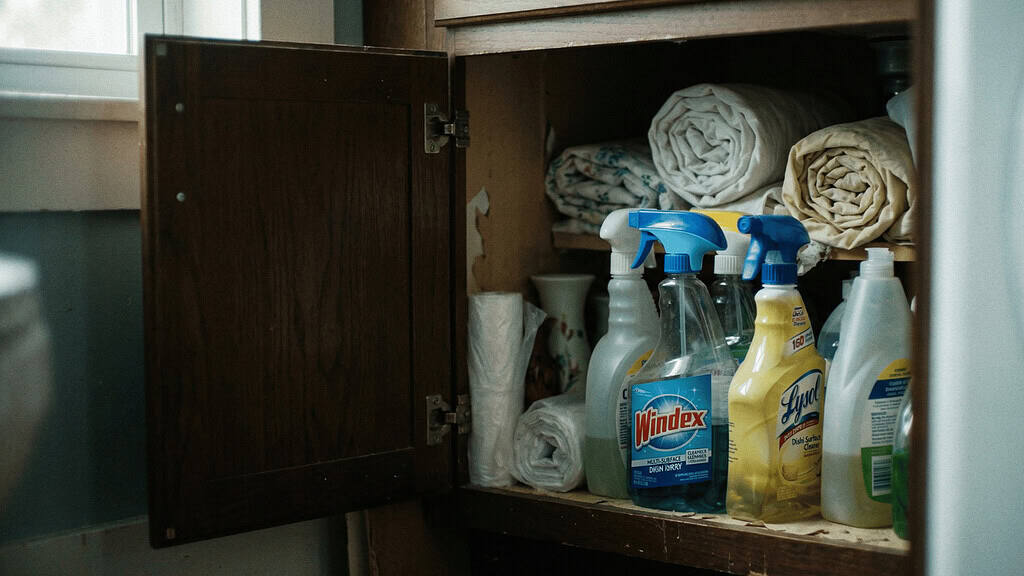
This was the one I hid behind the most.
Extra sheets for a bed I don't own anymore. A cabinet full of vases I never use. Three backup bottles of cleaning spray under the sink (because what if they stop making it?).
Every single “just in case” item in my house had the same feeling behind it.
Scarcity.
The fear that if I let something go, I'd be caught without it at the worst possible moment.
But when I actually thought about it, that moment almost never comes. And even when it does, most of those things can be replaced for a few dollars at any store within ten minutes of my house.
The truth is, I wasn't preparing for the future. I was holding onto a fear that came from watching my mother save everything “just in case” for forty years. That fear was inherited, not rational.
Once I saw it for what it was, the grip it had on me loosened. Not all the way. But enough.
2. “It was expensive” really means “I don't want to admit I wasted the money.”
I had a coat in my closet that I paid way too much for and wore exactly three times. It didn't fit right. The color wasn't what I expected. But every time I thought about getting rid of it, all I could see was the price tag.
Keeping it didn't get the money back. It never was going to.
All it did was sit there, taking up space, quietly reminding me of a purchase I wished I'd thought through differently.
The money was spent the day I bought it. Whether the coat stays in my closet or goes to someone who will actually wear it, that number on my credit card statement doesn't change.
Letting it go wasn't throwing away money. It was stopping the punishment.
3. “Someone gave it to me” really means “I'm carrying guilt, not gratitude.”
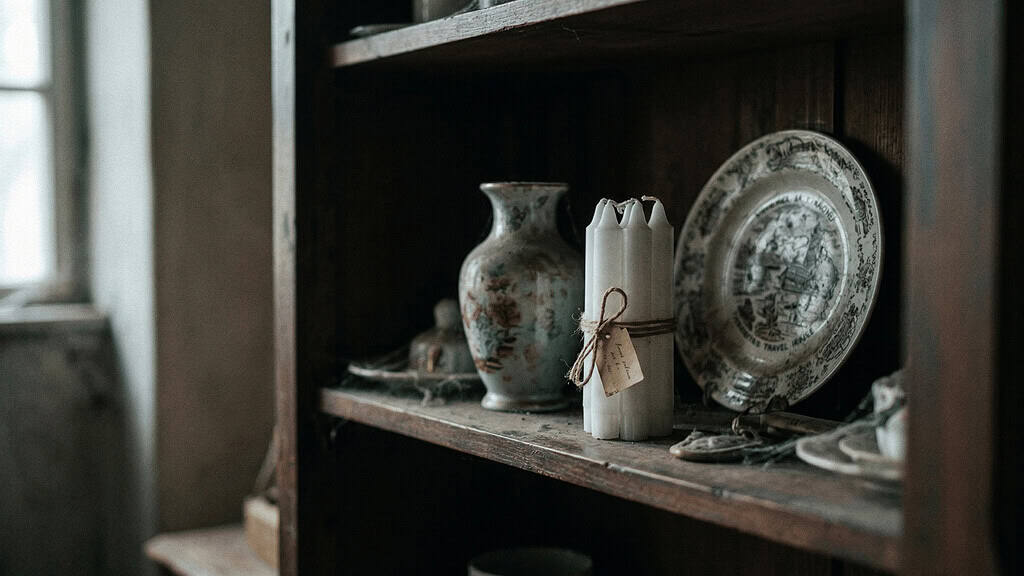
A vase from my sister-in-law. A set of candles from a neighbor who brings one every Christmas. A decorative plate from a trip I took with a friend ten years ago.
None of them were my taste. I didn't use any of them. But every time I thought about letting them go, I pictured the person who gave them to me and felt like I was being ungrateful.
That's not gratitude. That's guilt wearing a nice outfit.
The person who gave me that gift probably hasn't thought about it since the day they handed it to me. And they definitely wouldn't want it sitting in a cabinet making me feel bad every time I opened the door.
I kept one piece. The plate from the trip (because that memory actually meant something to me). The rest I gave to people who were genuinely happy to have them.
And nobody was offended. Nobody even noticed.
4. “I don't have time” really means “I don't have the emotional energy.”
This was the excuse I used the most. And it was the one that fell apart the fastest once I looked at it honestly.
I had time to scroll my phone for an hour before bed. I had time to watch two episodes of a show I'd already seen. I had time to reorganize the same kitchen drawer three times without actually getting rid of anything.
What I didn't have was the energy to sit with hard feelings. Because decluttering isn't really about stuff. It's about making decisions. And every decision, no matter how small, costs something when the thing you're deciding about carries weight.
The shift for me was giving myself permission to do less at a time. Not a whole room. Not a whole closet. Just one shelf. Fifteen minutes. Then stop.
That was a kind of time I actually had.
5. “My kids might want it” really means “I'm not ready to let go of who I was when they were here.”
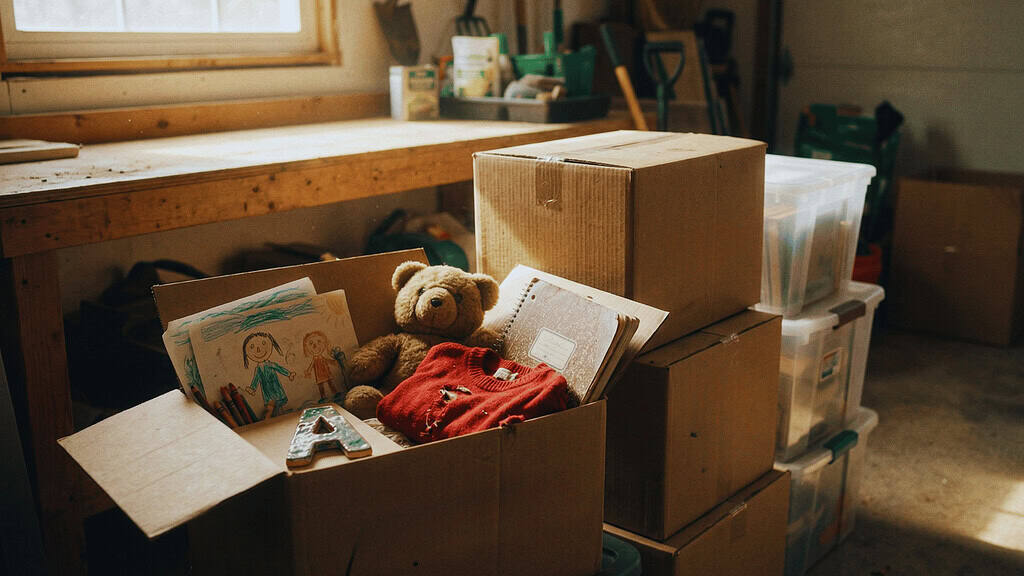
This one took me the longest to see clearly.
I had boxes of their old school projects. Bins of toys they played with in elementary school. Clothes they wore on specific days I still remember.
I told myself I was keeping it for them. But when I actually asked (which took more courage than I expected), they didn't want most of it. They didn't even remember half of it.
The things in those boxes weren't for my kids. They were for me. They were proof of a chapter of my life that was full and busy and loud. And letting them go felt like admitting that chapter was over.
It is over. And that's okay. The memories don't live in a bin in the garage. They live in me.
I kept a few things. The ones that made me smile without making me sad. The rest I let go with more peace than I expected.
6. “It's not that bad” really means “I've gotten very good at not seeing it.”
This is the one that keeps you stuck the longest. Because as long as the house looks fine on the surface, there's no urgency.
The counters are clear. The floors are clean. When company comes, things get tidied quickly and nobody suspects a thing.
But behind the closed doors (and we all have them), things have been quietly piling up for years.
I had gotten so used to walking past certain messes that I genuinely stopped seeing them. The stack on the dining table that had been there since last spring. The closet I hadn't fully opened in months. The garage I navigated on autopilot.
It wasn't that it wasn't bad. It was that I'd adjusted to it. And adjusting to something is not the same as being okay with it.
The moment I stopped telling myself “it's fine” was the moment I finally started.
7. “I don't know where to start” really means “I'm afraid of what it'll feel like once I do.”
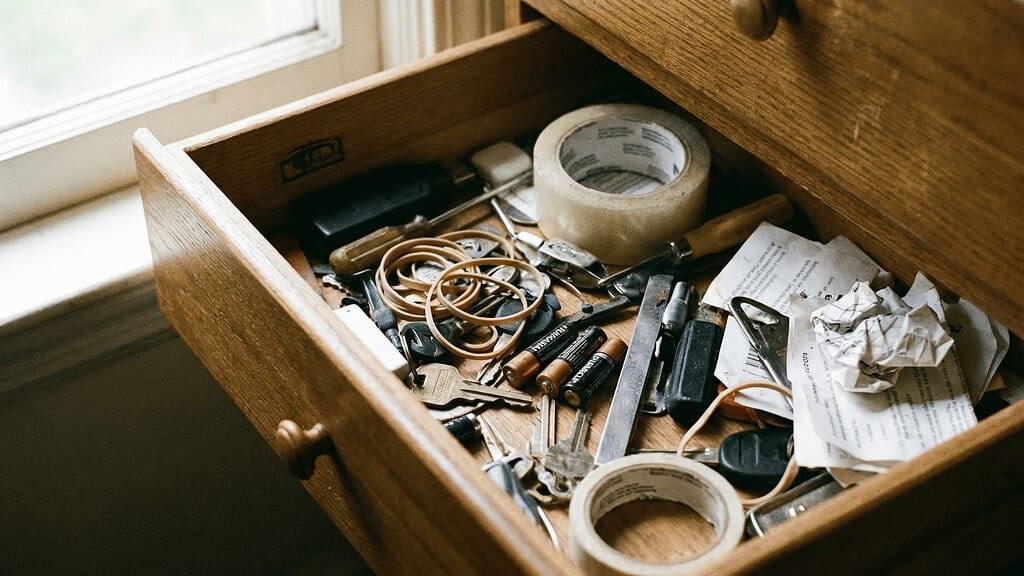
I said this one more than any other. And every time I said it, I believed it.
But it wasn't true.
I knew exactly where to start. The kitchen junk drawer. The bathroom cabinet. The pile of mail that had been growing on the counter for weeks. Any one of those would have taken fifteen minutes.
The problem wasn't that I didn't know where. The problem was that starting meant facing the mess. And facing the mess meant feeling things I'd been avoiding.
Overwhelm. Frustration. Sadness. The quiet embarrassment of letting things get this far (even though nobody was judging me but me).
Starting was never about finding the perfect first step. It was about being willing to feel uncomfortable for a little while. And the truth is, that discomfort passes a lot faster than you think it will.
And Then There's That One More Thing I Wasn't Ready to Admit
The seven truths above took me weeks to work through. But there was one more underneath all of them that I didn't see until much later.
I wasn't just failing to get rid of the clutter.
On some level, I was keeping it on purpose.
After my kids moved out, the house got quiet in a way I wasn't prepared for. The rooms that used to be full of noise and mess and life were suddenly just rooms. Empty. Still. Too clean.
So I filled them. Not with junk. With activity. With projects. With things to organize and sort and manage.
The clutter gave me something to do. Something to think about. Something to feel responsible for when the rest of my life had shifted into a slower gear that I hadn't quite adjusted to yet.
I wasn't holding onto stuff because I was lazy or disorganized. I was holding onto it because a full house felt less lonely than an empty one. And managing the mess gave me a sense of purpose when I wasn't sure where else to find it.
That was the hardest truth of all.
And once I named it (sitting alone in the living room on a Tuesday afternoon, which felt about right), something released. Not the clutter. But the need for it.
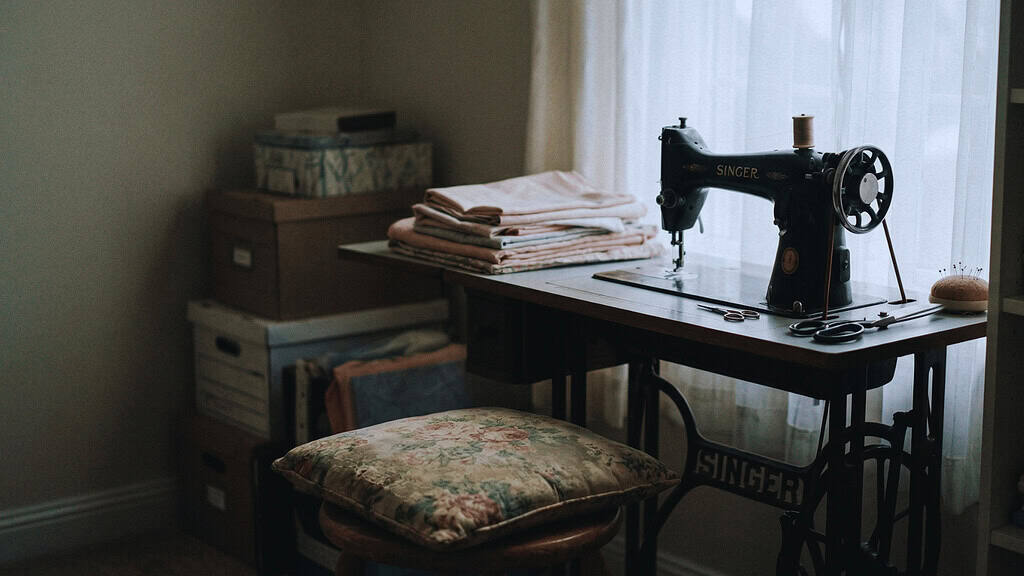
I started finding that sense of purpose in other places. In morning walks. In calling a friend. In actually using my sewing room instead of storing things in it. In sitting on my porch with a cup of coffee and not feeling guilty about the fact that nothing in the house needed managing.
The stuff didn't fill the gap. It just covered it up.
Letting it go didn't leave me with less. It left me with room for the things that actually make me feel like myself.
What Changed Once I Stopped Believing My Own Excuses
I won't pretend the house transformed overnight. It didn't.
But the decisions got easier.
Not because the stuff mattered less. But because I finally understood why I was keeping it. And once I could name the real reason (fear, guilt, grief, loneliness, habit), the excuse lost its power.
I still have days where I walk past something and think “I'll deal with it later.” Old habits don't disappear just because you've had a realization.
But now I catch myself. I stop. And I ask, “What's the real reason I'm not dealing with this right now?”
Usually the answer is uncomfortable. And usually, once I've said it out loud (even just to myself), I can move forward.
That's what these decluttering reminders really are. They're not motivation posters. They're not tips from an expert. They're just the truth, said plainly, for the moments when you've gotten off track and need something honest enough to pull you back.
Because the stuff in your house isn't the real problem. The stories you tell yourself about the stuff are.
Change the story, and the house starts to change too.
Not perfectly. Not all at once. But enough to finally feel like you're moving instead of standing still.
You Already Know What to Do. Now Let Yourself Do It.
I spent years stuck between knowing and doing. The gap between those two things felt impossible to cross until I stopped blaming the mess and started looking at myself.
These reminders won't declutter your house. Only you can do that.
But they might quiet the voice that keeps telling you it's too hard, too late, or too much. And once that voice gets a little quieter, you'd be surprised how much you can get done in fifteen minutes on a random Tuesday afternoon.
Your house doesn't have to be perfect. It just has to stop weighing you down.
And it will. One honest truth at a time.
Want a Clear Place to Start?

If these reminders have you seeing your house a little differently, my free Declutter for Self Care Checklist can help you turn that shift into action.
It gives you a room-by-room path that keeps you moving forward without the overwhelm that usually sends you right back to the couch.
Frequently Asked Questions
Why can't I seem to start decluttering even though I know I need to?
Most of the time it's not about knowing what to do. It's about what you're feeling underneath the resistance. Guilt about money spent, fear of regretting it later, emotional attachment to a person or a chapter of your life. Once you can name what's really stopping you, the first step gets a lot less heavy. Start with one small area that doesn't carry emotional weight and build from there.
How do I get back on track when I lose motivation to declutter?
Come back to why you wanted to start in the first place. Not the practical reasons. The personal ones. How you want your home to feel. What you'd do with the space if it were clear. Who you'd invite over if you weren't embarrassed. Those reminders pull harder than any checklist. And if you've stalled, don't try to pick up where you left off. Start fresh with something small and easy. Momentum comes back faster than you think.
How do I stop feeling guilty about getting rid of things?
Guilt usually comes from one of two places. Either you feel bad about the money you spent, or you feel bad about letting go of something connected to a person you love. For the money, remind yourself that keeping it doesn't get the money back. For the sentimental things, remind yourself that the memory lives in you, not in the object. You can keep one meaningful piece and let the rest go without losing anything that actually matters.
What do I do when I feel like my clutter is too overwhelming to tackle?
Stop looking at the whole house. You're not decluttering your house today. You're decluttering one drawer. One shelf. One corner. Set a timer for fifteen minutes and stop when it goes off. That's it. The women who actually finish are the ones who go small and steady, not the ones who try to do everything in a weekend.
How do I stay motivated to keep decluttering after the initial excitement wears off?
The excitement always fades. What keeps you going is noticing how the cleared spaces make you feel. Pay attention the next time you open a drawer that's been sorted or walk into a room that has a little more breathing space. That calm feeling is the motivation. Not a before-and-after photo. Not a challenge. Just the quiet relief of a home that feels a little lighter than it did last week.
Follow me elsewhere!

