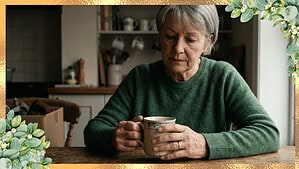
I almost didn't go.
It was a Tuesday evening. I was tired. I'd already changed into the clothes I wear when I have no intention of leaving the house again.
But a friend from church had asked me to come to a talk at the community center, and I'd said yes before I knew what it was about.
A hospice nurse was speaking about end-of-life care.
Not exactly the light Tuesday night I had in mind.
But I went. And somewhere in the middle of her talk, she said one sentence that I haven't stopped thinking about since.
It didn't have anything to do with decluttering.
She wasn't giving household tips. She was talking about people. About what they say in their final days. About what they ask for and what they don't.
And that one sentence followed me home, into my kitchen, through my closet, and into every room in my house.
It became the only decluttering rule I've ever needed. And it takes less than five minutes to use.
She Said One Thing I Haven't Been Able to Forget
The nurse had been doing hospice work for over twenty years.
She talked about what it's like to sit with someone in their last days.
What they worry about. What they want to say. What they wish they'd done differently.
She said the regrets are almost always about people. Not enough time with them. Not enough honesty. Not enough “I love you” when it was easy to say.
Then she paused and said something I wasn't expecting.
“In all my years of doing this work, not one person has ever asked me to bring them something from their house.”
She let that sit for a second.
“Nobody asks to see their kitchen one more time. Nobody wishes they'd kept more dishes. Nobody says, ‘I wish I'd held onto that coat.'
They ask for their daughter. They ask for forgiveness. They ask for one more afternoon outside. But they never ask for their things.”
The room was quiet.
I looked down at my hands and thought about the cabinet in my kitchen that I can barely close.
The closet full of clothes I haven't worn in years.
The boxes in the garage I've been storing for people who never asked for them.
And I thought, what am I doing?
I Didn't Plan to Turn It Into a Rule. It Just Became One.
I drove home that night and couldn't stop replaying what she'd said.
Nobody asks for their things.
The next morning, I was unloading the dishwasher and putting a mug back in the cabinet (the one with thirty-four glasses in it, most of which I never touch).
And without really thinking about it, I held the mug and asked myself a question.
“If this were my last year, would I spend any part of it washing, storing, or worrying about this mug?“
The answer took about three seconds.
No.
I set it in a bag by the back door.
Then I picked up another one. (Same question. Same answer. Same bag)
Over the next few days, that question followed me everywhere. The closet. The bathroom. The junk drawer.
Every time I touched something I wasn't sure about, I'd ask myself the same thing.
If this were my last year, would I spend any of it managing this?
And within five minutes (usually much less), the answer was always clear. Not because I'd found some clever trick. But because that question cuts through every excuse I've ever used to keep something.
“It still works” doesn't matter when you're thinking about your last year.
“I paid good money for it” doesn't matter either.
“Someone might want it someday” falls apart completely.
The only thing that holds up is…
Does this thing actually matter to me right now?
That's the 5-minute decluttering rule. One question. Honest answer.
Almost always under five minutes. And it's the only rule that's ever stuck.
What Happened When I Took That Question Home With Me
I didn't do the whole house at once. I just started noticing things throughout my normal day, and every time something caught my eye, I asked the question.
The answers came faster than I expected.
The Kitchen
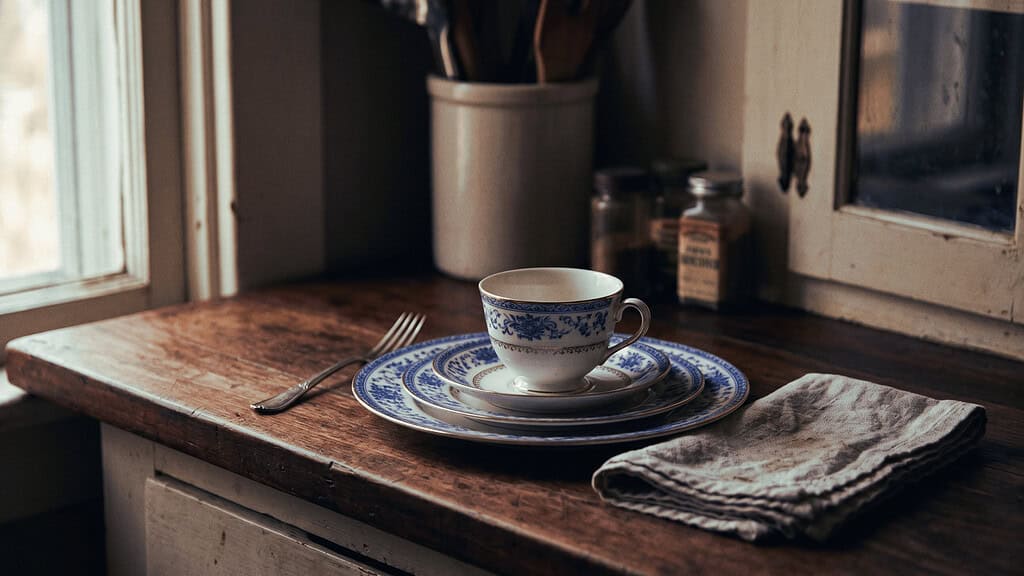
The good china was the first thing I thought about.
I've had it for over twenty years. It comes out maybe once a year (and some years not even that). It takes up an entire shelf in the cabinet. Every piece has to be hand washed.
Would I spend any part of my last year managing a set of dishes I use once a year?
No. Not even close.
I kept four pieces. The ones I actually think are beautiful.
The rest went to a woman at church who was setting up her first home after a divorce and needed a full set of dishes. She cried when I handed them to her.
That felt better than twenty years of storing them ever did.
The Closet
Would I spend my last year keeping blazers from a career I retired from?
No.
Would I spend it holding onto jeans in a size I haven't been in for five years, just in case?
No.
Would I spend it keeping a blouse my daughter gave me that I've never worn but felt too guilty to donate?
That one took longer than five minutes. But the answer was still no.
And my daughter (when I finally told her) laughed and said she didn't even remember buying it.
The Garage
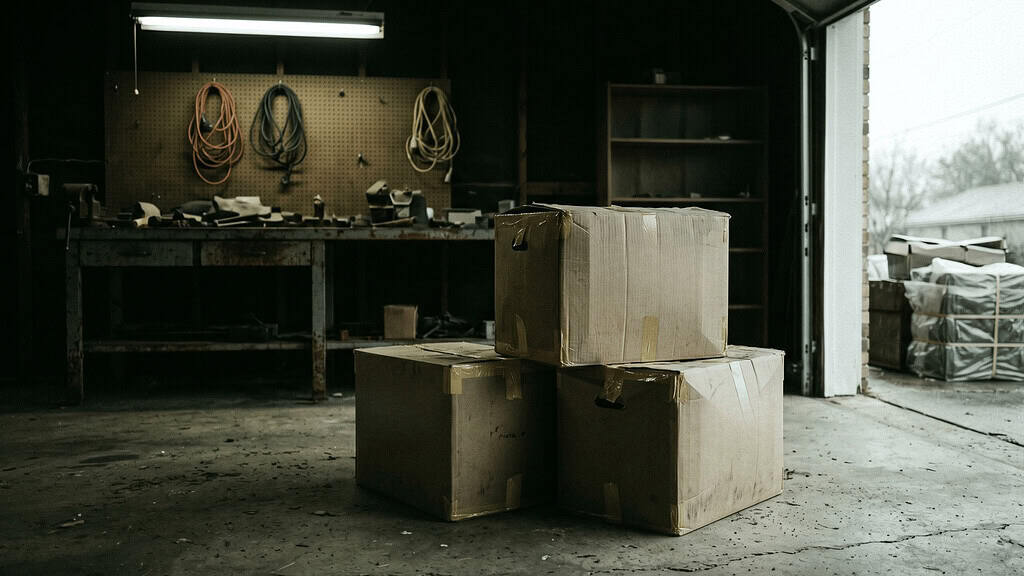
Three boxes from our last move that I'd never opened.
Would I spend any part of my last year finally unpacking boxes I've ignored for over a decade?
I didn't even open them. They went straight to donation.
My husband watched me carry them out and said, “You don't even know what's in there.”
I said, “Exactly.”
The Spare Bedroom
Bins of my kids' old things. Holiday decorations I haven't used since we stopped hosting. A broken exercise bike. A stack of photo albums I keep meaning to sort through but never do.
Would I spend my last year in this room, sorting through boxes of things from a chapter that's already closed?
I kept the photo albums (those are worth the time). I kept a small box of my kids' things, the ones that actually made me feel something when I held them.
Everything else left that room within a week.
And for the first time since 2018, someone could actually sleep in there.
The Living Room
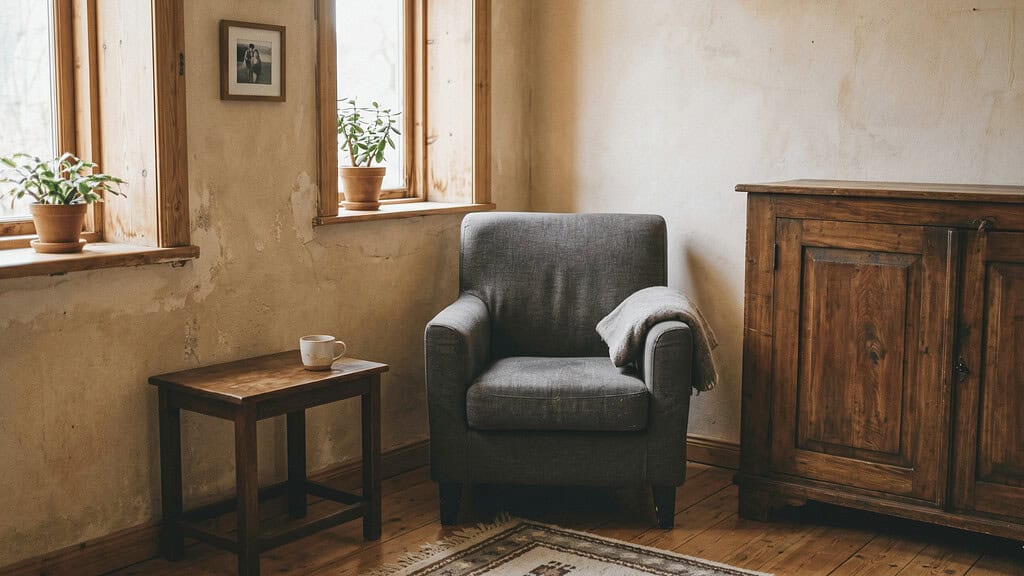
This one surprised me.
I thought the living room was fine. It's clean. It's tidy. There's nothing obviously wrong with it.
But when I asked the question, I realized I was spending time every single week dusting figurines I don't care about…
Fluffing pillows I bought because a magazine told me to…
And working around a piece of furniture that's too big for the space but too expensive to feel okay about getting rid of.
Would I spend my last year dusting things that don't make me happy?
The figurines are gone. The pillows are gone. The furniture is still here (for now), but it's on notice.
Why One Question Did What Twenty Tips Couldn't
I've tried other decluttering rules.
The “does it spark joy” method. The “have you used it in the last year” test. The “one in, one out” approach. The timers, the challenges, the checklists.
They all worked a little. But none of them stuck.
Because every one of them left room for me to argue my way out of letting something go.
“Does it spark joy?” Well, it doesn't not spark joy.
“Have I used it in the last year?” I think so. Maybe. I can't remember, but I might have.
I could always find a reason to keep something when the question was about usefulness or feelings.
But this question doesn't ask about usefulness. It asks about what matters.
And when you frame it around the end of your life (not in a morbid way, just in an honest one), the things that deserve space in your home become incredibly clear.
The stuff that stays is the stuff you'd WANT around you.
Everything else is just storage. And I don't want to spend whatever time I have left managing a storage facility. (Are you?)
The Things That Stayed Are the Things That Matter
My house isn't empty. It's not even close to minimalist.
My husband would have something to say about that, and he would be right (we still have the golf clubs, but that's a battle for another day).
But what's here now is here for a reason.
My mother's wooden spoon is on the kitchen counter because I use it every week and I think of her every time.
The photos are on the wall because they make me smile when I walk past them.
The books on the shelf are the ones I've actually read and loved, not the ones I kept because a full bookshelf looks a certain way.
The good dishes are being used on Tuesdays, not saved for a someday that never comes. The candles are lit. The nice towels are out.
Because if that hospice nurse taught me anything, it's this.
Nobody at the end wishes they'd saved more things.
They wish they'd enjoyed MORE of the life that was happening around them while they still could.
I can't get back the years I spent storing, sorting, and stepping around things that didn't matter.
BUT…
I can make sure the years I have left aren't spent the same way.
Five minutes. One question. That's all it takes.
And I stole it from a hospice nurse on a Tuesday night I almost didn't show up for.
Want to Start Using This Rule in Your Own Home?

If that one question is already making you look around your house a little differently, my free Declutter for Self Care Checklist can help you work through it room by room.
It gives you a clear path forward without the overwhelm that usually stops people before they start.
Frequently Asked Questions
What is the 5-minute decluttering rule?
It's a simple decision filter.
When you pick something up and feel stuck on whether to keep it or let it go, ask yourself one question: if this were my last year, would I spend any part of it storing, cleaning, or worrying about this thing?
The answer almost always comes in under five minutes. It cuts through the excuses that usually keep things in your house long past when they should have left.
Where did this rule come from?
It came from something a hospice nurse said during a community talk about end-of-life care.
She mentioned that in over twenty years of sitting with people in their final days, not one person had ever asked to see their things.
They asked for people. They asked for peace. But never their stuff.
That perspective became the foundation for a question I now use every time I can't decide what to keep.
Is this rule too morbid to actually use?
It doesn't feel morbid in practice. It feels clarifying.
You're not dwelling on death. You're just using the awareness that time is limited to cut through the noise.
It's the same reason Swedish death cleaning works.
When you stop pretending you have unlimited time to “deal with it later,” the decisions get much simpler.
What if the answer takes longer than five minutes?
Then the item probably carries emotional weight that deserves more than a quick decision.
Set it aside and come back to it when you're not in the middle of sorting through everything else.
The five-minute rule works best for the everyday stuff. The sentimental items need their own time, their own space, and a gentler approach.
Can I use this rule alongside other decluttering methods?
Absolutely. It works well as a filter on top of whatever method you're already using.
If you're going room by room, shelf by shelf, or using any other system, just add this question whenever you get stuck.
It's not a replacement for structure. It's the thing that gets you unstuck when structure isn't enough.
Follow me elsewhere!

