Do your bras dig in, ride up, or leave marks by noon? Then your bra is not doing its job.
After 60, your size, shape, posture, and skin change. A bra that felt fine at 45 can fail at 65. Poor fit leaves dents, red marks, and lines that show under your tops. It can also pull your posture down and make clothes look messy.
You deserve support that feels good and looks smooth all day. Start with the basics that matter most.
In this blog post, you will see what a good bra should do now and the five mistakes to avoid. You will also get simple fixes, a two minute fit check, and a short buying list to help you shop with confidence.
Why Your Bra Needs a Check After 60
As we get into our 50s and 60s, our bodies change.
Weight can shift. Your rib cage can settle. Breast tissue gets softer. Shoulders may round. Skin gets thinner.
And because of that, bras will (most of the time) fit differently.
The band may dig in or ride up. Cups can gap or spill. Straps might slip or pinch.
Also, fabric matters more now. Heavy materials trap heat and rub on sensitive skin. Underwires that felt fine years ago can press into soft tissue and leave marks.
So it’s time to update the fit. A fresh check isn’t a luxury. It’s basic care for comfort, good posture, and smooth-looking outfits.
First, learn what a good bra should do for you now. Next, we’ll go through the five common mistakes and the simple fixes.
Five Bra Mistakes to Avoid After 60
As your body changes, many habits stay the same. You keep the old size, the same styles, and the same brands, even when they no longer feel right.
That is why bras dig in, ride up, and show lines under clothes. The good news is each problem has a simple fix you can do at home.
Below are the five common mistakes and the quick steps to correct them.
Mistake 1: Wearing the Wrong Size
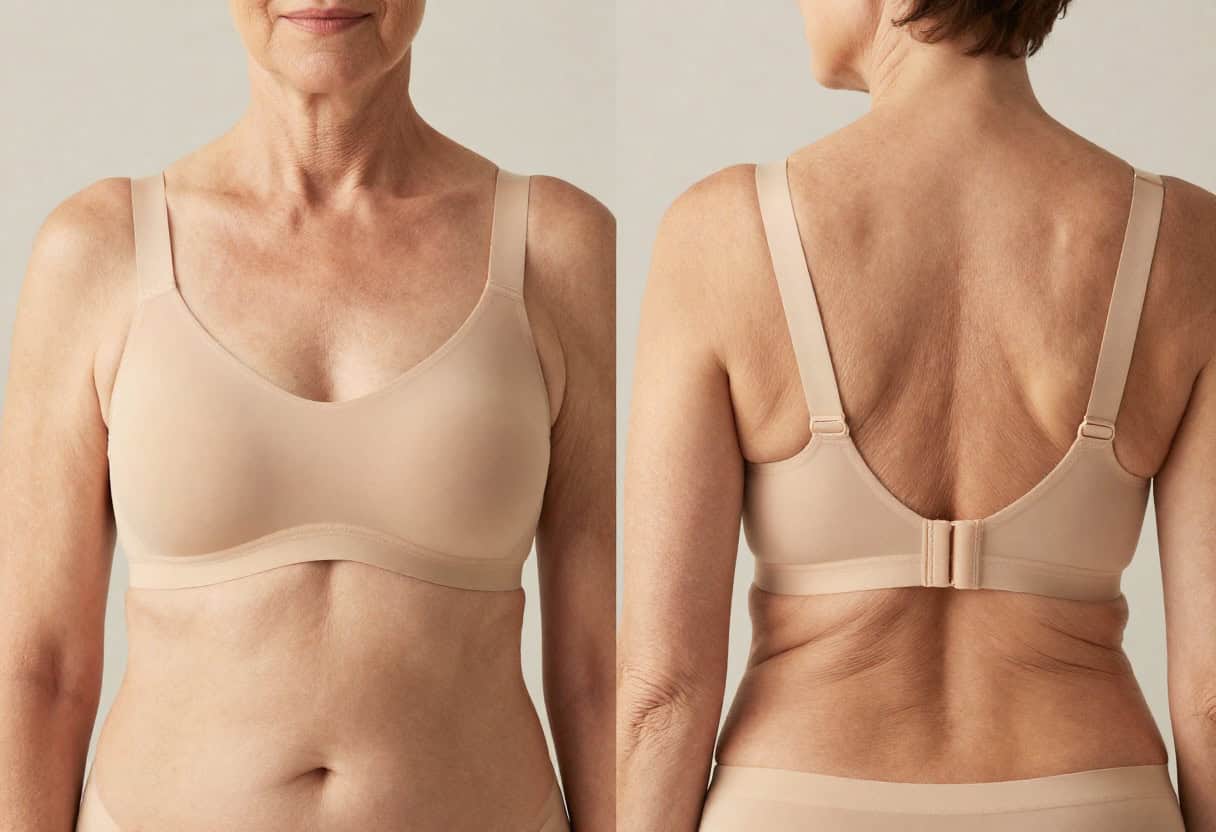
Many women keep the same size for years. Bodies change with age, weight shifts, and posture. When the size is off, the band can dig in or ride up. Cups can wrinkle, gap, or spill.
The center front should lie flat. If it floats or presses hard, the size is not right. A poor fit makes shoulders sore and shows lines under tops.
How to fix it
Measure at home once a year. Set the band snug and comfy on the loosest hook. Adjust straps so they stay put without dents.
Do a move test. Raise your arms, bend, and sit. If anything shifts, try a nearby size and note what works best by brand.
Mistake 2: Believing Only Underwire Gives Support
Underwire can help, but it is not the only way to get lift. With softer skin, wires can press and leave marks by evening.
Real support comes from a firm band, the right cup shape, and good strap placement. A well made wire free bra can hold shape, smooth lines, and feel better on tender areas.
How to fix it
Try wire free styles with a firm band, wider straps, molded cups, and higher sides. Put on a tee and check the outline.
If the shape is smooth and nothing pokes or rubs, keep it. If you prefer wires, pick soft cushioned channels and make sure the center sits flat without pressure.
Mistake 3: Ignoring Fabric and Breathability
Thinner skin needs gentle fabric. Heavy or scratchy materials trap heat and rub, which can cause itch and soreness.
Seams in the wrong place can chafe under the arm or along the band. Breathable, stretchy fabric moves with you and helps you stay cool and dry.
How to fix it
Choose soft, breathable knits that recover well after stretching. Look for smooth linings where rubbing happens most.
In warm weather, pick lighter fabrics so you stay comfortable all day. If your skin is sensitive, choose tagless prints to avoid scratchy labels.
Mistake 4: Keeping Worn Out Bras Too Long
Elastic gets tired over time. When the band pulls away from your back or the cups look wrinkled, the bra has lost its job.
A stretched band cannot hold weight, so straps carry more and dig into shoulders. Old bras can also make posture slump and clothes look messy.
How to fix it
Replace everyday bras every 12 to 18 months. Rotate three to five bras so each one rests between wears. Wash by hand or use a mesh bag on gentle.
Clip hooks before washing. Lay flat or line dry. Good care keeps shape and support longer.
Mistake 5: Forgetting Comfort Is Part of Style
When a bra hurts, you think about it all day. You tug, shift, and hunch. That makes outfits look less neat.
Comfort helps posture, smooths lines, and lets clothes drape well. Pretty details still count, but they should not scratch or squeeze.
How to fix it
Pick styles that feel good first. Choose smooth cups for tees and knits. Match the bra neckline to your top so nothing shows.
Look for wider straps if your shoulders are tender and higher sides for a clean line. Choose colors and trims you enjoy so you feel confident and comfortable all day.
Quick At-Home Fit Check in 2 Minutes
Before you buy anything new, test the bras you own. This fast check shows if a bra fits your body now.
First, check the band. It should sit level around your rib cage and feel firm on the loosest hook. You should slide two fingers under it without pain.
Next, check the center front. It should lie flat on your chest. If it floats or digs, the size is off.
Then, adjust the straps. Tighten until they stay put without leaving dents. You should fit two fingers between the strap and your shoulder.
Now, scoop and smooth the cups. Lean forward, place tissue fully into the cup, and stand up. Cups should not gap, wrinkle, or spill.
Look at the sides. Higher sides should smooth the underarm area, not cut in. If you see bulge or loose space, try a nearby size.
Do the move test. Raise your arms, twist, and sit. Nothing should shift or ride up.
Put on a thin tee. The outline should look smooth with no lines or bumps.
Finally, note the results. Write down the brand, size, and any tweaks that worked so you can repeat the fit.
Your Simple Bra Buying List
Start by covering your basics. Most women do well with three everyday bras and one dressy option. Cover the basics first, then add what you’ll actually wear.
- Smooth t-shirt bra for daily wear: molded cups, a firm band on the loosest hook, higher sides to smooth the underarm, and straps that stay put.
- Wire-free support bra for long days or tender skin: the band should feel secure without pinching; wider straps and molded cups help keep a neat shape under a thin tee.
- Soft lounge bra for at home: gentle support, wide straps, and smooth fabric that does not rub.
- Dressy bra that matches your necklines: V-neck, scoop, or lightly lined styles that disappear under blouses and dresses.
For color, pick a shade close to your skin for light tops. Add black or a deeper tone for dark outfits.
Fit comes first. Buy your best size, then try a nearby size if something feels off. A small band extender can help with tiny changes, but size up if you truly need more room.
Rotate three to five bras so each one rests between wears. Wash in a mesh bag or by hand, and air dry to keep the shape. Replace everyday bras every 12 to 18 months.
Before you remove the tags, do the two minute fit check. Make sure the band sits level, the center front lies flat, the straps stay put, and the cups look smooth under a thin tee.
Your Best Outfits Start With The Right Bra
The right bra can change how you feel and how your clothes look. When the size, fabric, and shape match your body now, you get lift without pain and a smooth line under every top.
Wire free styles can support well when the band is firm, the straps are wide, and the cups hold shape. A steady refresh every 12 to 18 months keeps that comfort and support in place.
You do not need a drawer full of options. You need a small set that works.
Measure once a year, do the quick fit check, and keep notes on sizes that fit by brand.
With those habits, shopping gets easy and your outfits look neat again.
Build Outfits That Work With Your New Fit
Now that your bra fits, tops hang better and lines look smooth. Make the rest of your closet simple with a small mix and match plan.
Pick one base color and one light neutral so every piece goes together.
Add a few soft tees and blouses, pants that fit at the waist, one easy skirt, a light sweater or jacket, and shoes you can walk in. Keep the number of items low so getting dressed is fast.
Alison’s free guide shows each step in plain language. You will get a printable checklist, sample color plans, and easy outfit ideas you can use right away.
Ready to start today?
Frequently Asked Questions
1. How often should I replace a bra?
Plan on every 12 to 18 months with regular wear. Replace sooner if the band stretches more than two fingers, the cups wrinkle, or straps slip even after you adjust them.
Rotate three to five bras so each one lasts longer. Hand wash or use a mesh bag and air dry to keep the fit.
2. Can wire free bras support older women?
Yes, when the design is right. Look for a firm band, molded cups, wider straps, and higher sides.
These parts do the lifting without wires. Put on a thin tee and check that the outline is smooth and you feel no pressure points.
3. How do I measure my bra size at home?
First, measure snug under your bust to find your band size in inches. Next, measure around the fullest part of your bust. Subtract band from bust to estimate your cup size: about one inch per cup step (A, B, C, and so on).
Use this as a starting point, then try nearby sizes to confirm the best fit.
4. Which straps help sore shoulders?
Choose wider straps or light padding to spread weight. Front adjusters make fine tuning easy.
If straps still dig, the band may be too loose and forcing the straps to work too hard. Set the band firm first, then adjust the straps just enough to stay put.
5. What helps with back or underarm bulge?
Start with the right band size so it sits level and does not cut in. Higher side panels and a wider back wing help smooth the area. Pick soft, smooth fabric that does not pinch. If you still see bulge, try a nearby size or a style with higher sides for more coverage.
6. Should I sleep in a bra?
It is a personal choice. If you like light support at night, pick a soft, wireless lounge bra with smooth fabric and no tight elastic. Avoid anything that leaves marks by morning. If you feel fine without one, you do not need to wear a bra to sleep.
Follow me elsewhere!


