
Have you ever caught yourself keeping something you don’t need because somewhere deep down you believe you should?
Not because a blog told you to. But because it’s what you were taught. By your mother. By your grandmother. By the women who ran the households you grew up in.
I carried those beliefs into every room of my house. Save things. Prepare for company. Keep what’s “still perfectly good.”
And for a long time, I never questioned any of it. Because those ideas didn’t sound like lies. They sounded like love.
They came from women who lived through real scarcity and taught me what they knew to keep me prepared. I’m not saying they were wrong.
For their lives, in their time, those beliefs made perfect sense.
But the world they were preparing me for isn’t the one I’m living in now. And the rules that once kept a household running smoothly had quietly turned into the reasons I couldn’t let go of a single thing without guilt.
These are the seven decluttering lies I grew up believing. Not the ones you read about in articles. The deeper ones.
The ones that feel less like bad advice and more like betraying someone you love when you finally set them down.
7 Beliefs I Carried for Decades Without Ever Questioning Them
None of these felt like lies when I was living by them. They all felt like the right thing to do.
That’s what made them so hard to let go of.
1. A Good Host Always Has Extras Ready
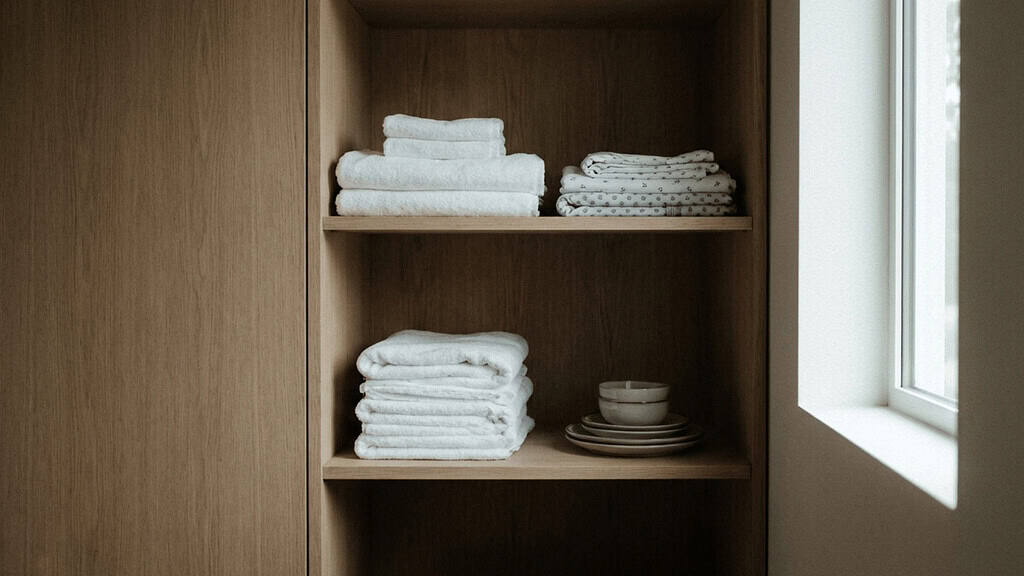
My mother kept backup everything.
Extra towels. Extra sheets. Extra dishes. Enough cups and glasses for a party of twenty even though she rarely had more than six people over at a time.
I did the same thing.
I had a cabinet full of guest towels that hadn’t been touched in years. A full set of extra bedding for the spare room (which, as you know, became a storage room a long time ago). Twelve place settings for a table that hasn’t seated more than four in over a decade.
I kept all of it because I was raised to believe that a good host is always prepared. That being caught without something for a guest was a reflection of you as a person.
But here’s what I finally realized.
I was storing things for guests who weren’t coming and sacrificing daily space and peace of mind in exchange for a scenario that almost never happens.
I kept enough for the visitors I actually have (which is usually my daughter and her family). The rest went to a women’s shelter that furnishes apartments for families starting over.
Those towels are being used every single day now. That’s more than I could say when they were folded in my closet.
2. Never Throw Away Something That Still Works
This one runs deep.
My mother reused aluminum foil. She kept rubber bands in a kitchen drawer. She held onto every glass jar “just in case” she needed it for canning season, even years after she stopped canning.
I inherited that instinct completely.
I had kitchen gadgets from the early 2000s that worked perfectly fine but hadn’t been touched in a decade. A vacuum that had been replaced twice but was “still good” so it stayed in the garage.
“It still works” became my reason for keeping almost everything. And it’s a hard one to argue with because it sounds so reasonable.
But something can work perfectly and still have no place in your life.
A blender that functions but hasn’t been plugged in since 2018 isn’t serving you. It’s just taking up space and making you feel guilty for thinking about getting rid of it.
Working and useful are not the same thing.
That distinction took me years to accept.
3. Save the Nice Things for a Special Occasion
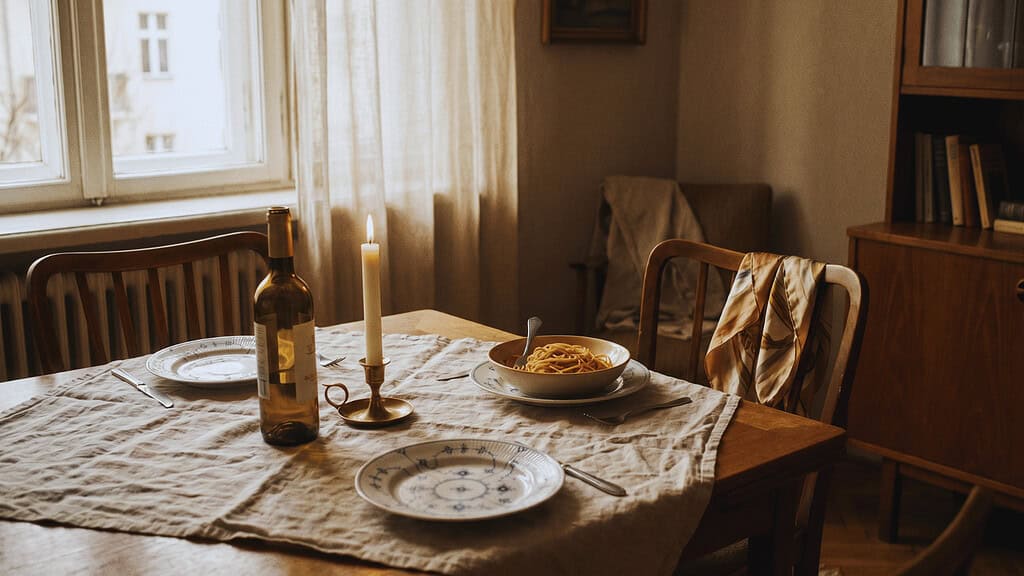
My mother had a set of china she brought out twice a year. Christmas and Thanksgiving. The rest of the time it sat in the cabinet behind glass, waiting.
She also had candles she never lit. Lotion she never opened. A silk scarf she saved for “somewhere nice” but never wore.
I did the same thing without realizing it.
I had good dishes I never ate off of. Bath products still in the box from three Christmases ago. A beautiful tablecloth folded in a drawer that I’d been saving for a dinner party I kept meaning to throw but never did.
What was I waiting for?
The special occasion never comes. Or it comes and you forget the thing exists because it’s been buried in a cabinet for so long.
And then one day you’re going through your things and you find a candle that’s dried out, lotion that’s expired, and dishes that have been sitting untouched for years.
I started using the nice things. Every day.
The good dishes became my Tuesday dishes. The candles got lit on a random Wednesday. The tablecloth came out for a regular dinner with my husband (nothing fancy, just spaghetti).
And I wish I’d started doing that twenty years ago.
4. A Full House Is a Happy House
I grew up in a home where every surface had something on it.
Every shelf was filled. Every wall had a picture or a decoration. And it felt warm. It felt alive. It felt like home.
So when I built my own household, I did the same thing. I filled it. Shelves, mantels, tables, corners. If there was an empty space, something went in it. Because empty felt unfinished. Like the house was missing something.
It took me a long time to realize that what I was feeling wasn’t warmth. It was weight.
A full house isn’t a happy house.
A full house is just (well) a full house.
And there’s a BIG difference between a home that feels lived in and a home that feels like there’s no room left to breathe.
When I started clearing surfaces and leaving some shelves empty on purpose, I expected the rooms to feel cold. They didn’t. They felt calm.
And I wasn’t constantly looking around thinking “I need to dust all of this” or “I need to deal with that pile.”
Empty space isn’t something missing. It’s room for YOU.
5. If You Let It Go, You’ll Forget
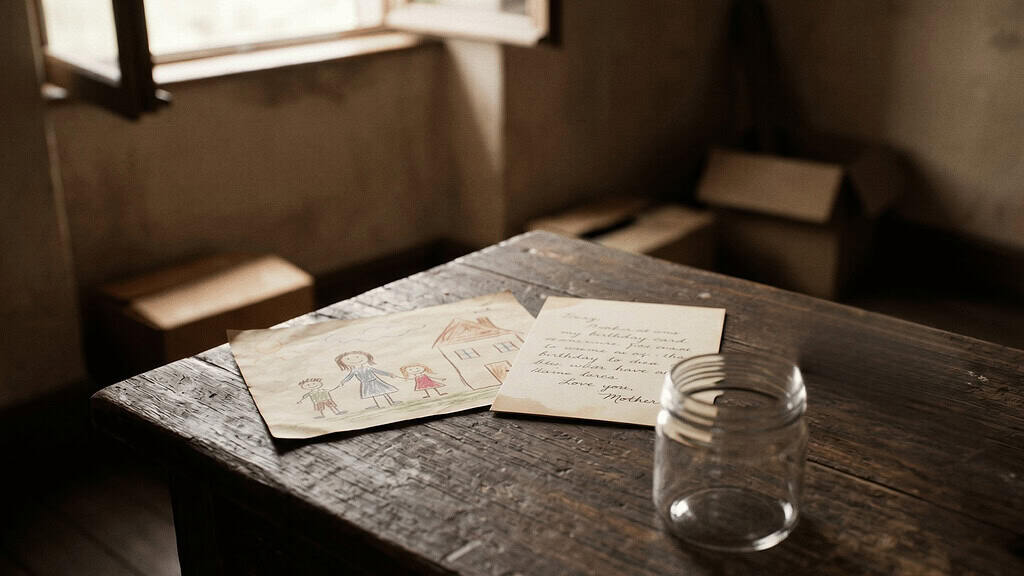
This is the one that kept me holding onto things the longest.
Boxes of my kids’ school projects. Old greeting cards. My mother’s kitchen things that I never use but couldn’t part with because I was afraid that without them, the memory would fade.
I was taught (not in words, but in practice) that things are how you hold onto the past. That the object is the memory.
And if the object goes, so does everything attached to it.
That’s not true. And I think on some level I always knew that.
But believing it meant I could keep everything, and keeping everything felt safer than deciding what actually mattered.
When I finally went through those boxes (it took an entire afternoon and some tears), I kept a small handful of things that genuinely meant something.
My daughter’s first drawing of our family. One birthday card from my mother in her handwriting. Thewooden spoon she used every Sunday morning.
The rest I let go. And the memories are still right here. Every single one of them.
The things were never the memories. They were just the containers I was storing them in because I didn’t trust myself to hold them without help.
6. It’s Wasteful to Get Rid of Something You Paid For
My mother grew up in a home where money was tight. So did hers. And the lesson that got passed down to me was simple: you don’t waste.
You don’t throw away food. You don’t replace what isn’t broken. And you certainly don’t get rid of something you spent good money on (especially if you could “still get some use out of it”).
I carried that lesson into every corner of my house.
The coat I paid too much for and barely wore. The furniture we bought when we first moved in that doesn’t fit the way we live now but cost enough that getting rid of it feels like throwing money in the trash.
But here’s the part nobody ever said out loud.
The money is already gone. It left the moment I paid for it.
Whether the thing sits in my closet for another ten years or goes to someone who will actually use it, the amount on the receipt doesn’t change.
Keeping something expensive that I don’t use doesn’t save money. It just stores the regret and takes up space I could be using for something better.
Letting it go isn’t wasteful. Letting it sit there untouched for another decade is.
7. You Should Be the Keeper of the Family’s Things
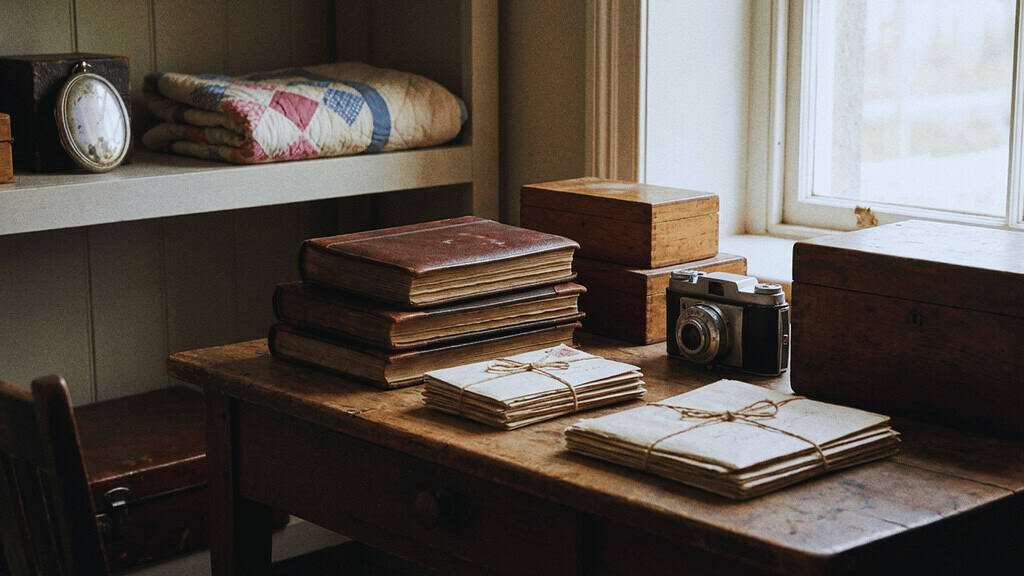
This is the one I carried the heaviest.
Somewhere along the way, I became the person in my family who holds onto everything.
The photos. The documents. The heirlooms nobody else had room for. The boxes from my parents’ house. The things my siblings didn’t want but felt too guilty to throw away, so they sent them to me.
I accepted all of it without question because I believed that was my role. That someone had to be the keeper.
And that someone was always the woman.
But being the keeper of everyone else’s things means your own home STOP being yours. It becomes a storage facility for other people’s memories, other people’s guilt, and other people’s decisions they didn’t want to make.
I finally told my siblings that I couldn’t hold onto everything anymore.
That they needed to come get what they wanted or give me permission to let the rest go. It was one of the hardest conversations I’ve had.
And one of the most freeing.
You can love your family deeply and still not be their storage unit. Those two things can exist at the same time.
My Mother Wasn’t Wrong. The World Just Changed.
I want to be clear about something. I don’t blame my mother for any of this. Or my grandmother. Or any of the women who taught me how to run a household.
They taught me what they knew. And what they knew came from lives where saving was survival. Where a full pantry meant security. Where holding onto things wasn’t a personality flaw. It was how you got through.
I respect that. Deeply.
But I don’t live in that world anymore. And the rules that kept their households running were quietly filling mine with things I didn’t need, guilt I didn’t earn, and weight I’d been carrying without realizing it.
Once I started questioning those beliefs (one at a time, usually while standing in front of a cabinet holding something I hadn’t touched in years), the decisions got so much easier.
Not because the guilt disappeared completely. It didn’t. I still feel a small pinch sometimes when I let something go that my mother would have kept.
But I’ve learned to sit with that pinch and let it pass. Because on the other side of it is a house that finally feels like mine. Not my mother’s. Not my grandmother’s.
Mine.
And that feels like something worth holding onto.
When You’re Ready, Start With the Belief That’s Loudest
If any of these felt familiar, you don’t have to tackle all seven at once.
Just pick the one that runs the loudest in your head. The one you hear every time you try to clear a shelf or open a closet. Start there.
Question it. Sit with it. Ask yourself whether it’s still serving you or just keeping your house full and your shoulders heavy.
You’re not betraying anyone by letting go of a belief that no longer fits your life. You’re honoring yourself the same way those women honored their families.
Just in a different way. For a different time.
Want Help Taking That First Step?

If these lies have been keeping you stuck, my free Declutter for Self Care Checklist can help you start moving forward.
It gives you a clear, room-by-room path that meets you where you are, not where some article says you should be.
Frequently Asked Questions
What are the most common decluttering lies?
The most common ones aren’t about bins or systems. They’re the beliefs we carry without questioning.
Things like “never throw away something that still works,” “save the nice things for a special occasion,” and “if you let it go, you’ll forget.”
These feel like wisdom but they often keep us holding onto things that no longer serve our lives. Recognizing them is the first step to letting go without guilt.
Why is decluttering so emotionally hard?
Because it’s not really about the stuff. It’s about what the stuff represents.
Guilt over money spent, fear of losing memories, beliefs passed down from parents who lived through harder times, and the feeling that letting go means letting go of a part of yourself.
Once you understand what’s really behind the resistance, the physical act of decluttering gets much easier.
How do I stop feeling guilty when I get rid of things?
Start by asking yourself where the guilt is coming from. Is it about the money? The person who gave it to you? A belief you were raised with about waste?
Naming the source takes away a lot of its power.
And remind yourself that keeping something you don’t use out of guilt isn’t honoring it. It’s just storing the guilt in your closet instead of dealing with it.
How do I declutter things my family gave me or passed down?
Give yourself permission to keep only what genuinely adds something to your life right now.
You don’t have to keep everything to honor someone’s memory.
One meaningful piece is worth more than three boxes of things you never open. And if family members are sending you their things because they don’t want to deal with them, it’s okay to have an honest conversation about what you can and can’t hold onto.
How do I get back on track after I stop decluttering for a while?
Don’t try to pick up where you left off.
Start fresh with something small and easy. One drawer. One shelf. Fifteen minutes. And revisit the belief that stalled you in the first place.
Usually the reason you stopped wasn’t time or energy. It was one of these deeper lies getting loud again. Name it, question it, and keep moving.
Follow me elsewhere!

