
The candle set has been sitting in the back of my linen closet for almost three years (longer than I’d like to admit).
It was a gift from my sister-in-law, beautifully wrapped, and she’d told me she picked the scents out herself.
The trouble is, I don’t really care for scented candles.
Never have.
But every time I went to clean out that closet, I’d see those candles tucked in the corner, feel a little tug in my chest, and shove them right back where they were.
Maybe you know that feeling too.
It shows up with the sweater from your daughter that doesn’t quite fit, or the serving dish from your mother that doesn’t match a thing you own.
Even the little decorative piece a friend brought back from a trip, sitting on a shelf because moving it feels like saying you don’t care.
That’s the thing about decluttering gifts.
It’s one of the hardest parts of letting go, and the item itself is rarely the real issue.
What makes it so hard is the guilt sitting underneath it.
The quiet worry that if we get rid of something, we’re somehow getting rid of the person who gave it to us.
I carried that guilt for a long time.
It wasn’t until I started reading about Swedish Death Cleaning that something in me quietly began to shift.
Why Gifts Are One of the Hardest Things to Declutter
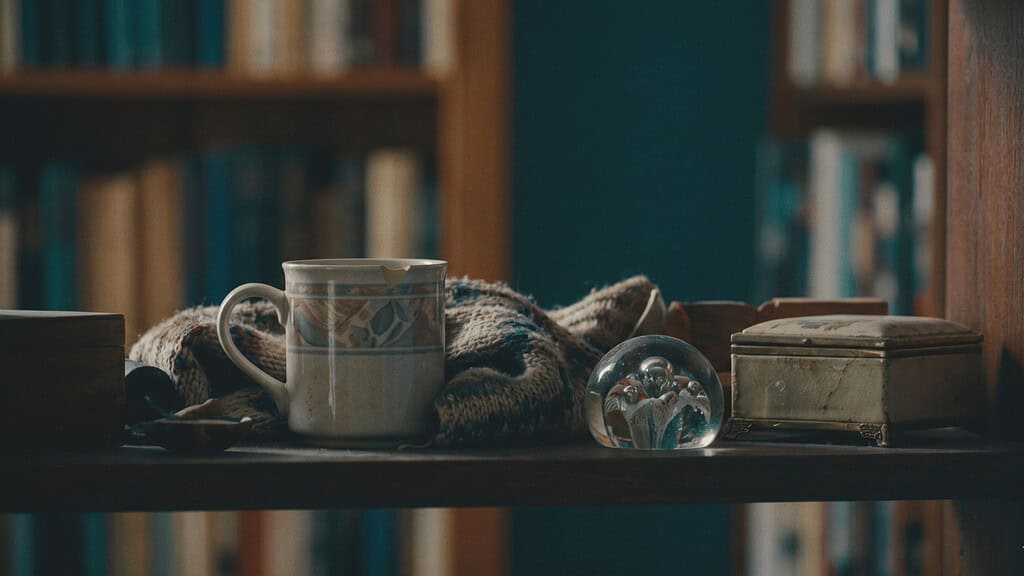
Most things in your home are easy to decide on.
A pair of worn-out shoes, an expired bottle of vitamins, a magazine from last spring. You see it, you know it has to go, and out it goes.
But gifts are different.
When you pick up a gift, you’re not just holding an object. You’re holding the moment it was given.
The way they smiled when you opened it. The story behind why they thought you’d love it. (Sometimes you can still picture exactly where you were standing.)
That’s what makes them so heavy. The item isn’t just an item anymore. It’s wrapped up in love, obligation, and memory all at once.
And then there’s the guilt.
The little voice that whispers, “But what if they ask about it next time they come over?” Or, “What if they think I didn’t appreciate it?“
So we keep things we don’t use.
We tuck them in cabinets.
We move them from drawer to drawer every spring, never quite using them and never quite knowing what to do with them.
For years I had a whole shelf of these myself. (My husband called it the “gift graveyard.”)
Each one came with a story attached, and that story is what made them so hard to part with.
Decluttering gifts isn’t really about the gift.
It’s about everything we’ve decided the gift represents.
The Moment Everything Started to Feel Lighter

It happened on a quiet Saturday morning.
I was standing in the closet again, looking at that scented candle set, and I realized something I hadn’t let myself think before.
My sister-in-law gave me those candles because she loves me.
She thought of me, picked them out, wrapped them up, and handed them over with a smile.
That gift had already done its job.
The moment she gave it to me, the love in the gesture had already arrived.
(The candles themselves were never really the point.)
I took the box out of the closet, set it on the counter, and added it to the donation pile.
Nothing dramatic happened.
No lightning bolt, no sweeping wave of emotion.
Just a small, quiet feeling that something I’d been carrying for three years had finally been set down.
Later that week, I started looking at other things on the shelf with new eyes.
The dish towels that didn’t match anything.
The decorative bowl I never used.
The books I’d been told I should read.
One by one, I let them go.
That’s the gift Swedish Death Cleaning gave me.
Not a tidier closet. But a peaceful one.
Click here to read the article and fully understand what Swedish Death Cleaning really is.
The Truths That Made All the Difference
I didn’t get to these truths all at once.
They came slowly, over months of letting go and noticing how I felt afterward.
Each one made the next gift a little easier to release.
Six of them stand out as the lessons that changed everything.
1. The Gift Was Given. The Obligation Wasn’t.
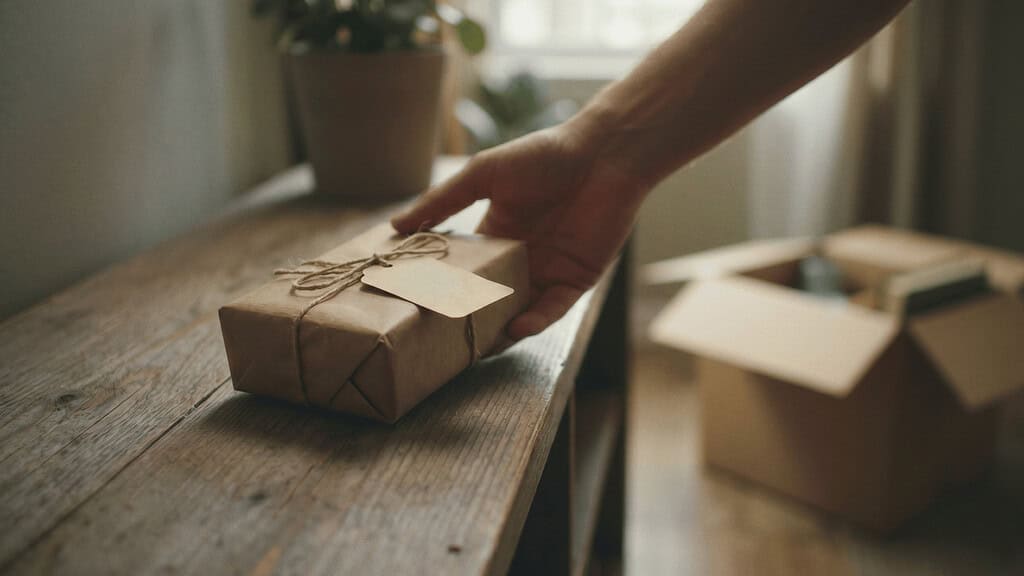
When somebody gives you a gift, what they’re really giving you is a moment.
The thought, the effort, the love behind it.
That’s the whole point.
What they’re not giving you is a lifetime contract to keep, display, or feel guilty about that item for the next thirty years.
I had to remind myself of this more times than I can count.
Because somewhere along the way, I’d convinced myself that accepting a gift meant promising to keep it forever.
(As if receiving it came with strings attached that the giver never actually tied.)
But think about the gifts you’ve given other people over the years.
Did you mean for them to feel stuck with what you bought? Probably not.
You wanted them to enjoy it, and if they didn’t, you’d want them to pass it along to someone who would.
The same is true for the gifts that came to you. The moment is yours forever. The object is just an object.
2. Keeping Something Out of Guilt Doesn’t Honor the Giver.
For a long time, I thought holding onto every gift was a way of showing respect.
Like the items themselves were small monuments to the people who gave them.
But guilt isn’t honor. It’s just guilt wearing a fancier name.
When I kept that candle set in the closet for three years, I wasn’t thinking warmly about my sister-in-law every time I shoved it back in.
I was thinking, “I really need to deal with this.”
(Which is the opposite of honoring anyone.)
Real honor lives in the relationship. The phone calls, the visits, the way you remember someone’s birthday or check in when they’re going through something hard.
Those are the things that show love. Not the dusty objects taking up space in your house.
Letting go of a gift doesn’t erase the giver. They’re still there, still loved, still part of your life. The shelf they once occupied just isn’t theirs to hold forever.
3. Your Home Is Not a Museum for Other People’s Choices.
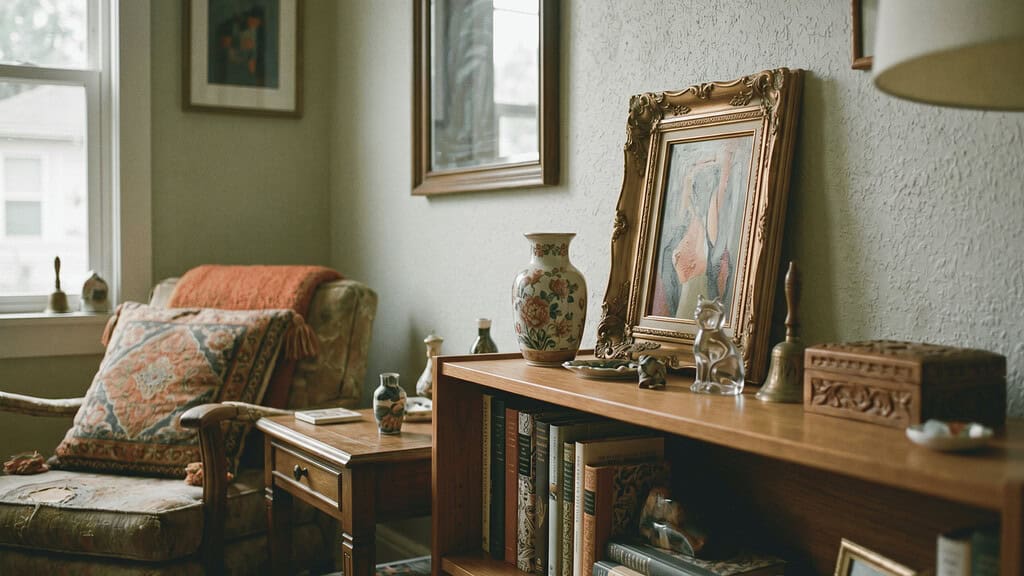
Every gift that comes into your home reflects somebody else’s taste, somebody else’s idea of what you might like, somebody else’s style.
And when you look around a room and see that almost everything in it was chosen by someone other than you, something quiet starts to feel off.
Your home is supposed to feel like you.
Not like a collection of well-meaning suggestions from people who love you but don’t always know what you’d actually pick out for yourself.
I noticed this most in my living room. The wall art, the throw pillows, the little decorative things on the shelves.
So many of them were gifts. And while I was grateful for every single one, I started to wonder when I’d last bought a single piece of decor for myself.
Letting go of the things that don’t reflect you doesn’t make you ungrateful. It means you’re claiming back the right to live in a space that feels like home.
4. Letting Go Is Part of Caring for the People Who Come After You.
This is the heart of Swedish Death Cleaning, and the lesson that hit me hardest.
When my mother-in-law passed away a few years ago, my husband and I spent weeks going through her house.
Drawers full of birthday cards from 1984. Closets full of sweaters she hadn’t worn in decades. A whole spare room of things she’d kept “just in case.”
She kept those things out of love. But sorting them was one of the hardest jobs I’ve ever done.
I don’t want my own kids to face that someday.
So when I look at the gifts in my closet now, I think about who’s going to deal with them eventually. Not in a morbid way. Just in a practical, caring way.
The fewer unused things I leave behind, the more time my family gets to grieve me without sorting through boxes. (And honestly, that feels like a gift in itself.)
Letting go now is something I can do for them. Quietly, ahead of time, while it’s still mine to do.
5. A Gift’s Purpose Ends When It Stops Bringing Joy or Use.
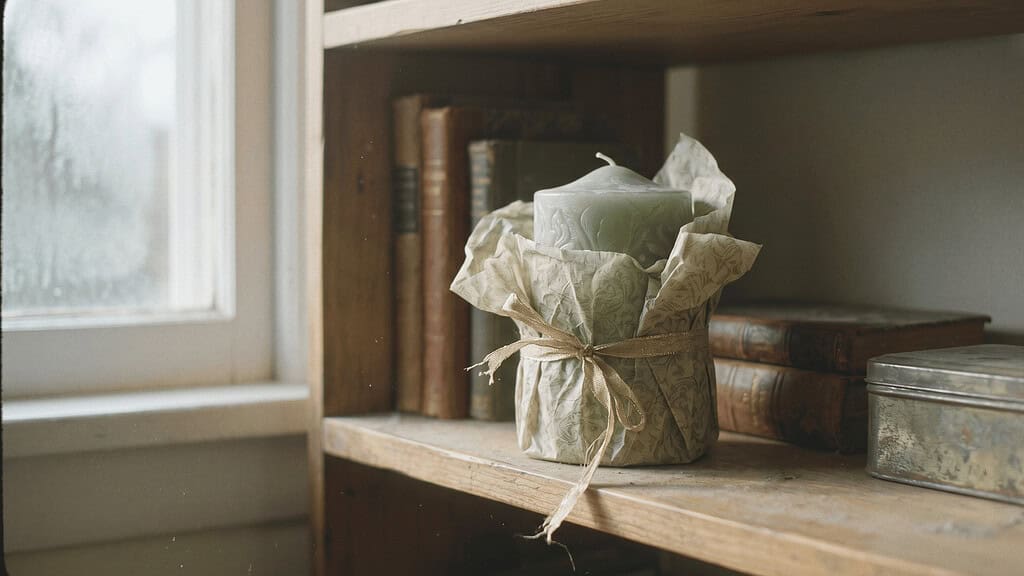
A gift has a job to do. That job is to make you feel loved, useful, or happy in some way.
The day a gift stops doing that job, it’s done.
It served its purpose.
Holding onto it past that point doesn’t make it more meaningful. It just turns it into clutter wearing a sentimental disguise.
The candle set I kept for three years stopped being a gift the moment I decided I didn’t like scented candles.
After that, it was just a box on a shelf, taking up room and waiting for me to make a decision.
The same is true for the sweater that doesn’t fit anymore, the cookbook from a friend who didn’t realize you don’t bake, the candle holder that doesn’t go with anything.
Those items had their moment. They did the work they were meant to do.
Letting them move on to someone who can use them isn’t disrespect. It’s giving them a second chance to do the job they were made for, somewhere else.
6. The Memory Lives in You, Not the Object.
For years, I worried that letting go of a gift meant losing the memory of the person who gave it to me. As if my brain couldn’t hold onto the moment without a physical reminder sitting on a shelf.
But that’s not how memory works.
I still remember exactly where I was when my grandmother gave me her favorite recipe book, even though I passed it on to my niece a long time ago.
I still remember the trip my friend took when she brought me back the little ceramic dish, even though that dish broke years later.
The memory didn’t go anywhere when the objects did.
The gift was the moment, not the thing. The thing was just the marker.
Once I started to understand that, the way I felt about letting go of sentimental items shifted for good.
Decluttering gifts stopped feeling like betrayal. It started to feel like trusting myself to hold onto what mattered, without needing a physical object to do it for me.
The Real Gift Was Never the Object
For years, I thought I was being a good person by holding onto every gift that came through my door. I thought letting go meant I didn’t care.
What I’ve learned, slowly and one closet at a time, is that those two things have nothing to do with each other.
The people who gave me those gifts weren’t asking for a permanent shelf. They were giving me a moment. And that moment is mine now, no matter what happens to the object that came with it.
Swedish Death Cleaning didn’t just teach me how to declutter gifts. It taught me how to feel okay about it.
How to look at a candle set or a sweater or a decorative dish and know, deep down, that letting go is allowed.
That it’s even kind. To myself, to my family, to the future I’m trying to build.
If you’ve been holding onto gifts that don’t serve you, this is your permission slip. The weight you’ve been carrying isn’t gratitude.
It’s guilt.
And guilt was never something the giver wanted you to carry in the first place.
When You’re Ready to Set Down What You’ve Been Carrying

If reading this stirred something up, you’re not alone. Most of the women I hear from have a closet, a drawer, or a whole room full of gifts they’ve been carrying around for years.
My free Declutter for Self Care Checklist walks you through the spaces that hold the most guilt, room by room, so you can finally let go without second-guessing yourself.
It’s gentle, doable, and made for the way real homes actually work. No big weekend overhauls. No pressure to get it perfect.
Just a quieter home and the lighter feeling that comes with letting go.
Frequently Asked Questions
Is it disrespectful to declutter gifts?
No. Letting go of a gift doesn’t undo the love behind it.
Gifts are given as a gesture, and that gesture is complete the moment they’re handed over. Keeping something you don’t need or love doesn’t honor the person who gave it.
It just turns their kind moment into a quiet piece of guilt sitting on a shelf. The relationship is what matters, not the object.
How do you let go of unwanted gifts without feeling guilty?
Start by remembering that the giver wanted you to feel loved, not stuck. Take a quick photo if it helps you keep the memory.
Then find the item a meaningful new home, like a friend who would actually use it, a women’s shelter, or a thrift shop tied to a cause you care about.
Knowing where the item is going makes letting go feel like passing it forward, not throwing it away.
What do you do with gifts you don’t want from family?
Be gentle, but be honest with yourself first.
The gift isn’t doing its job if it sits unused for years. You can pass it on to another family member who would love it more, donate it quietly, or sell it if it has real value.
If you’re worried about being asked about it later, a kind, simple answer like “I appreciated it, but it didn’t quite fit our home” is usually enough.
Should you keep gifts you never use?
Not just because they were gifts. Holding onto things you don’t use or love takes up space in your home and quiet space in your mind.
Every unused gift becomes one more thing to clean around, store, and feel guilty about.
If something has been sitting unused for years, that’s a strong sign it’s done its work as a gift and is ready to move on.
How does Swedish Death Cleaning work for gifts?
Swedish Death Cleaning is the gentle practice of letting go of belongings you no longer need, so your home stays lighter for you and your family.
When applied to gifts, it shifts the question from “Should I keep this?” to “Will the people who love me want to sort through this someday?”
That small shift makes it easier to release things kindly and live with only what truly matters to you now.
Follow me elsewhere!

